

Everyday Napa Cabbage Kimchi
Everyday napa cabbage kimchi made with chopped cabbage, gochugaru, and a simple seasoning paste, then fermented naturally for clean, balanced flavor that works with daily Korean meals.
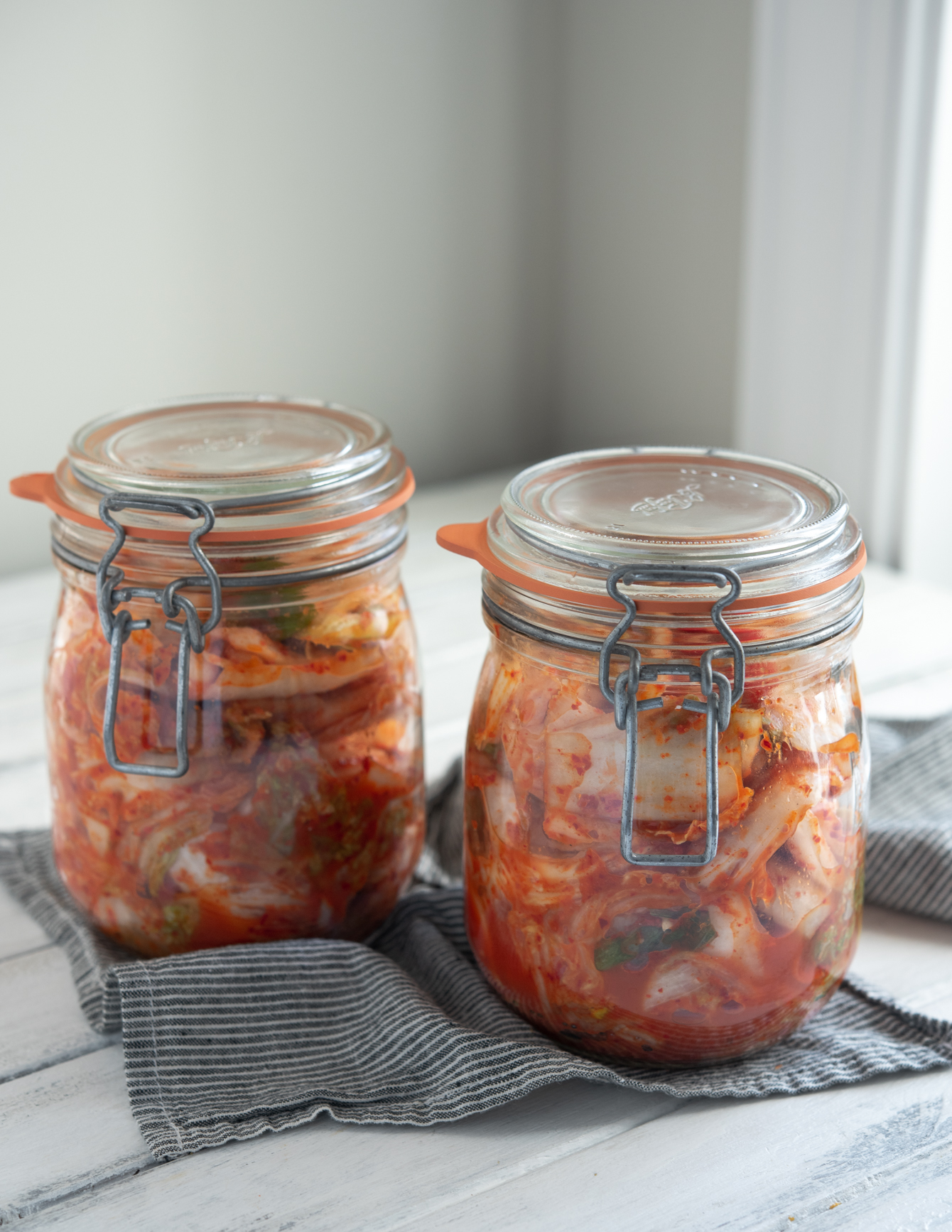
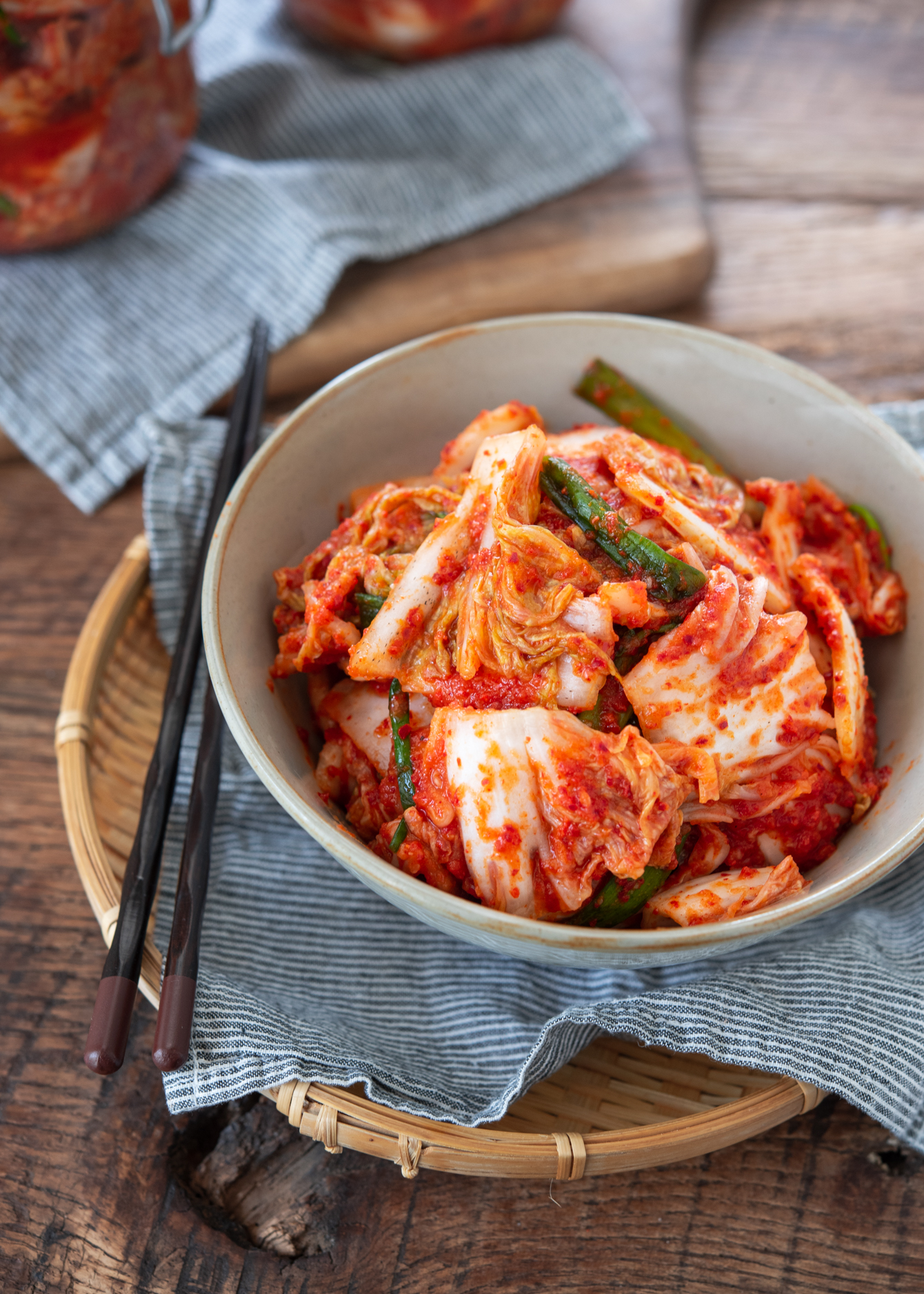
This is the napa cabbage kimchi I make most often at home — not for kimjang season, and not as a same-day salad, but for everyday meals. It’s a mak kimchi–style recipe, meaning the cabbage is chopped instead of left whole, which keeps the process practical while still allowing the kimchi to ferment properly and develop flavor over time.
I rely on this version when I want a dependable batch of kimchi in the fridge that gets better after a day or two, with balanced heat, tang, and savoriness. It’s the kind of kimchi that works with a simple bowl of rice, soups, or grilled dishes without overpowering the meal. If you’re looking for a home-style cabbage kimchi that’s straightforward, fermented, and made to be eaten daily, this is the recipe I come back to again and again.
Get new recipes via email:
Why This Is My Everyday Napa Cabbage Kimchi
This recipe is designed for regular home cooking, not large-batch kimjang or same-day kimchi. The cabbage is chopped for practicality, seasoned simply, and allowed to ferment so the flavor develops gradually in the fridge. I make this version when I want a reliable napa cabbage kimchi that works with everyday meals and improves over time.
For traditional, whole-cabbage kimchi made in larger batches, see my kimjang kimchi recipe, which follows the classic salting and fermentation process used for winter storage.
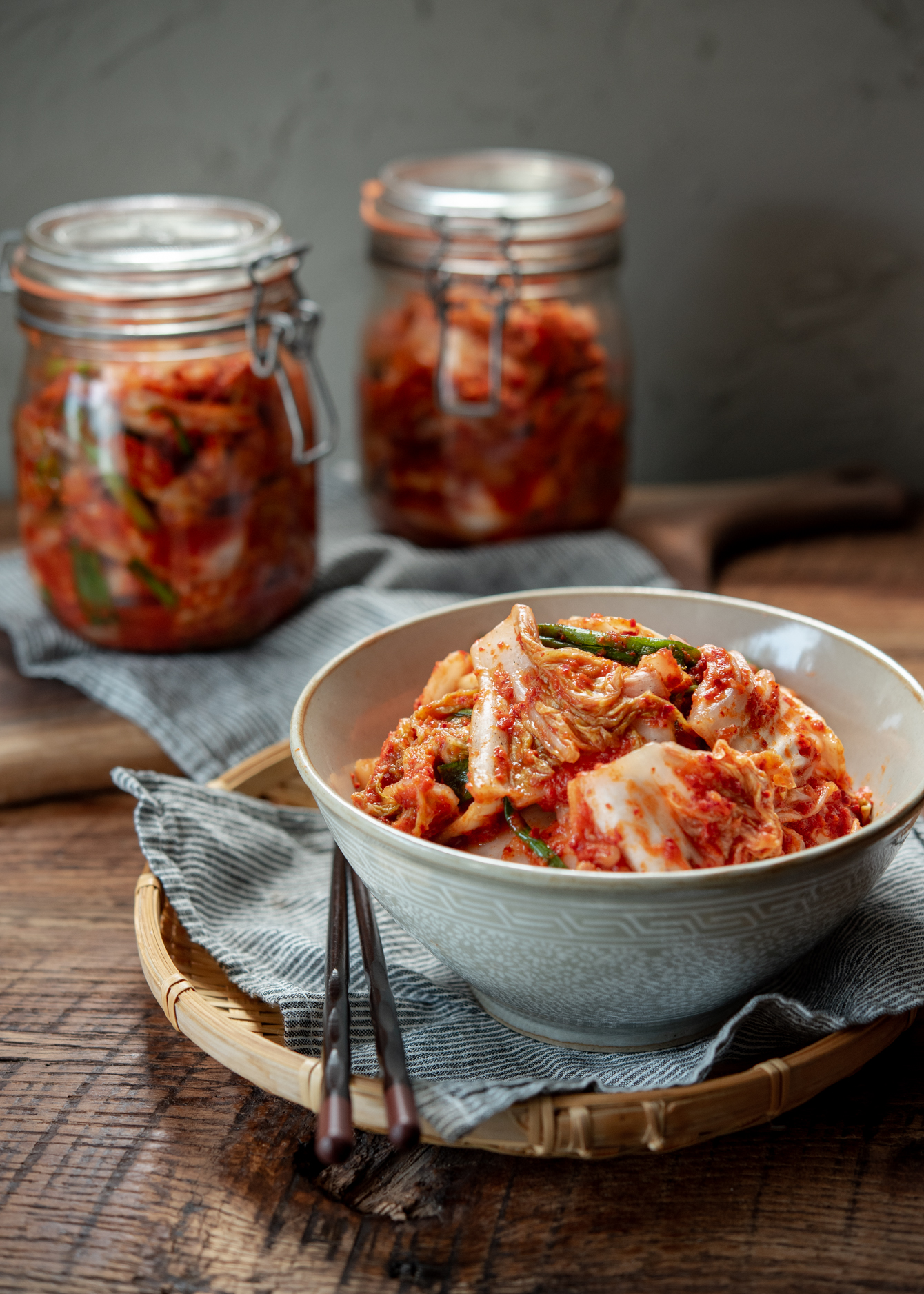
Key Ingredients for Cabbage Kimchi
After years of making kimchi both in Korea and abroad, I’ve found that choosing the right ingredients is key—especially for an everyday kimchi that’s meant to ferment and be eaten over time. Here are my go-to ingredients and why they matter.
Napa Cabbage: This is the classic base for kimchi, known for its crunchy texture that softens beautifully as it ferments. Can’t find napa? Green cabbage works in a pinch, though the texture and fermentation will be slightly different. I share a dedicated method in my green cabbage kimchi recipe.
Korean Coarse Sea Salt (cheonilyeom): Korean sea salt draws moisture slowly and evenly, which helps preserve the cabbage’s crunch. I’ve tested regular table salt—it makes the cabbage too limp. Stick with coarse salt made for kimchi when you can.
Korean Chili Flakes (Gochugaru): This gives kimchi its signature color and spicy kick. I recommend using gochugaru made in Korea—it tends to have better flavor and brighter color. Avoid chili flakes that look dull or brownish.
Starch (for the paste): A small amount of starch helps the seasoning paste cling to the cabbage and supports fermentation. When I want a smoother texture or am making a larger batch, I cook a quick sweet rice flour paste. On busy days, blended leftover rice works just as well.
Fish Sauce & Salted Shrimp: Anchovy fish sauce and saeujeot (salted shrimp) provide the depth and umami that give fermented kimchi its complexity. This combination is what I use most often at home. If you avoid seafood, soup soy sauce can be used as a plant-based substitute while still producing a well-balanced kimchi.
Sweetener (Fruit or Sugar): A small amount of sweetness helps balance the spice and acidity as the kimchi ferments. For this batch, I used a blend of apple and pear nectar, which added gentle sweetness without overpowering the chili paste.
Sea Kelp Stock (Optional): This isn’t required, but a light kelp stock adds subtle savory depth to the seasoning paste. Simmer a small piece of dried kelp in water, then let it cool before using.
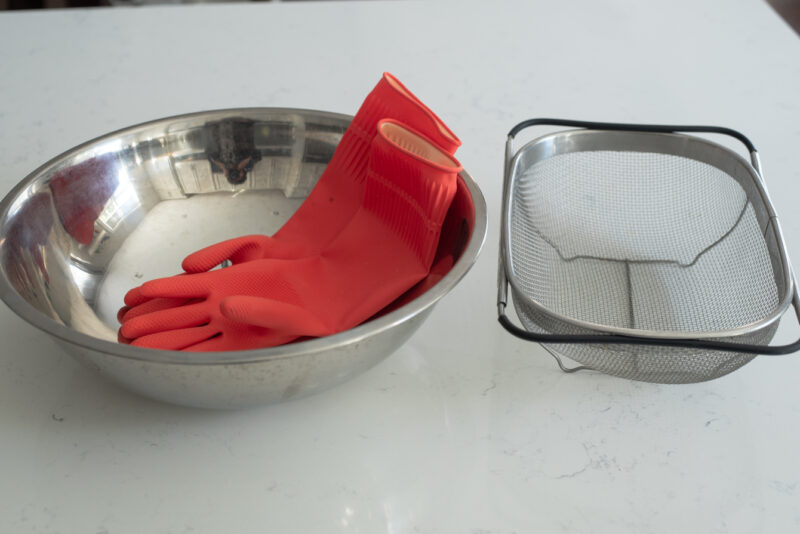
You don’t need special equipment to make this kimchi, but a few basics make the process easier: a large mixing bowl for salting, a colander for draining, kitchen gloves to protect your hands from gochugaru, and airtight jars with a little headspace for fermentation.
How I Make Everyday Napa Cabbage Kimchi
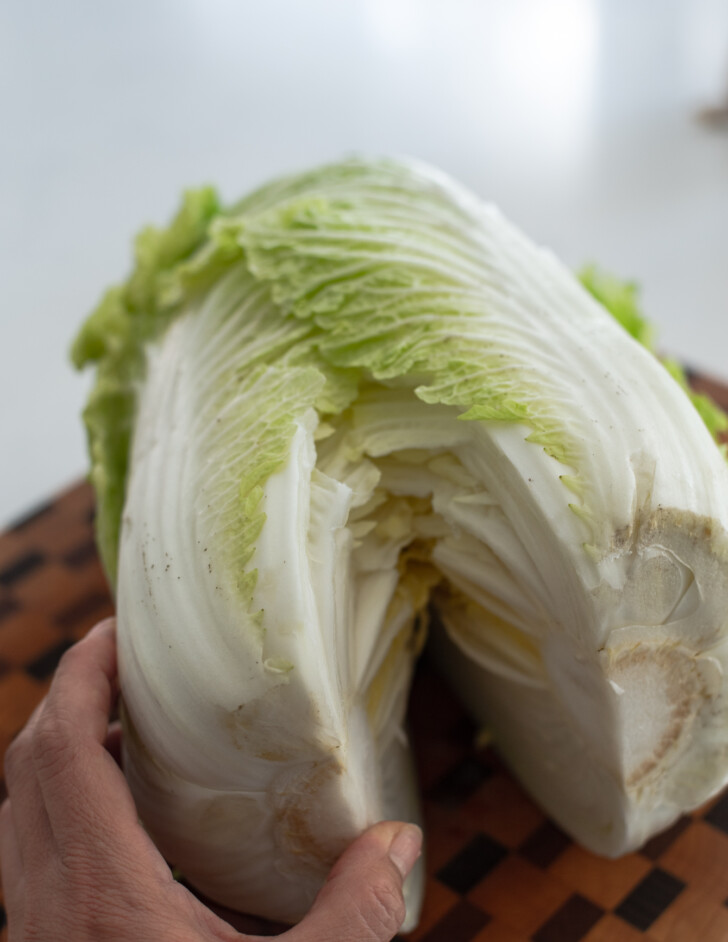
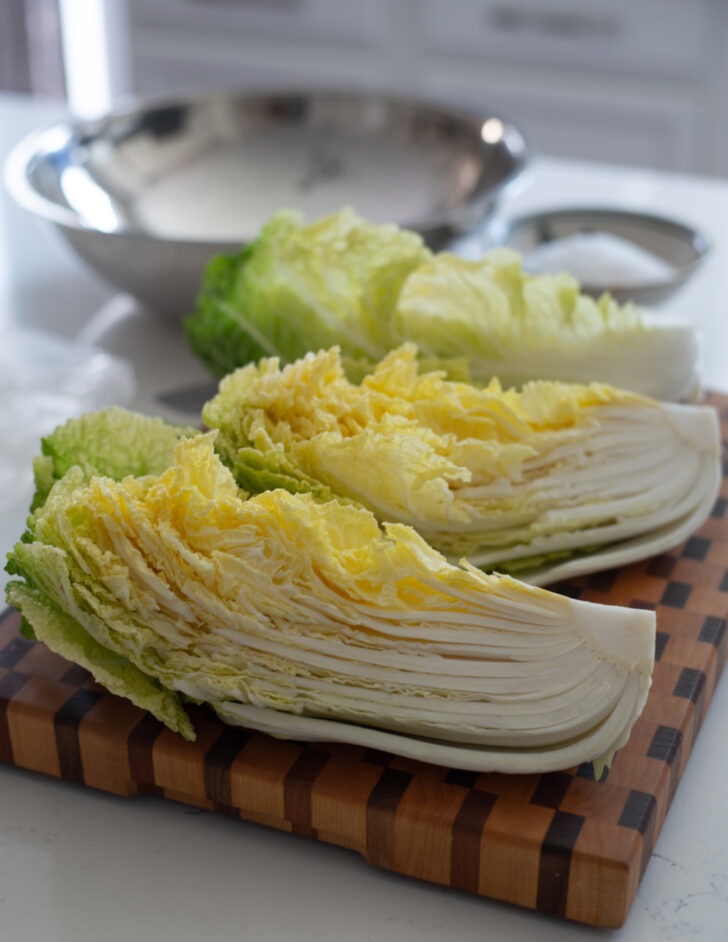
Prep the Cabbage. I start by quartering the napa cabbage the traditional Korean way—cutting a small slit at the base, then splitting it open by hand. This keeps the leaves intact and helps the cabbage ferment evenly later on.
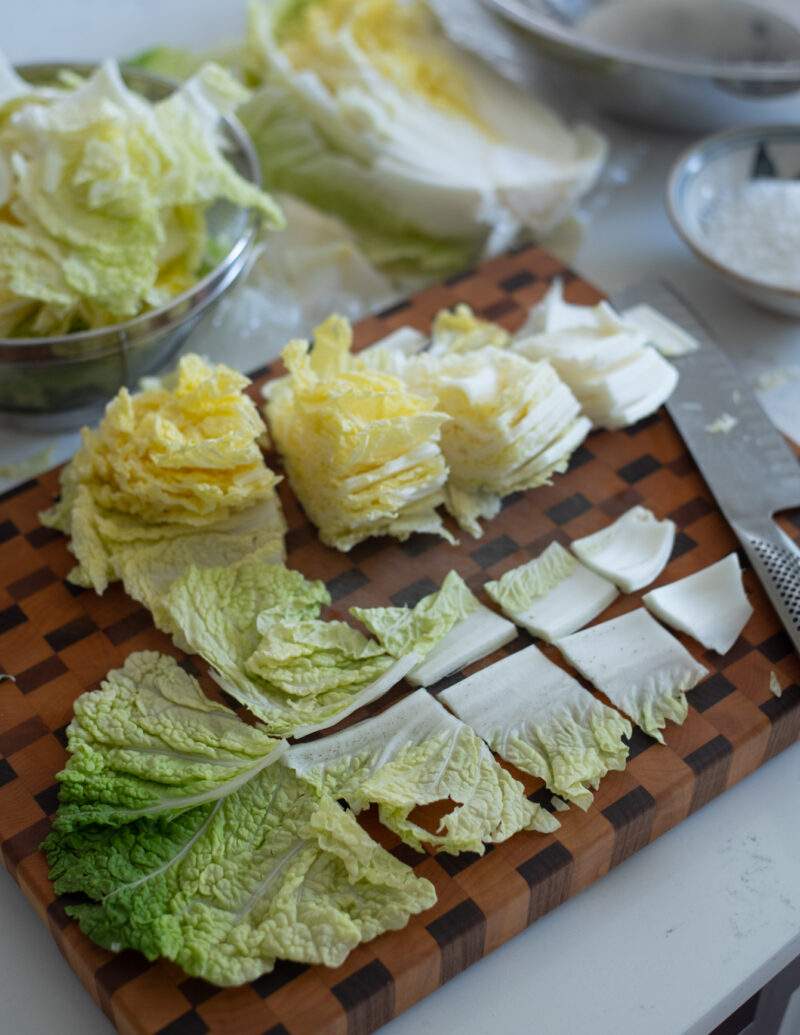
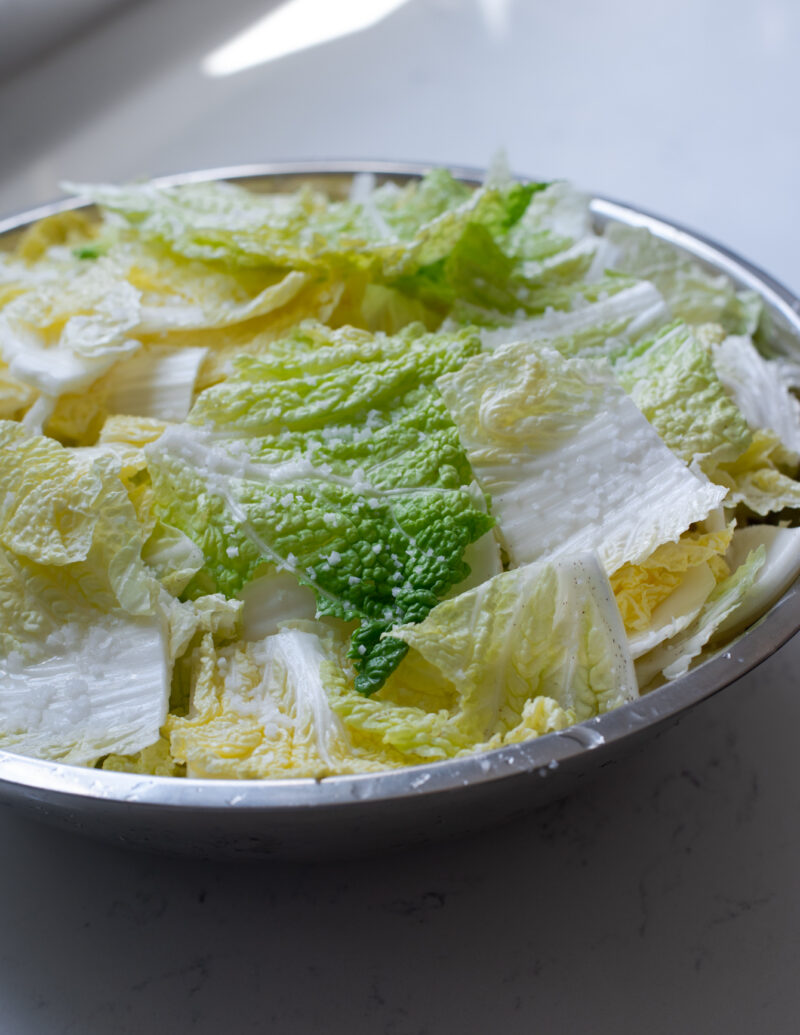
Salt the Cabbage. Cut the quarters into large chunks and layer them with coarse Korean sea salt in a large bowl. Make sure the salt reaches the thicker stem parts. Let the cabbage rest until the stems bend easily without snapping.
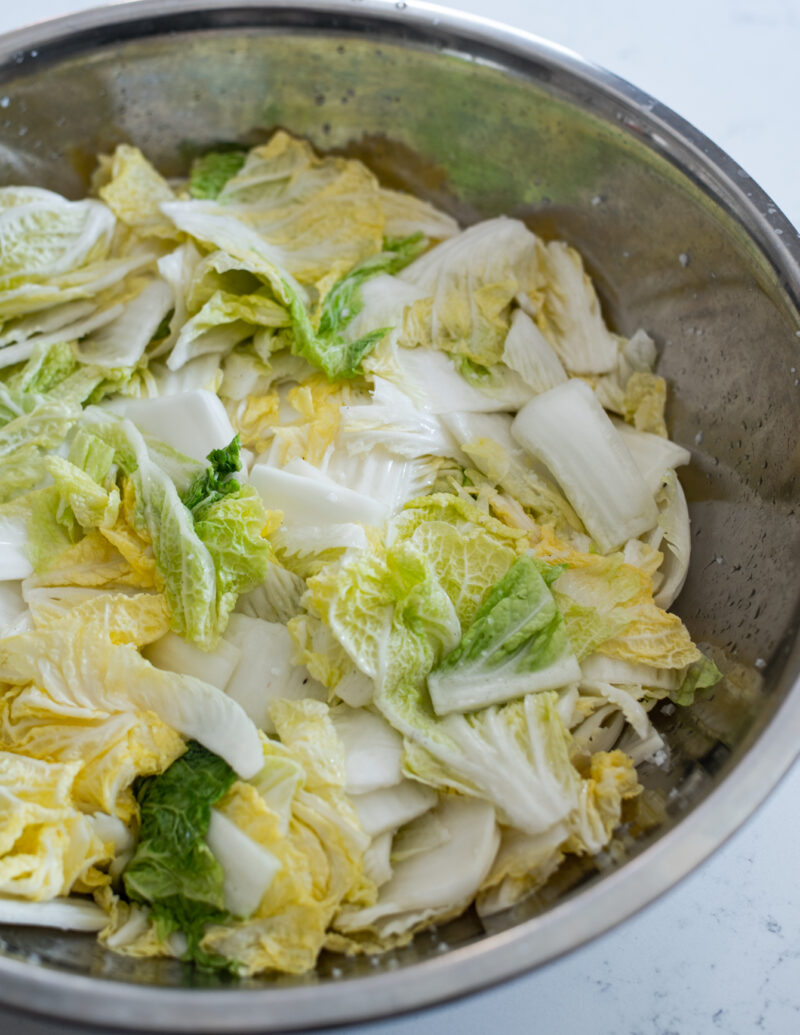
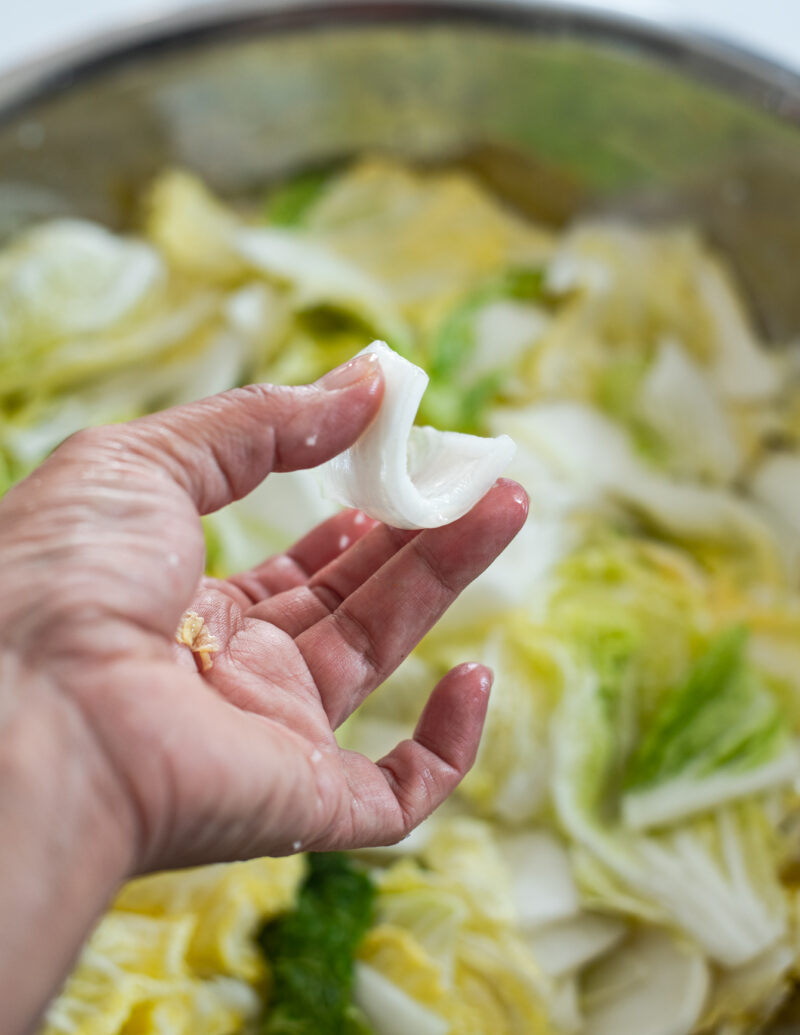
Rinse and Drain. Rinse the salted cabbage a few times to remove excess salt, then gently squeeze out the water. The cabbage should feel pliable but not waterlogged.
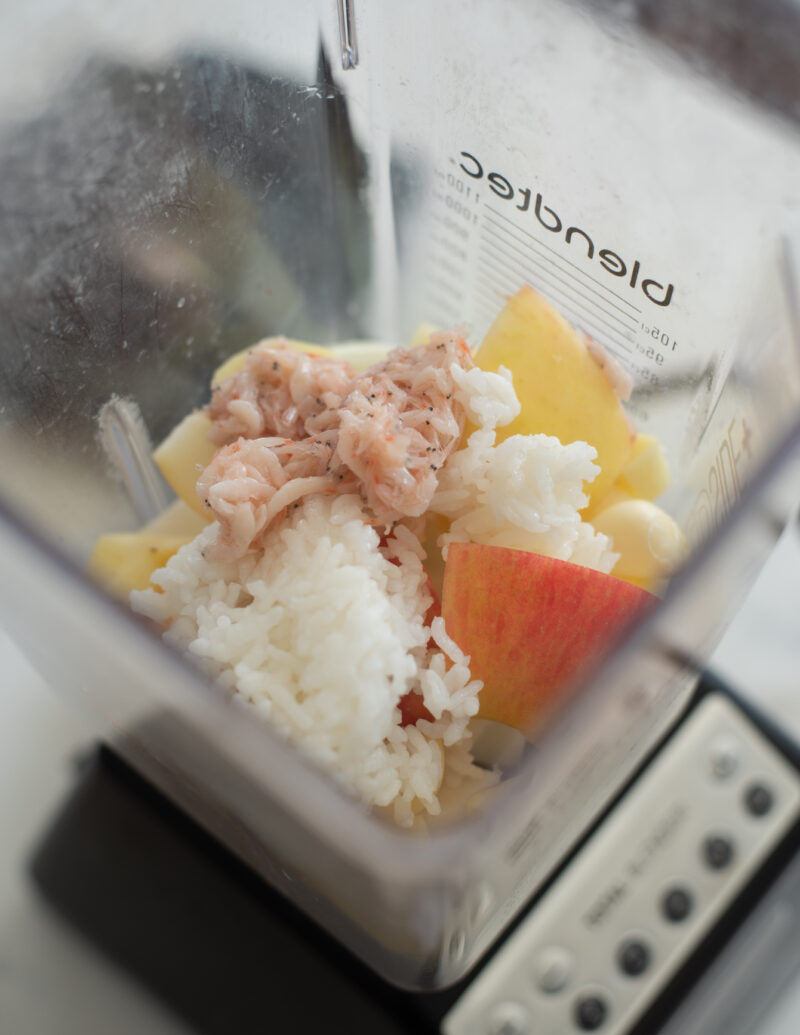
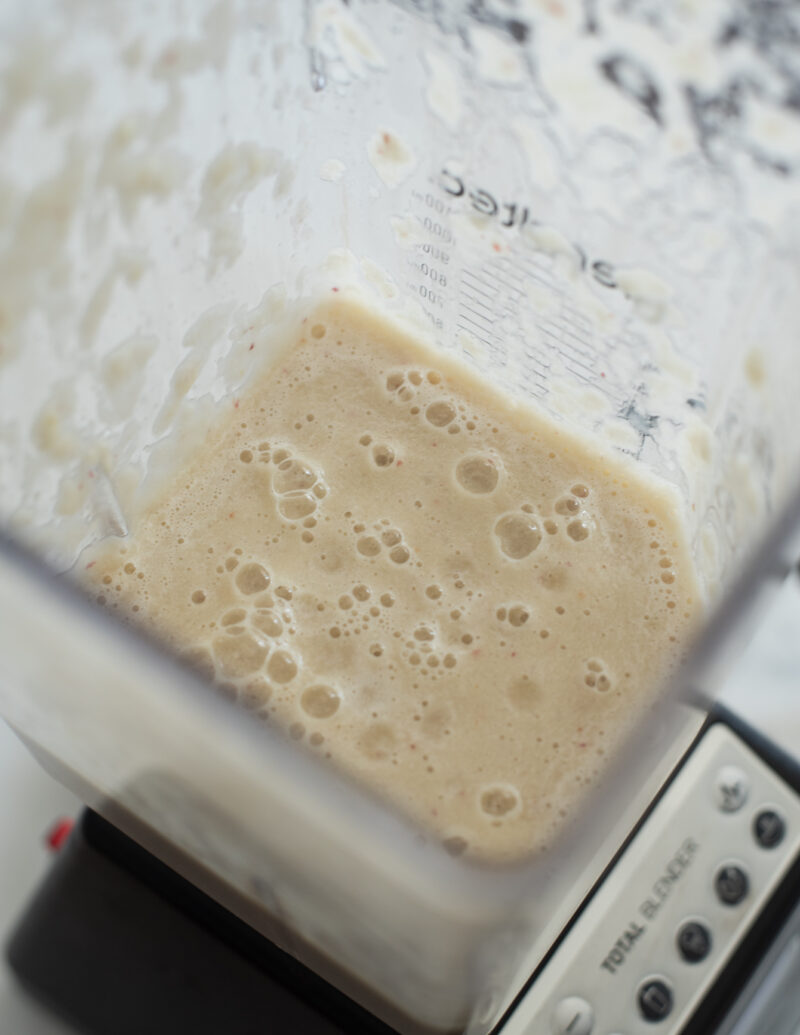
Make the Seasoning Base. While the cabbage rests, blend garlic, ginger, onion, apple or pear, a small amount of sugar, fish sauce, salted shrimp, and a bit of kelp stock if using. This base gives the kimchi depth and helps it ferment cleanly.
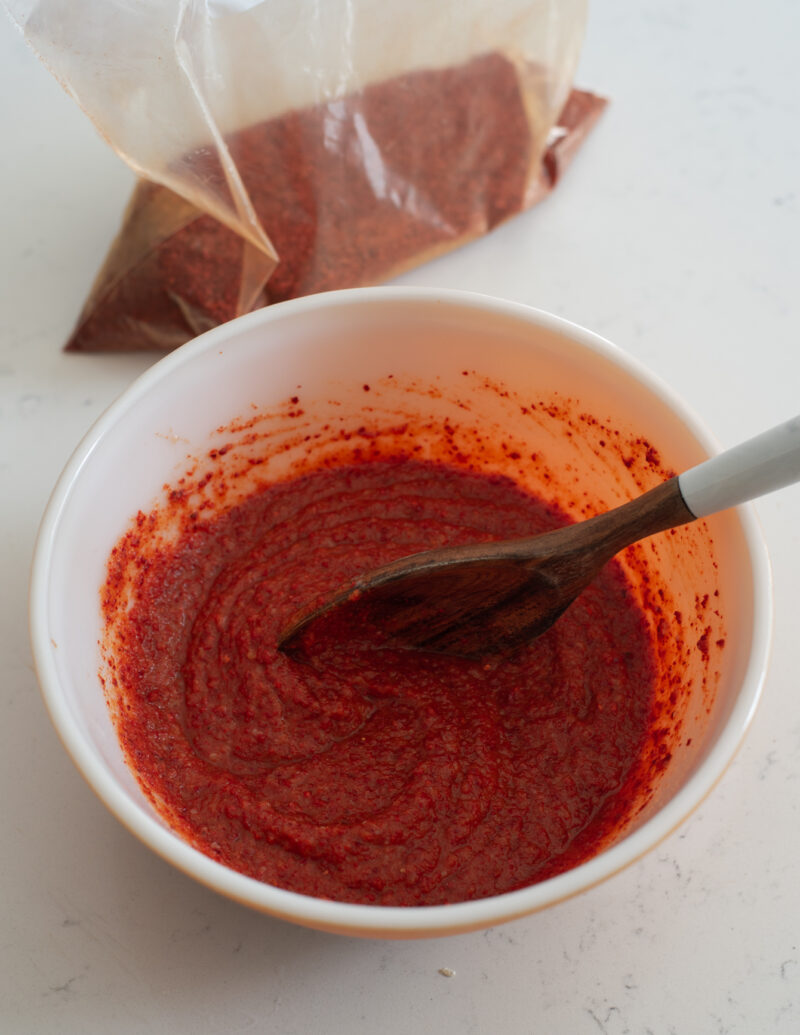
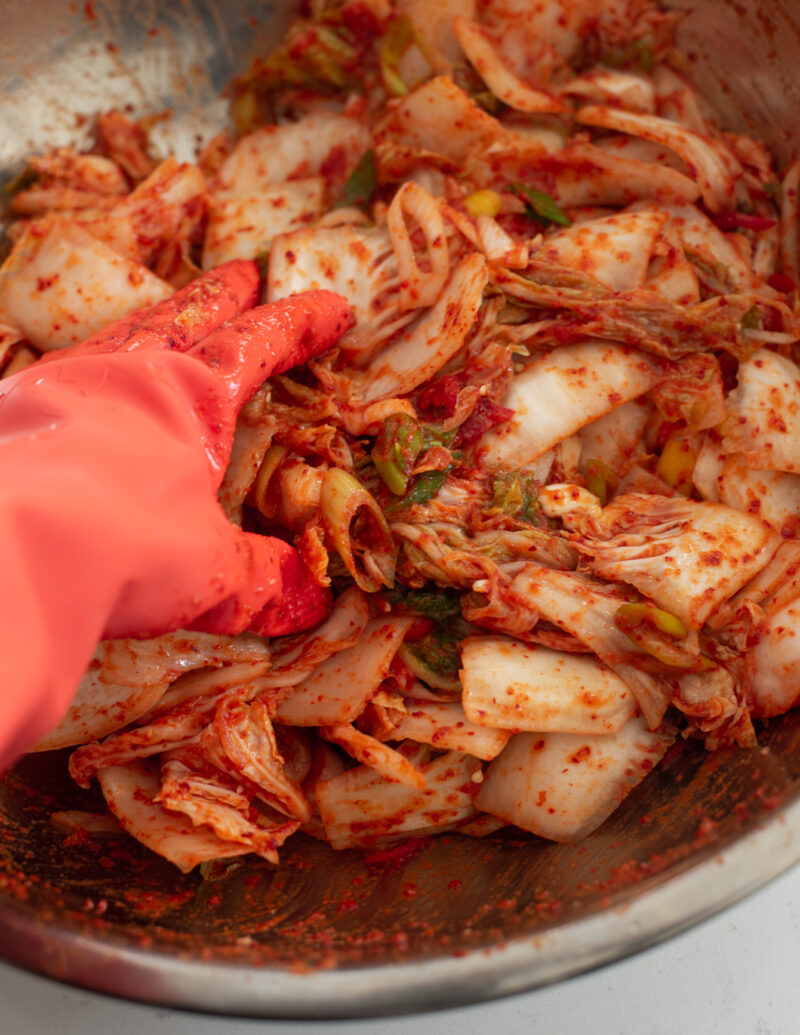
Mix and Season. Stir gochugaru into the blended base and let it sit briefly so the chili flakes bloom. Toss the drained cabbage with the seasoning paste and sliced green onions or leeks, coating the cabbage evenly.
Tip: I always wear gloves for this step—gochugaru stains and can irritate skin. The kimchi may taste slightly salty at first; it will mellow as it ferments.
If you’re looking for a fully plant-based version without fish sauce or salted shrimp, see my vegan kimchi, which follows the same fermentation principles using pantry-friendly substitutes.
How to Ferment and Store Kimchi at Home
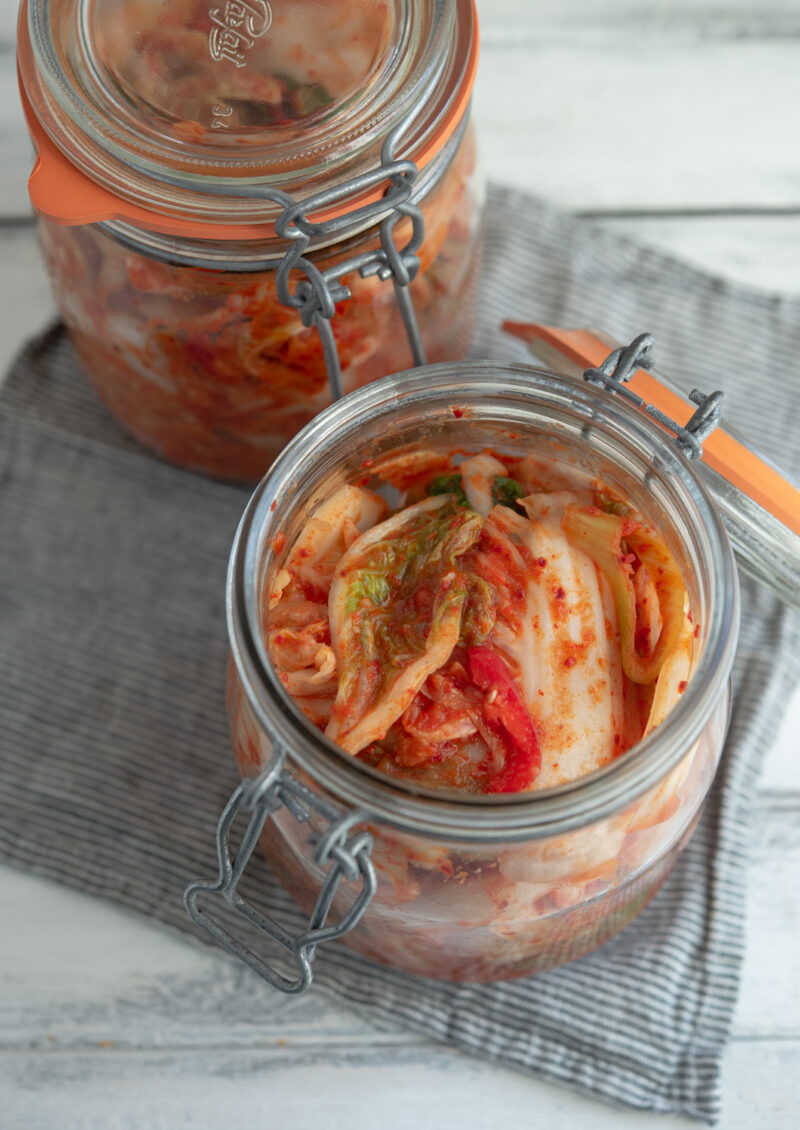
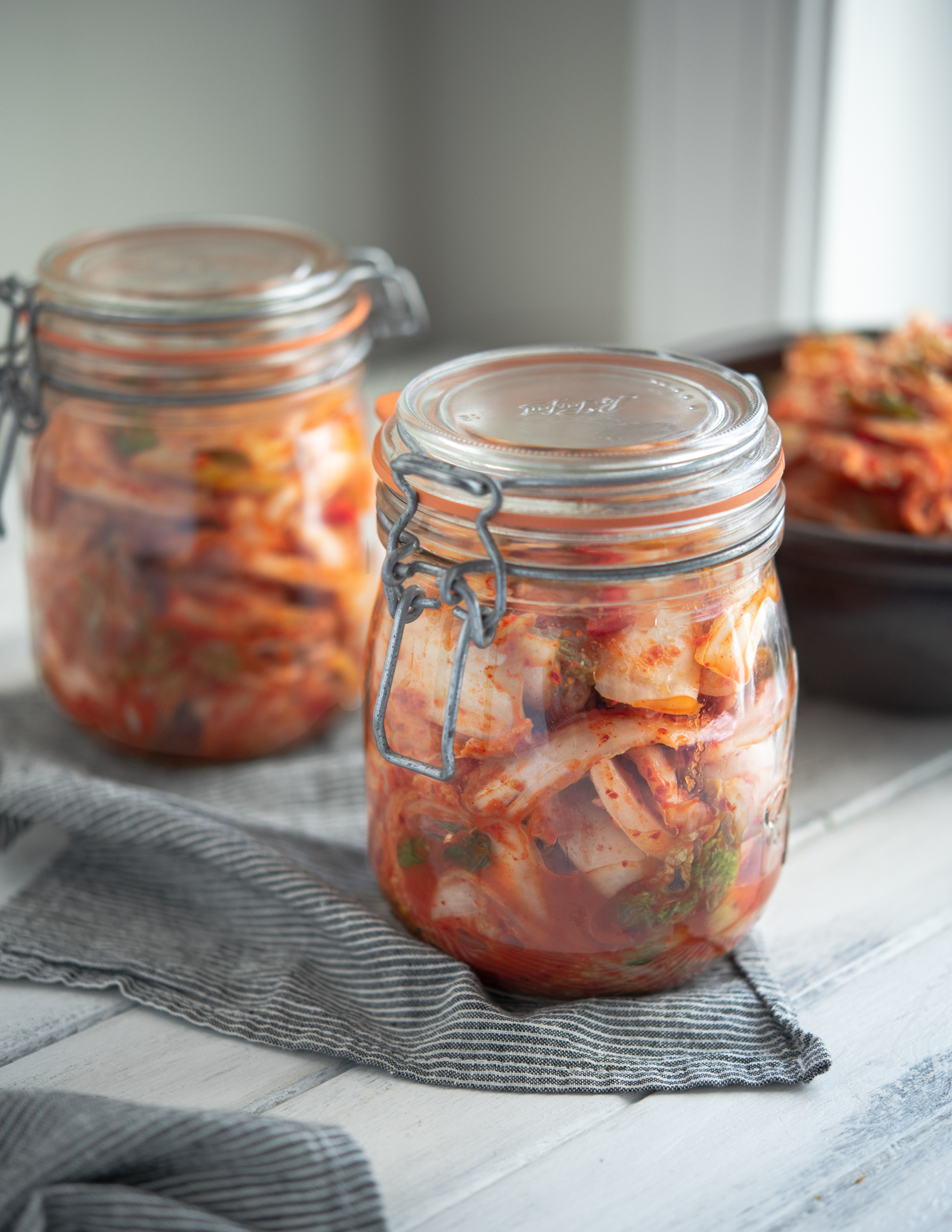
Once packed into jars, fermentation is what transforms the seasoning and cabbage into kimchi. I usually leave mak kimchi at room temperature for about one day—sometimes two if the kitchen is cool—until I see light bubbling and smell a gentle sourness. At that point, it goes into the fridge to slow fermentation.
Because the cabbage is chopped, mak kimchi ferments faster than whole-leaf kimchi. I like it best within the first few weeks, when it’s still crisp and balanced. As it ages, it becomes softer and tangier, which makes it better suited for cooking.
My go-to storage tips:
- Use airtight glass jars and leave headspace for expansion
- Press the kimchi down so it stays submerged in its juices
- Store it toward the back of the fridge where temperature is steady
As the kimchi becomes more sour over time, it’s especially good for cooking. Well-fermented kimchi works beautifully in dishes like kimchi jjigae, where deeper flavor is a plus.
If you want a same-day option without fermentation, make my geotjeori (fresh kimchi salad) and serve it right away.
For other styles and variations, browse my Korean kimchi recipes collection.
Love this recipe? Rate it and share your experience in the comments below! On Instagram? Tag me to showcase your creation. For more delicious recipes, subscribe to our newsletter!
Everyday Napa Cabbage Kimchi
Ingredients
- 3 lb (1.3 kg) napa cabbage, about 1 medium head
- 2/3 cup (200 g) Korean coarse sea salt
- 1 bunch green onion, sliced
- 2-3 fresh red chili (optional), sliced
For kimchi paste
- 1/2 large onion, diced
- 7-8 cloves garlic
- 1 inch (2.5 cm) ginger, peeled and diced
- 1/2 large sweet apple, seeded and diced
- 2/3 cup (60 g) Korean chili flakes (gochugaru)
- 1 tbsp (12 g) sugar
- 4 tbsp (60 ml) Korean anchovy sauce
- 1 tbsp (15 ml) Korean salted shrimp
- 3 tbsp (45 g) cooked white rice
- 1/2 cup (120 ml) sea kelp stock , or water (See note)
Equipment
- glass food storage jars 1 gallon (3.5 liter) airtight container
Instructions
To salt brine the cabbage
- Cut a 3-inch slit through the white stem part of cabbage. Open up the cabbage from the white stem part using your hand. It should open up easily. Cut additional slits on each cabbage half on the stem and open up again. By doing so, you are quartering the cabbage the Korean traditional way. Rinse the cabbage quarters once to wet them.
- Dice cabbage quarters into large chunks. For the large outer leaves, slice them in half lengthwise first, then dice into chunks.
- In a large bowl, put in a small layer of cabbage chunks and sprinkle about 2-3 tablespoons of coarse sea salt over the cabbage. Repeat the process several times, creating layers of cabbage chunks and salt.
- Let the cabbage soak for 1-2 hours, turning them upside down a couple of times during the soaking. When you bend the white stem part of cabbage, if it bends with a gentle pressure, the brine step is completed. Rinse the cabbage 3 times in water. Drain the cabbage in a colander, pressing down gently to remove excess water.
To make kimchi paste
- Combine onion, garlic, ginger, salted shrimps, fish sauce, cooked rice (or other choice of starch), and fruit in a blender. Pour in sea kelp stock (or water) to allow the blade to mix the ingredients. (If using fruit nectar, you don't need to add stock.) Process everything until smooth.
- Pour the puree in a large mixing bowl. Add Korean chili flakes, and mix well. Taste and adjust the seasoning of paste for your liking. Let the paste rest for 5 minutes, so the chili flakes will get re-hydrated.
To assemble kimchi
- Put the drained cabbage in a large mixing bowl. Add leek (or green onion), fresh chili (if using), and kimchi paste to the cabbage.
- Mix well to coat the cabbage with the seasoning paste. (Wear kitchen rubber gloves to protect your hands from getting stained or smelly.) Taste your kimchi! If your kimchi tastes saltier than you would hope for, don't worry! Freshly made kimchi usually taste much saltier, but the saltiness will subdue as it ferments.
To ferment and store kimchi
- Pack kimchi tightly into a clean glass jar, leaving 1 inch of headspace. Seal with a lid and let sit at room temperature (60–75°F / 15–24°C) for 1–2 days until light bubbling appears. Transfer to refrigerator and let ferment 4–5 days before serving. Best within 1–2 months.

I am looking forward to making your kimchi recipe as soon as I can get all the ingredients. Instead of the rice, can I use a cooked yellow skin potato (the kind you boil)? If yes, how much do you suggest I use? Thanks!
Yes, you can use a cooked yellow potato (skined) instead of rice. Just boil the potato until fully tender and use the same amount as the rice listed in the recipe. Hope your kimchi turns out great!
Hi Holly! Thank you for sharing your kimchi recipe. It is my favorite! I make it every few months. I especially love the specific brand of gochugaru you linked in the recipe; however, Amazon has stopped selling it 🙁 I’m sad because I really liked it. Do you have any other recommendations for specific brands of gochugaru that are 100% made in Korea? I’ve tried looking on Amazon, but it is hard to find.
Give this brand a try this time (https://amzn.to/4jBGDKk). I hope it gives you the same great results as before! I’m so happy to hear you’re enjoying my kimchi recipe. Thank you! 😊
I have an autoimmune disease (Sjogren’s) and cannot eat hot spicy food. I should eat Kimchi every day. I have bought Kimchi
at the grocery store but it is too spicy hot for me to eat— it breaks me out. Do you have a suggestion for me to make a fermented but mild Kimchi?
Try white kimchi, which doesn’t include any chili flakes. I don’t have the recipe for it yet, but I’m planning to post it soon.
I am Korean and live in a country where I cannot buy kimchi. My mother has tried a ton of kimchi recipes and sent me this one to try because it is her favorite. I completely get why it is! This recipe is amazing! Very authentic and so so yummy.
This is my favourite kimchi recipe, I have tried others but they don’t taste as good!!
So happy to hear that. Thank you very much!
A fantastic recipe and directions. really made a beginner feel capable. Thank you
Can you use something like dashi as an alternative to the sea kelp stock?
Thanks!
I don’t recommend dashi for making kimchi. Dashi uses smoked fish such as Katsuobushi and it can leave the smoky flavor to the kimchi.
I have never made kimchi before and am planning a batch in the next few days as Xmas gifts for family. Your website is so informative (explaining the why of the steps and not just the how, which I absolutely need) and makes it look so easy, I am looking forward to getting started!
Hi!
Planning to make the Kimchi recipe soon. The recipe says “12 servings”, but how much is that in weight/volume? I’d like to make enough to fill six 16oz jars to give to friends. Would this recipe make enough to do that? Thanks!
This recipe uses one medium-sized cabbage and yields approximately 6 cups (1.5 liters, 50 oz). The total volume will fill three 16 oz jars. To fill six jars, you’ll need to double the recipe. Hope this helps
I have a question that will probably make people cringe. I like the flavor of kimchi, but I can’t stand the texture. The specific crunch of raw cabbage and onion is something I can’t tolerate. I don’t want to cook kimchi and destroy the probiotic benefits, so is it possible to cook the cabbage and onion before starting this recipe? Maybe steaming them until just softened then salting the cabbage? I appreciate the help.
I recommend you to also explore my quick kimchi recipe at https://www.beyondkimchee.com/30-minute-kimchi/.
In that recipe, you can slightly blanch the cabbage before adding the seasoning paste. While it may not provide the exact texture you desire, it’s worth trying for a different approach.
Hello!
I am a first-timer… I was using green cabbage instead of Napa because I was told that I could substitute it, but it wasn’t wilting as it should. So I left it in longer, and it finally started to wilt after it stayed in the brine overnight, but no matter how many times I rinse it, the cabbage tastes pretty salty. Is this normal? Or should I toss it and try again? Should I try blanching the cabbage first? Thanks for any help you have for me!
Sincerely,
-D
Hi David
What type of salt and how much did you use? Even if you let the green cabbage sit a little longer, it shouldn’t be too salty if you uses coarse sea salt (people often mistakenly uses table salt, and that can case the extreme saltiness. If using table salt, you have to use 1/3 of amount).
Also the green cabbage doesn’t have to be completely wilted during the salting process, just a little lifeless stage works fine.
Often the saltiness subsides as kimchi ferments, so let your kimchi ferments a few more days and see how it tastes. If you have some chunks of raw radish, stick a few pieces with your kimchi. They will absorb the saltiness and even out the taste.
I’m concerned my mixture is mushy. I used Korean gochujang paste rather than dried chilli flakes. I also added too much apple and rice. Should this be okay or should I tip it out and start again?
Hi Jeanette
Unfortunately, using gochujang paste to make kimchi is not recommended. As you mentioned, it can result in a mushy and overly pasty texture. I highly recommend using Korean chili flakes (gochugaru) instead, if possible, and giving it another try.
Still in the process of making this (got a case of free napa cabbage so I also made a bunch of sauerkraut), so I can speak to the final result but the smell and taste of the chili paste is making me so happy. Totally happy letting the smell fill my house while the cabbage salts! The only changes I made were red chili flakes instead of Korean because the store didn’t have them, and fish sauce instead of anchovy paste because it was what I had on hand. I just happened to have the salted shrimp of all things I got from a specialty store leftover from another recipe. 😂 Going to try it with the anchovy paste next time to see if there is a noticeable difference.
Hi Selia
I’m glad you’re trying this kimchi recipe, but I’m a bit concerned about using chili flakes instead of Korean gochugaru. Regular chili flakes can make it very spicy. I hope it’s not too hot for you. Adding salted shrimp to kimchi is great, and I suggest mixing it with fish sauce next time. Fish sauce is a substitute for Korean anchovy sauce, but use a little less. Hope this helps. Thanks for the comment!
My kimchi is kind of dry, like there isn’t enough brine, what can I do to make it juicier?
When you are finished assembling kimchi and put it in a container, try adding more water (or kimchi stock) to the mixing bowl you assembled kimchi in. Swirl the water around the bowl to collect all the kimchi paste residue and pour it back to the kimchi container. The more water you add, the more kimchi brine you will get. Some people don’t want too much brine, so it’s a personal preference. Hope this helps. Thanks!
Hi i was wondering can i use fish sauce instead of anchovy sauce? And i dont like shrimp so id have to buy it just gor this recipe. Is it 100% necessary or can i substitite it for something else? This will be my 2nd attemptbat kimchi hopefully it will work the last attempt went mouldy.
Hi Becky
You can use fish sauce instead of anchovy sauce. Also, you can skip the salted shrimps and that’s perfectly fine. And you don’t need to increase the amount of fish sauce to make up for the missing salted shrimps since fish sauce is usually saltier than Korean anchovy sauce. Hope this helps.
This was the most informative and easy to understand start to finish Kimchi recipe I have found and I really appreciated the fermenting tips as that was what I think was my missing piece of the puzzle. I will report back on my results.
Hi Michael
I am glad this post is helpful to you. I hope your kimchi making will be successful so that you can enjoy the outcome. Thanks for the comment.
What about using jarred dried sardines packed in oil in place of the shrimp/fish sauce?
Hi Leslie
I wouldn’t recommend the jarrd fish in oil. Fish sauce itself is fermented and has component to bring good bacterias to the kimchi.
If you can’t find fish or shrimp sauce, you can omit it. It will still ferment, but with more subtle in taste.
My ex MIL used to make Kim-Chee when she was alive. Always too spicy for me. Can you use any veggies you want or does it need to be the ones you’ve mentioned. I was thinking maybe, bell pepper, onion, cabbage and something else. No anchovy flavors. Thanks for the recipes
Hi Karen
You can use either napa or regular green cabbage with this recipe. Bell pepper, carrot, and radish are good vegetable to add. If you are not fond of anchovy sauce, there’s another fish sauce called “Kkanari (까나리)”. It has a milder taste than anchovy. If you prefer not to use any fish sauce at all, then try my vegan kimchi recipe for the idea.
You can always adjust the amount of chili flakes for your preference. You can use less than what the recipe asks for, then you’ll get a milder kimchi, but pale in color. Also, some chili flakes are spicier than the other. I recommend avoiding the extra spicy chili flakes, so check the label.
What a fantastic tutorial. It’s inspired me to try making kimchi at home. I’ve always enjoyed it but thought it took weeks or months to make so it never occurred to me to attempt it. But this sounds completely do-able!
My 4 year old daughter and I just made this recipe to a tee except I forgot the leeks and green onions. She went from being a food wimp to being a daring taster in the course of a day. Ended up with extra sauce. What’s the funnest or strangest thing to do with it?
Thank you so much Holly for a delicious and easy kimchi recipe!! Your great sense of humor and eloquent writing style is highly appreciated as well. ^_^
Dear Holly.
I am a fulltime housewife and a fan of korean cuisine. As korean cuisine especially this side dish became more popular at my country I wish to use your recipe to produce homemade kimchi for selling purpose. I hope you dont mind. Thank you very much.
Thanks for letting me know. If you are selling for a small volume amount, just a few bottles at a time, it won’t bother me that much. However, if this is more of mass produce business, that would be a different story. Please let me know what your plan is.
Thanks for your feedback Holly. That’s the reason why I reach you in the first place. To seek for you permission. As far as your concern couple of bottles would do. And Im not getting any ideas to make it big. With 3 kiddos that I have sure timing would be an issues. But if you have doubted in me please let me know. I believe honest will lead you to success. Thanks and really appreciate your feedback.
Fyi, I’ve been making kimchi using your recipe couple of times. My husband was once study at Korea for 8 years. While he yearns for kimchi it was your recipe I digged out. And the idea to turn it to bussiness just popped up recently. Once again thank you Holly!
Hello Holly,
I’ve been wanting to make kimchee for quite some time and when I found your website, I knew I found the perfect recipe to try it for the first time. So over the last weeks I’ve been collecting all ingredients and today was the big kimchee-making day! I’ve made the paste (which tastes really good already!) and I soaked the cabbage in the sink. But sadly, something seems to have gone very wrong. I have rinsed the cabbage about five times, almost piece by piece and I also let it soak in regular water, but it still tastes TERRIBLY SALTY. I’ve used coarse sea salt (since I could not find Korean salt here in the Netherlands) 1 + 1/2 cup of it and about 2,5 liters (10 cups) of water (a little bit more than you stated, since I had a lot of cabbage). I also tried to dissolve the salt in the water, maybe that is what I did wrong? There were almost no salt kernels left, because it was all dissolved in the water.
For now, I put the filling in the fridge to keep it well, and the cabbage is still soaking in it’s bath of regular water, because I’m still hoping it will lose some of its saltiness. It would be really sad to have to throw it away…
So dear Holly, even if this post is already a few years old, I’m hoping you want to help me and my sad, salty cabbage! Do you think there is a way to save it (the saltiness is extreme though, I cannot taste cabbage, only salt)? Or can you tell me what I might have done wrong? I still have a great kimchee filling waiting in the fridge, so I’ll definitely try again using new cabbages and, of course, a different baptizing technique.
Thank you so much in advance!
Emma
Emma
First of all, I admire your willingness trying making kimchi from scratch. It is difficult job to a beginner but it doesn’t mean that you can’t succeed. Your kimchi would be fine.
To help you with salting the cabbage in a salt brine, the ratio of water:salt as 10:1 or 10:1.5 isn’t too bad. Unless you soaked the cabbage way too long, it should be fine. The cabbage will taste very salty even without the seasoning at first. The saltiness will ease as time goes. So wait until it gets fermented for a few days. Taste it to see if it is way to salty for you. If it is still very salty to eat, then put a few slices of radish (or turnip) in between the cabbage. That will help.
DOn’t soak the cabbage in the regular water too long. Otherwise it will come alive again. LOL!
Hope this helps. Please let me know how it goes.
Hey Holly,
Thank you so much for the reply! It’s great having a Korean person helping me out with making kimchi 😉
I wanted to let you know how it went. Well… The kimchi turned out amazing! In fact, me and my boyfriend have emptied the pot already and we’ll have to make a new batch next week. I cooked several meals with it, but most of it was eaten straight out of the pot. It was truly amazing!
After a while soaking in regular water, the cabbage had become less salty so I rubbed in the filling and put everything in a big pot. On the fourth day of fermenting, we ate our way through the first quarter of that haha, straight from the pot!
For the next batch, I’ll try soaking the cabbage in less salty water (1:10 ratio) and I’ll reduce the soaking time a bit (I’m not sure, but I might have soaked the cabbage longer than you recommended). Also, when we started eating the kimchi, it was very spicy for us (here in the Netherlands, when something says ‘spicy’, it’s probably not very spicy), but now that the pot is empty we seem to have gotten quite used to it already. I may reduce the amount of chili flakes a little, but I definitely won’t split it in half like I thought I would 10 days ago haha!
Thanks so much again for this recipe and for the help. We’ll be making and eating a lot of kimchi in the future 🙂
Oh! I had another question! The salted fermented shrimp that you use? Is there any other way I can use it? Any other Korean dishes or improvisations? Thank you!
Salted Shrimps can be used in many dishes that need a little bit of pungent flavor. You can use for pretty much any Kimchi recipes, or in clear soups to season. You can also use a little amount to make Korean style rolled egg side dish or steamed egg pudding (https://www.beyondkimchee.com/steamed-egg-pudding/).
Hope this helps.
thank you again!
I just made this kimchi and it is AMAZING! I wanted to find a simple kimchi recipe that didn’t include radishes (since I didnt buy any! OPPS). I also didnt have the shrimp paste or the anchovy sauce that you speak of.. I used Vietnamese fish sauce instead, which I’ve seen my Korean friend’s mom using in her kimchi and it turned out fine! I really love the instructions you gave and appreciate the time it took you to post this recipe up for people like me who are addicted to Korean food! Also! My friend’s mom made her’s with cheap beer. Do you know why that is? If i wanted to make it like that, when would I add the beer and how much of it? Would it be in place of the fish broth? I thought her kimchi was the BEST kimchi I’ve ever tasted. I also only soaked one head of Chinese lettuce in a 1/4 cup of salt and it was fine. I’m sure it’ll taste even more amazing once I get the shrimp paste! Thank you so much and I love the kimchi!
Hi Thu
I never heard of adding beer in Kimchi. Beer is often used to cook with pork belly or make stock with. Maybe she used to make a stock to add in kimchi filling?
Anyhow, glad to hear that the kimchi turned out great. Thanks for your kind comment on my recipe. Hope you can continue your journey in Korean cooking.