

Kimbap (Korean Seaweed Rice Rolls)
Make fresh Korean kimbap at home with warm rice, colorful vegetables, and your choice of protein—all wrapped in roasted seaweed. This easy, customizable rice roll comes together in about an hour and works for meal prep, picnics, lunchboxes, or a light, wholesome meal. The step-by-step guide helps every roll come out tight, neat, and full of personality.
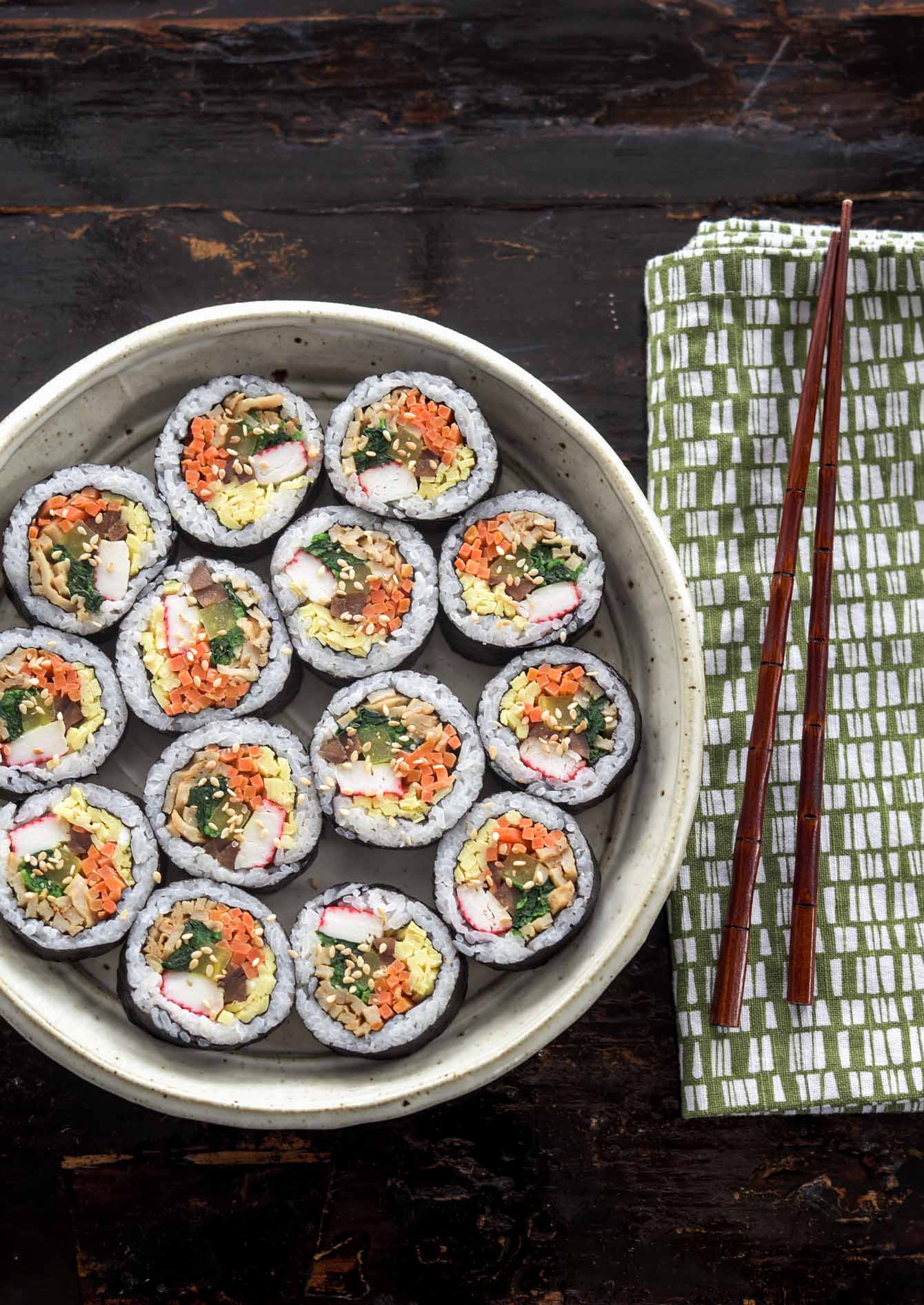
When I was little, my mom would pack kimbap (김밥, gimbap) for every school picnic. She sliced and arranged them in a lunchbox so that, when you lifted the lid, you saw a beautiful array of neatly sliced kimbap.
Her kimbap had a flavor all its own, and my friends always asked for a share. Her secret seasoning was a splash of homemade plum extract, which gave the rice a light, tangy sweetness that made her kimbap unforgettable. One year, her kimbap even won first place at my school picnic, and that little trick has been in my kitchen ever since.
Get new recipes via email:
Every Korean family makes kimbap a little differently, and that’s part of the joy. Some keep it simple with egg, carrots, spinach, burdock root and danmuji; others add a bit of grilled meat like beef bulgogi or spicy pork bulgogi. My version stays true to the classic style but leans on plum extract for a lighter, clean flavor.
Homemade kimbap is warm, fragrant, and tightly rolled — nothing like the dry, refrigerated ones from the store. Once you slice into a fresh roll, you’ll see why this is still one of the most loved Korean home-cooked meals.
What Makes My Kimbap Method Different
After rolling kimbap more times than I can count, I’ve learned that a few small choices can change everything:
- Plum extract–seasoned rice: I use maesil-cheong (either homemade or storebought) instead of sesame oil for a lighter, cleaner seasoning. It’s the way my mom made it, and it gives the rice a balanced flavor without feeling heavy.
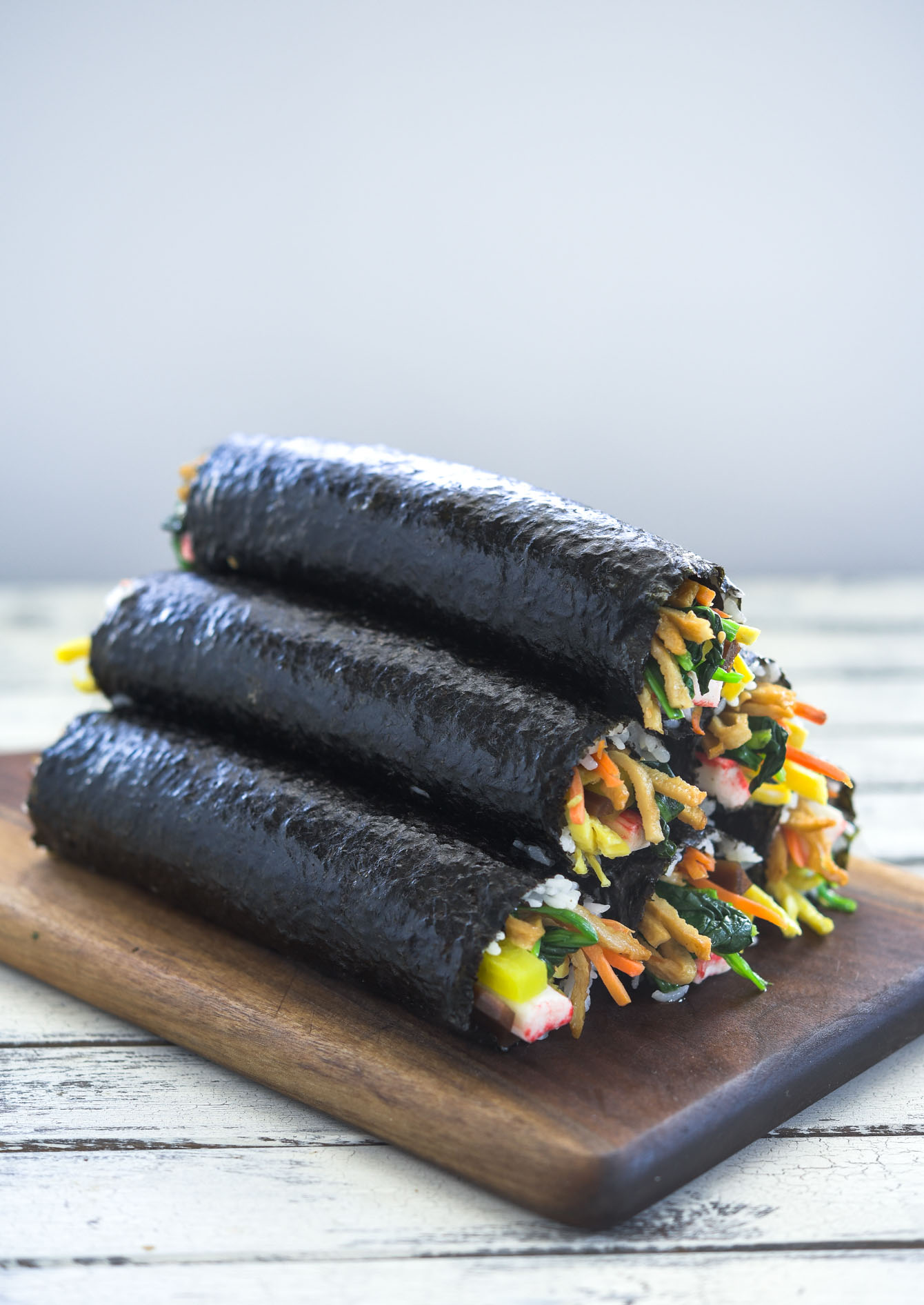
- The “half sheet gim” trick: A thin half sheet of seaweed over the rice creates a clean border and keeps moisture from spinach and danmuji from soaking into the rice, so the slices stay neat.
- Prep each filling separately: A very Korean home-cooking detail: carrots sautéed alone, spinach seasoned on its own, fish cake glazed separately. Each bite ends up layered instead of flat.
- Warm (not hot) rice: Hot rice weakens the seaweed; cold rice won’t stick. Warm rice keeps the texture tight and rollable.
- An oiled knife for clean slices: Instead of sesame oil, I wipe the blade with neutral oil for tidy cuts that don’t overpower the fillings.
My Essential Ingredients for Kimbap
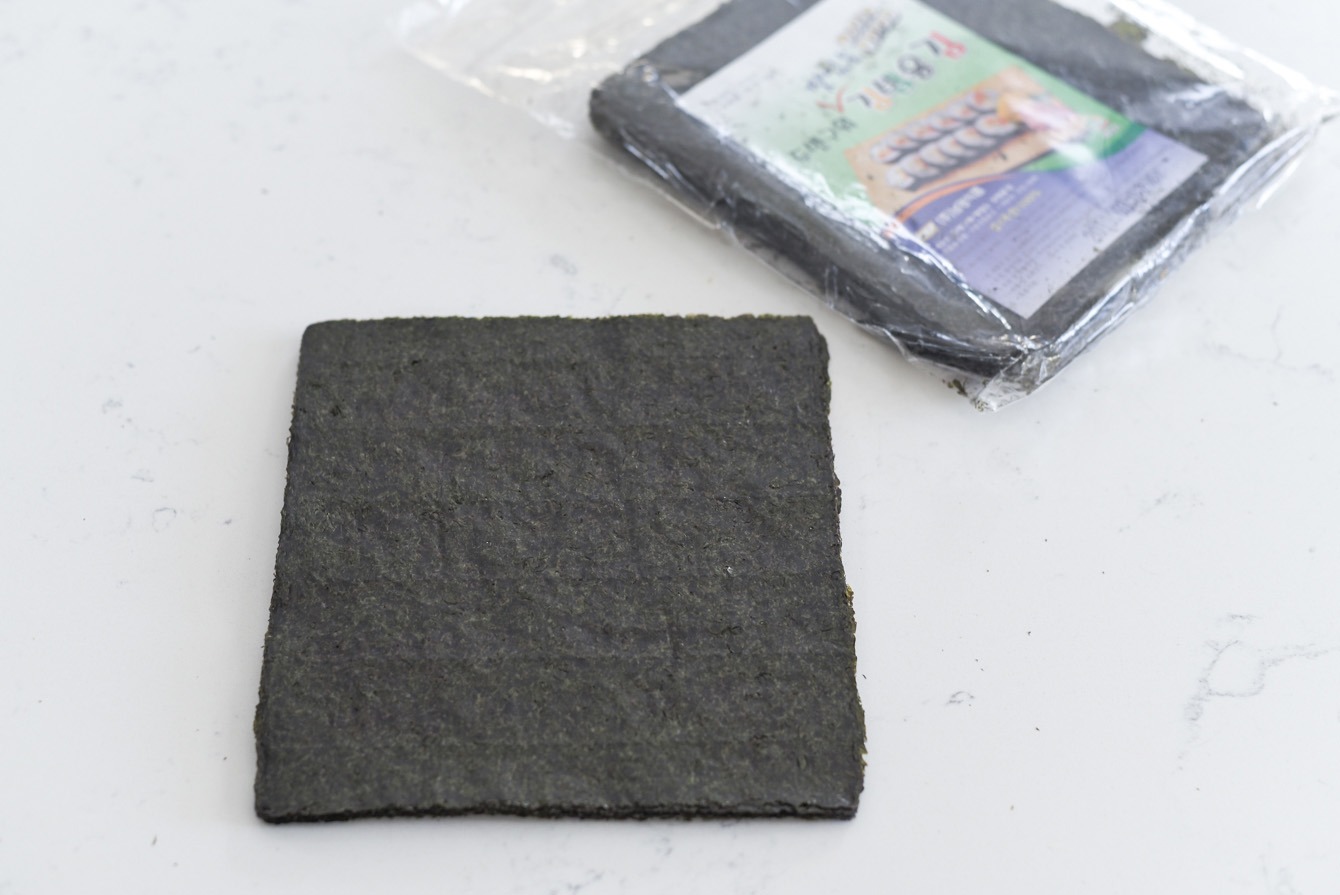
Roasted Gim (Seaweed Sheets): Use toasted Korean gim — crisp, deep green, and slightly shiny. Dull sheets or ones with red oxidation spots won’t roll well. I freeze extra packs to keep them fresh.
Rice: Always use freshly cooked short-grain rice so it clings together. I season mine with Korean plum extract (maesil-cheong) and a little salt for a clean, bright flavor, though you can absolutely use sesame oil and salt if you prefer the classic nutty style.
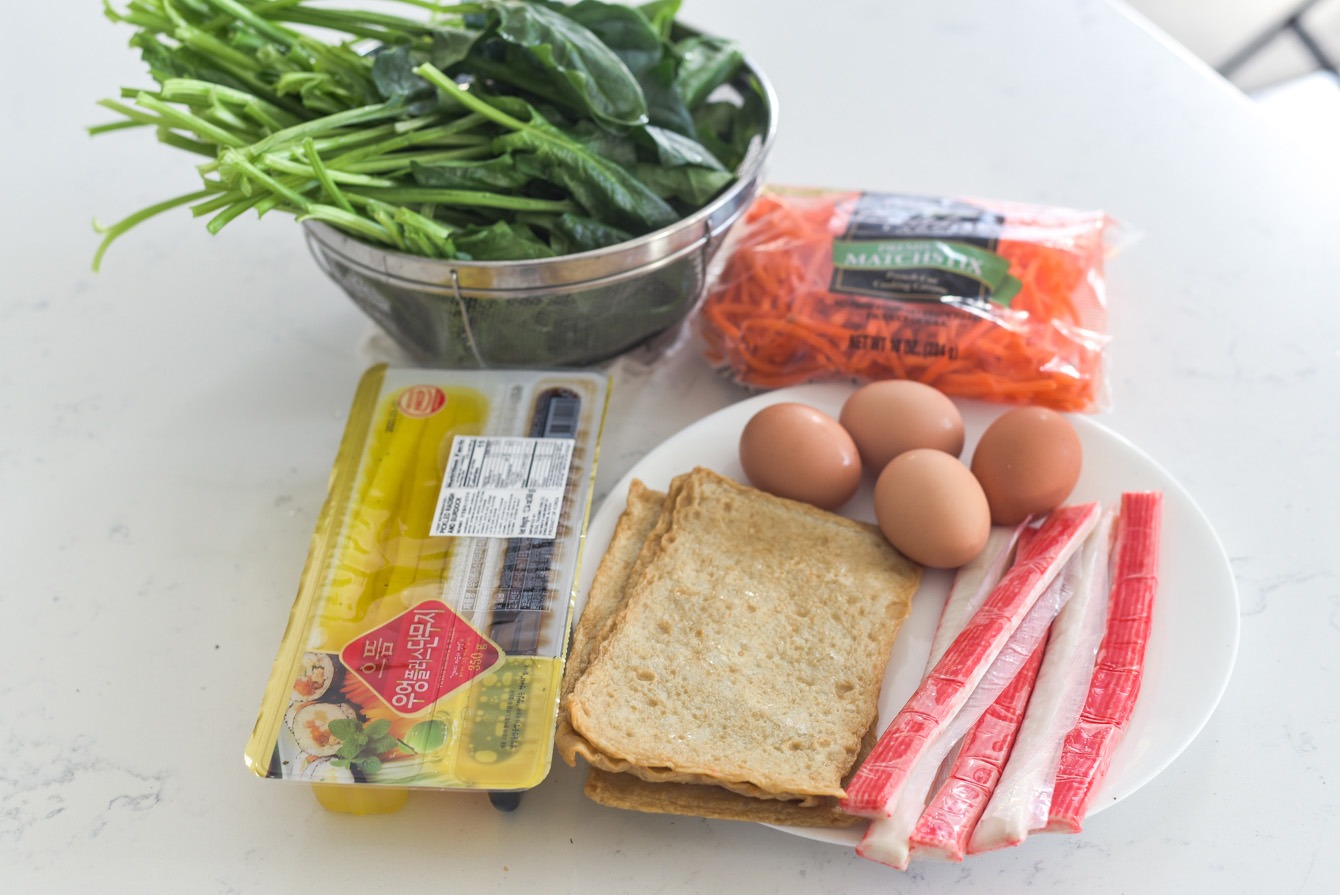
Vegetable Fillings: Spinach, carrots, and danmuji (pickled radish) are the essentials. Each one gets prepped separately (a very Korean home-kitchen thing).
Protein Options: Egg strips, imitation crab, or fish cake are classic. Grilled meats are great variations — if you love tuna, try my tuna kimbap with cucumber.
Optional Extras: Lightly seasoned squid (ojingeochae muchim), my personal favorite, and stir-fried anchovies (myulchi bokkeum) are two fillings many Korean home cooks tuck into their rolls. Feel free to add whatever you love; kimbap is wonderfully flexible.
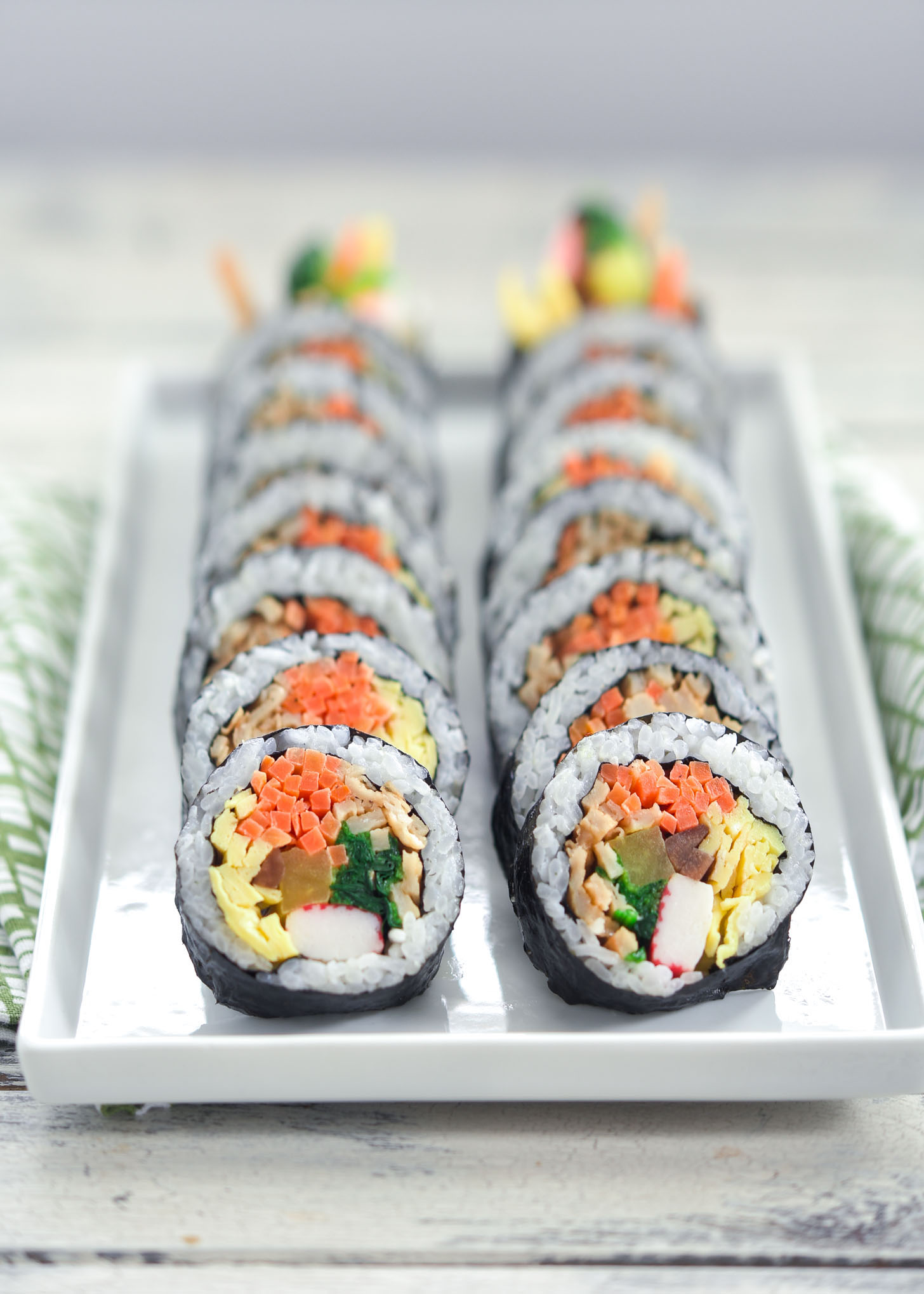
How to Make Kimbap (Step-by-Step)
Rolling kimbap isn’t difficult once you see it in action. Here’s my process with the small details that make the difference between a loose roll and a neat, tightly packed one.
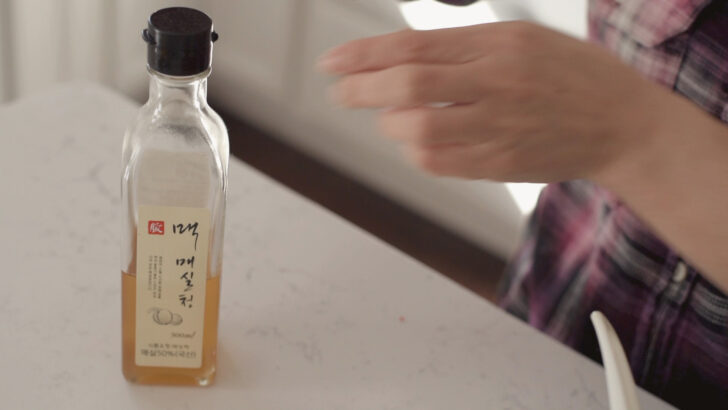
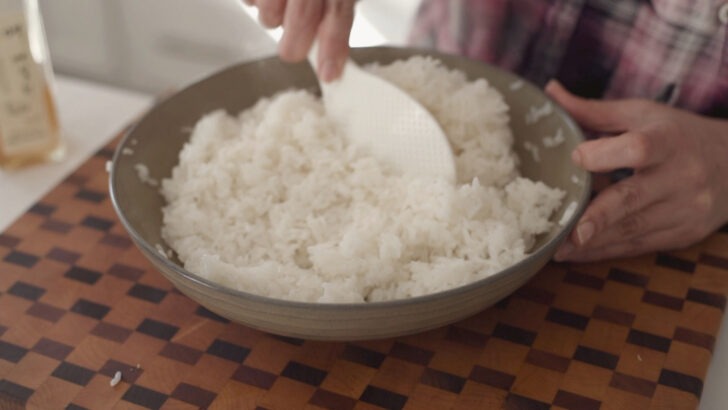
Rice first. Warm rice holds together best when rolling, so I let it cool just a little before seasoning. I mix in maesil-cheong and salt—simple and clean, and it keeps the rice pleasantly balanced.
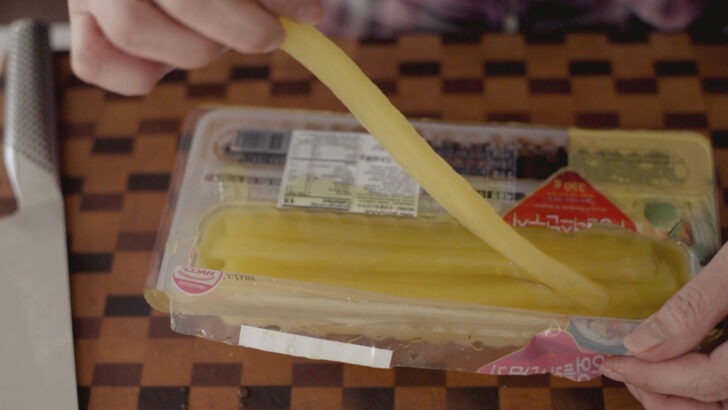
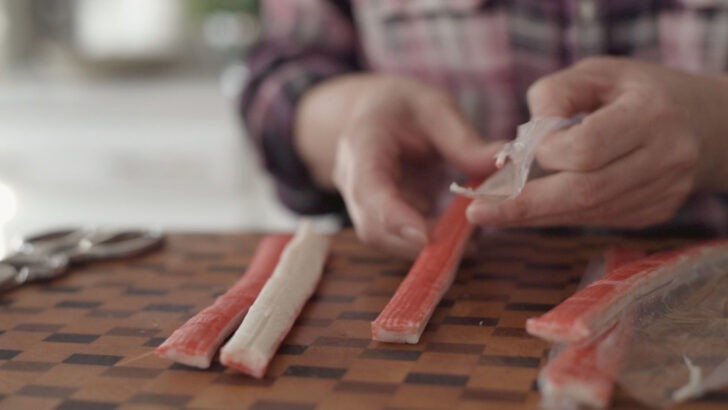
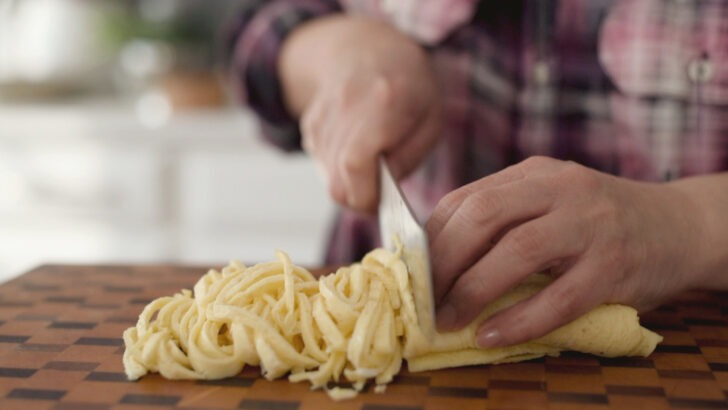

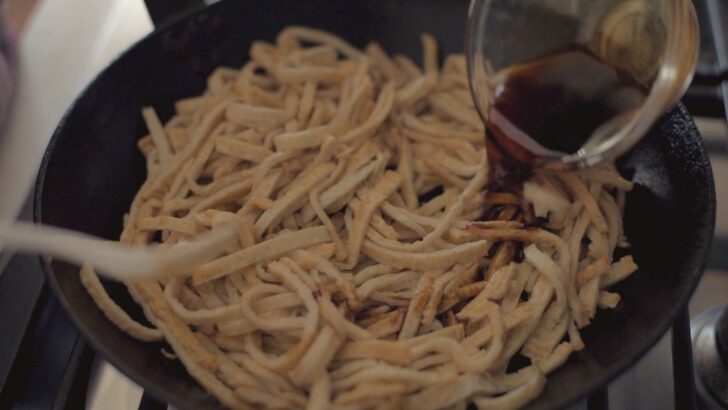
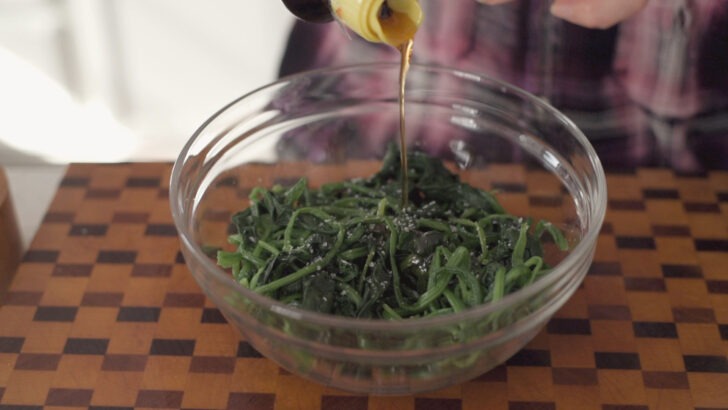
Prepare fillings. Korean home cooks prep each component separately so every bite has its own flavor.
- Carrots get a quick sauté.
- Spinach is blanched and lightly seasoned.
- Fish cake gets a simple soy glaze.
- Eggs are cooked into thin sheets and sliced.
- Danmuji is used as-is.
Once everything is seasoned and cooled, assembly becomes easy and fast.
How to Roll Kimbap
Rolling may take a little practice, but once you get the rhythm, it’s surprisingly fun! It’s easier to use a bamboo mat when starting out, though experts can roll without one.
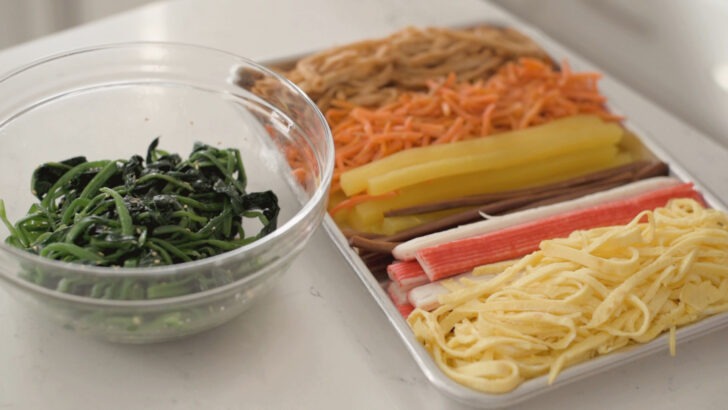
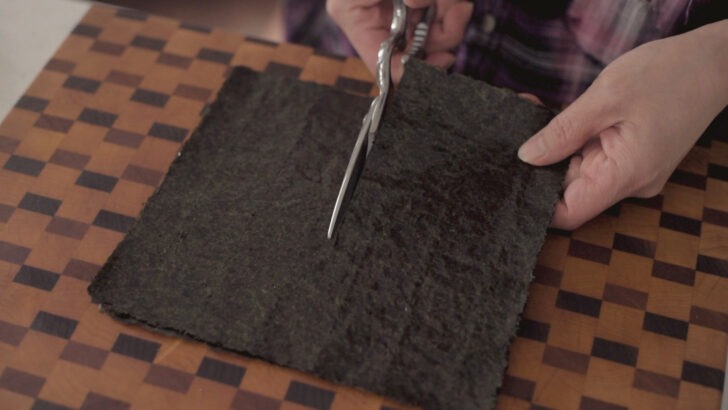
Set Up Your Rolling Station. Cut three sheets of roasted gim in half—you’ll use full sheets for rolling and half sheets as a moisture-shielding layer. Lay out all fillings within reach. A tidy setup makes the rolling smoother and much more enjoyable.
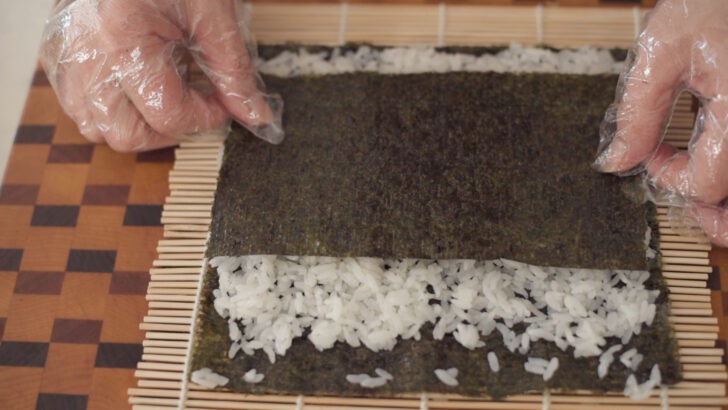
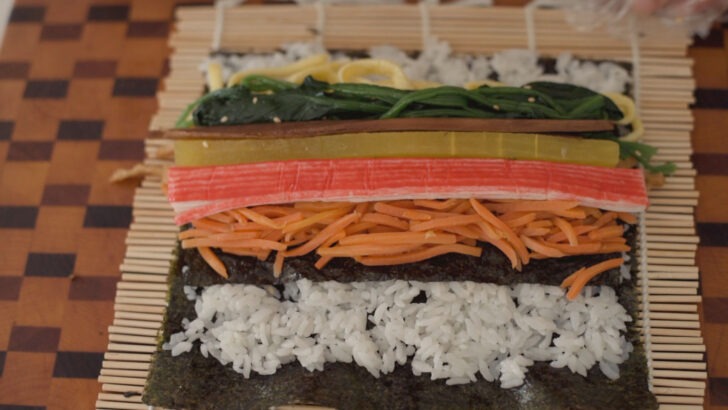
Spread the Rice & Add Fillings. Lay a full sheet of gim (shiny side down) on your bamboo mat and spread a thin layer of warm rice over it, leaving a small border at the top.
Place a half sheet of gim over the rice. This helps keep moisture from ingredients like danmuji and spinach from softening the roll and creates cleaner slices. Arrange your fillings in a neat horizontal line so everything stays centered when you roll.
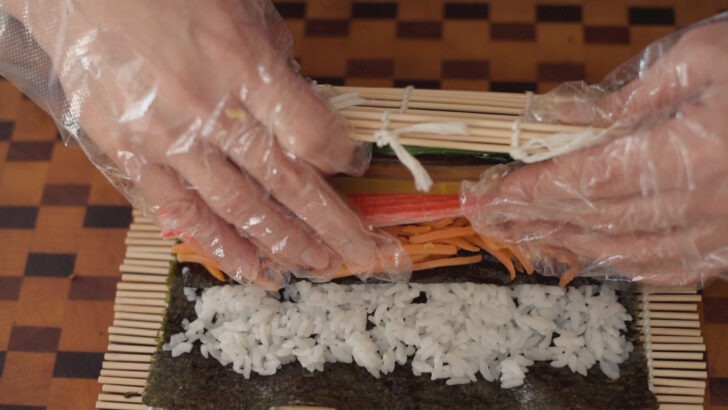
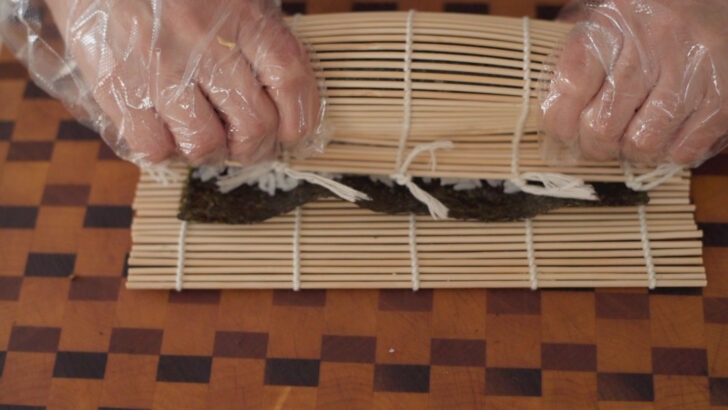
Roll the Kimbap. Lift the edge of the mat closest to you and roll forward, tucking the fillings in as you go. Apply gentle, even pressure to tighten the roll without crushing the rice. Finish the roll and give it a final squeeze with the mat to secure the shape.
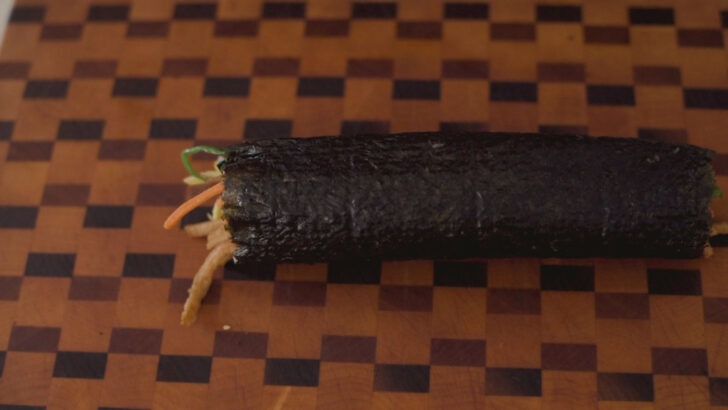
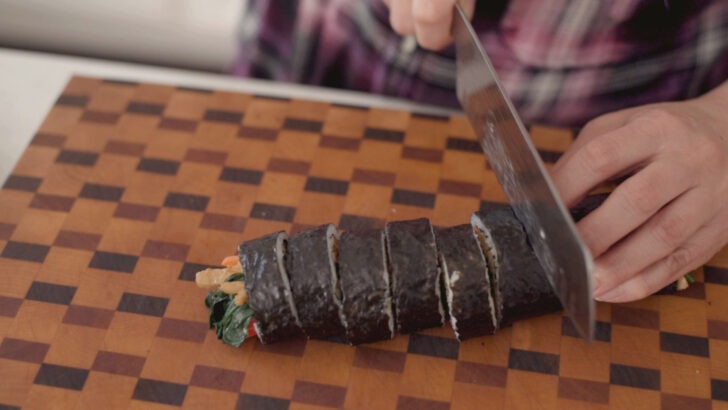
Slice Cleanly. Kimbap slices beautifully when the knife is sharp and lightly oiled. I wipe the blade with neutral oil between cuts to keep the seaweed from tearing. Cut into bite-sized pieces and arrange on a tray.
Storing and Serving Tips
Kimbap is always best the day it’s made, when the rice is soft and the seaweed is still crisp. If you need to pack it ahead, here’s what’s worked well for me:
- For lunchboxes: Wrap each roll in parchment or foil. It keeps the rice from drying and makes slicing easier later.
- For freezing: Wrap individual pieces tightly in plastic and freeze in a single layer. The texture changes slightly once thawed, but the flavor holds up and it makes a great quick snack.
- Optional finish: Some people brush the finished roll with sesame oil and sprinkle sesame seeds for sheen and aroma. I skip the oil for my kimbap because I prefer the cleaner flavor of the fillings, but it’s entirely personal preference.
- For serving: No Korean snack spread is complete without dipping your kimbap into a spicy sauce. Try pairing these rolls with my 25-minute tteokbokki for the ultimate street food experience.
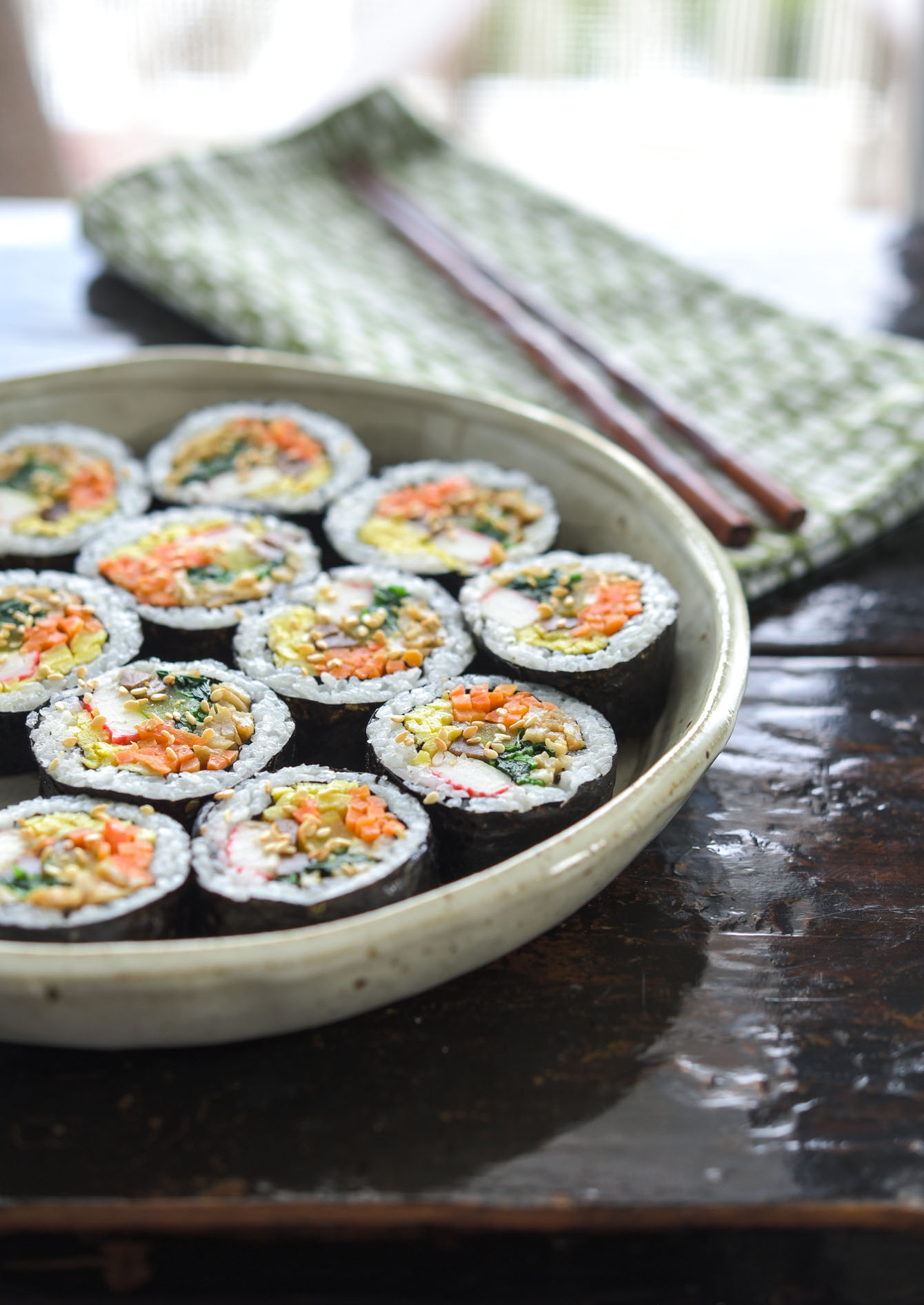
Love this recipe? Rate it and share your experience in the comments below! On Instagram? Tag me to showcase your creation. For more delicious recipes, subscribe to our newsletter!
Kimbap (Korean Seaweed Rice Rolls)
Recipe Video
Ingredients
For the rice
- 2 cups (480 ml, about 450 g) uncooked short grain white rice
- 2 1/2 cups (600 ml) water
- 2 tbsp (30 ml) Korean plum extract (maeshil cheong)
- 1/2 tsp salt
For the filling ingredients
- 6 strips pickled radish (danmuji), 1/2 inch thick, drained
- 6-12 strips braised burdock root (Oeong), drained
- 6 strips imitation crab meat
- 2 tbsp (30 ml) oil, divided
- 10 oz (283 g) package shredded carrot
- 2 tbsp (30 ml) water
- 4 eggs, beaten
For the fishcake
- 3 sheets flat fish cake, sliced thinly
- 1 tbsp (15 ml) soy sauce
- 1 tsp (4 g) sugar
- 1 tbsp (15 mk) sweet rice wine (mirim)
- 1 tbsp (15 ml) corn syrup
For the spinach
- 1 bunch (12 oz, 340 g) spinach
- 2 pinches salt
- 1 tsp (5 m) sesame oil
- dashes toasted sesame seeds
Equipment
Instructions
- For the rice: Rinse rice several times and drain. Soak rice in 2 1/2 cup water for 10 minutes. Cook rice until soft. Put hot rice in a large mixing bowl, add plum extract and salt; toss well. Cover rice with a kitchen towel and set aside to cool.
- For the egg: Beat eggs and cook in a skillet in 3 batches. Roll them up and slice thinly
- For the carrot: cook shredded carrot in a little oil over medium high heat with some salt. Add 2 tbsp of water to create a steam and cover with a lid. Cook for 2 minutes until crisp but tender.
- For the fishcake: slice fishcake sheets thinly and stir-fry in a little oil for 1 minute over medium high heat. Mix together soy sauce, sugar, and rice wine in a bowl, and add the mixture to the fishcake. Continue to stir-fry for another minute.
- For the spinach: blanch spinach in a pot of boiling water with some salt. Drain and rinse with cold water. Squeeze out the excess water. Place the spinach in a mixing bowl and season with salt, sesame oil, and sesame seeds. Toss well.
To assemble Kimbap
- Cut 3 sheets of seaweed in half and set aside.
- Place a full sheet of seaweed, shiny side down, longer side toward you, on a bamboo rolling mat. Spread about 1 cup of rice (1/6 amount) evenly on the seaweed leaving 1 inch of space at the end. Lay a half seaweed sheet in the middle of rice.
- Put filling ingredients on top of the half seaweed sheet in a contrasting color pattern.
- Lift the entire end of mat from your side with both hands, roll over to cover the fillings, tucking in the filling with your fingers. Put firm pressure on the roll and continue to roll again as you roll away the mat until it reaches to the end.
- Place the finished kimbap on a platter, seam side down, while you are making another. Cut kimbap into 1/2 inch thick slices with a sharp knife.
Notes
- If you want to season rice with sesame oil, toss rice with 1 tbsp sesame oil and 1/2 tsp salt.
Tried these tonight and they were delicious! The recipe was very easy to follow for my first time making my own kimbap. Will be adding to the dinner rotation. Thank you so much! :))
I’m so glad your first kimbap turned out well. It’s wonderful to hear it was easy to follow and earned a spot in your dinner rotation!n. Thank you!
Love the way you explained
Will do this now, January 31st, 2026. Thank you so much
Is there a cultural significance behind the choice of ingredients in kimbap/gimbap, and how has the dish evolved over time to cater to different tastes and dietary preferences?
The cultural significance of kimbap lies in its portability and its sharable nature, making it perfect for enjoying with family and friends. It’s a popular picnic food, providing all the necessary nutrients in one convenient roll—rice, seaweed, vegetables, and often meat for a balanced and energizing meal.
Over time, kimbap has evolved to suit modern tastes and dietary preferences. You can now find vegetarian, vegan, gluten-free, and low-carb variations for health-conscious eaters. It also reflects global influences, incorporating ingredients like cheese, steak, tonkatsu, or avocado to appeal to a wider range of palates.
I only have one local Korean grocery store in my area and it’s tiny. 10 years ago they used to sell bulgogi kimbap for $5-6 per roll and it was a big roll, now it’s closer to $8-9 for the same thing due to inflation. That finally made me decide to want to make it at home.
I remember buying kimbap for $4.99 just a few years ago. I’ve heard the price has nearly doubled since then! That’s just so crazy!
Enjoy your homemade kimbap—nothing beats the taste of making it yourself.
Hi Holly! Thank you so much for the recipe. Under notes, for the optional vinegar mixture for the rice, is it 1/2 tsp or 1/2 TBS of salt?
Hi Lucy
It’s 1/2 teaspoon of salt. Thanks!
I would love to try making kimbap, but I have trouble eating seaweed. Is there an alternative to seaweed that I could use?
Hi Jo
You can roll with cooked egg sheets. Check out my kimbap video to see how I made the egg sheet. In that case, you can omit the egg in the filling. Hope this helps.
Thanks for the recipe.
These are fun — look great, and I’ll bet they taste great. Agree with Angie that they look like a professional sushi chef made them. 🙂
I wasn’t familiar with kimbap before this post, but the process seems very similar to making sushi at home. There was a time (pre-child) that Laura and I used to make sushi at home. We still have the rolling mats and stuff…and you’ve inspired me to pull them back out sometime soon. This sounds like a fun recipe to make together on a weekend evening!
It is indeed fun to make kimbap especially with families. Hope you can try making one. You don’t have to put all the filling ingredients and be creative to make your own style.
I’ve never heard or even tried kimbap, but these rolls sound wonderful (Even though I might not be familiar with some ingredients). I also must admit the rolls look splendid and so neatly done – even layers, tightly rolled up. You don’t often see this quality even at a restaurant, and for some homemade rolls is is simply impeccable work!
I know some of the Korean ingredients are not common in America. Kimbap is becoming popular among many American these days. It take some effort to get them ready to roll, but worth the try. It is a wonderful finger food.
These look like from a professional sushi chef 🙂
Thank you.
is it absolutely required to use rice vinegar?
You can use white vinegar instead.
I have all the ingredients, and I’m excited to get started, however, all I could find was prefried fish cakes, do I still prepare it as suggested? Or do I just reheat them? Thanks for your help.
Hi Michelle
You can prepare it with the recipe to add more flavor or you can use as is. Usually it tastes better if you add the seasoning to the fish cakes. Have fun making them. They will be delicious!
Thank you Ms.Holly for a visually beautiful guide on how to make a kimbap! I’m really thankful for your detailed instructions which is easy to follow. And I have just read your introduction in the ABOUT page, aw, it so sweet of you Ma’am, to create this blog as a gift for your children.. May God bless you more Madamme and your family ’cause you deserve it!
P.S. What camera did you use Ma’am? You’re pictures are all good. ^v^
Thank you so much for your blog! My husband is half Korean, and my mother-in-law has taught me to cook a lot of Korean food. Your recipes are authentic and delicious 🙂 My mother-in-law doesn’t have her recipes written down, and whenever I refer to this blog when I have a question, it turns out just like hers! YAY! Thank you! Do you have a recipe for kongnamul soup?
I posted Beef and Bean Sprout Soup yesterday. Hope you get to try it. There are may versions of Kongnamul soup. I will remember to post as much as I can.
Hello, Holly! I’ve been reading your various recipes as I prepare for a big Korean lunch tomorrow with guests! I’m trying your cola braised Korean chicken + my other usual panchans. 🙂 I’ve made kimpop from another recipe, and they were good, but something was not quite right. I never steamed my carrots (!!) and I never rinsed the radish (!!!) which may be the missing steps. Thank you for the details that help a non-Korean wanna be chef!
Question: is there a specific way to cut the kim-pop? I’ve tried using different knives, but have trouble with my seaweed tearing or the kim-pop tearing apart while I try to separate them. Am I not pressing the roll tight enough? Any input is appreciated!!!
Thanks from your Padawan Learner,
Jessica 🙂
Hi Jessica
Sharpen your knife before cutting. Avoid serrated knife. Instead of pushing down motion, use jigsaw motion to cut through the seaweed layer. Also try not to cut each slice too thin, at least 1/2″ thick slices unless you have a very sharp knife. I usually wipe my knife with a damp cloth (or wet paper towel) per each kimbap roll before you cut to remove the stickiness from the rice in the previous roll. Basically you wipe off the sticky residue from your knife every roll you cut.
Coat your kimbap roll with a little sesame oil or other oil by using your hand or brush, just to bring a little shine. It also help strengthen the seaweed.
Hope all these tip will help. Tearing happens sometimes but I like it because the torn piece can go into my mouth immediately. 🙂