
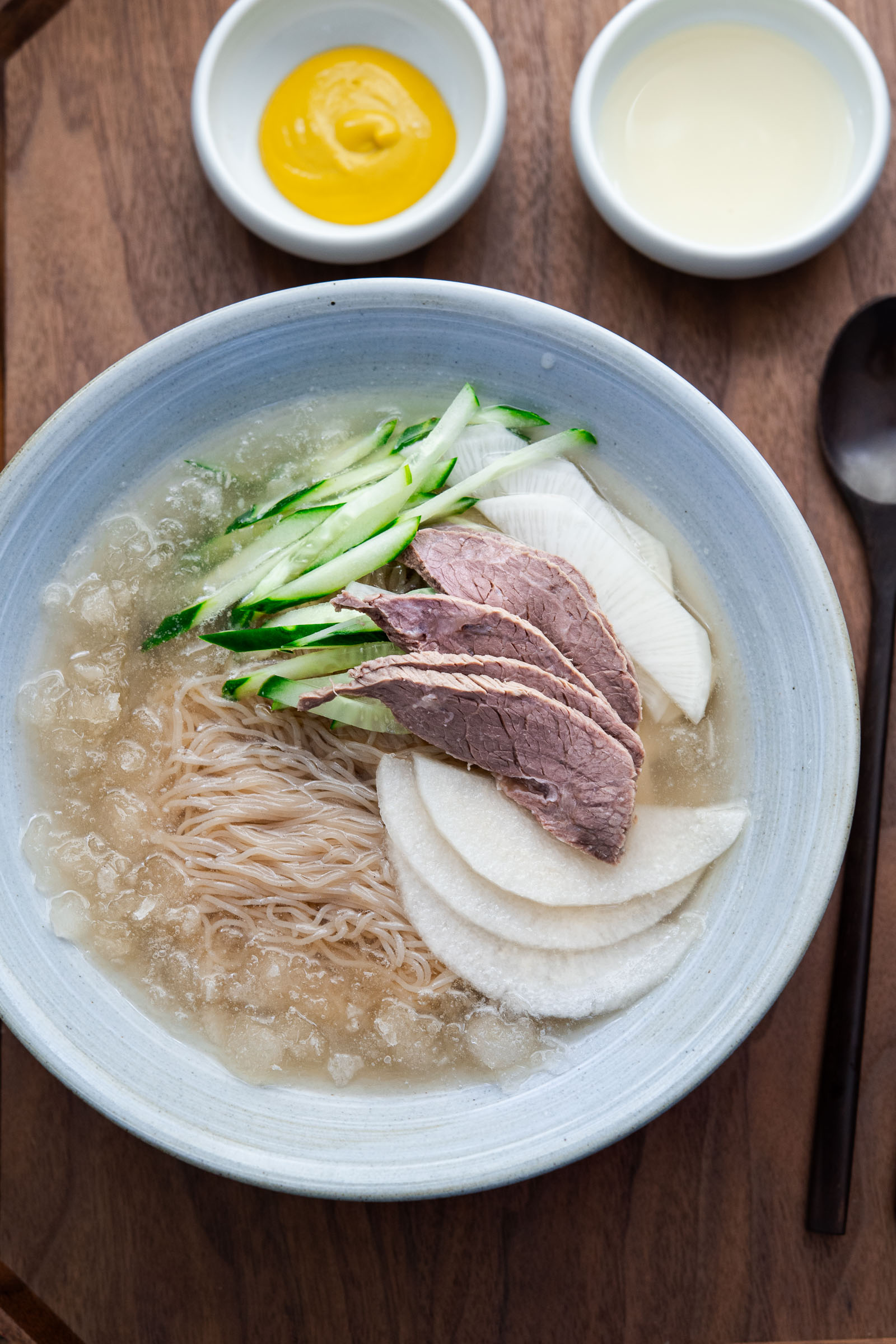
Mul Naengmyeon (Korean Cold Noodle Soup with Icy Broth)
A refreshing bowl of mul naengmyeon with chewy buckwheat noodles, sliced beef, and an icy, clean broth made easily at home. This Korean cold noodle soup uses a simple stovetop method with a lightly seasoned beef base, finished with that signature slushy texture. Perfect for hot days when you want something light, crisp, and satisfying without a long simmer.
Get new recipes via email:
Mul naengmyeon (물냉면) wasn’t something I grew up eating often in the southern part of Korea. It showed up more as a treat my parents enjoyed, especially on hot summer days. A bowl of icy broth with buckwheat noodles, a few simple toppings, and that quiet, refreshing finish. It was always easy to find at local restaurants and surprisingly affordable, so it never really made its way into our home kitchen.
As a kid, I didn’t quite get it. The broth tasted too subtle, and the noodles were so chewy I could barely bite through them. But taste changes. Over time, I started to appreciate that clean, understated flavor and the texture that makes this dish so distinctive. Now, it’s the first thing I look for when summer hits.
For years, I assumed mul naengmyeon was too involved to make at home. A proper broth sounded like something that needed hours of simmering. But I learned there’s a much more practical way. Using Korean beef stock granules (sogogi dashida, 소고가 다시다), often used in restaurants as well, you can build that deep yet clean flavor without standing over the stove all day.
This is the method I use at home now. It’s simple, reliable, and delivers that refreshing bowl you want in warm weather. I’ll also show you how to create that lightly frozen, slushy broth that makes mul naengmyeon feel truly special.
Mul Naengmyeon vs Bibim Naengmyeon (and a Quick Regional Note)
Mul naengmyeon and bibim naengmyeon use the same chewy buckwheat noodles, but they eat completely differently.
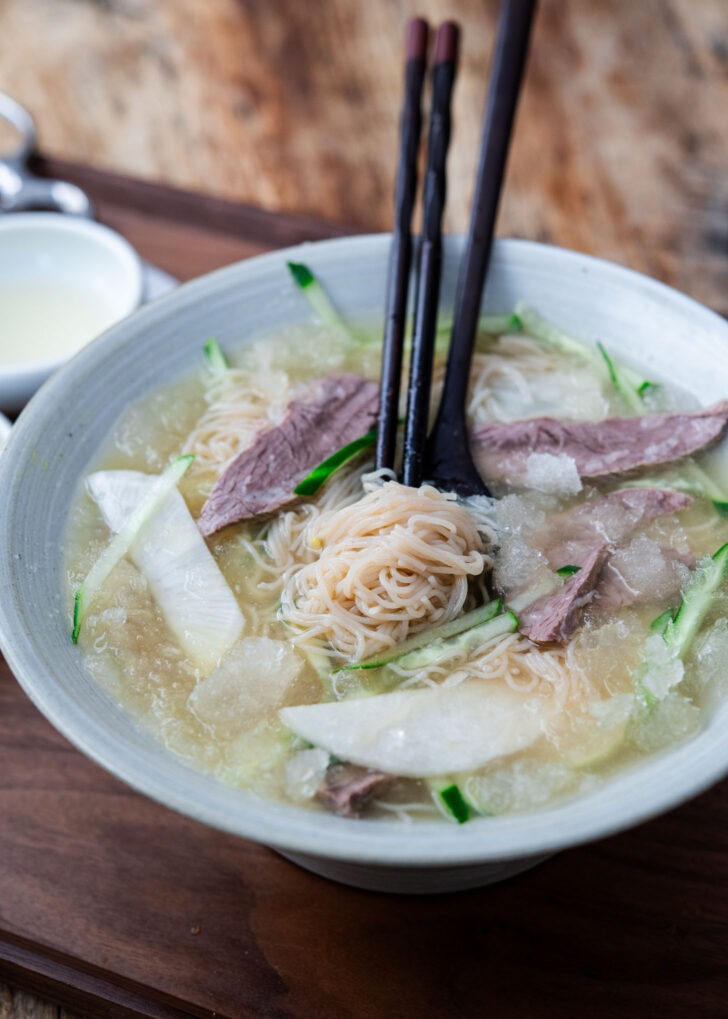
Mul naengmyeon is served in a cold, clean broth. The flavor is subtle at first, then brightens with a splash of vinegar and a touch of mustard. It’s light, refreshing, and especially satisfying on a hot day.
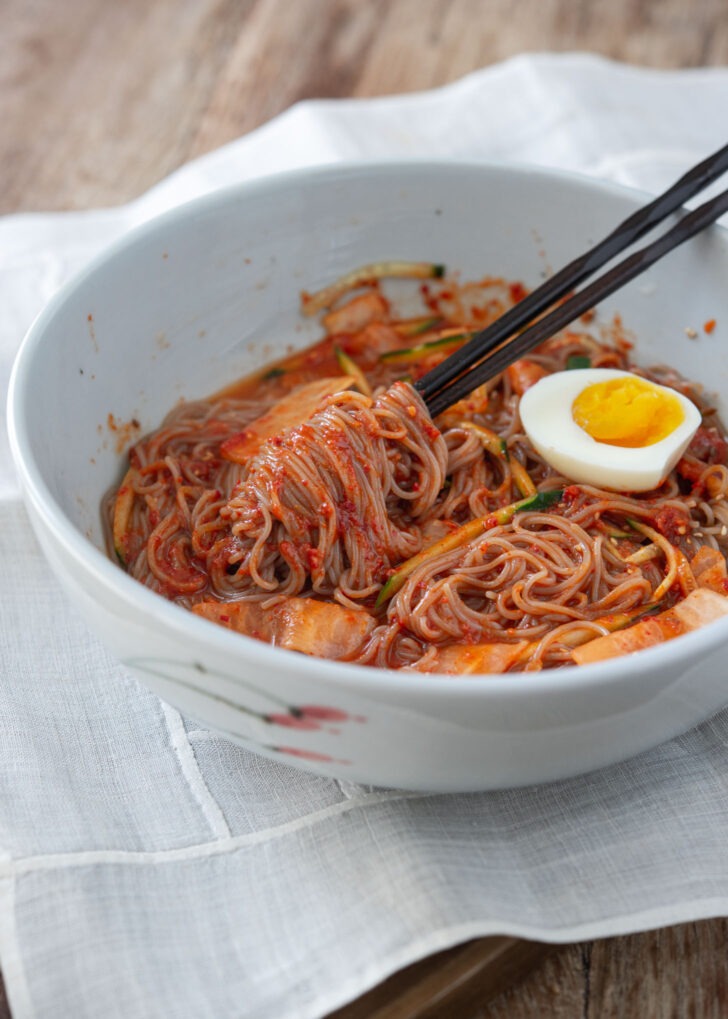
Bibim naengmyeon skips the broth and coats the noodles in a spicy, tangy gochujang sauce. It’s bolder and more direct in flavor. If that’s more your style, you can check out my spicy bibim naengmyeon version.
You may also hear about Pyongyang and Hamheung styles (both from North Korea). Pyongyang naengmyeon leans toward a mild, broth-focused bowl like this one. Hamheung naengmyeon is typically served bibim-style, with a spicier sauce and a firmer chew.
Both are popular, but when the weather turns hot and humid, a cold, clean bowl of mul naengmyeon is hard to beat. If you prefer the red spicy type of noodles, you might also like a lighter, spicy cold noodle like my bibim guksu with kimchi.
The Clean, Crisp Broth That Makes Mul Naengmyeon Work
A good mul naengmyeon broth should feel clear and balanced. Not weak, just restrained. It may taste subtle at first, but that’s intentional—the flavor sharpens once chilled and seasoned at the table.
Traditionally, the broth combines beef stock with dongchimi (radish water) for a subtle, slightly tangy finish. At home, I keep that balance by starting with a clear beef base and adding a small amount of dongchimi brine to keep the flavor fresh rather than heavy.
If dongchimi isn’t available, use a bit of Korean pickled radish liquid or add mild vinegar with a pinch of sugar. The goal is to keep the broth crisp and refreshing, not overly sour or rich.
The key is restraint. If the broth is too strong, it takes over the bowl instead of supporting the noodles. When kept light and well chilled, it does what it’s meant to do—cool, clean, and quietly satisfying.
Building Mul Naengmyeon at Home (Step-by-Step)
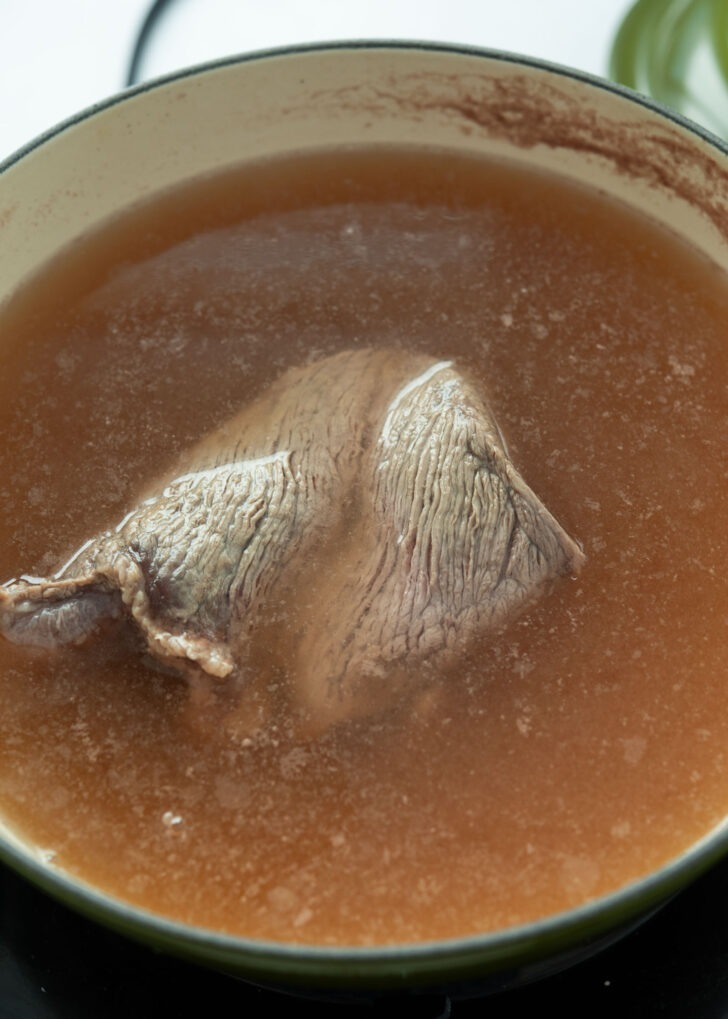
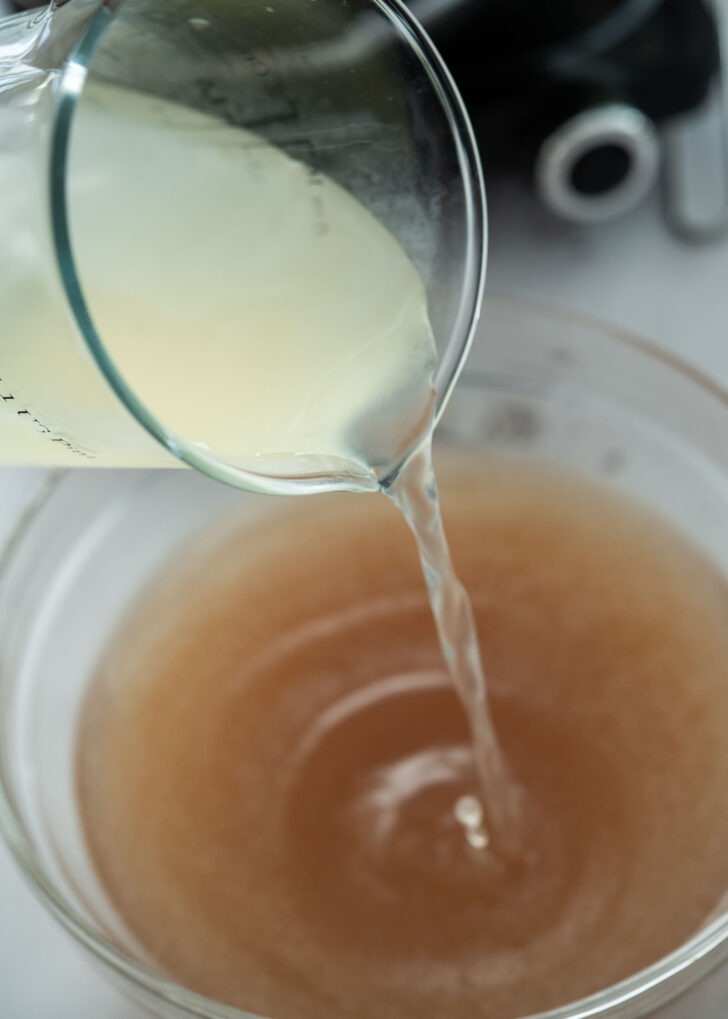
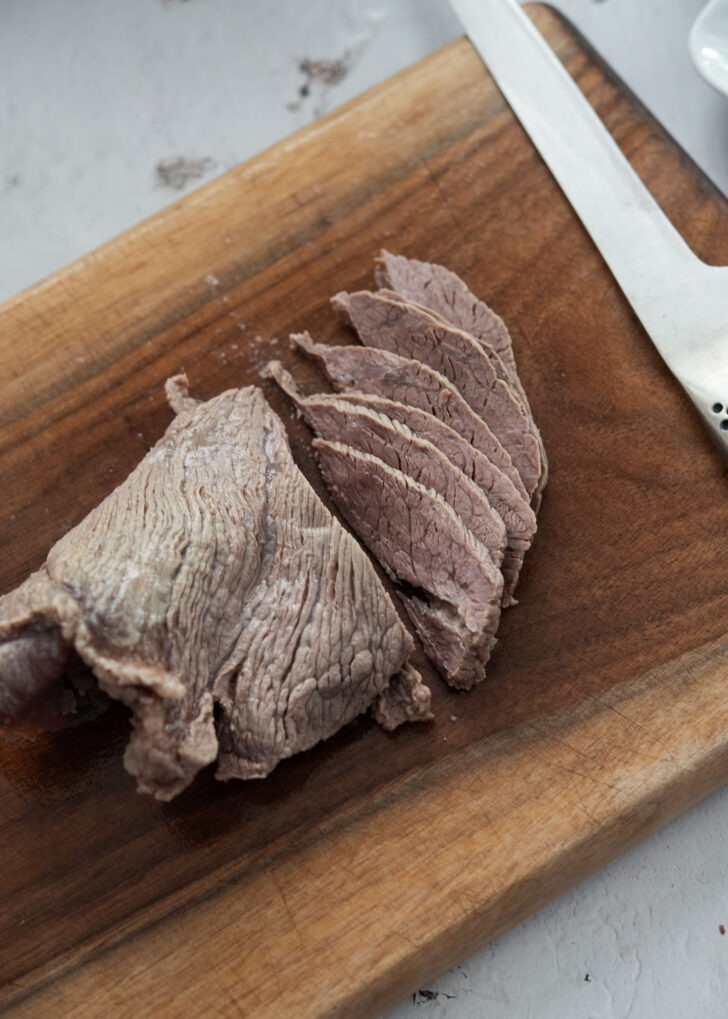
In a pot, mix water with Korean beef stock granules. Add the beef and cook until just tender, then remove and let it cool before slicing thinly. Let the broth chill fully before using so the flavor settles and stays clear.
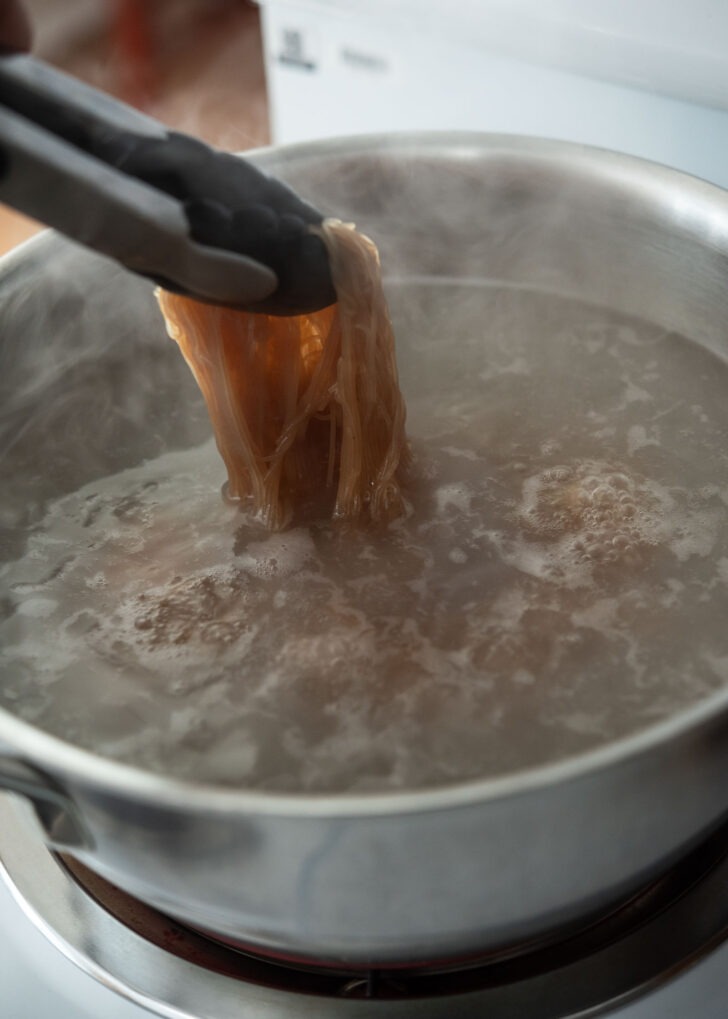
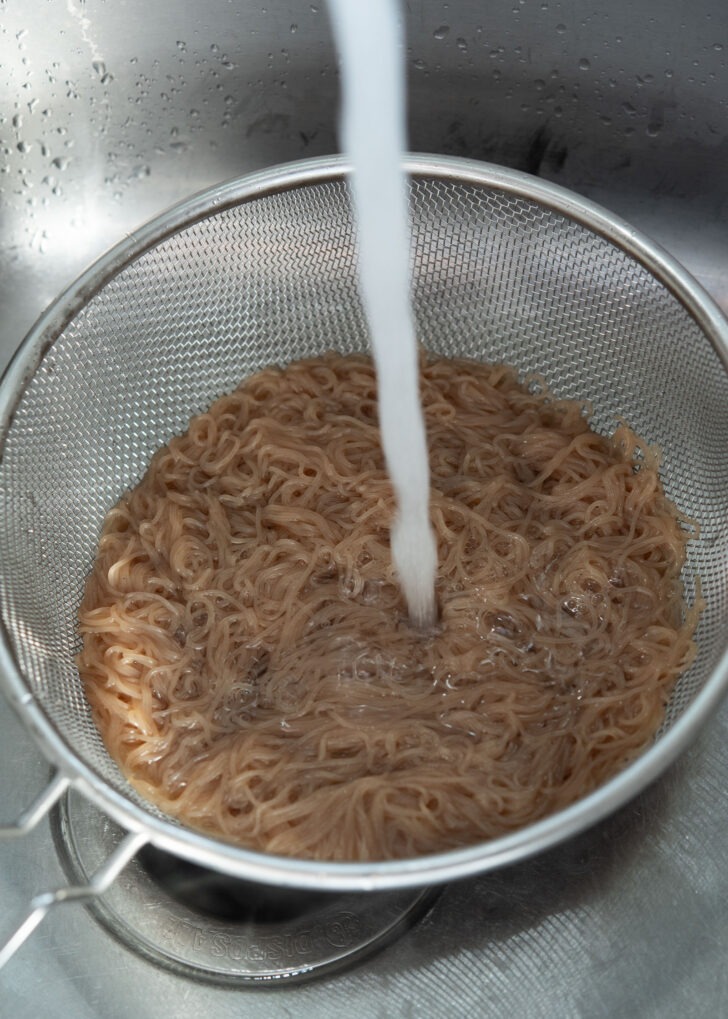
For the noodles, the key moment is after cooking. Rinse them thoroughly under cold running water and gently rub to wash off excess starch. You’ll feel the texture change as they firm up and become more elastic.
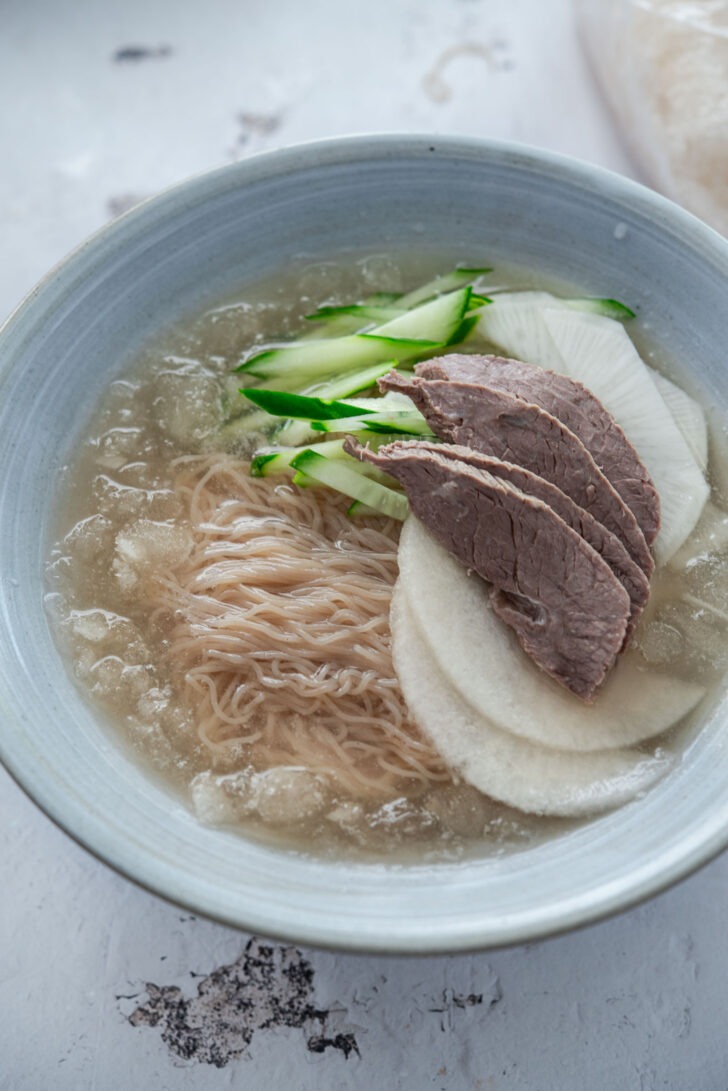
When assembling, think in layers rather than steps. The noodles go in first, loosely coiled, not packed. Pour the chilled broth around them so it stays clear. Then add just enough garnish to keep the bowl balanced—thin slices of beef, crisp radish, fresh cucumber, and a few pieces of pear for contrast. You can also add a hard boiled egg on top.
The finished bowl should look simple and uncluttered, with everything sitting lightly in that clear, cold broth.
How to Get That Icy, Slushy Restaurant-Style Broth
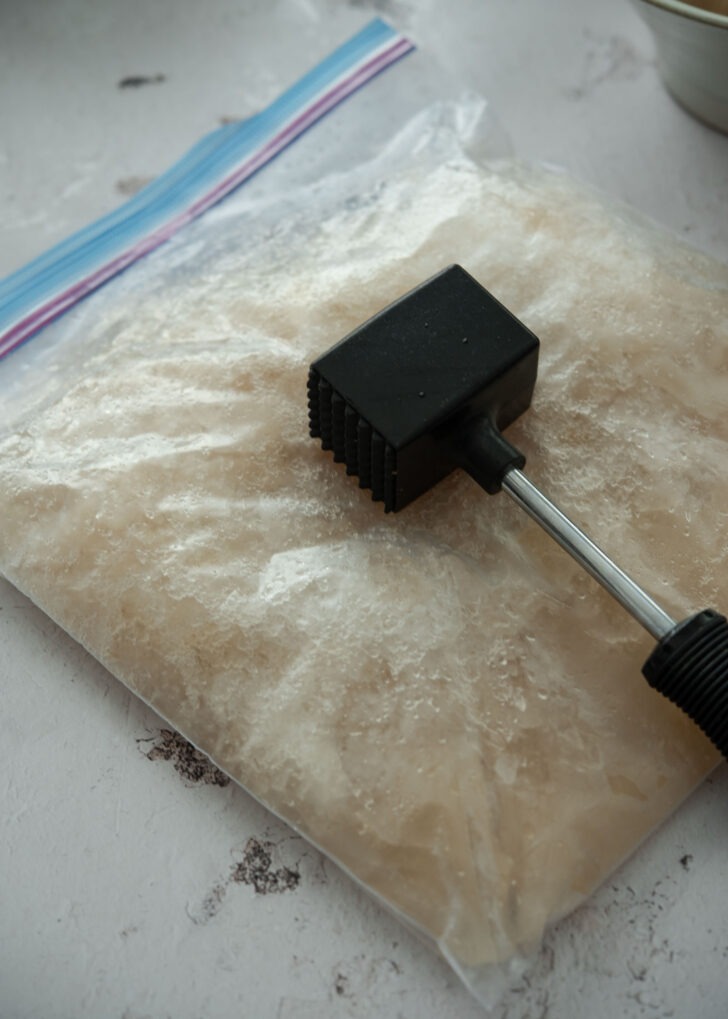
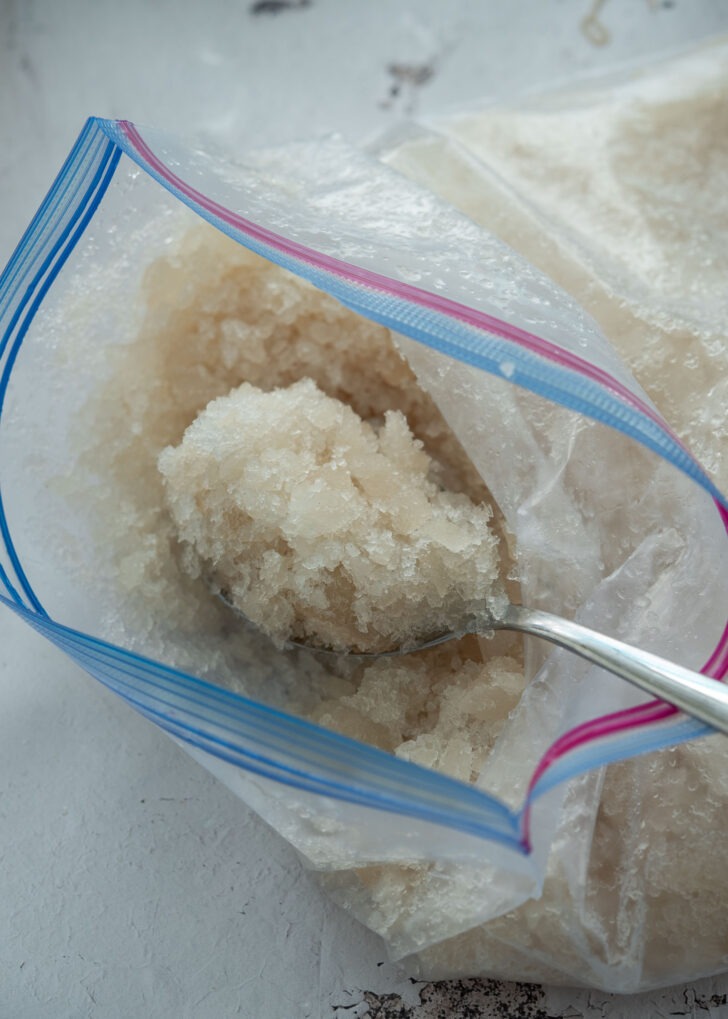
That lightly frozen surface you see in restaurants isn’t just for looks. It keeps the broth colder longer and tightens the flavor.
Instead of freezing the whole batch, set aside a small portion of broth and chill it until it begins to freeze. Break it into fine ice crystals and add a spoonful or two right before serving.
You don’t need much. Just enough to create that frosty layer without watering down the broth.
How Koreans Actually Season Naengmyeon at the Table
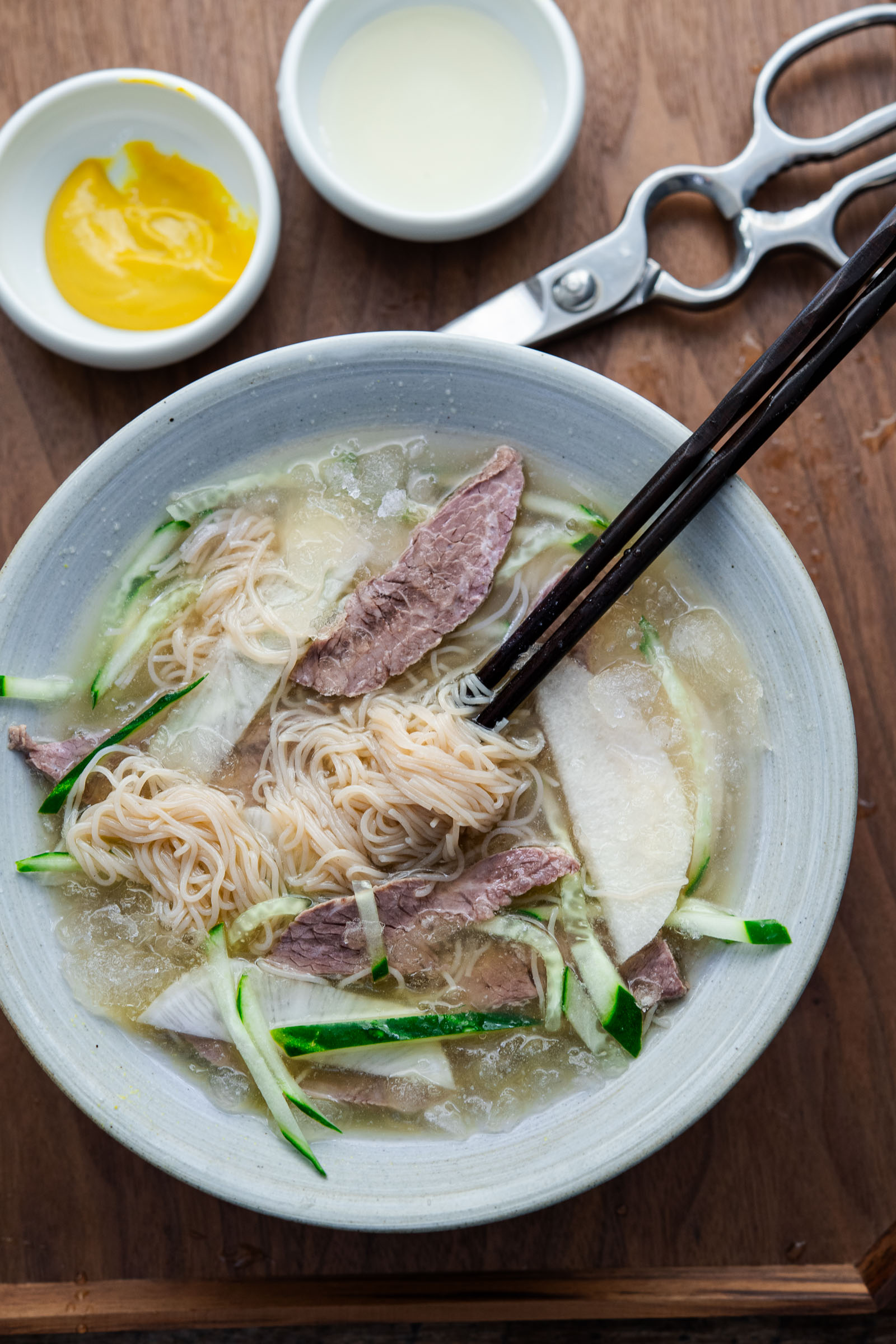
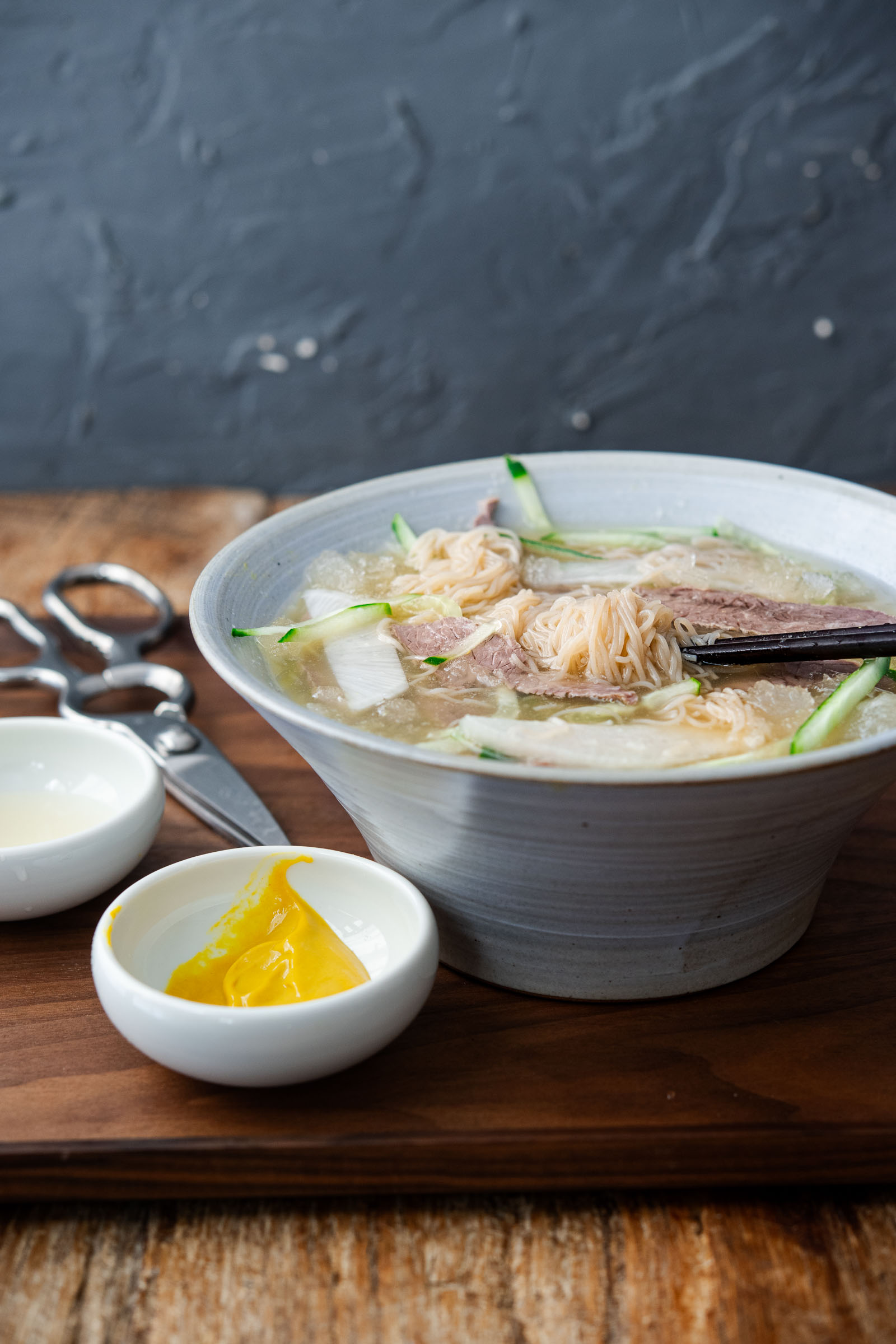
Mul naengmyeon is meant to be adjusted at the table. Start with a small splash of vinegar to brighten the broth, then add a touch of yellow mustard for gentle heat. A pinch of sugar is optional, especially if the broth leans more savory.
Some people cut the noodles with kitchen scissors before eating, since they can get quite long. The dish is often enjoyed on its own, with a small side of kimchi. Napa cabbage or crisp radish kimchi adds just enough contrast to round out the meal.
If you find yourself craving noodles again, I have a whole lineup of Korean noodle dishes, or you can switch gears with a warm, simple bowl like janchi guksu.
Love this recipe? Rate it and share your experience in the comments below! On Instagram? Tag me to showcase your creation. For more delicious recipes, subscribe to our newsletter!

Mul Naengmyeon (Korean Cold Noodle Soup with Icy Broth)
Recipe Video
Ingredients
- 10½ oz (300 g) beef brisket
- 4 cups (960 ml) water
- 4 tbsp (28 g) korean beef base granules (sogogi dashida)
- 14 oz (400 g) dried naengmyeon noodles (Korean buckwheat noodles)
- 2 cups (480 ml) dogchimi brine, see note for substitution
- 3 tbsp (38 g) sugar
- 3 tbsp (45 ml) vinegar, plus more to taste
- yellow mustard, to taste
Toppings
- dongchimi radish kimchi, thinly sliced, optional
- Korean pear, thinly sliced
- cucumber, sliced into matchsticks
- 2 hard boiled, sliced in half
- toasted sesame seeds, optional
Instructions
- Make the broth: In a pot, bring water to a gentle simmer and stir in the Korean beef base granules. Add the beef and simmer for 20 minutes, covered. Turn off the heat, and let the beef poach in the hot broth for 30 minutes. Remove the beef, let it cool, then slice thinly against the grain.
- Season and chill: Stir dongchimi brine, sugar, and vinegar into the broth. Taste and adjust lightly if needed. Chill the broth in the refrigerator until very cold.
- Make the broth slush: Pour a small portion of the chilled broth into a zip-top bag or shallow container and freeze for 1 to 2 hours, until partially frozen. Break it into small ice crystals with a mallet.
- Cook the noodles: cook the naengmyeon noodles according to package directions. When the water foams up, add a splash of cold water to control the boil. Drain and rinse thoroughly under cold running water, rubbing gently to remove excess starch.
- Assemble: Place the chilled noodles in serving bowls. Pour over the cold broth and add a few spoonfuls of broth slush if using. Top with beef, radish, cucumber, pear, and egg.
- Serve: Serve immediately with vinegar and mustard on the side for seasoning to taste. Enjoy with a side of kimchi.
Notes
- Light radish water: Soak thinly sliced Korean radish in cold salted water for 1–2 hours, then add a small splash of vinegar
- Pickled radish liquid: Use Korean pickled radish (chicken radish) brine, slightly diluted
- Simple substitute: Add a little extra vinegar with a pinch of sugar