

Kimbap (Korean Seaweed Rice Rolls)
Make fresh Korean kimbap at home with warm rice, colorful vegetables, and your choice of protein—all wrapped in roasted seaweed. This easy, customizable rice roll comes together in about an hour and works for meal prep, picnics, lunchboxes, or a light, wholesome meal. The step-by-step guide helps every roll come out tight, neat, and full of personality.
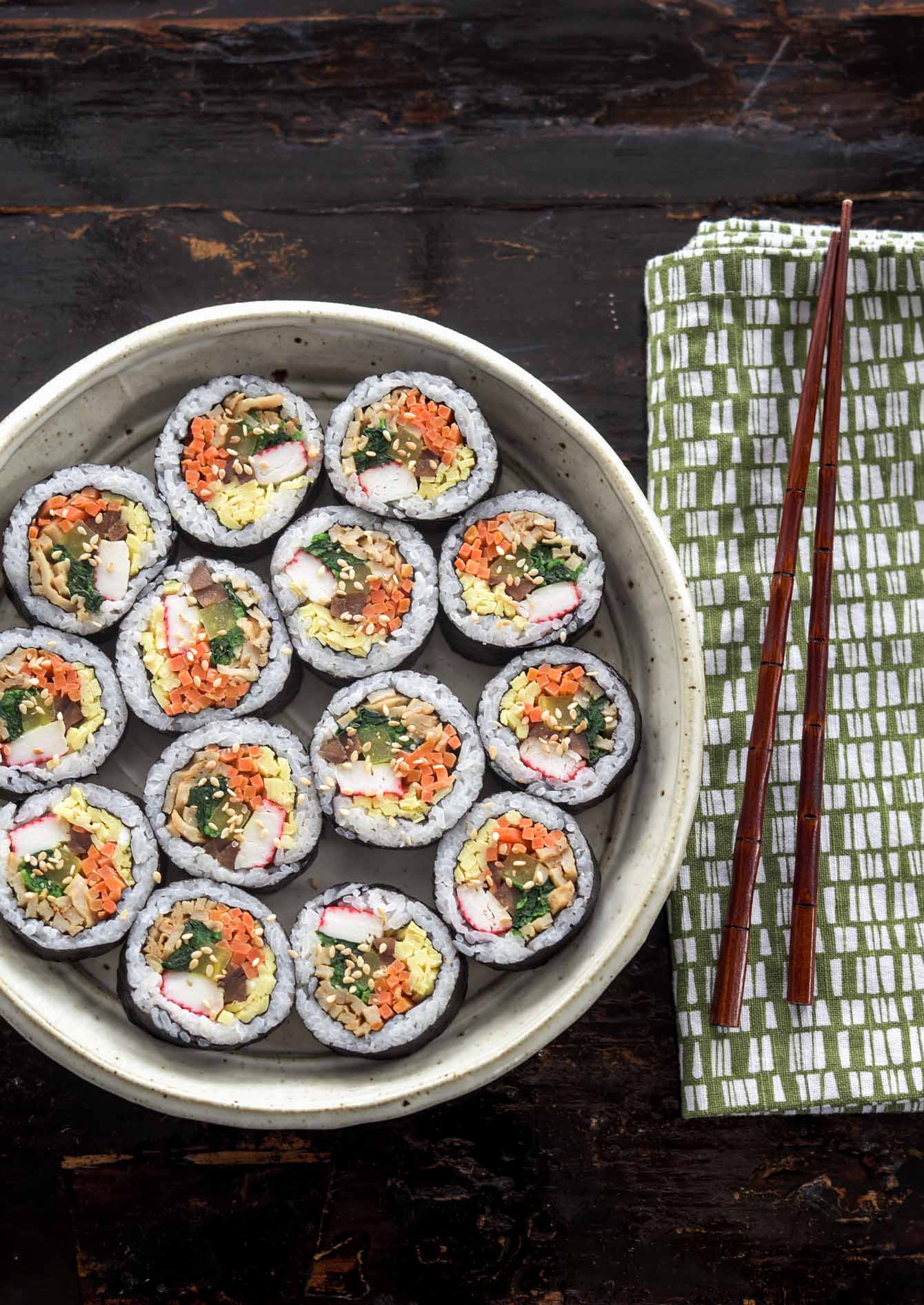
When I was little, my mom would pack kimbap (김밥, gimbap) for every school picnic. She sliced and arranged them in a lunchbox so that, when you lifted the lid, you saw a beautiful array of neatly sliced kimbap.
Her kimbap had a flavor all its own, and my friends always asked for a share. Her secret seasoning was a splash of homemade plum extract, which gave the rice a light, tangy sweetness that made her kimbap unforgettable. One year, her kimbap even won first place at my school picnic, and that little trick has been in my kitchen ever since.
Get new recipes via email:
Every Korean family makes kimbap a little differently, and that’s part of the joy. Some keep it simple with egg, carrots, spinach, burdock root and danmuji; others add a bit of grilled meat like beef bulgogi or spicy pork bulgogi. My version stays true to the classic style but leans on plum extract for a lighter, clean flavor.
Homemade kimbap is warm, fragrant, and tightly rolled — nothing like the dry, refrigerated ones from the store. Once you slice into a fresh roll, you’ll see why this is still one of the most loved Korean home-cooked meals.
What Makes My Kimbap Method Different
After rolling kimbap more times than I can count, I’ve learned that a few small choices can change everything:
- Plum extract–seasoned rice: I use maesil-cheong (either homemade or storebought) instead of sesame oil for a lighter, cleaner seasoning. It’s the way my mom made it, and it gives the rice a balanced flavor without feeling heavy.
- The “half sheet gim” trick: A thin half sheet of seaweed over the rice creates a clean border and keeps moisture from spinach and danmuji from soaking into the rice, so the slices stay neat.
- Prep each filling separately: A very Korean home-cooking detail: carrots sautéed alone, spinach seasoned on its own, fish cake glazed separately. Each bite ends up layered instead of flat.
- Warm (not hot) rice: Hot rice weakens the seaweed; cold rice won’t stick. Warm rice keeps the texture tight and rollable.
- An oiled knife for clean slices: Instead of sesame oil, I wipe the blade with neutral oil for tidy cuts that don’t overpower the fillings.
My Essential Ingredients for Kimbap
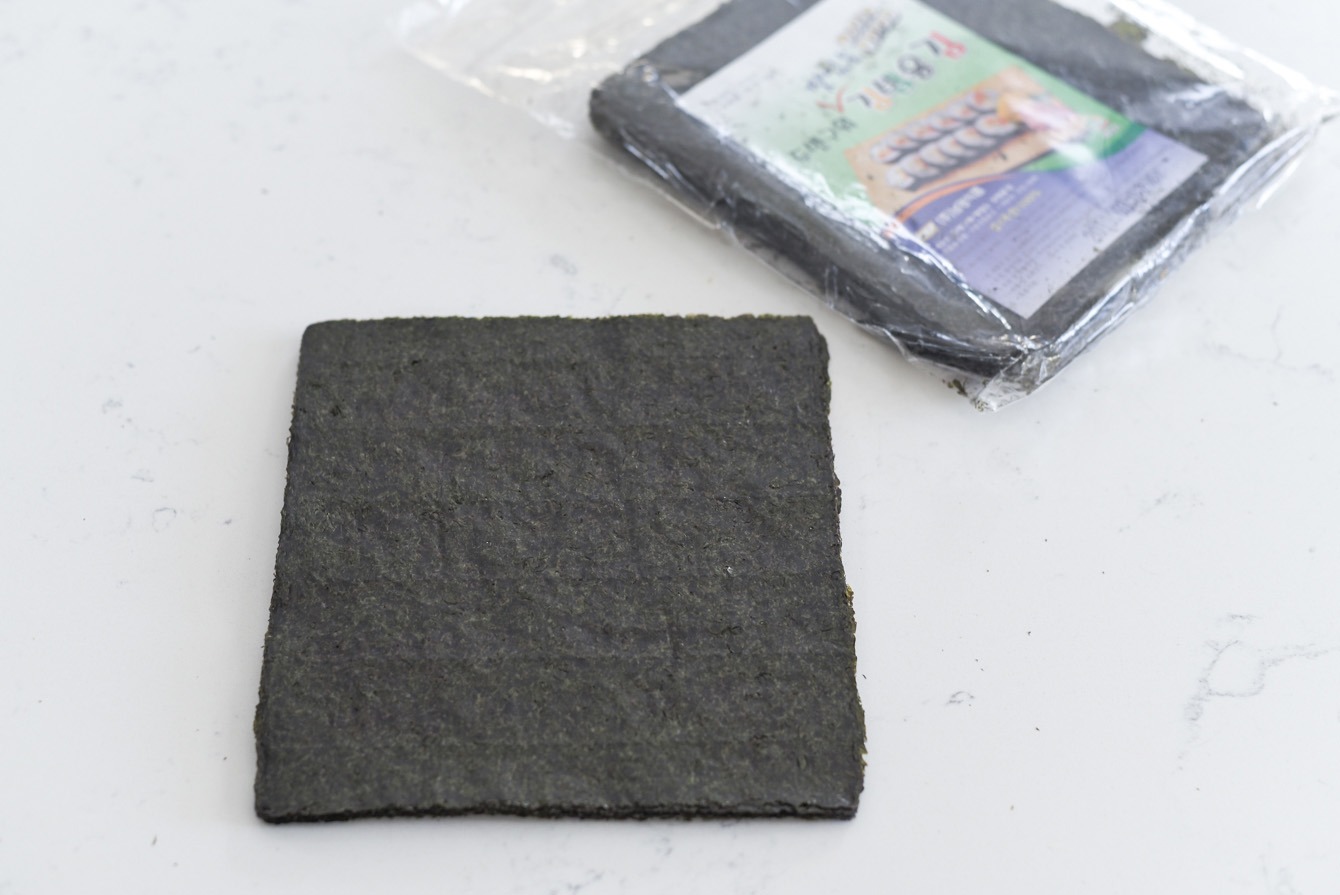
Roasted Gim (Seaweed Sheets): Use toasted Korean gim — crisp, deep green, and slightly shiny. Dull sheets or ones with red oxidation spots won’t roll well. I freeze extra packs to keep them fresh.
Rice: Always use freshly cooked short-grain rice so it clings together. I season mine with Korean plum extract (maesil-cheong) and a little salt for a clean, bright flavor, though you can absolutely use sesame oil and salt if you prefer the classic nutty style.
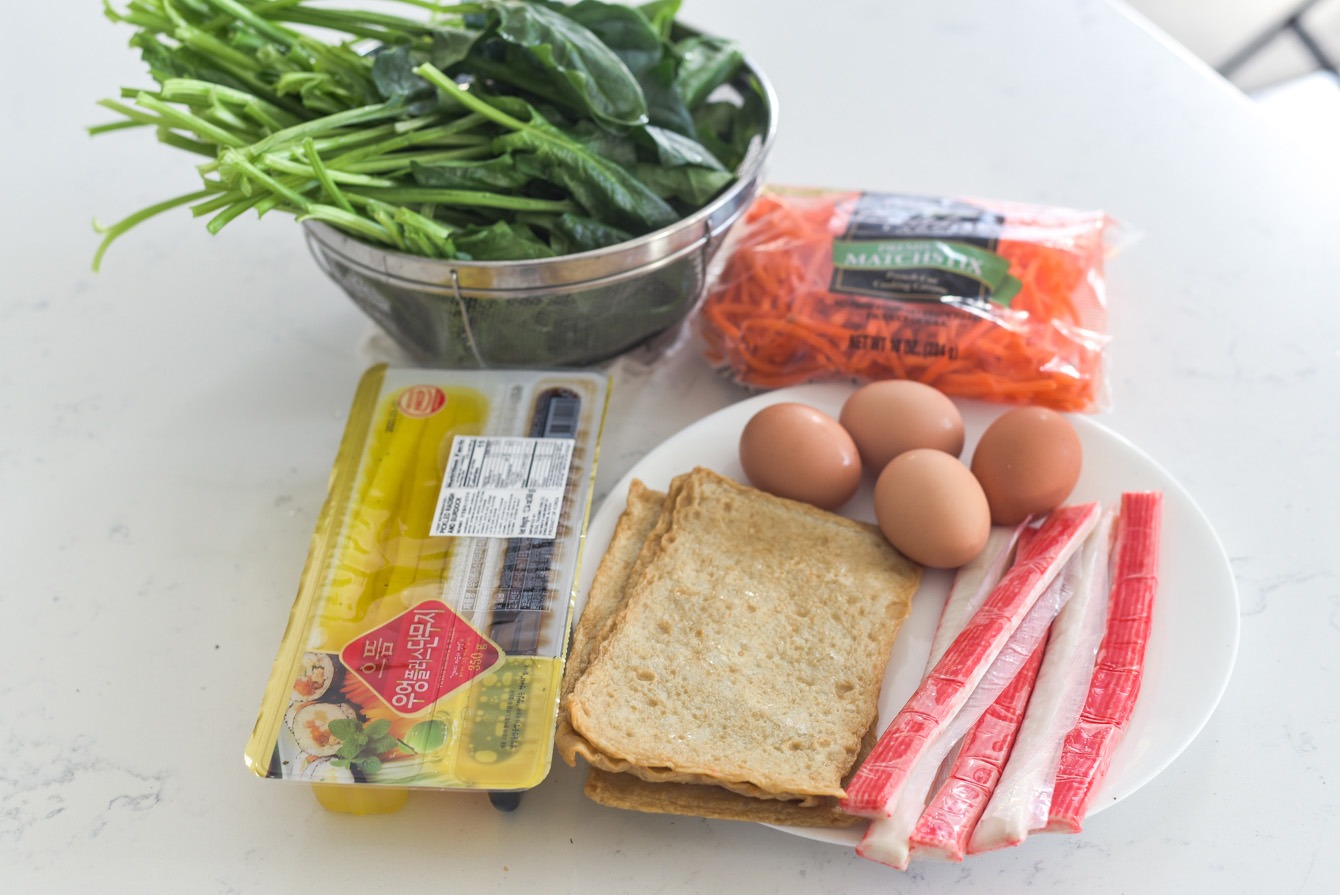
Vegetable Fillings: Spinach, carrots, and danmuji (pickled radish) are the essentials. Each one gets prepped separately (a very Korean home-kitchen thing).
Protein Options: Egg strips, imitation crab, or fish cake are classic. Grilled meats are great variations — if you love tuna, try my tuna kimbap with cucumber.
Optional Extras: Lightly seasoned squid (ojingeochae muchim), my personal favorite, and stir-fried anchovies (myulchi bokkeum) are two fillings many Korean home cooks tuck into their rolls. Feel free to add whatever you love; kimbap is wonderfully flexible.
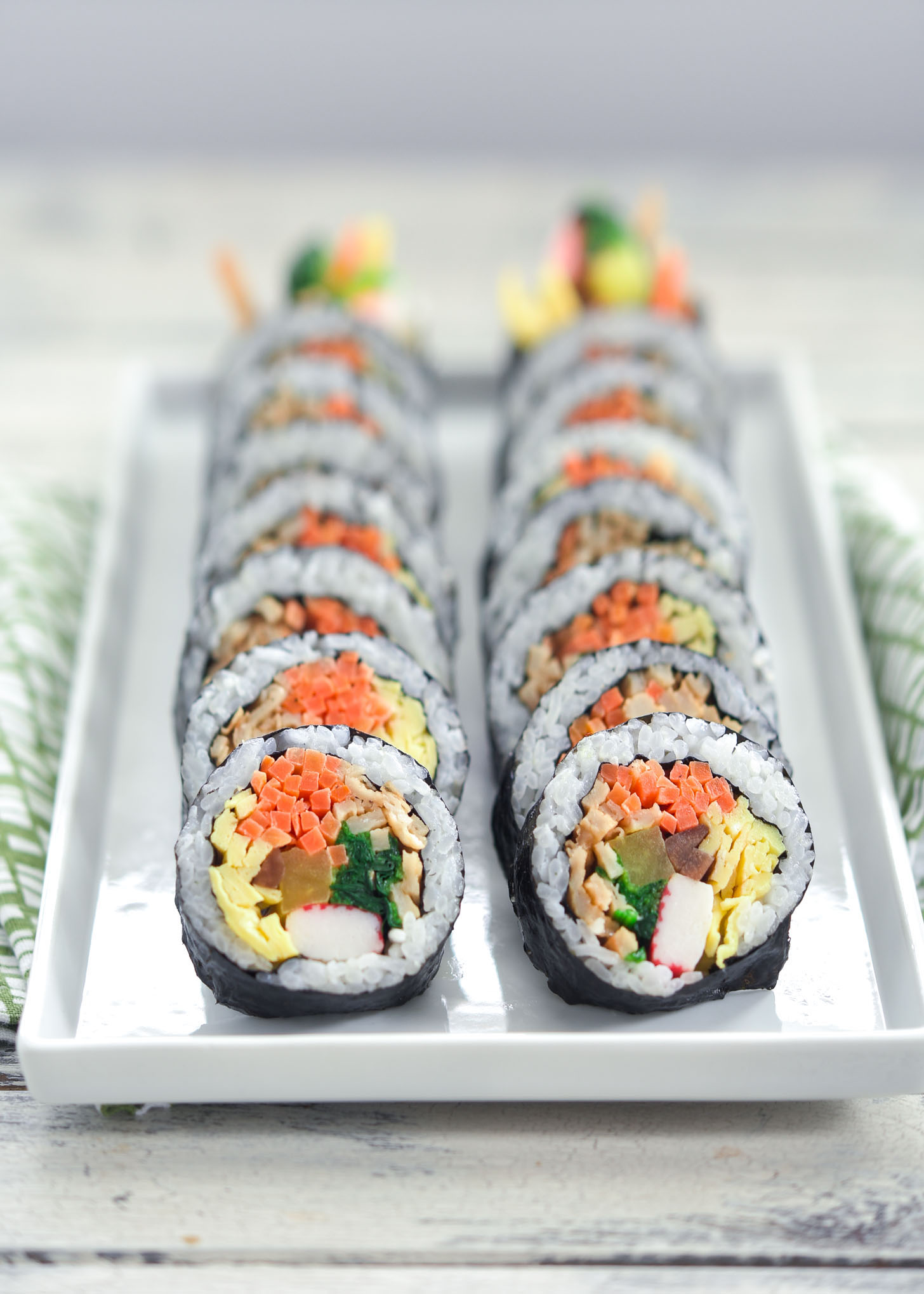
How to Make Kimbap (Step-by-Step)
Rolling kimbap isn’t difficult once you see it in action. Here’s my process with the small details that make the difference between a loose roll and a neat, tightly packed one.
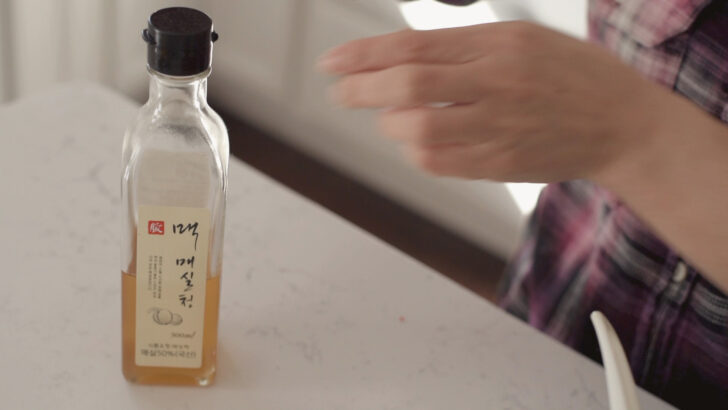
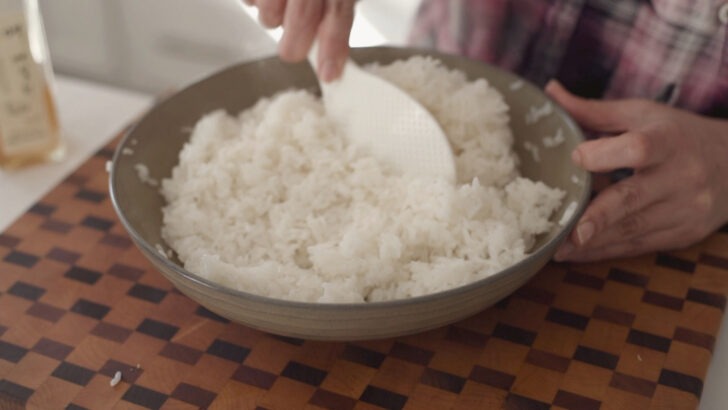
Rice first. Warm rice holds together best when rolling, so I let it cool just a little before seasoning. I mix in maesil-cheong and salt—simple and clean, and it keeps the rice pleasantly balanced.
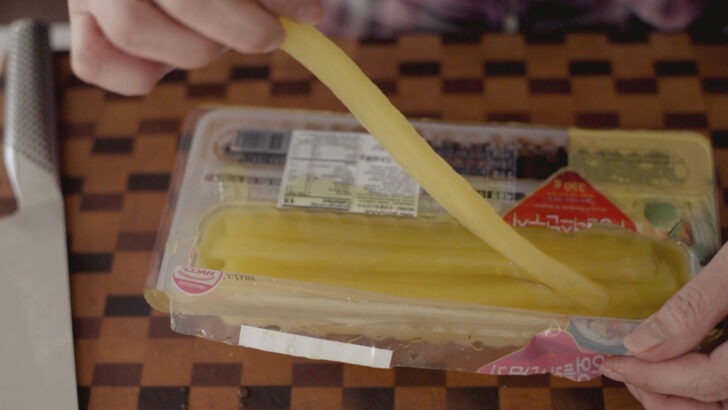
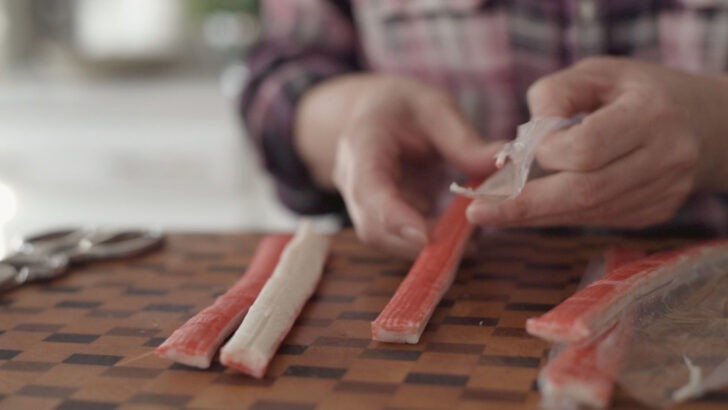
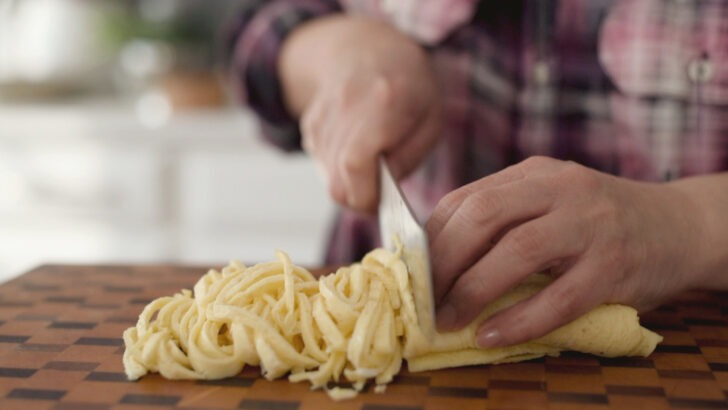

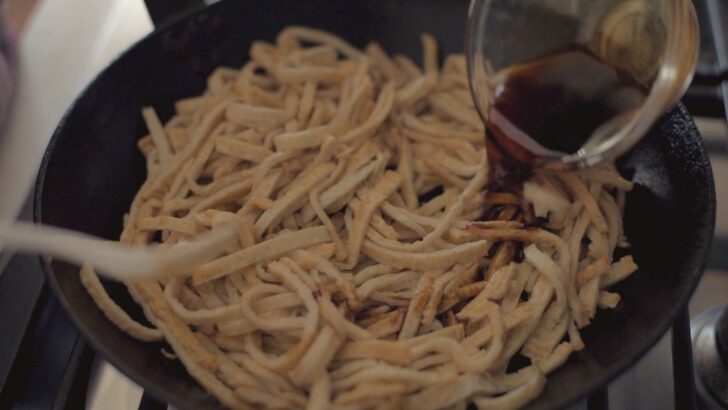
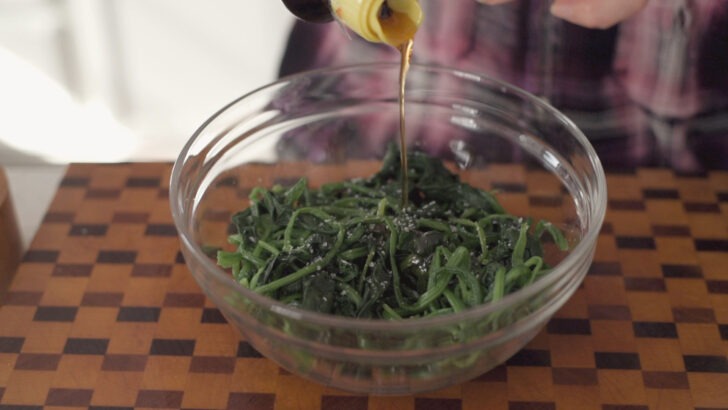
Prepare fillings. Korean home cooks prep each component separately so every bite has its own flavor.
- Carrots get a quick sauté.
- Spinach is blanched and lightly seasoned.
- Fish cake gets a simple soy glaze.
- Eggs are cooked into thin sheets and sliced.
- Danmuji is used as-is.
Once everything is seasoned and cooled, assembly becomes easy and fast.
How to Roll Kimbap
Rolling may take a little practice, but once you get the rhythm, it’s surprisingly fun! It’s easier to use a bamboo mat when starting out, though experts can roll without one.
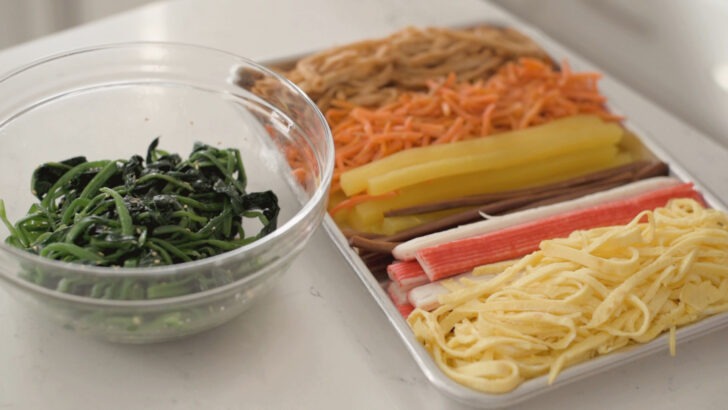
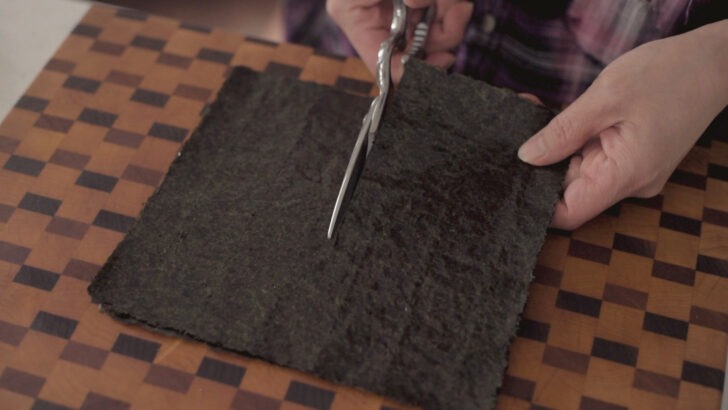
Set Up Your Rolling Station. Cut three sheets of roasted gim in half—you’ll use full sheets for rolling and half sheets as a moisture-shielding layer. Lay out all fillings within reach. A tidy setup makes the rolling smoother and much more enjoyable.
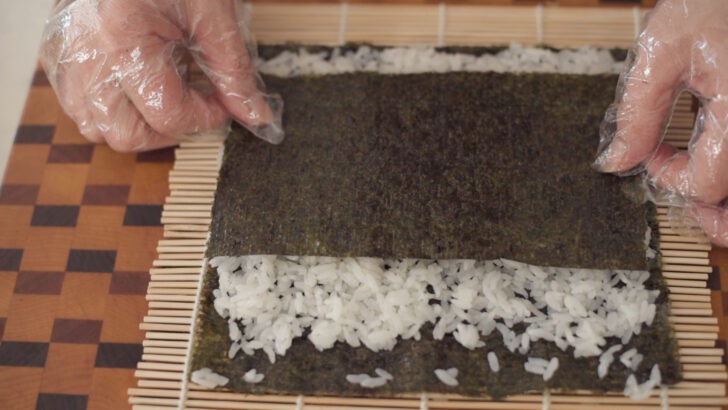
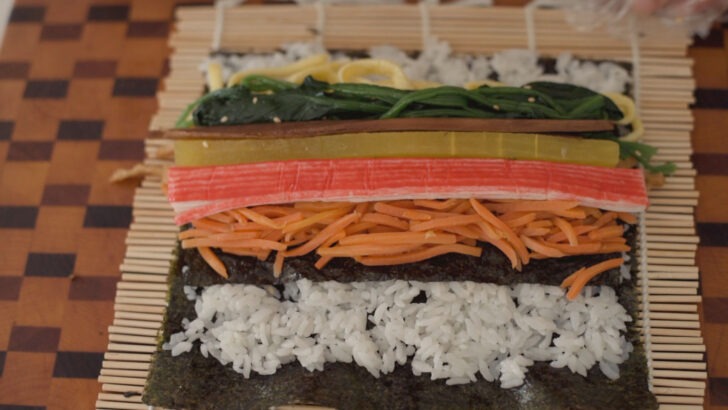
Spread the Rice & Add Fillings. Lay a full sheet of gim (shiny side down) on your bamboo mat and spread a thin layer of warm rice over it, leaving a small border at the top.
Place a half sheet of gim over the rice. This helps keep moisture from ingredients like danmuji and spinach from softening the roll and creates cleaner slices. Arrange your fillings in a neat horizontal line so everything stays centered when you roll.
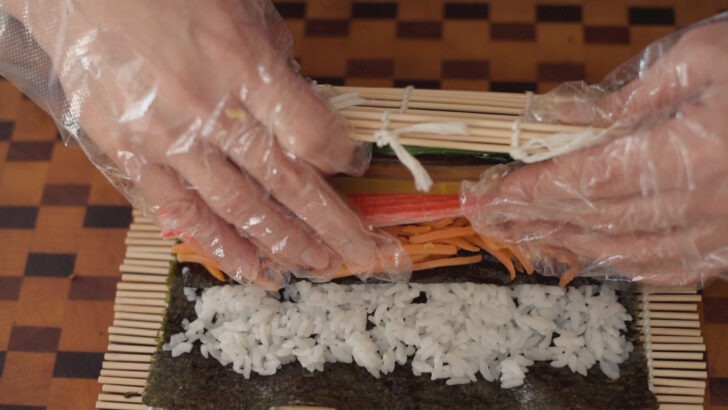
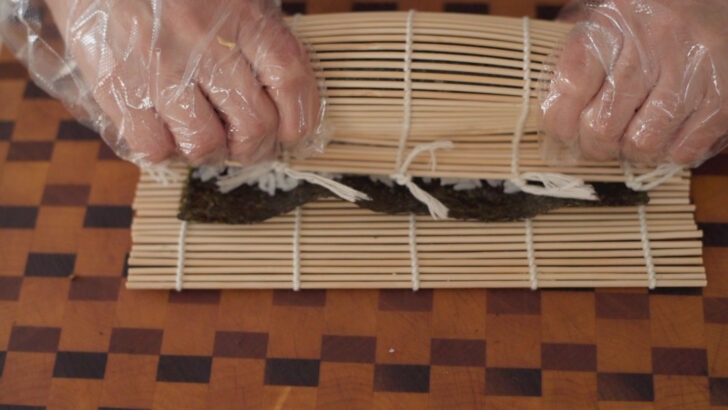
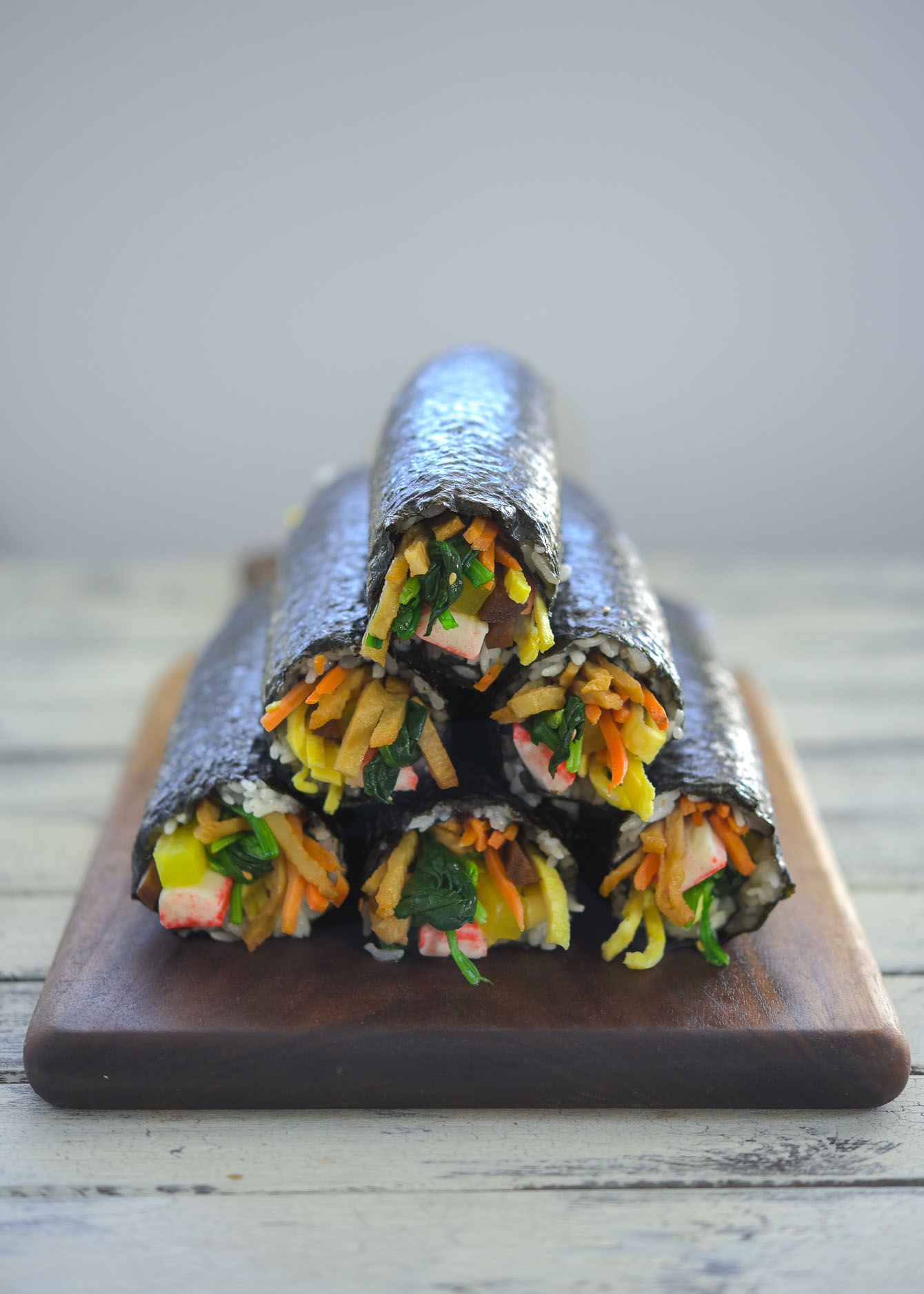
Roll the Kimbap. Lift the edge of the mat closest to you and roll forward, tucking the fillings in as you go. Apply gentle, even pressure to tighten the roll without crushing the rice. Finish the roll and give it a final squeeze with the mat to secure the shape.
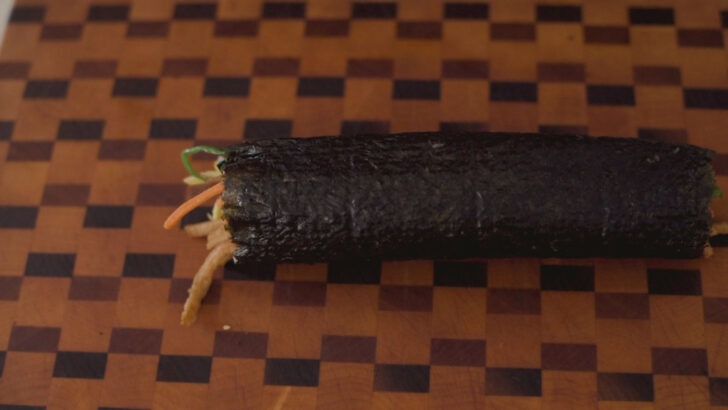
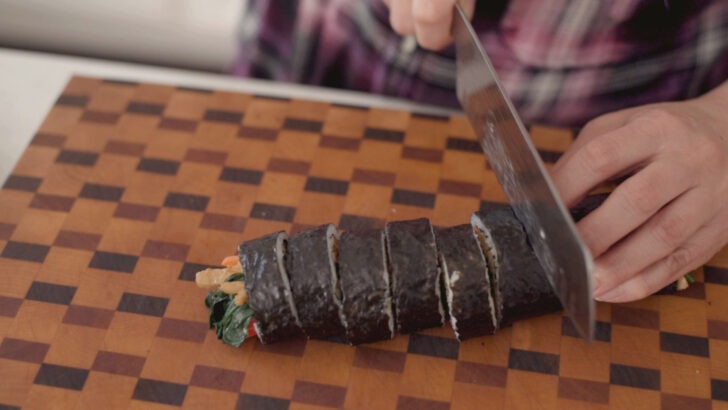
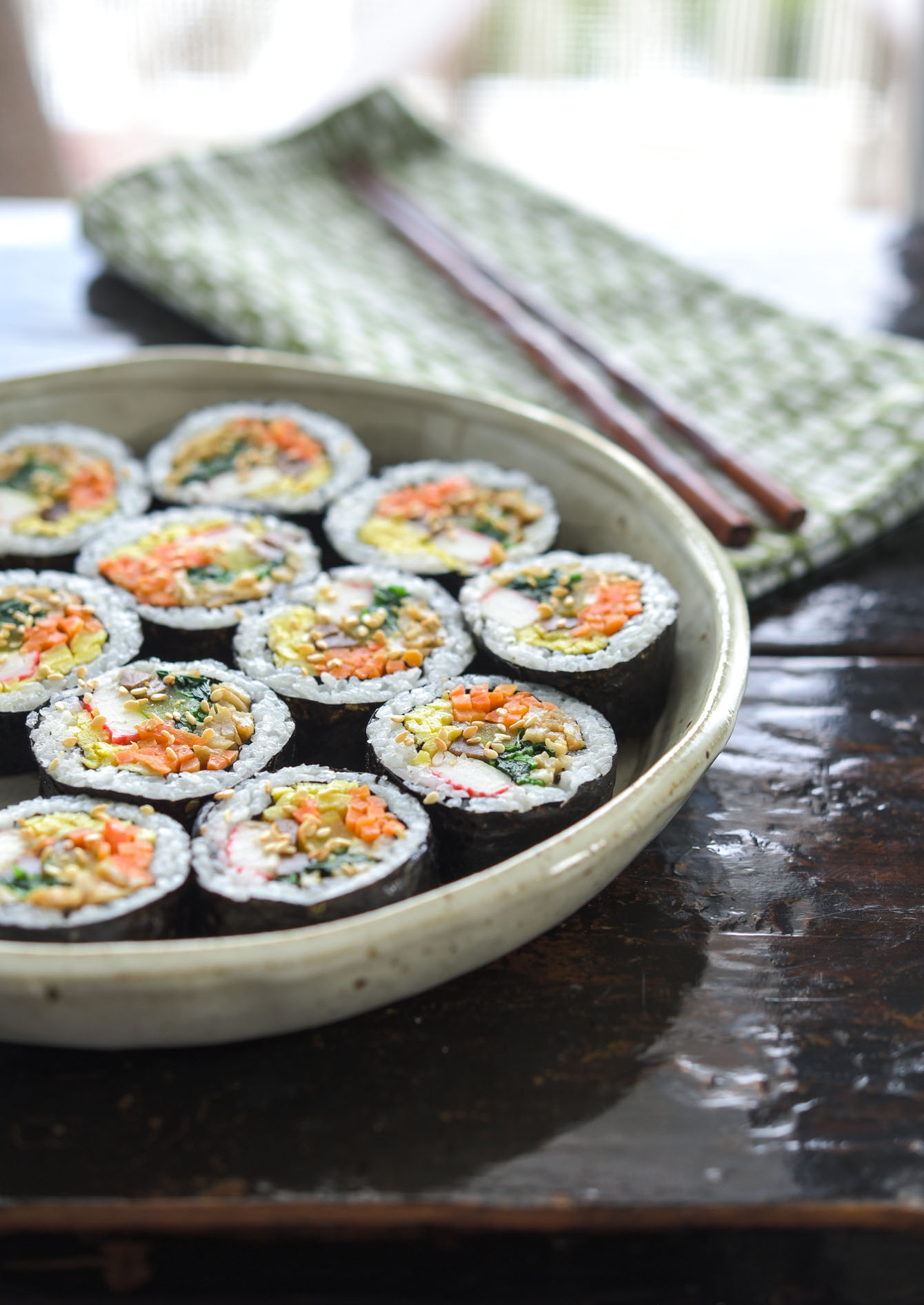
Slice Cleanly. Kimbap slices beautifully when the knife is sharp and lightly oiled. I wipe the blade with neutral oil between cuts to keep the seaweed from tearing. Cut into bite-sized pieces and arrange on a tray.
Storing and Serving Tips
Kimbap is always best the day it’s made, when the rice is soft and the seaweed is still crisp. If you need to pack it ahead, here’s what’s worked well for me:
- For lunchboxes: Wrap each roll in parchment or foil. It keeps the rice from drying and makes slicing easier later.
- For freezing: Wrap individual pieces tightly in plastic and freeze in a single layer. The texture changes slightly once thawed, but the flavor holds up and it makes a great quick snack.
- Optional finish: Some people brush the finished roll with sesame oil and sprinkle sesame seeds for sheen and aroma. I skip the oil for my kimbap because I prefer the cleaner flavor of the fillings, but it’s entirely personal preference.
- For serving: No Korean snack spread is complete without dipping your kimbap into a spicy sauce. Try pairing these rolls with my 25-minute tteokbokki for the ultimate street food experience.
Love this recipe? Rate it and share your experience in the comments below! On Instagram? Tag me to showcase your creation. For more delicious recipes, subscribe to our newsletter!
Kimbap (Korean Seaweed Rice Rolls)
Recipe Video
Ingredients
For the rice
- 2 cups (480 ml, about 450 g) uncooked short grain white rice
- 2 1/2 cups (600 ml) water
- 2 tbsp (30 ml) Korean plum extract (maeshil cheong)
- 1/2 tsp salt
For the filling ingredients
- 6 strips pickled radish (danmuji), 1/2 inch thick, drained
- 6-12 strips braised burdock root (Oeong), drained
- 6 strips imitation crab meat
- 2 tbsp (30 ml) oil, divided
- 10 oz (283 g) package shredded carrot
- 2 tbsp (30 ml) water
- 4 eggs, beaten
For the fishcake
- 3 sheets flat fish cake, sliced thinly
- 1 tbsp (15 ml) soy sauce
- 1 tsp (4 g) sugar
- 1 tbsp (15 mk) sweet rice wine (mirim)
- 1 tbsp (15 ml) corn syrup
For the spinach
- 1 bunch (12 oz, 340 g) spinach
- 2 pinches salt
- 1 tsp (5 m) sesame oil
- dashes toasted sesame seeds
Equipment
Instructions
- For the rice: Rinse rice several times and drain. Soak rice in 2 1/2 cup water for 10 minutes. Cook rice until soft. Put hot rice in a large mixing bowl, add plum extract and salt; toss well. Cover rice with a kitchen towel and set aside to cool.
- For the egg: Beat eggs and cook in a skillet in 3 batches. Roll them up and slice thinly
- For the carrot: cook shredded carrot in a little oil over medium high heat with some salt. Add 2 tbsp of water to create a steam and cover with a lid. Cook for 2 minutes until crisp but tender.
- For the fishcake: slice fishcake sheets thinly and stir-fry in a little oil for 1 minute over medium high heat. Mix together soy sauce, sugar, and rice wine in a bowl, and add the mixture to the fishcake. Continue to stir-fry for another minute.
- For the spinach: blanch spinach in a pot of boiling water with some salt. Drain and rinse with cold water. Squeeze out the excess water. Place the spinach in a mixing bowl and season with salt, sesame oil, and sesame seeds. Toss well.
To assemble Kimbap
- Cut 3 sheets of seaweed in half and set aside.
- Place a full sheet of seaweed, shiny side down, longer side toward you, on a bamboo rolling mat. Spread about 1 cup of rice (1/6 amount) evenly on the seaweed leaving 1 inch of space at the end. Lay a half seaweed sheet in the middle of rice.
- Put filling ingredients on top of the half seaweed sheet in a contrasting color pattern.
- Lift the entire end of mat from your side with both hands, roll over to cover the fillings, tucking in the filling with your fingers. Put firm pressure on the roll and continue to roll again as you roll away the mat until it reaches to the end.
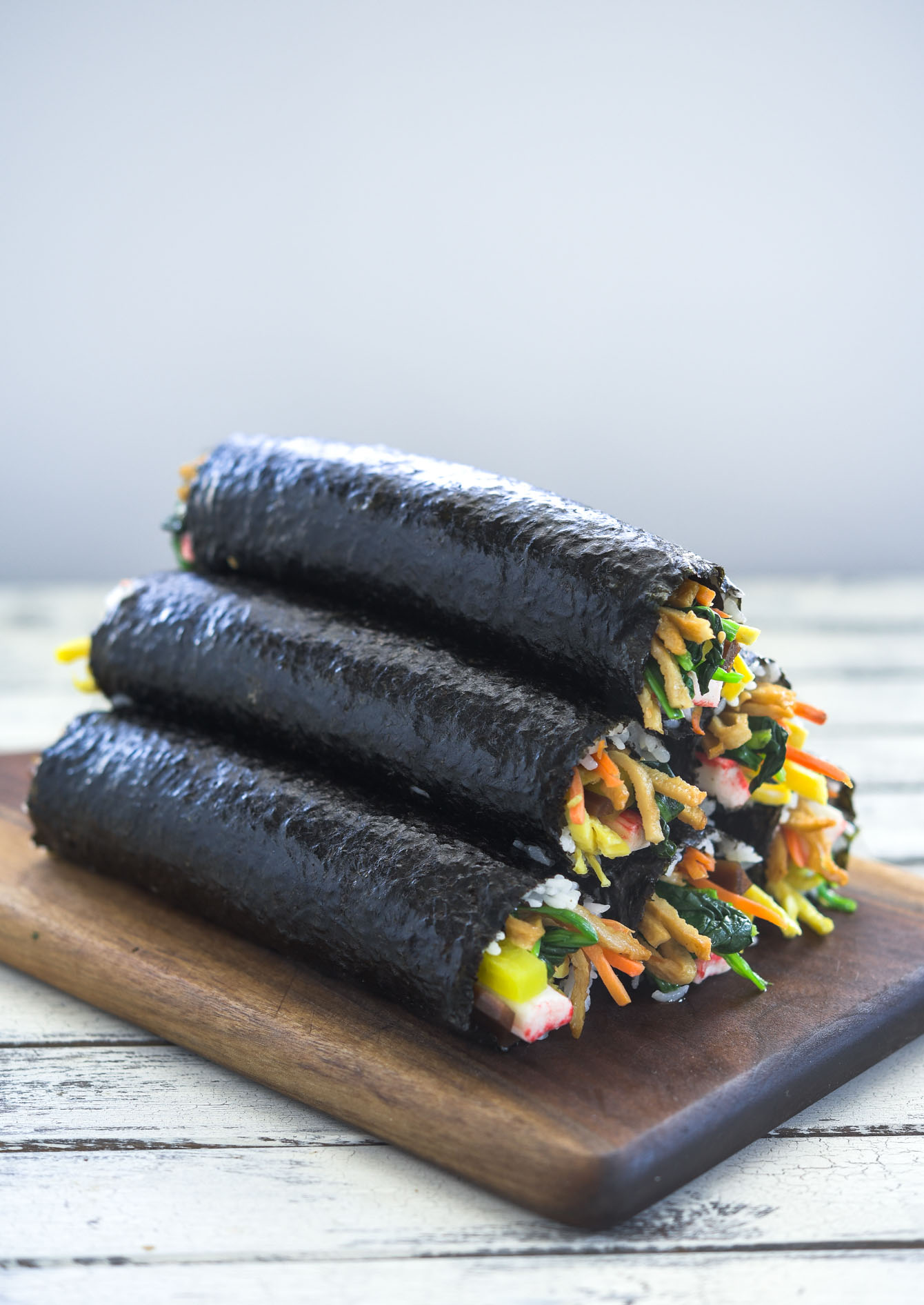
- Place the finished kimbap on a platter, seam side down, while you are making another. Cut kimbap into 1/2 inch thick slices with a sharp knife.
Notes
- If you want to season rice with sesame oil, toss rice with 1 tbsp sesame oil and 1/2 tsp salt.
I realy like your blog. This is the first time I see this blog. Yes, i like the way you show how to roll the kimbap. Thank you for sharing.
How to keep the rice rolls fresh if made them a day before?
Thanks.
You can’t. You need to consume on the day you made. They don’t keep well in the fridge.
Wow!! you my friend are just simply AMAZING!! I love the humor you bring to the table so to speak =) I just wanted to say that the recipe you have listed is the best one I have came across so far *and my search is done now since I found you* Thank-you for being so awesome!
How would the rice cooking change if I want to use brown short grain rice instead?
I made these for my family and they turned out great! Thank you for this recipe!
김밥에 김치하고 함께 먹어도 너~~~~~~~~무 맛있어요^^
캬! 맛있죠 그렇게 먹으면…
I love your recipe.. And i really enjoy your story.
Hi! I loved reading this post! Thank you! Great stories that made me laugh! I was inspired to make Kimbap.
I love how you called the Kimbap “Black Beauty.” It reminded me of some memories.
I’ll have to try making the pickled radish too.
Thanks Samantha. You did a great job with your kimbap.I enjoyed reading your post.
Our family loves making and eating kimbap! We play around with the fillings – sometimes adding different things like avocado, cucumber or kimchee. But I don’t like that there is saccharine in the pickled radish. The radish is really an essential flavor that is needed and the kimbap tastes bland without it. So my question: is there a way to make the pickled radish at home, so that I can keep the saccharine out?
Also – I loved your story about your childhood friend. Now everytime I make kimbap for my daughter’s lunch I hum Billy Jean to myself and smile!
Hi Linda
Yes, you can make pickled radish at home. Get a Korean or daikon radish and and slice into long strips (the size you desire for making kimbap). Sprinkle 1/4 cup of coarse salt per radish and let it soak for 1 hour. Drain the liquid that has been extracted from the radish.
In a pot combine 1 cup vinegar + 1/2 cup water + 1/4 cup sugar together and bring to a boil stirring to dissolve the salt. Remove from heat and pour over the radish. Let it sit in the room temperature for 4 hours, then keep in the fridge for 3-4 days and your radish will be ready to serve. Store them in the fridge for as long as you want.
It is nice that your family enjoy making Kimbap. It is a great family activity, isn’t it?
Delicious! Mine didn’t look like the picture, but they were still good.
I believe that taste is more important than the look when it comes to a food. Glad to hear you liked it. Thanks!
May I ask, why must we put kelp into the rice in water?
Hi, the rice seasoning in this kimbap recipe is closed to the Japanese sushi rice which my family often use. Sea kelp adds nice flavor. You can omit the kelp if you prefer without it.
Wow, this looks delicious. I must try it sometime soon. I love sushi of all forms and although there is no raw fish here, it looks delicious. I am not sure where I would find the fish cake, but I am sure I can substitute.
Yum I love whenever my mom makes this! Hopefully I can make it for myself now.
Yes. If you are doubling the amount of rice, you can double the vinegar seasoning mixture as well. You've must made them very well last time. They like to put you to work! Have fun making them!
Hi there! I made this recipe the other day and now I've been asked to repeat it again, but for double the people! Can you simply double the rice and vinegar portions? Or should it be to some other ratio? thanks!
Wow. Looks fabulous, I am going to give this a try.
Hi Lori
rice vinegar is the best option but if you can't find one, sub with sherry
wine vinegar or white vinegar. Use a little less amount since rice vinegar
is milder than the other kinds.
Hope you enjoy your stay in Egypt.
Holly
ohh, this brings me back to my days living in seoul! i miss kimbap! I have a question. I live in Cairo now, and their rice is short grain so I think it will be fine…IF I can't find (or afford at the expensive import stores) rice vinegar, what do I do???
Thanks!
@ce447ac57cc910942e49530e7174c48d:disqus
I don't use dipping sauce. It is just good to eat without it. However, I often make simple miso soup to go with though.
I'm so excited to try this recipe. It looks delicious and it's one of my favorite things! Is there a dipping sauce you usually make with it?
@9ddada242b78c88059a25a727b6c7e93:disqus
Hope you can make Kimbap soon. Yes, I agree that the surprise is doubled because it exceeds the expectation you had. Thanks.
@4bed61f208a84803d3710771a1019d05
Thanks Rowena.
Your kimbap looks so mouthwatering…! Everytime I a visit a blog and somebody makes kimbap or sushi, I always think, 'I need to make this tomorrow!' ;). The story of that old classmate of yours is so funny, but often quiet people have got surprising talents. And the surprise is often doubled, because they tend to be so introvert and quiet ;).
I like how you are so precise with your step-by-step food pics (never would have thought about cooking rice in a cast iron pot), but that memory about Mi-gyoung is too precious! You're not only a fantastic cook, but also a great storyteller.
kimbap always reminds me of being a kid. we always had it for road trips and picnics too, i really should make some!
Oh, this is bringing back so many lunchtime memories! I'm half-Korean and grew up in the States, and sometimes my mom would pack kimbap for my lunch, which I loved, except when some other kids teased me for my "weird" food!