

Vegan Kimchi Without Fish Sauce
Kimchi doesn’t need fish sauce to taste authentic. This vegan kimchi recipe uses Korean soup soy sauce (guk-ganjang) and fruit-vegetable stock for deep umami flavor. Inspired by Buddhist temple cuisine, it’s light, refreshing, and completely plant-based.
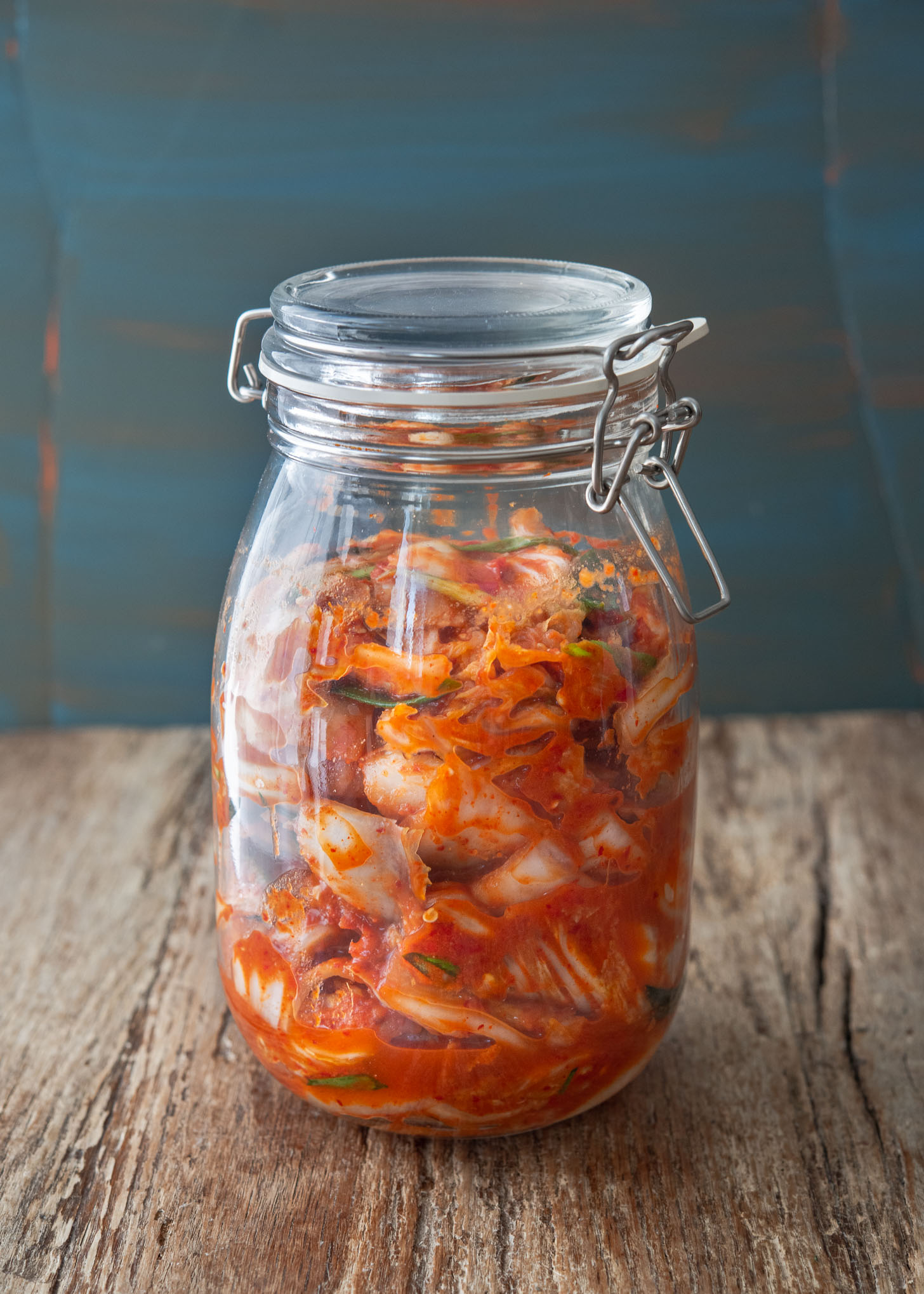
I still remember visiting a few Korean Buddhist temples and being struck by how flavorful their cooking was, even without a trace of meat or seafood. Their kimchi in particular amazed me. It had the same tangy, spicy depth I grew up with, yet it was completely plant-based.
That memory inspired me to create my own vegan kimchi recipe. By using a pear-apple stock and Korean soup soy sauce (guk-ganjang), I’ve found a way to capture authentic umami without fish sauce.
Get new recipes via email:
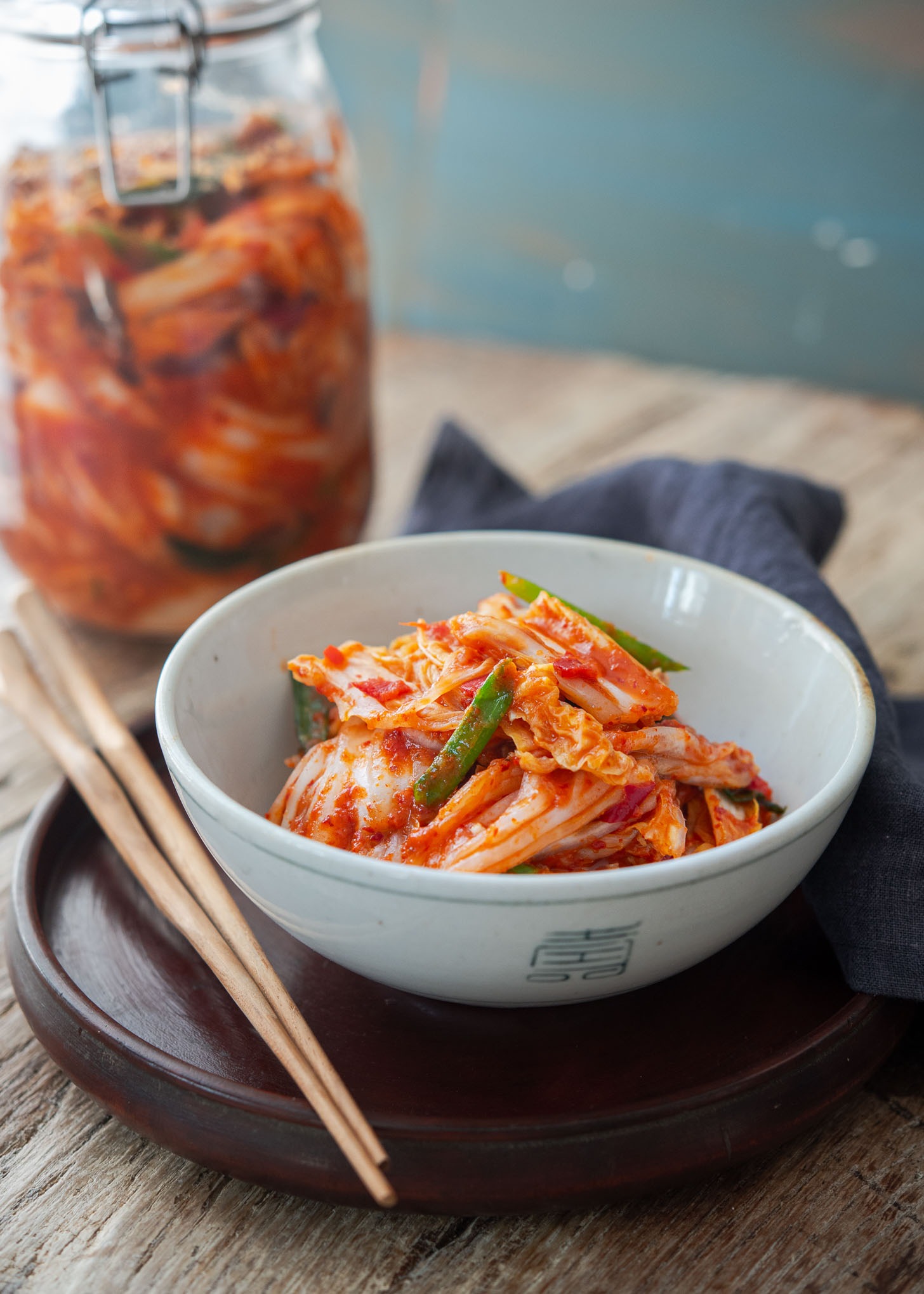
The result is light, crisp, and deeply satisfying—perfect for anyone craving authentic Korean flavor in a vegan-friendly way, or for those who can’t eat seafood but still want the deep, robust taste of traditional kimchi.
What Makes This Vegan Kimchi Authentic
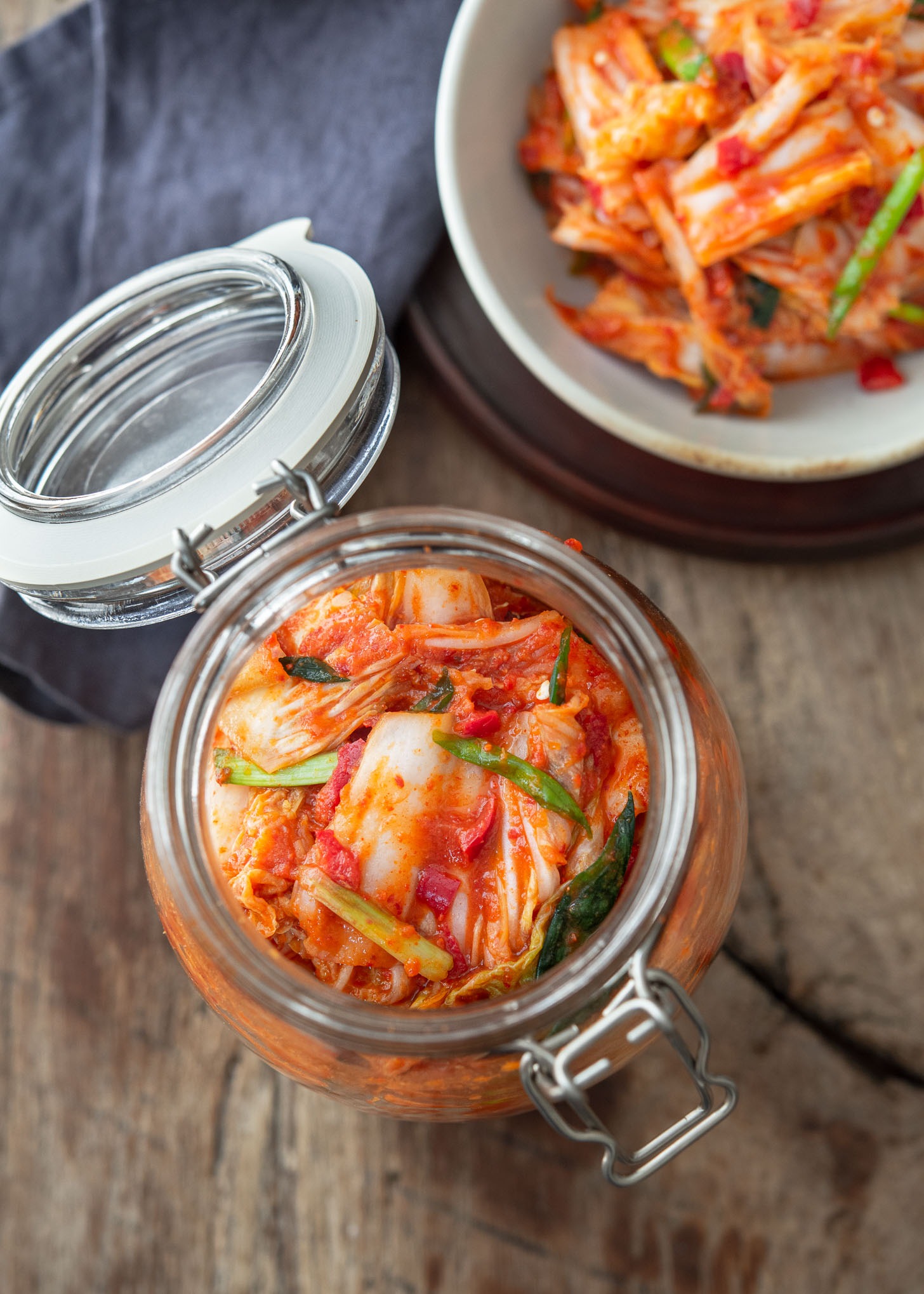
When I first started experimenting with vegan kimchi, I noticed that many versions lacked depth. Traditional kimchi relies on fish sauce or salted shrimp for umami, and simply replacing it with soy sauce or skipping it altogether left the flavor a little flat.
Over the years, I’ve found that the key to a more authentic taste is Korean soup soy sauce (guk-ganjang) combined with a light pear-apple stock. The soy sauce adds clean, savory depth while the fruit stock brings natural sweetness and balance. Together, they create the same layered flavor of traditional kimchi, without muting the kimchi’s vibrant red color.
This method is deeply rooted in Korean Buddhist temple cuisine. In fact, many temple kimchi recipes traditionally use guk-ganjang as their seasoning base. It’s how monks and temple cooks developed rich flavors without seafood for centuries, and that tradition directly inspired the approach I use here.
Key Ingredients for Flavor (and Substitutions)
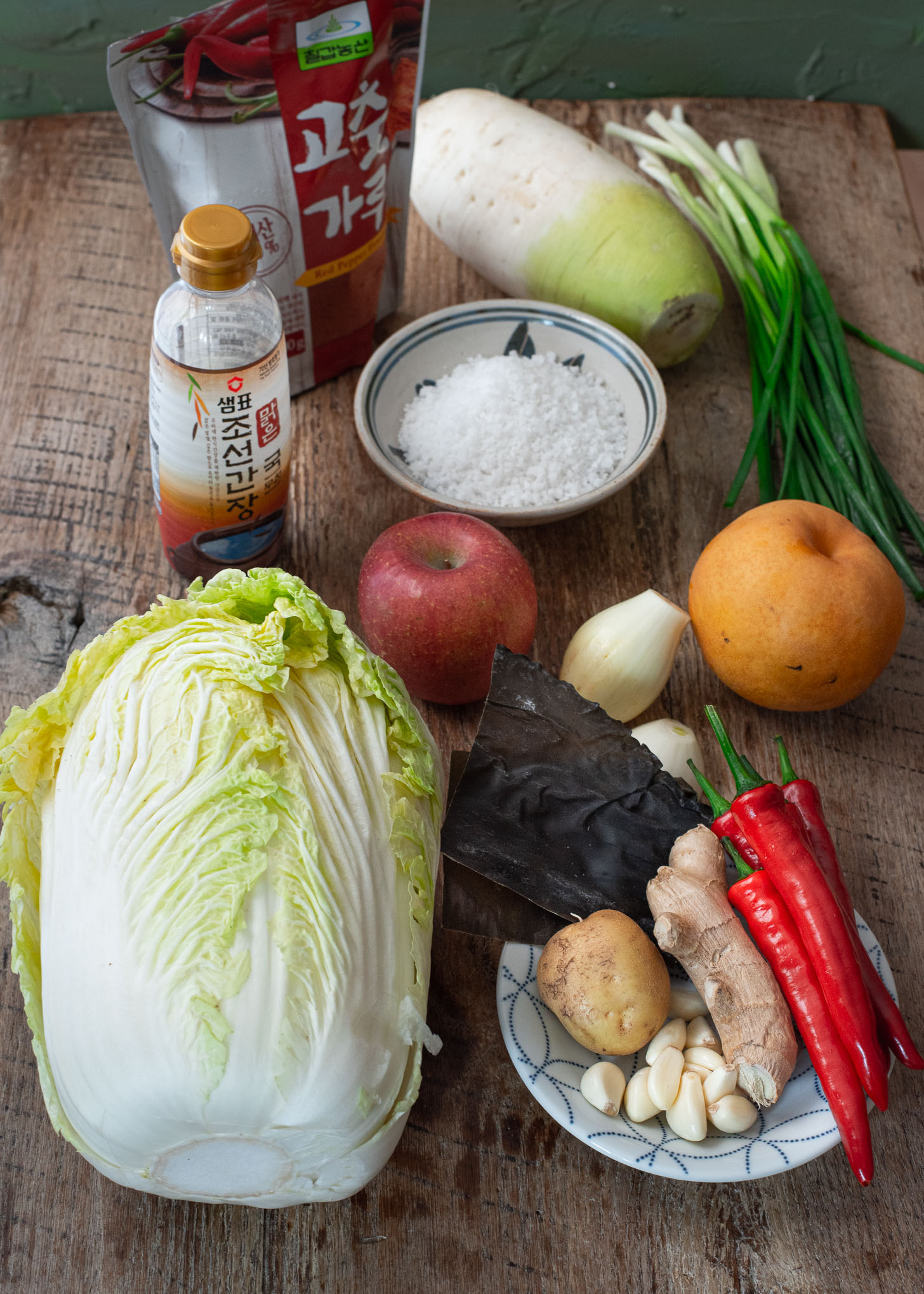
- Napa Cabbage: The classic choice for kimchi, giving crisp texture and natural sweetness. If Napa isn’t available, green cabbage works too. I share a full method in my green cabbage kimchi recipe.
- Korean Soup Soy Sauce (Guk-ganjang): The backbone of authentic vegan kimchi. Unlike regular soy sauce, it’s lighter in color and deeply savory, so it seasons without darkening the chili paste. Many temple-style kimchi recipes rely on it as their main umami source.
- Fruit & Vegetable Stock: Made with pear, apple, radish, onion, and sea kelp. This is my key to balancing saltiness with natural sweetness—no sugar needed.
- Starch Base (Potato or Rice): A small amount of starch feeds the beneficial bacteria that drive fermentation, ensuring the kimchi develops properly.
- Korean Red Chili Flakes (Gochugaru): Essential for flavor and aroma. The coarse texture and fruity heat can’t be replaced with generic chili powder.
How to Make Vegan Kimchi (Step-by-Step Guide)
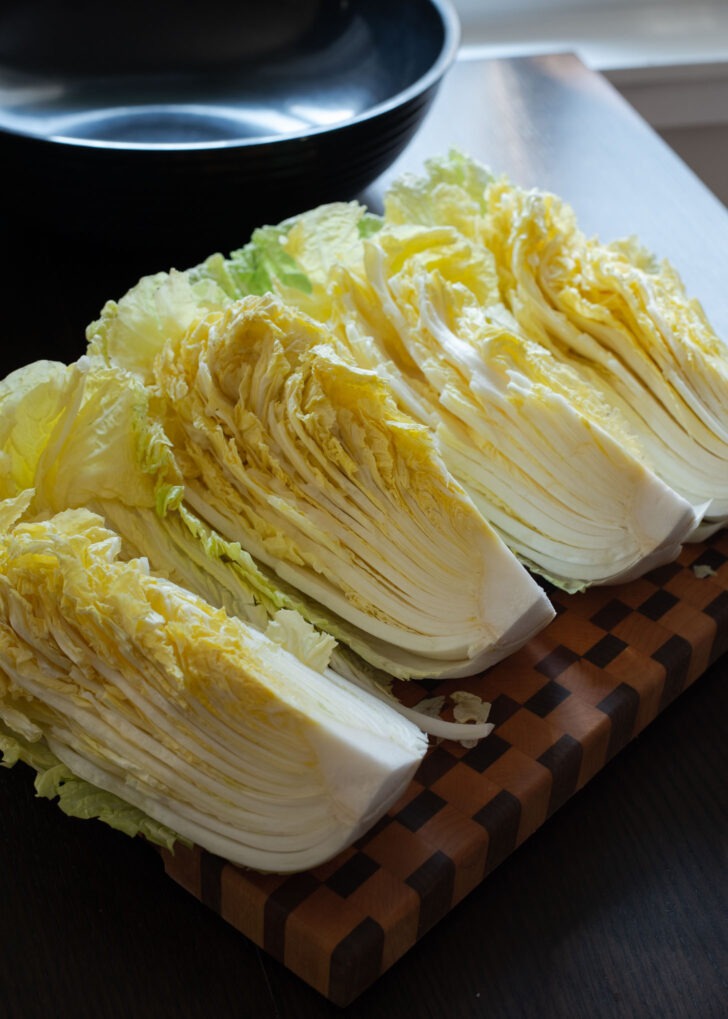
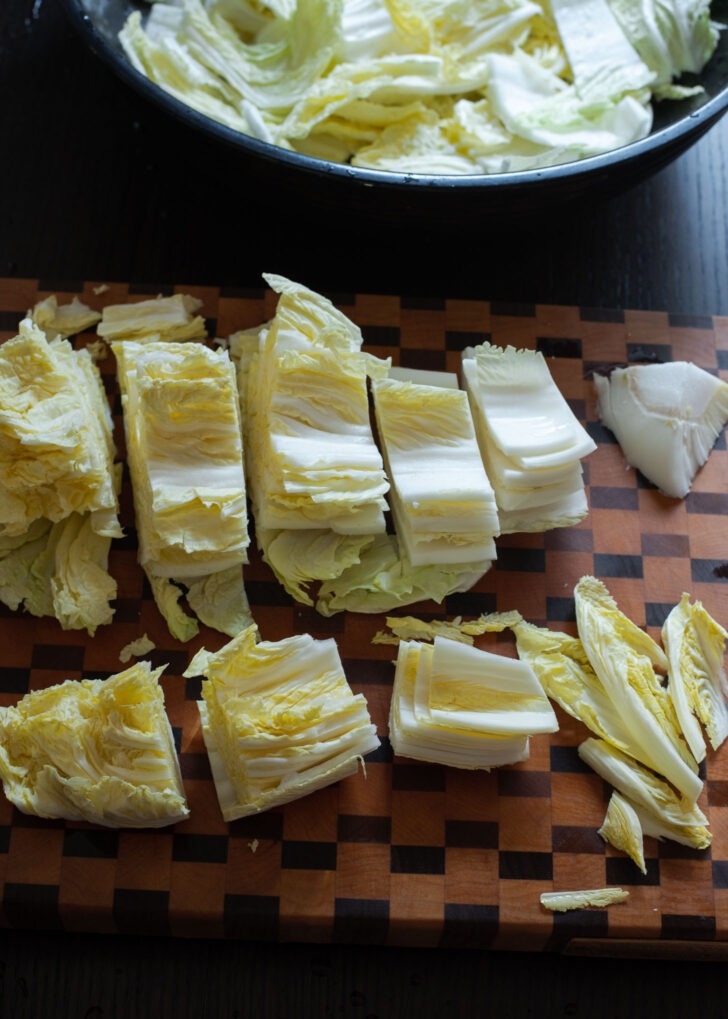
Slicing the cabbage: Cut the cabbage into even bite-sized pieces, keeping the leafy parts slightly larger and the thick ribs a bit smaller. This balance helps everything brine and ferment at the same pace, so you don’t end up with leaves that go limp while the stems stay tough.
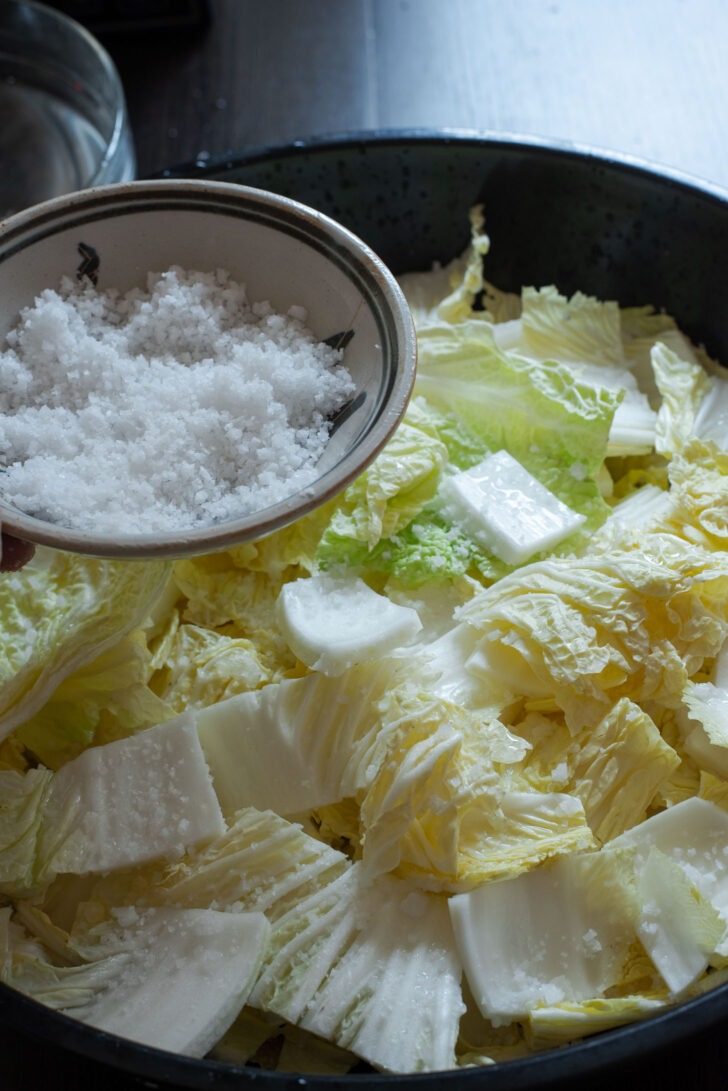
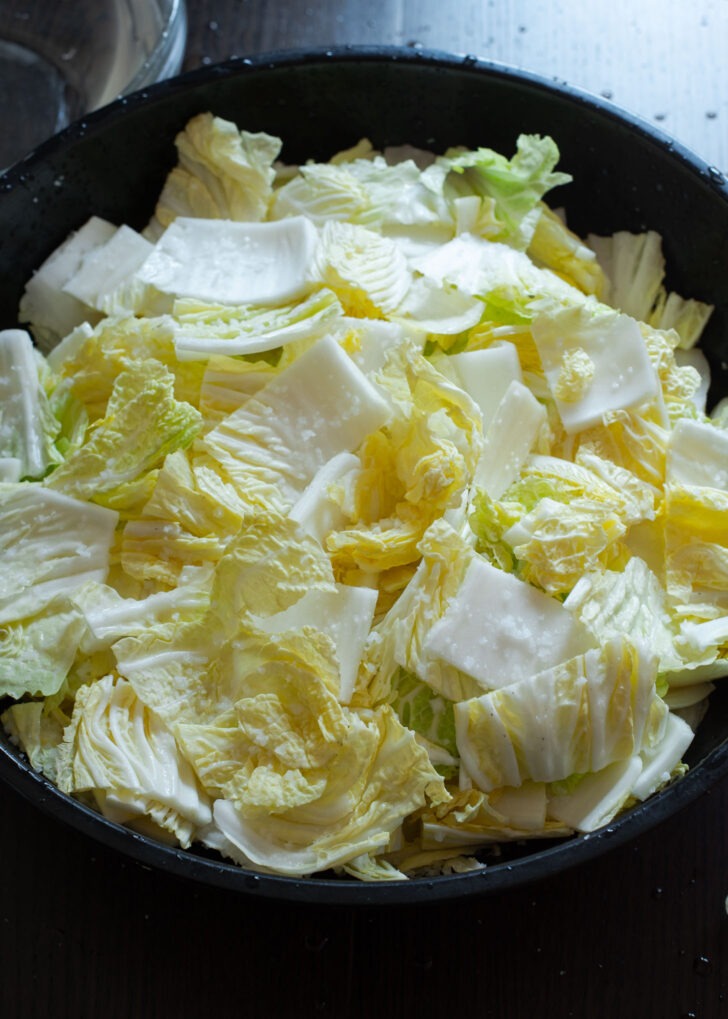
Salting the cabbage: Sprinkle coarse salt between the layers as you go, letting the cabbage rest so it can draw out moisture. You’ll notice the leaves begin to soften and release water—this is the sign the salt is pulling moisture for fermentation.
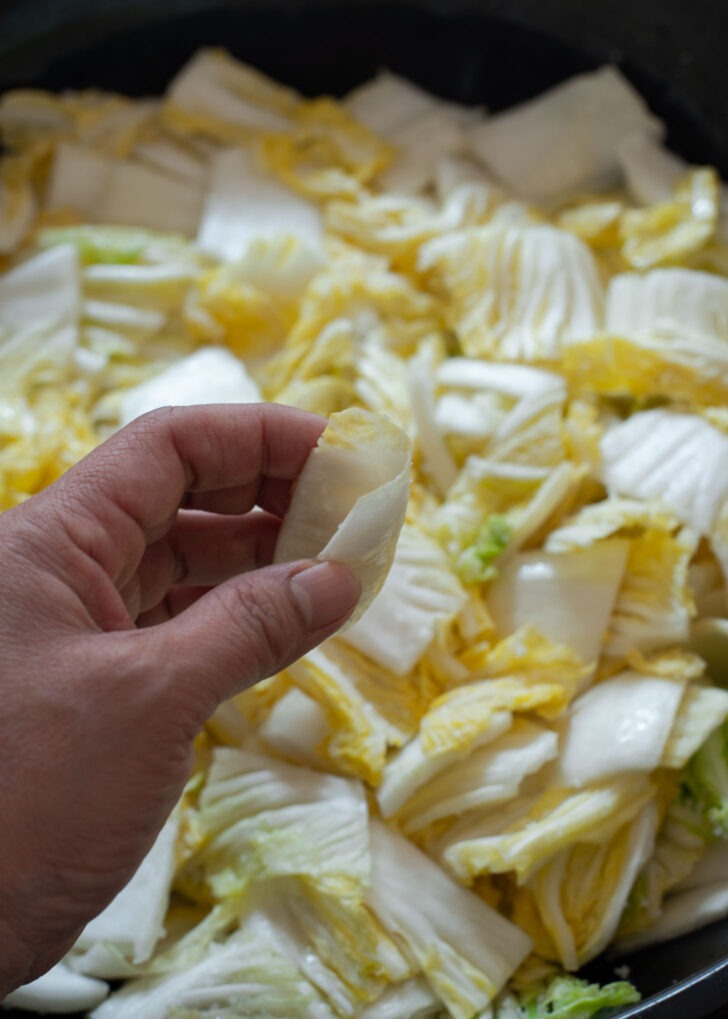
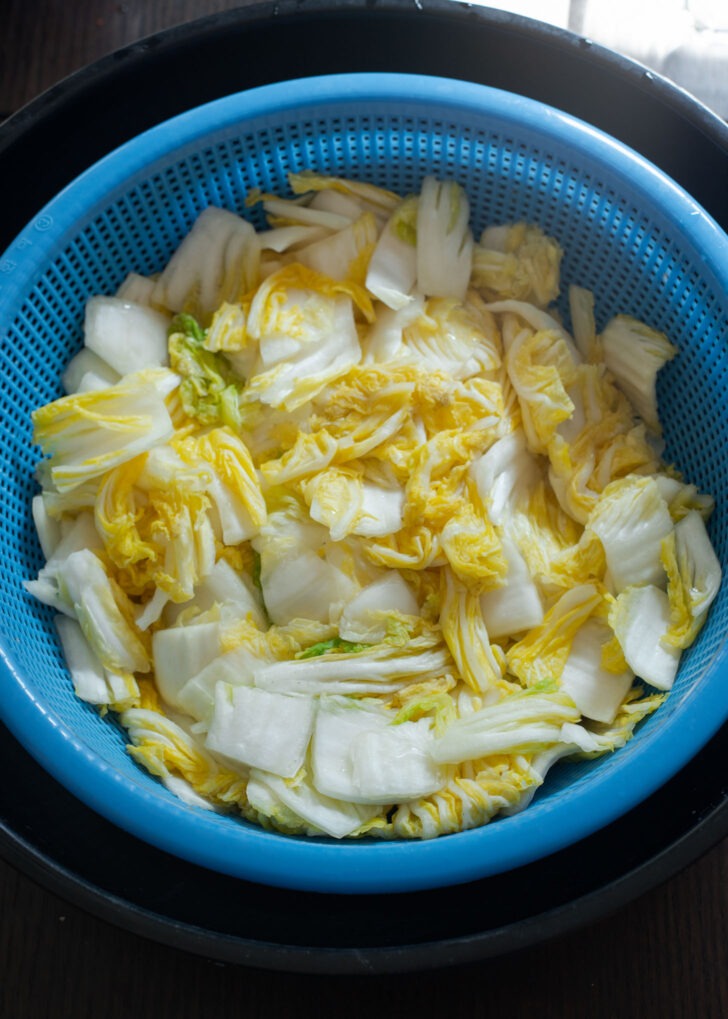
Rinse the cabbage: Once the stems bend without snapping, rinse the cabbage thoroughly in cold water three times. This not only removes excess salt but also washes away any grit hidden between the leaves. Let it drain well in a colander—too much leftover water can dilute the kimchi paste and weaken the flavor.
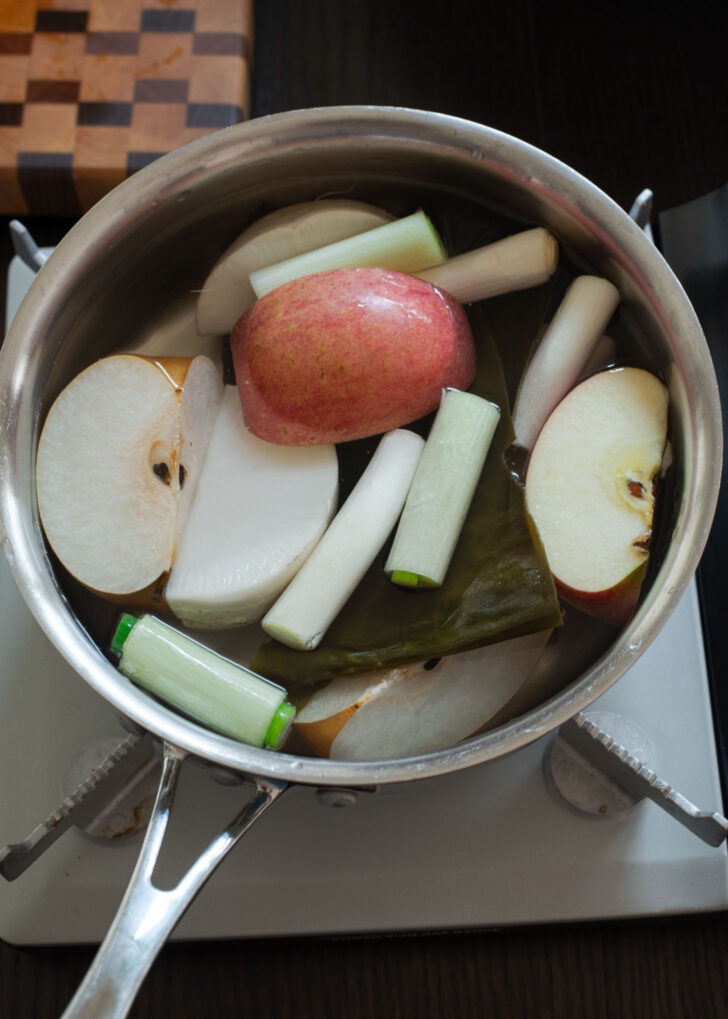
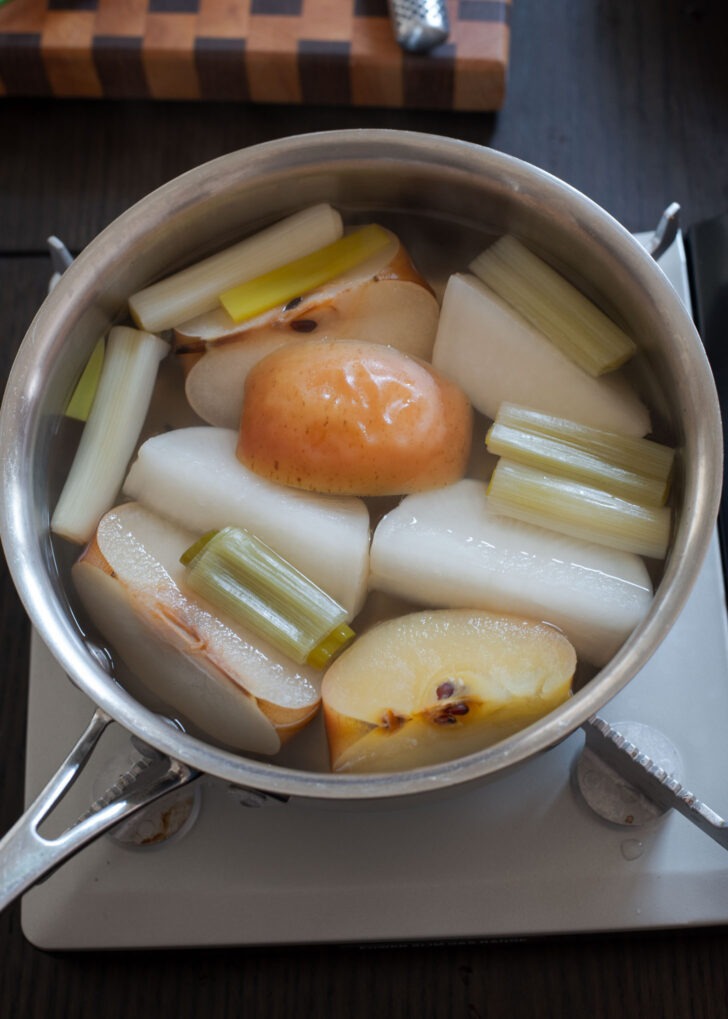
Preparing the base stock: A light pear-apple stock balances out the chili paste. This method is common in temple cooking and removes the need for added sugar.
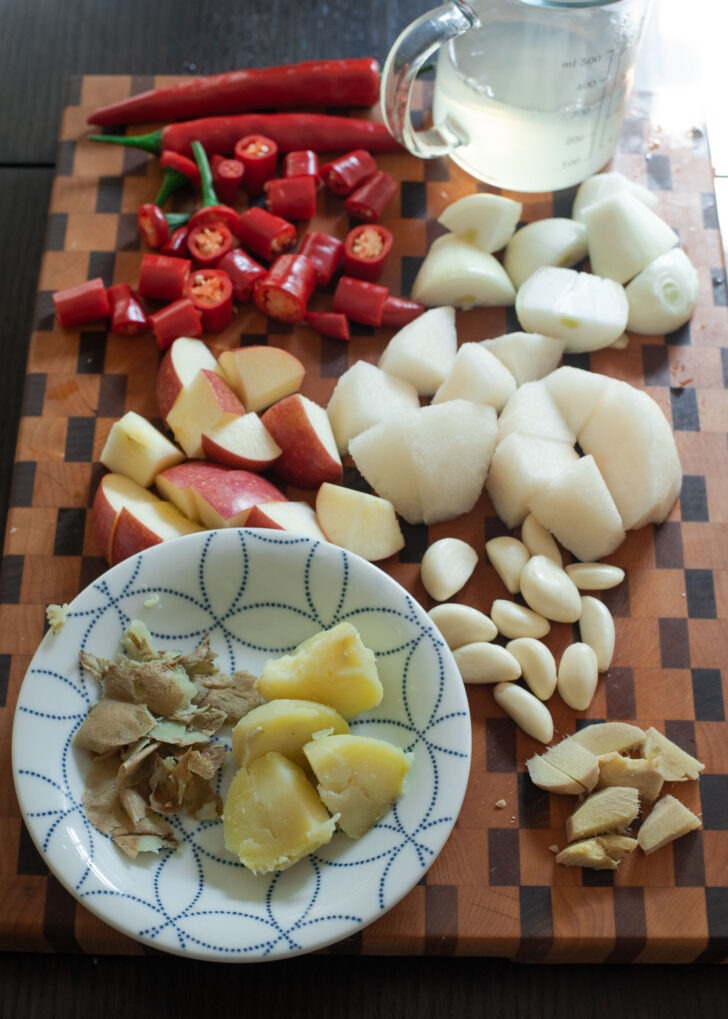
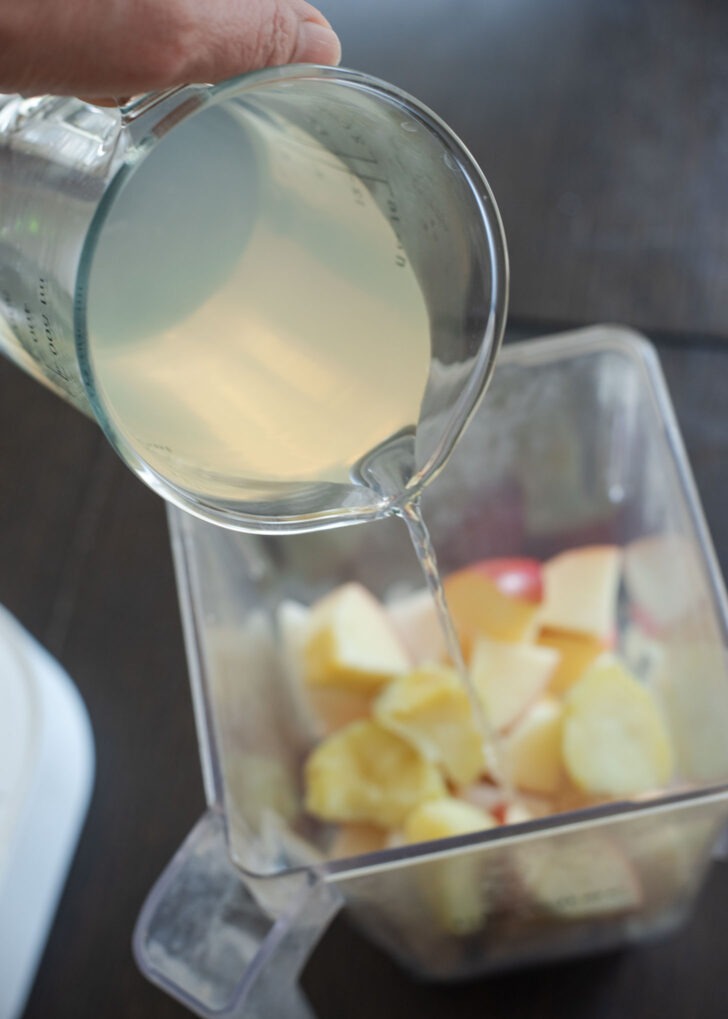
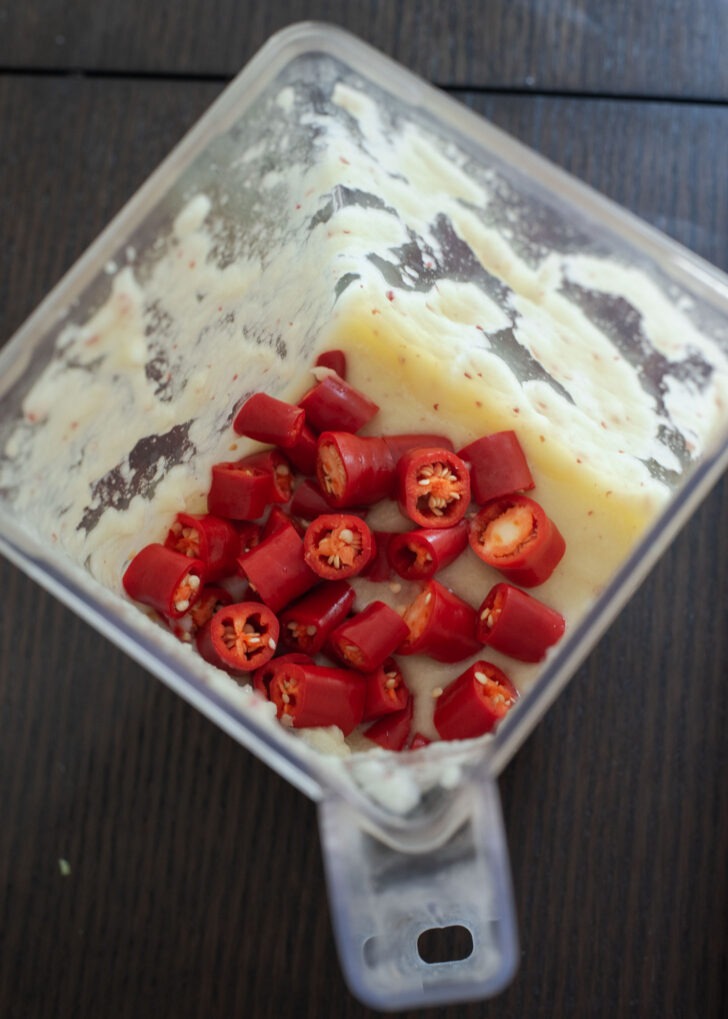
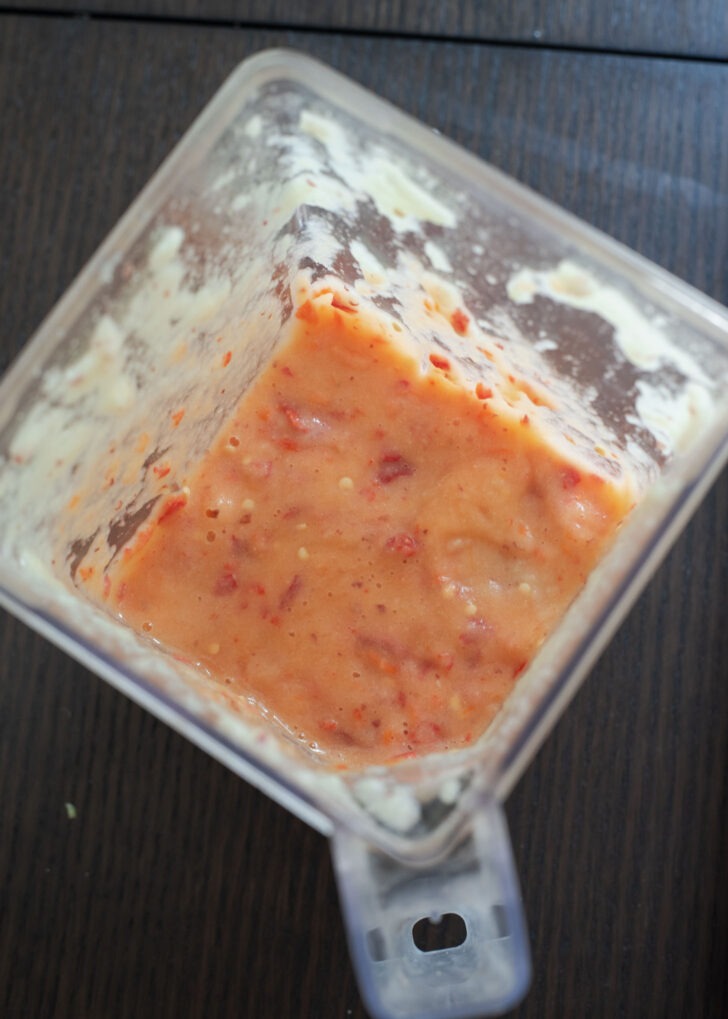
Blending the paste: I puree the aromatics with potato or rice starch. It feeds the lactic acid bacteria that drive fermentation.
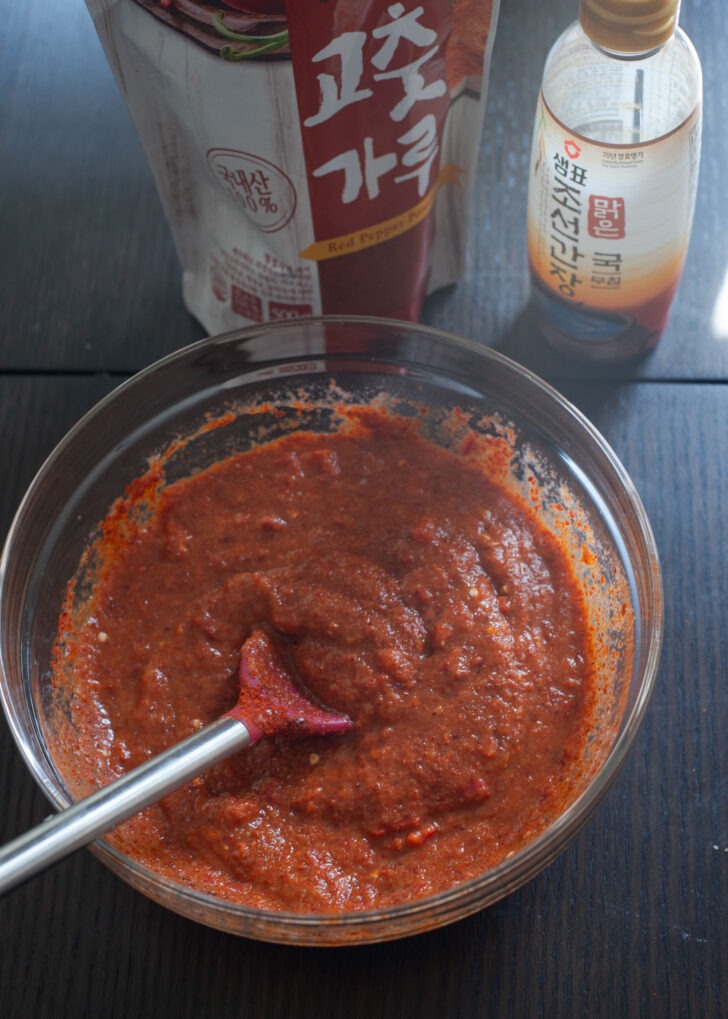
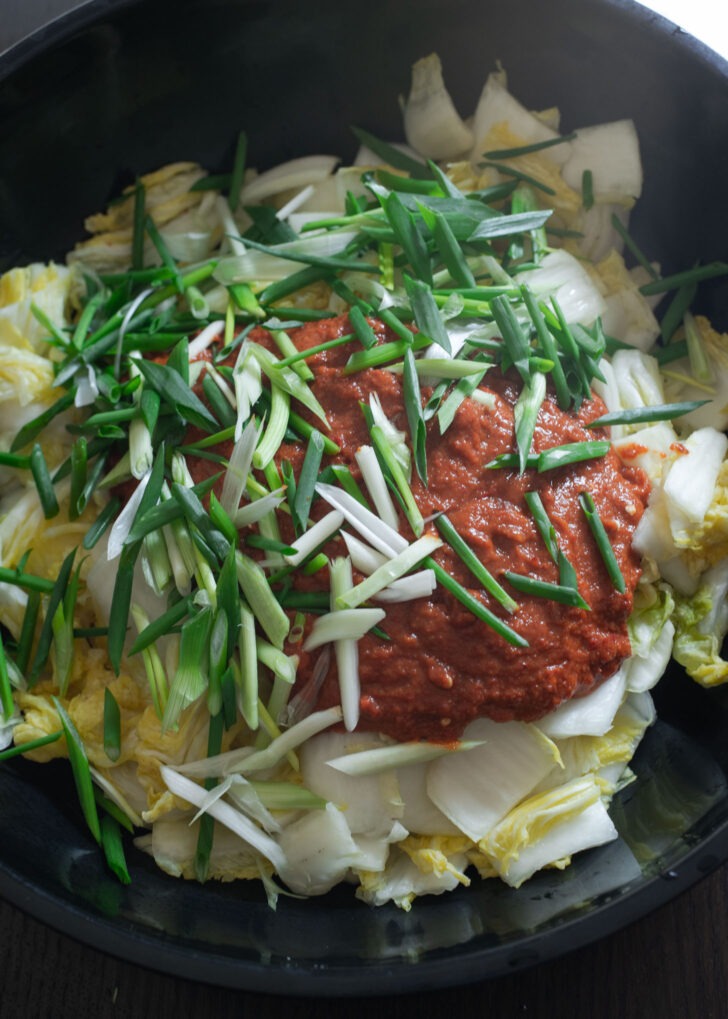
Mixing in the chili flakes: Letting the gochugaru hydrate in the paste for a few minutes deepens both the color and flavor.
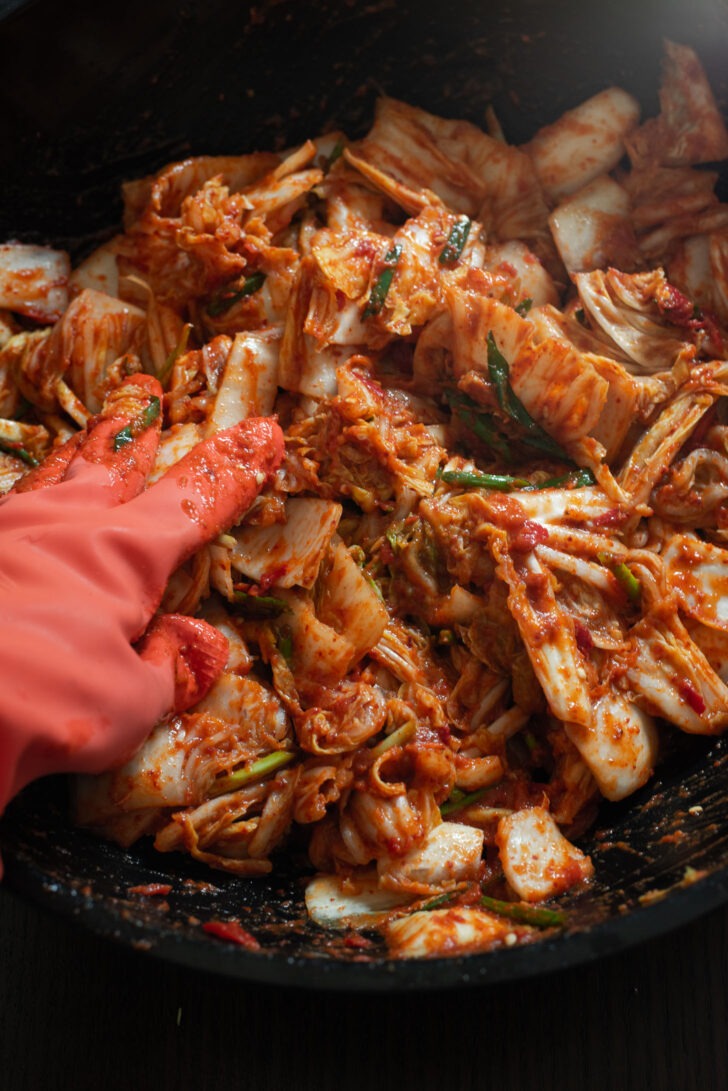
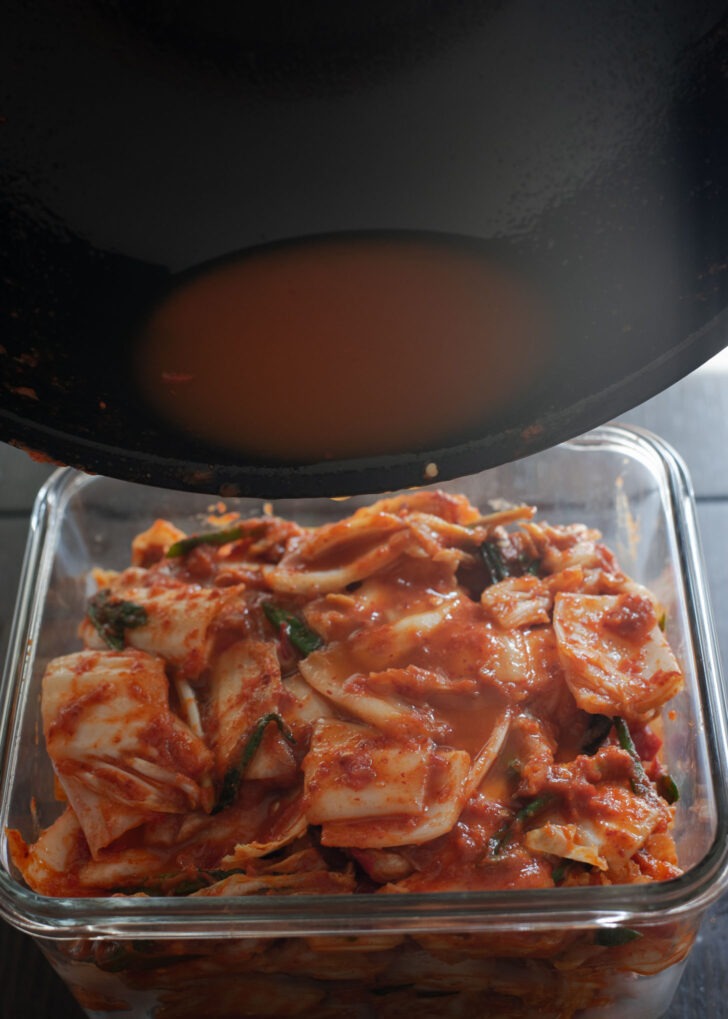
Coating the cabbage: Use kitchen rubber gloves and toss gently so each piece gets evenly coated. If you like a juicier kimchi, swirl leftover stock in the mixing bowl and add it to your jar.
Fermentation: Leave the jar loosely covered at room temp for a day or two. You’ll see small bubbles rising—this is the natural fermentation at work.
Serving Ideas for Vegan Kimchi
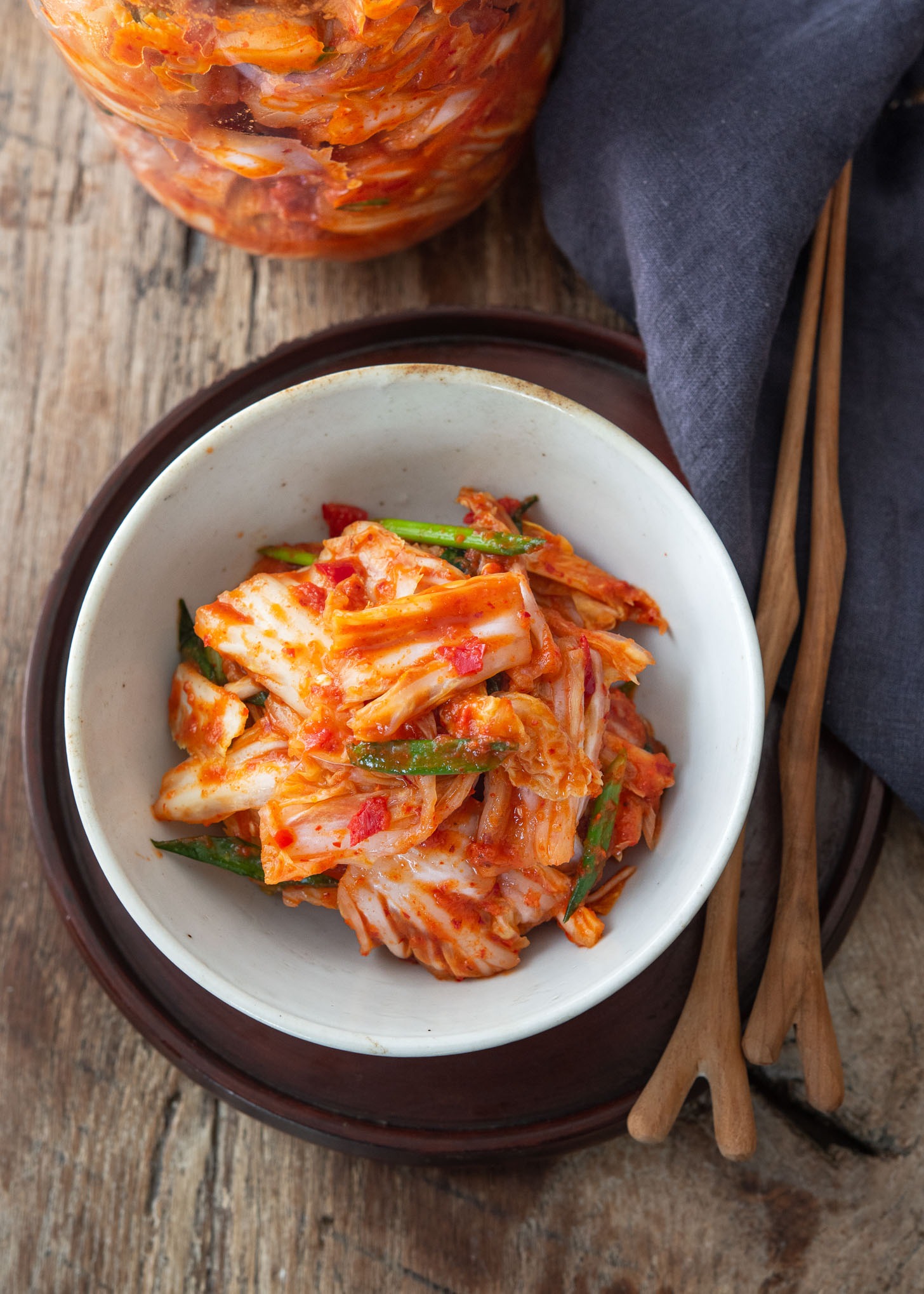
I love freshly made kimchi with a simple bowl of rice, but it also brings flavor to so many other dishes. Toss it into a quick kimchi fried rice, layer it in vegan kimbap, or stir it into a warming kimchi jjigae.
Slightly older kimchi is my favorite for savory kimchi pancake. It gives them the tang and depth you can’t get any other way.
Love this recipe? Rate it and share your experience in the comments below! On Instagram? Tag me to showcase your creation. For more delicious recipes, subscribe to our newsletter!
Vegan Kimchi (Authentic, No Fish Sauce)
Recipe Video
Ingredients
- 4 1/2 lb (2 kg) napa cabbage
- 1 1/2 cup (360 ml) Korean coarse sea salt, or 1/3 cup kosher salt
For vegetable-fruit stock
- 1/2 large onion, or leek, sliced
- 1/4 lb (113 g) Korean radish, or daikon radish, diced
- 2 large pieces dried sea kelp (dashima)
- 1/2 Asian pear or Bosc pear
- 1/2 sweet red apple
- 6 cups (1.4 liter) water
For kimchi paste
- 1/2 large onion, diced
- 10 cloves garlic
- 1-2 inch (2.5–5 cm) ginger, peeled and diced
- 1/2 (150 g) Asian pear or Bosc pear, peeled, cored, and diced
- 1/2 (100 g) sweet red apple, cored, and diced
- 4 tbsp (60 g) cooked plain potato, or white rice
- 4-5 fresh red fingerlong chilies, diced, optional
- 2/3 cup (160 ml) Korean chili flakes (gochugaru)
- 4 tbsp (60 ml) Korean soup soy sauce (gukganjang)
- 1 bunch (100 g) green onion , sliced
Instructions
To salt the cabbage
- Cut the cabbage in half lengthwise, and separate the halves by hand and then repeat the process to make quarters. Rinse the cabbage and chop it into 2-inch pieces.
- Spread a small portion of cabbage in a large bowl, sprinkle 3-4 tablespoons of coarse salt (1 tablespoon for kosher salt) evenly, and repeat until all the cabbage is used. Sprinkle with water occasionally if the cabbage seems dry and push it down with your hands. Let it soak for 1 1/2 to 2 hours, turning it around halfway through. Rinse the cabbage thoroughly 3 times and drain well in a colander.
To make the vegetable stock
- While the cabbage is brining, make the vegetable-fruit stock by combining pear, apple, radish, onion, dried sea kelp, and water in a pot. Boil and then simmer over medium heat for 20 minutes, removing the sea kelp after 5 minutes. Discard the ingredients and reserve 1-1/2 cups of stock. Let it cool.
To make kimchi paste
- Process onion, garlic, ginger, pear, apple, cooked potato (or white rice), and 1/2 cup of stock in a blender until smooth. If using fresh red chili, add the slices at the end and pulse a few times.
- Pour the puree into a mixing bowl and add Korean chili flakes, Korean soup soy sauce, and mix well. Let it sit for 5 minutes so that the chili flakes can absorb the seasoning and rehydrate.
To assemble kimchi
- In a large mixing bowl, combine the cabbage and sliced green onion, add the kimchi paste, and toss well to coat all the cabbage pieces.Tip: To avoid chili stains on your hands, it is recommended to wear kitchen gloves or disposable plastic gloves.
- Transfer the kimchi into a storage container. If you want extra kimchi brine, add the remaining 1 cup of stock to the mixing bowl you assembled the kimchi in. Rinse the bowl to collect all the residue of kimchi paste and pour it over the kimchi.
- After preparing the kimchi, let it sit at room temperature for 1-2 days to allow the fermentation process to start. Then, transfer the kimchi to the refrigerator to let the flavors develop fully. See the recipe notes below for more information.
Notes
- To preserve the flavor of your kimchi, use an airtight container.
- Do not fill the container to the top, but leave at least 1/5 of the container empty to allow the kimchi to expand during fermentation.
- Allow the kimchi to sit at room temperature for 1-2 days, depending on the temperature, and then store it in the refrigerator for an additional 2-4 days for ideal fermentation.
- As kimchi ferments, it creates an odor. To prevent the spread of the odor, keep 1-2 boxes of fridge baking soda in your refrigerator.
It works! I made it from western style cabbage instead of Napa cabbage – same taste, just different texture. I didn’t have Korean pepper, so I used red pepper flakes and some of my frozen Trinidad scorpion pepper (little pieces) I grew in my garden last year. Added a touch of brown sugar for more fermentation. I also added shredded carrot and used western style radish. I also only had red delicious apples and Bartlet pears on hand. I had kelp granules and put a tablespoon in a metal mesh infuser for the broth. My version tastes very close to the Korean version, even with the changes. But it’s really simple to do! I let it sit out two days to ferment. This is a good basic recipe that allows for any variation. So really, ANYONE can make it, even if they don’t have access to Asian ingredients. And, it’s super healthy. Everyone should eat kimchi! The bacteria from its fermentation have astounding health benefits – look it up and see for yourself. 😀
❤️❤️❤️ thank you so much for sharing this Recipe!
This looks great! I am constantly trying different vegan kimchi recipes and cannot wait o try it (my mother-in-law has a persimmon tree and we are always trying to figure out ways to use up the fruit!).
In your opinion, do you think that using cooked brown rice as a starch component would be a good substitute? I’ve used white rice and made rice porridge before, I was just wondering about brown rice as an option.
Thank you!
Jaycen
Brown rice will work, but it can change the kimchi color slightly darker. Also brown rice is less starchy.
Thank you! I started a new batch yesterday, we’ll see how it goes! 🙂 Thank you for responding! I am so glad I’ve found your site!
Thank you so much for sharing! I don’t think I will make this recipe because I don’t have a blender and the Eden grocery shop nearby is run by Koreans who make authentic kimchi (and I don’t have to avoid seafood). But I can almost taste most recipes just reading them, like how I can listen to music just looking at the notes (my master’s degree is in piano), and what made your recipe so lovely I couldn’t resist responding was your tone! You’re serious about what you say but it’s really sweet like your persimmon. No wonder you like to add fruit but not sugar to your kimchi! Please keep writing to us about your cooking!
I’ll try this recipe soon, not because I’m vegan but because I’ve recently moved to Uruguay and haven’t found fish sauce or fish powder yet. Also, I have a person in my household with a serious allergy to shellfish so I have to be careful. Thank you for making this available in English!
Yes, this kimchi will be safe for those with shellfish allergy.
Thank you for this recipe, looks awesome and I will give it a try today, but I have a doubt about the potato, I suppose it goes with the stock and everything that is blended? Rice would also be blended here?
Yes, either cooked potato or rice can be used to be blended all together with the other ingredients as specified. Hope it turns out well for you. Thanks.
Great recipes with veg broth and persimmon! I would imagine how good it will be because I love persimmon 😀
Can the onion and garlic be left out in the recipe during the fermentation process?
Onion and Garlic won’t effect the fermentation but they help with the flavor. I would recommend to use less. Omitting entire amount won’t bring the good taste of kimchi
WOWW!! This recipe turned out to perfection!!! The broth is the magic ingredient. And next time I will seek the treasured PERSIMMON to make it even better.
Where did you find those bamboo chopsticks? The brown one that looks like a bamboo stick 🙂 SO cool!
THANK YOU! My Korean wife said our Kimchi is better than her mom’s!
Holly, about the soy sauce for soup. I’ve read that it is gluten-free, as in no wheat is used during the production. Can you as a native speaker confirm, that it contains no grains with gluten just soy? Thanks!
Korean soy sauce for soup comes from the liquid where doenjang block is soaked in salt solution and being fermented. Authentic doenjang block(meju) should be 100% soy, therefore a good soy sauce for soup should be free of any wheat or barley. However, most commercial doenjang paste contains added wheat or rice during the process of making doenjang paste from the meju block to create desirable texture and color. For my understanding doenjnag block(meju) itself is made with 100% soy, but I can’t confirm if all the commercial soy sauce for soup are gluten-free. I highly suggest to read the ingredient label on the soup soy sauce bottle to see if there is any added wheat or other grains.