

Maeuntang (Korean Spicy Fish Stew with Croaker)
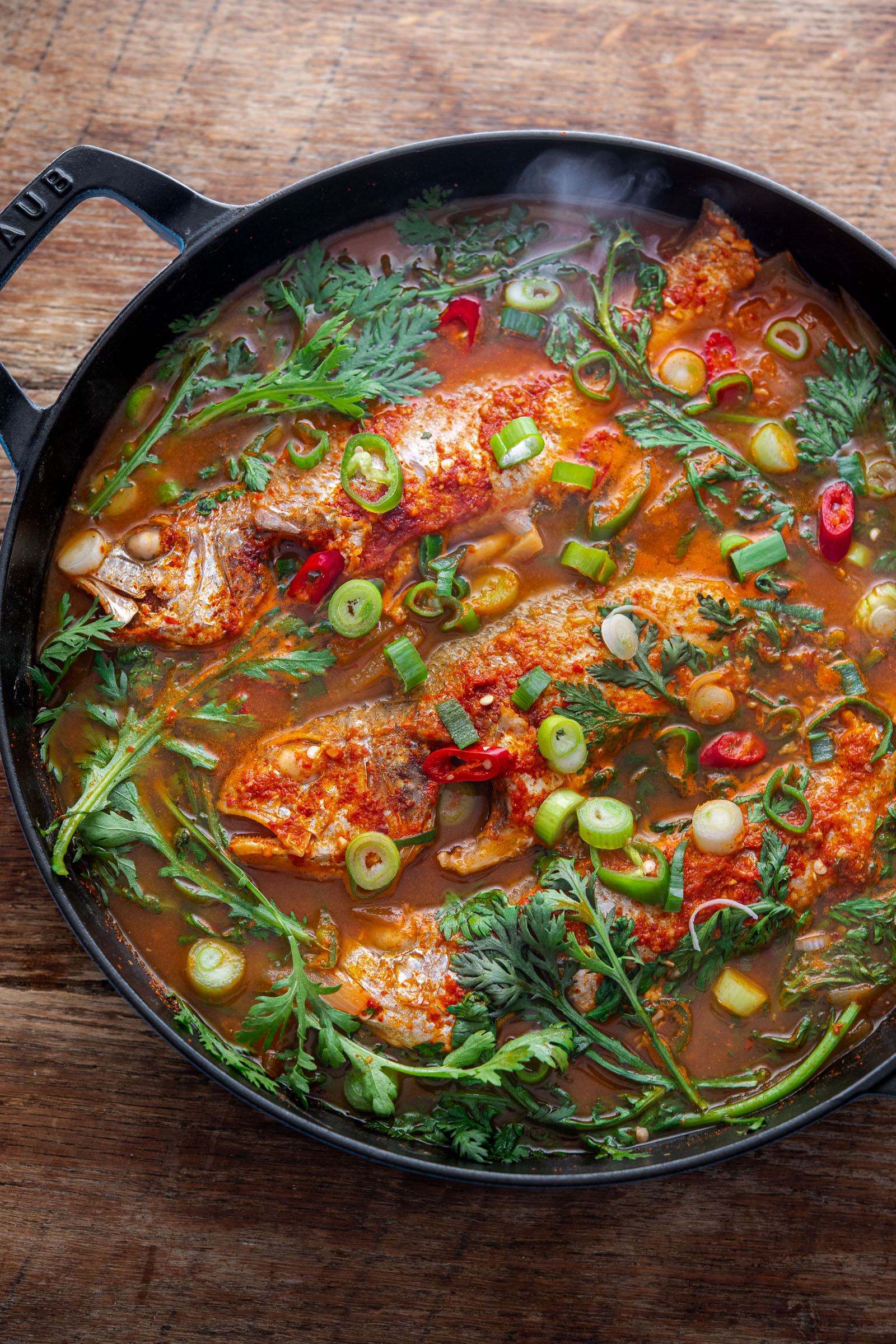
Spicy, bubbling maeuntang made easy at home. This Korean fish stew uses croaker or any firm white fish, Korean radish, and fresh greens in a rich savory broth. Ready in about 40 minutes, it is a cozy seafood dinner that begs for a bowl of rice.
Get new recipes via email:
Growing up on the southern coast of Korea, maeuntang was a regular dinner at our table. My mother often came home from the market with fresh fish caught that day. She simmered it with Korean radish, crown daisy (ssukgat), and water dropwort (minari), making a broth that was spicy, rich, and full of flavor.
In Tongyeong, where I’m from, she usually made maeuntang with fresh rockfish, a local favorite prized for its clean flavor and tender flesh. Since rockfish can be hard to source outside Korea, I use croaker here instead. It is easier to find in many countries, cooks well in stew, and gives you that same delicate white fish texture that works so well in this stew.
My favorite part was always the broth. A bowl of rice disappeared quickly every time. Maeuntang has a deep, warming flavor that wins people over fast. Even people who say they do not like fish often change their mind after one meal.
Best Fish to Use for Maeuntang at Home
Maeuntang works best with firm white fish that can hold its shape while simmering and still turn tender in the broth. In Korea, cooks often use whatever fish is freshest that day, so this is a flexible stew, not a one-fish-only recipe.
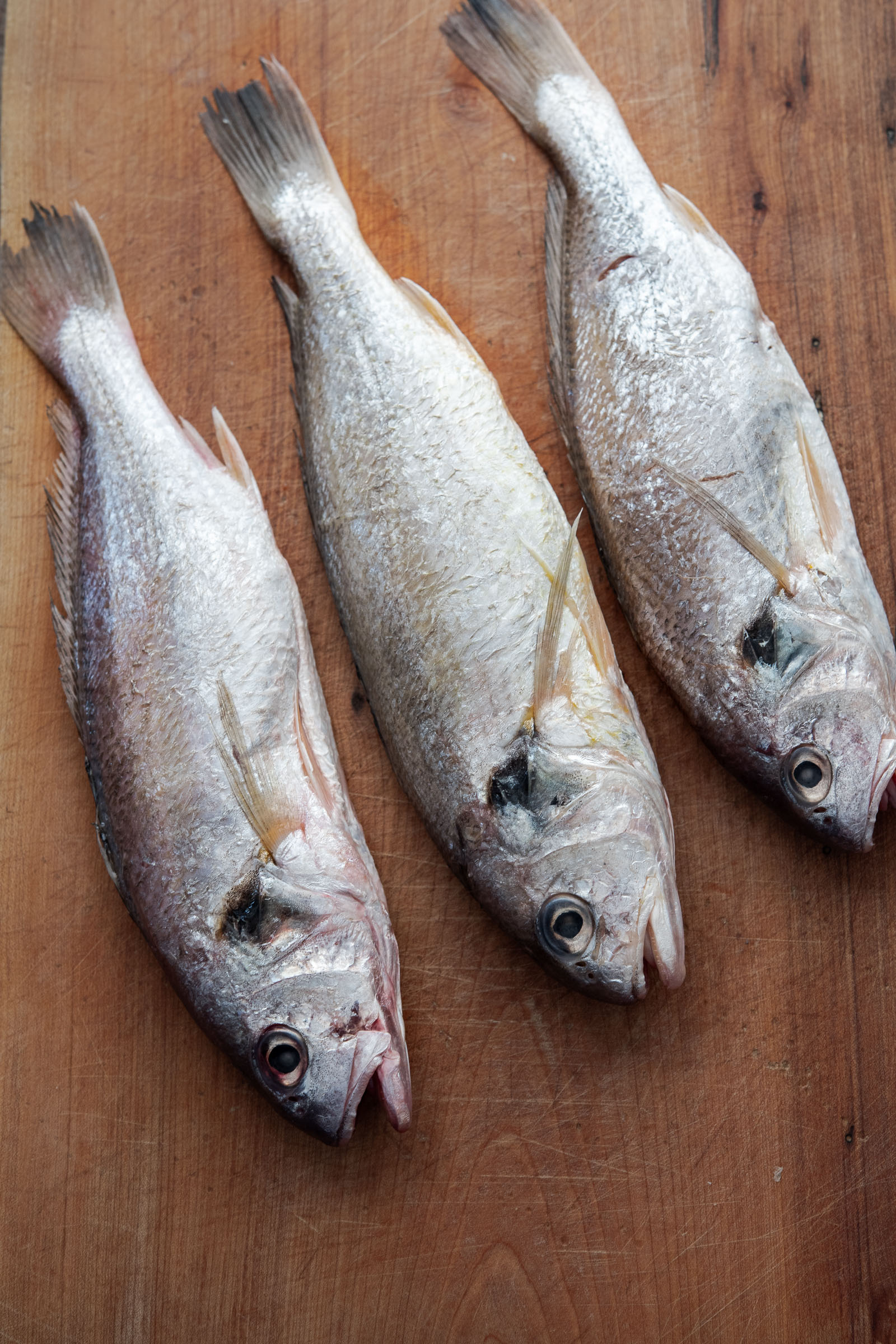
I use croaker for this version because it gives a clean, naturally savory flavor and soft flakes that pair well with the spicy broth. It is also easier to find in many countries than some Korean coastal fish.
Other good choices include red snapper, sea bass, black sea bream, cod, halibut, or rockfish. If you can buy a whole fish, even better. The head and bones add extra depth to the broth, which is why restaurant versions often taste fuller and richer.
If using fillets, choose thick cuts rather than thin pieces so the fish does not break apart too quickly.
Whole Fish Cleaning Tips
If your fish is not already cleaned, ask the fishmonger to descale it, remove the guts, and trim the fins. If you clean it yourself:
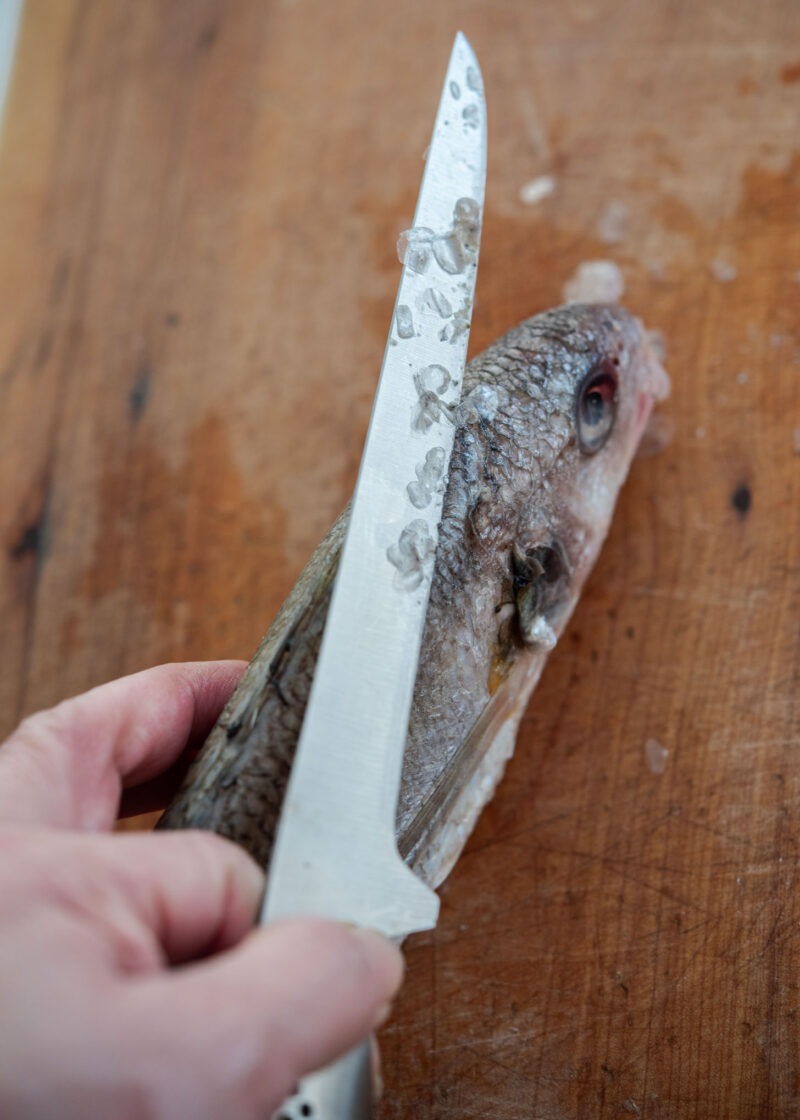
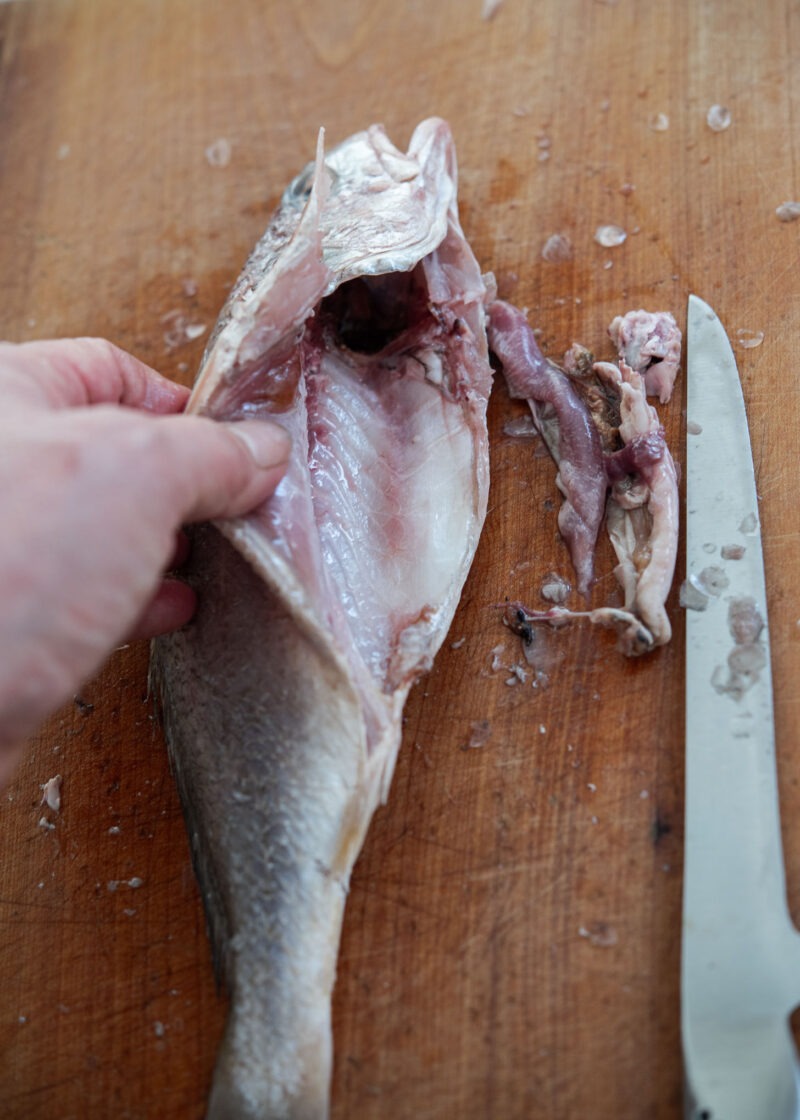
Scrape off the scales well, especially near the belly, head, and fins. Remove the gills, which can make the broth bitter. Remove the innards and rinse the cavity well.
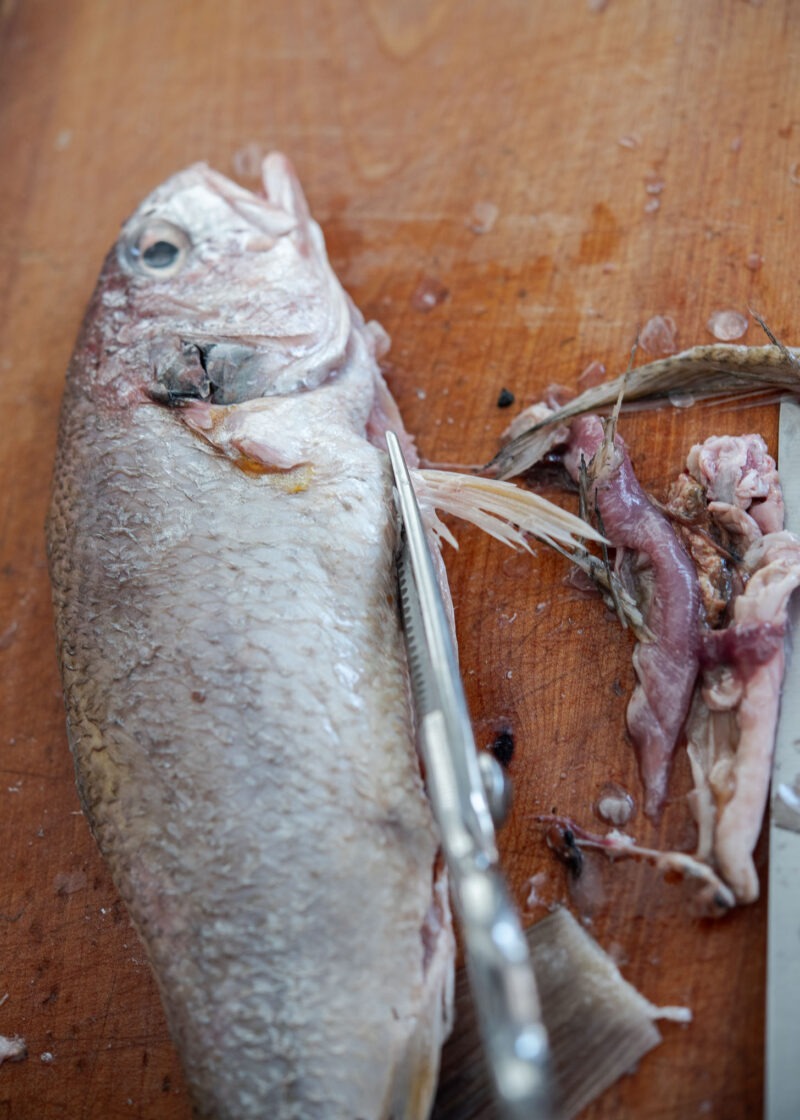
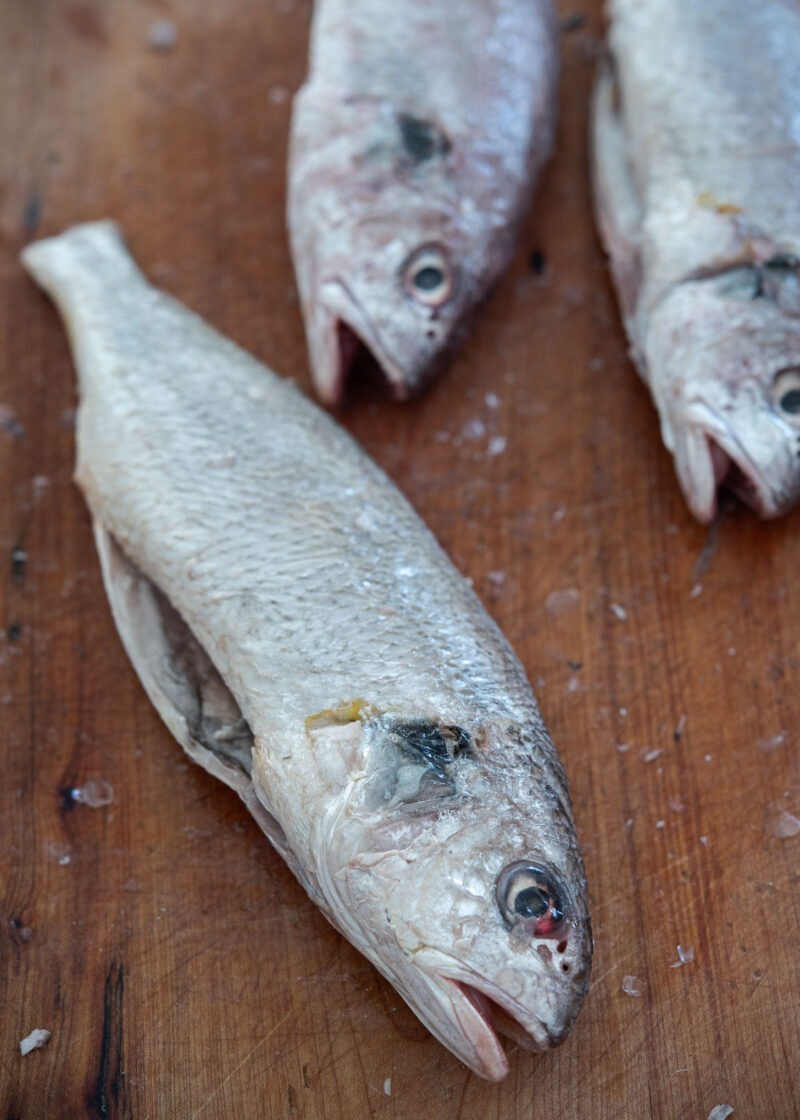
Trim-off all the fins. A quick rinse is enough. Avoid soaking fish in water too long, or the flavor can wash out. Check out my broiled yellow croaker post or recipe video below for detailed instructions on how to clean a whole fish.
My Honest Shortcut
If cleaning a whole fish sounds like a Tuesday problem you do not need, buy fish steaks or large fillets. The stew will still be delicious. Whole fish gives more broth flavor, but good fresh fish matters more than fish drama.
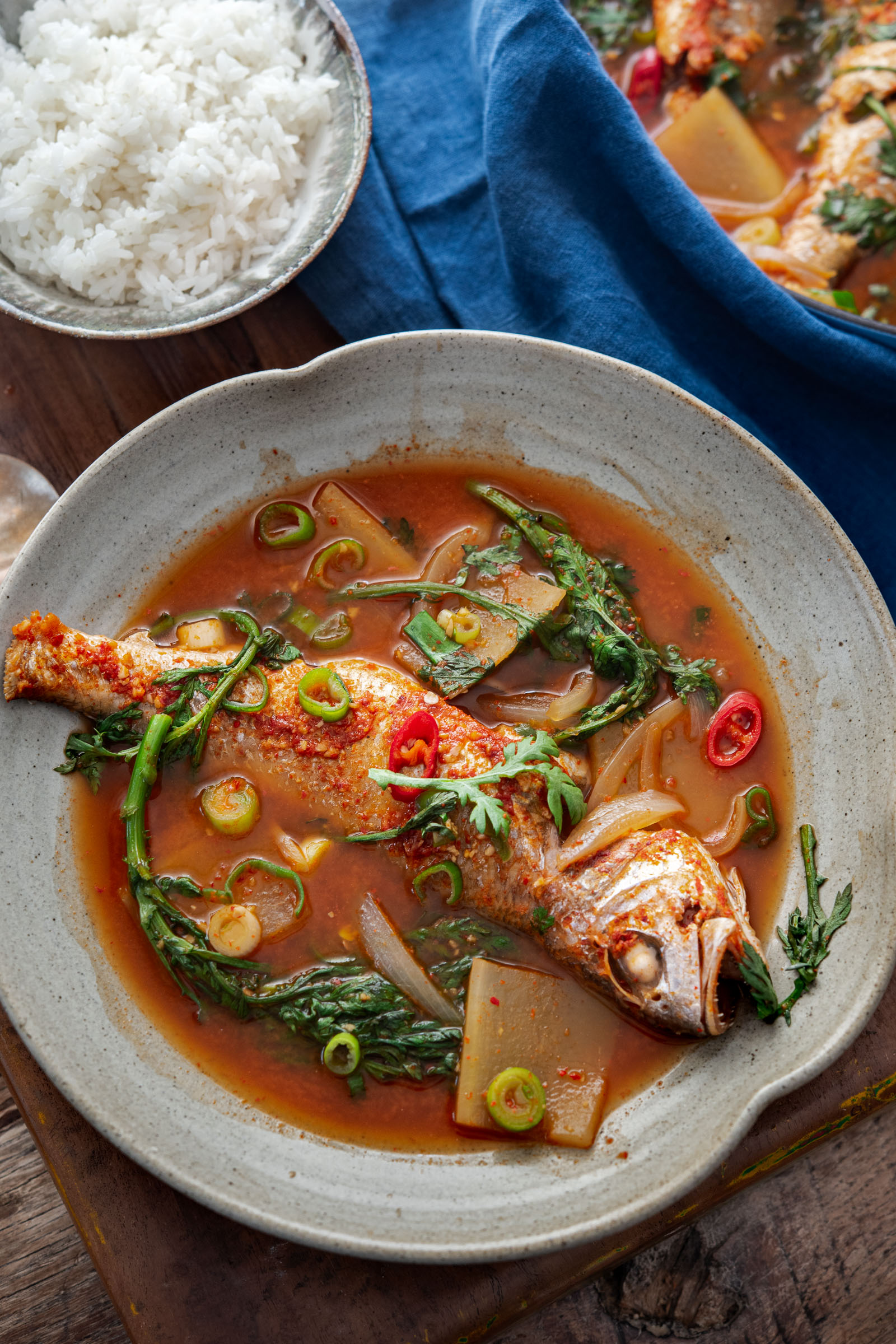
Key Ingredients, Smart Swaps, and Broth Tips for Better Maeuntang
A good maeuntang does not need a long ingredient list. It needs the right few ingredients working together. These are the ones that give the broth its clean, rich flavor, plus a few practical swaps if you cannot shop at a Korean market.
White Fish:
Use a firm white fish that holds its shape while simmering. Whole fish adds more depth, but thick fillets also work well.
Rice Water for More Body:
If you rinse rice before cooking, save the first cloudy rinse water and use it for the stew. This old home-cook trick gives the broth a little more body and a softer finish. Plain water works fine too, so do not let this stop dinner.
Gochugaru, Gochujang, and One Small Spoon of Doenjang
Gochugaru and gochujang build the spicy base. I also like to add a small spoonful of doenjang (Korean soybean paste). It deepens the broth, rounds out the flavor, and helps mellow any strong fish notes without making the stew taste like soybean paste. Use a light hand here. Maeuntang should taste like fish stew, not doenjang jjigae in disguise.
Korean Radish:
Korean radish is one of the most important ingredients in this stew. As it simmers, it adds gentle sweetness and helps the broth taste fuller and cleaner. If Korean radish is not available, use daikon as the best substitute.
Greens That Finish the Stew:
Crown daisy (ssukgat) and water dropwort (minari) are classic choices. They add fresh aroma and a crisp bite right at the end. If you cannot find them, use watercress or bok choy for a milder version. Add greens last so they stay bright and lively instead of looking like they had a hard day.
How to Make Maeuntang Step by Step
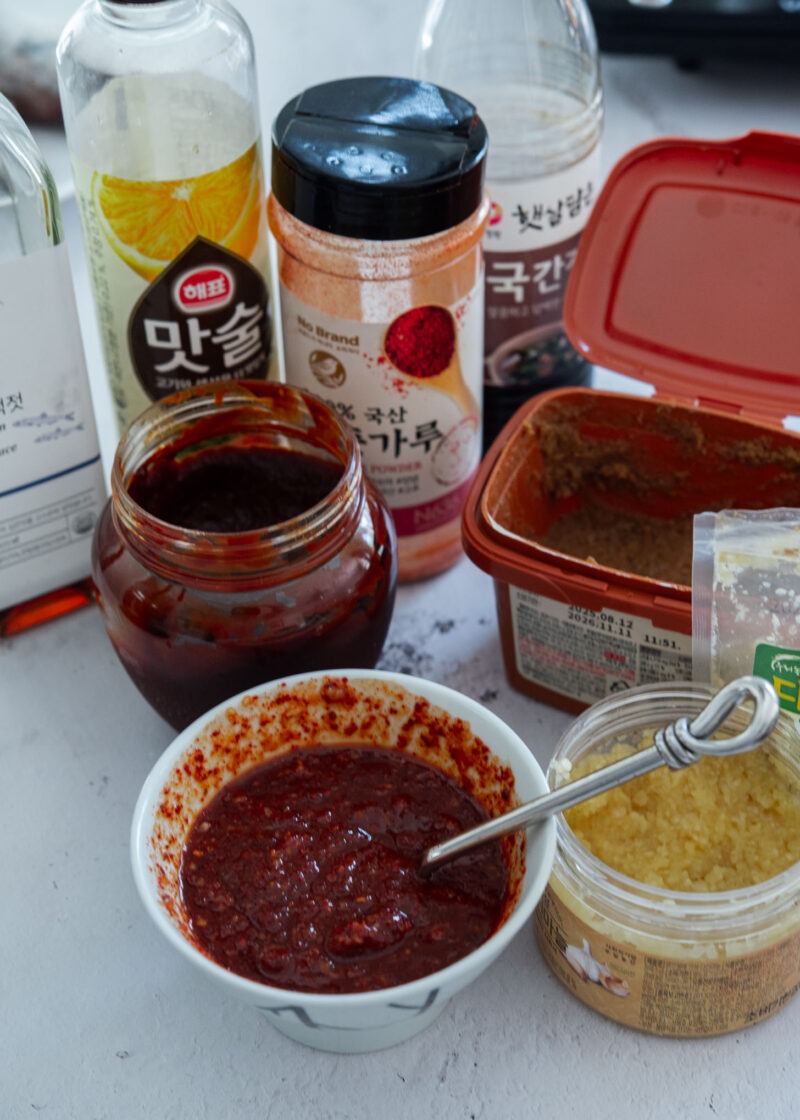
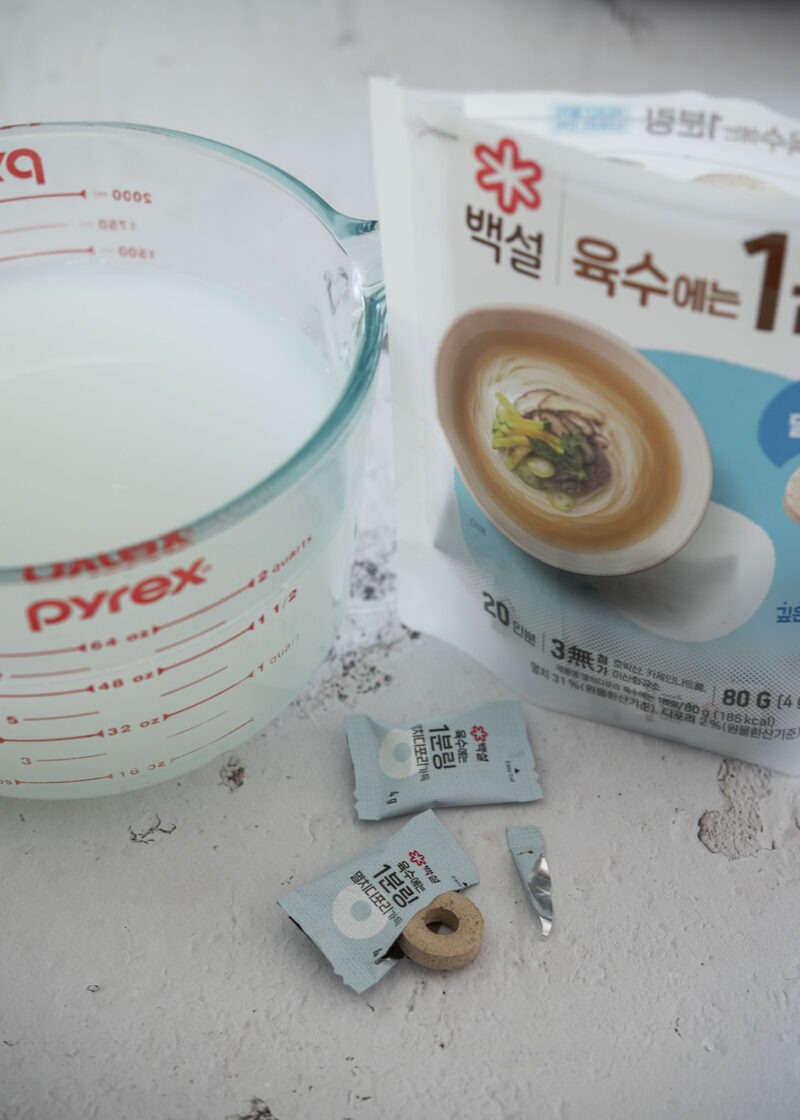
Maeuntang comes together quickly, so the order matters more than the effort. Start by mixing the seasoning first so the chili flavors bloom evenly once they hit the hot broth. I like using saved rice rinse water for extra body, then boosting it with anchovy stock coins when I want deeper flavor without making stock from scratch.
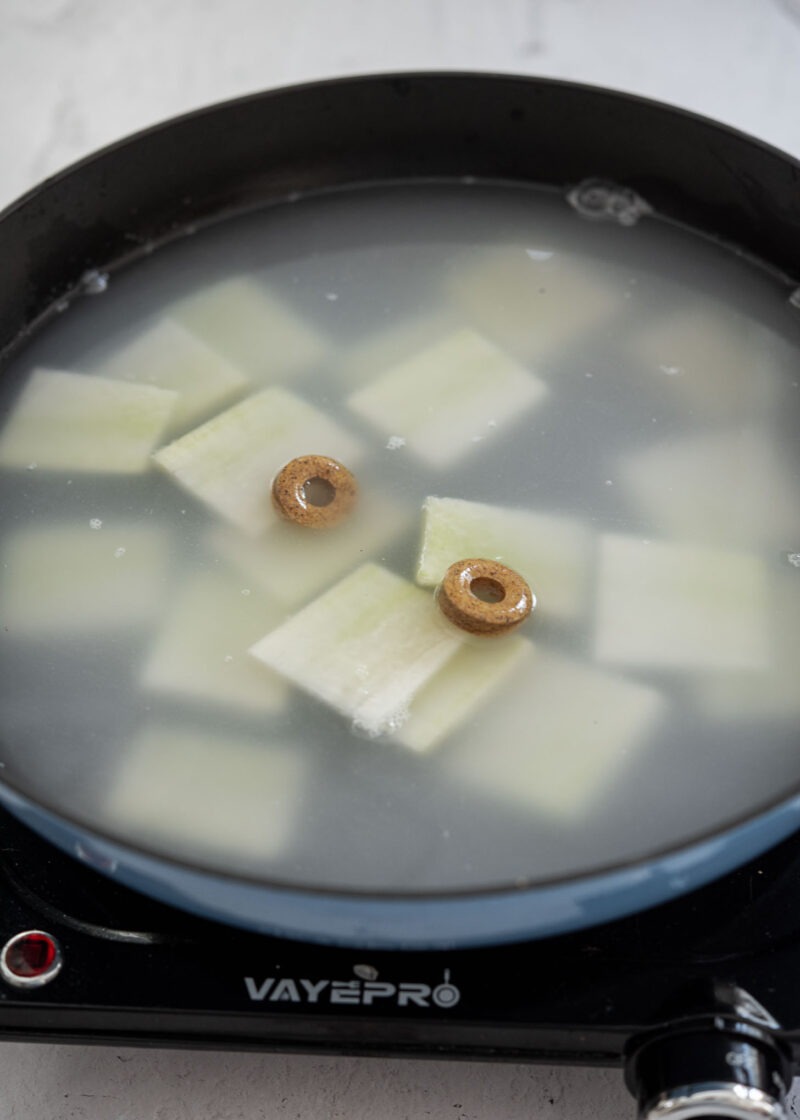
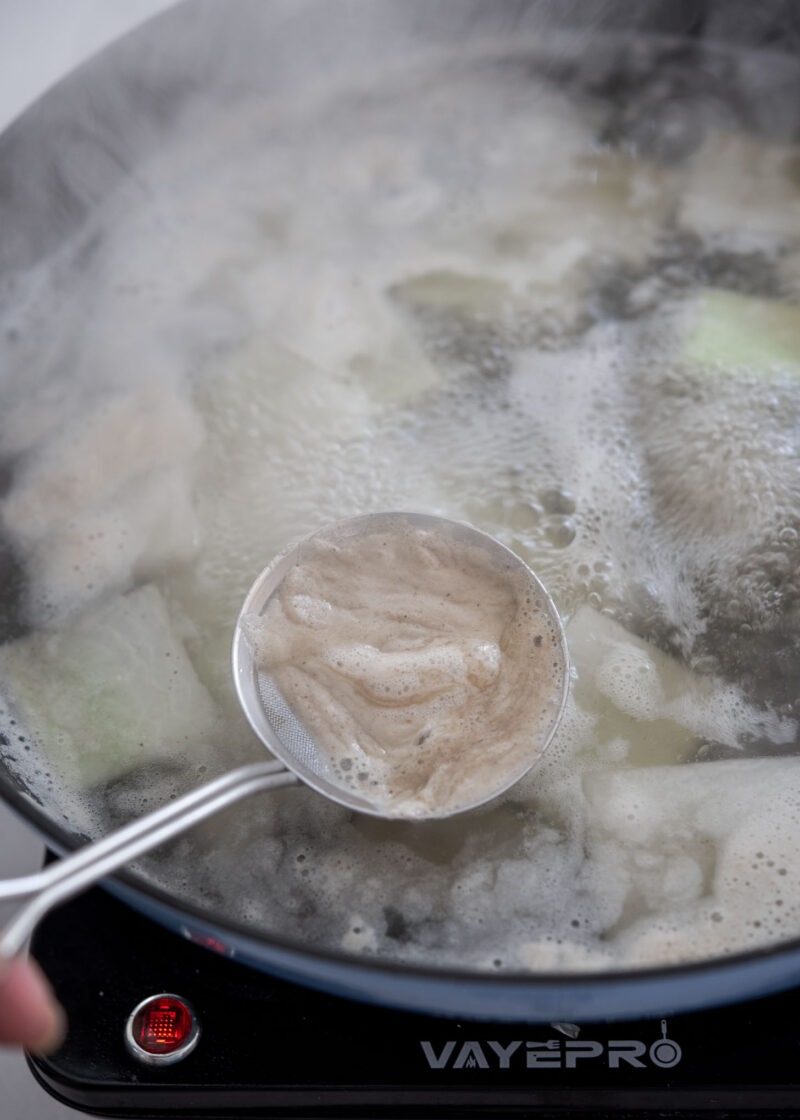
Simmer the radish first before adding the fish. This gives the broth sweetness and lets the radish soften enough to absorb flavor. As the pot boils, skim off any foam on top. Skimming keeps the broth clean and clear.
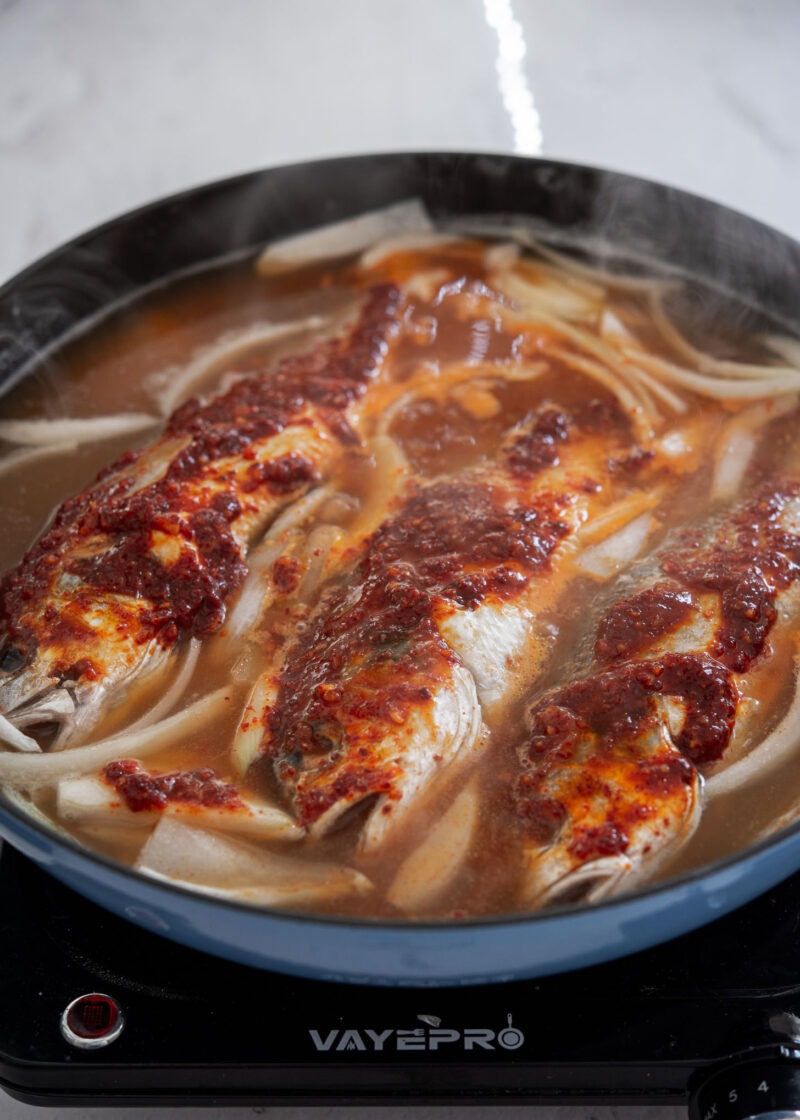
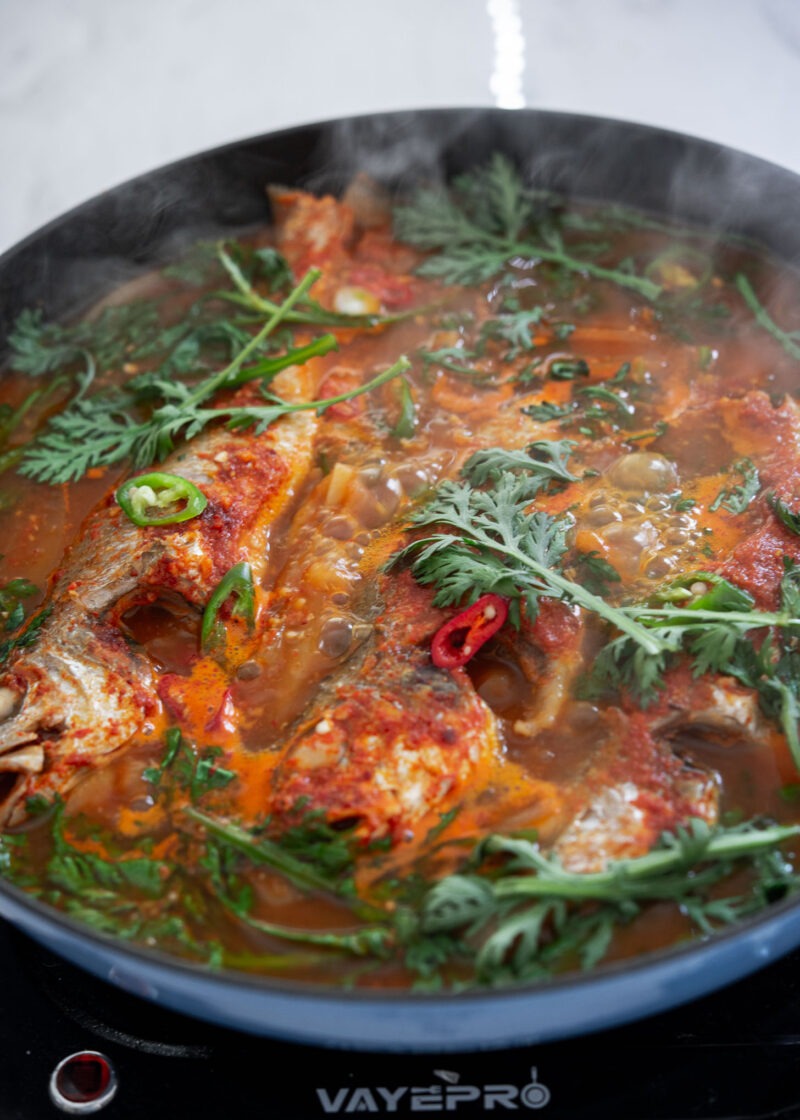
Once the broth is ready, add the fish and spread the seasoning over it rather than stirring too hard. Fish is delicate and can break apart if handled too much. Let it cook gently until just done.
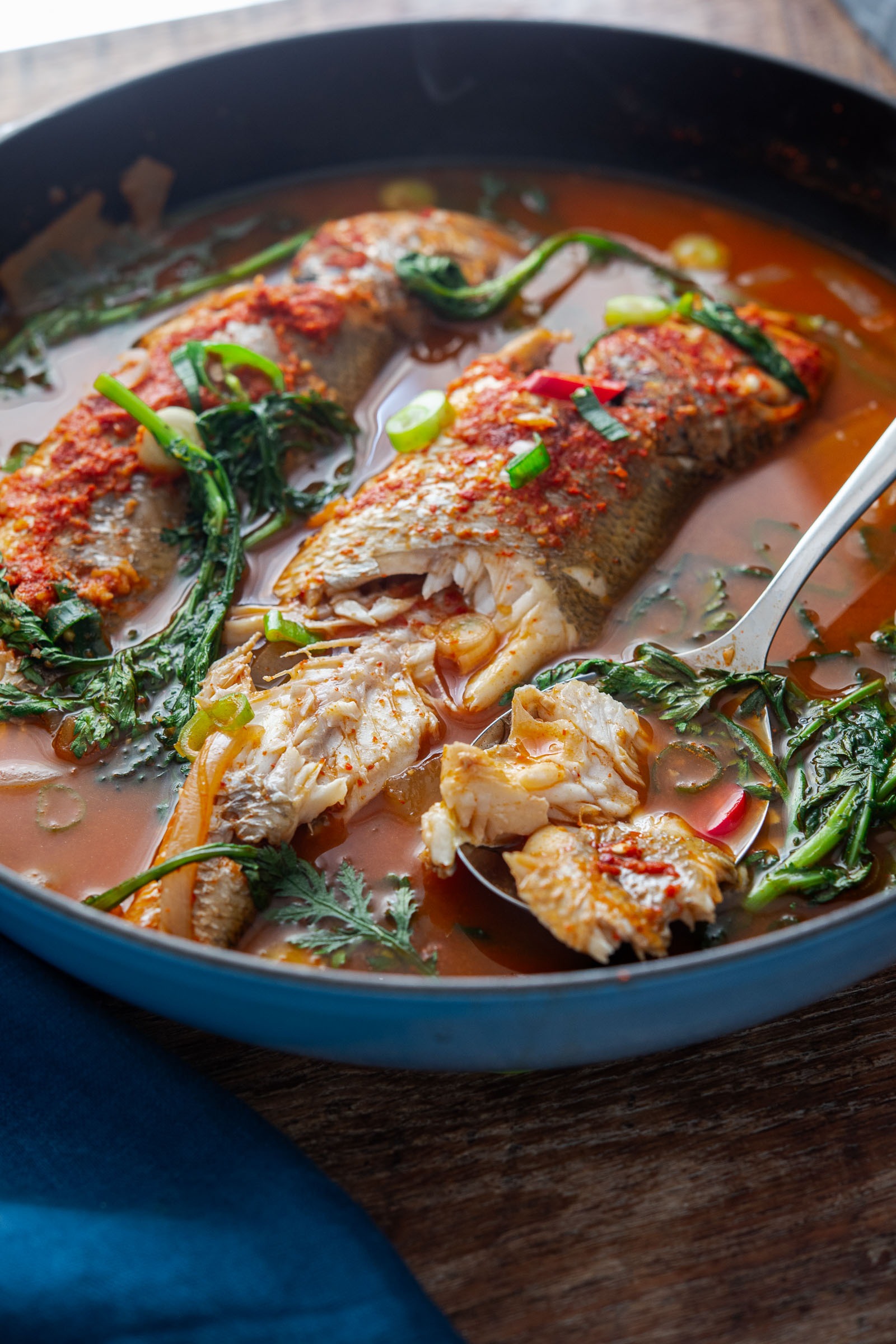
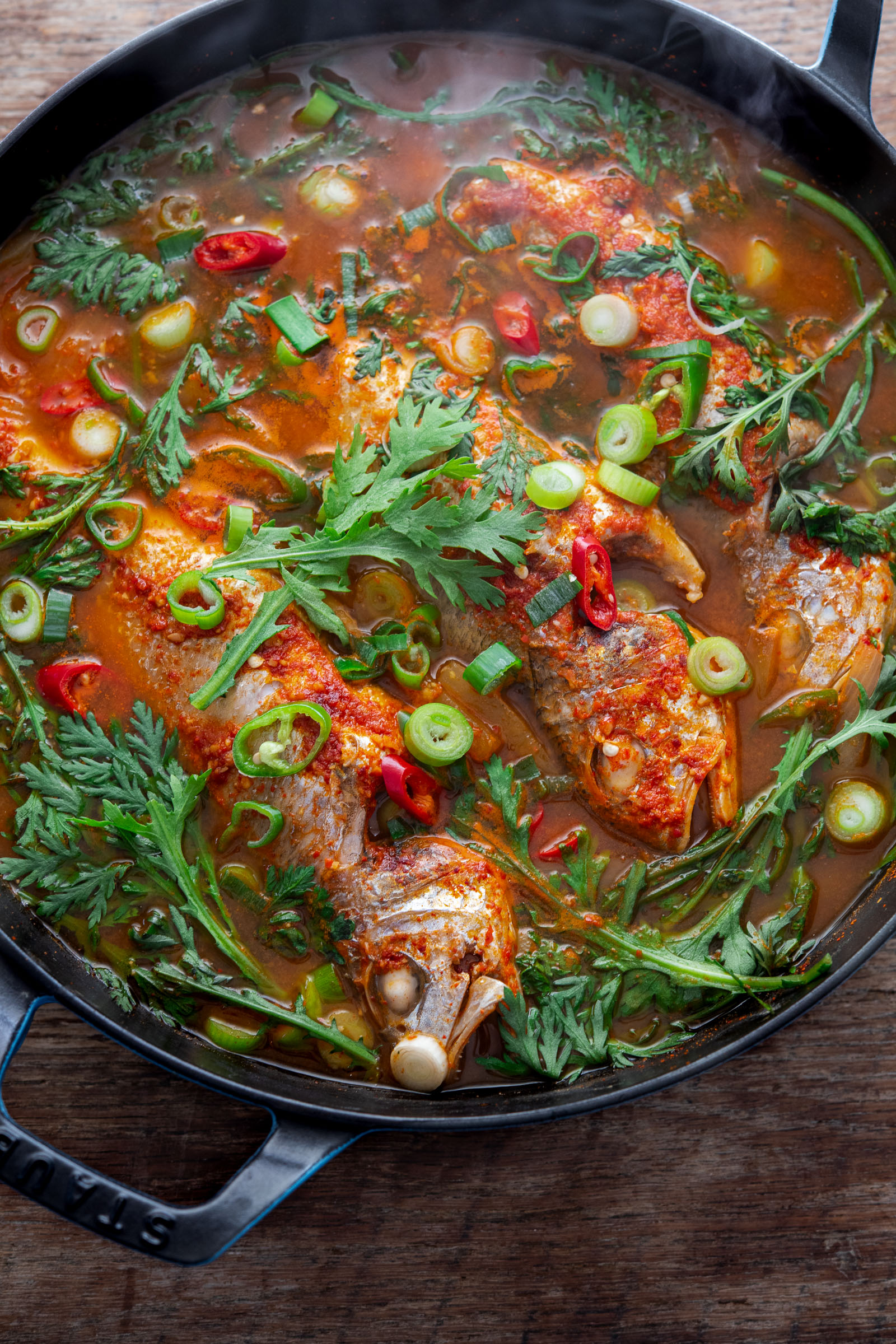
Finish with leeks, fresh chili, and greens right at the end. They keep their color, texture, and fresh aroma best this way. Taste before serving and adjust with a little salt if needed. Serve the stew hot with rice and a few crisp Korean side dishes that balance a spicy stew. A simple bowl of seasoned soybean sprouts (kongnamul muchim) works especially well with the broth.
Why Maeuntang Tastes Flat and How to Fix It
If your maeuntang tastes flat, the broth usually needs more depth. Korean radish helps build natural sweetness, while a small spoon of doenjang can round out the flavor. If the stew tastes harsh, reduce gochujang and rely more on gochugaru for a cleaner taste.
Add fish after the broth starts simmering and cook it gently. Overcooking can dull both texture and flavor. Finish with fresh greens at the end for a brighter finish.
Love this recipe? Rate it and share your experience in the comments below! On Instagram? Tag me to showcase your creation. For more delicious recipes, subscribe to our newsletter!
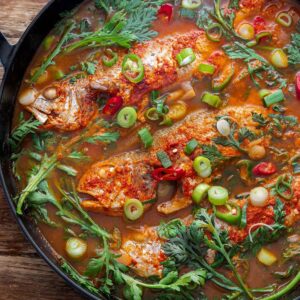
Korean Fish Stew (Maeuntang with Croaker)
Recipe Video
Ingredients
- 1¾ lb (800 g) whole croaker fish, cleaned or other fresh white fish
- 4 cups (1 liter) rice water , or water. See note below
- 2 Korean anchovy stock coin
- 7 oz (200 g) Korean radish, thinly sliced
- ½ large onion, sliced
- 1-2 fresh chili, sliced
- 2½ oz (70 g) crown daisy (ssukgat), minari or watercress
Spicy Seasoning Paste
- 1 tbsp (15 ml Korean chili paste (gochujang)
- 4 tbsp (24 g) Korean chili flakes (gochugaru)
- 2 tbsp (30 ml) Korean soup soy sauce
- 1 tbsp (15 ml) Korean fish sauce
- ½ tbsp (8 g) Korean soy bean paste (doenjang)
- 2 tbsp (30 ml) sweet rice wine (mirim)
- 2 tbsp (30 g) minced garlic
- ½ tsp (2 g) ginger paste
Instructions
- Make the seasoning paste: In a small bowl, mix gochujang, gochugaru, soup soy sauce, fish sauce, doenjang, mirim, garlic, and ginger. Set aside.
- Start the broth: In a large pot, combine sliced radish, rice water (or water), and anchovy stock coins. Bring to a boil, then simmer for 5–7 minutes until the radish begins to soften. Skim off any foam for a cleaner broth.
- Add fish and cook: Gently add the onion and fish pieces. Spoon the seasoning paste over the fish. Cover and simmer for 5–8 minutes, until the fish is just cooked through.
- Finish and serve: Add fresh chili, crown daisy (or watercress) and cook briefly until wilted. Taste and adjust with salt if needed. Serve hot with rice.

After reading through the recipe I know I will love this dish. Will make it when I have some kimchee seasonings.