

Tteokbokki (Korean Street-Style Spicy Rice Cakes)
Korean street-style tteokbokki comes together in under 25 minutes with chewy rice cakes simmered in a glossy, spicy-sweet gochujang sauce with fine gochugaru and savory stock. This tested one-pan method delivers the bold, balanced flavor and satisfying chew of classic tteokbokki at home.
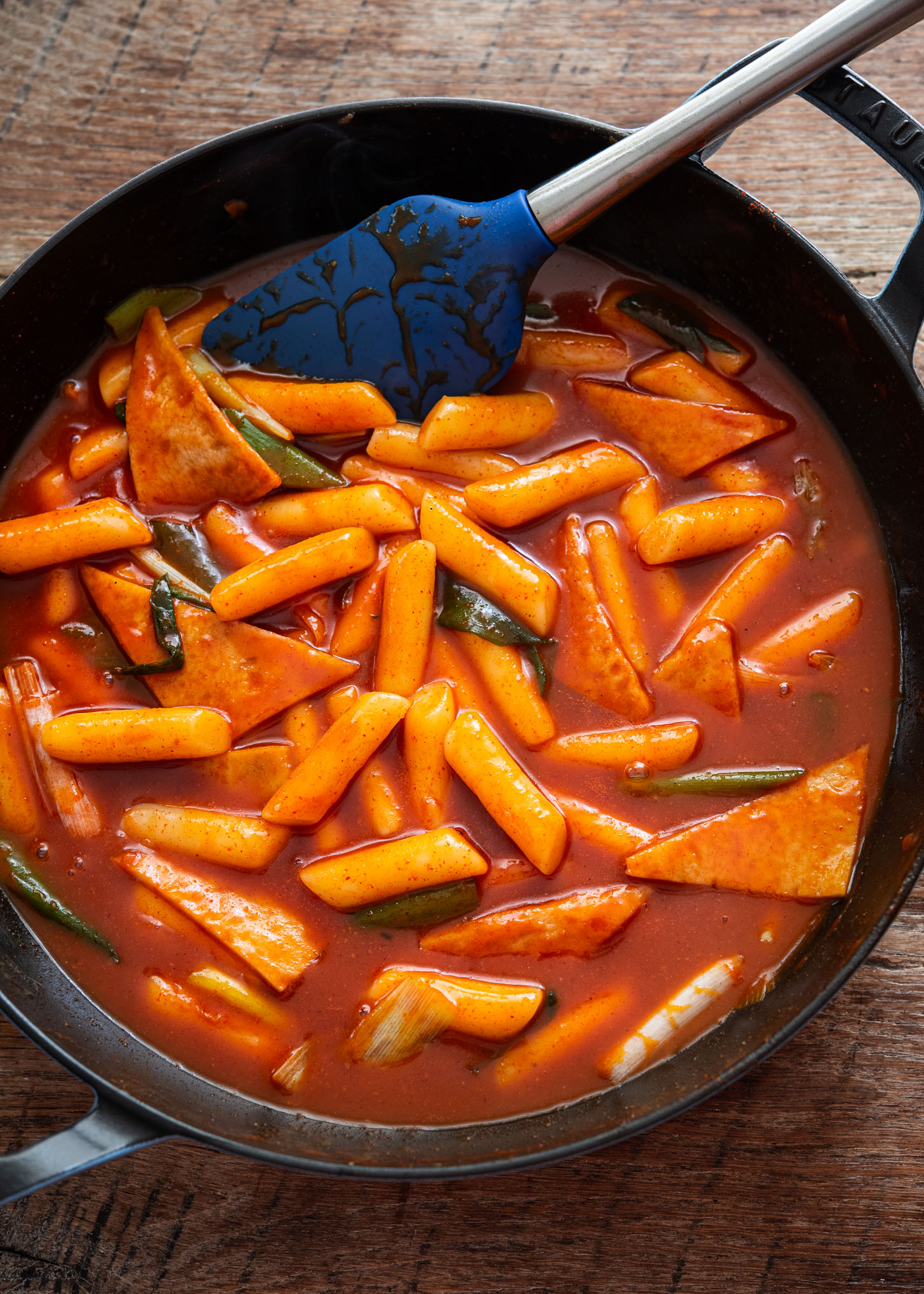
Tteokbokki (떡볶이) is one of those Korean foods where the sauce makes or breaks the dish. I want mine spicy and savory first, with just enough sweetness to round out the heat. The sauce should cling to the rice cakes without turning thick or sticky.
Growing up in Korea, I knew tteokbokki as everyday street food, served bubbling hot from snack shops and market stalls. That familiar flavor is still what I look for when I make it at home.
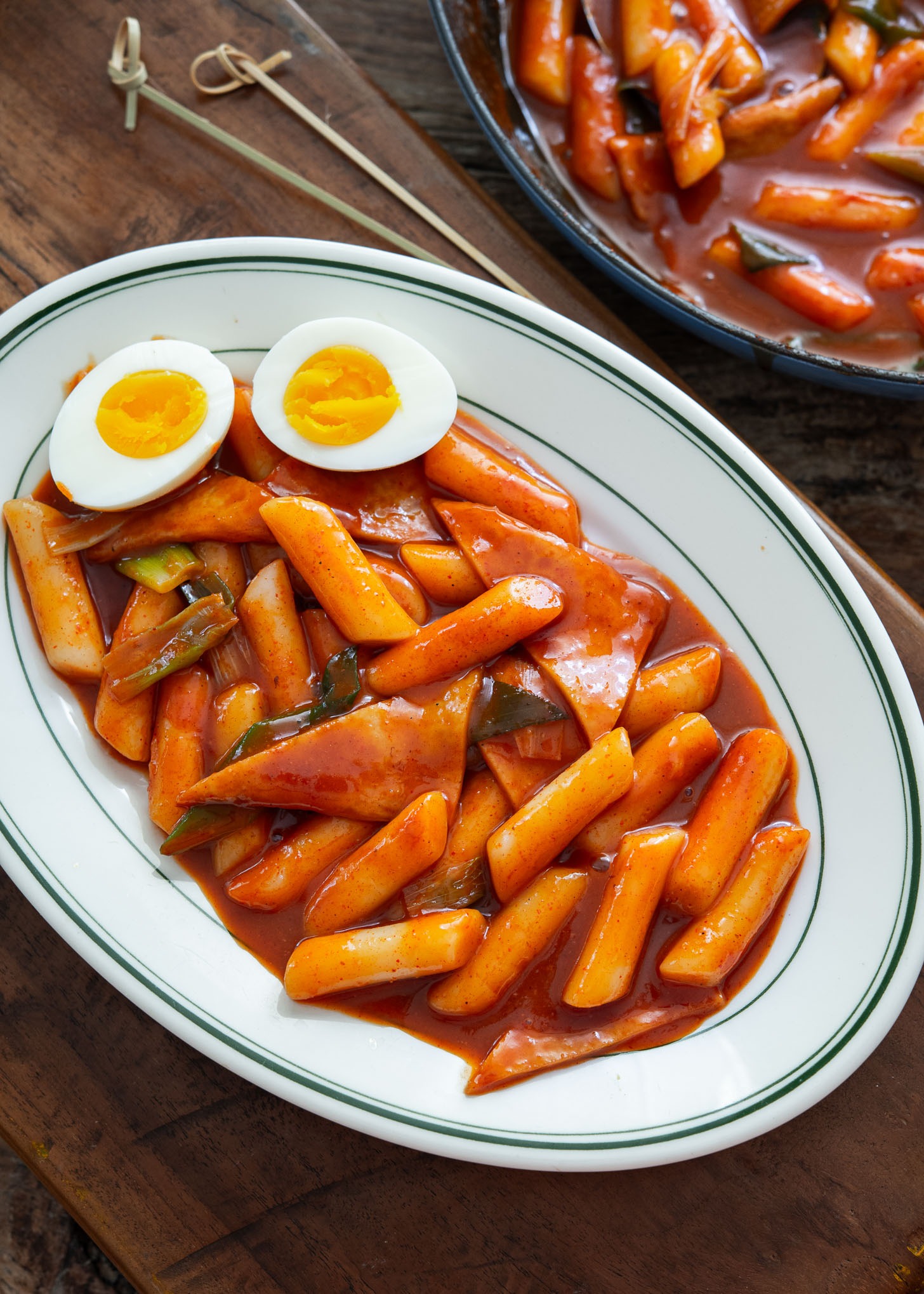
Over the years, I’ve adjusted my version to get the balance I like best: anchovy stock for depth, fine gochugaru for smooth heat, and a sauce that finishes slightly loose in the pan because it continues to thicken as it sits.
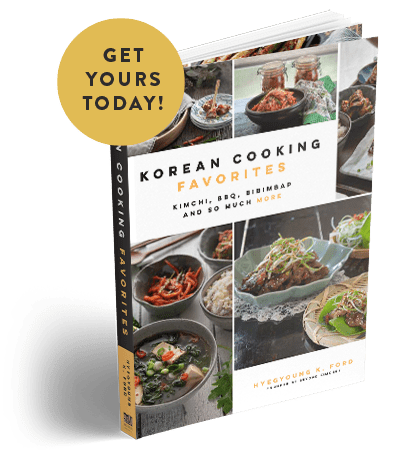
It’s also a longtime family favorite, and I included a similar version in my cookbook, Korean Cooking Favorites. Over the years, I’ve continued adjusting the sauce to get the savory, spicy balance I prefer at home.
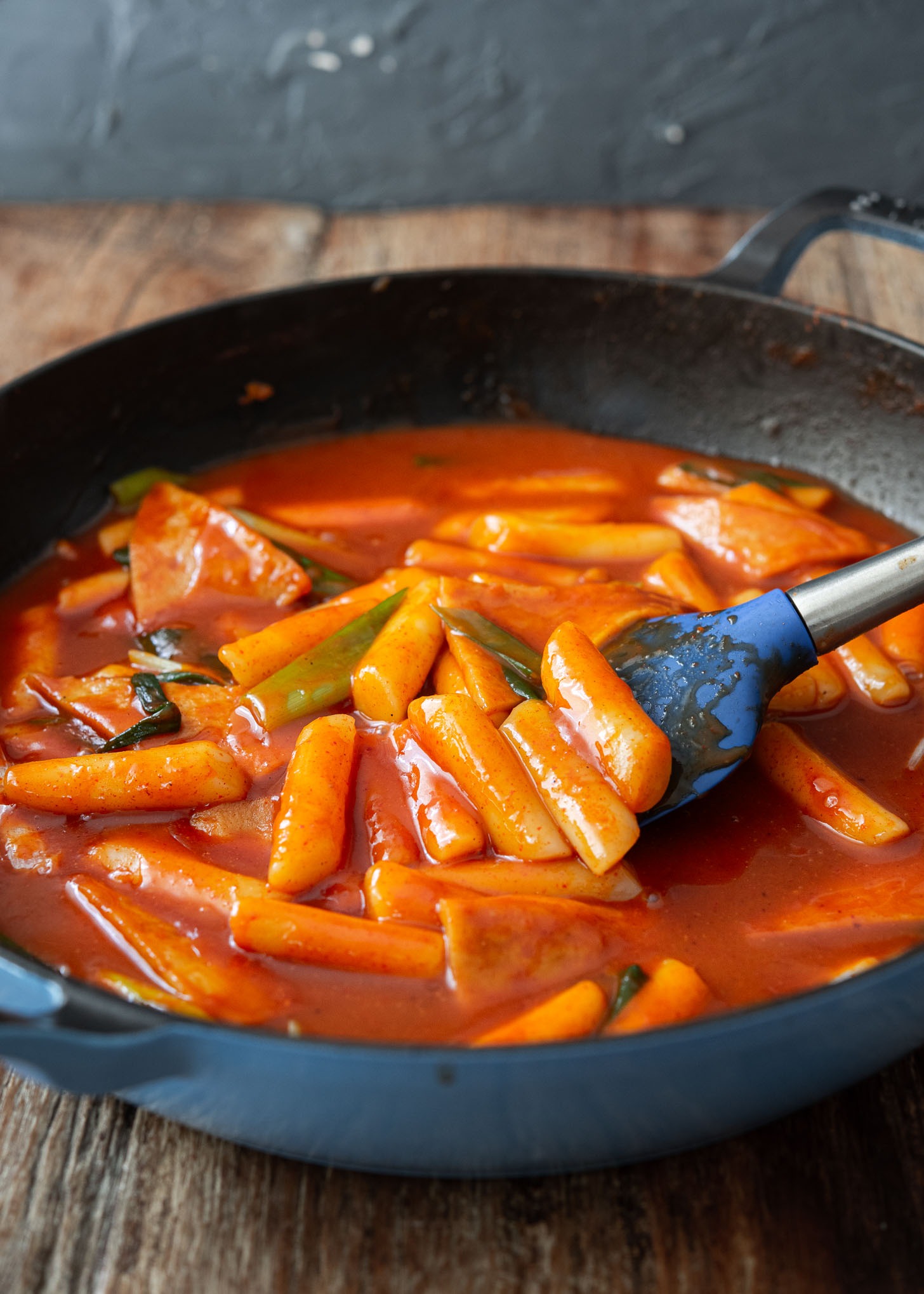
Tteokbokki comes in many styles now, from creamy rose tteokbokki to savory gungjung tteokbokki, the non-spicy royal court version. I enjoy them both, but the classic gochujang-based tteokbokki is still the one that tastes most familiar to me.
How I Balance Tteokbokki Sauce
For me, good tteokbokki should taste savory and spicy before it tastes sweet.
- Gochujang gives the sauce its body and fermented flavor. In my version, I add fine gochugaru for extra heat without making the sauce coarse or gritty.
- I also use anchovy stock instead of plain water because it gives the sauce more depth without making it heavy.
- The sweetness is there to balance the spice, not dominate it. I prefer brown sugar for a softer sweetness, but the most important part is not adding too much.
- One thing I’ve learned from making tteokbokki over the years is to stop cooking before the sauce looks completely thick. The rice cakes release starch as they cook, and the sauce continues to tighten as it cools. If it already looks very thick in the pan, it will usually be too heavy by the time you serve it.
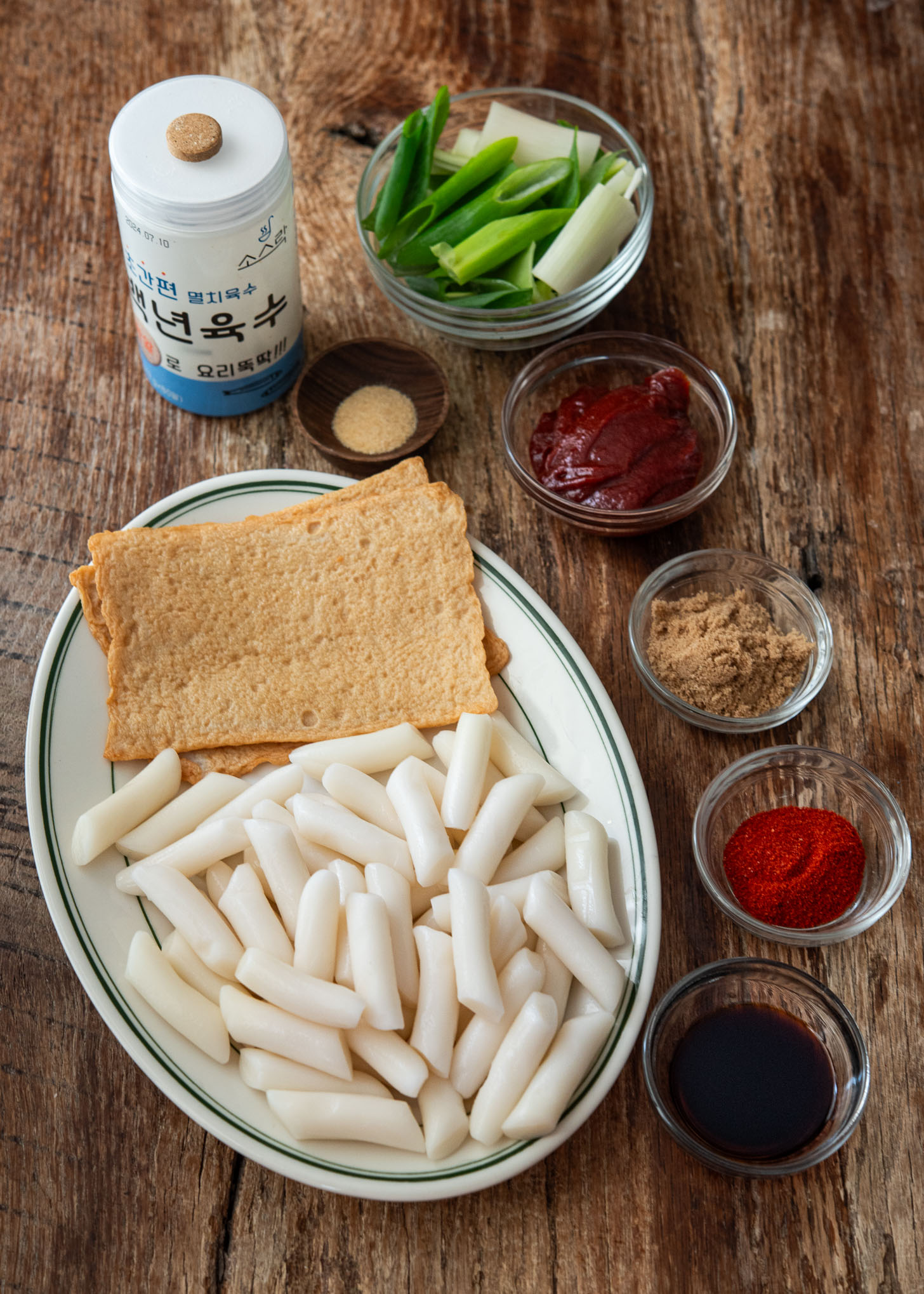
Ingredients That Make the Biggest Difference
Rice Cakes (Tteok, 떡): Fresh or refrigerated Korean rice cakes give the best chewy texture. If they feel firm, soak them in warm water for about 10 minutes before cooking. Frozen rice cakes may need a little longer to soften.
Fish Cakes (Eomuk, 어묵): Thin, flat sheets are traditional. They add light chew and absorb the sauce as it reduces. Slice into triangles or strips for even cooking.
Anchovy Stock or Korean Stock Coin: This gives the sauce the savory base I associate with classic Korean tteokbokki. Plain water works in a pinch, but the flavor will be lighter. For Vegetarian/Vegan option, swap the anchovy stock for dried kelp (dashima) stock and skip the fish cakes.
Fine Gochugaru: I prefer finely ground Korean red pepper flakes here because they blend smoothly into the sauce. Coarse gochugaru can leave the sauce slightly grainy.
If some of these ingredients are unfamiliar, my essential Korean ingredients guide explains what to look for and how I use common Korean ingredients in everyday cooking.
How to Make Tteokbokki
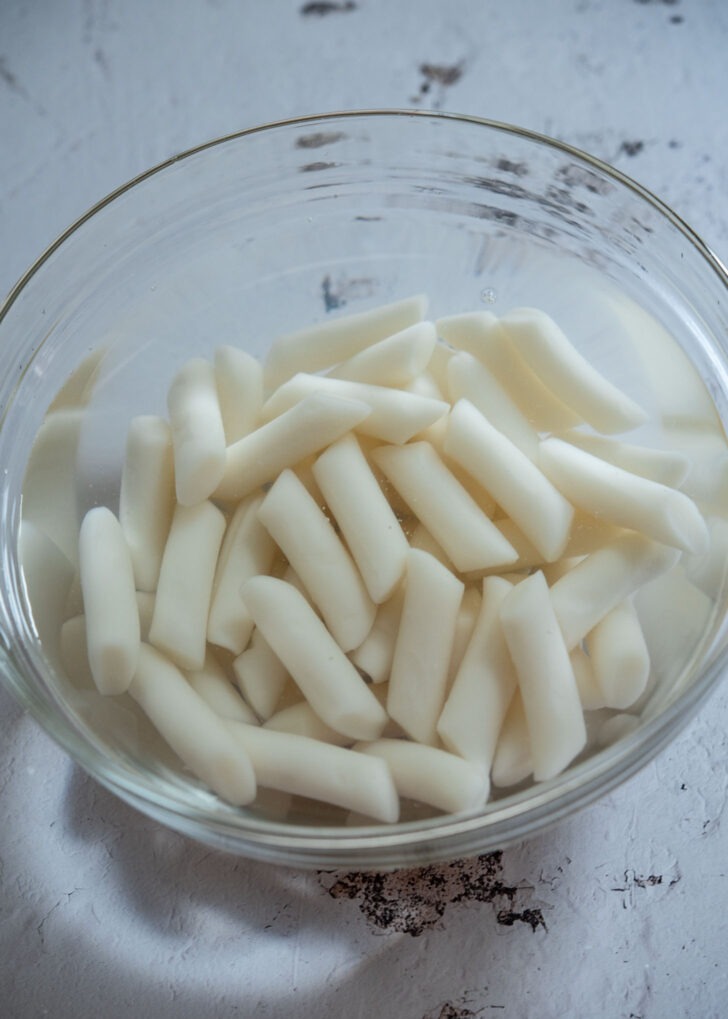
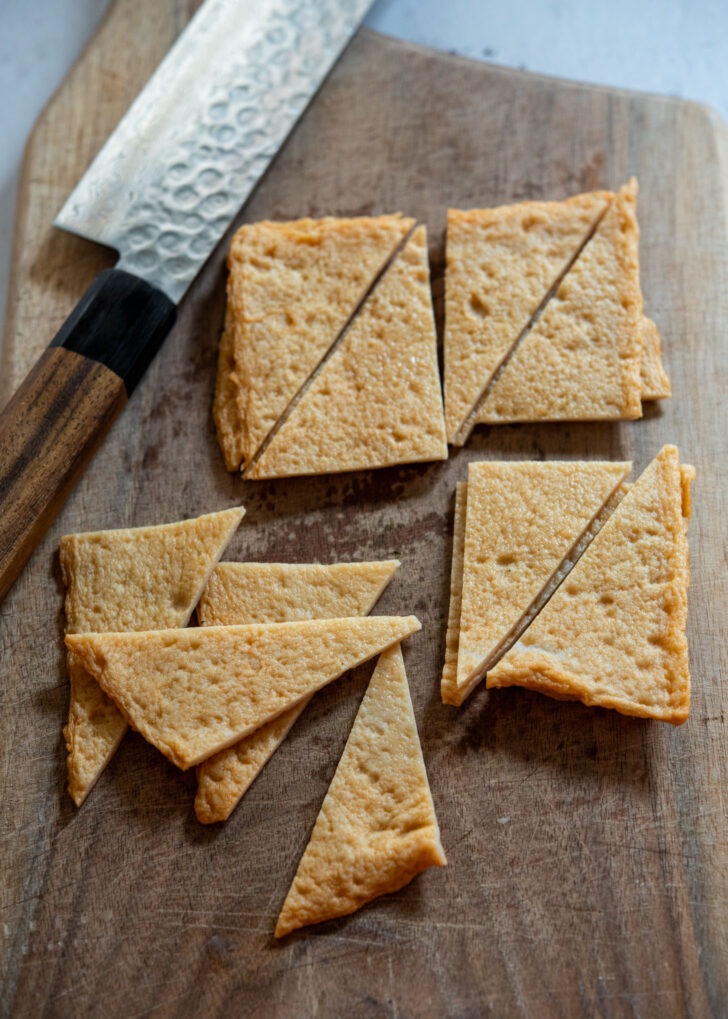
Prepare the rice cakes and fish cakes. If the rice cakes are firm or refrigerated, soak them in warm water for about 10 minutes, then drain. Fresh, soft rice cakes can usually go straight into the pan. Slice the fish cakes into medium strips or triangles so they heat through quickly and absorb the sauce.
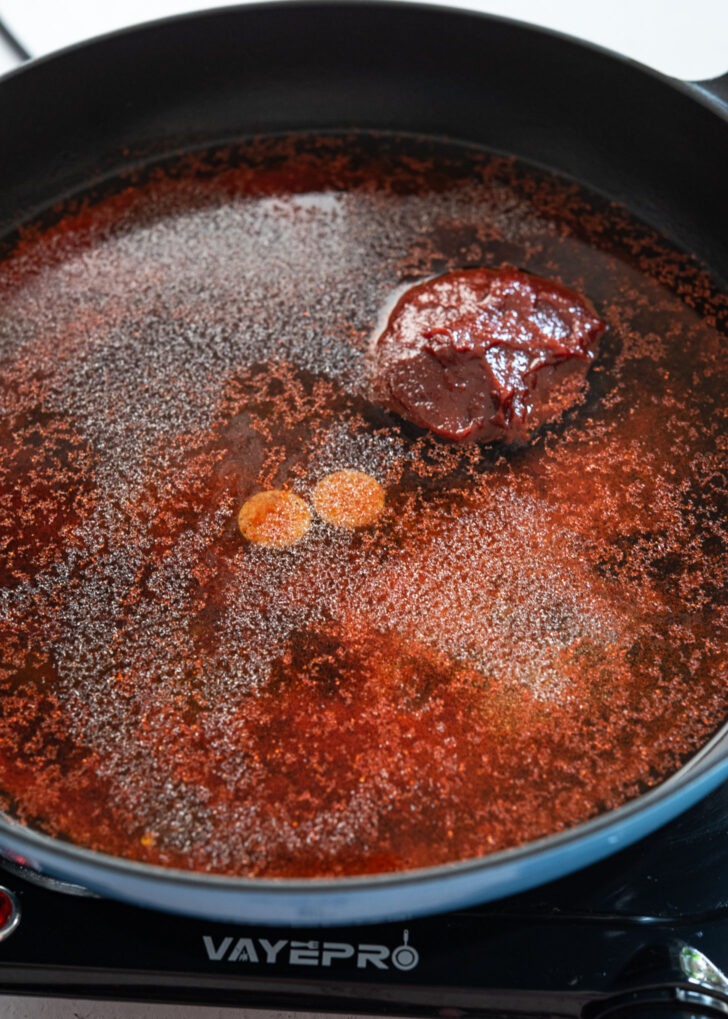
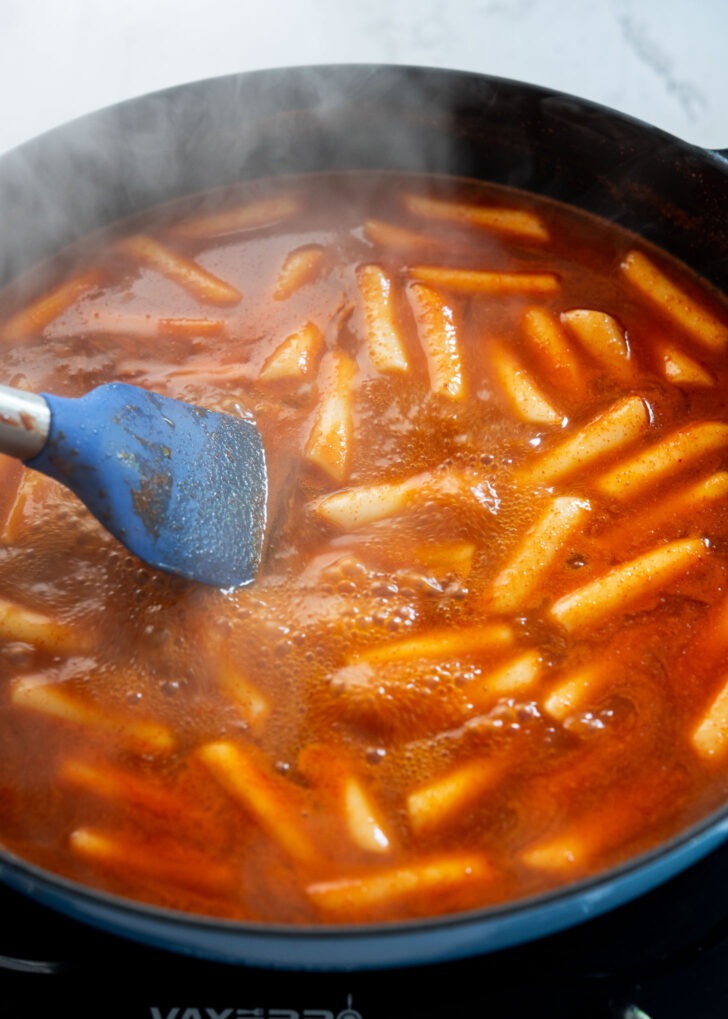
Build the sauce. Combine the anchovy stock, gochujang, fine gochugaru, sugar, and seasonings in a wide pan. Bring everything to a gentle boil and stir until the gochujang is fully dissolved.
Cook the rice cakes. Add the rice cakes and cook at a steady simmer. As they soften, they release starch that naturally thickens the sauce. Stir occasionally so the rice cakes cook evenly and don’t stick to the bottom of the pan.
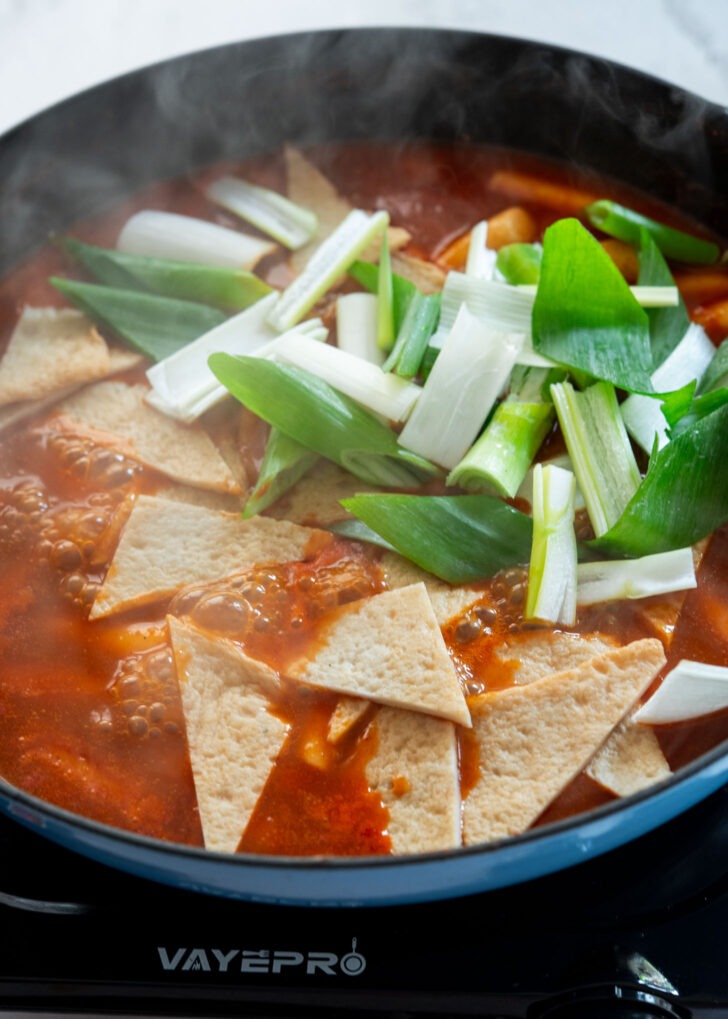
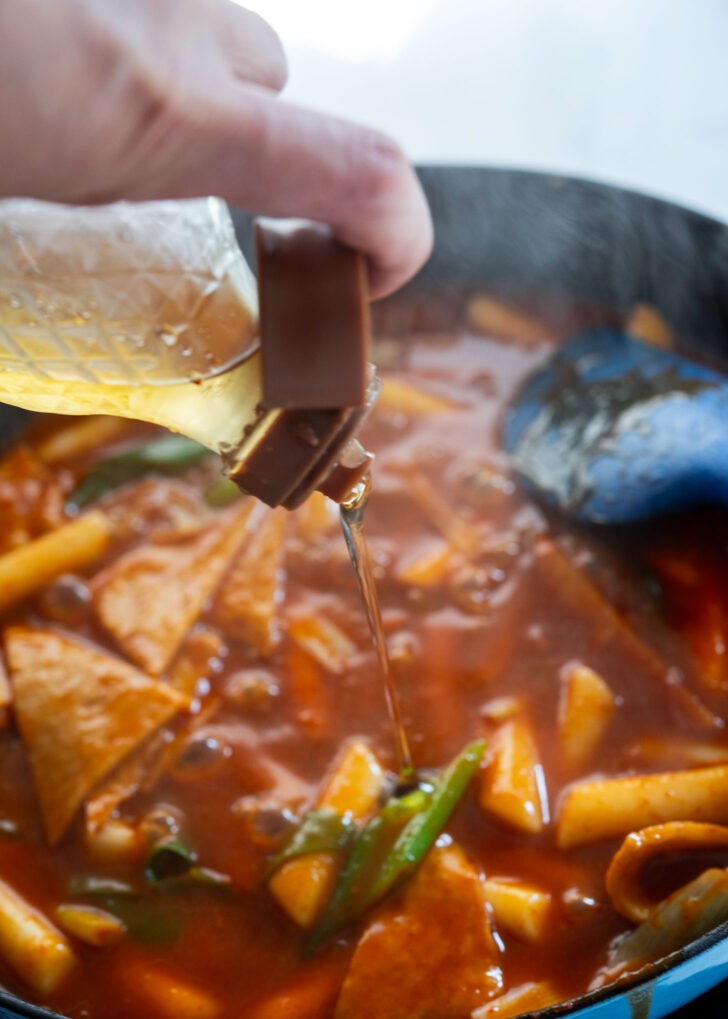
Add the fish cakes and leeks. Add the fish cakes and vegetables once the rice cakes are mostly tender. Continue cooking until everything is heated through and the sauce lightly coats the rice cakes.
Stop while the sauce is still slightly loose. This is the part I pay the most attention to. The sauce should cling to the rice cakes but still move easily around the pan. Don’t wait until it looks fully thick. It will continue to thicken as it sits.
Hyegyoung’s Tip: A small drizzle of oligo syrup at the end adds gloss without increasing sweetness significantly.
How Koreans Serve Tteokbokki
Tteokbokki is classic Korean bunsik, the casual snack-shop food often eaten with other small dishes.
One of my favorite pairings is gimmari, crispy seaweed rolls that are especially good dipped into the spicy tteokbokki sauce. Kimbap is another classic choice when you want to turn it into a more filling meal.
For more dishes in the same spirit, you can also explore my Korean street food recipes.
This recipe was originally posted in April 2010. I’ve updated the recipe with a few changes, new photos, and more information.
Love this recipe? Rate it and share your experience in the comments below! On Instagram? Tag me to showcase your creation. For more delicious recipes, subscribe to our newsletter!
Tteokbokki (Chewy Rice Cakes in Spicy Gochujang Sauce)
Recipe Video
Ingredients
- 1 lb (450 g) rice cakes, see note below
- 2 sheets (about 3 oz / 85 g) fish cake , sliced large bite-size strips
- 1 (about 100 g) Asian leek or 3 green onions, sliced
- 2-1/2 cup (600 ml) water
- 2 anchovy stock coin
- 3 tbsp (45 g) Korean chili paste (gochujang)
- 1 tbsp (7 g) Korean fine chili powder (goun-gochugaru), see note below
- 1 tbsp (15 ml) soy sauce
- 1-1/2 tbsp (20 g) light brown sugar, or more for your preference
- 1-1/2 tsp (4 g) onion powder
- 1 tbsp (15 ml) Korean oligo syrup, optional
Instructions
- If using refrigerated or frozen rice cakes, soak them in warm water for 10 minutes until softened and separated. Drain and set aside. Fresh, soft rice cakes do not need soaking.
- In a deep skillet or shallow pot, combine the water, Korean stock coins, gochujang, fine gochugaru, soy sauce, brown sugar, and onion powder. Stir until the gochujang is fully dissolved.
- Bring the sauce to a gentle boil. Add the rice cakes and simmer over medium heat for 7–10 minutes, stirring occasionally so they don’t stick. The rice cakes will soften and release starch, which gradually thickens the sauce.
- Add the fish cakes and leeks. Simmer over medium-low heat for another 3–5 minutes, until everything is heated through and coated.
- Stop cooking while the sauce still looks slightly loose and moves easily around the pan. It will continue to thicken as it sits. For a glossy finish, drizzle in the Korean oligo syrup during the last minute, if using. Serve immediately.
delicious, super spicy, just the way i like it.
This was my first time making tteokbokki! I didn’t make the anchovy stock (or have fish cakes), so just used dashi instead, but definitely will try to get those for next time. It came together really quickly!!
Wanting to make this in a few days for a birthday celebration, but I don’t think I will ba able to find dried anchovies locally. Can I sub anchovy paste in some way? Thanks!
I am afraid that anchovy paste has lots of sodium in it so it might not be suitable to replace for the dried anchovies.
I found a good replacement in amazon and I think it might work better. It’s a anchovy dashi pack and doesn’t need refrigeration, so it can ship easily.
My kids love rice cakes, and I love spice, so I’m gonna have to make this — but maybe separate it into portions, so that I can have it at full spice level and the boys can have it less spicy! Glad you had an enjoyable trip to Korea! I still need to visit one day!
Travel is really difficult at the moment, so glad you were able to get away. Bet you had fun! Anyway, this is a lovely dish — loads of flavors. Thanks!
Can’t remember when I last had those chewy delicious rice cake. I need to visit Asian store very soon.
You’re hilarious! Funniest recipe I’ve read. Thanks
OMG Your writing style makes these recipes so fun to make! I absolutely love Korean food and I’m glad I could find your blog. Definitely bookmarking this deliciousness. Thanks!
Thank you, Ajuuma.
I NEED immediate HELP! If I bought Korean Rice cake (Garaettok) to make Ttoboki or dak galbi how long can they last outside of the fridge? or should they be kept in the fridge all the time??
Hi, thank you for the recipes 🙂
Could we replace the stock of anchovies and sea kelp with mix of water and chicken powder (the one from Knorr)?
Thank you.
You can just use plain water.
This is one of my fav korean dish! I could never get bored of korean food! Love love love 😉
I visited some friends in Korea this past spring and I am HAUNTED by this dish. I could not get enough of it. I almost got it from every vendor who sold it! There are a few local Korean restaurants where I live in the mdwest and I order this (or a similar stew with rice cakes and ramen) as an appitizer every time. I am going to make this over the weekend. Thanks for sharing your recipe!
Hi love, thanks for your recipe, btw may I ask you why my rice cakes turn our hard and not that chewy after I cooked them? Pls help me:)
Did you use frozen cakes? If using frozen cakes, soak them in water for 10 minutes before adding to the recipe. They tend to get hard faster than fresh kind so they need longer cooking time.
Thank you very much for your reply, holly!! I will soak them Nx time before is cook them.
Hi hi! I love rice cakes!! And I really enjoyed this blog post of yours. You have a very interesting sense of humor! Hehe will definitely try out this recipe soon!!!
Just made this dish; it’s the first Korean dish I’ve ever made and I’m quite thrilled with the results. Awesome, thank you.
I added a few squirts of toasted sesame oil near the end, which was a great addition. It’s my favourite secret ingredient.
I ate this for the first time today after being in Korea for a week. I loved it so much that I ended up here ! I can’t wait to visit my family back in Europe and cook this for them ! They’re going to love it (I just hope they have the ingredients at the asian supermarket). Thanks for the recipe !
Hi, this sounds like a tasty and great recipe, however, I’m studying in the UK in an area where there is two tiny asian markets. I couldn’t find dried anchovies, is there anyway I can substitute or buy a stock which will resemble. I really would like to make my own stock but unfortunately I’m limited at the moment from ingredients.
You can use the dried sea kelp only if you can’t find the anchovies. You can also use powdered form of dried anchovies but make sure it doesn’t have too much sodium in it.
You have a great website! Quick question, your recipe is for the frozen rice cakes, I was able to buy fresh ones, how should I cook them? Should I add them after the sauce has thickened and cook for about ten minutes, or wait until the last minute? Thank you!
If using fresh rice cakes, reduce the amount of stock by 1/2. You don’t need to cook that long as it is written in the recipe. Other than that, you can simply follow the direction.
Hi! I made this dish a couple days ago and the flavor was delicious…but my rice cakes were kind of soggy 🙁 Do you know why? I didn’t make the broth in the first step (i just used stock), so rather than soaking them in the hot broth for 5 minutes, I soaked them in instant hot/boiling water from my tap for 5 minutes. Now I’m confused what water you actually soaked yours in…just regular tap water??
Thanks!
Hi Amy
Is your rice cakes fresh kinds (never been chilled or freezen)? Because you don’t need to soak fresh rice cakes since they are already soft. If your rice cakes are frozen, it might be that your rice cakes are not made of 100% rice. Some rice cakes contains wheat and they can be soggy after a long soaking or braising. Check the ingredients on the package. I soaked mine in regular tap water(hot).
Thank you for your reply! I think maybe the water I soaked it in was too hot! They were frozen, but I”ll have to check if they were pure rice.
HI! I loveeeeee the rice cakes but just need to know how can I store them overnight as i”ve made too much. And will it be good after I’ve reheated them the next day? Thnkas!
Unfortunately leftover rice cakes are not that great in terms of the texture once chilled with sauce in the fridge. You can reheat but they won’t taste the same.