

Tteokbokki (Korean Street-Style Spicy Rice Cakes)
Korean street-style tteokbokki comes together in under 25 minutes with chewy rice cakes simmered in a glossy, spicy-sweet gochujang sauce with fine gochugaru and savory stock. This tested one-pan method delivers the bold, balanced flavor and satisfying chew of classic tteokbokki at home.
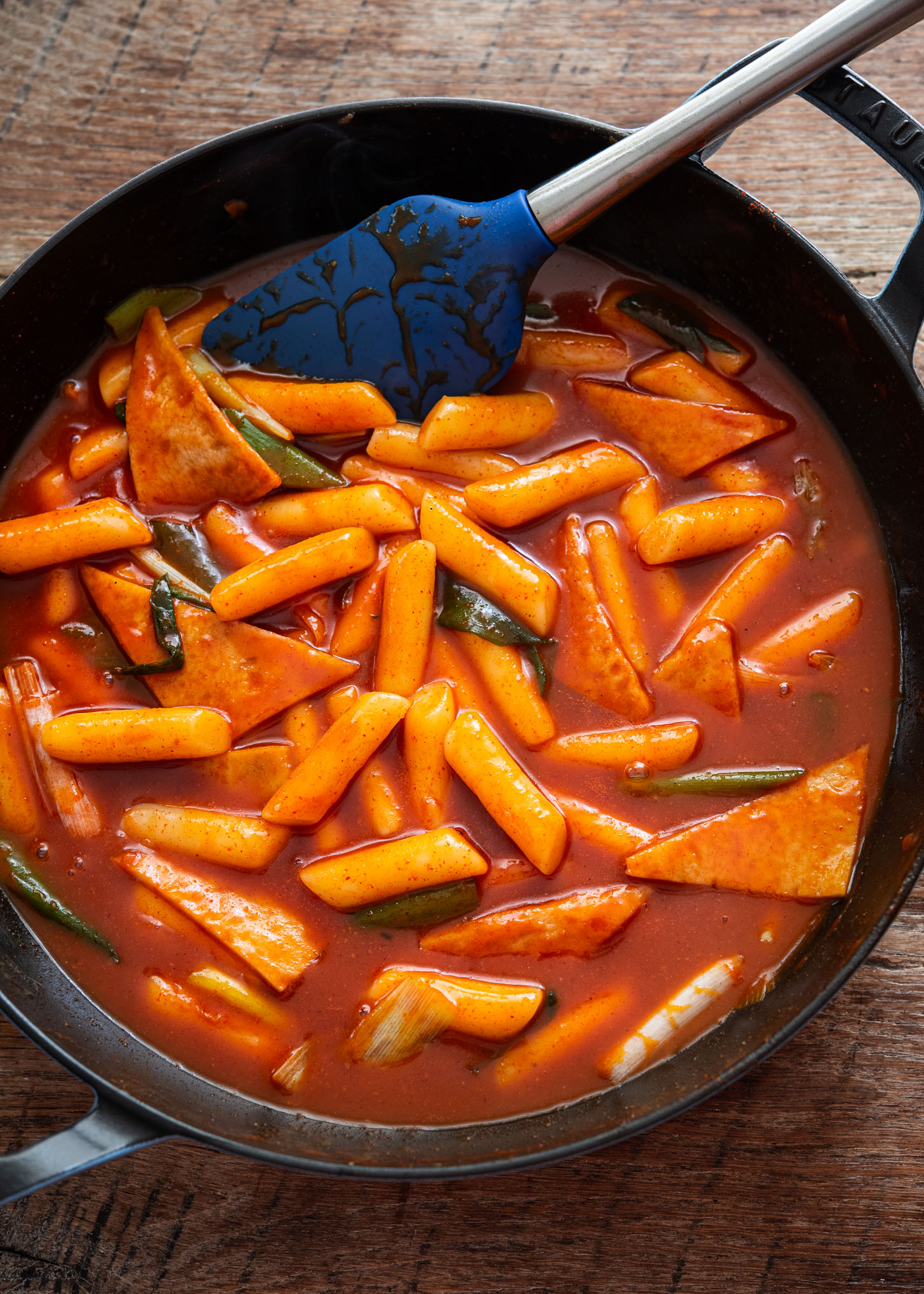
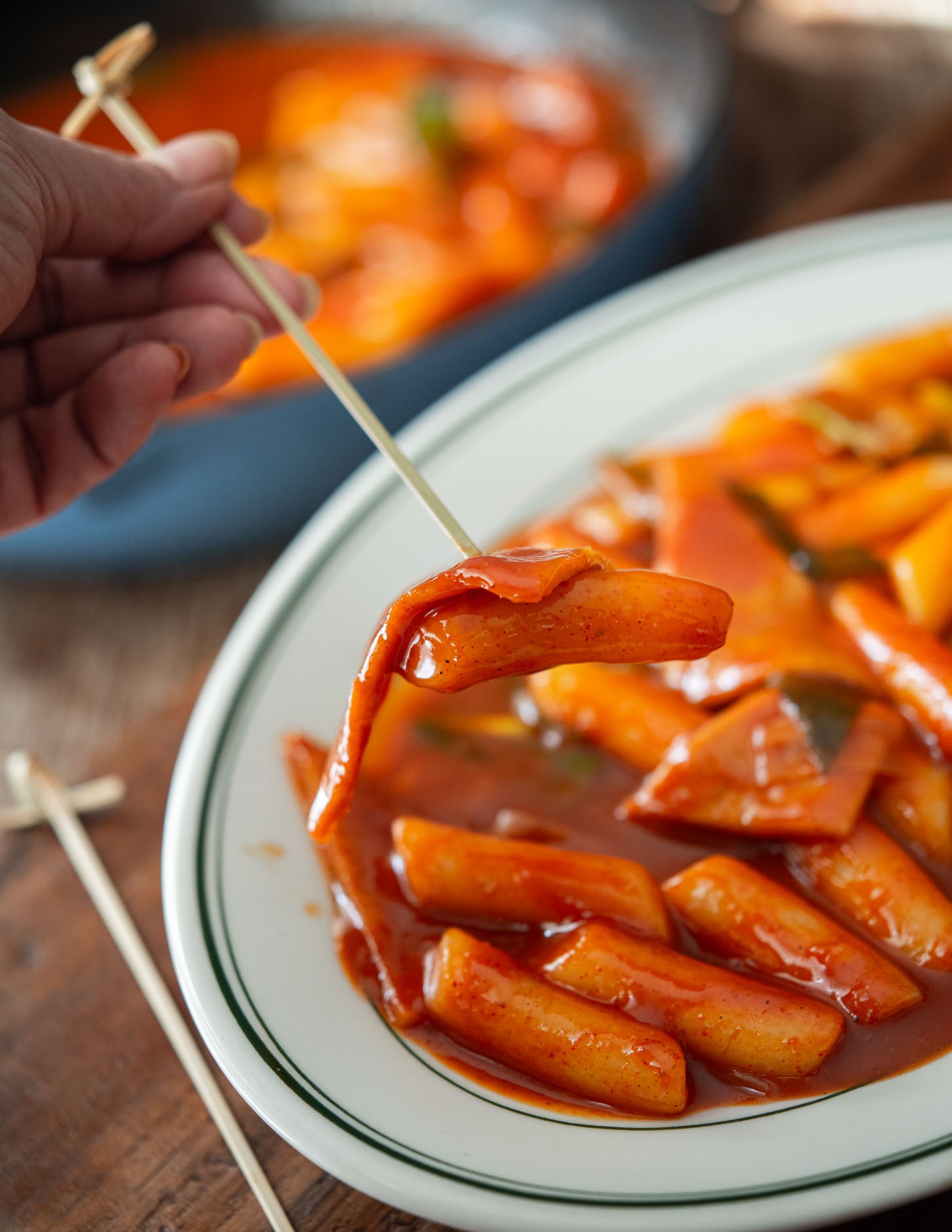
Tteokbokki (떡볶이) is one of those Korean foods where the sauce makes or breaks the dish. I want mine spicy and savory first, with just enough sweetness to round out the heat. The sauce should cling to the rice cakes without turning thick or sticky.
Growing up in Korea, I knew tteokbokki as everyday street food, served bubbling hot from snack shops and market stalls. That familiar flavor is still what I look for when I make it at home.
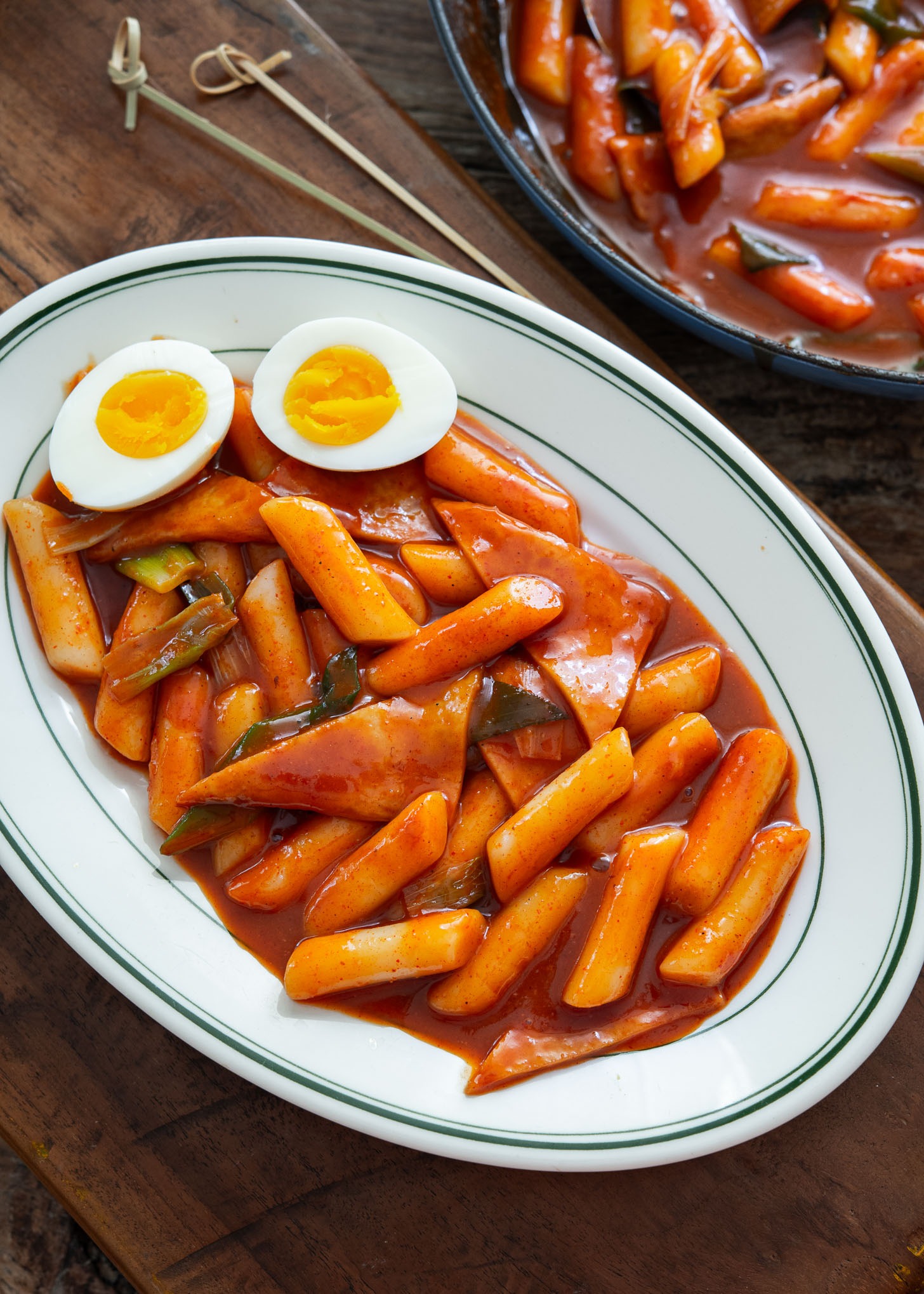
Over the years, I’ve adjusted my version to get the balance I like best: anchovy stock for depth, fine gochugaru for smooth heat, and a sauce that finishes slightly loose in the pan because it continues to thicken as it sits.
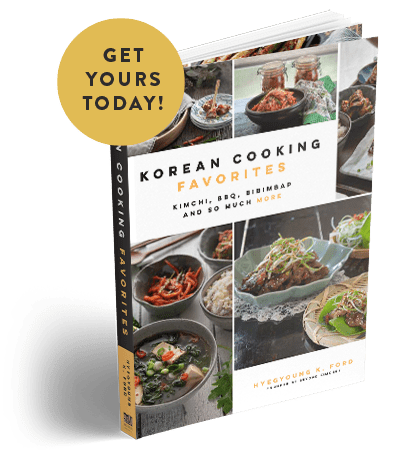
It’s also a longtime family favorite, and I included a similar version in my cookbook, Korean Cooking Favorites. Over the years, I’ve continued adjusting the sauce to get the savory, spicy balance I prefer at home.
Tteokbokki comes in many styles now, from creamy rose tteokbokki to savory gungjung tteokbokki, the non-spicy royal court version. I enjoy them both, but the classic gochujang-based tteokbokki is still the one that tastes most familiar to me.
How I Balance Tteokbokki Sauce
For me, good tteokbokki should taste savory and spicy before it tastes sweet.
- Gochujang gives the sauce its body and fermented flavor. In my version, I add fine gochugaru for extra heat without making the sauce coarse or gritty.
- I also use anchovy stock instead of plain water because it gives the sauce more depth without making it heavy.
- The sweetness is there to balance the spice, not dominate it. I prefer brown sugar for a softer sweetness, but the most important part is not adding too much.
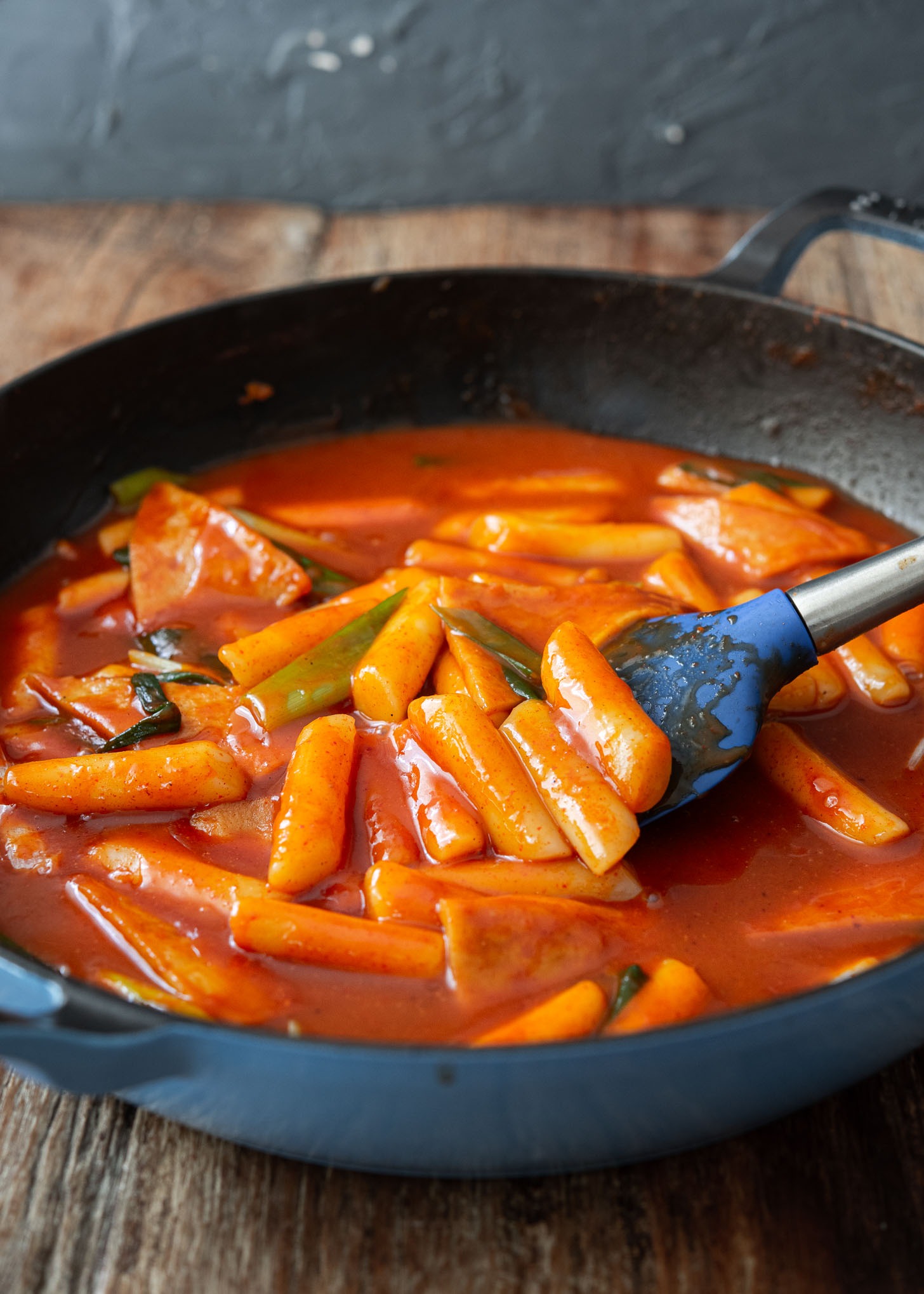
- One thing I’ve learned from making tteokbokki over the years is to stop cooking before the sauce looks completely thick. The rice cakes release starch as they cook, and the sauce continues to tighten as it cools. If it already looks very thick in the pan, it will usually be too heavy by the time you serve it.
Ingredients That Make the Biggest Difference
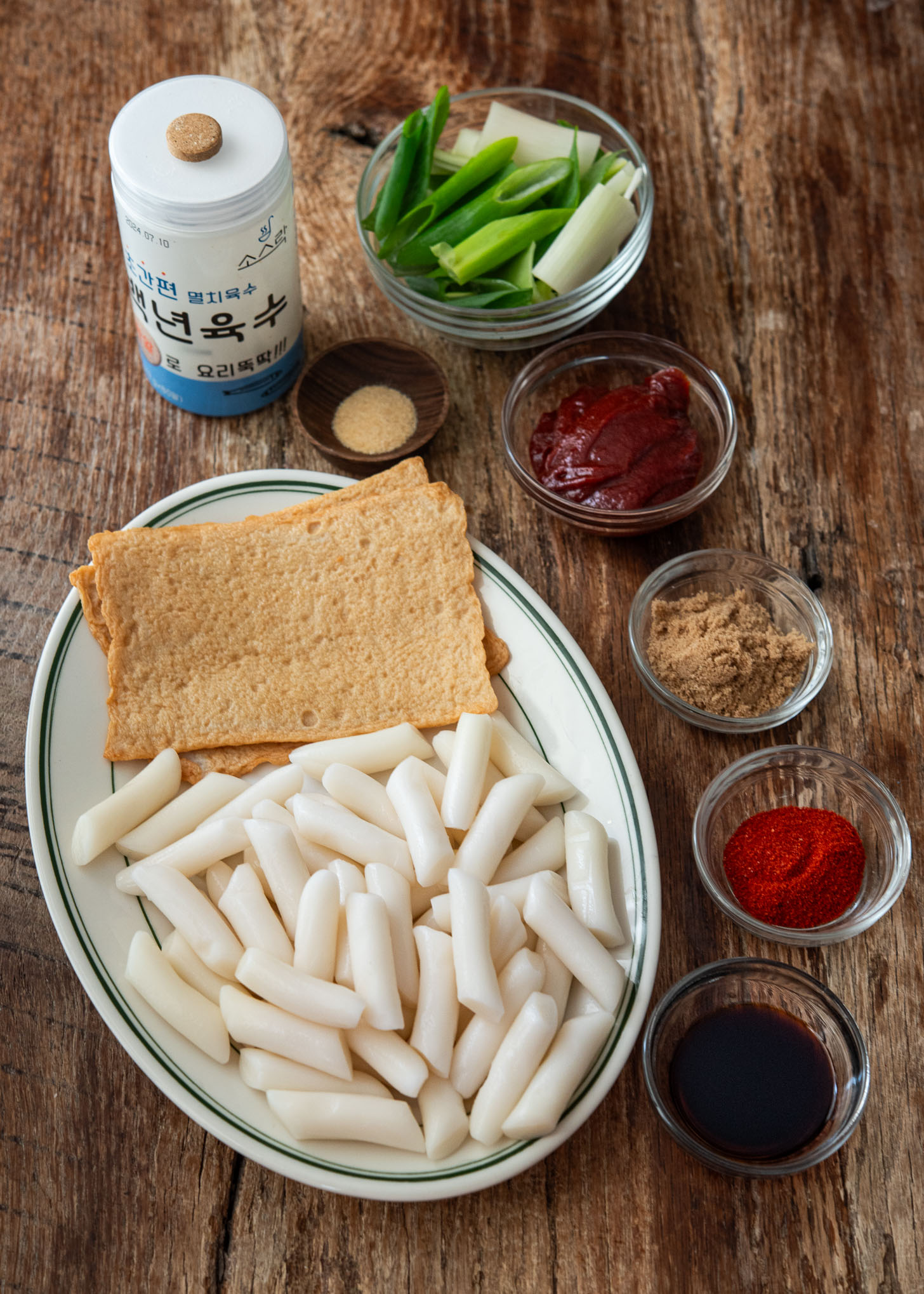
Rice Cakes (Tteok, 떡): Fresh or refrigerated Korean rice cakes give the best chewy texture. If they feel firm, soak them in warm water for about 10 minutes before cooking. Frozen rice cakes may need a little longer to soften.
Fish Cakes (Eomuk, 어묵): Thin, flat sheets are traditional. They add light chew and absorb the sauce as it reduces. Slice into triangles or strips for even cooking.
Anchovy Stock or Korean Stock Coin: This gives the sauce the savory base I associate with classic Korean tteokbokki. Plain water works in a pinch, but the flavor will be lighter. For Vegetarian/Vegan option, swap the anchovy stock for dried kelp (dashima) stock and skip the fish cakes.
Fine Gochugaru: I prefer finely ground Korean red pepper flakes here because they blend smoothly into the sauce. Coarse gochugaru can leave the sauce slightly grainy.
If some of these ingredients are unfamiliar, my essential Korean ingredients guide explains what to look for and how I use common Korean ingredients in everyday cooking.
How to Make Tteokbokki
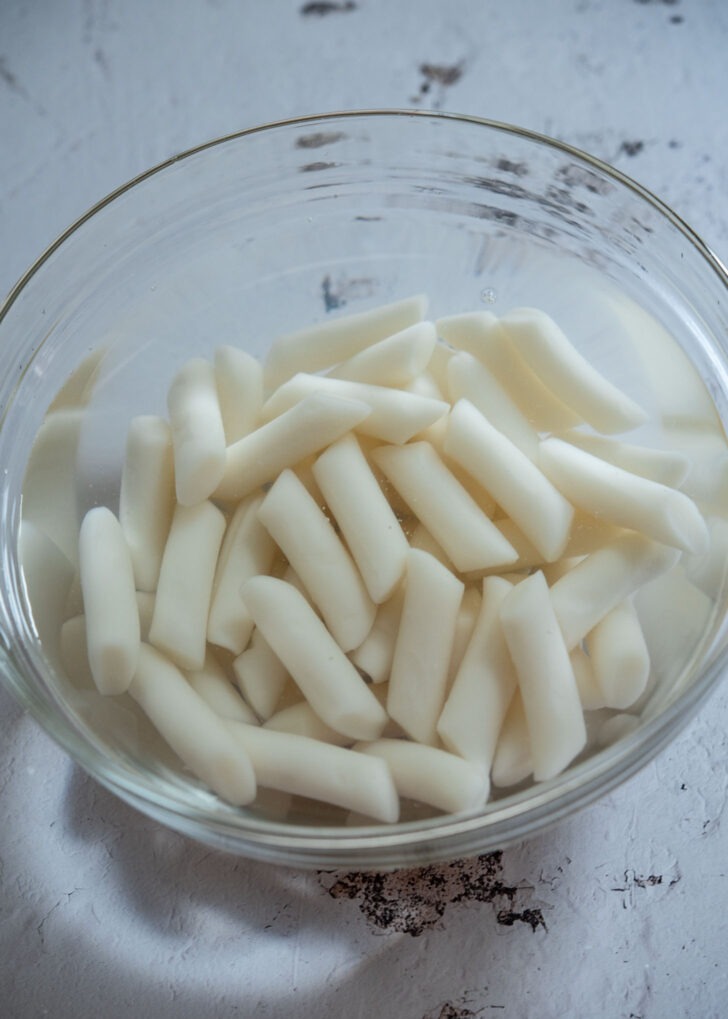
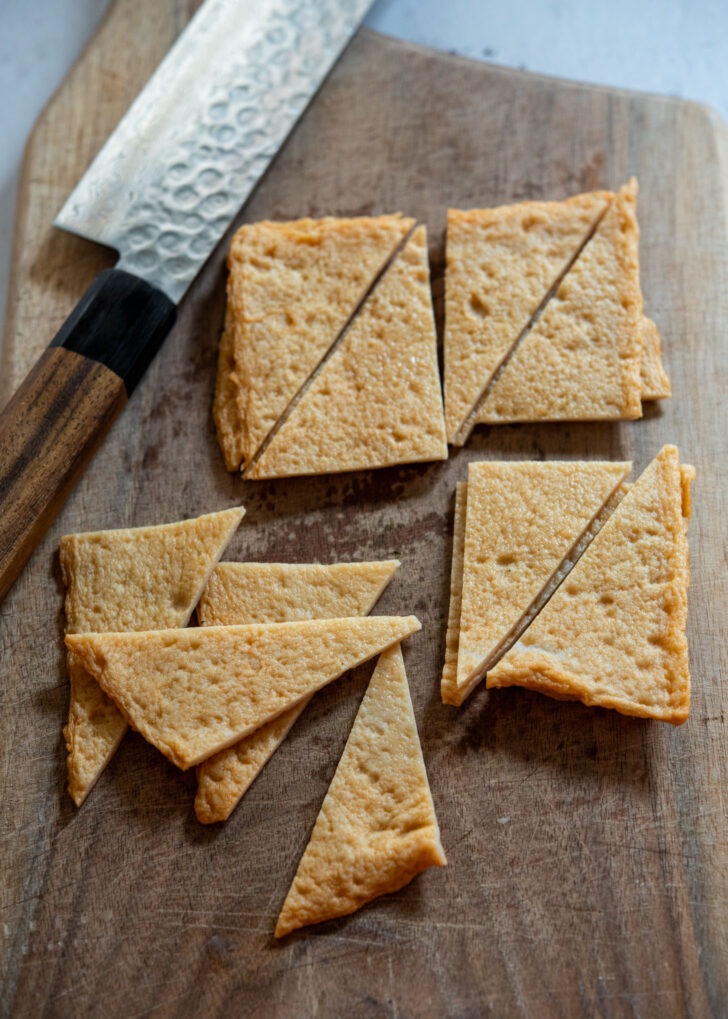
Prepare the rice cakes and fish cakes. If the rice cakes are firm or refrigerated, soak them in warm water for about 10 minutes, then drain. Fresh, soft rice cakes can usually go straight into the pan. Slice the fish cakes into medium strips or triangles so they heat through quickly and absorb the sauce.
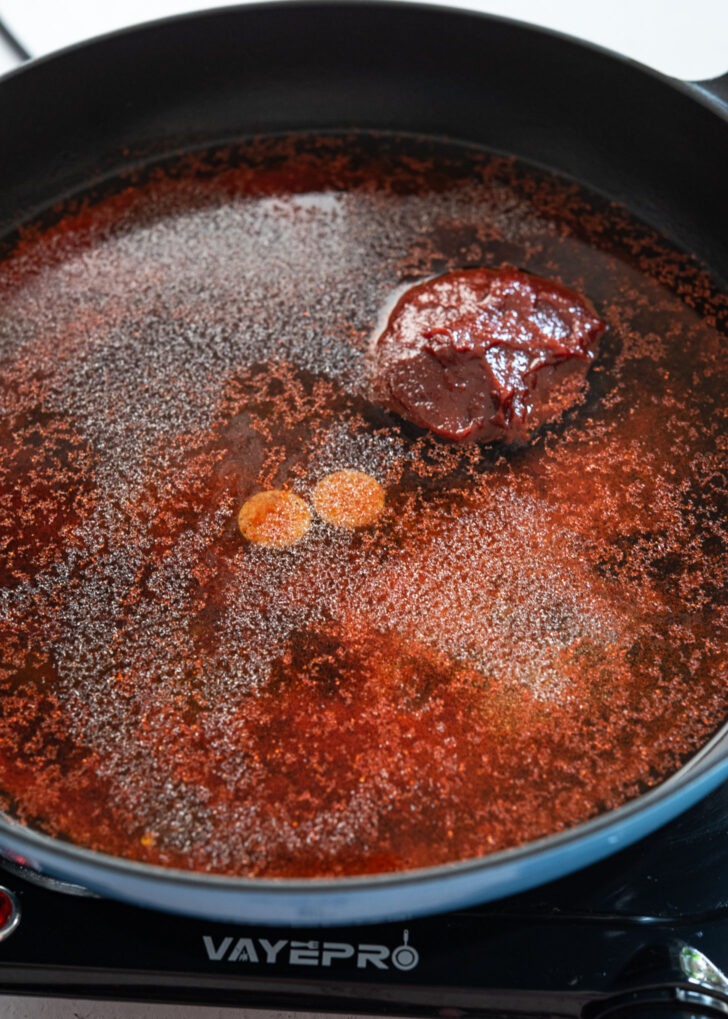
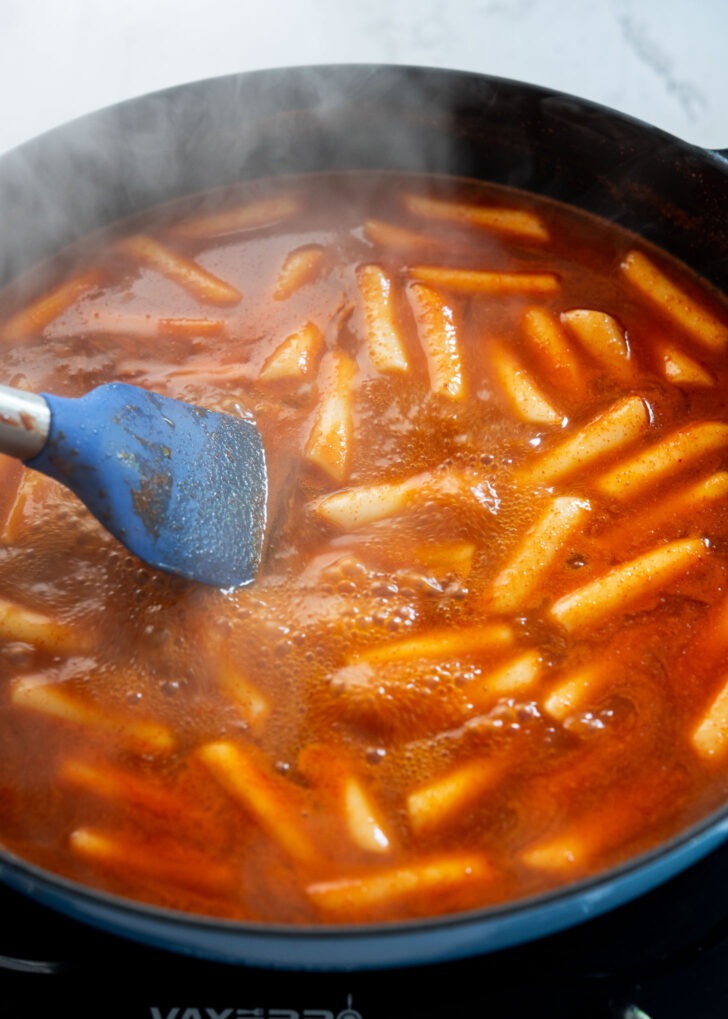
Build the sauce. Combine the anchovy stock, gochujang, fine gochugaru, sugar, and seasonings in a wide pan. Bring everything to a gentle boil and stir until the gochujang is fully dissolved.
Cook the rice cakes. Add the rice cakes and cook at a steady simmer. As they soften, they release starch that naturally thickens the sauce. Stir occasionally so the rice cakes cook evenly and don’t stick to the bottom of the pan.
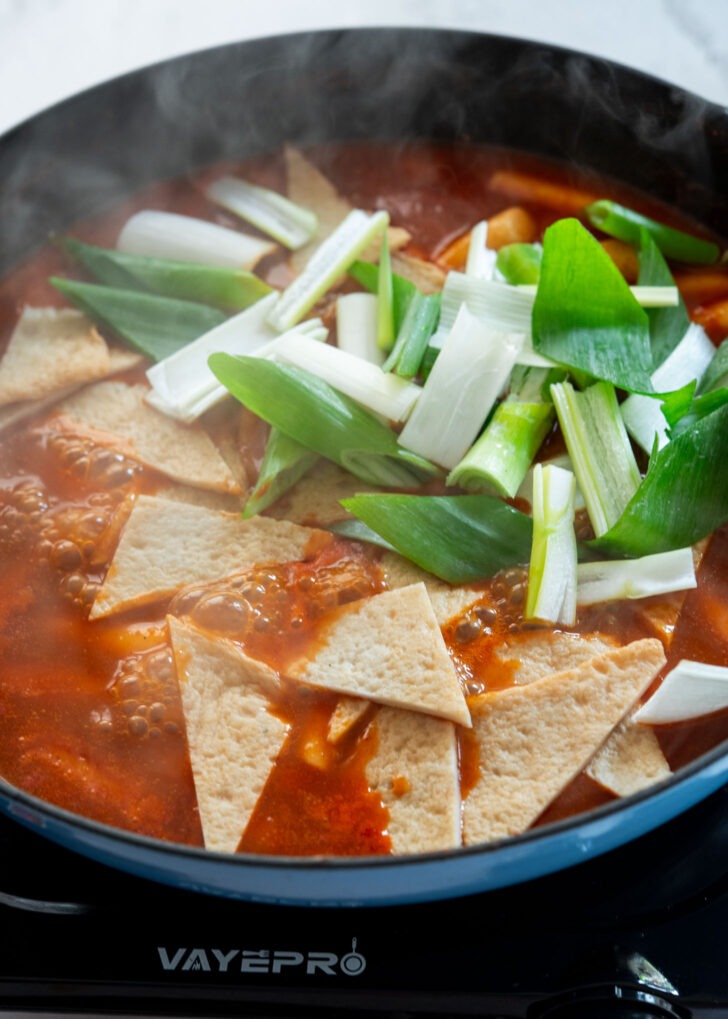
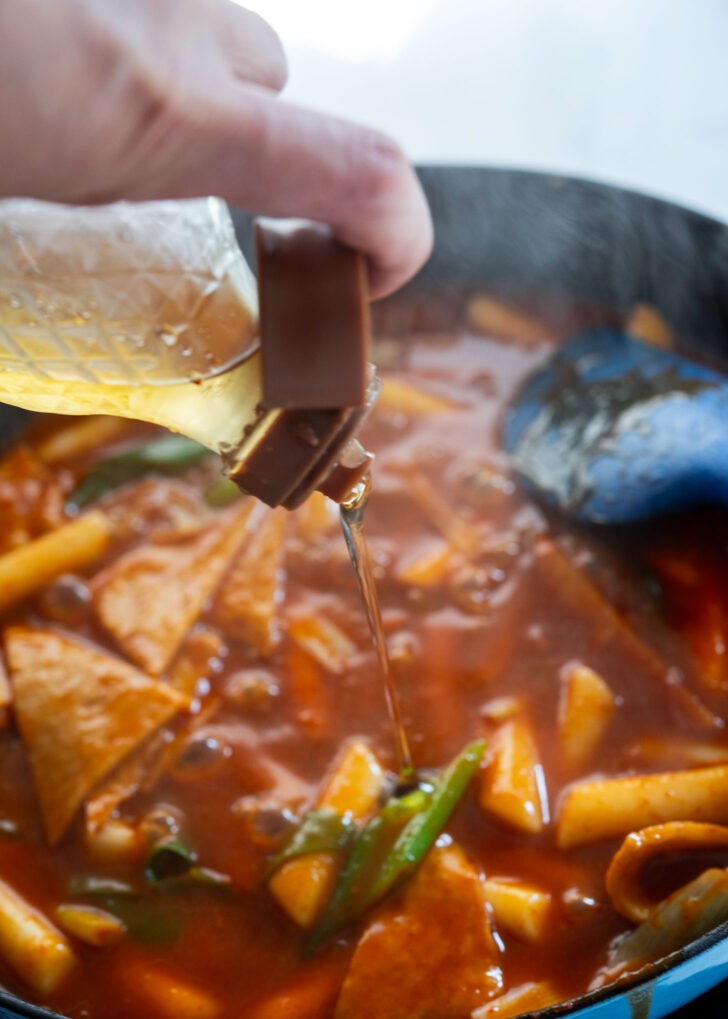
Add the fish cakes and leeks. Add the fish cakes and vegetables once the rice cakes are mostly tender. Continue cooking until everything is heated through and the sauce lightly coats the rice cakes.
Stop while the sauce is still slightly loose. This is the part I pay the most attention to. The sauce should cling to the rice cakes but still move easily around the pan. Don’t wait until it looks fully thick. It will continue to thicken as it sits.
Hyegyoung’s Tip: A small drizzle of oligo syrup at the end adds gloss without increasing sweetness significantly.
How Koreans Serve Tteokbokki
Tteokbokki is classic Korean bunsik, the casual snack-shop food often eaten with other small dishes.
One of my favorite pairings is gimmari, crispy seaweed rolls that are especially good dipped into the spicy tteokbokki sauce. Kimbap is another classic choice when you want to turn it into a more filling meal.
For more dishes in the same spirit, you can also explore my Korean street food recipes.
This recipe was originally posted in April 2010. I’ve updated the recipe with a few changes, new photos, and more information.
Love this recipe? Rate it and share your experience in the comments below! On Instagram? Tag me to showcase your creation. For more delicious recipes, subscribe to our newsletter!
Tteokbokki (Chewy Rice Cakes in Spicy Gochujang Sauce)
Recipe Video
Ingredients
- 1 lb (450 g) rice cakes, see note below
- 2 sheets (about 3 oz / 85 g) fish cake , sliced large bite-size strips
- 1 (about 100 g) Asian leek or 3 green onions, sliced
- 2-1/2 cup (600 ml) water
- 2 anchovy stock coin
- 3 tbsp (45 g) Korean chili paste (gochujang)
- 1 tbsp (7 g) Korean fine chili powder (goun-gochugaru), see note below
- 1 tbsp (15 ml) soy sauce
- 1-1/2 tbsp (20 g) light brown sugar, or more for your preference
- 1-1/2 tsp (4 g) onion powder
- 1 tbsp (15 ml) Korean oligo syrup, optional
Instructions
- If using refrigerated or frozen rice cakes, soak them in warm water for 10 minutes until softened and separated. Drain and set aside. Fresh, soft rice cakes do not need soaking.
- In a deep skillet or shallow pot, combine the water, Korean stock coins, gochujang, fine gochugaru, soy sauce, brown sugar, and onion powder. Stir until the gochujang is fully dissolved.
- Bring the sauce to a gentle boil. Add the rice cakes and simmer over medium heat for 7–10 minutes, stirring occasionally so they don’t stick. The rice cakes will soften and release starch, which gradually thickens the sauce.
- Add the fish cakes and leeks. Simmer over medium-low heat for another 3–5 minutes, until everything is heated through and coated.
- Stop cooking while the sauce still looks slightly loose and moves easily around the pan. It will continue to thicken as it sits. For a glossy finish, drizzle in the Korean oligo syrup during the last minute, if using. Serve immediately.
Hi
Hmmm, I'm sorry to hear that it was watery. It should be somewhat saucy but not watery though. I wonder it there was too much stock/water. Reduce the amount of liquid a little and cook up the liquid over higher heat, UNCOVERED. The sauce should eventually thickens and be able to coat the rice cakes over all. Hope this helps. Please let me know how it turns out next time.
Hi, I just made this dish now but found that it was too watery. I think maybe I put too much water in the pan. Love your blog.
I am glad I came upon this recipe, very authentic… how my Mom makes it too! I like your style of presenting this recipe. You are funny and creative 🙂
Hi Cynthia
Yes, you can change to chicken stock, but use low sodium one. You might want to reduce the chili passte just a little since most store bought chicken stocks have lots of sodium in them.
lol, can I change the fish cakes and stock for chicken, because I'm allergic to sea food.
I just found your blog and love it! I lived in Korea for a year and half and miss Korean food. I laughed outloud at your description of an Ajumma…you described them perfectly!! I plan on using your tutorials to make some of that yummy goodness 🙂
@9b40a37369b581ac3f92fab250c69c25
You can double the recipe but reduce the amount of the stock and the chili paste a little bit first (by 1 1/2X instead of 2X). You can always add more if you need.
You don't need to add kelp. Anchovies alone can bring wonderful flavor.
Have fun making them and let me know how it turned out.
Thank you so much for posting this I can't wait to try making it ^-^
If I were to make a bigger batch, say for about 8 people, I just have to double everything, right? Including the amount of anchovies for the stock? And also, can I skip the sea kelp and just have the anchovies?
Yes, you can use water instead of anchovy stock. But DO NOT add the fish
sauce, it will make the dish very very salty.
Can I use some water and fish sauce instead of making the anchovie stock?
thank you so much 🙂
Thanks! Everybody loves rice cakes. It is spicy but so good!
Sure, you can use just plain water, vegetable or chicken stock. It will taste slightly different but still good. You can skip the fish cake. I sometimes add dry ramen noodles or sweet potato noodles (the Japchae noodle). It will be a carb explosion! 🙂
how would you incorporate the ramen noodles instead of the fish cakes?
Add the ramen noodle when you add the rice cakes and cook them together.
Hello i wanted to know,is there another way to make this without using fish cakes and dried anchovies,i dont eat any type of seafood,but always wanted to try rice cakes 🙂
This is what I always eat when we went to Korea! It is really delicious especially the spicy one! Koreans have this really nice taste when it comes to sauces.
Hi Holly,
Thanks for your fast help! Actually I had the same frozen ones as shown in your picture. But when I soak them they crack up. I also made tteok myself (poor attempt) and froze them for later and I have the same problem with them. Maybe some kind of storage problem? Or it depends on the temperature of the water?. Do you let them defrost slowly before you soak them?
I will experiment some more tonight for dinner! 🙂
oh I always love the redness in Korean dishes. So appetizing! Thanks for sharing this great recipe! About the rice cake, is it the same with mochi?
I love all types of Korean food! This looks so good! I'm glad that I found your blog!
Does the cooked rice cakes keep well overnight in fridge? If reheated will the texture change?
You might want to add a tablespoon or two of water and cover with cellophane before microwaving. This will help rehydrate the rice cakes.
Hi! Thanks for posting the recipe. I just left our local Asian market with a bag of refrigerated rice cakes and had not the slightest clue of how to go about cooking them. I'm heading out to the grocery store now to pick up the rest of the ingredients for your 'Spicy Korean Rice Cakes.' 🙂
@Laura
Hi Laura
I would love to hear how you and your boyfriend like it. Thanks for visiting my blog.
Thank you so much for posting this recipe! My Dad lived in Korea and when I went to visit him this was my absolute favorite dish. Now I can't wait to get the ingredients together and make it for my boyfriend.
I can't wait to try making this tasty-looking dish!!
Hi Eunice and eating vancouver
Thanks for visiting my blog. Hope your Ddukppoki turned out good.
I'm bookmarking this recipe: thanks!
While I didn't grow up in Korea, I definitely grew up in a household where ddukppoki was a staple. Now, whenever I go home to visit the family, my mom makes me be the one to prepare and make this dish! Mmmm, I may have to go buy some dduk tonight and make it tomorrow!