

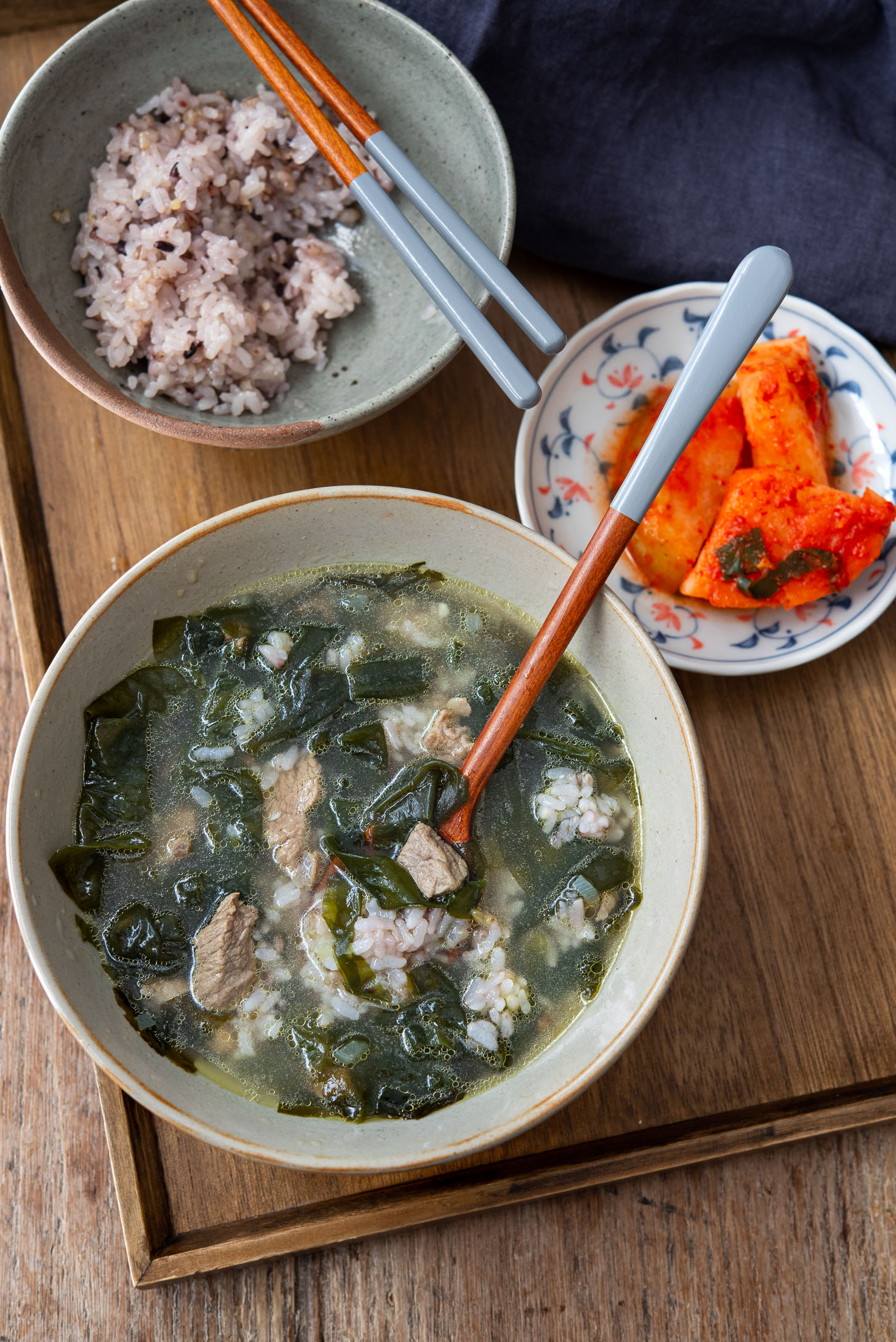
Korean Seaweed Soup (Miyeokguk)
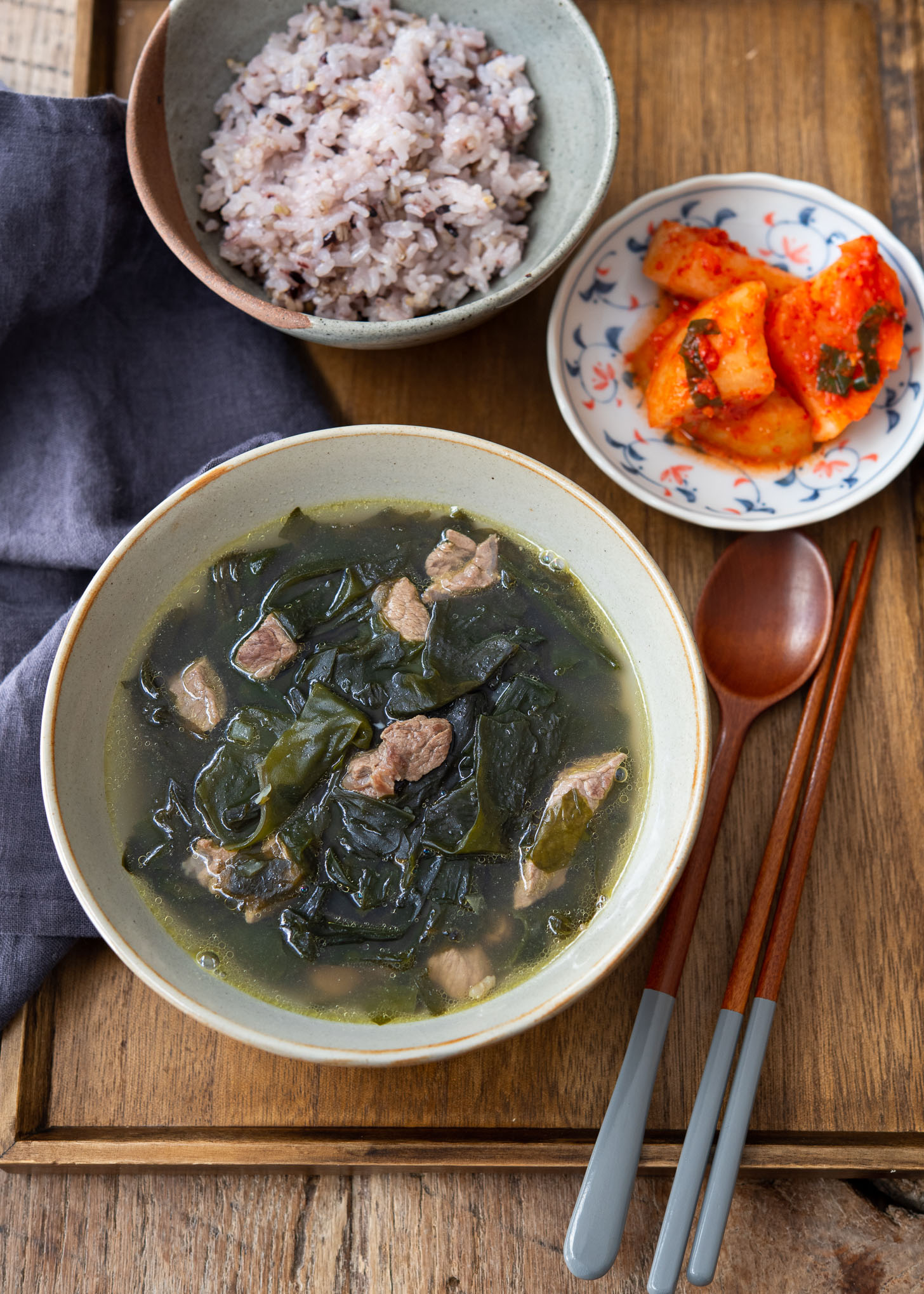
A clean, savory Korean seaweed soup made with tender beef, dried miyeok, and a rice-water broth. Ready in about 30 minutes, this simple soup is a staple for birthdays and postpartum meals in Korean homes.
Get new recipes via email:
Korean seaweed soup, or miyeokguk (미역국), is one of those dishes I’ve eaten my whole life without ever getting tired of it. Growing up in a family of seven, my mom made it for every birthday, so we had it almost every other month. No one complained. We actually wanted it more often.
I did the same after having my children, eating it daily for weeks. In Korea, it’s a traditional postpartum soup, known for its light, nourishing broth. Seaweed is naturally rich in iodine, iron, and minerals, which is why it’s believed to support recovery and help new mothers maintain breast milk supply. It may sound repetitive, but I never got bored of it. Honestly, I looked forward to it every day. It’s simple, comforting, and somehow always hits the spot.
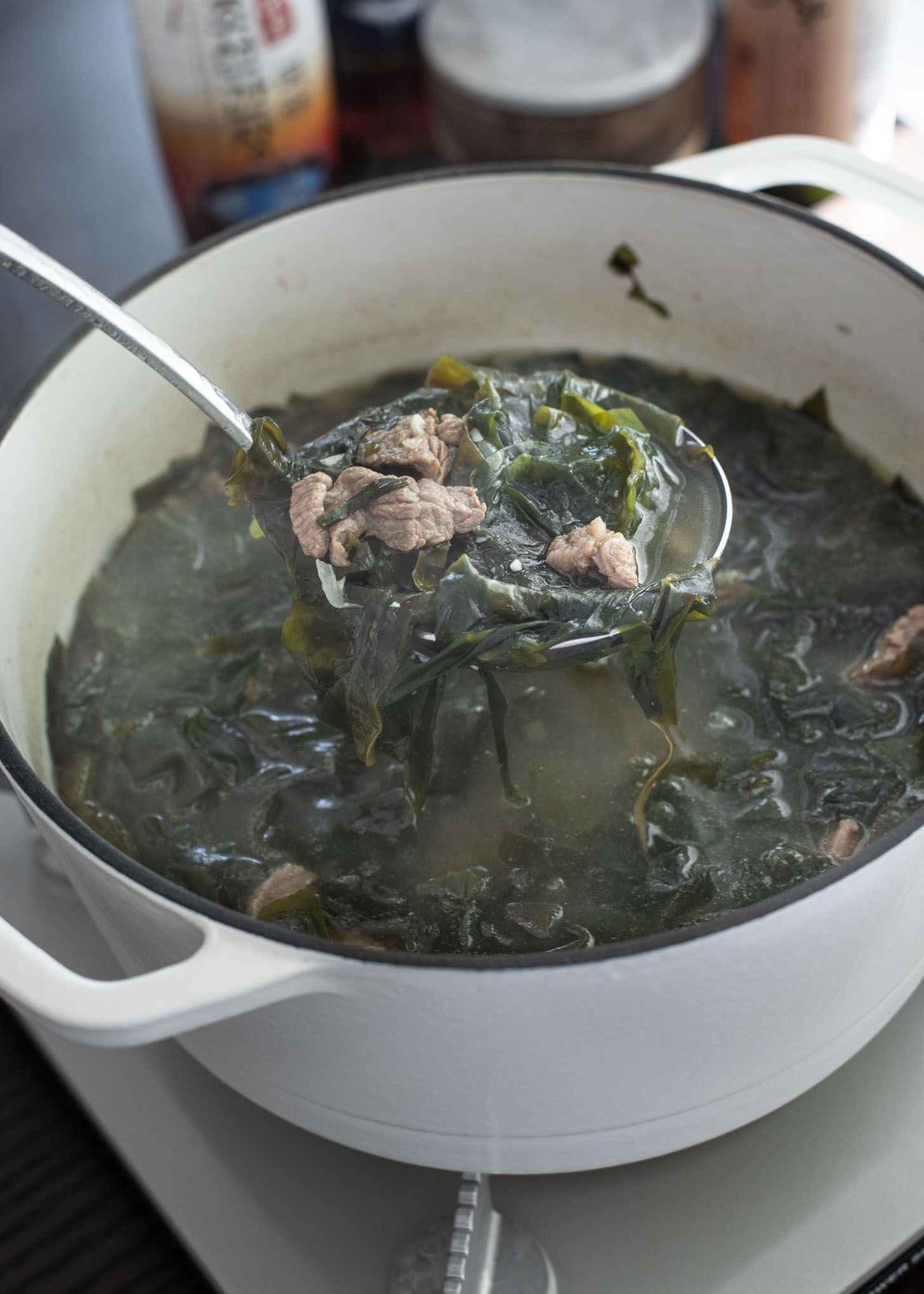
What Keeps My Miyeokguk Clean and Deep in Flavor
I like to keep this soup clean and balanced so the seaweed flavor comes through clearly, not muddled. A gentle simmer does the trick. No need to rush it with a hard boil.
I also add a small amount of onion. Not traditional, I know, but it gives the broth a subtle savory lift. You won’t notice it outright, but you’ll miss it if it’s not there.
This version leans clean rather than heavy, the kind of soup you can keep going back to without getting tired of it.
Key Ingredients That Shape the Flavor
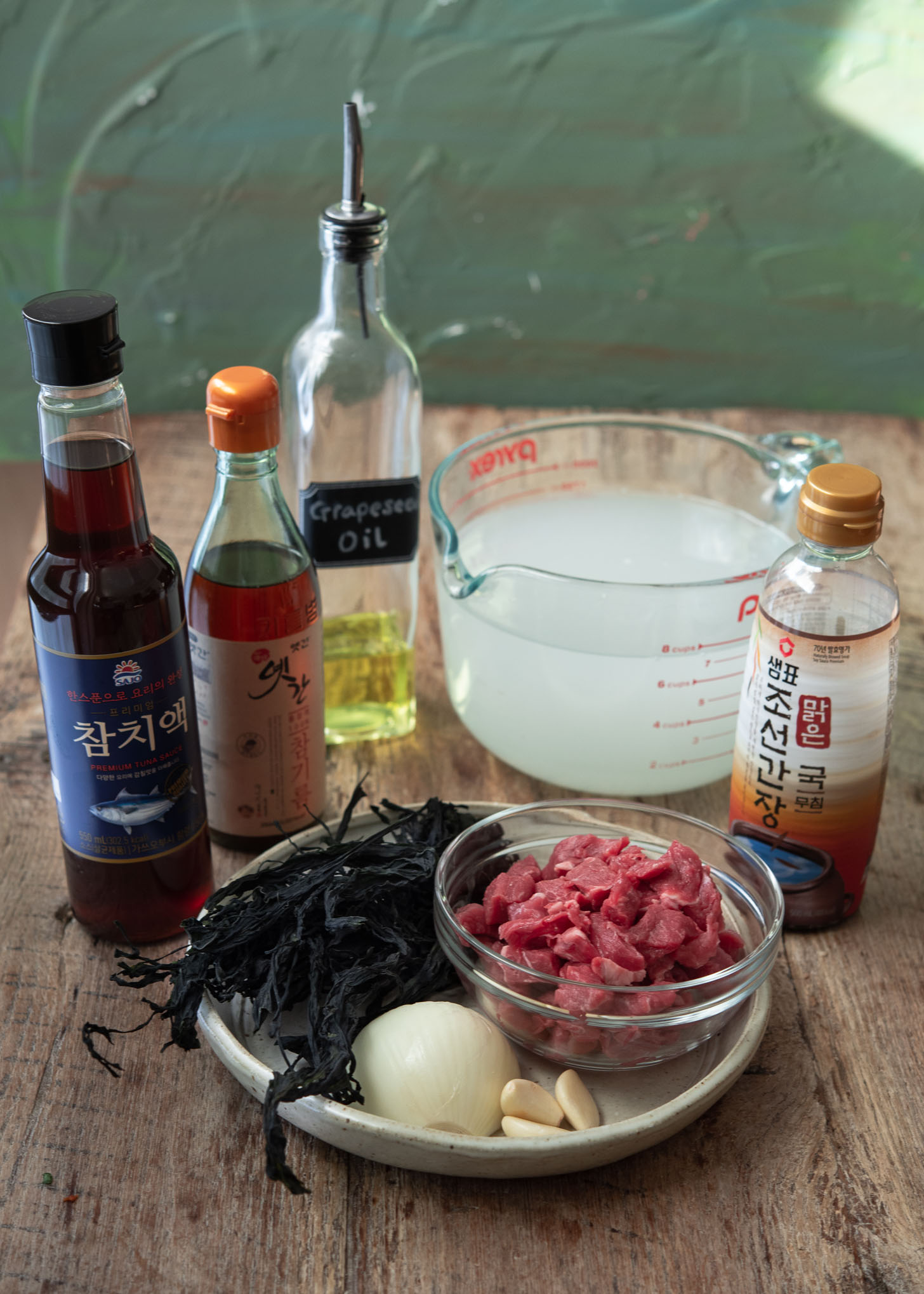
Miyeok (Dried Korean Seaweed):
Look for thin, dark green strands labeled guk-yong miyeok (soup-grade). Good-quality seaweed rehydrates quickly and turns silky without falling apart. If you enjoy this flavor, I also use it in my seaweed egg drop soup and cold seaweed cucumber soup.
Beef:
Small pieces of stew beef or brisket work well. I like to sauté the beef in a little sesame oil first. It’s a simple step, but it builds a deeper, more rounded broth from the start.
Rice Water:
Using the milky water from rinsing rice is a classic home-style trick. It adds a gentle sweetness and a light body to the soup. Subtle, but it’s one of those details that makes it taste the way it should.
Seasoning:
Season with Korean soup soy sauce (guk-ganjang) to keep the broth clear and savory. Finish with a drizzle of sesame oil to bring everything together. I often add a bit of Korean tuna sauce (chamchi aekjeot) for an extra, modern umami boost.
How to Make Seaweed Soup with Beef


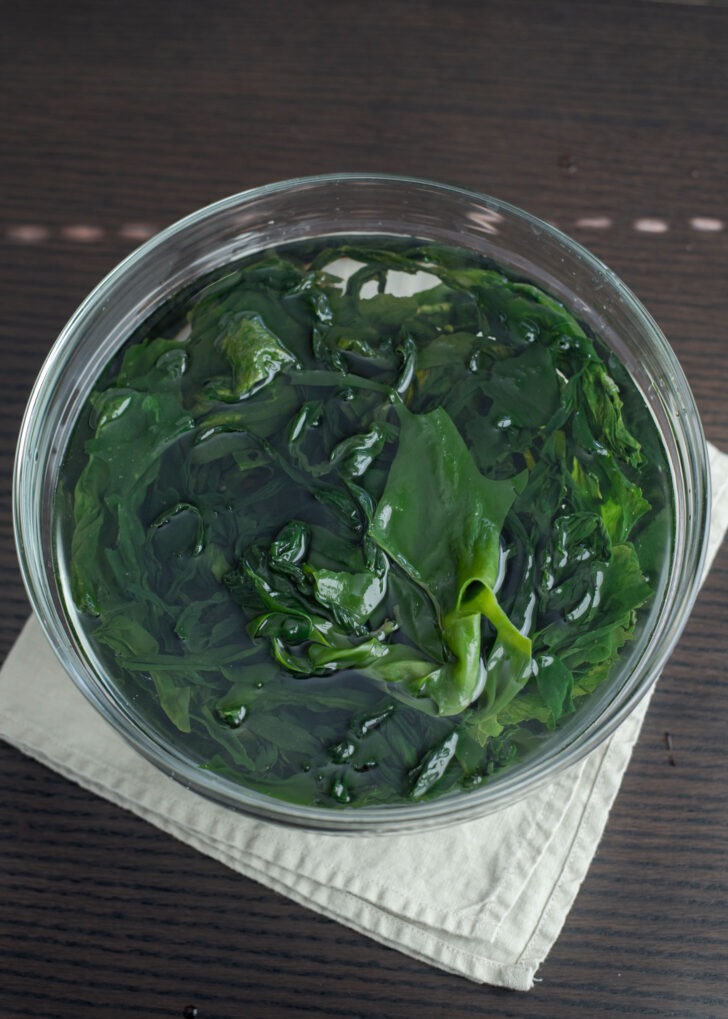
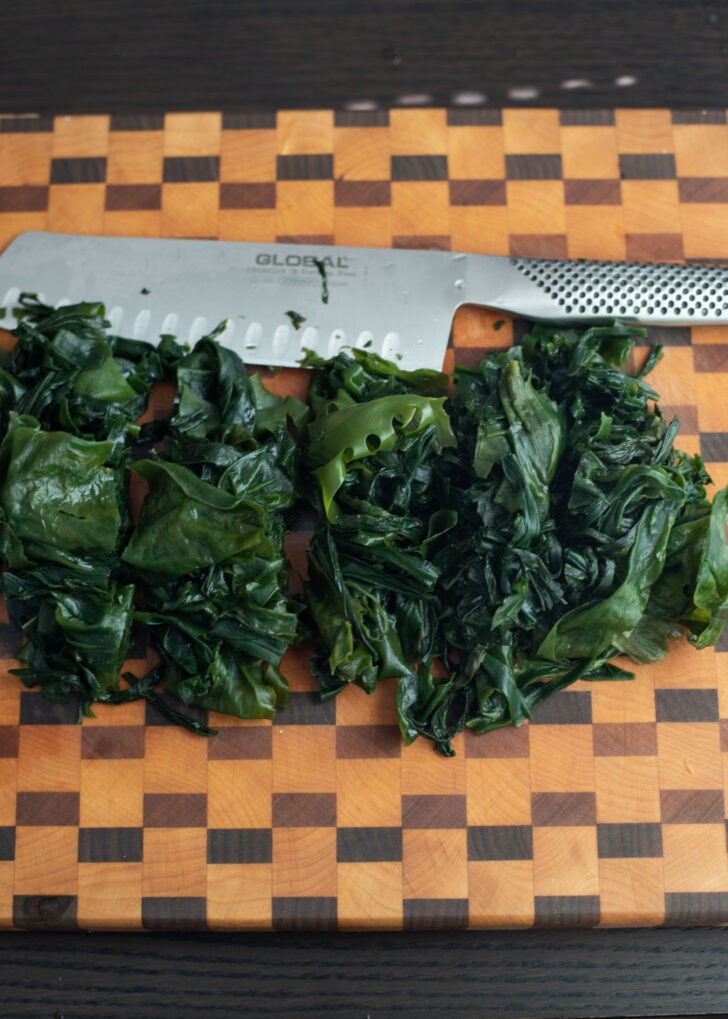
Soak the Seaweed. Rehydrate the dried miyeok in cold water until soft, then squeeze out excess water and cut it into bite-size pieces. Good-quality seaweed should expand significantly and keep a silky but slightly firm texture.

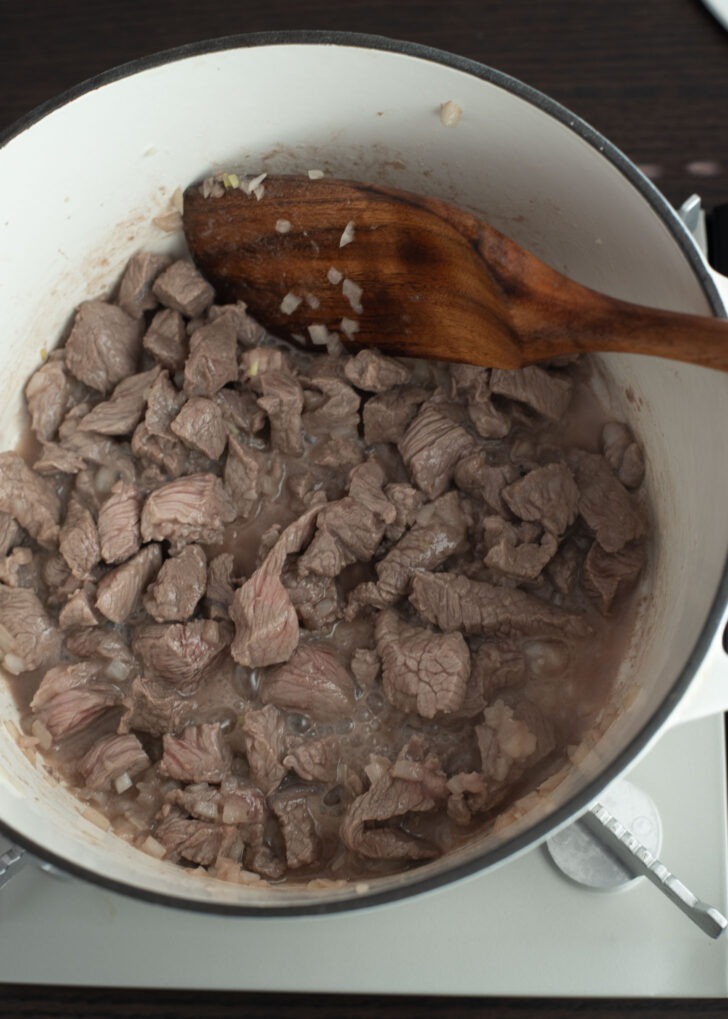
Sauté the Beef and Onion. Cook the minced onion and beef together in sesame oil until the beef loses its pink color. I add onion here because it naturally sweetens the broth — a small twist that gives the soup a more balanced flavor.
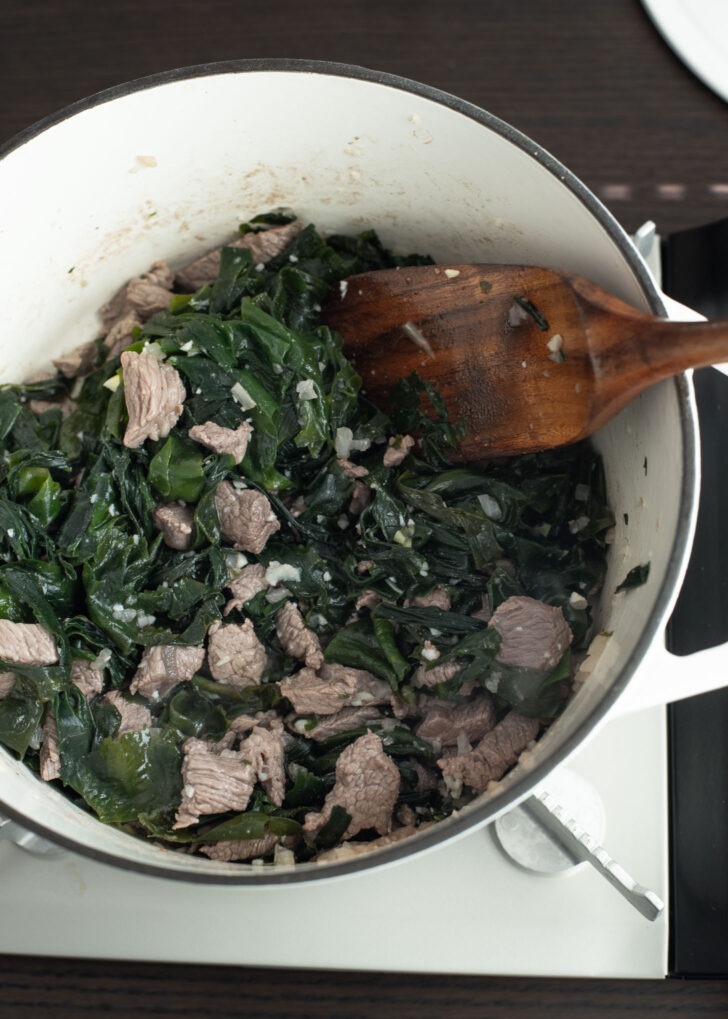
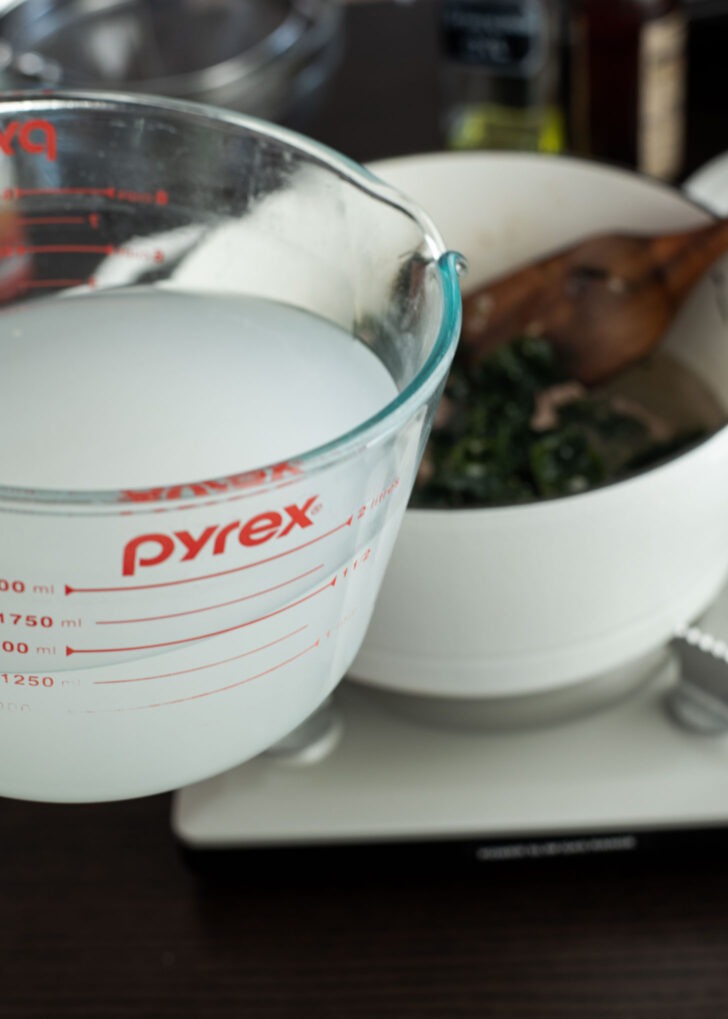
Simmer with Seaweed and Rice Water. Add the rehydrated miyeok and stir briefly before pouring in rice water. As it simmers, the broth turns slightly opaque and savory — exactly what you want.
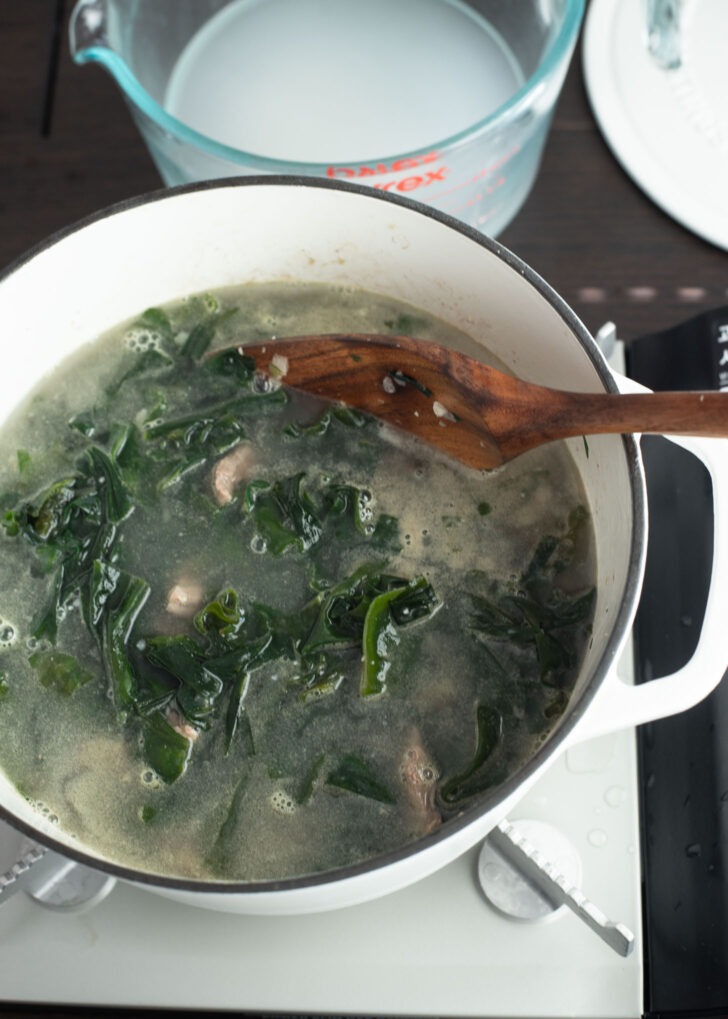
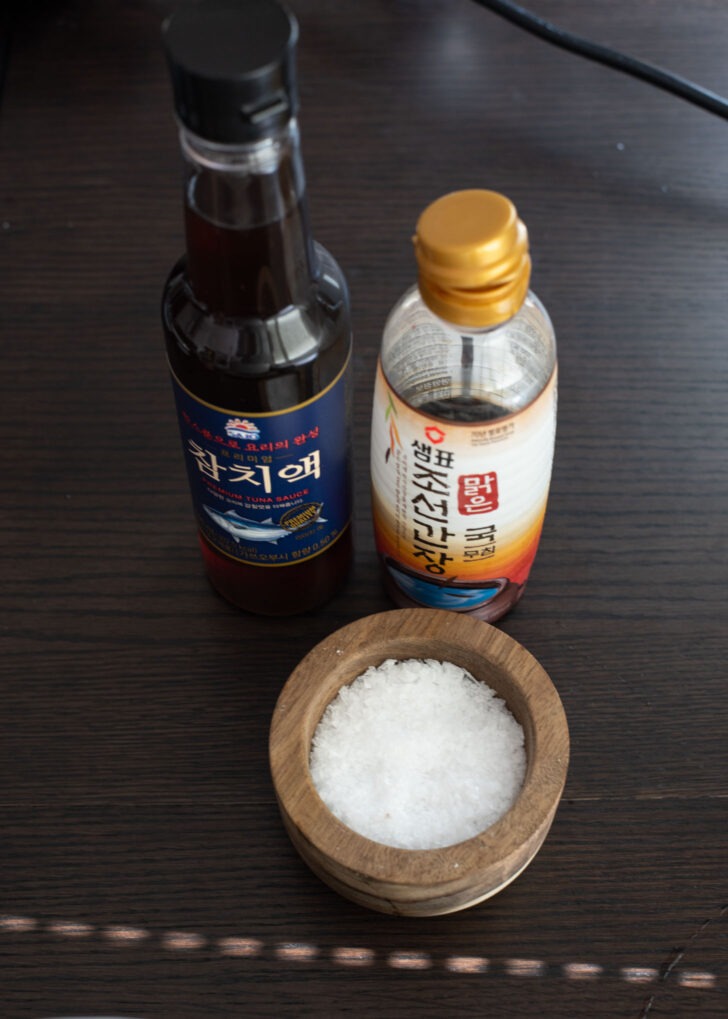
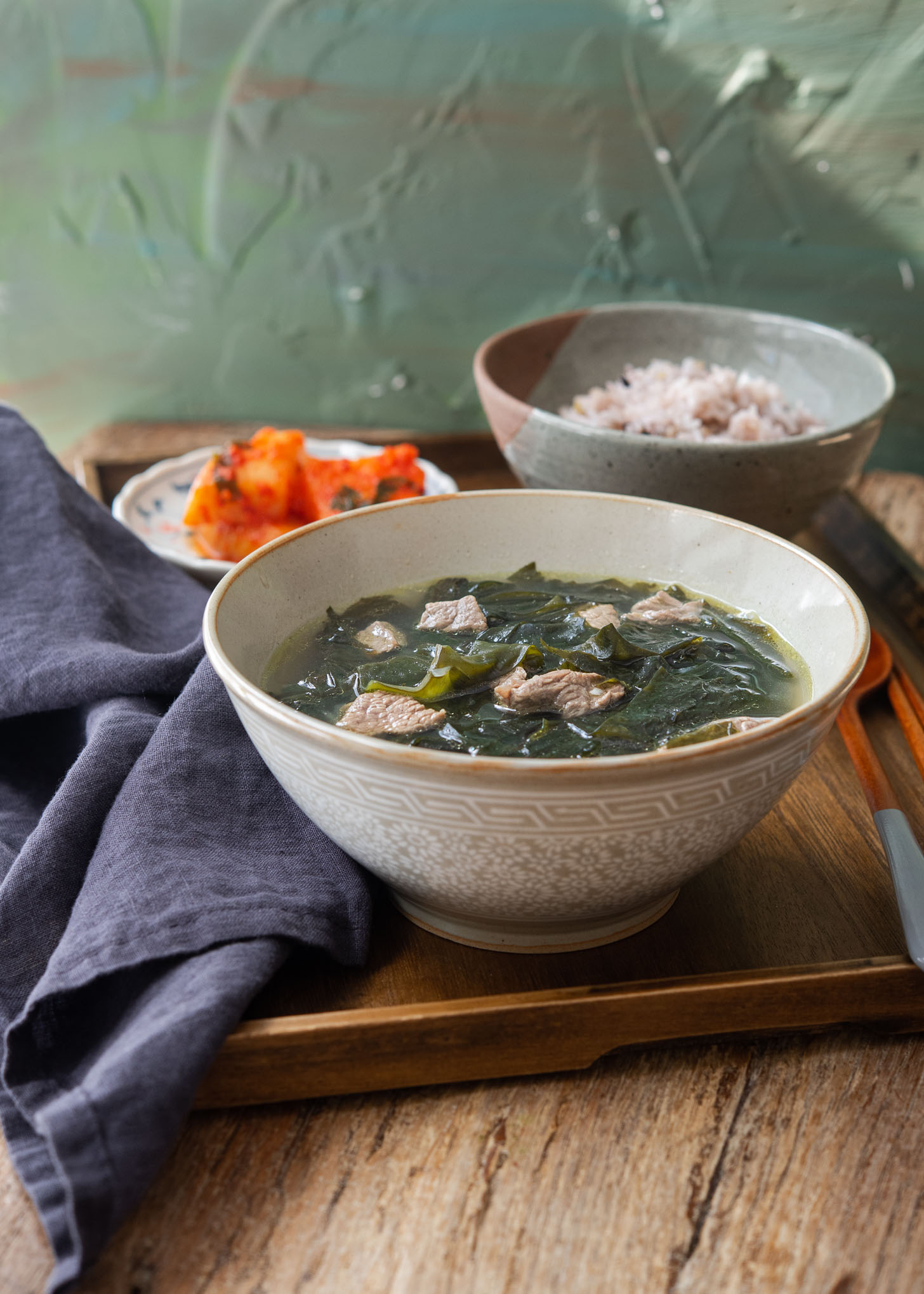
Season and Serve. Finish with soup soy sauce, a splash of tuna sauce (optional), and salt to taste. A drizzle of sesame oil at the end adds warmth and aroma. Serve with steamed rice for a classic Korean meal.
Storage & Reheating Tips
Miyeokguk keeps well for several days and often tastes even better the next day. Store refrigerated for up to 4 days or freeze for up to 3 months. Reheat over low heat to keep the seaweed tender and the broth clean.
For seaweed lovers, there’s also a fish-based miyeokguk variation in my cookbook Korean Cooking Favorites — a version with a slightly different depth and one I still make often. If you enjoy light, comforting Korean soups, try my beef radish soup next — another everyday favorite in Korean homes.
And for more cozy Korean bowls, take a look through my Korean soups & stews category.
Love this recipe? Rate it and share your experience in the comments below! On Instagram? Tag me to showcase your creation. For more delicious recipes, subscribe to our newsletter!
Korean Seaweed Soup (Miyeokguk)
Recipe Video
Ingredients
- 1 oz (30 g) dried seaweed (miyeok)
- 1/2 tbsp (7 ml) oil
- 1 tbsp (15 ml) sesame oil
- 1/2 (about 50 g) small onion, minced
- 2/3 lb (300 g) beef , stew meat, small pieces
- 2 cloves garlic, finely minced
- 2 tbsp (30 ml) Korean soup soy sauce (gukganjang), divided
- 7-8 cups (1.65–1.9 liter) rice water, or plain water
- 1 tbsp (15 ml) Korean tuna sauce, optional
- pinches salt, to taste
Instructions
- Soak seaweed in cold water for 10-15 mins, then drain and slice.
- Heat oil and sesame oil in a soup pot over medium-low heat. Add minced onion and stir-fry for 30 seconds. Add the beef and cook until no longer pink. Add the seaweed, garlic, and 1 tablespoon of Korean soup soy sauce; cook for 3 minutes
- Pour in rice water (or plain water) and stir. Cover with a lid and simmer for 10 minutes or until the seaweed is soft and tender.
- Season the soup with the remaining Korean soup soy sauce, Korean tuna sauce (if using), salt, and 1 tsp sesame oil. Serve hot with rice and kimchi.

Just made this today and it was SO good. 10/10 will make again!
Thanks Holly! I made some today using my mother’s recipe which is almost identical to yours. She typically didn’t add onion and used just sesame oil. I like to add korean radish (무) and just a bit of shredded carrots for color.
I like your wide range of traditional and non-traditional recipes. Thanks so much! 수고하셨습니다!
Hi Mark
Most people don’t include onions in seaweed soup, but I found it much better with them. It make the soup more savory. I also like to add a little cooking oil to sesame oil when I cook the meat, so that it can raise the smoking point. Sesame oil is not ideal for stir-frying or cooking since it has a very low smoking point. I appreciate your addition of carrots. Thank you so much for your comment. I’m glad that my recipe is identical to your mother’s.
LOVE seaweed soup! Your ingredient list does not show onions, but your instructions has onions… how much onions do you use?
Thank you for the delicious recipe!
Hi Nana
Thanks for pointing out the missing ingredient. I updated the recipe card. If you love seaweed soup, you will love this recipe. Thanks for your comment.
Hi, anyway to make the beef more tender? I’ve seen other recipes, but this is exactly how my mother in law in Korea made it, so I know it’s legit.
I tried soaking it in baking soda, but that was gross.
I wouldn’t recommend soaking the beef with baking soda to make this soup. Use thin sirloin beef slices instead of cubed stew beef. This is a rather quick soup and if you want the beef to be tender, you will need to use tender cut of beef. However, is using stewing beef, give a longer simmer time. That will help tenderizing the beef. Hope this helps. Let me know if you have more questions. Thanks!
My mom made me a ton of seaweed soup when I was nursing; so for 3 months straight, every day I ate seaweed soup. LOL
Hi there, I check your blog like every week. Your humoristic style is awesome, keep doing what you’re doing!
Thanks Les. I appreciate your sweet words!
I love eating seafood! When they`re in soup or crispy and lightly salted! This soup looks great.
Holly,
This soup is great. We always have seaweed soup with pork bones or tofu and have not tried to stew beef with it. I will have a try next time.
I’ve heard many times how healthy seaweed is, but I never eat it unless it’s with sushi or miso soup. I’m interested in cooking with it.
Simple and delish and similar to what my Malaysian cousin does.
I can almost smell this soup! I need a big bowl of this soup right now… I love seaweed and enjoy Korean beef and seaweed soup a lot. I will try your recipe next time!
I’d had seaweed dishes in restaurants, but never cooked with it. I definitely have to try this — looks so wonderful! Good stuff — thanks.
This looks great. My mom used to make this for birthday celebration in the family. Thanks for the recipe. I’m excited to try this out!
I am also a seaweed machine and would love love a hot bowl of this RIGHT NOW. Sounds like a great simple but high impact recipe.
http://thatumamilife.wordpress.com
Hello! I stumbled across your blog and love it! Thanks for sharing.
I have to laugh, I thought this was something my mom had made up!…She use to make this soup whenever someone was sick.. Unfortunately, I never appreciated it… The seaweed grossed me out.. Now, I would appreciate it…Korean soy sauce? never had/heard of it… we used the typical Kikkoman…
I am glad that you are appreciating seaweed now. Korean soy sauce for soup is literally soy sauce made for soup. It is different than regular soy sauce that we all know. It is saltier and more pungent. It adds a deep layer of flavor that is quite different than usual soy sauce.
I noticed in Korean dramas that when it’s someone’s birthday they get asked if they ate seaweed soup or someone makes seaweed sou for them Now I know how to make it : ) tks for the recipe.