

Baechu Geotjeori (Fresh Napa Cabbage Kimchi Salad)
My authentic Baechu Geotjeori is a quick, Gluten-Free side dish of crunchy Napa cabbage tossed in a garlicky seasoning of gochugaru (Korean chili flakes) and fish sauce. This 1-hour, no-ferment recipe uses a simple salt brine to achieve that signature “noodle house” snap. It is the perfect refreshing Korean banchan for busy weeknights when you want bold flavor fast.
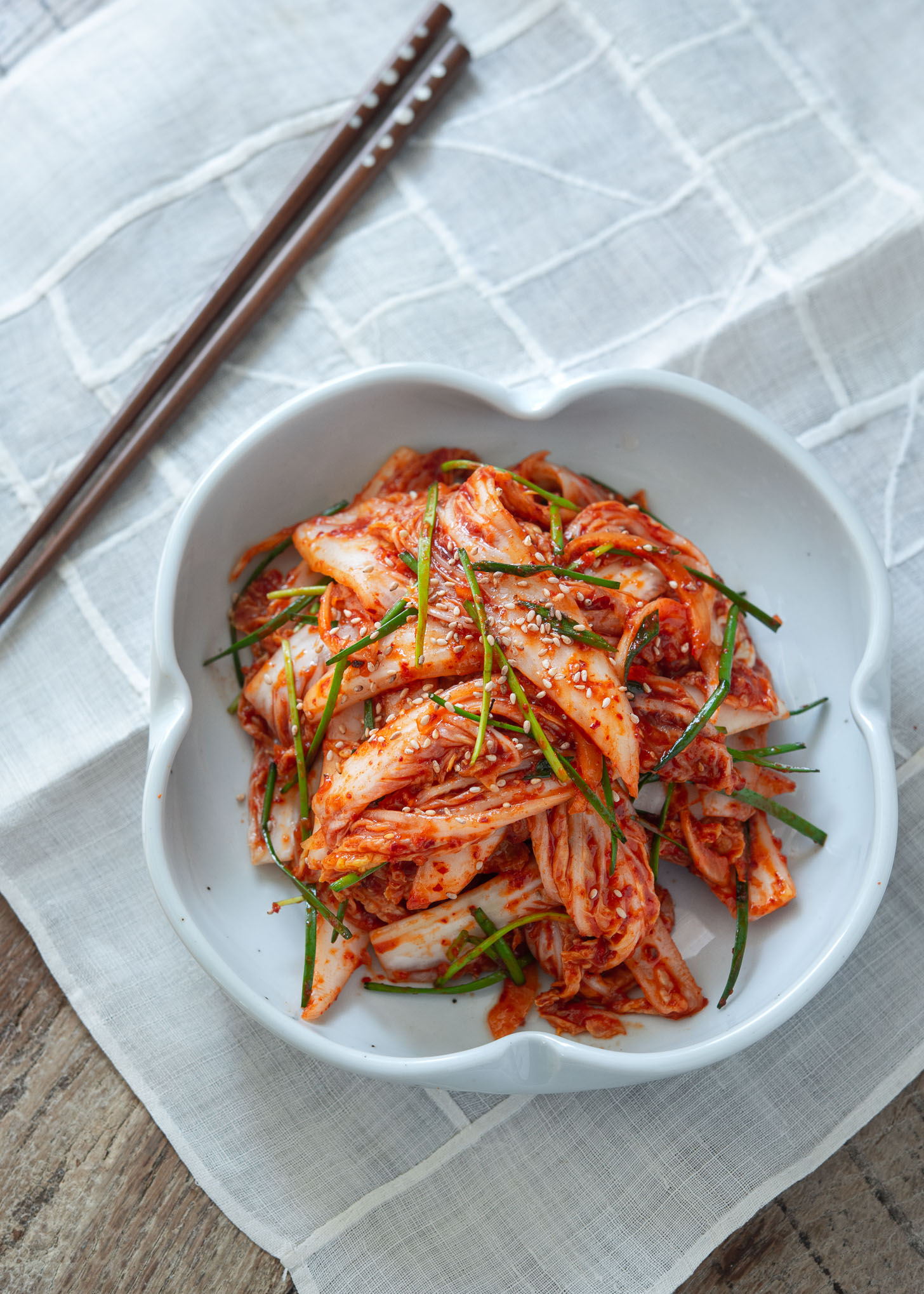
While I love easy everyday cabbage kimchi at any stage of fermentation, I often crave the explosive, refreshing crunch of Baechu Geotjeori (배추겉절이). This was the first recipe I mastered on my “kimchi adventure” decades ago. It taught me that you don’t always need months of waiting for a deep, complex flavor—sometimes, you just need a perfect 45-minute brine.
In Korea, we call this the “soul mate” to a steaming bowl of kalguksu (Korean hand-cut noodle soup). To be honest, if there isn’t a plate of fresh geotjeori on the table, I’d probably just skip the noodles altogether! There’s something so perfect about how the spicy, crunchy leaves cut right through that rich, starchy broth. It’s a flavor match made in heaven that you just have to try in your own kitchen.
Choosing Your Cabbage: Young Napa vs. Yellow Hearts
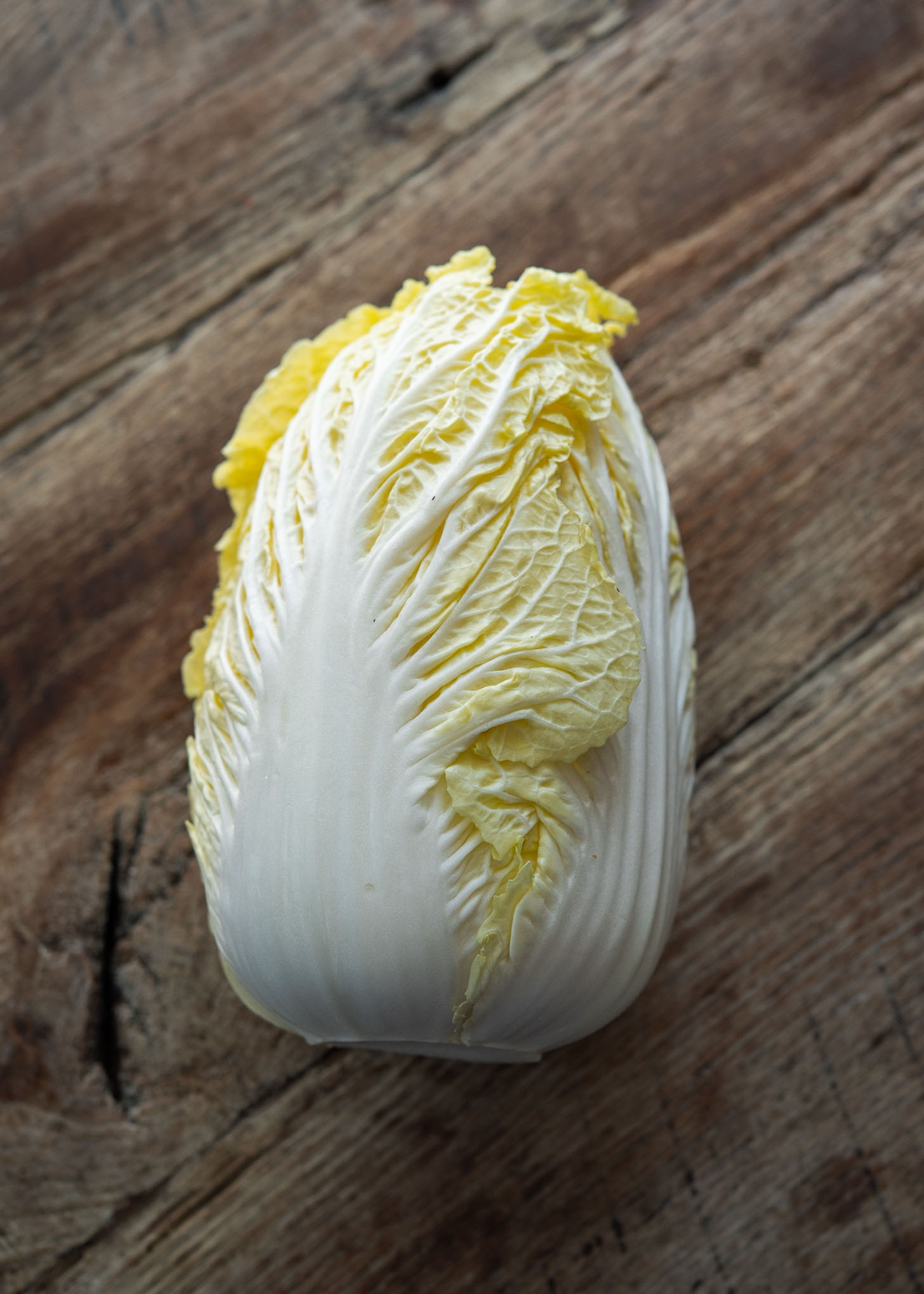
While you can make geotjeori with a standard large Napa cabbage, the absolute best version uses Young Napa Cabbage (Put-baechu, 풋배추). In many markets, this is sometimes labeled specifically as Kimchi Cabbage. These smaller, thinner leaves have a higher sugar content and a more delicate “snap.”
If you are using a full-sized head of cabbage, I recommend focusing on the tender, buttery yellow cabbage hearts. Because we aren’t fermenting this for a long period, using these sweeter inner leaves ensures the salad stays crisp rather than becoming tough or fibrous.
Hyegyoung’s Tip: The “Hearts” vs. The “Greens”
Don’t toss the dark green outer leaves! Save them for a hearty pot of Korean soybean paste soup; they work perfectly as a substitute for greens in my authentic Korean soybean paste soup (doenjang guk) recipe). For this fresh salad, we only want the yellow hearts that are tender enough to eat almost raw.
My Essentials for Geotjeori Dressing
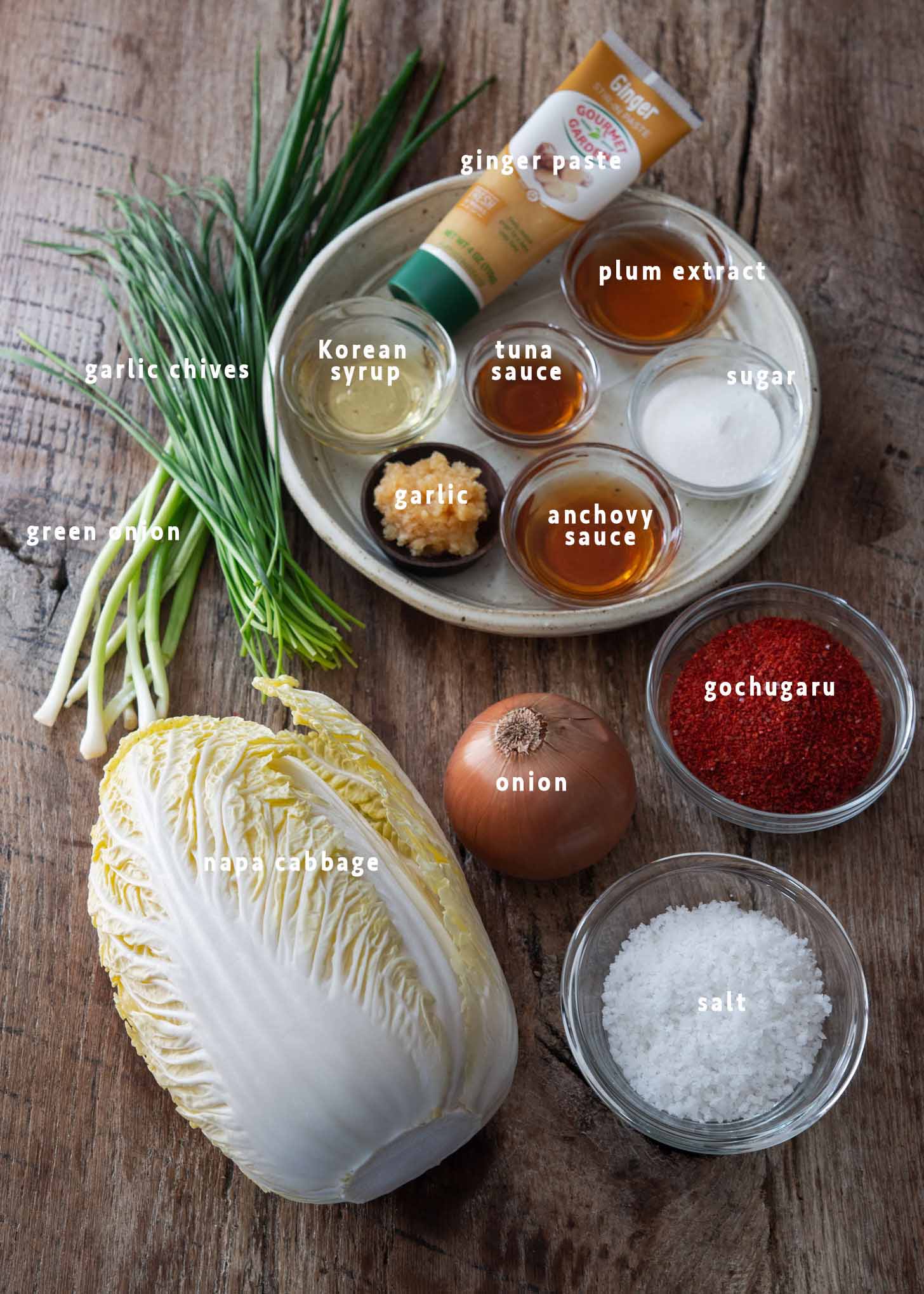
Geotjeori seasoning must be vibrant from the start. Since there is no fermentation to mellow the flavors, I focus on balancing salt, umami, and “gloss.”
The Brining Duo: I use Korean coarse sea salt mixed with a pinch of sugar. The sugar helps the cabbage soften faster while maintaining its “snap.”
- Substitution: Use only 1/3 the amount if using Kosher salt.
Double Umami: For a more complex savory base, I often use two different types, such as anchovy sauce and tuna sauce, for more flavor depth.
The “Gloss” Factor: To get that restaurant-style luster, I use Korean plum extract (maesil-cheong) and corn syrup (optional). This helps the gochugaru (chili flakes) adhere to the smooth leaves.
Aromatics: Geotjeori should be garlicky. I use a generous amount of minced garlic and a mix of Asian chives or green onions for extra crunch.
The Finishing Touch: Unlike aged kimchi, always add toasted sesame oil and seeds right before serving. This adds a fresh, nutty aroma that defines the dish.
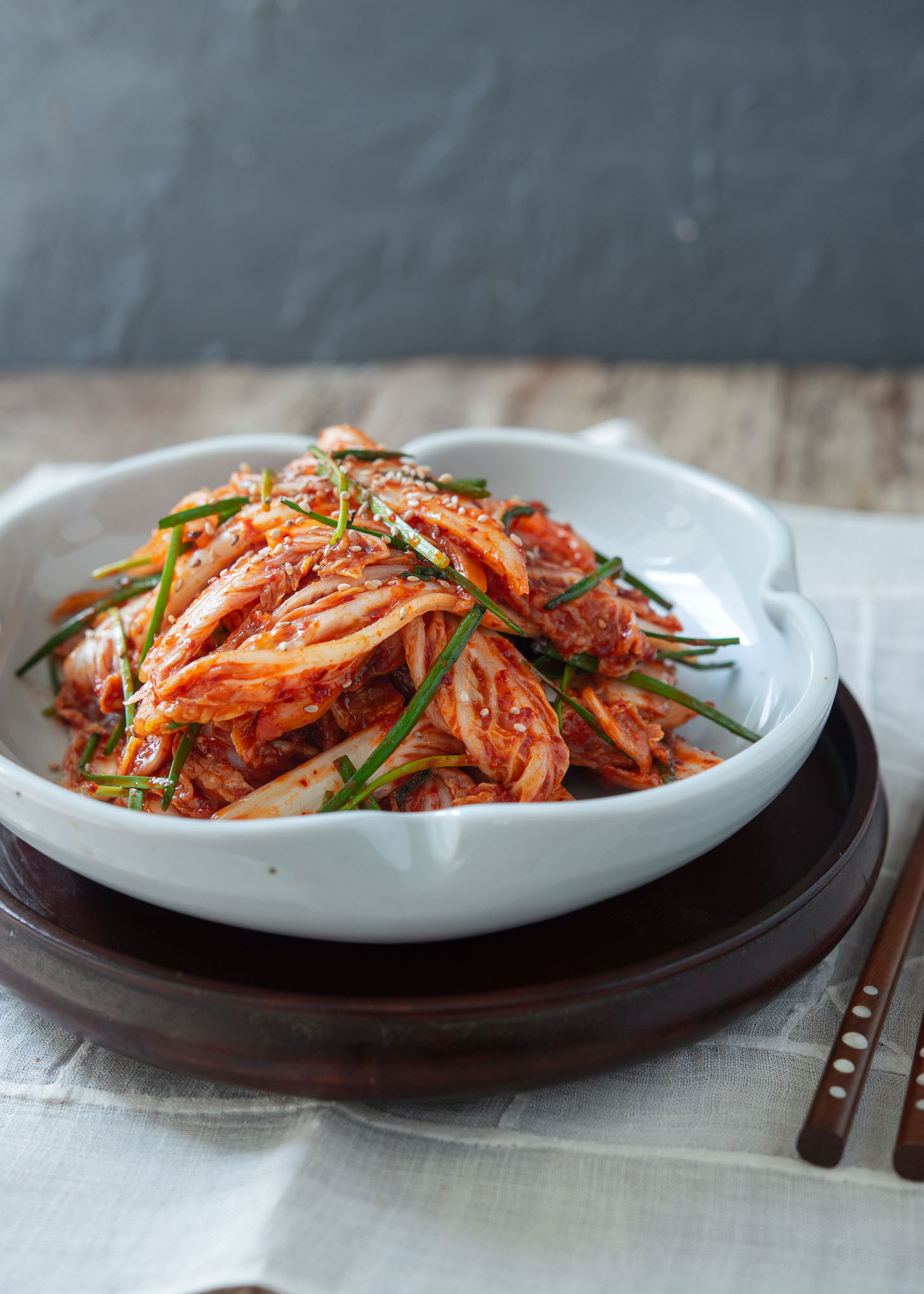
How to make Baechu Geotjeori (Fresh Kimchi Salad)
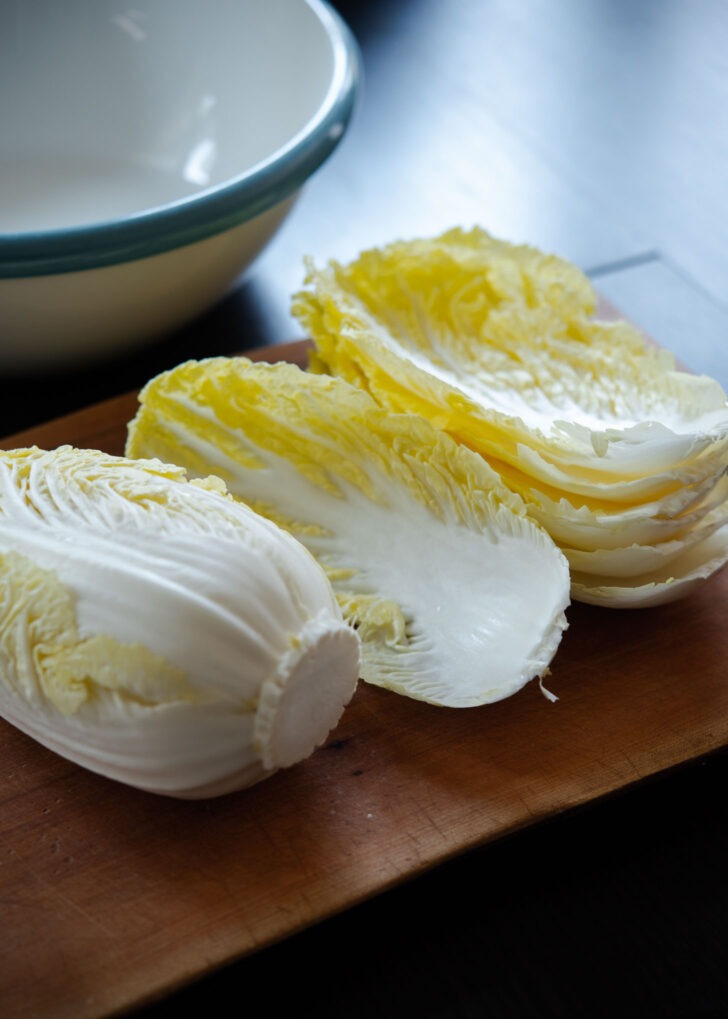
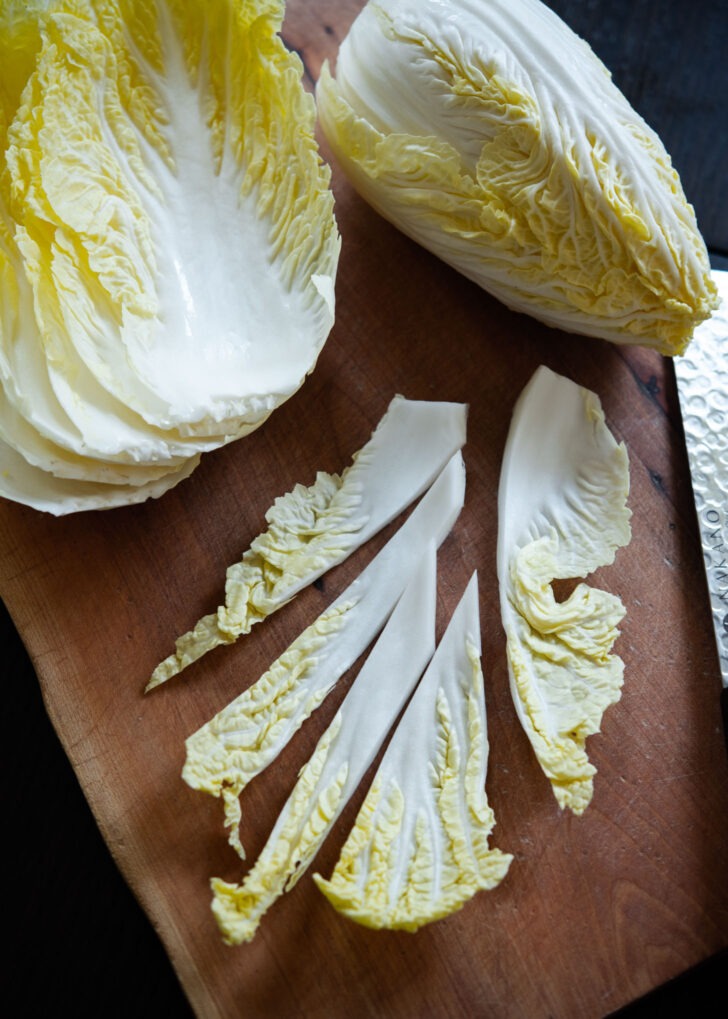
Cut the cabbage vertically. Instead of chopping the cabbage into generic squares, separate the leaves and cut them into long, vertical strips. Make sure each piece includes both the crunchy white stem and the tender leaf. This vertical cut is the secret to getting a uniform texture in every bite.
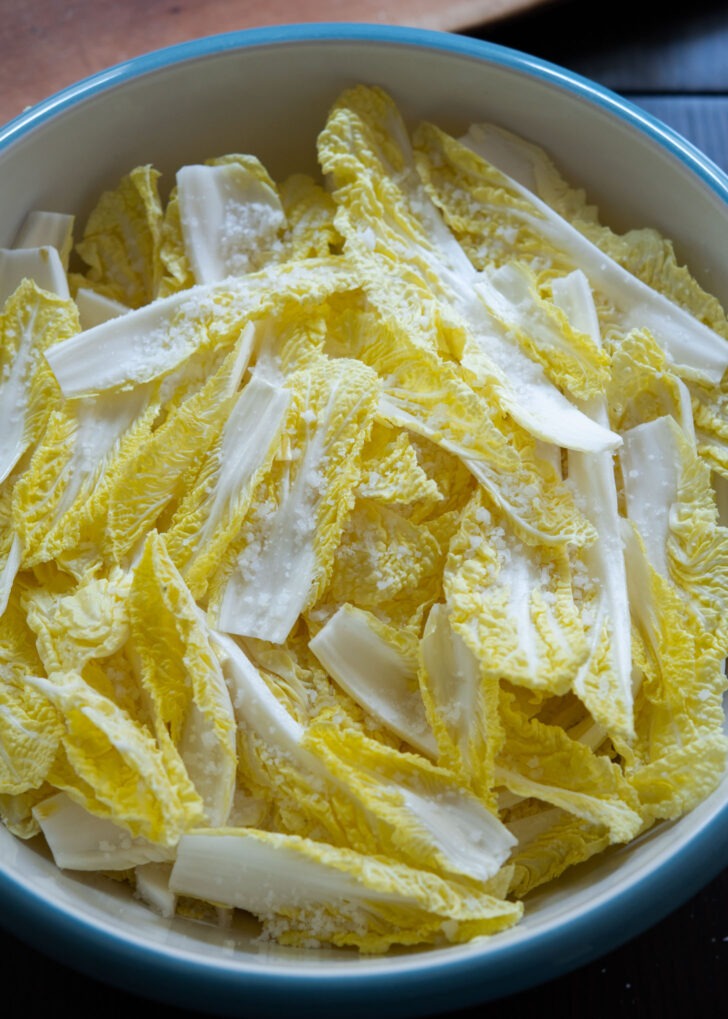
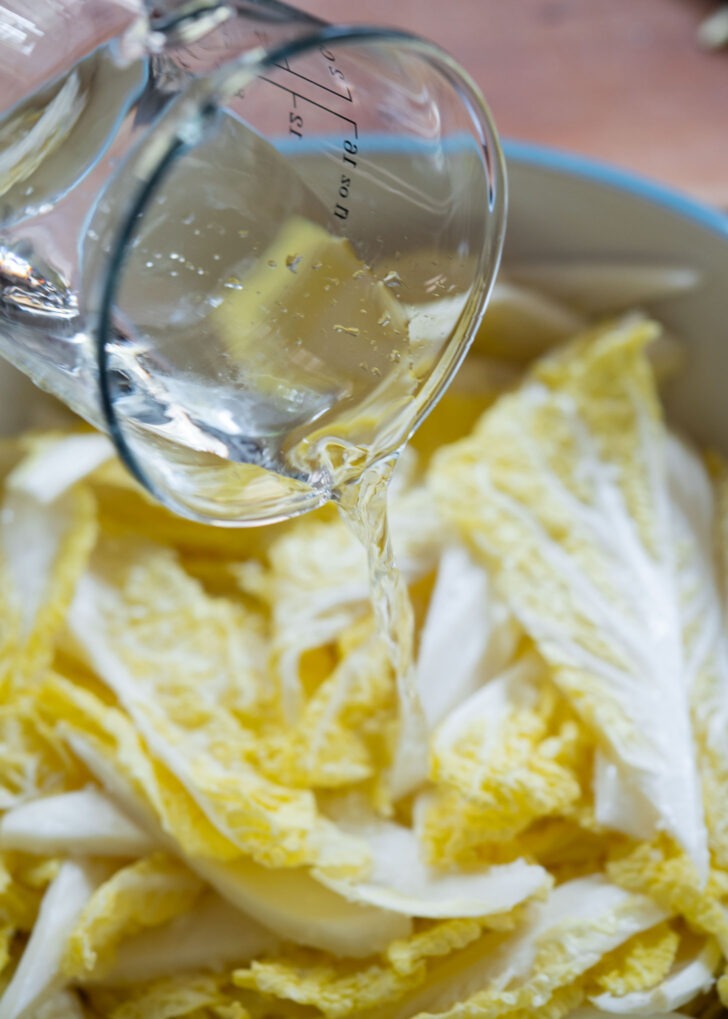
Brine for the “Bend Test”. Layer the cabbage with the salt and sugar mixture and a cup of water. Let it soak for 35–45 minutes, turning once. Before rinsing, pick up a thick stem and bend it. If it forms a “U” shape without snapping, it’s ready. The sugar in the brine helps the cabbage soften faster while maintaining its signature crispness.
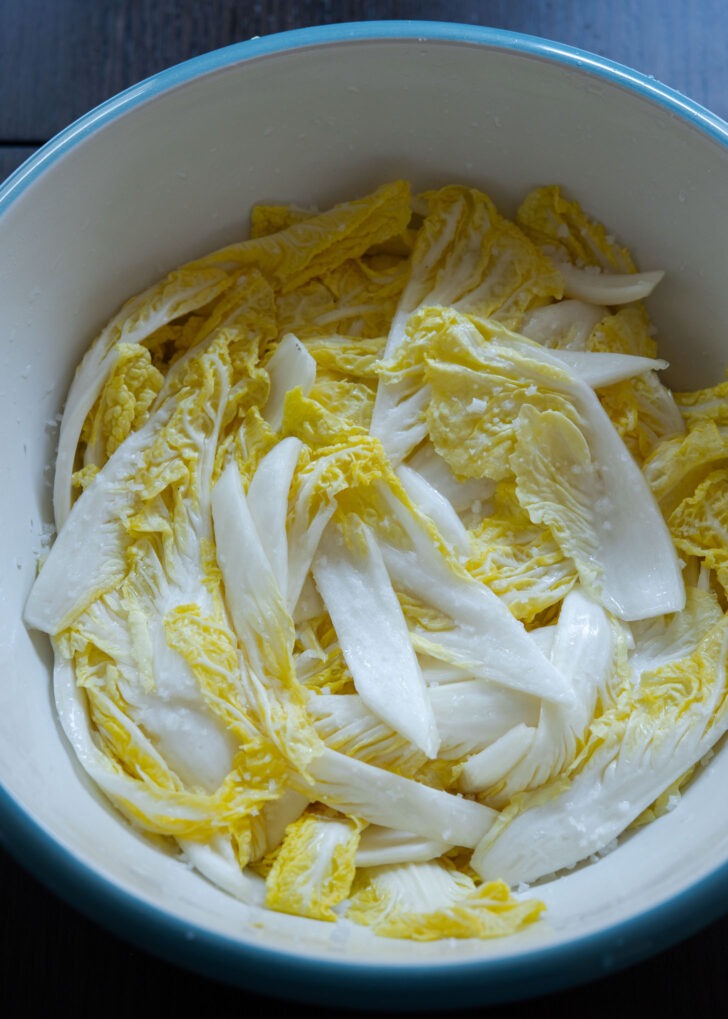
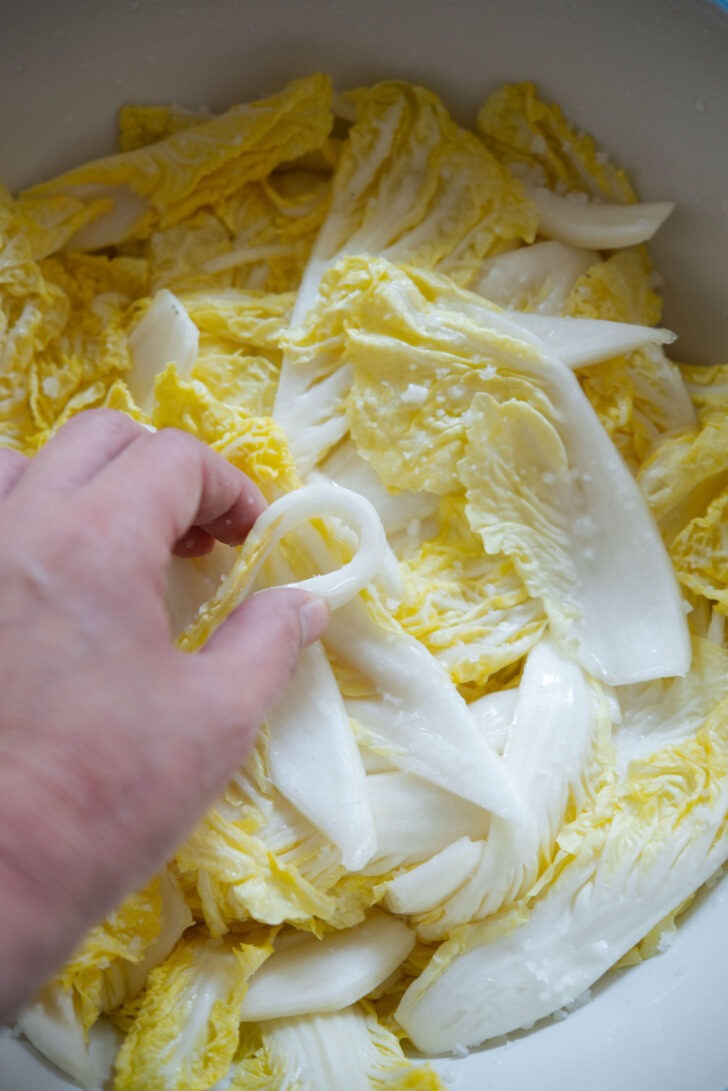
Rinse and drain thoroughly. Check to see if the cabbage is bending to make sure they are fully brined. Rinse the cabbage and squeeze out the excess moisture.
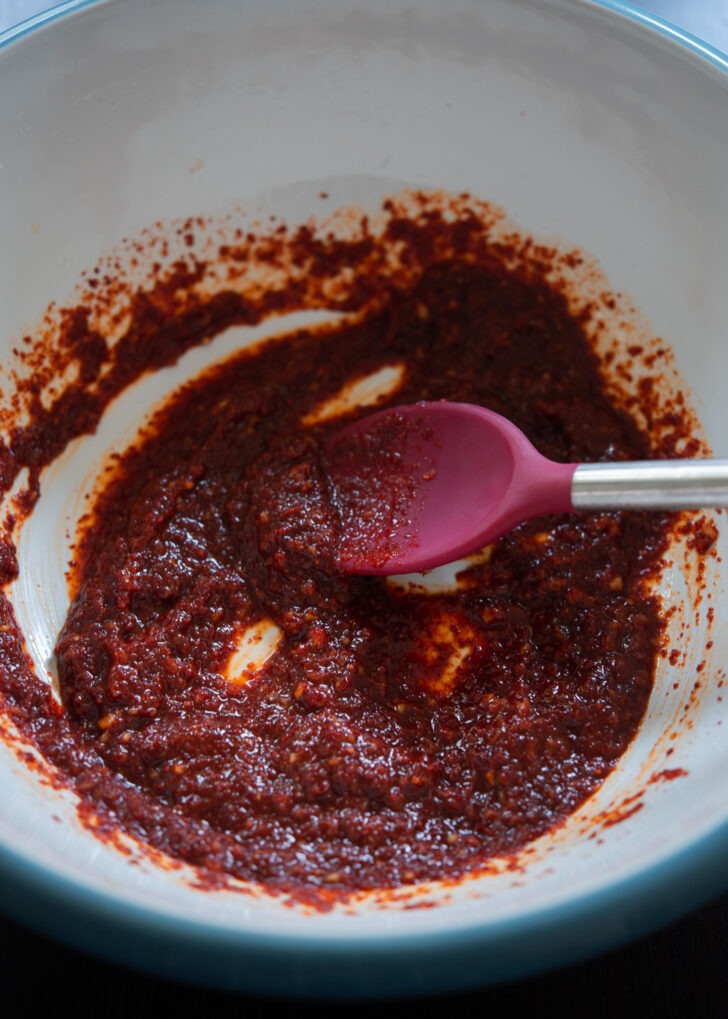
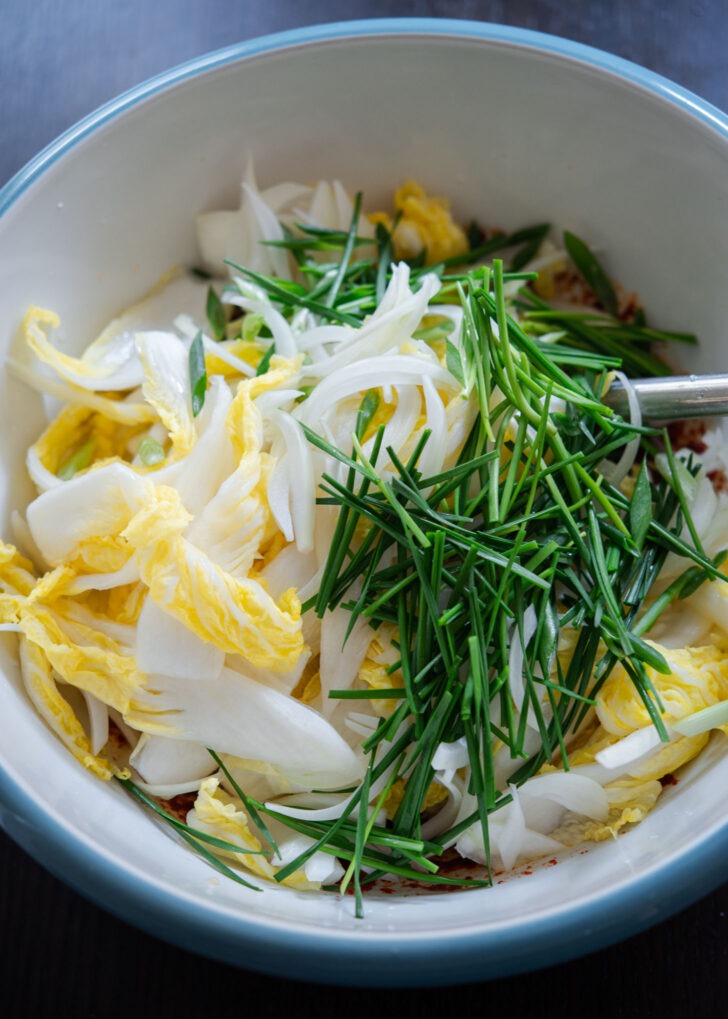
Make seasoning paste. I always mix the paste in the bowl before adding the cabbage. This helps the gochugaru hydrates properly so you don’t get ‘dry’ spots on your leaves.
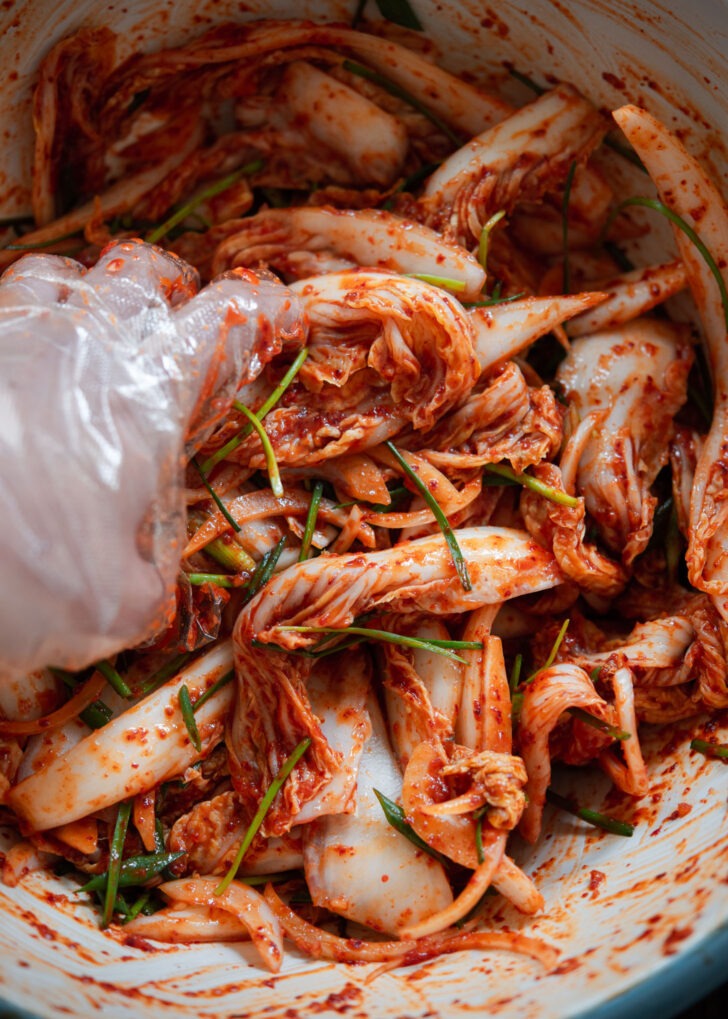
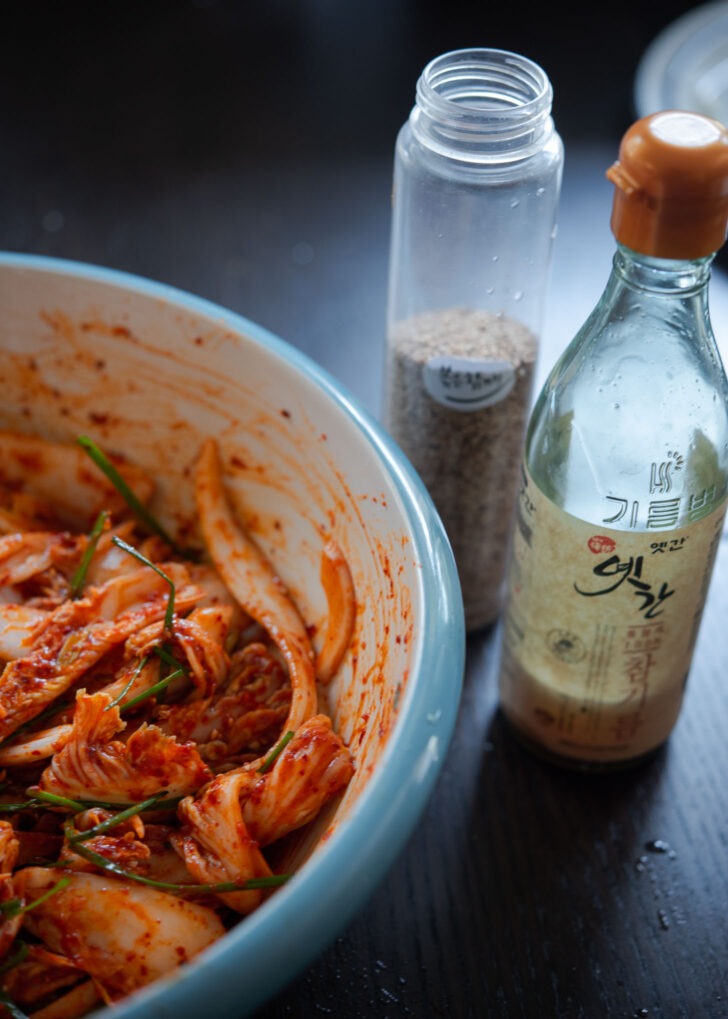
Coat with a gentle massage. Using your hands, apply a gentle massage motion to ensure every leaf is thoroughly coated. This isn’t a heavy rub; you want just enough pressure so the seasoning penetrates the cabbage rather than just sitting on the surface.
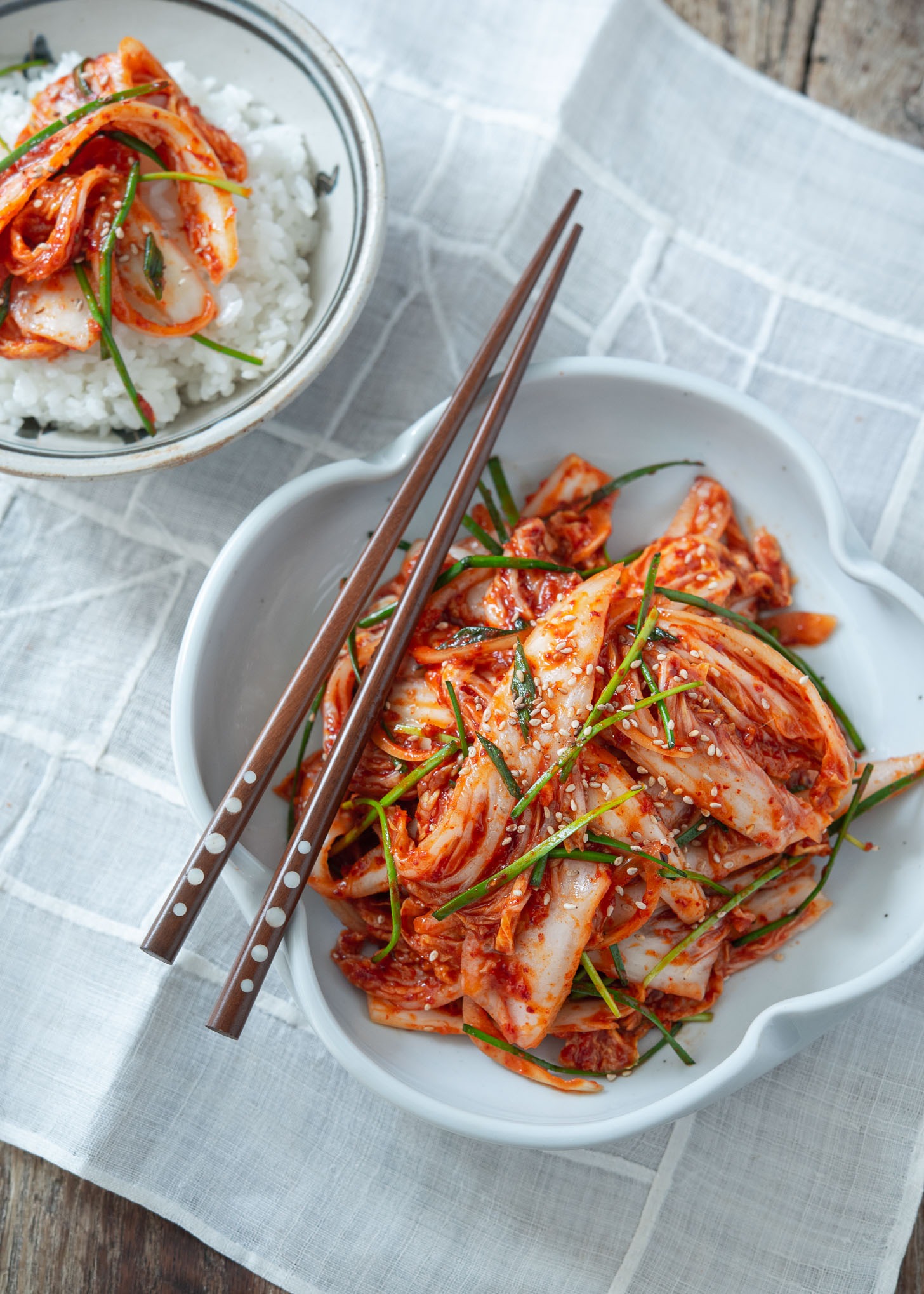
If you find yourself making this in the early spring, you must try my bomdong geotjeori recipe made with sweet spring cabbage. It uses a very similar seasoning but features those prized, flat-growing cabbages that only appear for a few weeks each year.
What to Pair with Fresh Kimchi
While this is the classic partner for kalguksu, I love serving this specifically with my step-by-step bossam (boiled pork belly) because the crisp cabbage cuts through the rich pork perfectly, just like you’d experience at a traditional K-BBQ house.
It’s also my go-to side dish for a steaming bowl of homemade mandu guk (dumpling soup), where the spicy, garlicky leaves provide a bright contrast to the mild, soothing broth.
How to Store Geotjeori
Transfer your fresh kimchi to an airtight container and refrigerate it immediately. While it stays safe to eat for up to a week, it is at its absolute peak within the first 48 hours.
After that, the salt will naturally draw out more moisture and the leaves will begin to ferment, losing that signature “fresh-picked” snap that makes geotjeori so special.
Love this recipe? Rate it and share your experience in the comments below! On Instagram? Tag me to showcase your creation. For more delicious recipes, subscribe to our newsletter!
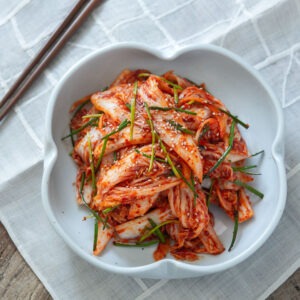
Baechu Geotjeori (Fresh Napa Cabbage Kimchi)
Recipe Video
Ingredients
- 1 head (1.7 lb, 800 g) young napa cabbage
- 5 tbsp (75 g) Korean coarse sea salt
- 1 tbsp (15 g) sugar
- 1 cup (240 ml) water
- ½ onion, thinly sliced
- 1 oz (28 g) Asian garlic chives, sliced, optional
- 3 green onion, sliced
- 2 tsp (10 ml) sesame oil, optional
- 1 tbsp (10 g) toasted sesame seeds, optional
For seasoning paste
- 6 tbsp (45 g Korean chili flakes (gochugaru)
- 2 tbsp (30 ml) Korean anchovy sauce
- 1 tbsp (15 ml) Korean tuna sauce, or Korean anchovy sauce
- 1½ tbsp (22 g) minced garlic
- ½ tbsp (8 g) ginger paste
- 2 tbsp (30 ml) corn syrup, or 1 tbsp sugar
- 1 tbsp (15 ml) Korean plum extract (maeshil cheong), optional
- 3 tbsp (45 ml) water
Instructions
- Start by separating the cabbage leaves and cutting each leaf into long, vertical shapes that include both the stem and leaf parts.
- Next, combine salt and sugar in a small bowl. In a large mixing bowl, layer the cabbage pieces with the salt mixture in portions, reserving 1 tablespoon for later. Sprinkle 1 cup of water over the cabbage, toss gently, and press the cabbage down, and sprinkle the remaining salt mixture on the top. Let the cabbage soak in the brine for 35-45 minutes, turning it over once during this time.
- Drain and rinse the cabbage in running water 2 times and squeeze out the excess water.
- To make the seasoning paste, combine all the seasoning sauce ingredients in a large mixing bowl, and mix well. Add the drained cabbage, onion, chives, and green onion (if using) and toss to mix well. If desired, add sesame oil and toasted sesame seeds and toss again.
- Serve the fresh kimchi salad with rice and other Korean dishes. Enjoy the refreshing, tangy taste of geotjeori!
Notes
- Store freshly made geotjeori in an airtight container in the refrigerator for up to one week. However, please note that while it can still be enjoyed after one week, it will begin to ferment.

Nice flavours but very hot for my Western tastebuds. Would it work to reduce the chili flakes by half? Also it makes more than we can eat in a week. Will it be ok to leave it to ferment in the fridge and will it last a long time then?
Of course, you can reduce the amount of chili flakes. You can even omit them and use fresh chili only if you prefer milder heat. Your kimchi won’t be as vibrant red, though. Yes, leaving it in the fridge works fine, and it will slowly ferment. It will last until it gets too sour to eat, at which point you can make kimchi jjigae with it.