

Japchae (Korean Glass Noodle Stir-Fry)
Japchae is a classic Korean glass noodle stir-fry with chewy sweet potato noodles, thinly sliced beef, colorful vegetables, and a savory-sweet soy sauce. My 35-minute method soaks the dangmyeon instead of boiling it, then finishes the noodles directly in the sauce for springy texture and deeper flavor.
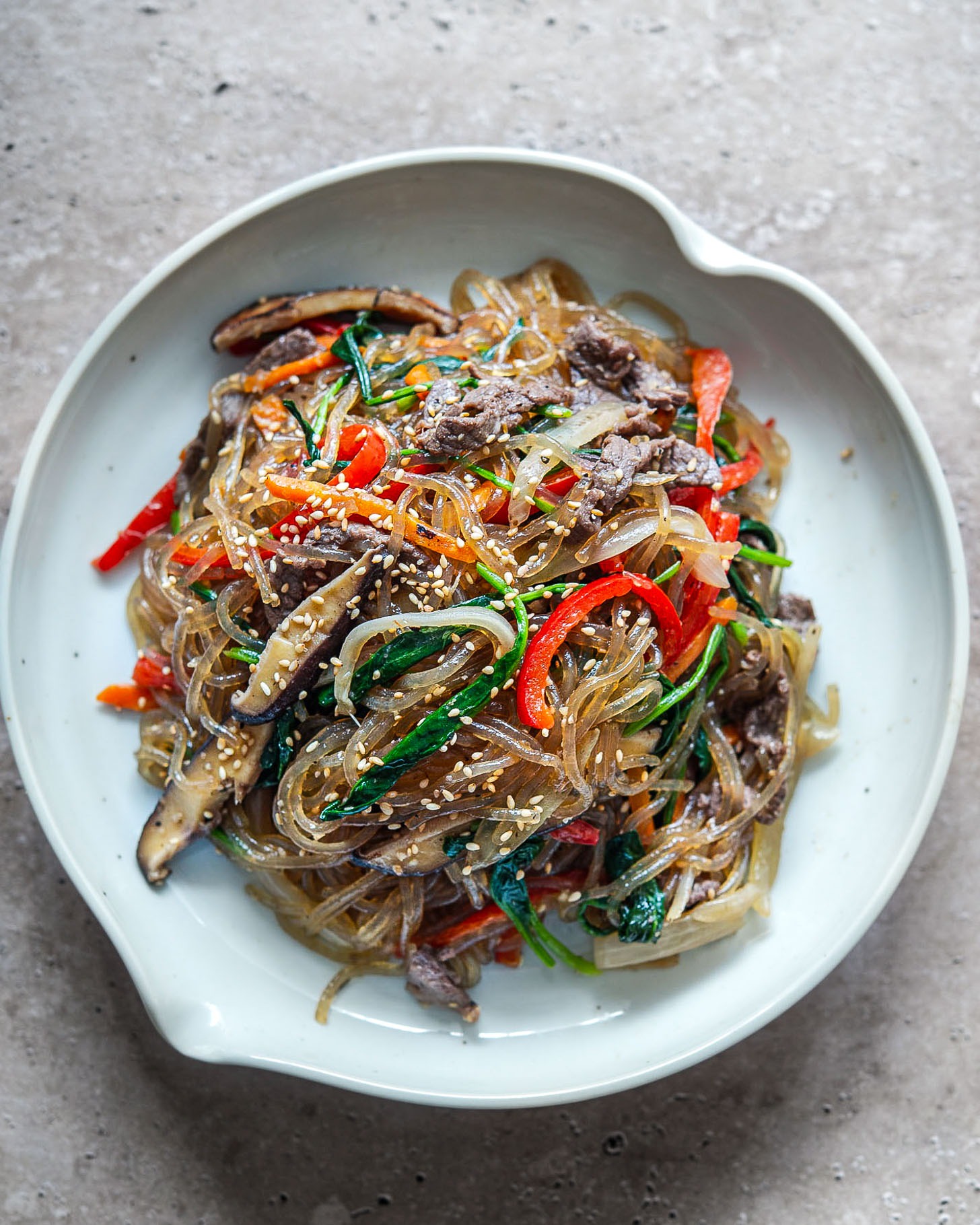
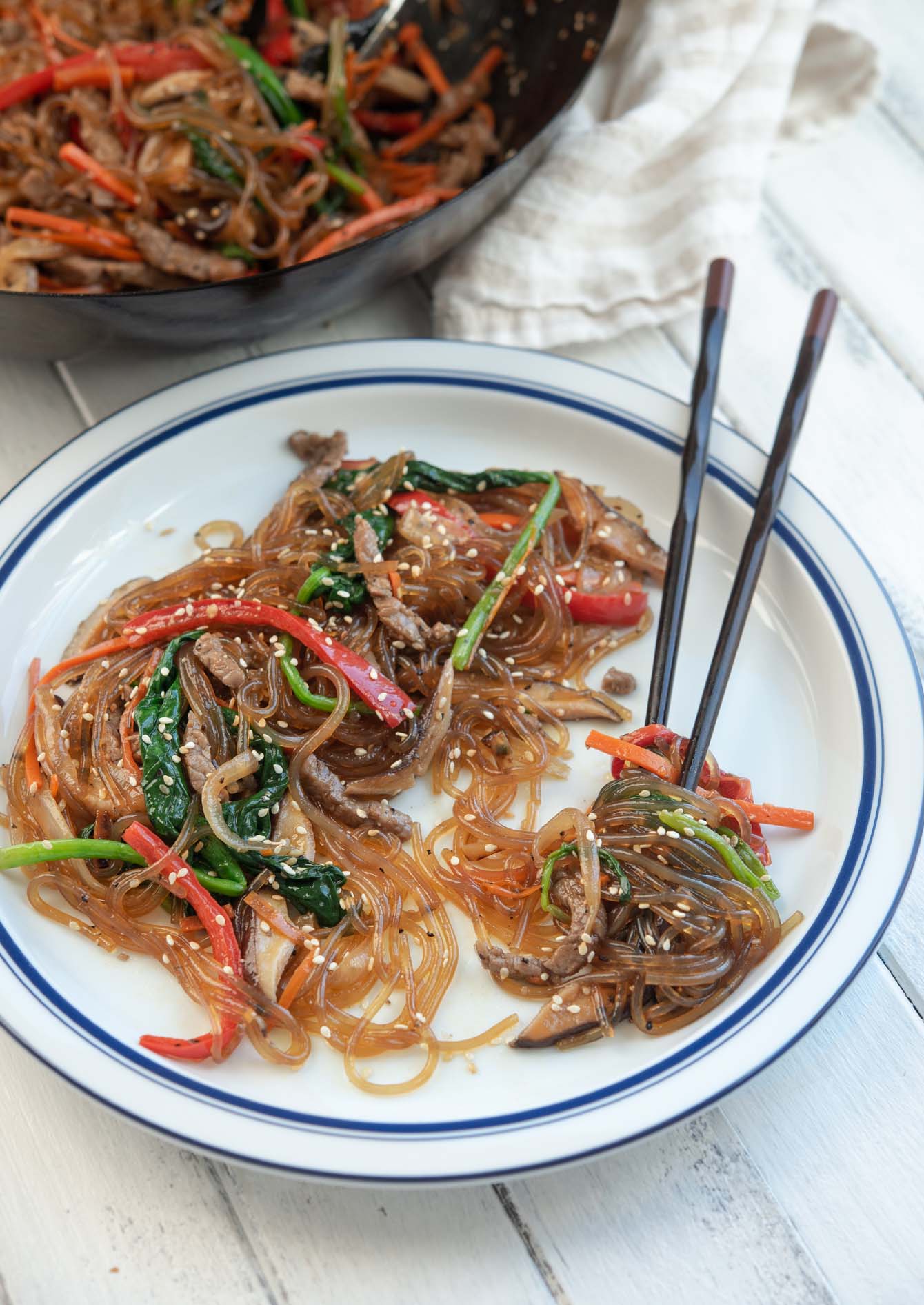
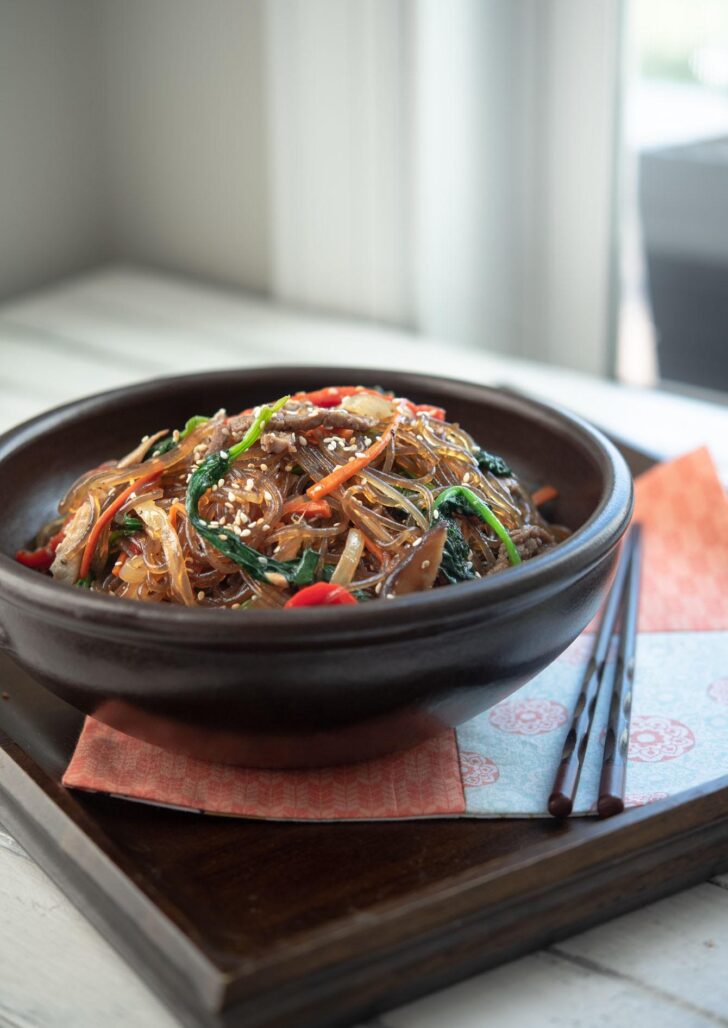
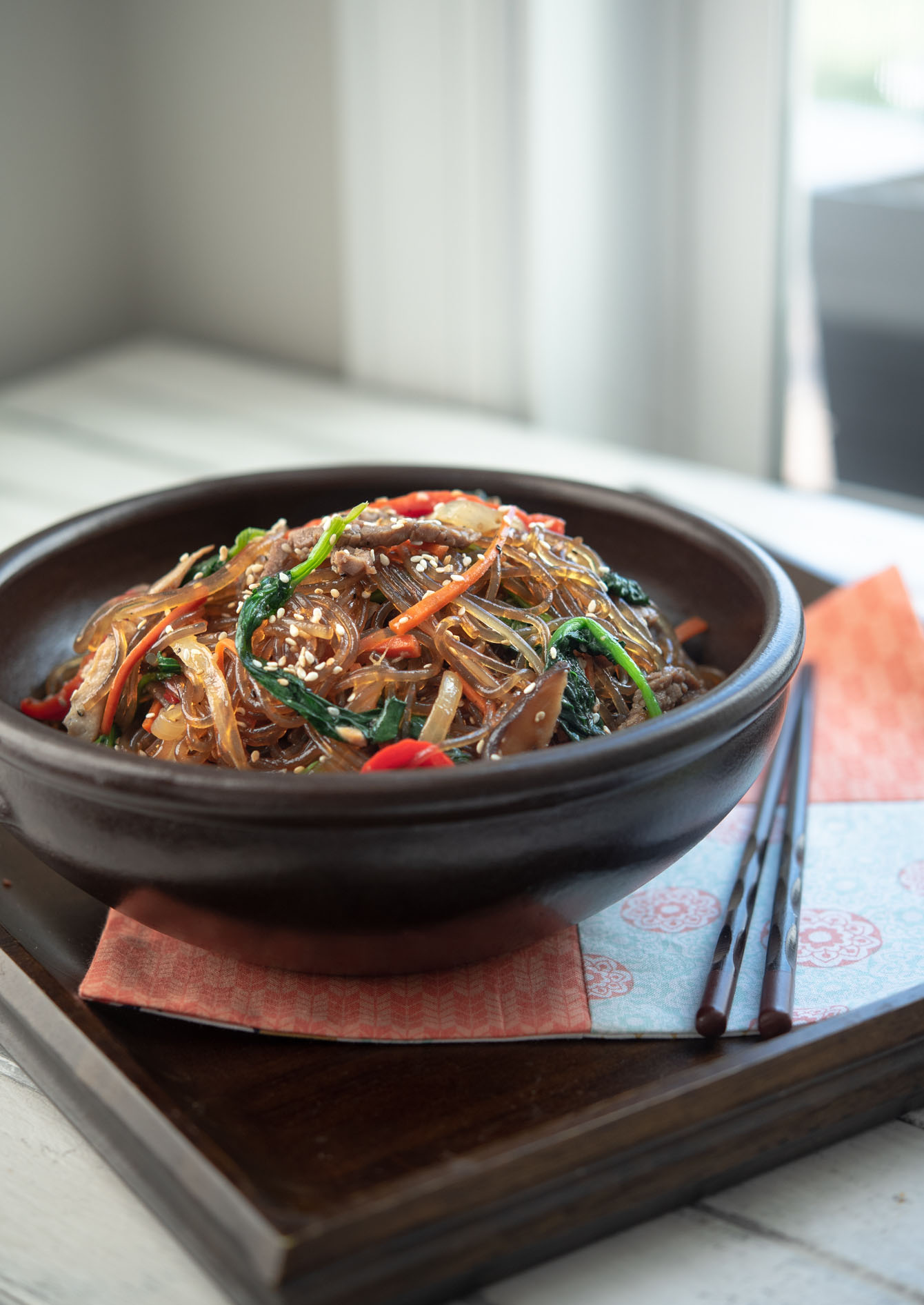
Japchae (잡채) should have springy, glossy noodles, vegetables that still taste distinct, and enough savory-sweet seasoning to flavor every strand without making it heavy or overly sweet.
I grew up in Korea eating the japchae my mother made the traditional way, with the noodles, vegetables, and beef cooked separately before everything was combined. Years later, when I came to the U.S. as an international college student, a Korean professor’s wife showed me a simpler approach: soak the sweet potato noodles, then finish them directly in the sauce.
Get new recipes via email:
I’ve made japchae both ways many times. For everyday cooking, I don’t find a meaningful difference in the final texture or flavor, so the soaking method is now the one I use most often. It takes about 35 minutes and gives me the springy noodles, colorful vegetables, and balanced flavor I expect from good japchae.
Why I Soak Japchae Noodles Instead of Boiling Them
I’ve cooked japchae with both boiled and soaked dangmyeon many times, and I don’t find that boiling gives me a better finished texture.
Instead, I soak the noodles in warm water for about 15 minutes. They soften but remain only partially hydrated, then finish cooking directly in the seasoned liquid.
This saves an extra pot and lets the noodles absorb flavor as they cook. The finished noodles should be tender and springy, not soft or waterlogged.
Dangmyeon brands vary in thickness, so use the texture of the noodles as your guide rather than relying only on the clock.
Ingredients That Matter Most
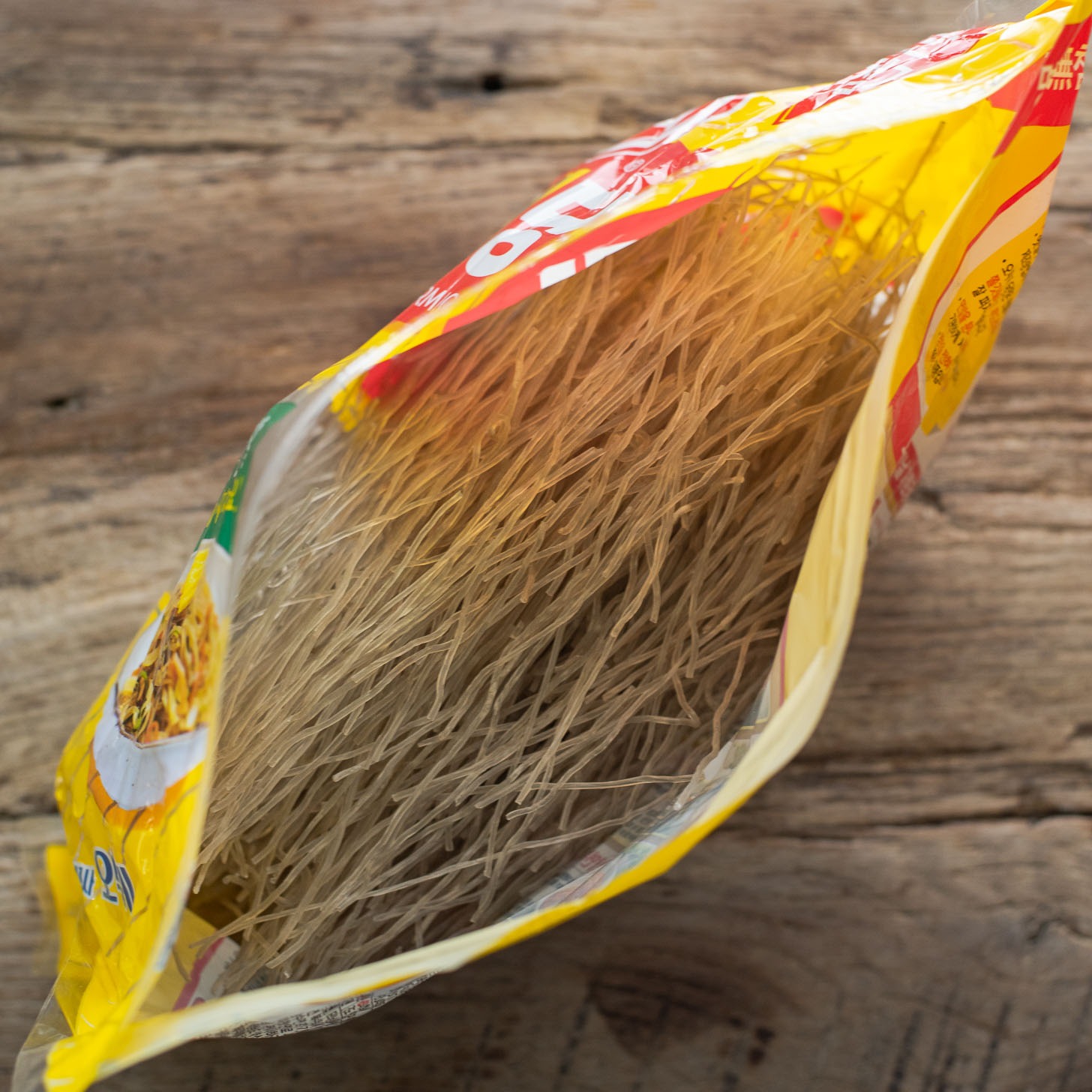
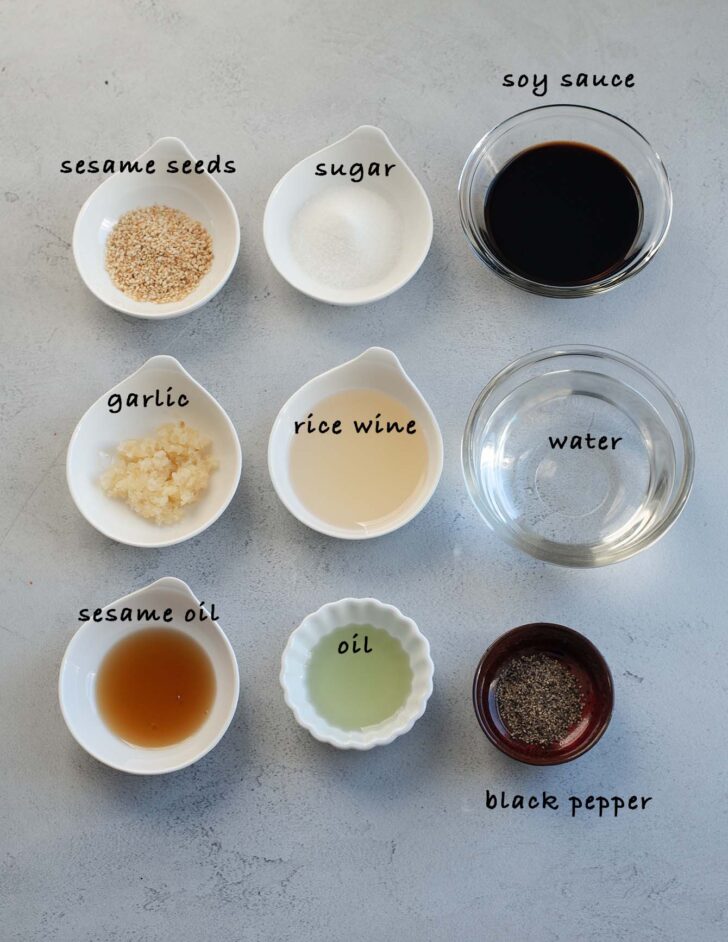
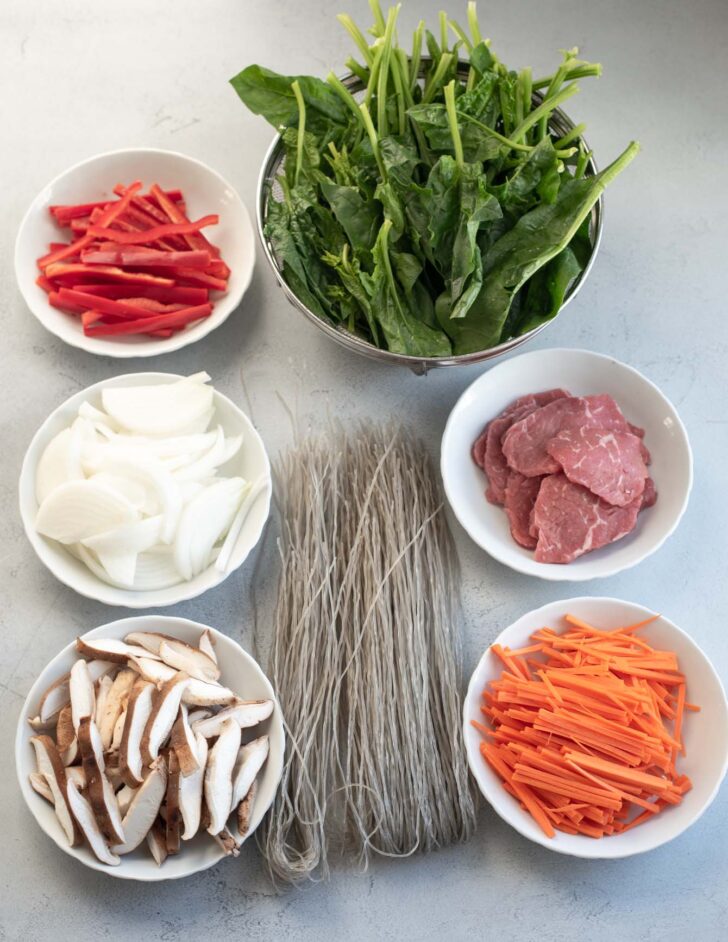
Dangmyeon: Use Korean sweet potato starch noodles. Their chewy, elastic texture is what gives japchae its characteristic bite, and other noodles won’t behave the same way in the sauce.
Vegetables: I like the vegetables to keep their own texture rather than cooking everything until equally soft. Cook the firmer vegetables first, then add the mushrooms and spinach later. The goal is not to cook everything until equally soft. Good japchae should still have contrast between the chewy noodles, tender beef, and lightly cooked vegetables.
Beef: Thinly sliced sirloin or strip steak works well because it cooks quickly and stays tender. Slice the beef against the grain into narrow strips. A brief marinade with soy sauce, sugar, and mirim seasons the meat before it joins the noodles.
Sesame oil: Add it toward the end. Its toasted aroma comes through much better when it isn’t cooked for too long.
If some of these Korean ingredients are new to you, my Korean pantry guide explains what to look for and how I use them in everyday cooking.
How I Balance Japchae Sauce
Because the soaked noodles are only partially hydrated, my sauce includes water along with soy sauce, sugar, garlic, and seasonings.
At first, the liquid may look a little loose. That’s intentional. As the noodles finish cooking, they absorb the sauce and the mixture tightens naturally.
Give the noodles time to absorb the liquid before adding extra soy sauce or seasoning. Otherwise, it’s easy to make the finished japchae too salty.
How to make Japchae
These step-by-step photos walk you through the process. For exact measurements, scroll down to the printable recipe card.
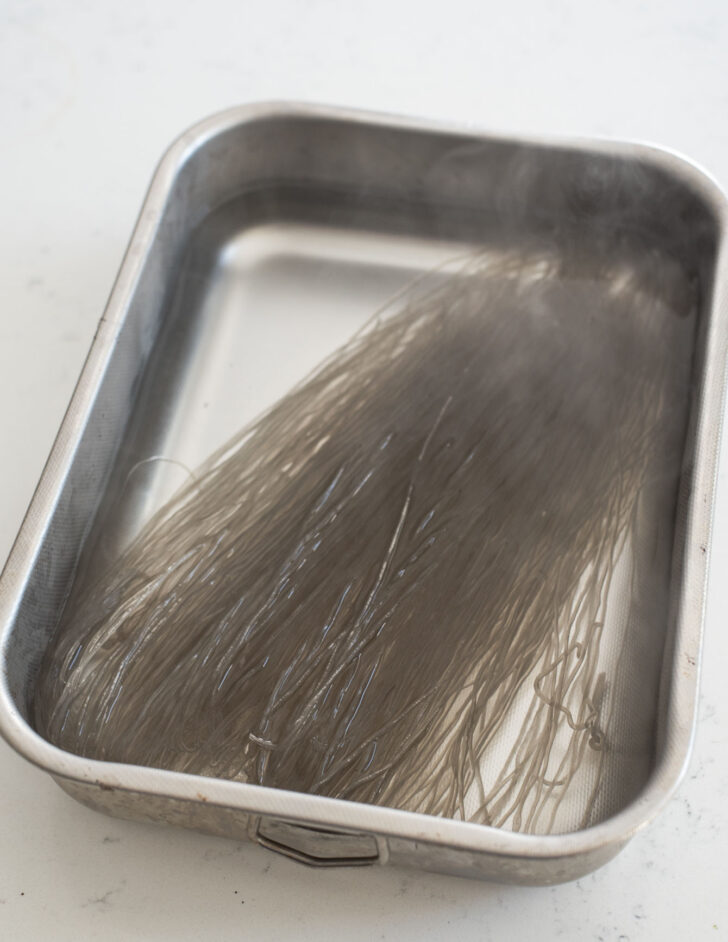
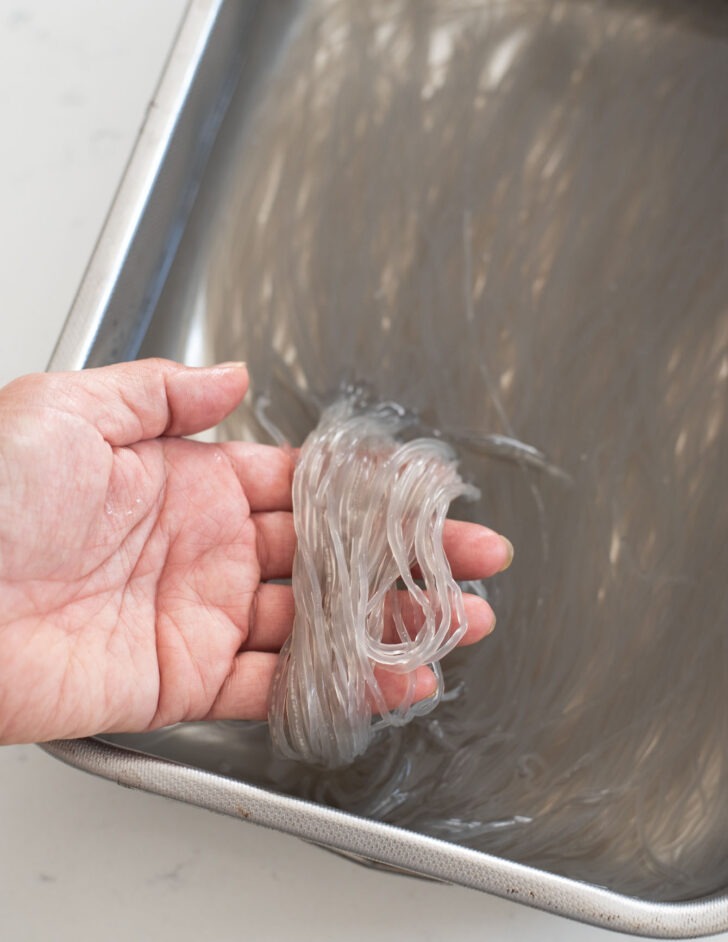
1. Soak the glass noodles. Soak the dangmyeon in hot water for about 15 minutes, then drain well. The noodles should be flexible but still slightly firm. They will finish cooking later in the sauce.
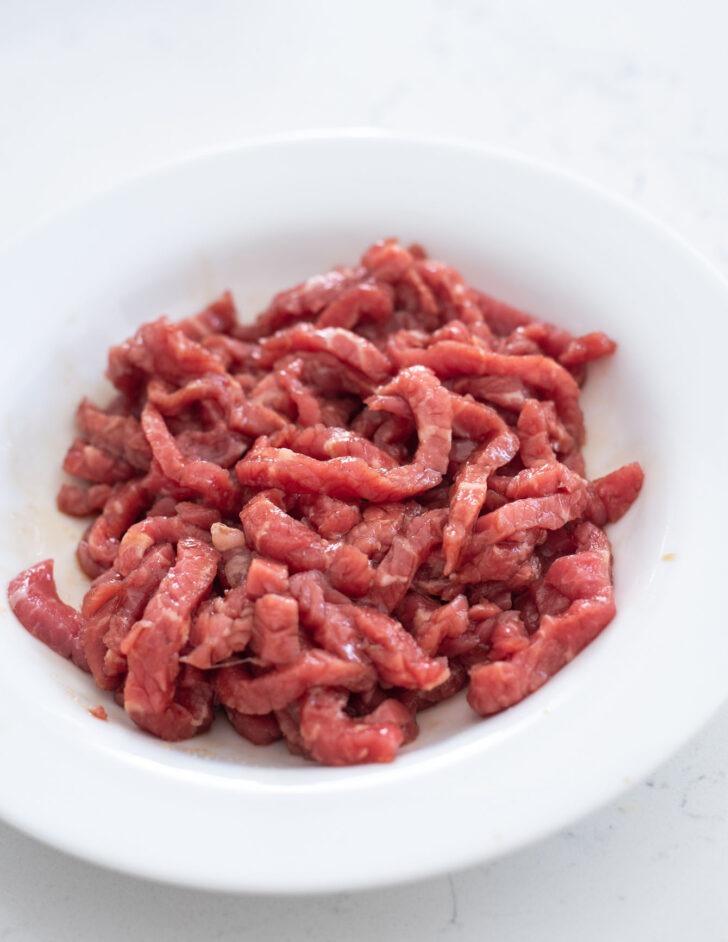
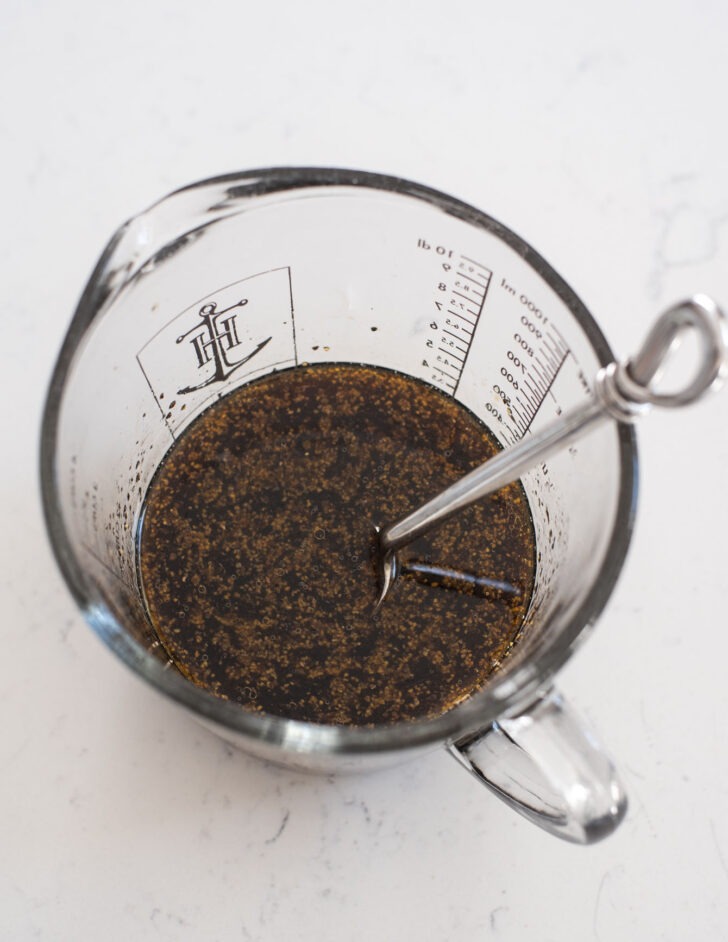
2. Marinate the beef and mix the sauce. Combine the sliced beef with soy sauce, sugar, and mirim. While the beef rests, mix the japchae sauce so it is ready when the noodles go into the pan. Having everything prepared before you start cooking makes this recipe move quickly.
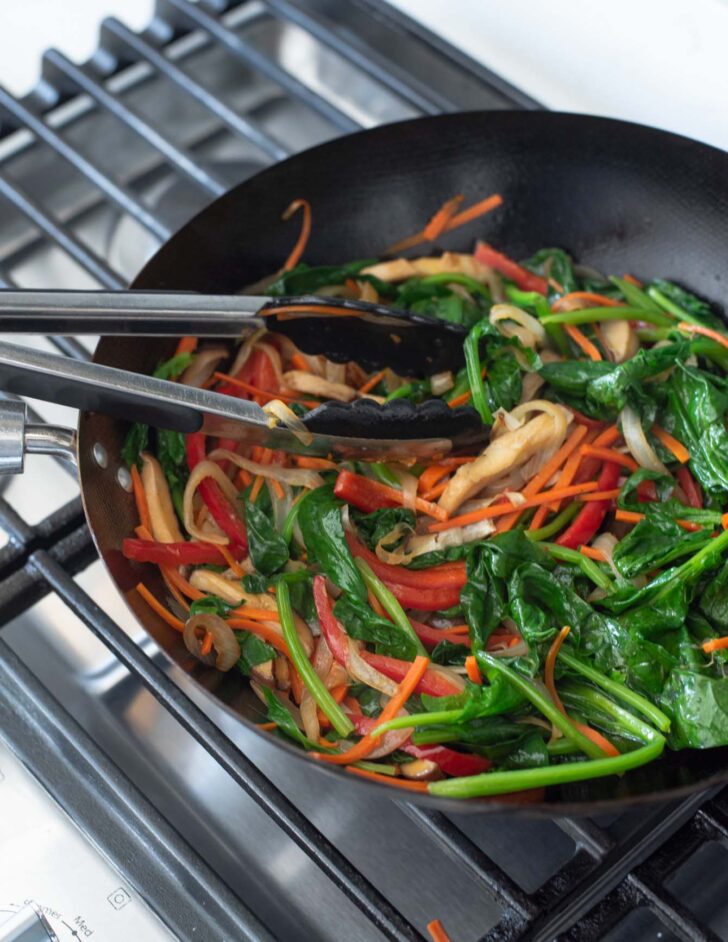
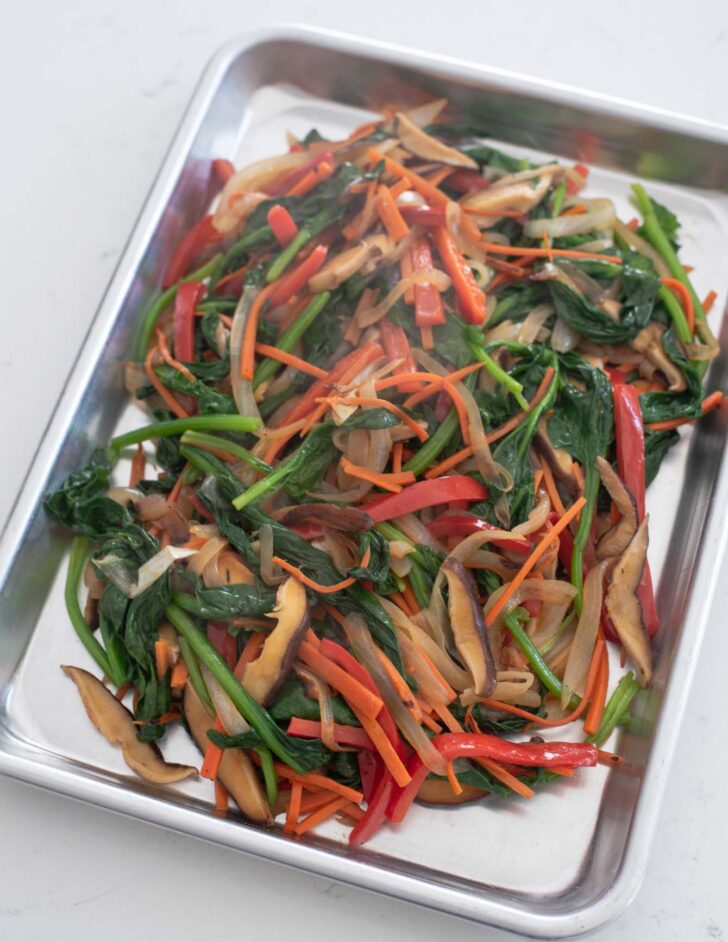
3. Stir-fry the vegetables in stages. Making japchae is a little like preparing bibimbap: the ingredients are cooked separately so each one keeps its own flavor and texture. Cook the onion, carrot, and bell pepper first with a small pinch of salt. Add the mushrooms once the firmer vegetables begin to soften, then add the spinach at the end. Cook just until the vegetables are tender but still have some texture, then transfer them to a large plate.
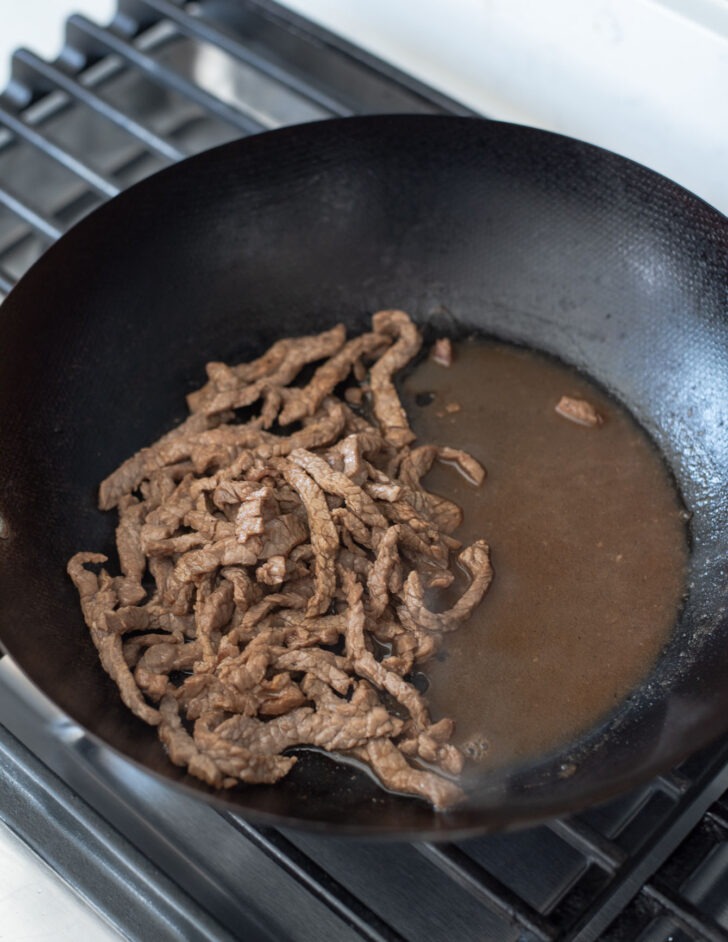
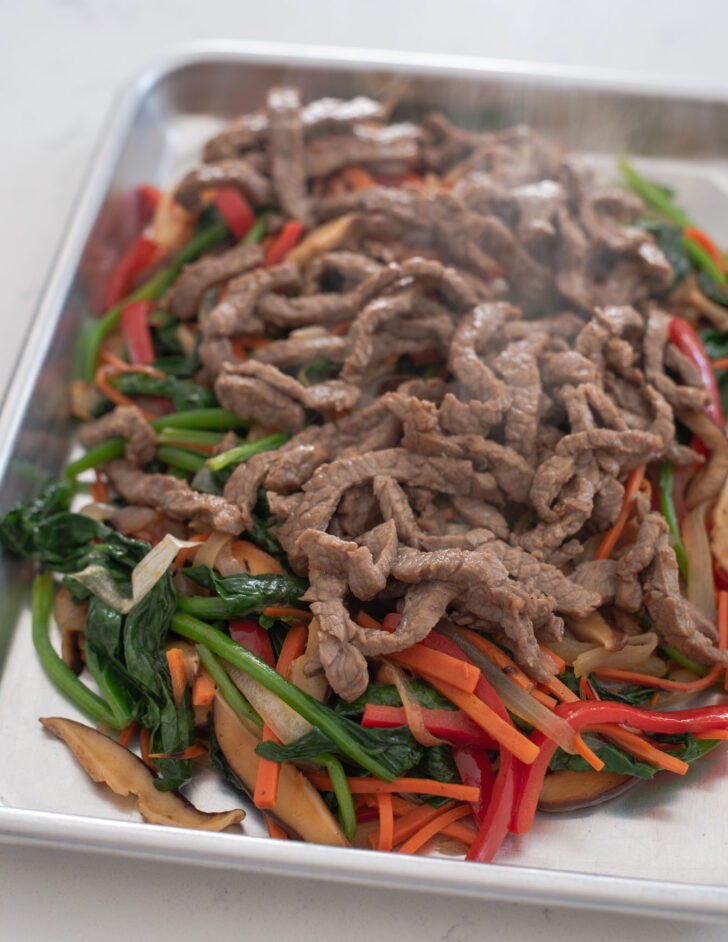
4. Cook the beef. Cook the marinated beef until just done, then remove it from the pan. Leave the flavorful juices behind. I use them as part of the base for cooking the vegetables instead of wiping the pan clean.
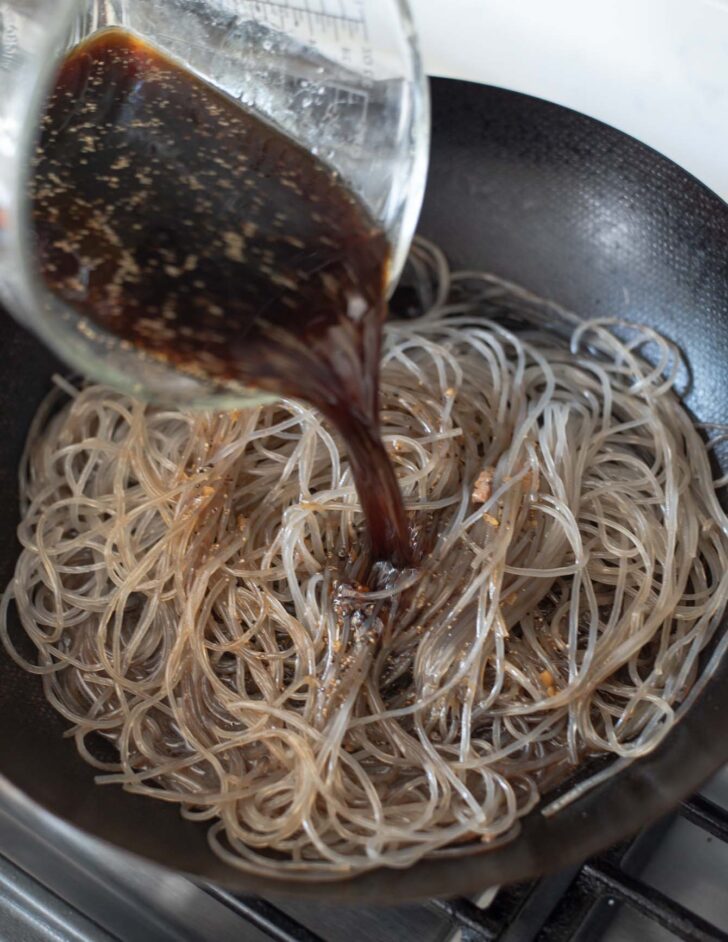
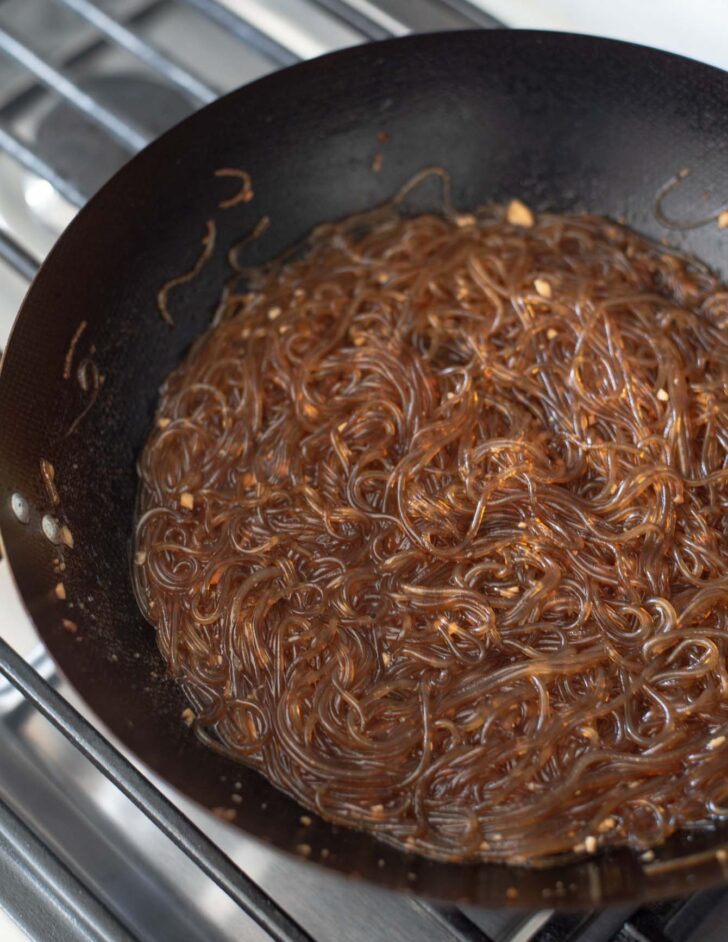
5. Finish the noodles in the sauce. Add the drained noodles to the pan along with the sauce. Stir-fry until tender and glossy, allowing the noodles to absorb the seasoning evenly. This is the stage where the dangmyeon picks up most of its flavor.
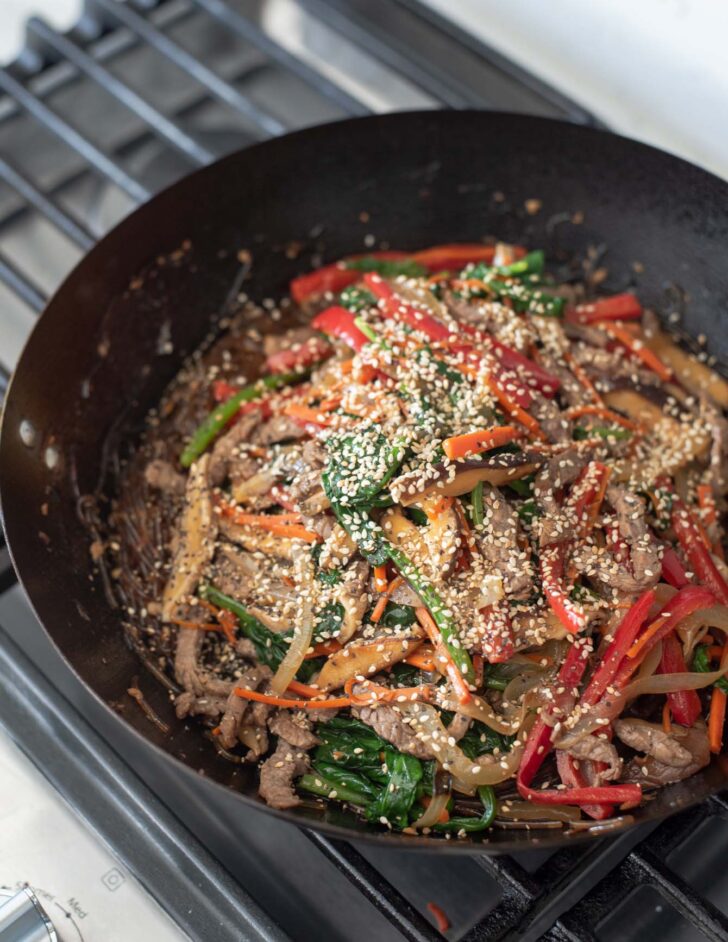
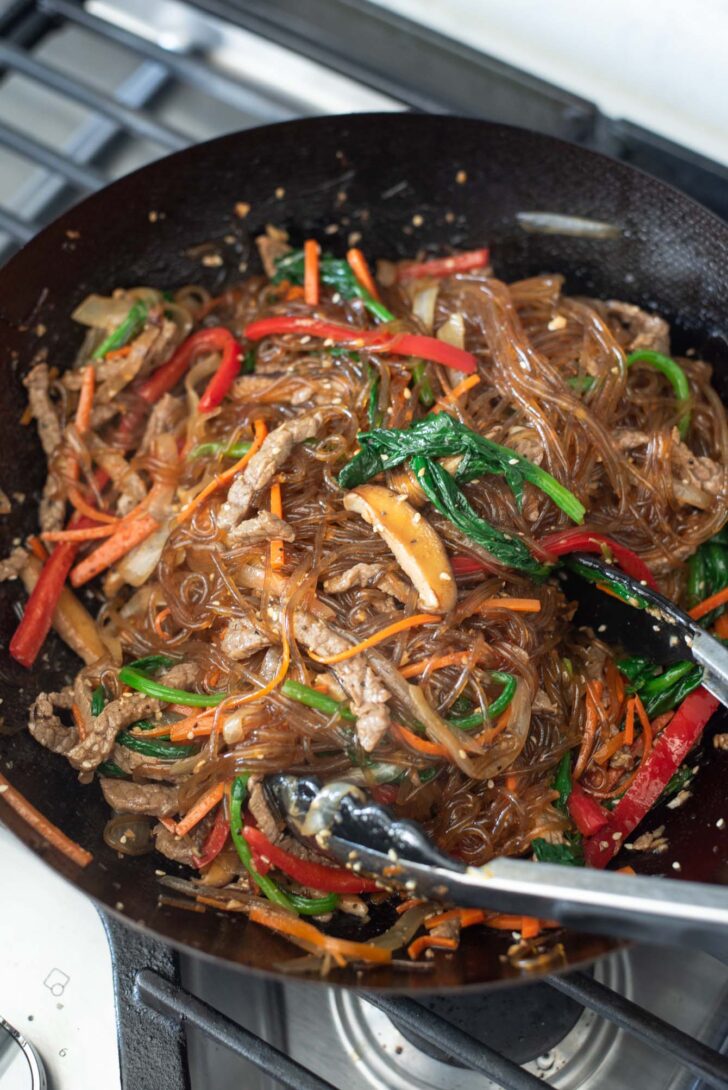
6. Combine and finish. Return the beef and vegetables to the pan and toss everything together until evenly coated. Finish with sesame oil and sesame seeds.
Serving Japchae the Korean Way
Japchae is common at Korean birthdays, holidays such as New Year’s Day and Harvest Festival, and family gatherings because it can be prepared ahead and doesn’t have to be served piping hot. I often serve it with my traditional beef bulgogi as part of a larger Korean meal.
If japchae puts you in the mood for more, I have plenty of other Korean noodle dishes to try next.
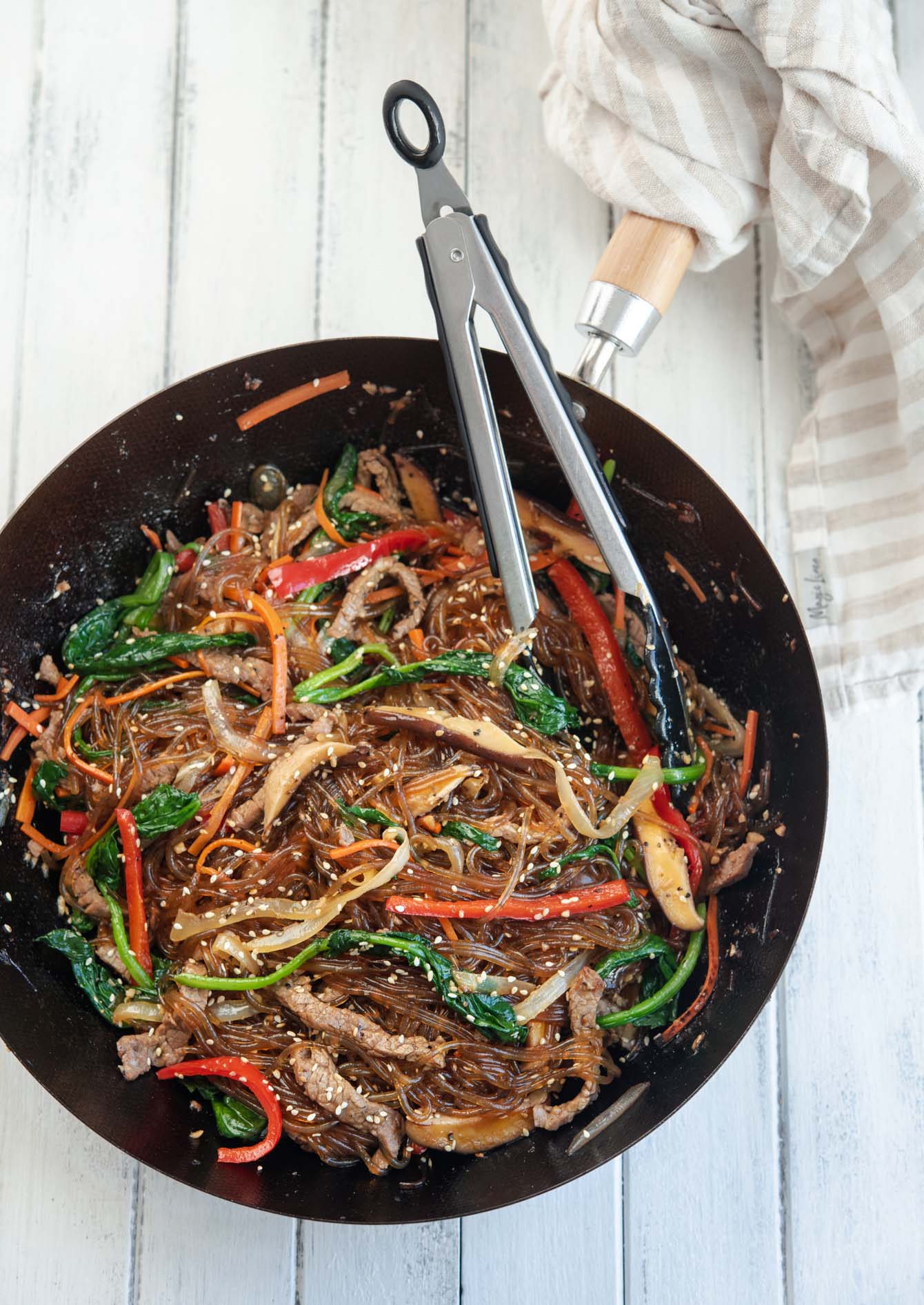
Originally published in March 2010. This post has been updated with new photos and improved step-by-step details to help you make Japchae easily at home, while preserving its authentic flavor.
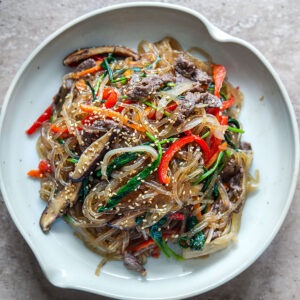
Easy Japchae with Chewy Korean Glass Noodles
Recipe Video
Ingredients
- 8 oz (226 g) Korean glass noodles (dangmyeon)
- 6 oz (170 g) beef sirloin, or pork loin. See note below for the vegan/vegetarian option
- 2 tbsp (30 ml) oil
- 1 medium (5 oz, 150 g) onion, thinly sliced
- 1 medium (3 oz, 75 g) carrot, cut into thin matchsticks
- 1 small (4 oz, 120 g) red bell pepper, thinly sliced
- a few pinches salt
- 5-6 3.5 oz (100 g) shiitake mushrooms, sliced
- 1 bunch (about 6 oz, 170 g) spinach, cleaned
- 1 tbsp (15 ml) sesame oil
- 1 tbsp (9g) toasted sesame seeds
For meat marinade
- 1 tbsp (15 ml) soy sauce
- 1 tsp (4 g) sugar
- 1 tbsp (15 ml) sweet rice wine (mirim)
For japchae sauce
- 4 tbsp (60 ml) soy sauce
- 1/2 cup (120 ml) water
- 2-3 tbsp (8-12 g) sugar
- 2 tbsp (30 ml) sweet rice wine (mirim)
- 1 tbsp (15 ml) oil
- 2 cloves garlic, minced
- 1/2 tbsp (3.5 g) black pepper
Instructions
- For the glass noodles: Soak the glass noodles in hot water for 15 minutes, then drain and set aside. .
- For the meat seasoning: Slice beef (or pork) into thin match sticks (about 1/4-inch thick) against grain and mix with marinade ingredients. Set aside.
- For the Japchae sauce: Combine all japchae sauce ingredients in a bowl. Set aside.
To cook Japchae
- Heat 1 tablespoon oil in a large skillet or wok over medium high heat. Add onion, carrot, pepper, and a pinch of salt; stir-fry until soft but have a slight crunch. Add sliced shiitake mushrooms and another pinch of salt. Continue to stir-fry until soft. Add spinach at the end and stir-fry until spinach is wilted. Remove the skillet from the heat and transfer the vegetables to a large plate to cool.
- Reheat the pan over high heat with the remaining 1 tablespoon oil, add the beef (or pork) and stir-fry until fully cooked. You will see the juice coming out from the meat. Transfer the meat to the large plate with the reserved vegetables, reserving the juice in the pan.
- Add the drained glass noodles to the pan with the meat juices. Pour the japchae sauce over the noodles and toss to combine. Let the noodles cook over medium heat until they are soft and the sauce liquid is mostly absorbed into the noodles, about 3-4 minutes.
- Reduce the heat to low. Add the vegetables and meat back to the pan over the noodles. Add sesame oil and sesame seeds. Toss well and adjust seasoning to taste.
Notes
- Let the cooked vegetables and beef cool slightly before combining. Mixing while piping hot can cause excess moisture and soften the noodles.
- Use kitchen scissors to trim the noodles into shorter lengths after cooking. This makes serving and eating easier.
- Finish with sesame oil and sesame seeds at the very end. Adding them off heat preserves their aroma.
- For gluten-free japchae, use gluten-free soy sauce such as tamari.
- For a vegetarian or vegan version, omit the beef and skip the meat marinade.
Love this recipe? Rate it and share your experience in the comments below! On Instagram? Tag me to showcase your creation. For more delicious recipes, subscribe to our newsletter!
I made this few nights ago and it was really delicious. I love the crunch of the carrot. And I’ve never had potato noodle before, but it’s so satisfyingly chewy. But, the most important lesson I took from this post is how to get rid of dirt from spinach!! For the life of me, I’ve never thought to soak spinach before so that the dirt can be washed off and settle at the bottom. Previously I would only rinse under running water and as such there are always stubborn grains of dirt on the spinach.
Hello! Thanks for the recipe! My family absolutely loved this dish. They gobbled it up like they haven’t eaten in days! 🙂
I just started a blog and I noticed that your fabulous blog started with japchae too! Love you site!
I got to do this one today. My husband, who is constantly comparing my cooking with his Korean mother’s cooking, loves it!! He admitted, I cooked this one better than my mother in law…. Thank you so much!
Thank you Janeth. I am so happy to hear that.
Hello!
Just so you know…the font you used for the first four pictures doesn't work so well for some computers. I'm on XP and I'm using chrome and it comes up as gunk. If I use Firefox things look great but I don't think Chrome likes the font.
I just copied and pasted it into an email and it looks just fine!
I am Korean student in Japan. I want to try this someday.
I made this tonight and it was delicious! I've tried for years to find a japchae recipe that was "right" and this is it. Thank you 🙂
You can double the recipe. However, the amount of seasoning on each ingredients doesn't have to be exact to the T. Adjust (+ or -) the seasonings depends on your taste. Japchae is a dish that you can season along as you make. Have a fun making!
Hello hello! I absoulutely love your blog and I'm looking forward to trying all these recipes! Just one question, for this recipe, can you double it by just doubling all the ingredient amounts? Or should it be in another ratio? Thanks so much for all the effort that you put into making this blog fantastic!!
Everything is okay. Although the symbols under the first three pictures are undicipherable, when I copy and paste the garbled paragraphs using wordperfect 11 the words (recipe) comes up in English! I have no idea why this occurs but since I can read it it's okay. Thank you. ^^
Hello! Actually, the email I wrote you was changed from the original. I copied and pasted the symbols under the first, second and third picture, but for some reason they were deleted in my post. 'Okay, I am nervous right now. This is my' isn't what I was saying..seems like it was part of yours…. I don't kwow.. –; The first English words I can see on my computer are "slice beef (cross grain) into 1/4" inch strips." This is under the fourth picture. For some reason the first few paragraphs are all strange symbols. I'll check on another computer someother time.. Thanks.*^.^*
@039abfd1fc430a33159afb6b9a81148d
Hi! how can I help you? Because I can see my words clearly under the first picture. All it says is that this was my very first post and how nervous I was.
I cannot read the begining ..right under the first picture..starts like..Okay, I am nervous right now. This is my please help!!! Thank you ~! *^.^*
Okay, I am nervous right now. This is my very first blog posting and I don't think anybody will find this or read this posting but why am I still nervous? Would you allow me to go and grab plateful of Japchae and I will continue to write this down as I am eating….?
Japchae (잡채) is perhaps the most famous Korean noodle dish. It is a must for any banquet or feast table. You can eat this dish alone or with some rice. This can be a great vegetarian dish as well if yo omit the beef. The key to making flavorful Japchae is seasoning each ingredient separately. Let me show you how you can make this beautiful dish to impress your significant others. Are you ready?
Japchae is new to my ears. But I like spicy foods. Maybe that's why I fancy Korean Cuisine. A lot of their foods recipe have one or two spicy ingredients in it like gochujang and gochugaru. Thanks for sharing this recipe. I'll definitely make one for our Korean Night. Korean Noodles and Korean TV – a healthy dose of Korean Idols like GDragon and TOP! 🙂
T is for tablespoon, and t is teaspoon.
does 'T' stand for teaspoon or tablespoon?
wow thanks for the very very detailed instructions and photos!
Very helpful cooking hints – i love Japchae! However, I'm lazy, and I cook the ingredients (except noodles) one after the other in a large frypan: onions, garlic, then carrots, followed by mushrooms. Then spinach, and lastly the noodles (which have been prepared per your recipe). I season each batch of ingredients. Then I add pinenuts just before serving (as my dish is vegetarian).
@Laura
Great! I am so happy to hear that you like the recipes. You Japchae looks fabulous! I want some now! 🙂
i fell upon your blog from foodgawker (originally looking for choco chip cookies) and TOTALLY fell in love with it. not only did i make the cookies today (btw, they're the BEST choco chip cookies i've ever tasted), i made 잡채 today for dinner =)it's my first time making it, your recipe and instructions were so easy to follow. thanks so much!
nice first post! looking forward to following your blog 🙂
masa
this is a famous Asian dish. hmm, looks very delicious. I love vegetables and the colors of it when mixed on noodles. planning to cook a good asian food soon.
I am glad that I taught you something. You can be creative and add other veges in the recipe. Some people add red or green peppers in the dish. I'm not a big fan of bell peppers in Japchae. To me the smoky flavor of peppers overpower the dish, but it is personal preference. I think zucchini or squash can be good addition as long as you use toward the skin part. The seeded area can be mushy and watery. Hope this helps.
I just made Japchae for a big dinner party on Sunday – served 21 people and still had tons of leftovers! I followed this recipe fairly closely, even before I found this blog, but I think you WERE the one who taught me how to make it. One difference was that I added some zucchini and summer squash, cut in matchsticks. Good stuff!