

Ganjang Gejang (Soy-Marinated Crab with Frozen Crabs)
Ganjang gejang is Korean soy sauce-marinated raw crab, served chilled with warm rice. My version uses frozen crabs in a kelp-based soy marinade with Korean tuna sauce, aromatics, and lemon. Marinate whole crabs overnight for about 24 hours to let the savory flavor soak into the sweet crab meat.
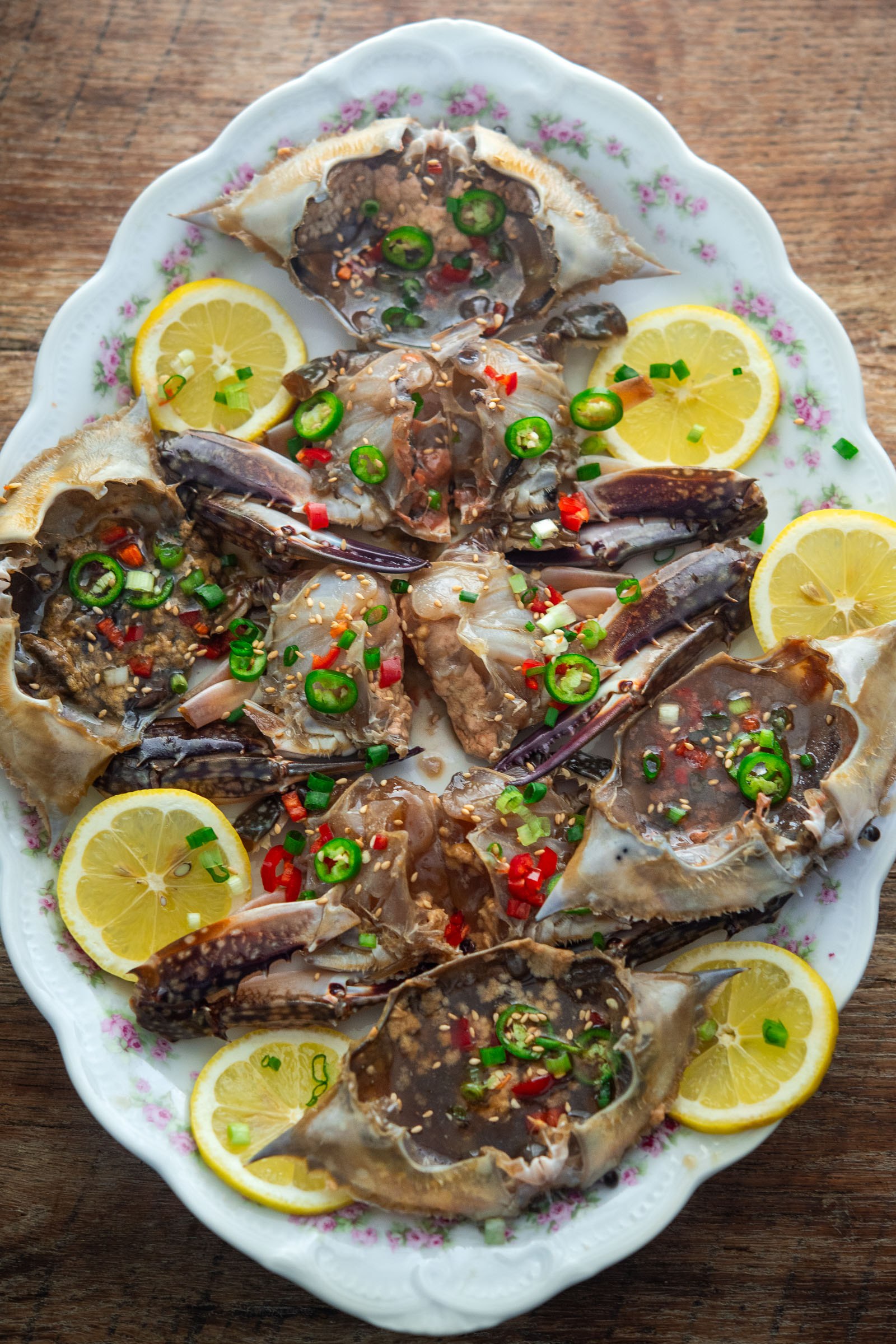
Ganjang gejang (간장게장) is a Korean favorite for a reason, and I think it’s worth trying at least once. The sweet raw crab meat takes on the savory soy marinade, and every bite calls for rice.
We call it bap-doduk (밥도둑), or “rice thief,” and it earns the name. Between squeezing meat from the shells and sucking the marinade from your fingers, your rice bowl empties surprisingly fast. Raw crab may take some getting used to, but once you fall for it, you’ll find yourself craving it again.
Last year, I traveled along Korea’s west coast in early fall, when ganjang gejang restaurants were busy with visitors coming for crab season. I tried several versions along the way. Research, I told myself, as I ordered more rice.
The ones I loved had rounded soy flavor and a clean finish that let the crab’s sweetness come through. I developed this version with frozen crabs so I could enjoy that taste at home year-round.
The Soy Marinade I Wanted to Bring Home
I use kelp stock, brewed soy sauce, and Korean tuna sauce as the base. Sweet rice wine, plum extract, and sugar round out the mixture. The aromatics simmer briefly in the liquid, then I strain them out before chilling the marinade.
If you prefer a gochugaru-based sauce, try my spicy marinated crab (yangnyeom gejang).
Choosing the Crab and Sauces
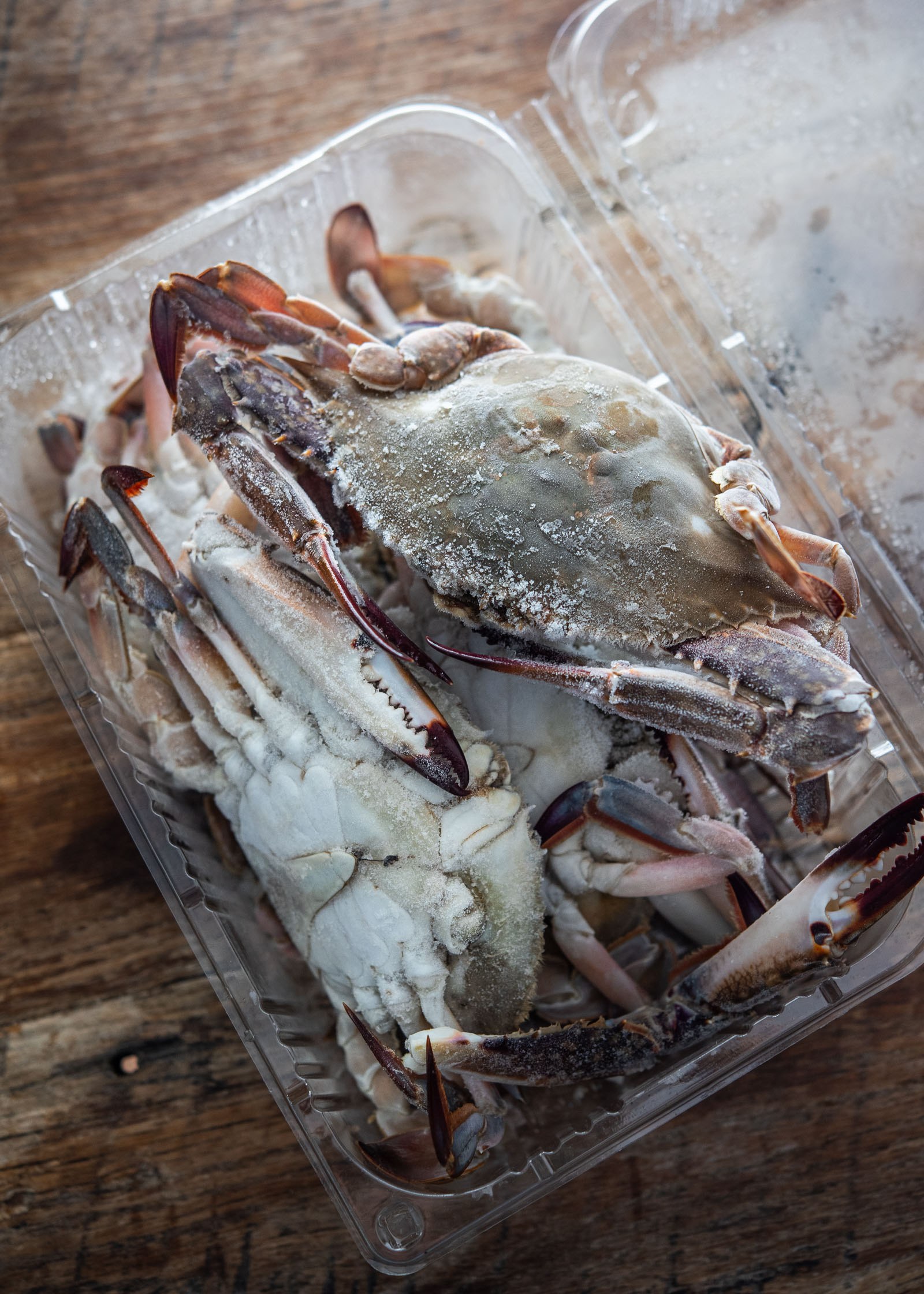
Crab: Both male and female crabs work for ganjang gejang. In fall, I prefer male crabs for their meat; in spring, female crabs are prized for their roe. When buying frozen, choose whichever is available. I prefer whole crabs with the large top shells intact for serving, though frozen cut crabs are another option.
If you’re buying whole crabs, my Korean chili crab post shows how to tell male and female crabs apart by their abdominal apron.
Check the supplier’s intended use and handling instructions. Being frozen does not automatically make crab suitable for eating raw.
Soy sauce and tuna sauce: I developed this formula with Sempio Naturally Brewed Soy Sauce 701 and Sajo tuna sauce. Using these products gives you the closest match to my version. Use regular soy sauce; I haven’t tested a low-sodium substitution.
Daepa: These large Korean green onions simmer with the other aromatics. I include the roots when thoroughly cleaned; trim them off if soil remains trapped between them.
Sweet rice wine and soju: I use Korean sweet cooking rice wine, such as mirim, and plain, unflavored soju. The rice wine contributes sweetness, so dry rice wine is not a direct substitute. Both go into the marinade before boiling.
Raw seafood note: Ganjang gejang remains raw. Freezing and marinating do not eliminate all food-borne risks. Keep the crab at 40°F/4°C or below during thawing and marinating. Pregnant people, children, older adults, and people with weakened immune systems should avoid raw seafood. The marinating times describe my flavor preferences, not a guarantee of safety.
How to Make Ganjang Gejang
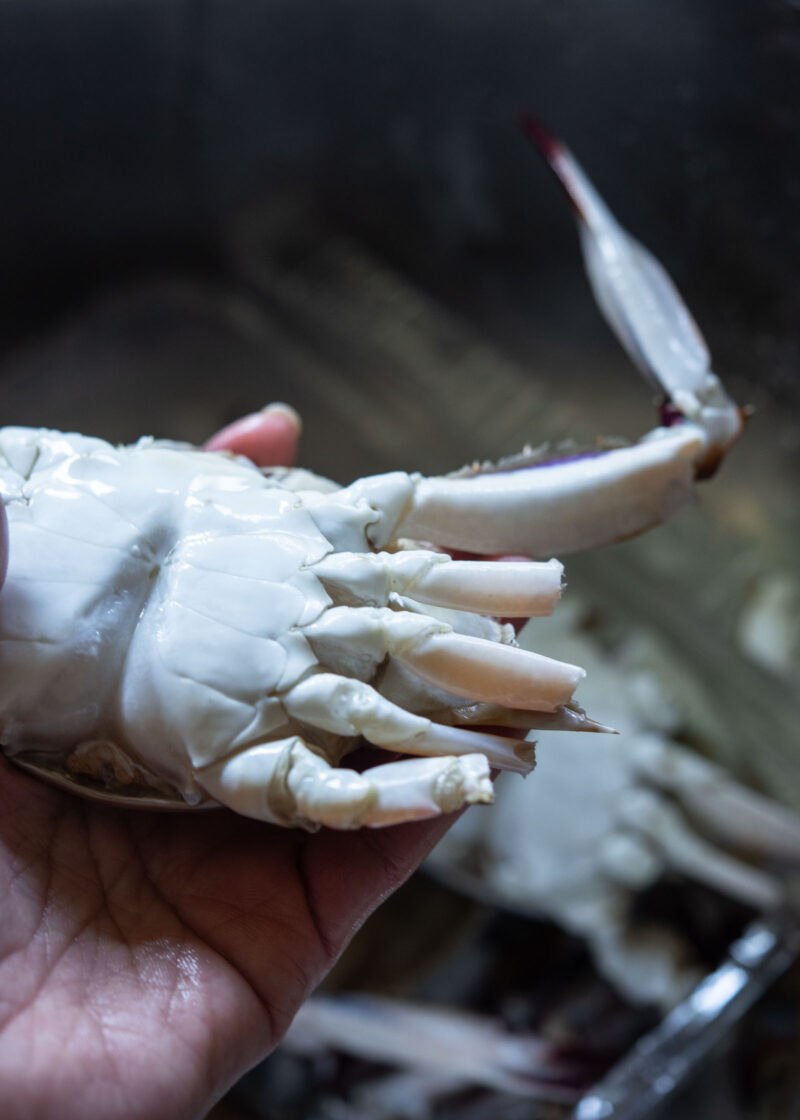
Rinse, brush, and trim the crabs:
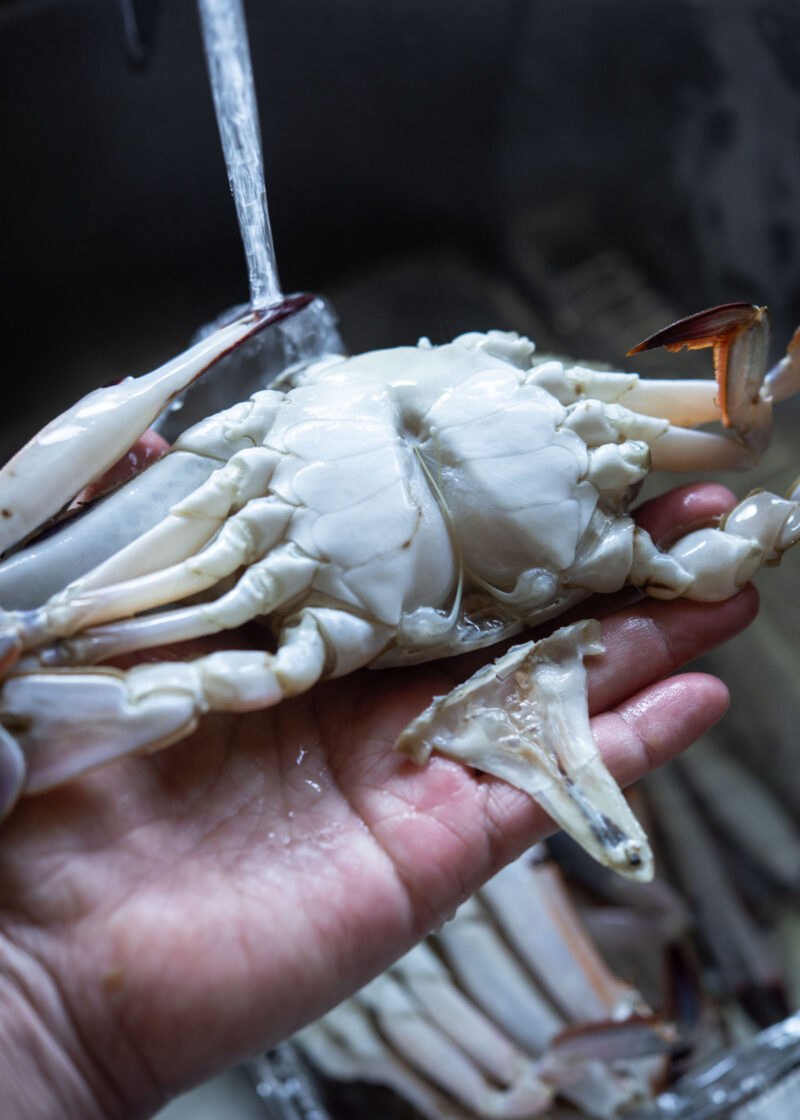
Rinse the frozen crabs under cold running water. I find they thaw quickly while I clean them. Pull off the pointed abdominal flap on the underside, then scrub the shell and around the legs with a clean kitchen brush or toothbrush reserved for food preparation.
Trim off the thin legs with kitchen scissors; they hold very little meat. Keep the large claws and top shells intact. Pat dry completely with paper towels and refrigerate promptly while preparing the marinade.
Hyegyoung’s note: I leave the large top shells attached during marinating and remove the gills before serving.
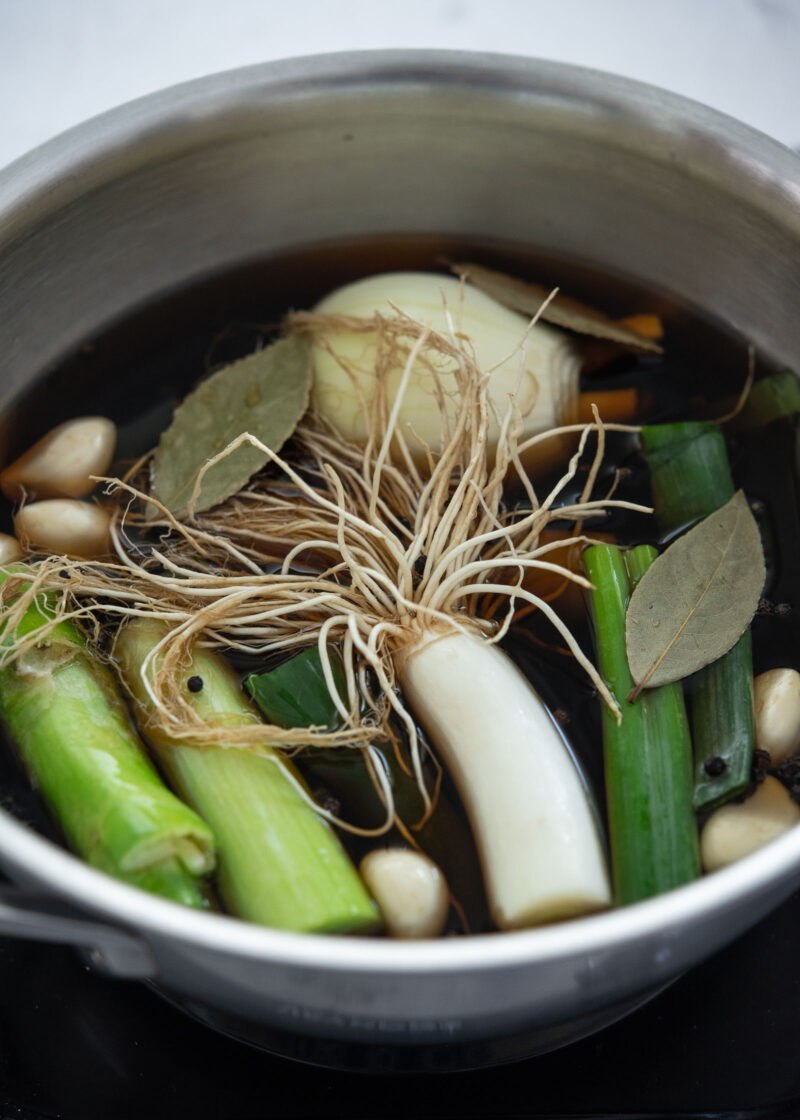
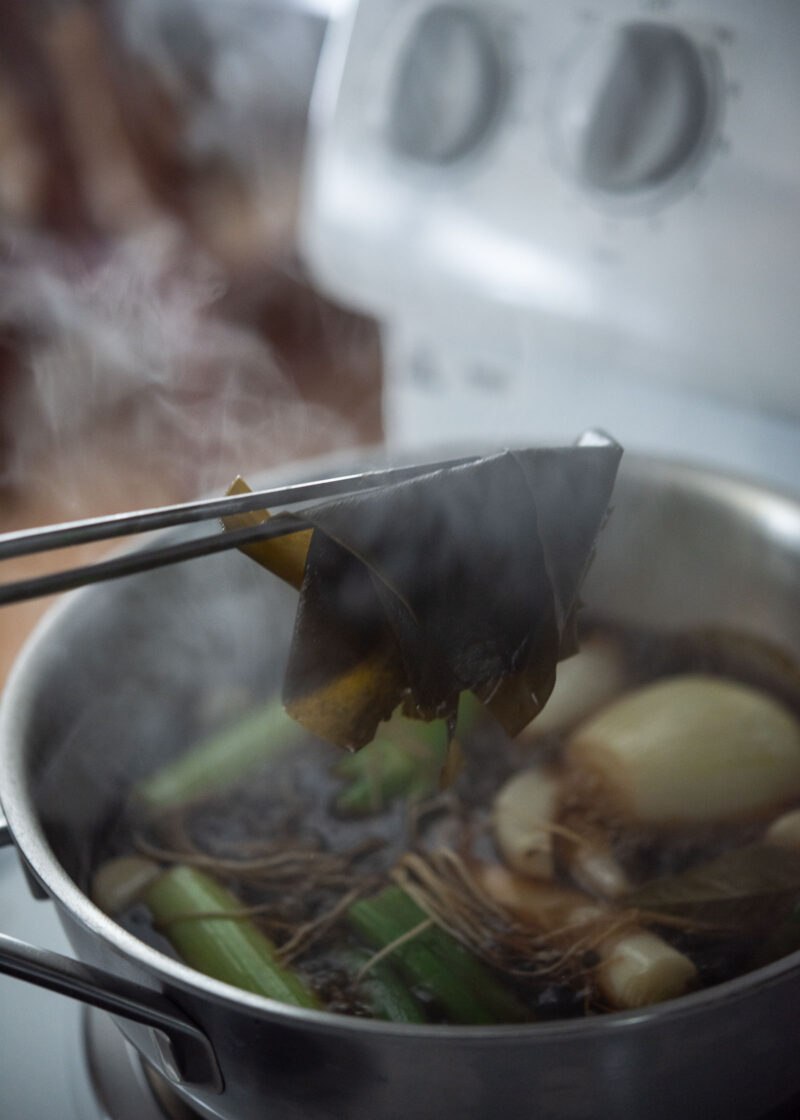
Simmer the aromatics, then chill the marinade:
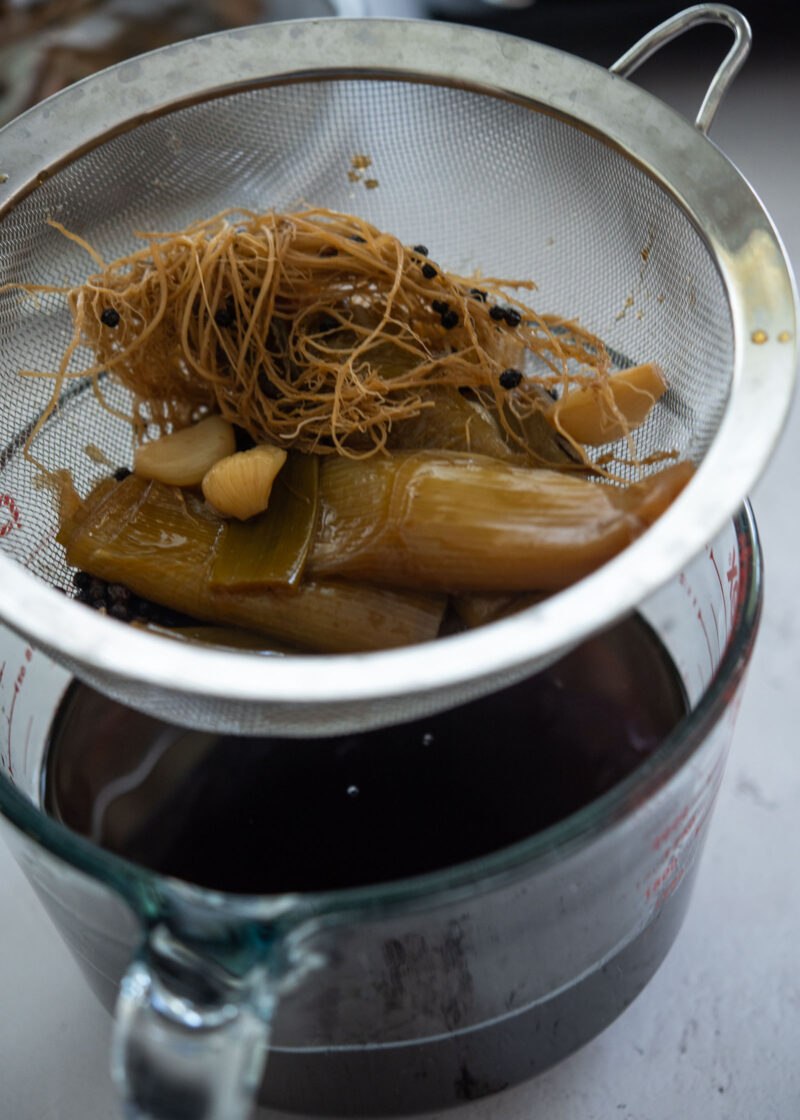
Combine the water, dried kelp, and remaining soy marinade ingredients listed in the recipe card. Bring to a boil and boil for 2 minutes. Remove the kelp, reduce the heat, and simmer for another 5 minutes. Strain out the aromatics, then cool and refrigerate the marinade until cold.
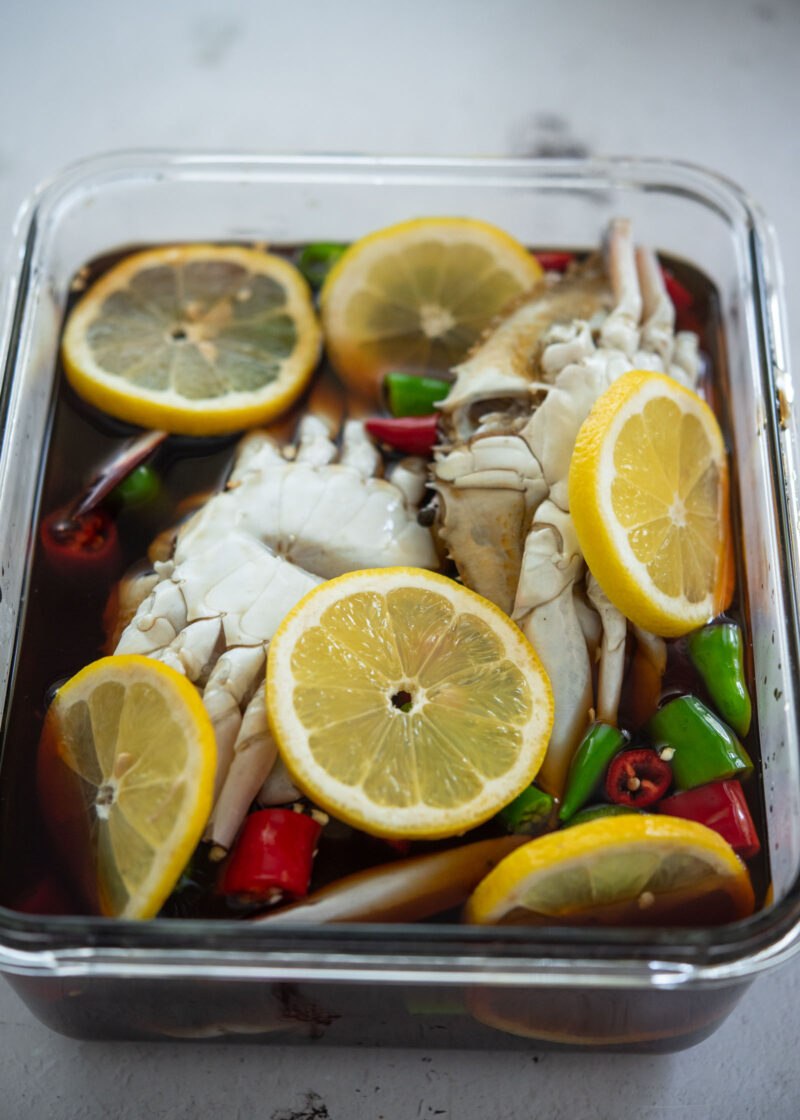
Marinate according to the crab’s size and cut:
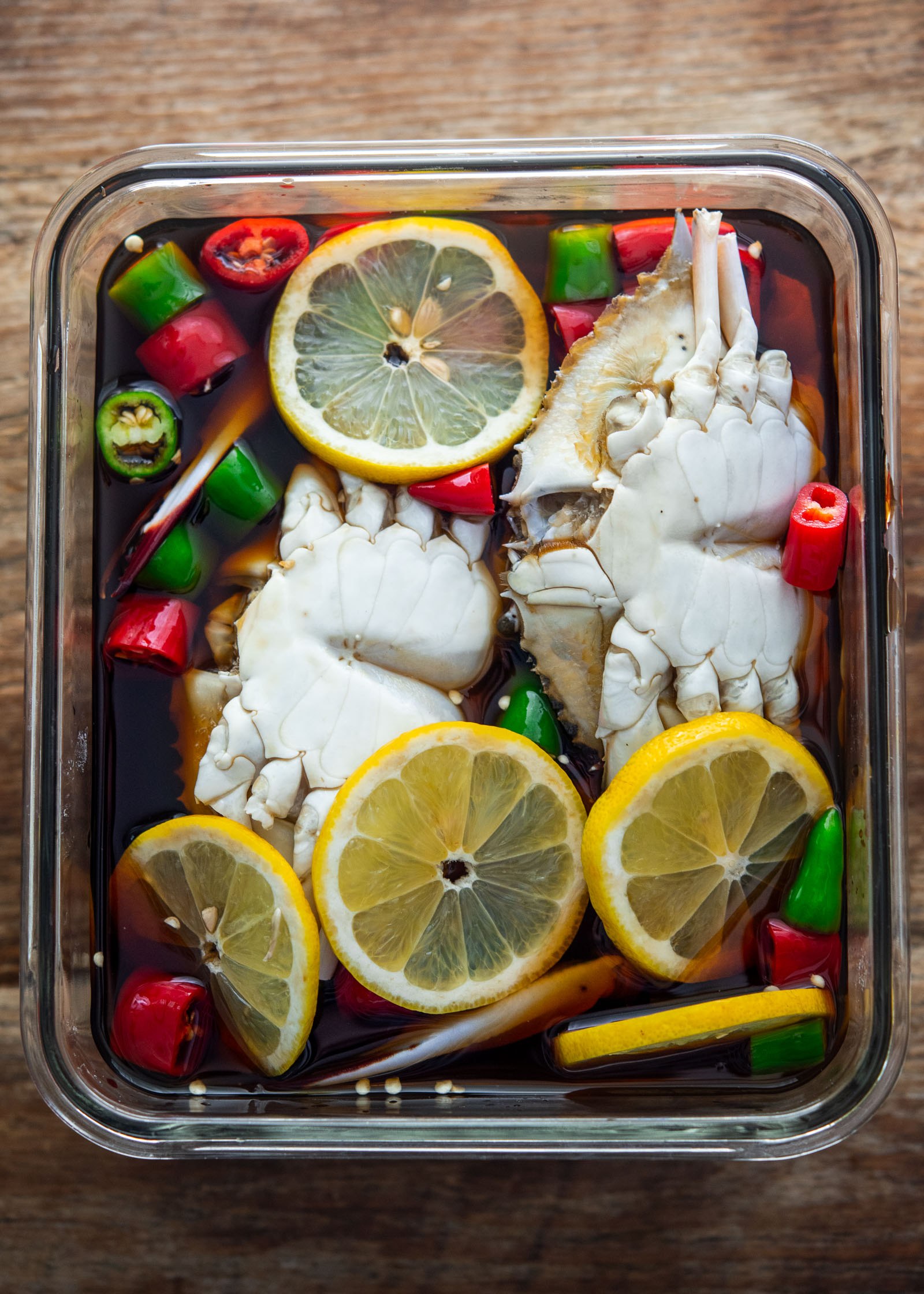
Arrange the crabs in a large container and pour the cold marinade over them. Add the lemon slices and fresh chilies. Keep the crabs submerged, using a small food-safe plate to weigh them down if needed. Cover and refrigerate at 40°F/4°C or below.
For whole crabs, I prefer the flavor after 24 hours. Earlier, the seasoning tastes weak to me. After a full day, it has worked into the meat while the crab’s sweetness still comes through. Cut crabs take less time; I marinate them for about 12 hours. Longer marinating makes the crab saltier, so I plan each batch around serving time.
Serving and Eating Ganjang Gejang
Open and Cut the Crabs
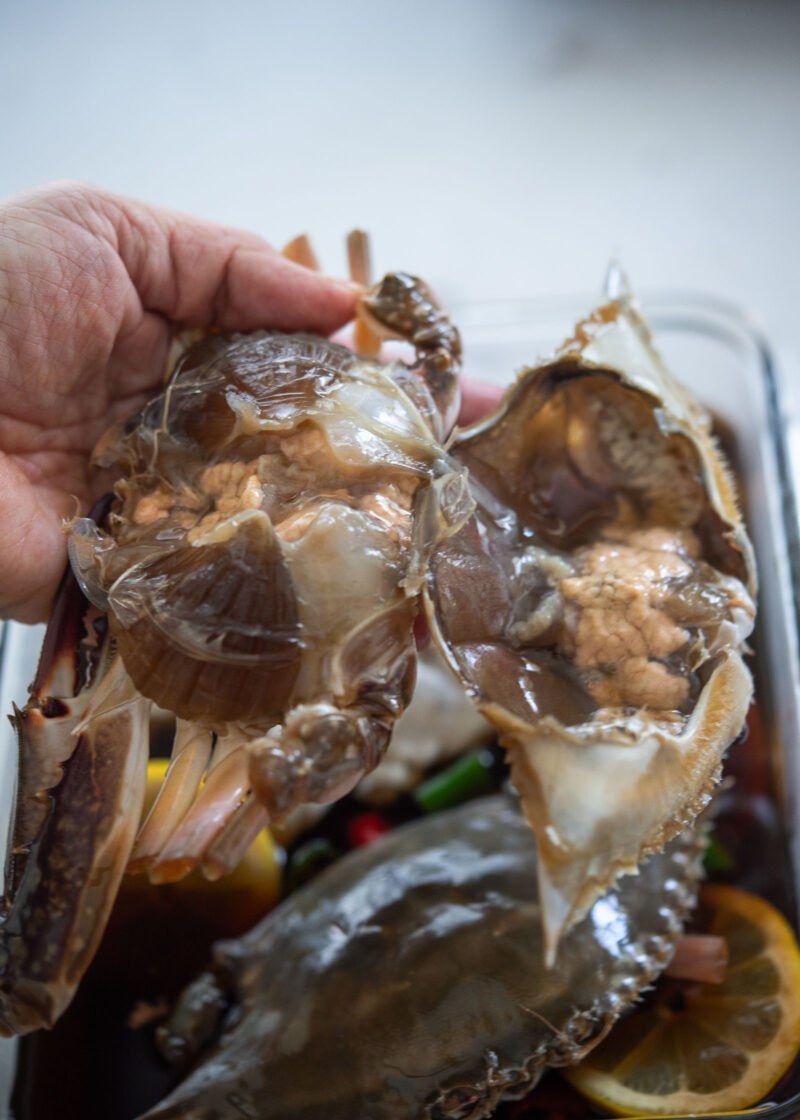
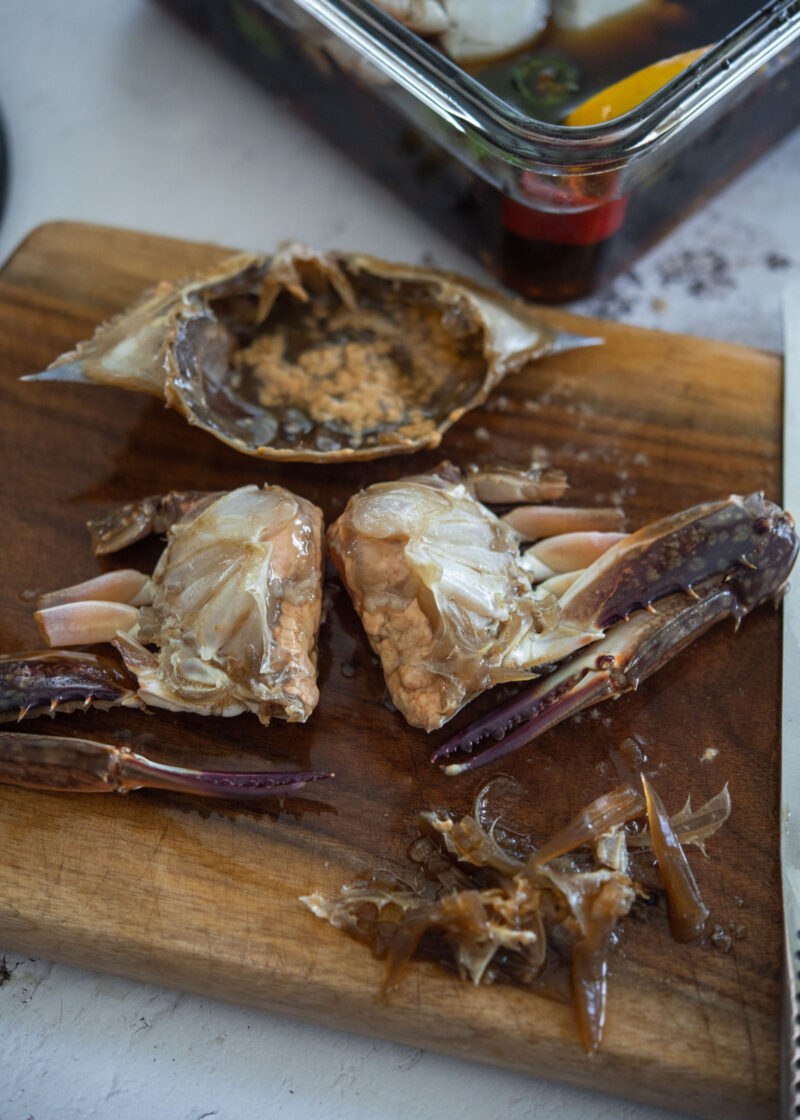
Lift off the top shells and remove the gills, stomach, and intestinal contents, keeping any roe. Cut the bodies in half with sturdy kitchen scissors.
Serve with Warm Rice
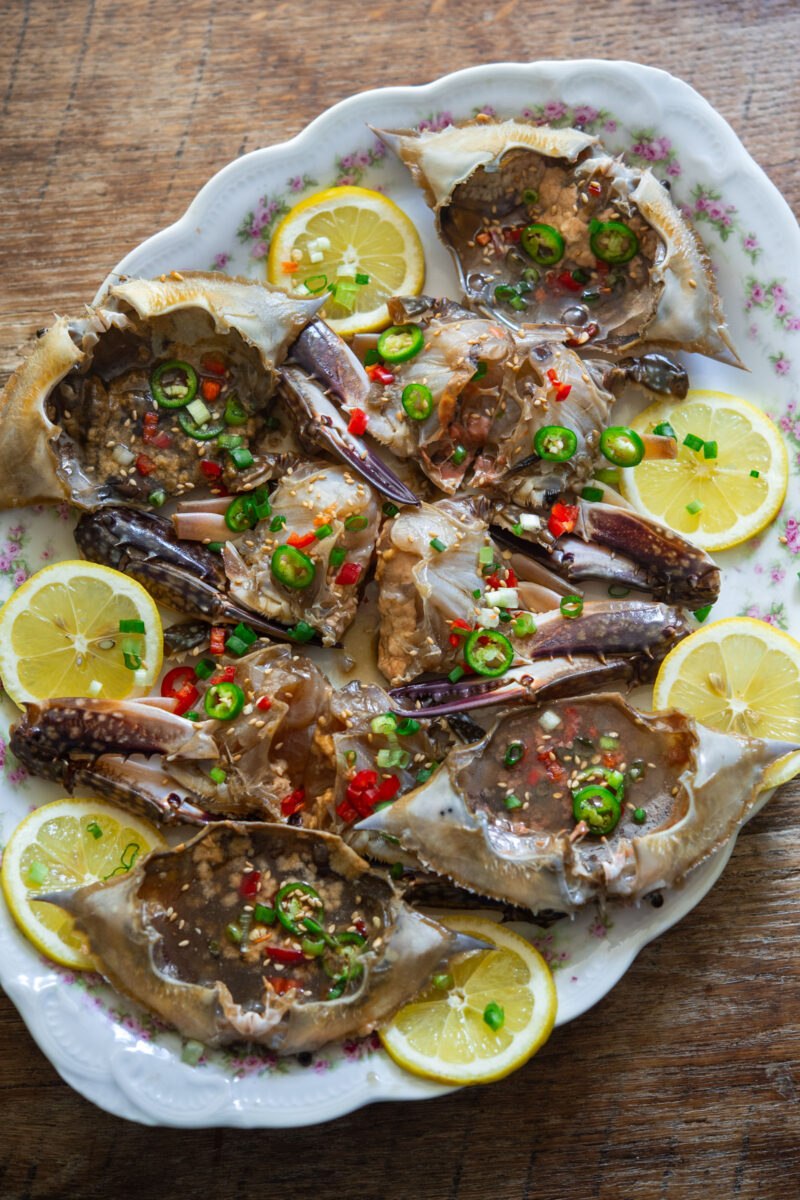
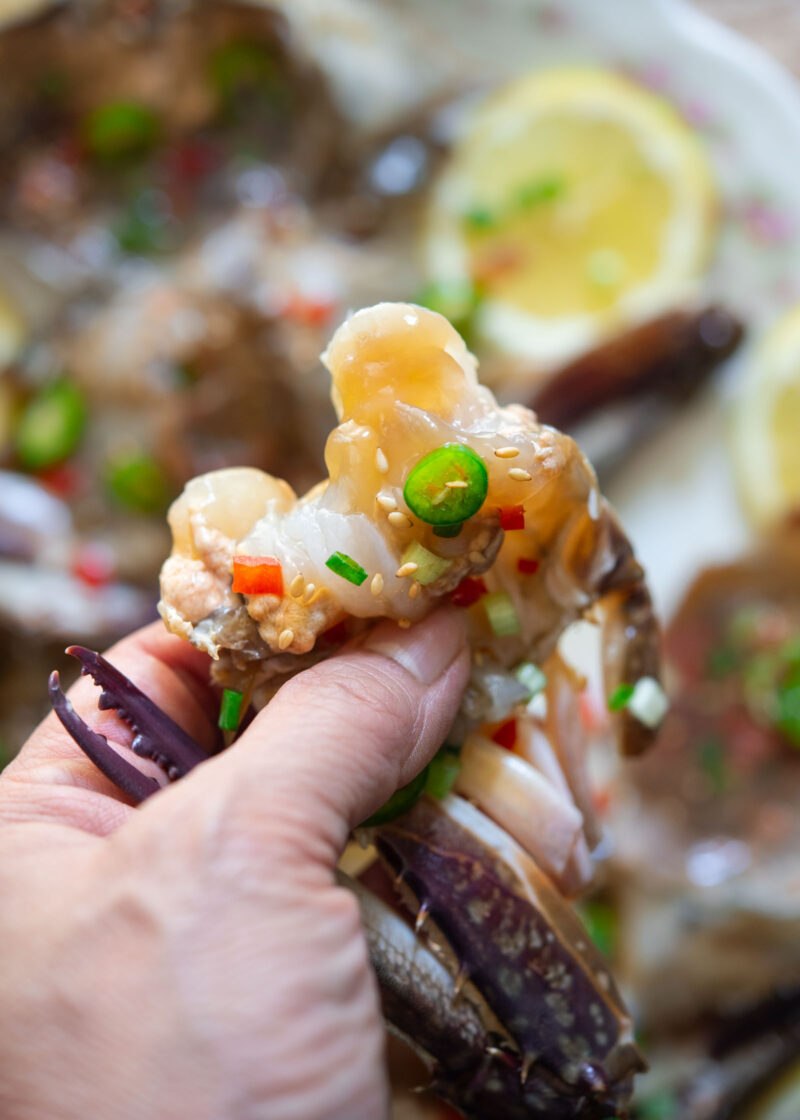
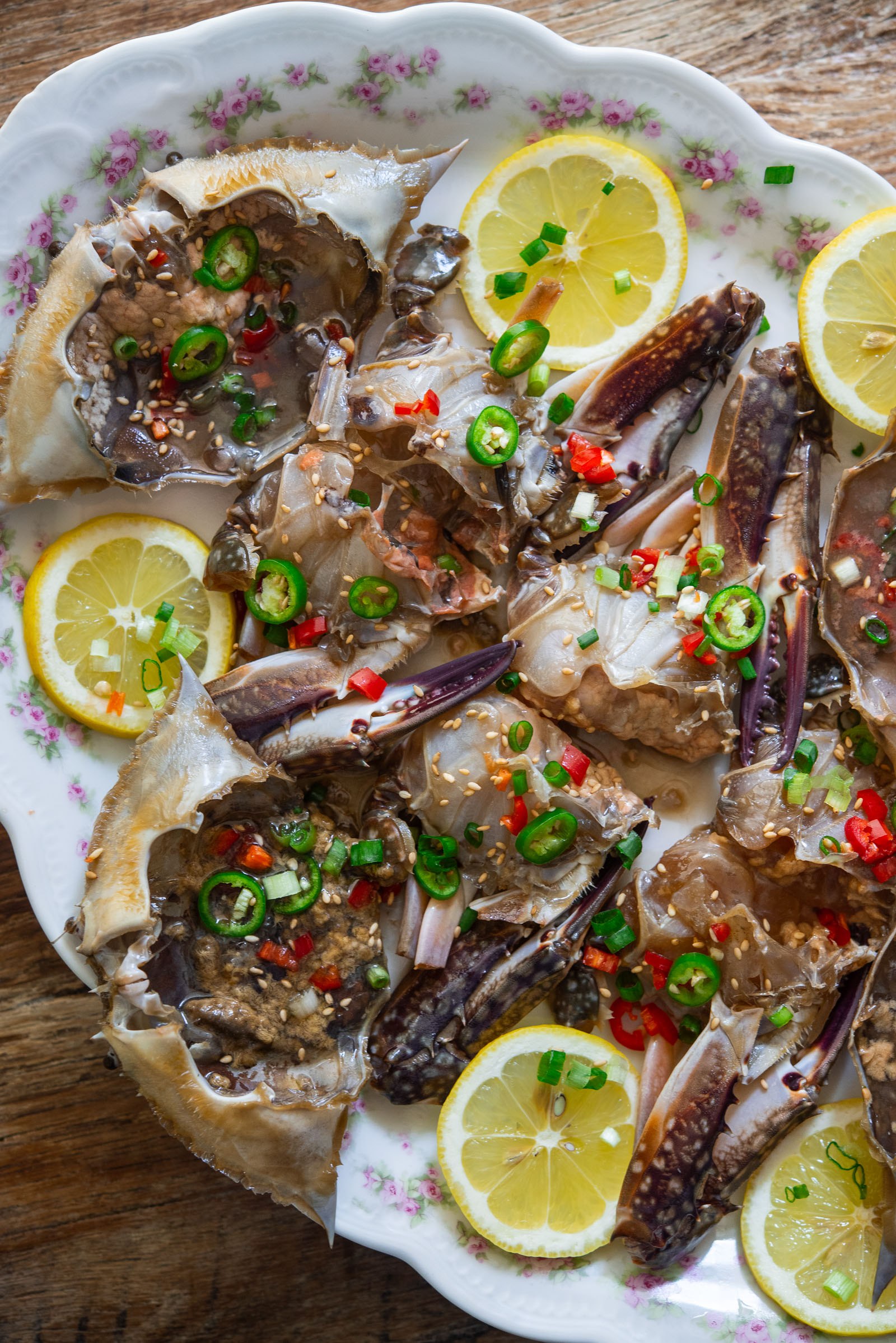
Arrange the crab and top shells on a platter and spoon a little marinade over them. Serve chilled with warm rice.
Gently squeeze the body sections to release the meat, and use kitchen scissors or a crab cracker for the hard claws. Watch for small shell fragments. Many Korean restaurants provide disposable food gloves, and you may appreciate a pair at home, too.
Mix Rice in the Top Shell
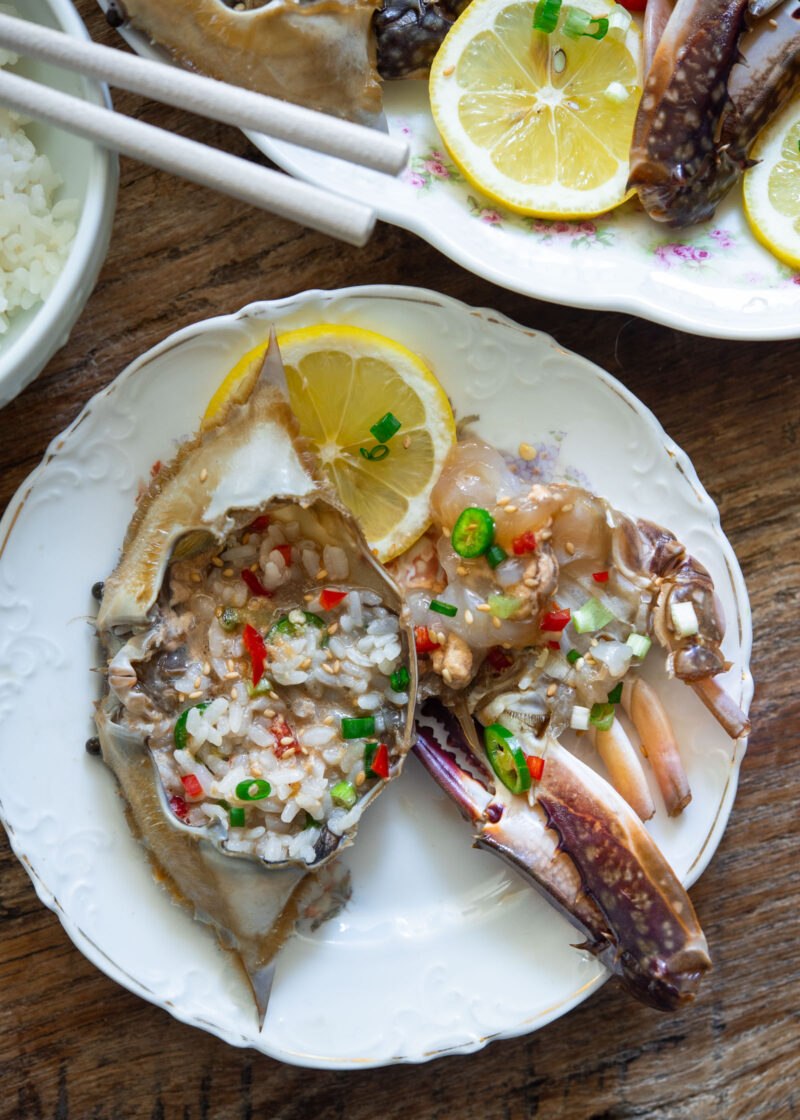
For me, the best part is mixing a spoonful of rice inside the top shell with the remaining crab meat, juices, marinade, and roe, if present. It’s a favorite Korean way to enjoy ganjang gejang. Scoop it straight from the shell, and you’ll understand the “rice thief” nickname.
Some people also enjoy the creamy innards, but these can accumulate contaminants, so consider leaving them out.
I keep this batch to 1 kg of crab and plan to finish it in one meal. Since the crab is eaten raw, I prefer to avoid additional refrigerator storage after marinating. Halve the recipe if you’re serving fewer people.
Prefer your crab steaming hot? My Korean crab stew (kkotgetang) comes with a spicy broth worth keeping your rice bowl close for.
Love this recipe? Rate it and share your experience in the comments below! On Instagram? Tag me to showcase your creation. For more delicious recipes, subscribe to our newsletter!

Ganjang Gejang (Soy-Marinated Frozen Crab)
Ingredients
- 1 kg (2.2 lb) frozen Korean flower crabs or U.S. blue crabs, whole or cut
- 1 lemon, thinly sliced
- 2 fresh chilies, sliced
- 2 tbsp chopped green onion, optional
- 1 tbsp toasted sesame seeds, optional
Soy marinade
- 5 cups (1.2 L) water
- 1 large piece (about 7-in, 17 cm) dried sea kelp
- 2 cups (480 ml) regular soy sauce, preferably Sempio Naturally Brewed Soy Sauce 701
- ½ cup (118 ml) Korean tuna sauce, preferably Sajo
- ⅔ cup (160 ml) sweet rice wine (mirim)
- 2 tablespoons (30 ml) soju, unflavored
- 2 tablespoons (30 ml) Korean plum extract (maesil-cheong)
- 5 tablespoons (60 g) sugar
- ½ large onion, cut in half
- 2 large Asian leeks (daepa), cut into lengths, roots thoroughly cleaned or trimmed off
- 10 garlic cloves, peeled
- 4 bay leaves
- 1 tablespoon (7 g) whole black peppercorns
Instructions
- Make the marinade. Combine all the soy marinade ingredients in a large pot. Bring to a boil and boil for 2 minutes. Remove the sea kelp. Reduce the heat and simmer for another 5 minutes. Strain out and discard the aromatics. Cool the liquid, then refrigerate until thoroughly chilled.
- Clean the crabs. Rinse the frozen crabs under cold running water while cleaning; they thaw quickly during this process. For whole crabs, pull off the pointed abdominal flap on the underside. Scrub the shells and around the legs with a clean kitchen brush. Trim off the thin legs with kitchen scissors, keeping the large claws and top shells intact. Pat dry with paper towels and refrigerate promptly.
- Add the marinade. Arrange the crabs belly-side up in a large food-safe container. Pour the cold marinade over them and add the sliced chilies and lemon. Keep the crabs submerged, using a small food-safe plate to weigh them down if necessary. Cover.
- Refrigerate. Marinate at 40°F/4°C or below for 24 hours for whole crabs or approximately 12 hours for cut crabs. These are my preferred flavor timings; longer marinating makes the crab saltier.
- Prepare for serving. For whole crabs, lift off the top shells and remove the gills, stomach, and intestinal contents, keeping any roe. Cut the bodies in half with sturdy kitchen scissors. Check pre-cut crabs for any remaining parts that need removing.
- Serve. Arrange the crab and top shells on a platter. Spoon a little marinade over them and serve chilled with warm rice. Use scissors or a crab cracker for hard claws, and watch for shell fragments.