
Korean Pork Cutlet (Donkatsu)
Korean donkatsu is a thin, crispy pork cutlet served with a savory-sweet brown sauce, steamed rice, shredded cabbage, and pickles. This old-school gyeongyangsik-style recipe uses pounded pork loin, coarse panko, and a smooth brown sauce for a classic Korean restaurant-style meal that comes together in about 40 minutes.
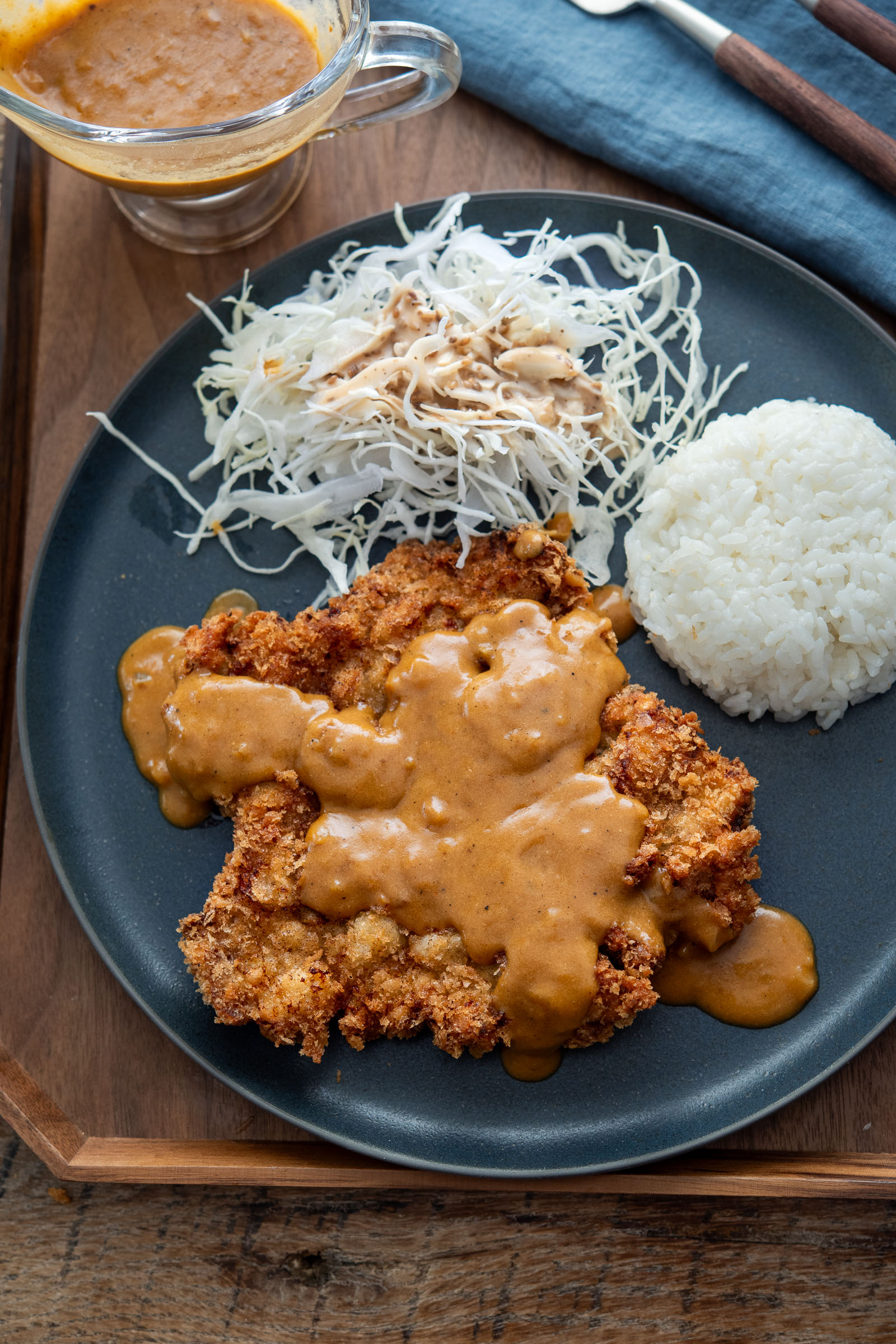
Donkatsu (돈가스) was a special treat when I was growing up in Korea. My parents would occasionally take us to a gyeongyangsik (경양식) restaurant, one of those old-fashioned Korean Western-style restaurants, and I almost always ordered the pork cutlet. I loved the thin piece of pork with its crisp panko crust, especially once it was covered in that savory-sweet brown sauce.
Years later, when I moved to Seoul for college, there was a small donkatsu restaurant near Namsan that became one of my favorites. I no longer remember the restaurant’s name, and it closed many years ago, but I still remember the cutlet and, especially, the sauce. Other restaurants later appeared with similar names, but the flavor was never quite the same.
Get new recipes via email:
For years, I tried to recreate that old-school Korean donkatsu sauce from memory. This recipe is the version that finally came closest to the one I remember: a thin, crisp pork cutlet with a rich, lightly sweet and savory brown sauce.
I’m happy to finally share it after carrying that flavor memory with me for decades.
What Makes Korean Donkatsu Different
Korean donkatsu, officially spelled donkkaseu (돈가스) in Korean and also commonly written 돈까스, has its roots in Japanese tonkatsu, but the version many Koreans grew up eating developed its own distinctive style. Japanese tonkatsu is usually thicker and more compact, while Korean donkatsu is often pounded very thin and stretched wide, sometimes large enough to nearly cover the plate. That oversized style is often called wang donkatsu (왕돈까스).
The texture is different, too. The thinner pork cooks quickly and gives you more crisp panko crust in every bite. In the old-fashioned gyeongyangsik restaurants I remember, that broad, thin cutlet was part of the appeal. It looked almost oversized when it arrived at the table.
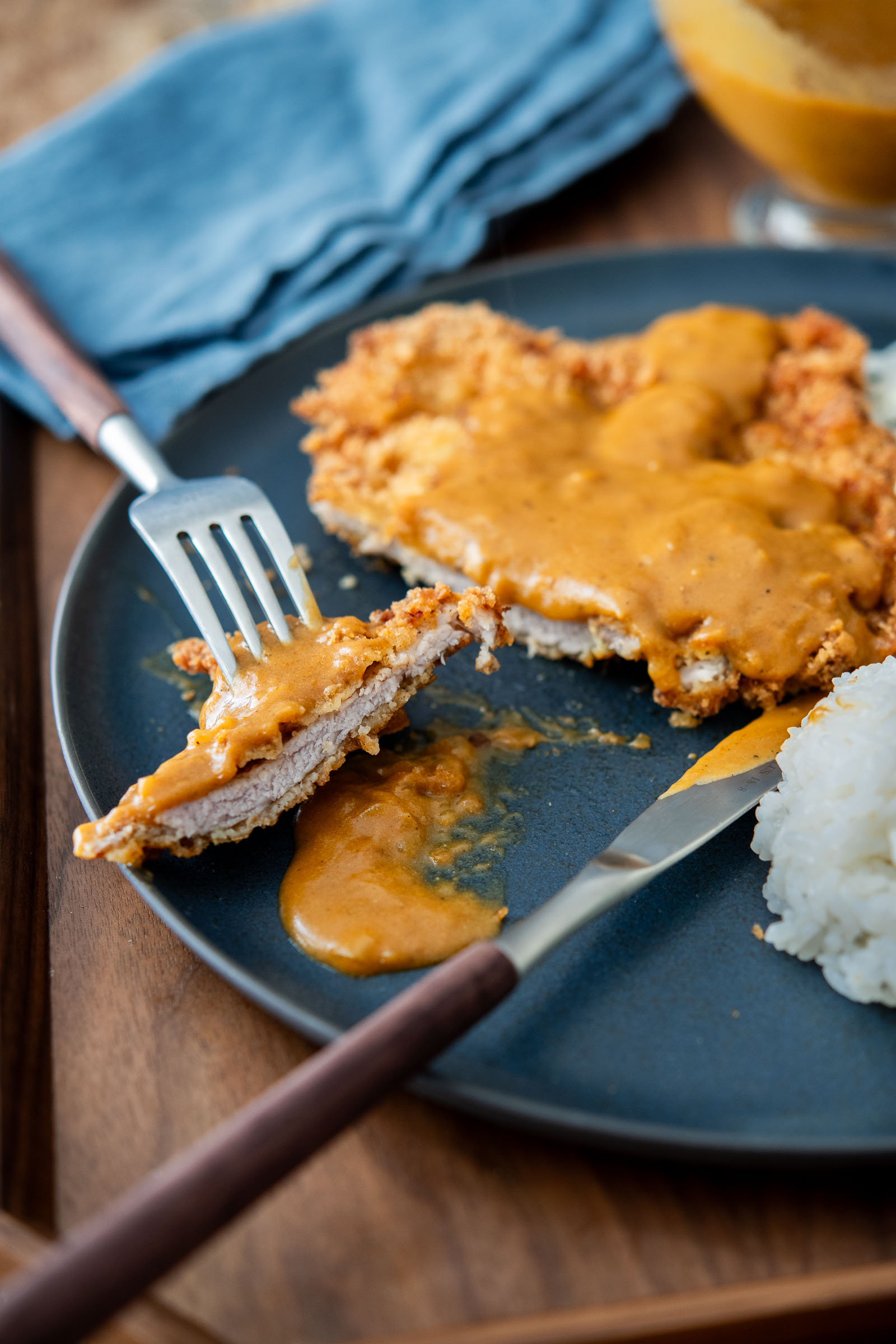
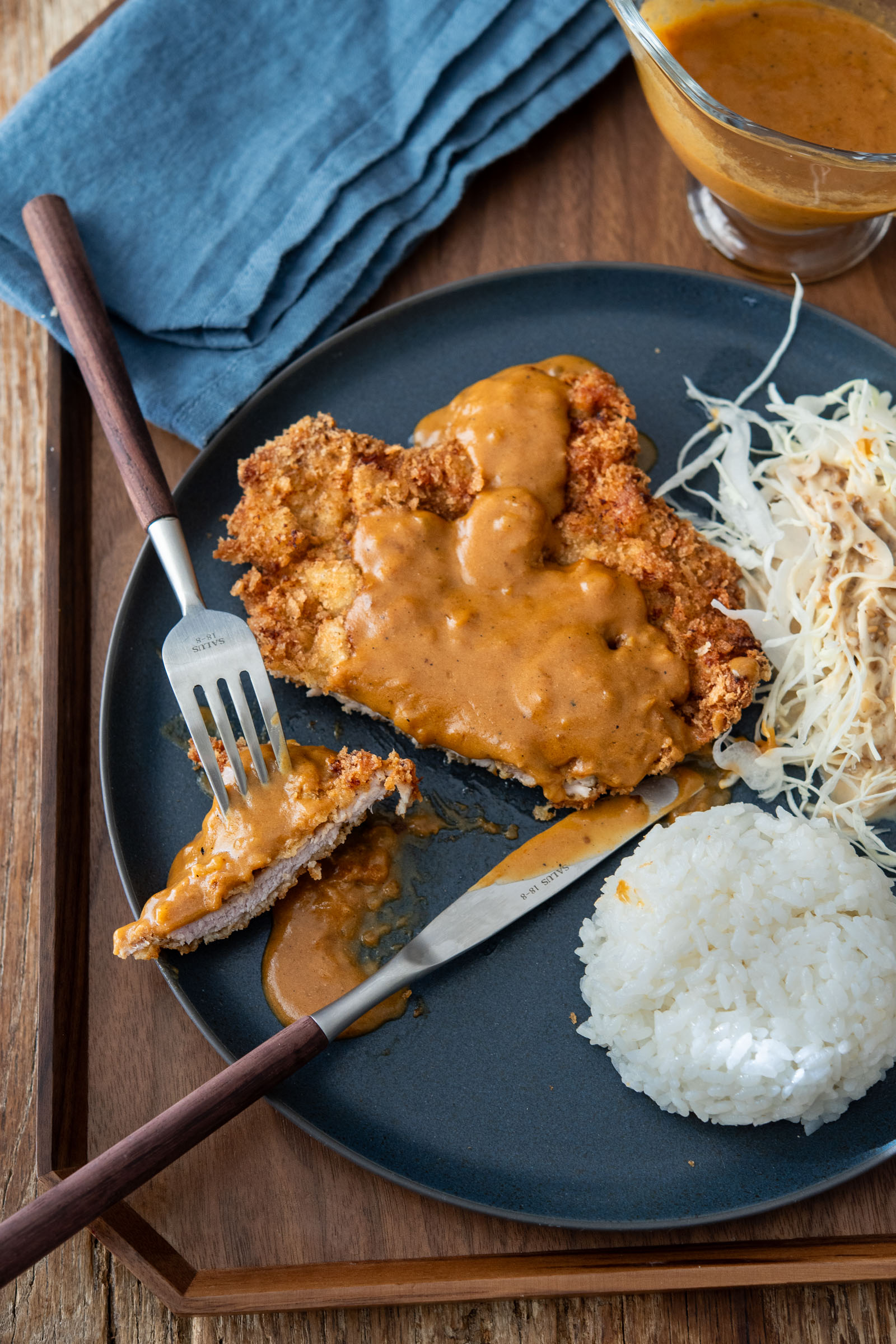
Another defining difference is the sauce. Instead of serving the cutlet sliced with sauce on the side, Korean donkatsu is often served whole with warm brown sauce spooned over the top. The sauce is savory, lightly sweet, and tangy, with a softer, gravy-like texture than Japanese tonkatsu sauce. That’s what makes donkatsu taste like the Korean restaurant version I remember.
Key Ingredients for Korean Donkatsu
The ingredient list is simple, but a few choices make a big difference in the texture of Korean-style donkatsu.
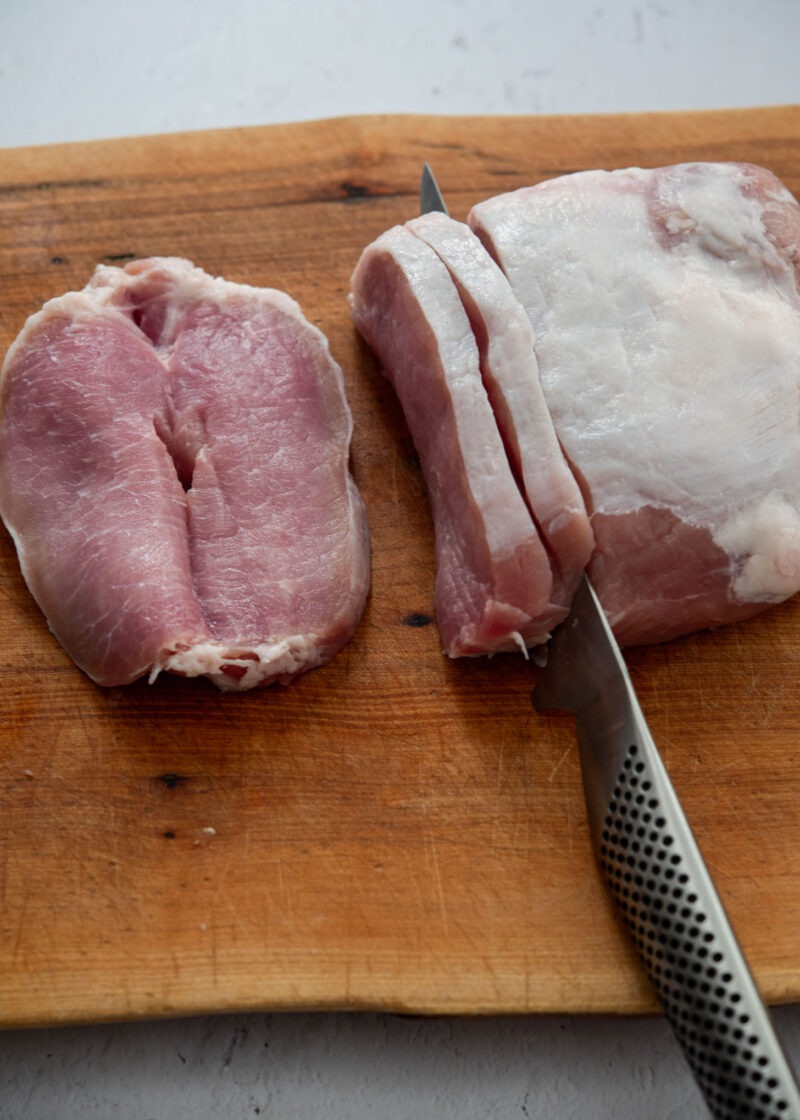
Pork loin: I prefer pork loin because it is lean, easy to pound evenly, and holds its shape well. For the oversized wang donkatsu style, I butterfly the pork loin slices first to create a larger surface, then pound it thin and even. If you do not care about making an extra-large cutlet, thinly sliced boneless pork loin works perfectly well.
Panko breadcrumbs: Panko gives donkatsu its light, crisp crust, but the type of panko changes the texture. I use frozen fresh panko, which has larger, softer flakes and fries into a coarser, airier crust. It gives the cutlet that extra craggy crunch I remember from Korean restaurants.
Regular dried panko from a package works well, too, and is much easier to find. I would avoid very fine breadcrumbs, though. They create a tighter, denser coating rather than the crisp, flaky crust you want for donkatsu.
Flour and egg: These form the base that helps the panko cling evenly to the pork. A light coating is enough. Too much flour or egg can make the crust feel heavy rather than crisp.
Neutral frying oil: Use an oil with a high smoke point and a clean flavor so the pork and panko remain the focus.
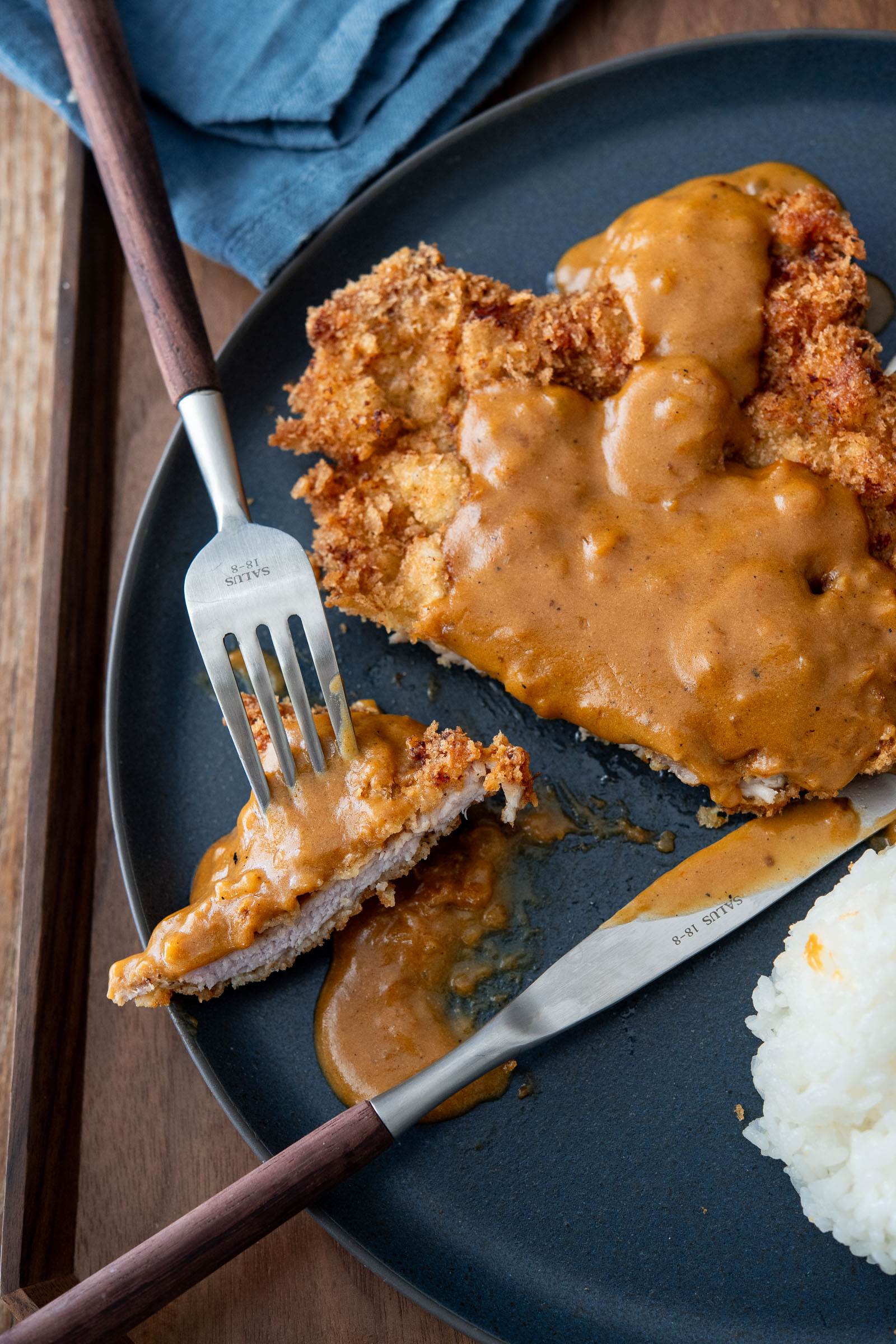
The Brown Sauce That Defines Korean Donkatsu
For me, the brown sauce is what gives Korean donkatsu its old-school gyeongyangsik character. It is not the same as the thick, fruity tonkatsu sauce often served with Japanese pork cutlets. Korean-style brown sauce is smoother and more gravy-like, with a savory base, gentle sweetness, and a little tang.
My version starts with browned onion and butter, then uses flour and milk to build a creamy, lightly thickened sauce. Ketchup adds sweetness and acidity, while steak sauce brings deeper savory flavor and seasoning. The result is rich enough to coat the pork, but not so heavy that it overwhelms the crisp crust.
Every Korean restaurant seemed to have its own version of this brown sauce, so there is no single formula that defines it. What matters is the balance: savory, lightly sweet, a little tangy, and smooth enough to coat the cutlet without masking its crisp crust. I adjusted this version until it matched the flavor and consistency I remember from classic Korean gyeongyangsik donkatsu.
How to Make Korean Donkatsu
1. Prepare and Season the Pork
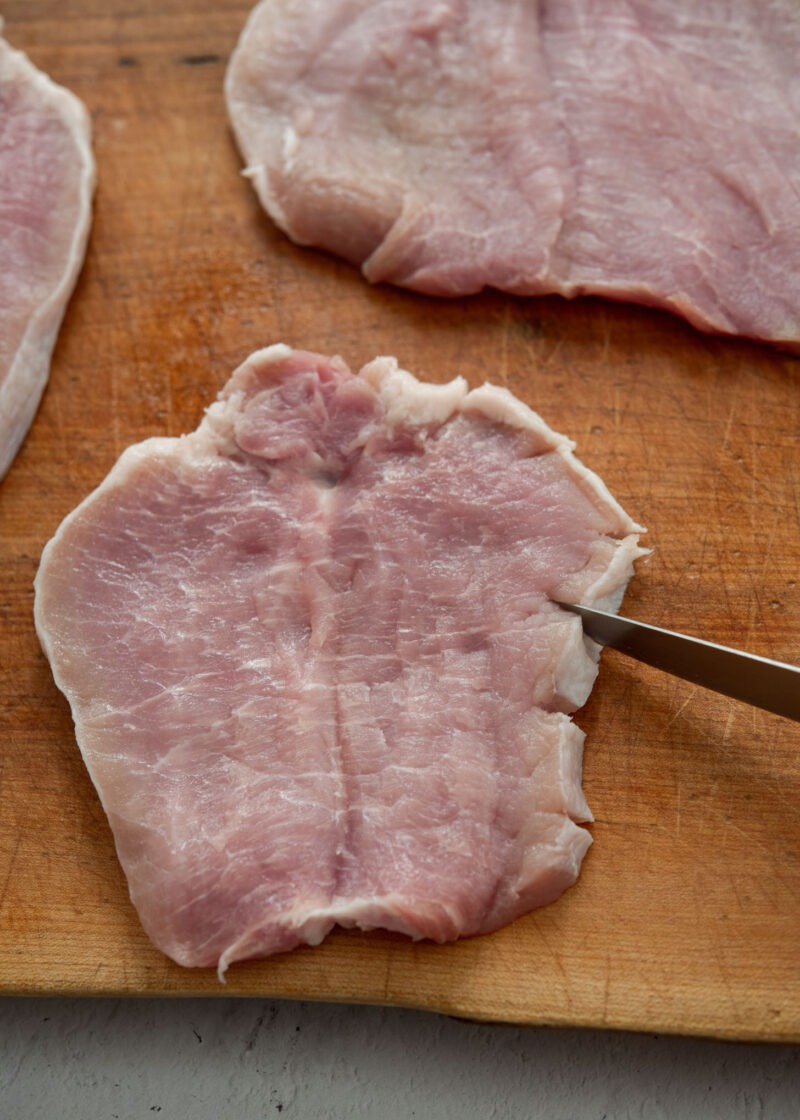
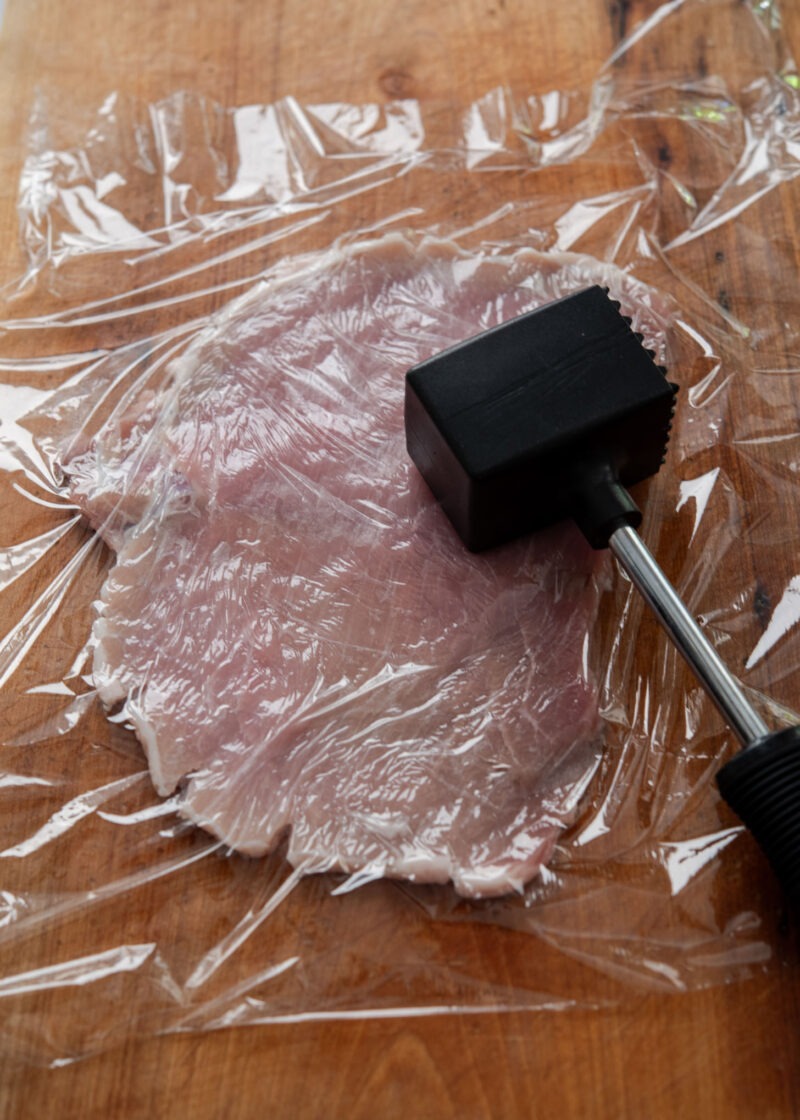
Once the pork is butterflied, make a few small slits around the edges. This helps keep the cutlet flat instead of curling as it fries. Cover with plastic wrap and gently pound until thin (about 1/4-inch), wide, and evenly flattened. Stretch the pork without tearing it so it cooks quickly and evenly.
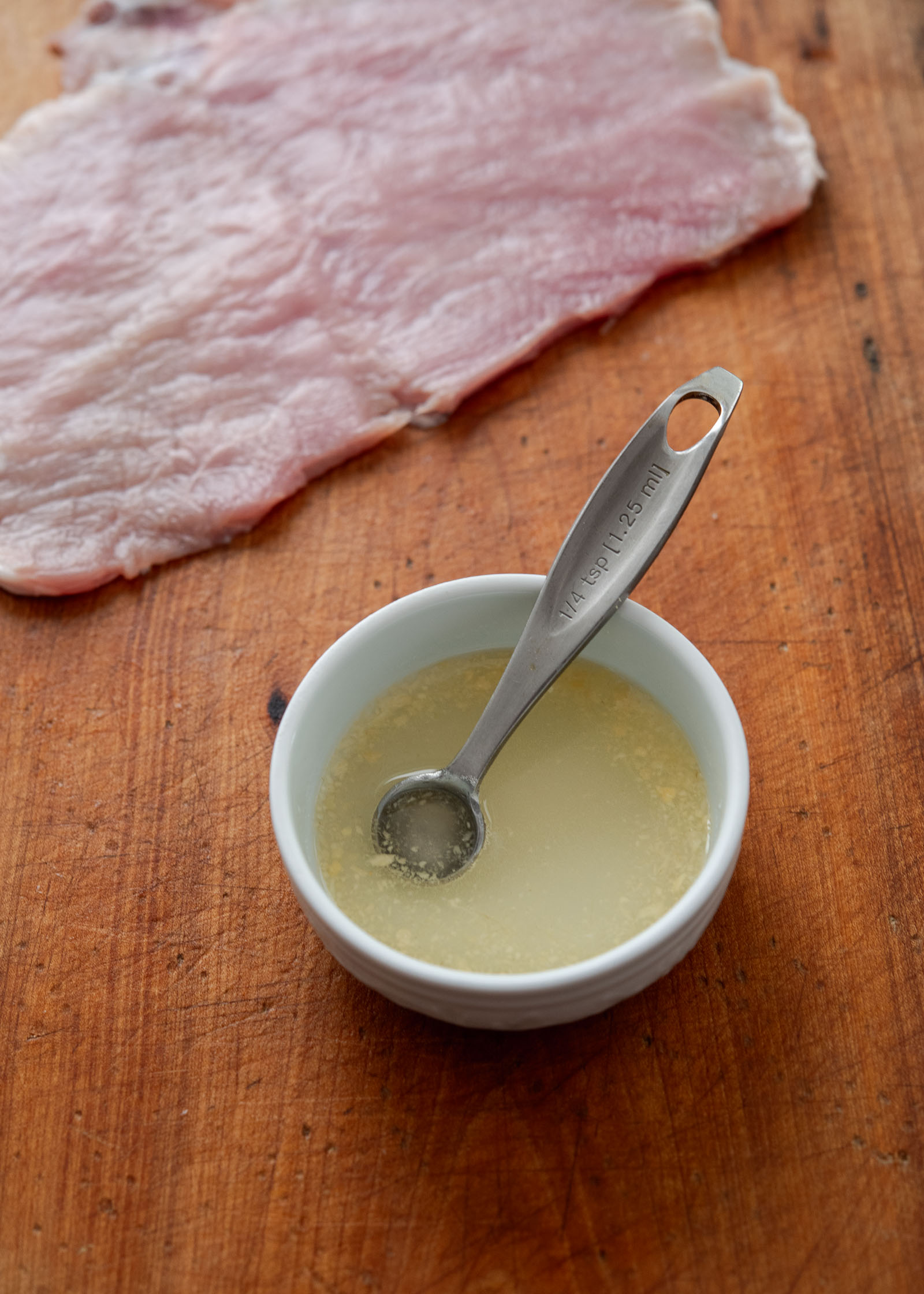
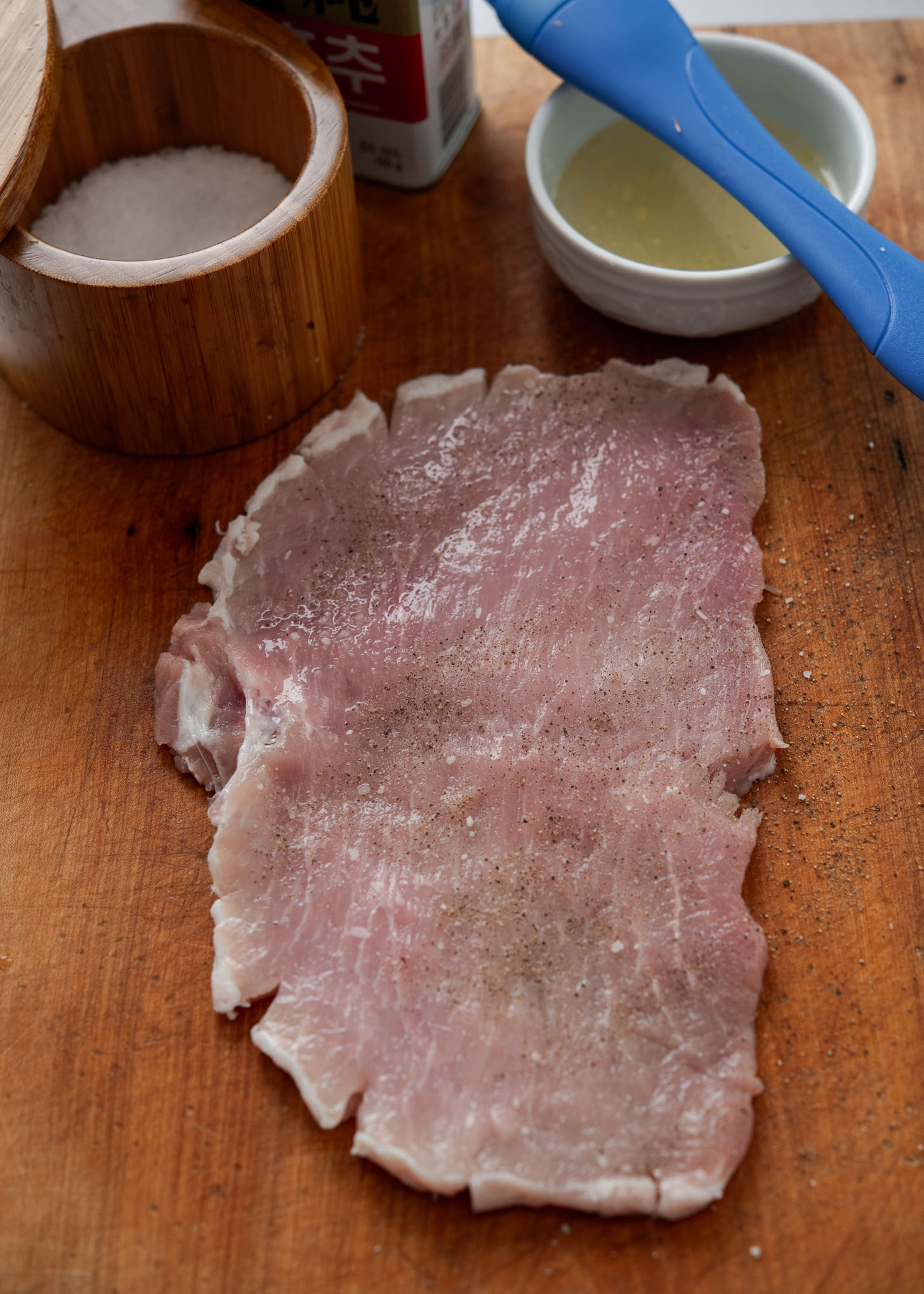
Lightly brush with the sweet rice wine, baking soda, and ginger mixture, then season with salt and pepper. I use only enough to coat the surface. A small amount of baking soda helps tenderize the pork, while the rice wine and ginger soften any strong pork flavor.
2. Coat with Panko
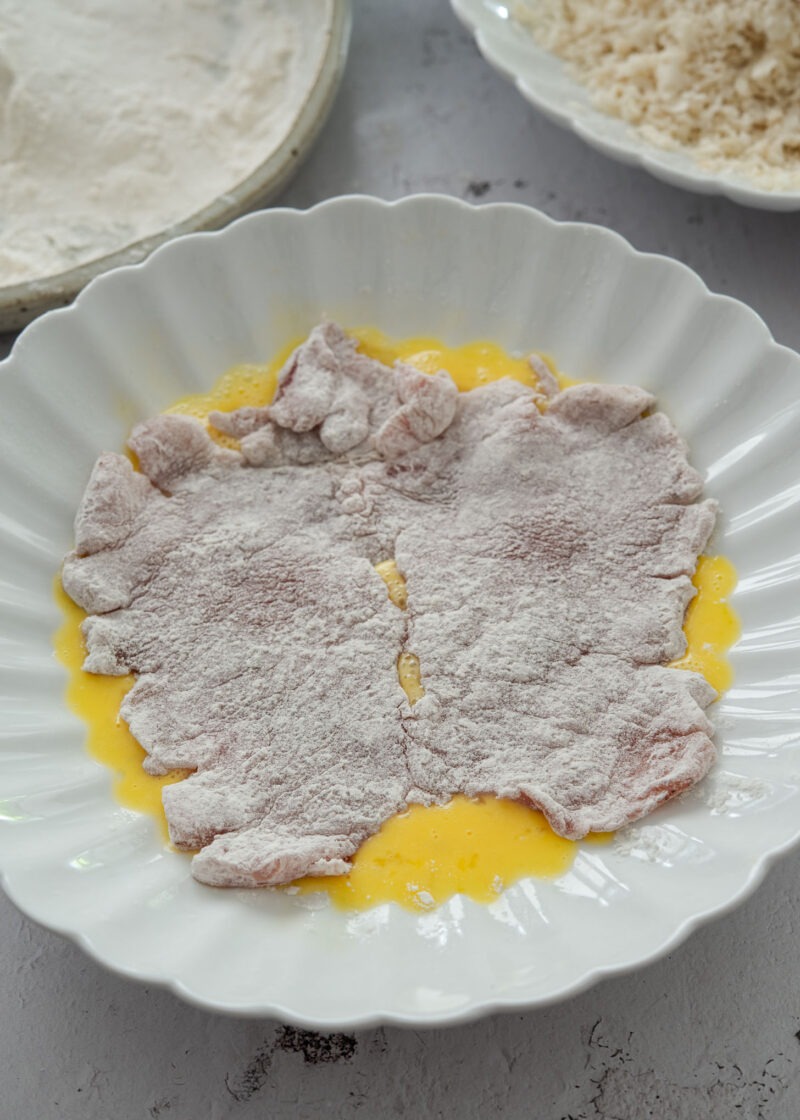
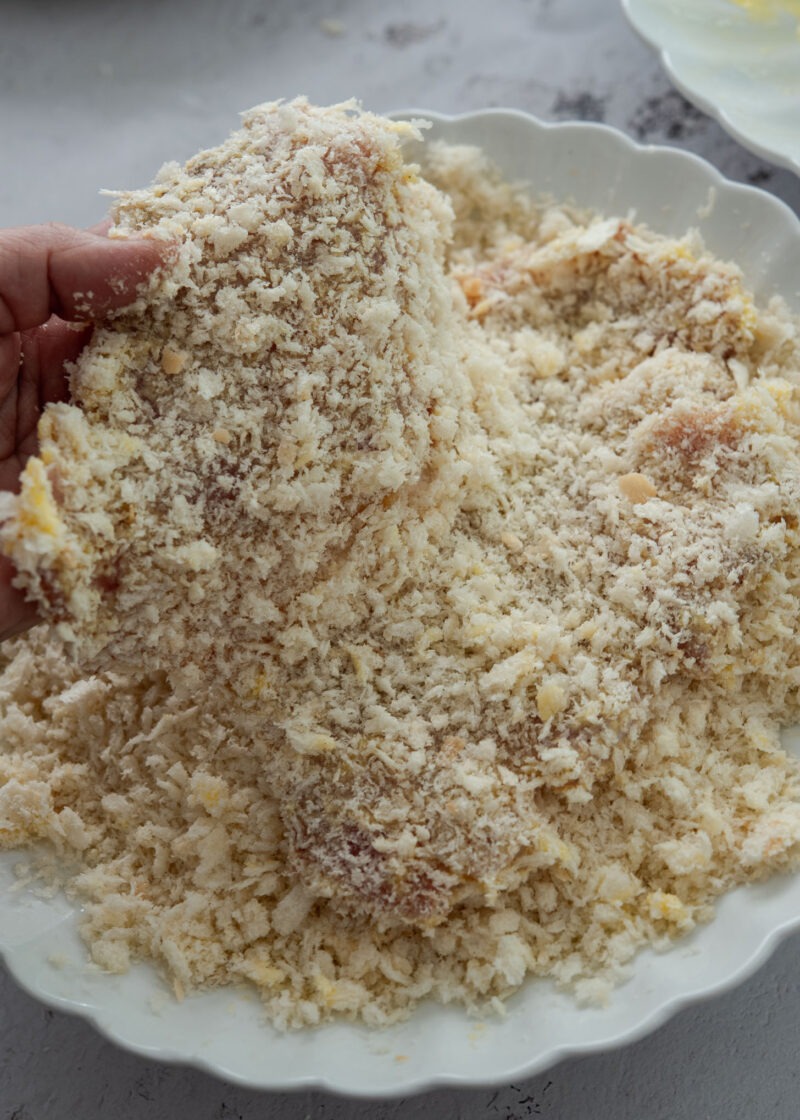
Lightly dust the pork with flour, dip it into beaten egg, then coat with panko breadcrumbs. Press the panko on gently so it adheres without becoming packed down. This keeps the coating light and craggy rather than dense.
3. Make the Brown Sauce
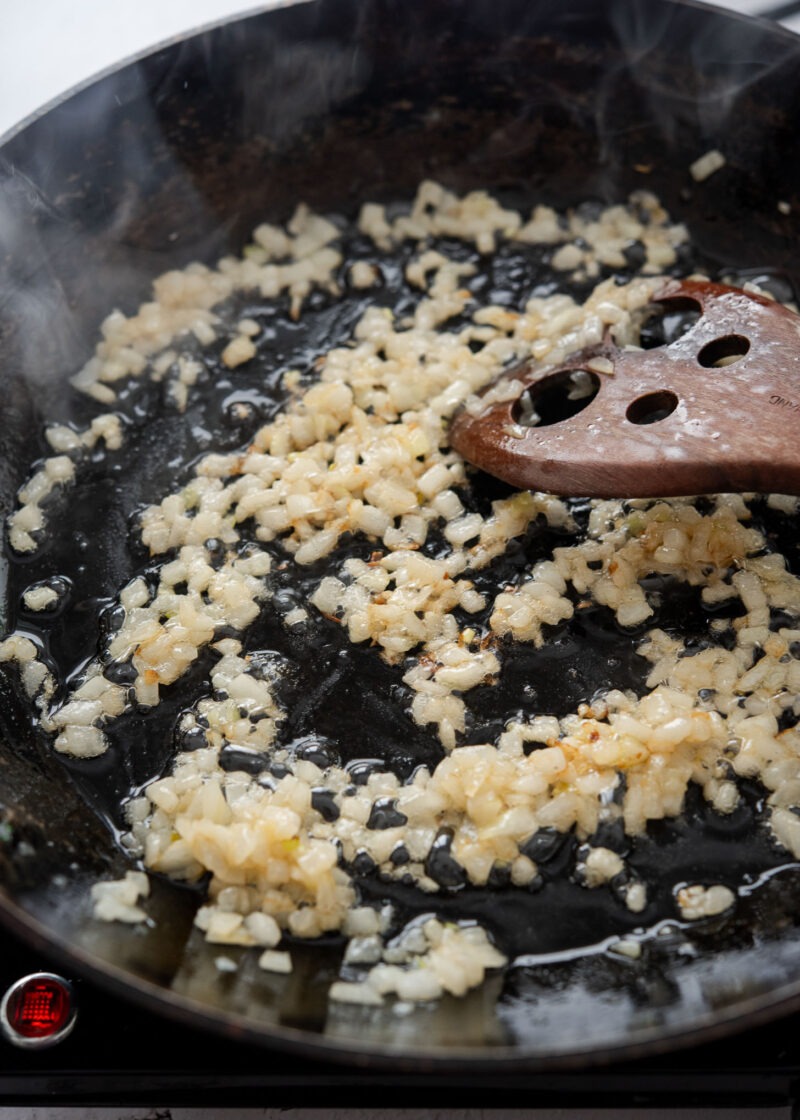
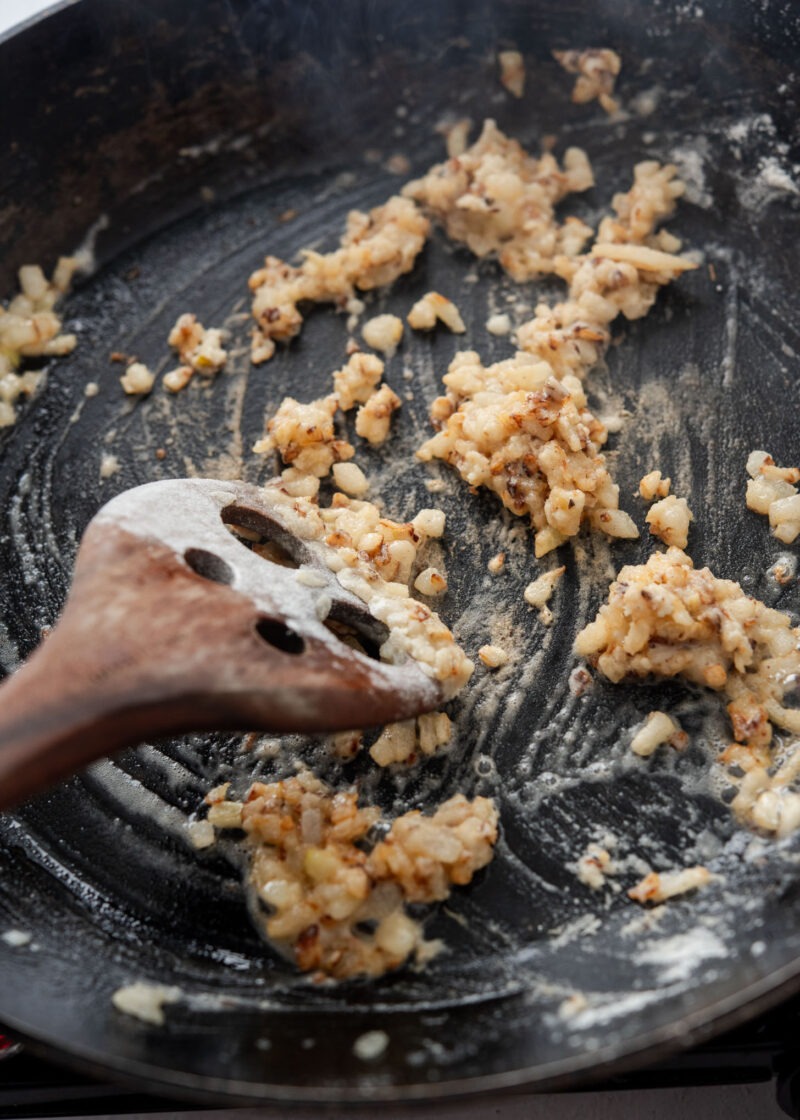
Cook the chopped onion in butter until soft and lightly golden. I let the onion develop a little color because it gives the sauce a deeper savory flavor. Stir in the flour and cook briefly until no dry spots remain.
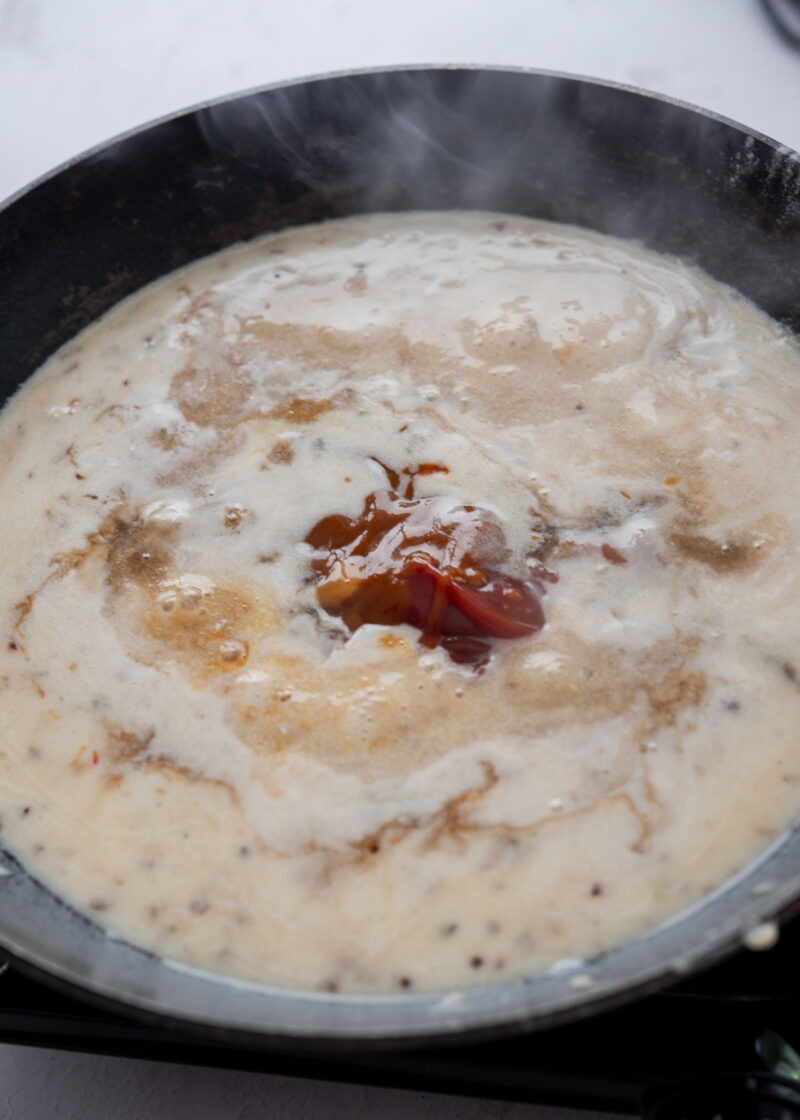
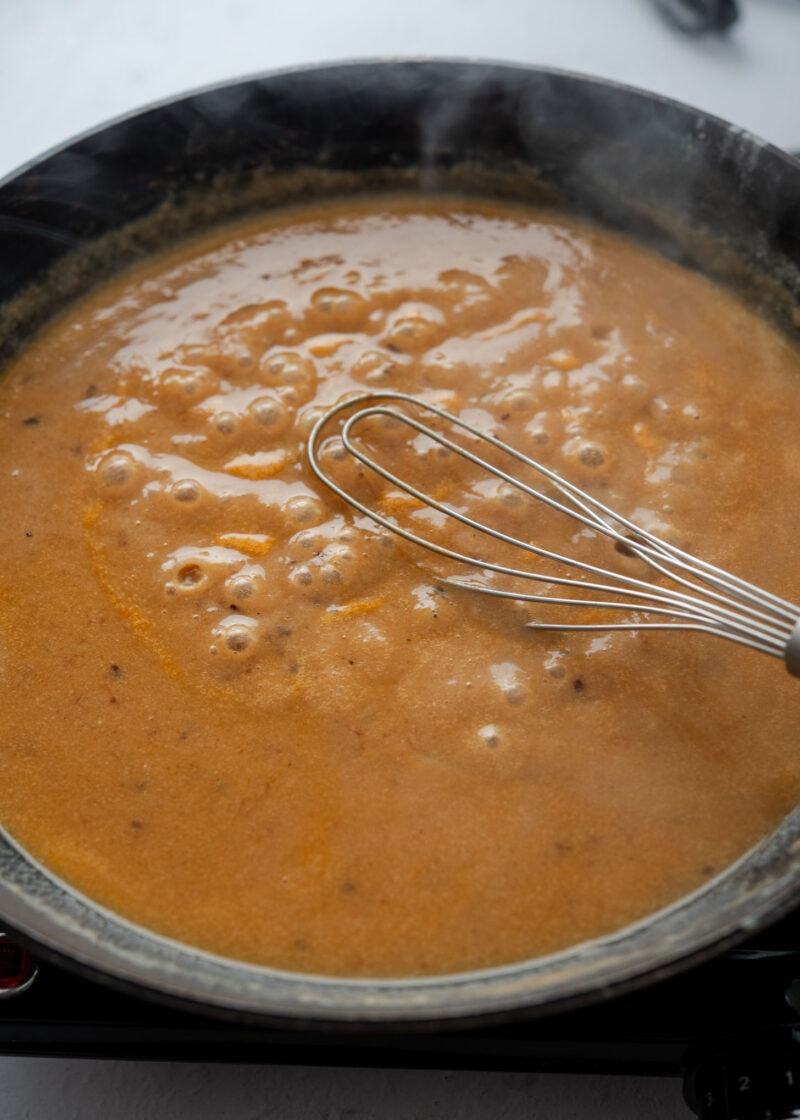
Add the milk, ketchup, steak sauce, Worcestershire sauce, and sugar, then whisk until smooth. Add water as needed and simmer gently until the sauce becomes golden brown and reaches a pourable gravy consistency. It should be thick enough to cling to the pork but loose enough to spoon easily over it.
4. Fry the Donkatsu Until Crisp
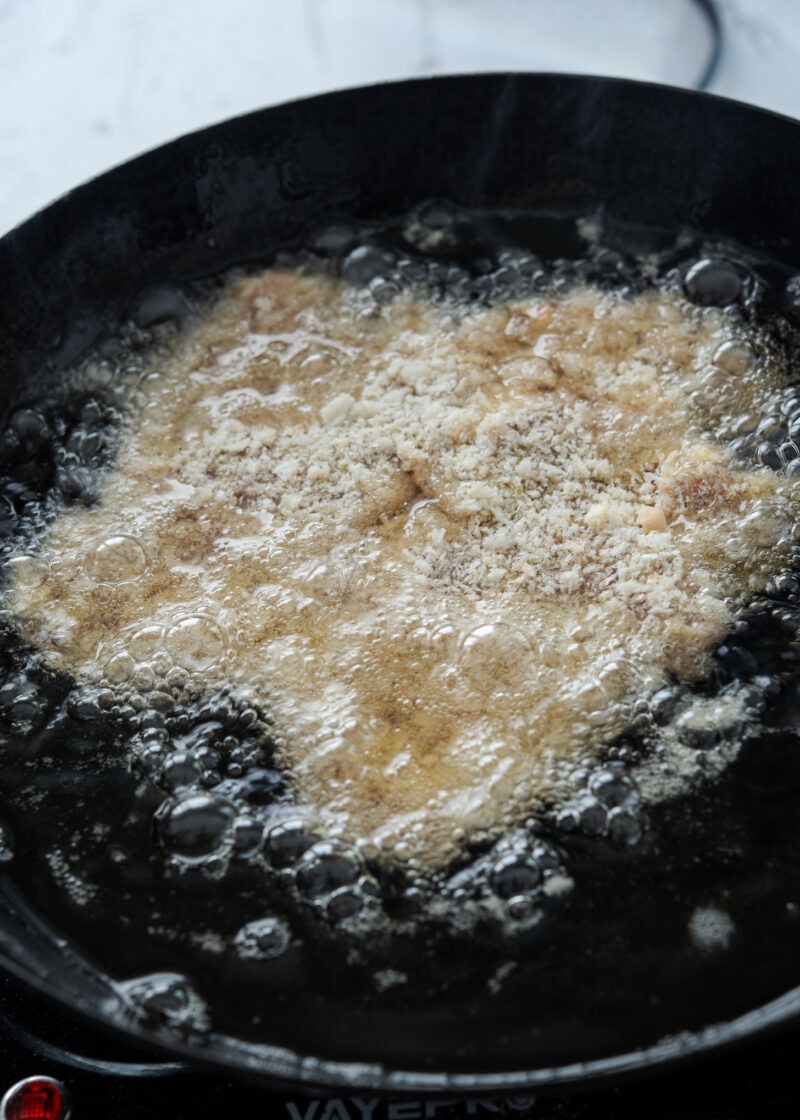
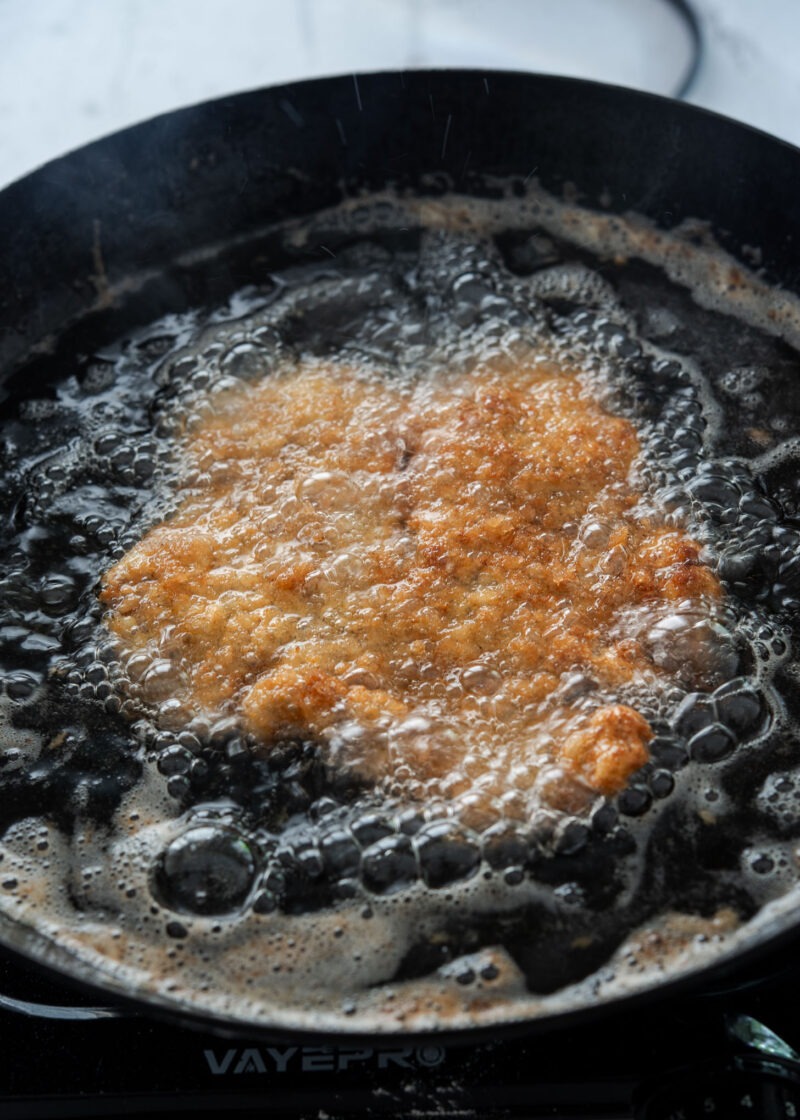
Heat the oil to 340–350°F (170–175°C) and fry each breaded cutlet until deep golden brown, about 3 to 4 minutes. Because the pork is pounded thin, it cooks quickly, so I fry it only once rather than double-frying.e-frying.
With fresh panko, one fry gives me the coarse, crisp crust I want without drying out the pork. When the bubbling begins to settle and the crust is evenly browned, remove the cutlet and let the excess oil drain.
What to Serve with Korean Donkatsu
Korean donkatsu is usually served as a full plate with steamed rice, finely shredded cabbage, pickles and sometimes kkakdugi (radish kimchi) on the side. I like the cabbage lightly dressed so its freshness cuts through the fried pork and rich brown sauce.
For the crispiest crust, spoon the brown sauce over the donkatsu just before serving. If you prefer maximum crunch, serve some of the sauce on the side.
For another old-school Korean Western-style favorite, try my hambak steak, which comes from the same kind of gyeongyangsik restaurant tradition with a savory brown sauce and classic plated presentation.
If pork is a regular part of your Korean cooking, browse my Korean pork recipes for more traditional and everyday ways to cook pork Korean-style.
Love this recipe? Rate it and share your experience in the comments below! On Instagram? Tag me to showcase your creation. For more delicious recipes, subscribe to our newsletter!
Korean Donkatsu (Crispy Pork Cutlet with Brown Sauce)
Recipe Video
Ingredients
For the pork cutlets
- 1.3 lb (600 g) boneless pork loin, see note below
- 2 tbsp (30 ml) sweet rice wine (mirin)
- ¼ tsp (1.2 g) baking soda
- ½ tsp (2.5 g) ginger purée
- salt and pepper, to taste
- ½ cup (60 g) all-purpose flour, for coating
- 2 large eggs, beaten
- 2 tbsp (30 ml) milk, or water
- 2 cups (90 g) fresh panko breadcrumbs, dried panko also works. see note below
- 3 cups (720 ml) neutral cooking oil, for frying
For the Korean brown sauce
- 2 tbsp (28 g) unsalted butter
- ½ cup (75 g) finely minced onion
- 2 tbsp (16 g) all-purpose flour
- 1½ cups (360 ml) water, plus more as needed
- ½ cup (120 ml) milk
- 1 tbsp (12 g) sugar
- 3 tbsp (45 ml) ketchup
- 4 tbsp (60 ml) steak sauce, I use Heinz 57
- 2 tbsp (30 ml) Worcestershire sauce
- salt and pepper, to taste
For serving
- 8 oz (225 g) finely shredded cabbage, for serving
- sesame ginger salad dressing, or mixture of ketchup and mayonnaise
- steamed rice, for serving
- pickled radish, optional
- kakdugi (radish kimchi), optional
Instructions
- Prepare the pork: Cut the pork loin into 1-inch-thick portions and butterfly each piece. Make a few small slits around the edges, cover with plastic wrap, and pound thin and wide.
- Season the pork: Mix the sweet rice wine, baking soda, and ginger purée. Lightly brush over both sides of the pork, then season with salt and pepper.
- Bread the cutlets: Place the flour, beaten eggs mixed with milk, and panko in separate shallow dishes. Coat each cutlet lightly in flour, dip in egg, then press into the panko until evenly coated.
- Make the brown sauce: Melt the butter in a skillet over medium heat. Add the onion and cook until soft and lightly golden. Stir in the flour and cook for about 1 minute.Finish the sauce: Add the water, milk, sugar, ketchup, steak sauce, and Worcestershire sauce. Whisk until smooth and simmer until slightly thickened and pourable, adding a little more water if needed. Season with salt and pepper.
- Fry the donkatsu: Heat frying oil to about 340–350°F (170–175°C). Fry the cutlets one at a time until deep golden brown and cooked through, about 3–4 minutes total. Transfer to a wire rack to drain.
- Serve: Place each donkatsu on a plate and spoon the warm brown sauce over the top. Serve with steamed rice, finely shredded cabbage, and pickled radish or kkakdugi.