
Salmon Fried Rice with Egg and Cabbage
This easy salmon fried rice turns leftover rice, tender salmon, egg, and crisp cabbage into a quick one-pan meal seasoned simply with tsuyu and salt. It is a savory Asian-style rice dish with Korean home-cooking influence, naturally dairy-free, ready in about 20 minutes, and perfect for a fast lunch or busy weeknight dinner.
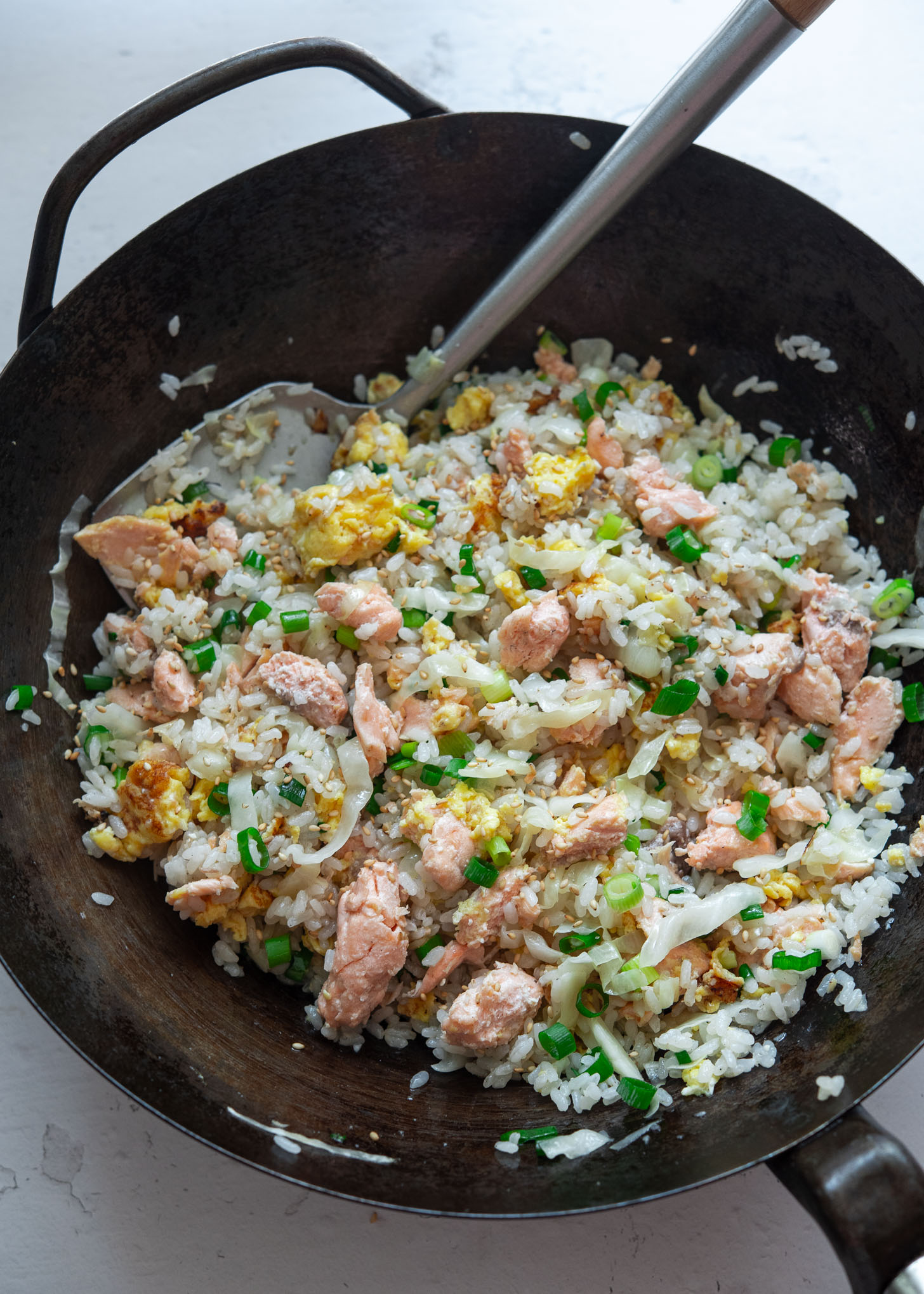
When the school year starts and weeknights get busier, I lean on simple meals that can turn leftovers into something completely new. My family loves salmon, so when I have a leftover fillet or a few cooked pieces in the fridge, salmon fried rice is one of my favorite ways to use them.
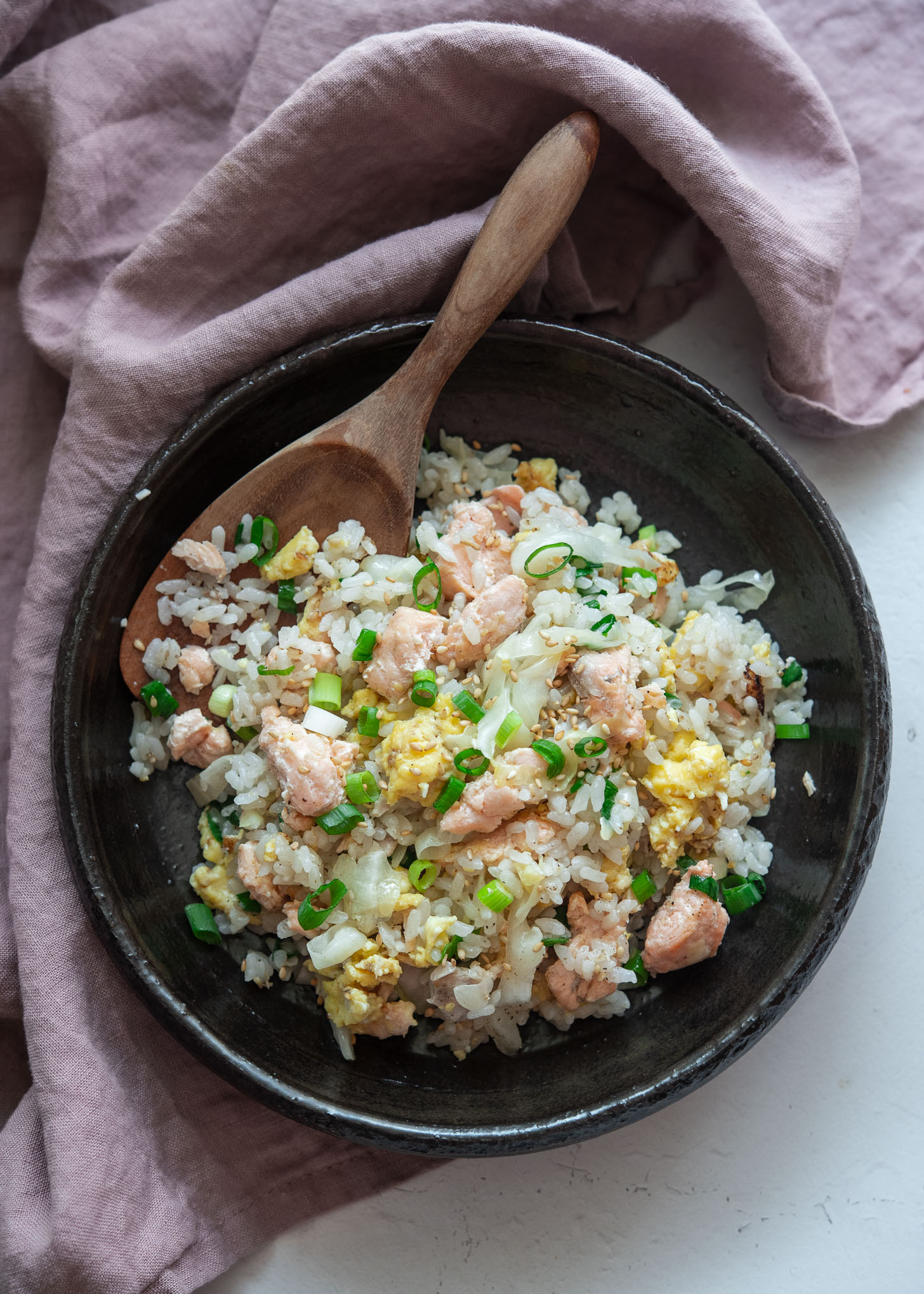
Fish in fried rice may sound a little unexpected, but salmon works especially well. Its rich, buttery flavor pairs naturally with savory rice, egg, and vegetables without needing much seasoning.
Get new recipes via email:
For this version, I added cabbage, a vegetable I use often in Korean cooking. It gives the fried rice a little crunch, gentle sweetness, and a fresher, lighter feel. A splash of tsuyu brings everything together with just enough savory depth, making this an easy meal that comes together fast with leftover rice.
Leftover rice rarely goes to waste in my kitchen. I often turn it into Kimchi Fried Rice for something spicy and tangy, or make Spam Fried Rice when I want an easy, savory meal with a little more richness.
Fresh or Leftover Salmon Both Work
I often make this fried rice with leftover cooked salmon, which makes it especially handy for a quick lunch or weeknight dinner. Break the salmon into bite-size pieces rather than tiny flakes so you still get distinct pieces throughout the rice.
Fresh salmon works too. Cut it into small chunks, cook it just until done, then remove it from the skillet and add it back near the end. This keeps the salmon moist while the rice gets the extra heat it needs.
Why Cabbage Works So Well Here
Cabbage may not be the first vegetable that comes to mind for fried rice, but I especially like it with salmon. Its mild sweetness balances the richness of the fish, while the crisp edges keep the rice from feeling too heavy.
Cabbage is also something I almost always have in my Korean kitchen, so it naturally finds its way into quick meals like this one.
Slice the cabbage fairly thin and cook it only until softened but still slightly crisp. If it cooks too long, it releases more moisture and can make the rice steam instead of fry.
That little bit of texture makes a noticeable difference here. You get tender salmon, chewy rice, soft egg, and just enough crunch from the cabbage.
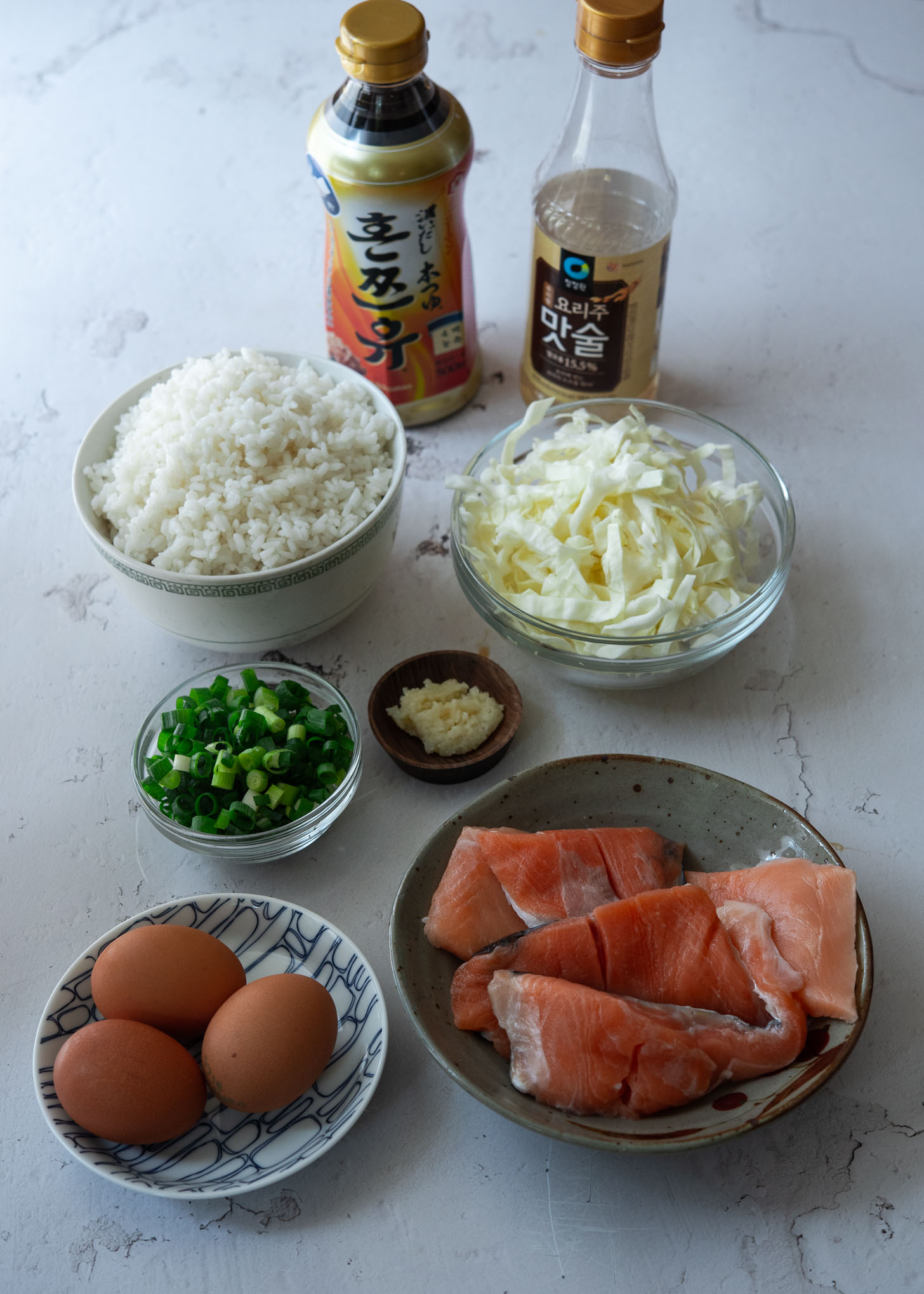
Why I Season Salmon Fried Rice with Tsuyu
Instead of making a separate fried rice sauce, I use tsuyu with a little salt. This Japanese noodle soup base combines soy sauce, dashi, and a touch of sweetness, adding savory depth without overpowering the salmon.
Salmon already has plenty of richness, so I don’t want the rice coated in a heavy soy sauce mixture. Tsuyu keeps the seasoning simple and lets the salmon, egg, and cabbage still taste like themselves.
Because brands vary in concentration, start with a little and taste as you go. The rice should taste well seasoned but never wet or saucy.
Cold Rice Matters More Than the Rice Variety
I usually use the Korean short- or medium-grain rice already in my refrigerator. It is stickier than jasmine rice, but once chilled, the grains firm up and fry very well. It is the same everyday rice I use in many of my Korean rice dishes, from bibimbap to simple rice bowls.
Loosen any large clumps before adding the rice, and use a wide skillet so moisture can escape. Cold rice plus enough pan space matters more here than using a particular variety.
How to Make Salmon Fried Rice
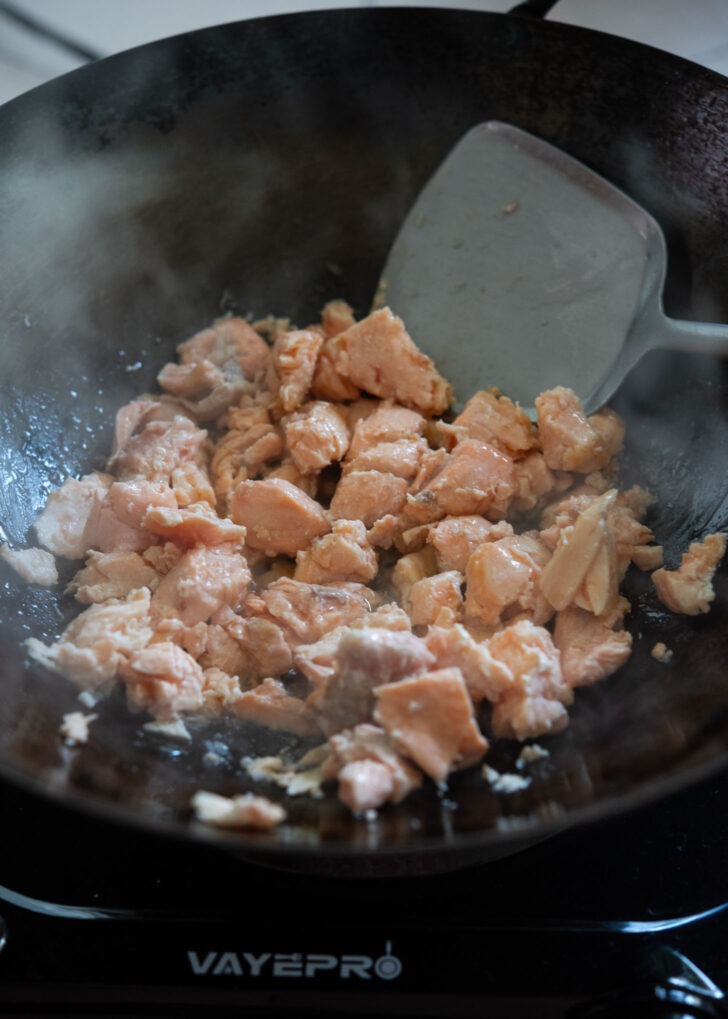
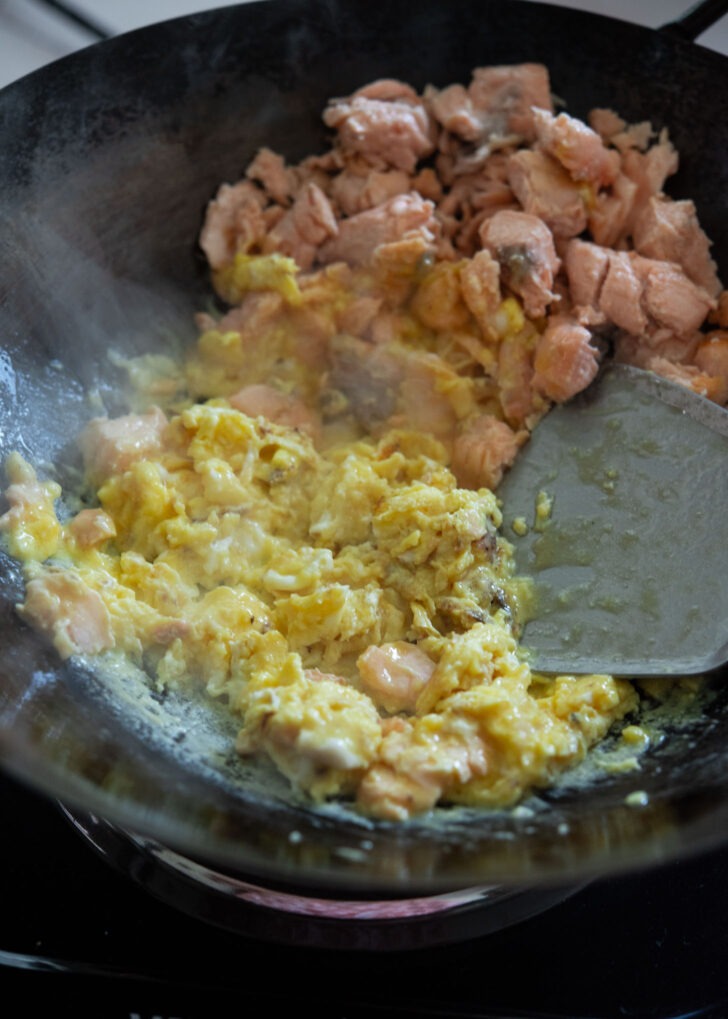
Start with the salmon and cook it only until about 80% done. That gives it enough color while leaving room for the fish to finish cooking later without drying out.
Push the salmon to one side of the wok and scramble the eggs beside it. One less pan to wash is always a good thing. Once both are just cooked, transfer them to a plate so the salmon stays tender and the eggs do not turn rubbery.
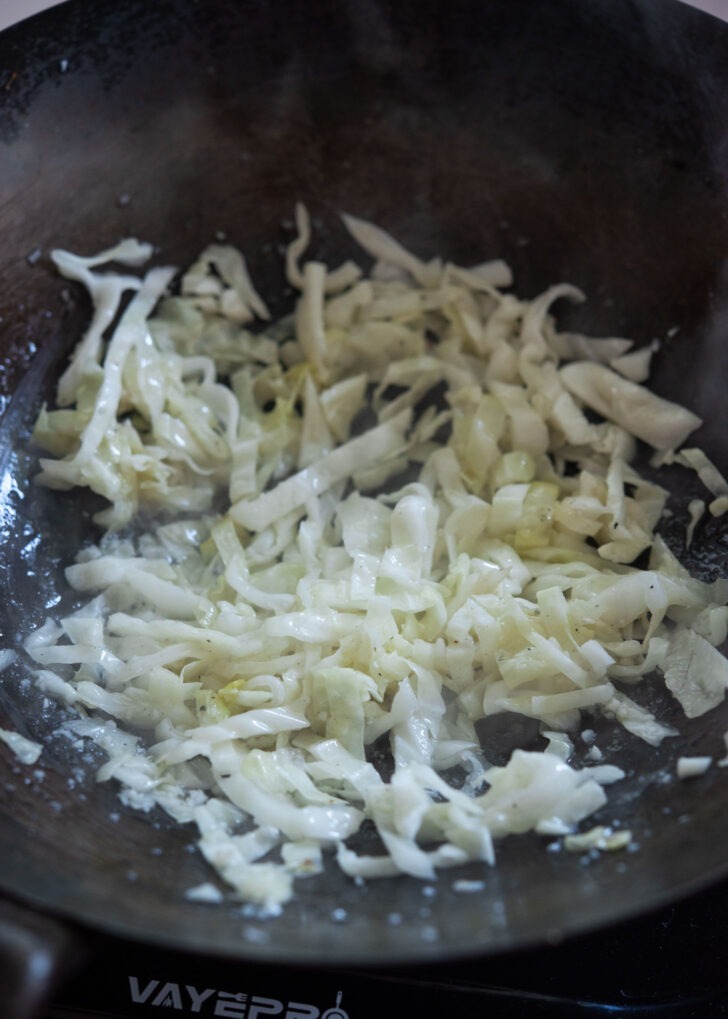
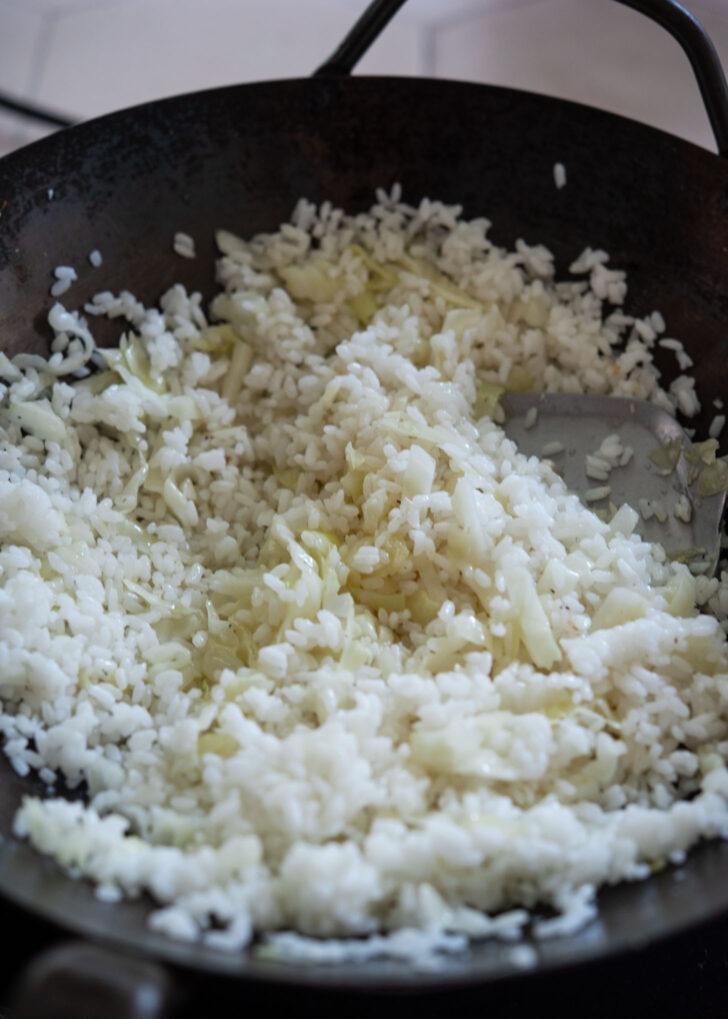
Next, stir-fry the cabbage and garlic until the cabbage softens around the edges but still has a little bite. Add the cold rice and break up any clumps, letting some of the grains sit against the hot wok long enough to lightly toast.
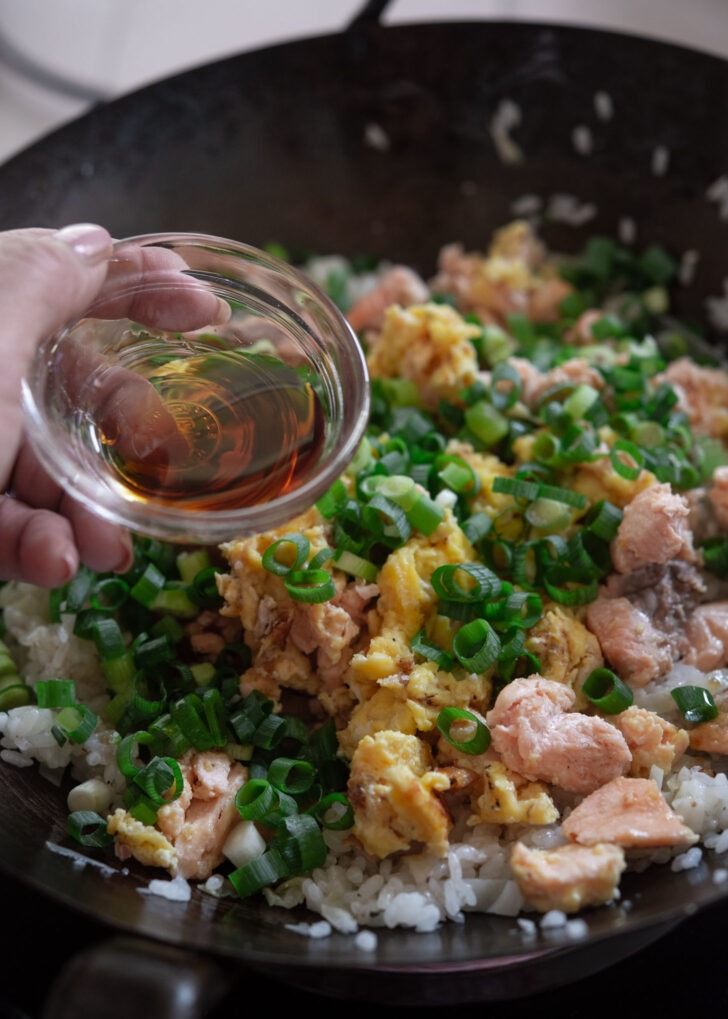
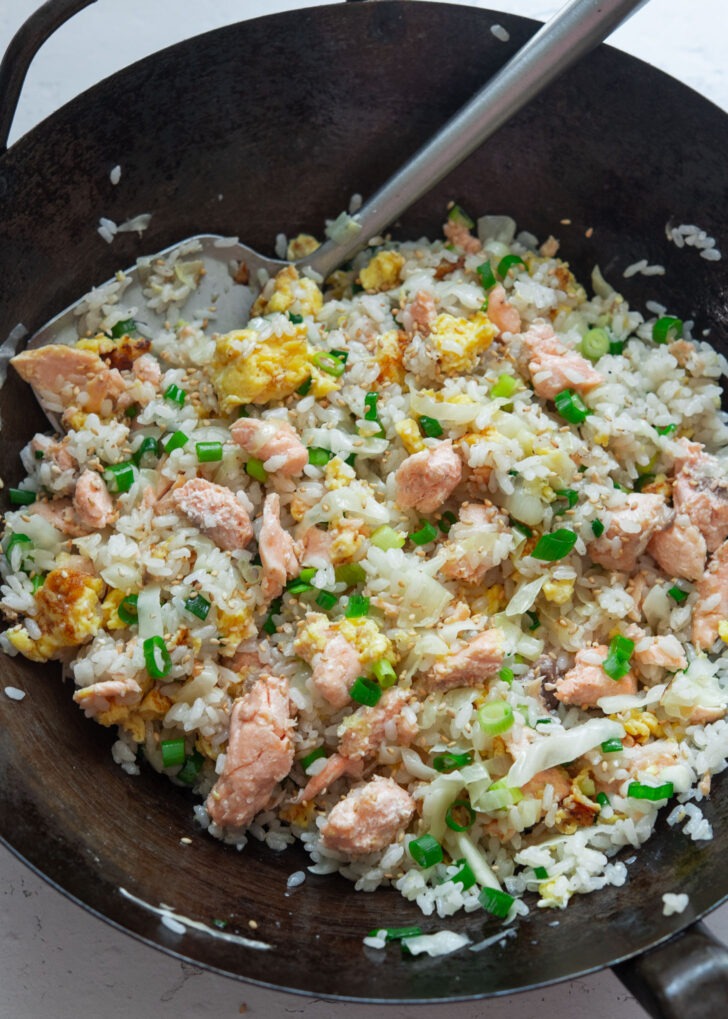
When the rice looks dry and lightly glossy, return the salmon and eggs, add the green onion, and drizzle in the tsuyu. Toss only until everything is combined. The salmon should stay in visible chunks rather than breaking into tiny flakes.
Finish with toasted sesame seeds and taste before adding more seasoning. This is the kind of simple fried rice that needs very little alongside it. A little kimchi is usually enough for me.
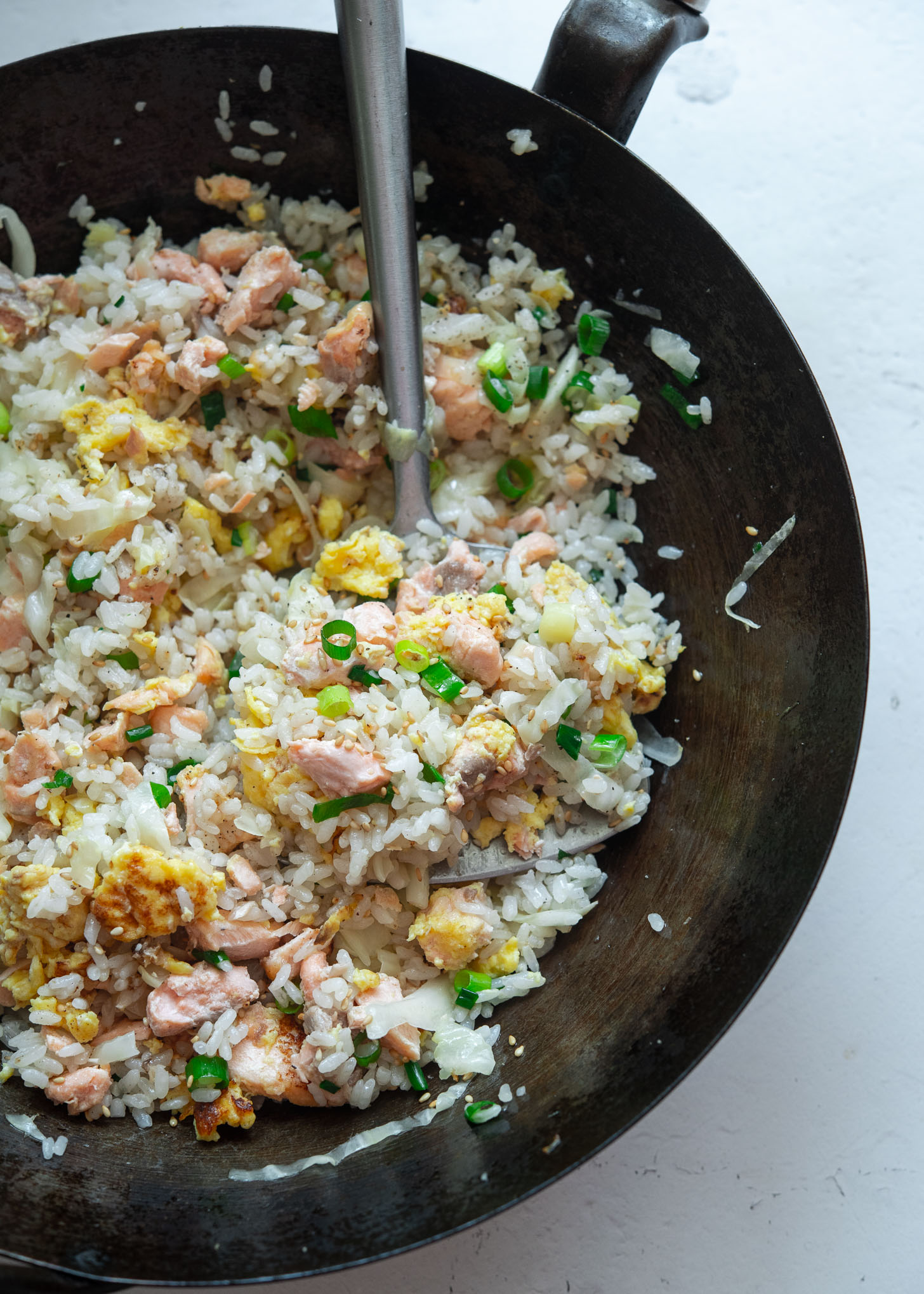
Love this recipe? Rate it and share your experience in the comments below! On Instagram? Tag me to showcase your creation. For more delicious recipes, subscribe to our newsletter!

Easy Salmon Fried Rice with Egg
Recipe Video
Ingredients
- 2 tbsp (30 ml) oil
- 5 1/2 oz (130 g) salmon fillet, see note below
- 1 tbsp (15 ml) sweet rice wine (mirin), optional
- 3 eggs, beaten
- 1/4 (about 150 g) cabbage, shredded
- 2 cloves garlic, minced
- 3 cups (about 450 g) day-old rice
- 1 tbsp (15 ml) tsuyu
- 2 green onion, finely chopped
- salt and pepper, to taste
- 1 tbsp (9 g) toasted sesame seeds, optional
Instructions
- Heat 1 tablespoon of oil in a wok or large skillet over medium-high heat until hot. Add the salmon and break it into small chunks with a spatula. Splash in the rice wine (mirin) to remove any fishy odor. Cook just until the salmon is mostly done but still slightly moist in the center. Do not overcook. Push the salmon to the side of the pan.
- Pour the beaten eggs into the open side of the wok and scramble until just set. Transfer the salmon and eggs together to a plate and set aside.
- Add the remaining 1 tablespoon of oil to the wok. Stir-fry the cabbage and garlic for 2–3 minutes, until the cabbage is tender-crisp and fragrant. Add the rice to the wok and toss well to combine with the cabbage. Break up any clumps of rice with your spatula.
- Return the salmon and eggs to the wok. Add the green onions and drizzle in the tsuyu (or oyster sauce). Stir-fry everything together until evenly mixed. Taste and season with salt and pepper as needed. Serve hot, garnished with toasted sesame seeds if desired.