

Dakgalbi (Korean Spicy Chicken Stir-Fry)
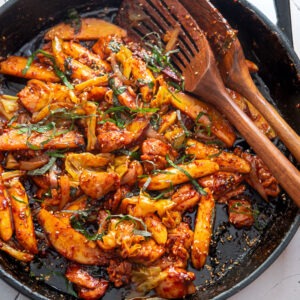
Quick Chuncheon-style dakgalbi made in one pan, a spicy Korean chicken stir-fry with tender thighs, chewy rice cakes, and veggies coated in a glossy gochujang sauce. It comes together in about 25 minutes for an easy and cozy weeknight dinner.
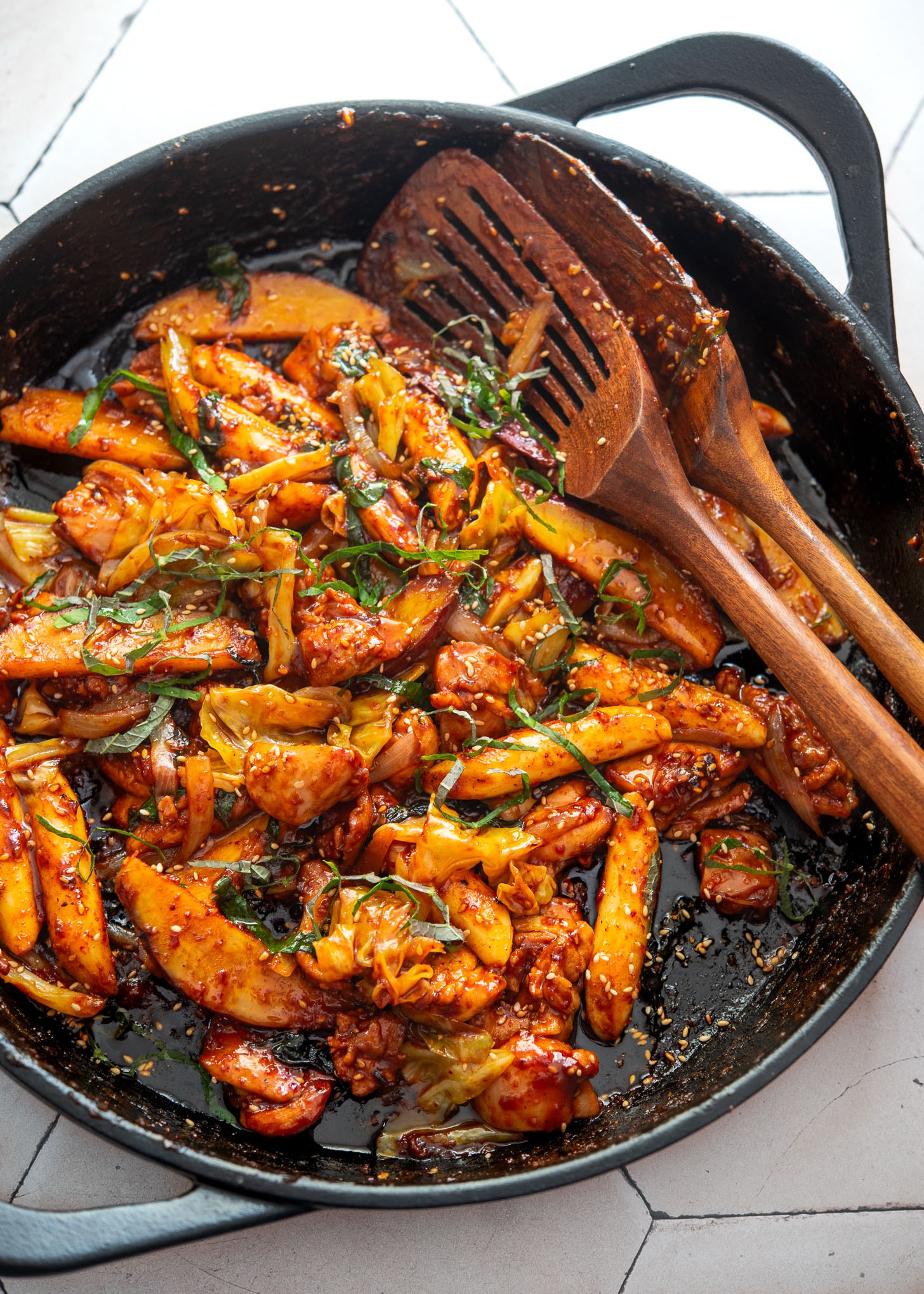
The first time I had dakgalbi (닭갈비) was in Chuncheon (춘천), the city where this spicy Korean chicken stir-fry began. The gochujang sauce was spicy, savory, a little sweet, with that warm curry aroma Chuncheon dakgalbi is famous for — and I was hooked after one bite.
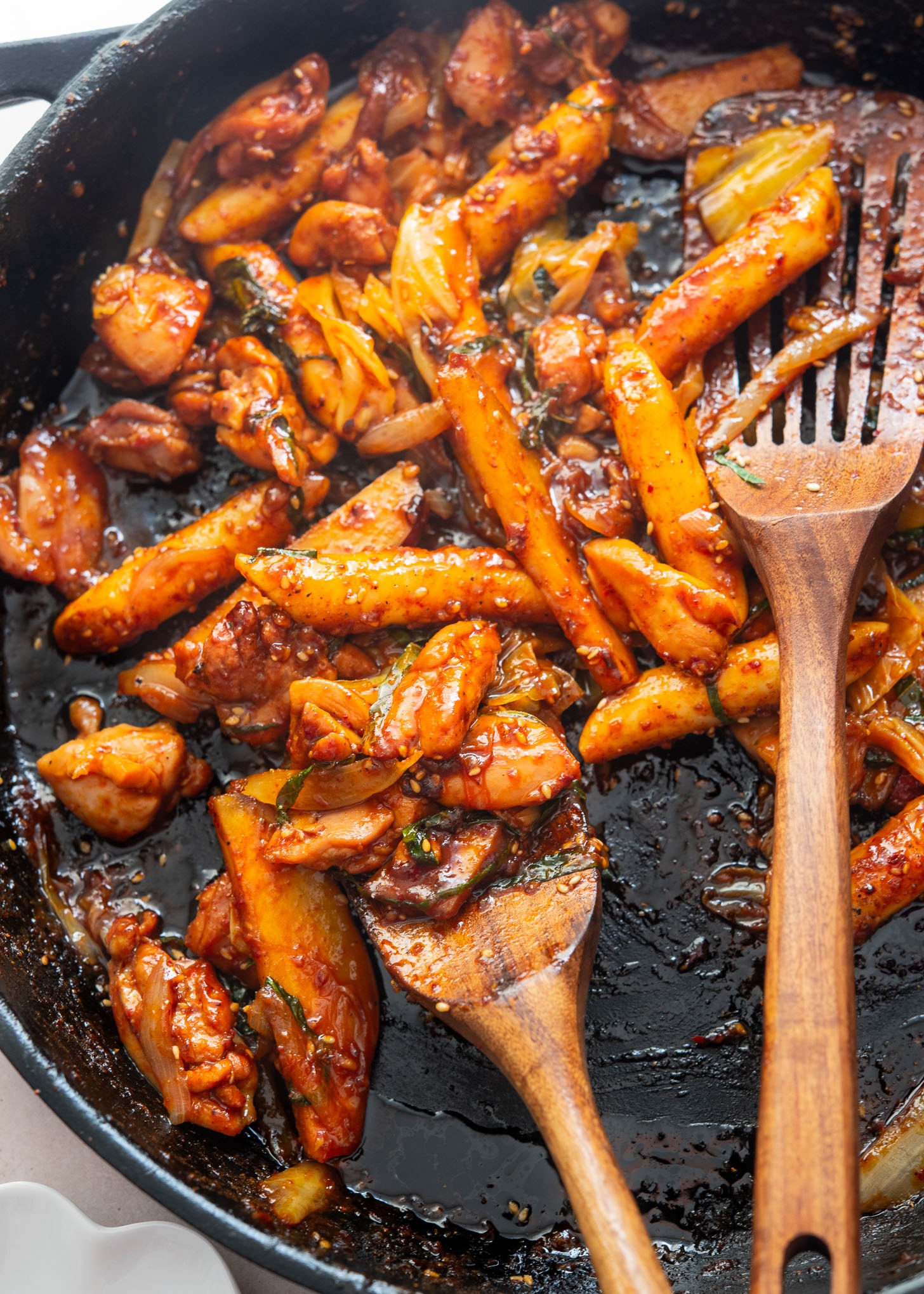
This is the version I make at home: similar in spirit to my chicken bulgogi in its deep, savory flavor, but cooked as a one-pan stir-fry with juicy chicken thighs, chewy rice cakes, cabbage, and sweet potatoes. There’s no grill or marinating involved, but you still get those caramelized, smoky edges I remember from Chuncheon.
Get new recipes via email:
Finish it with crispy dakgalbi fried rice at the end — the best part in Korea — and you have the full dakgalbi experience at home.
And if you’re in the mood for more meaty Korean mains, you can browse my Korean meat dishes collection — all easy, comforting, and weeknight-friendly.
Ingredient Notes & Substitutions
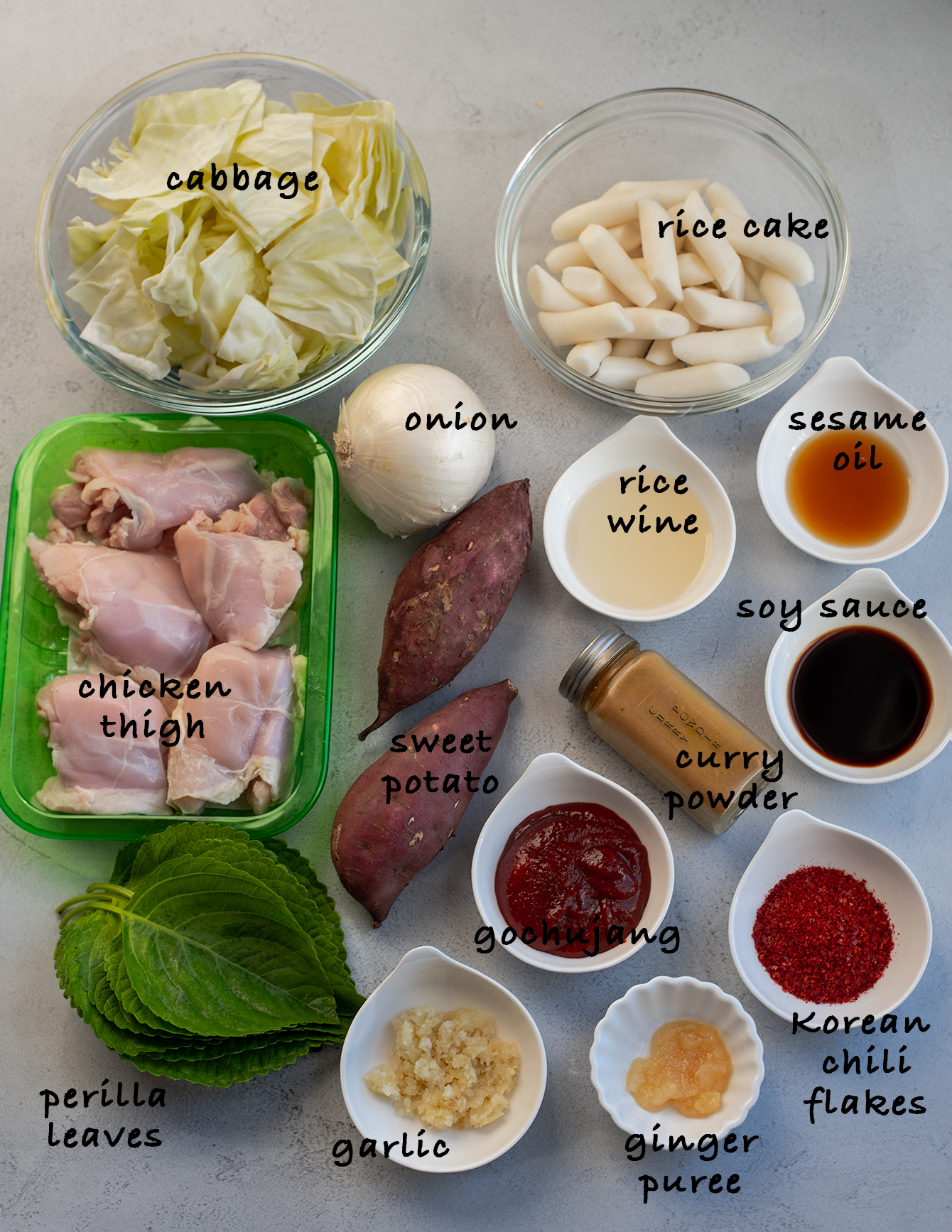
Chicken thighs: For the best flavor, boneless, skinless chicken thighs are the way to go. They stay juicy and absorb the dakgalbi sauce beautifully, giving you the rich, authentic taste. Chicken breast can be used, but it tends to be drier.
Tteok (rice cakes): Tteokbokki-style rice cakes work best here. I use the same chewy cylinder-shaped rice cakes here as I do in my authentic tteokbokki recipe. They soak up the spicy sauce perfectly. Soak them for 10 minutes so they soften quickly and stay chewy.
Cabbage + sweet potato: These add natural sweetness and pair well with the sauce beautifully.
Perilla leaves (kkaennip): Optional, but they add freshness at the end.
Gochujang + gochugaru + curry powder: This classic combo gives dakgalbi its deep, spicy, Chuncheon-style flavor.
How I Cook Dakgalbi Step-by-Step
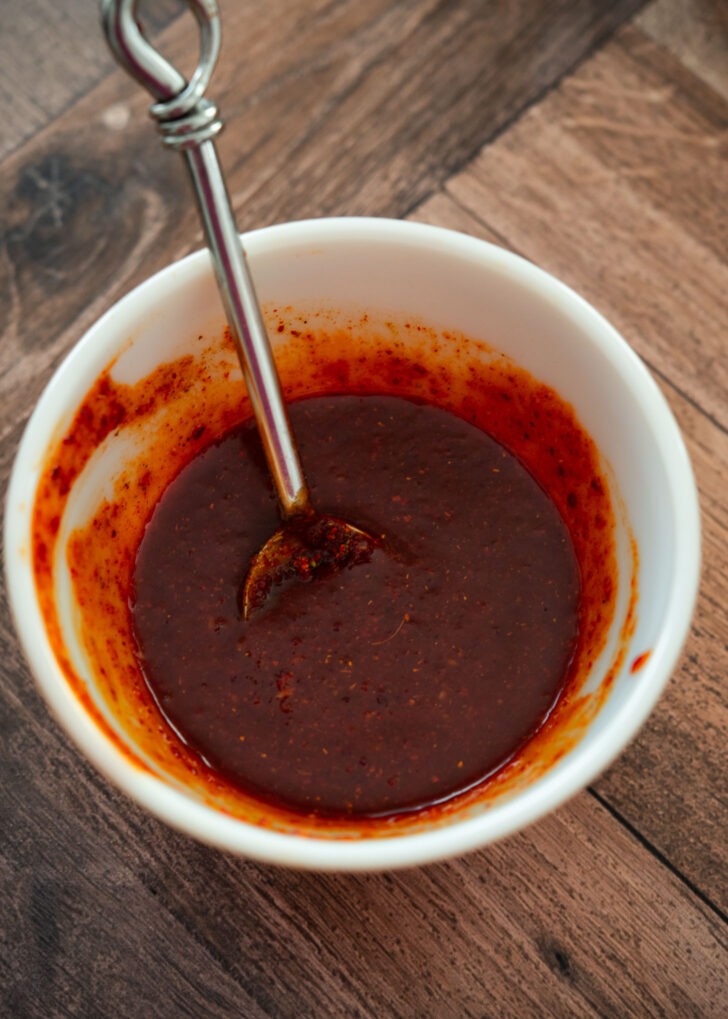
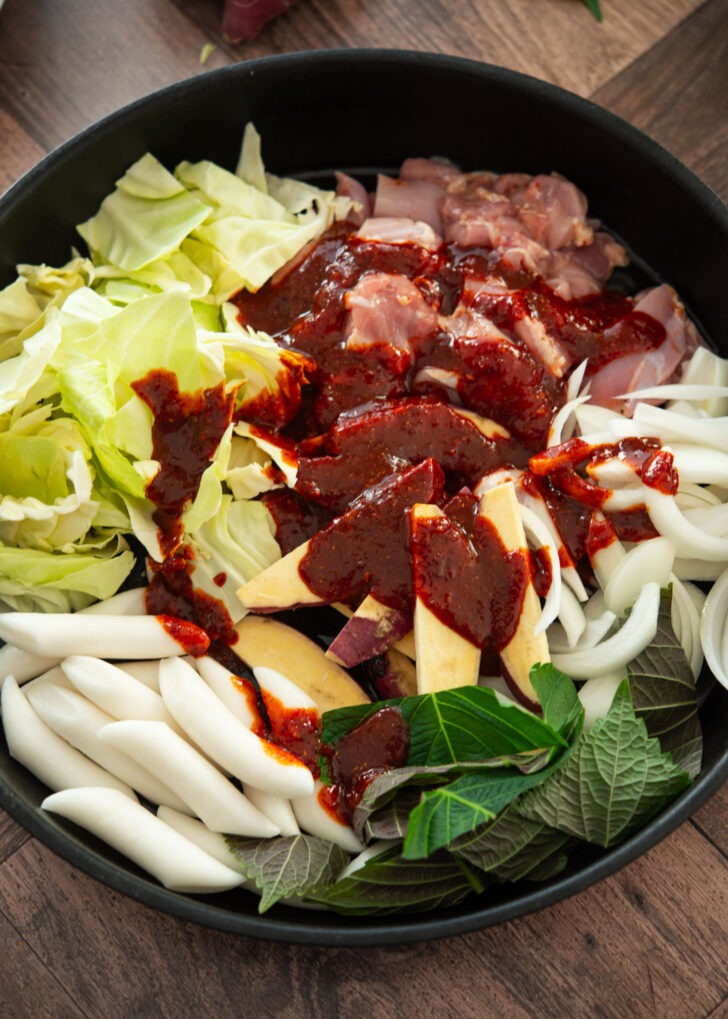
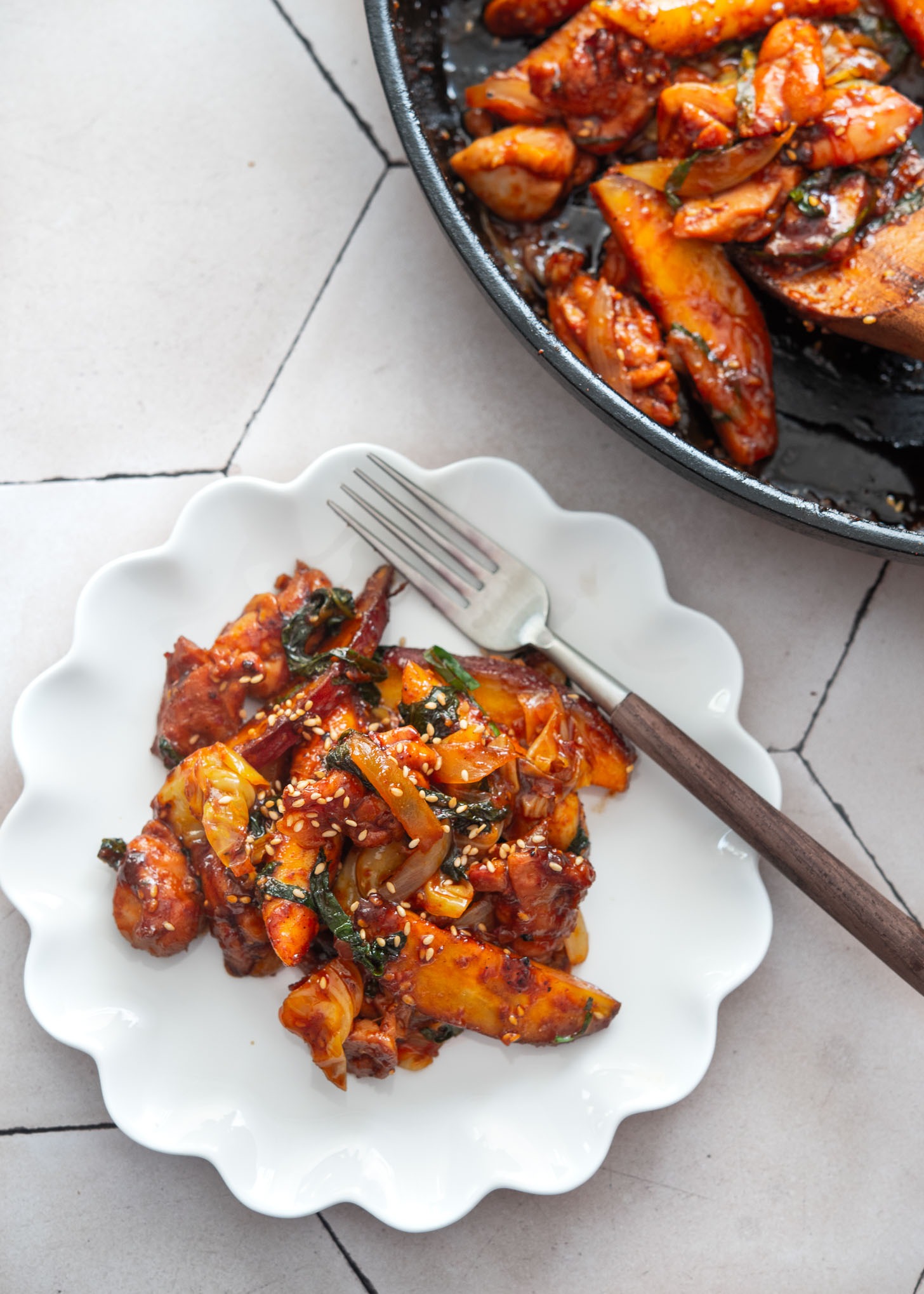
Mix the dakgalbi sauce in a bowl, then add it to the chicken, rice cakes, and vegetables. I use a large cast-iron skillet because it heats evenly and helps the sauce caramelize instead of steam.
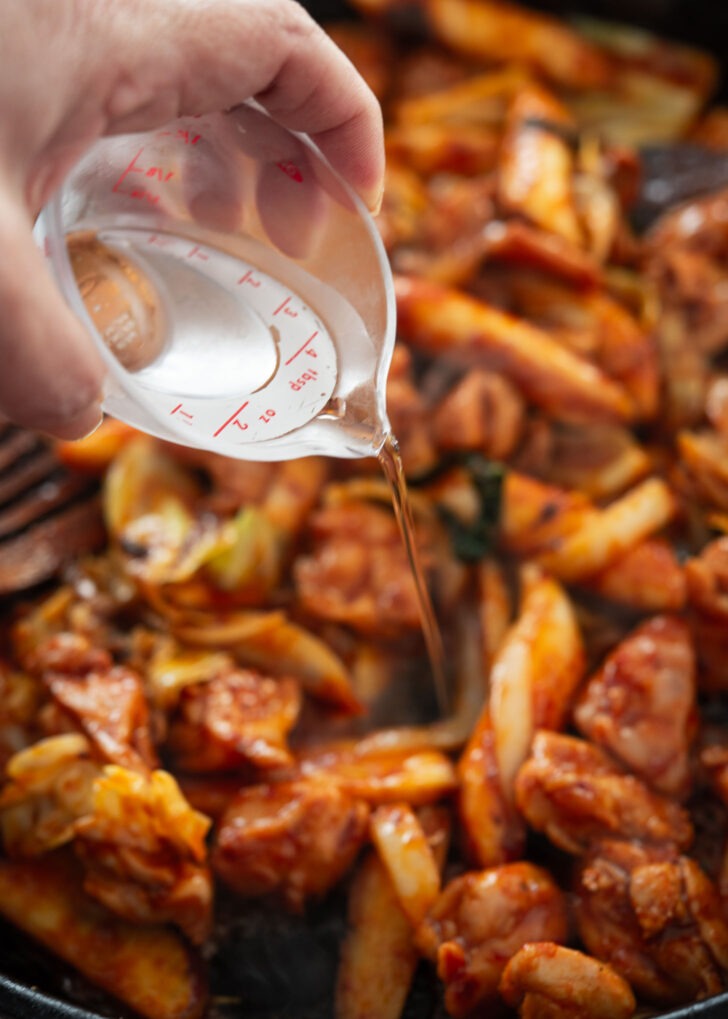
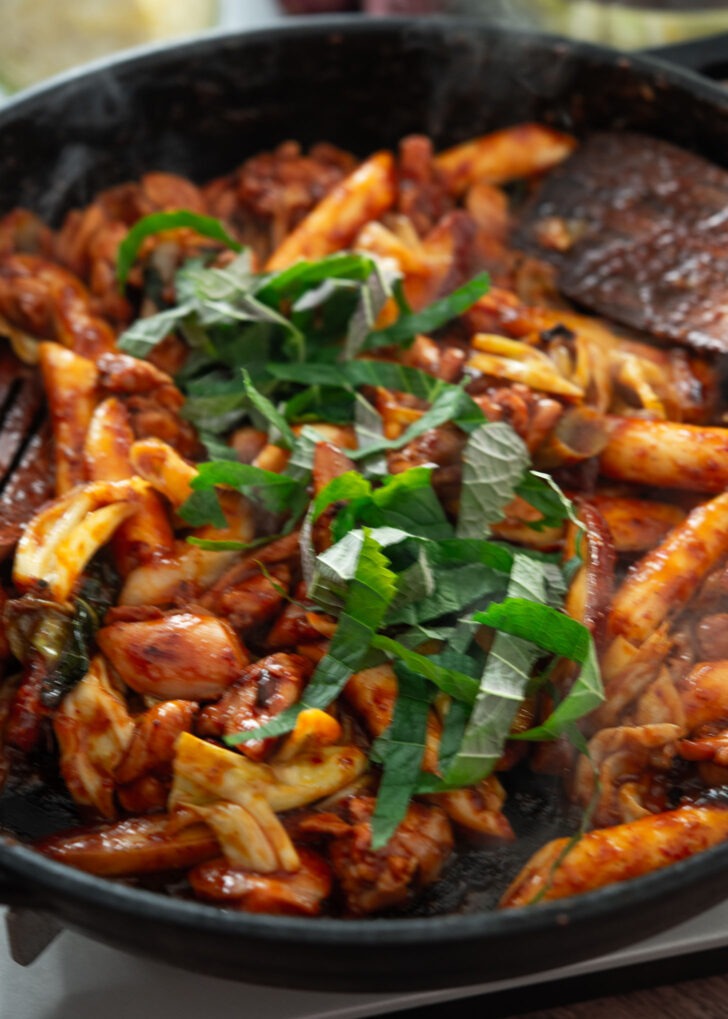
Start stir-frying over medium-high heat. Let the chicken get a little color before everything softens. That light browning adds great flavor. If the pan looks dry at any point, add a splash of water so the sauce coats the rice cakes smoothly. That’s all the cooking!
Once the chicken is fully cooked and the sweet potatoes are tender, toss in the perilla leaves. They wilt quickly and add a fresh, herbal finish. Give everything one last mix, and it’s ready to serve.
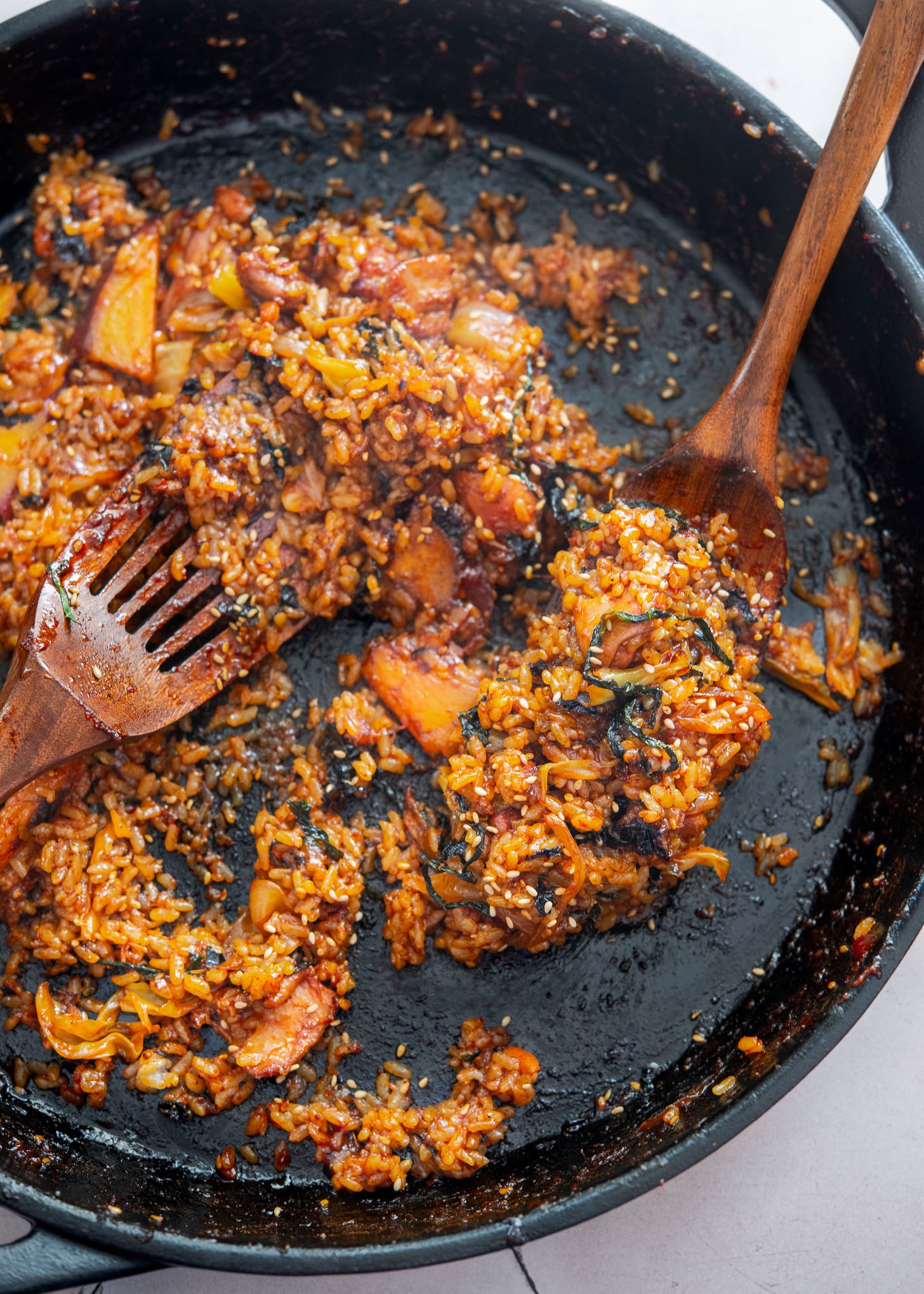
Dakgalbi Fried Rice
In Korea, dakgalbi always ends with fried rice — it’s the best part.
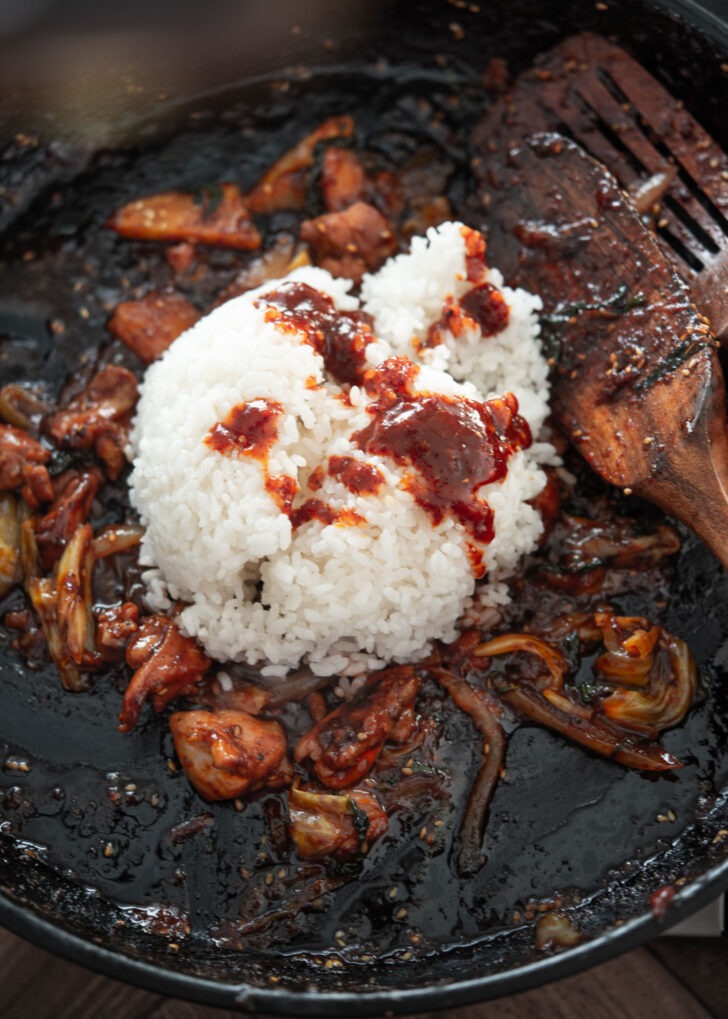
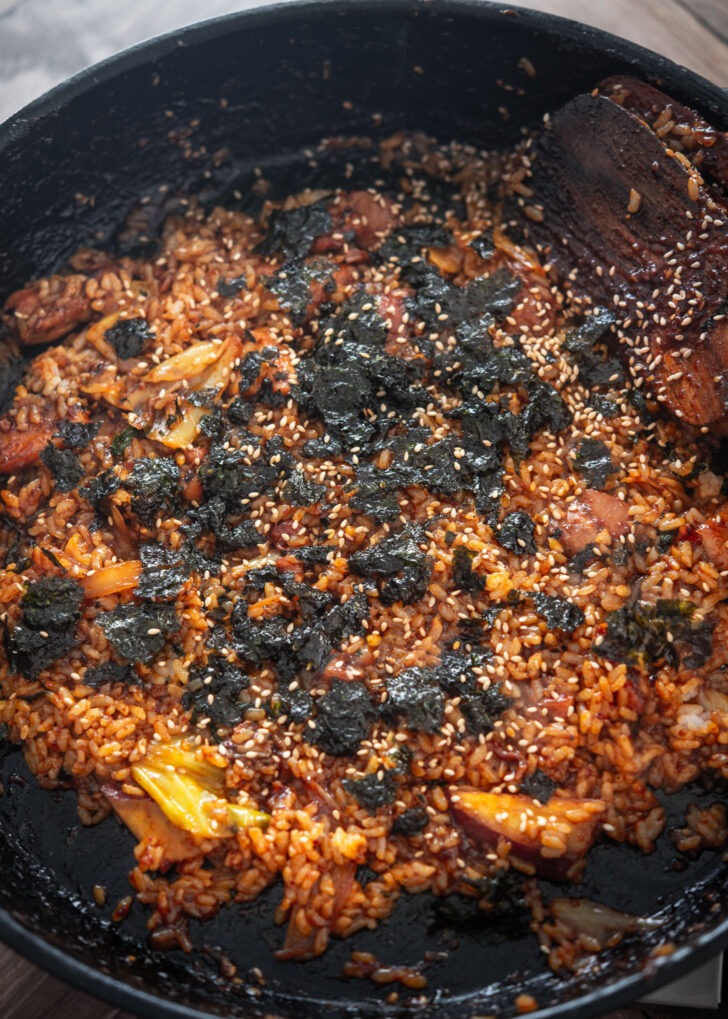
Once most of the chicken and vegetables are gone, add cooked rice to the same pan and mix it with the leftover sauce. The rice will soak up every bit of flavor.
Spread it out and let the bottom crisp over medium heat until you get that golden, crunchy layer like nurungji (scorched rice). Finish with crumbled roasted seaweed and sesame seeds.
If you enjoy Korean-style fried rice, this version is very similar in spirit to my kimchi fried rice — crispy, flavorful, and the perfect way to wrap up the meal!
Love this recipe? Rate it and share your experience in the comments below! On Instagram? Tag me to showcase your creation. For more delicious recipes, subscribe to our newsletter!
Dakgalbi (Korean Spicy Chicken Stir-Fry)
Recipe Video
Ingredients
For dakgalbi
- 1 lb (450 g) boneless, skinless chicken thigh, diced
- 2 tbsp (30 ml) oil
- 1/2 lb (225 g) Korean rice cake sticks
- 1/4-1/2 green cabbage, diced
- 8-10 perilla leaves , sliced
- 1/2 large onion, sliced
- 1 medium sweet potato, sliced into 1/4-inch thick wedges
- 2 tbsp (30 ml) oil
- 2-4 tbsp (30–60 ml) water
- 1 tbsp (12 g) toasted sesame seeds , to garnish
For dakgalbi sauce
- 3 tbsp (60 g) Korean chili paste (gochujang)
- 2 tbsp (30 ml) soy sauce
- 2 tbsp (12–14 g) Korean chili flakes (gochugaru)
- 2 garlic cloves, minced
- 2 tsp (4 g) curry powder
- 1 tsp (3 g) ginger powder
- 2 tbsp (30 ml) sweet rice wine (mirim)
- 1 tbsp (12 g) sugar
- 1 tbsp (15 ml) sesame oil
- 1 tsp (2 g) pepper
- 1 tbsp (15 g) Korean corn syrup (mulyeot), optional
For optional fried rice
- 1 tbsp (15 ml) oil
- 2 cup (320–350 g) cooked rice
- 1 tbsp (15 g) dakgalbi sauce
- 2 handful crumbled roasted seaweed
- 1 tbsp (15 ml) sesame oil
- 1 tbsp (12 g) toasted sesame seeds
Equipment
- cast iron skillet large size
Instructions
For the dakgalbi sauce
- To make the dakgalbi sauce, combine all the sauce ingredients in a small bowl. Set aside 1 tablespoon of sauce if you are making fried rice at the end.
For stir-frying dakgalbi
- Soak rice cakes in water for 10 minutes and drain.
- Drizzle oil in a cast iron skillet, arrange the chicken, vegetables, sweet potato wedges, rice cakes, and 1/2 the amount of perilla leaves. Drizzle the sauce over and bring the skillet over med-high heat.
- When you hear a loud sizzle, start tossing everything to combine. Stir-fry for about 6-7 minutes until the chicken is fully cooked and the rice cakes and sweet potatoes are tender. If the food sticks too much, add 2 tablespoons of water (or more) to loosen the sauce and help everything cook evenly.
- Add the remaining perilla leaves toward the end of stir-frying. Sprinkle with toasted sesame seeds and serve immediately when it is hot.
To make fried rice
- After finishing dakgalbi, turn the heat back to medium and drizzle 1 tablespoon of oil into the skillet. Add the cooked rice and reserved dakgalbi sauce, then start stir-frying to coat the rice with the sauce residue remaining in the skillet.
- Press the rice gently to the bottom of the skillet and let it crisp up for 2 minutes over medium heat.
- When the rice sticks to the skillet and becomes golden and crispy, drizzle sesame oil over the top and sprinkle crumbled seaweed and toasted sesame seeds. Toss everything together until well combined. Serve the dakgalbi fried rice immediately while it's still hot and crispy.
This was very nice. Why was the fried rice extremely hot, but the meat etc. was not? I fired the rice in the same sauce as that the meat was marinated in.
Thanks
Hi Holly
This is the first time I have made a Korean dish especially at 12 years old
my family was very happy when they tasted it
thank you for this dish
Hi Sabiha
I am so happy to hear that. What an amazing girl you are! You are so sweet and your family is so lucky to have you. Keep up the good work! Thanks for leaving the comment. You made my day!
84 congested miles from a Korean supermarket, can rice cakes from an American supermarket be subbed? Also, I have Szechuan chili flakes, is that a reasonable substitution? Have the normal Italian style ones as well but often read of their lack of interchangeability
Hi Steve
I am not sure what American rice cakes are like. If you can’t access the chewy Korean rice cakes, you can omit them. Try making the fried rice with leftover rice at the end of serving as I mentioned on the post above.
You can use Szechuan peppers in place for gochugaru but they are hotter, so I would use a lesser amount. Or try mixing with your Italian peppers.