

Jangjorim (Soy Braised Beef with Eggs)
Tender Korean soy-braised beef with quail eggs and shishito peppers, simmered in a savory-sweet jangjorim sauce that keeps well in the fridge and belongs in every Korean home-style banchan set. Simple prep, deep flavor, and perfect over warm rice.
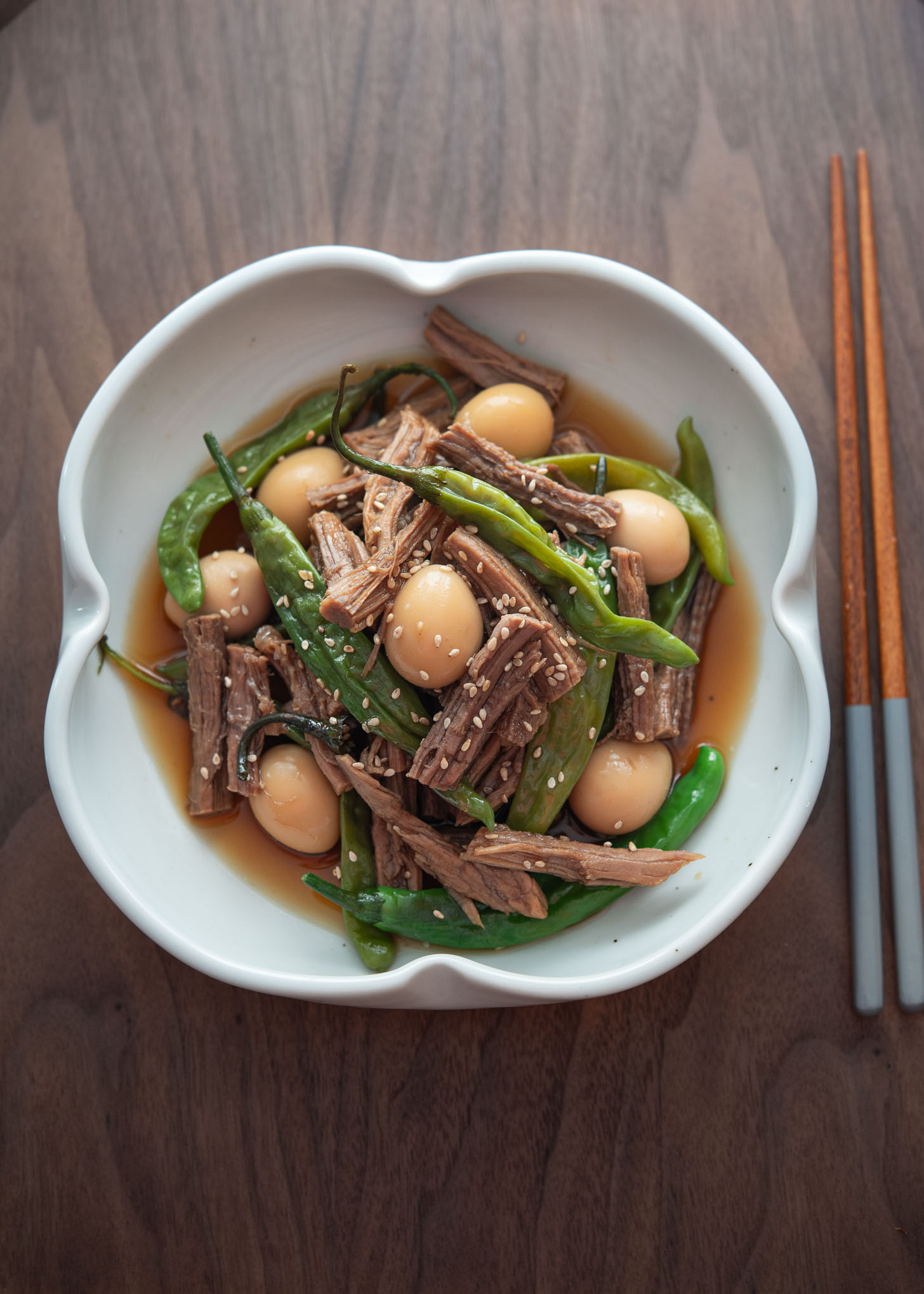
Growing up in South Korea, one of my favorite Korean side dishes was sogogi jangjorim (장조림)—soy sauce braised beef. This is one of the most common jip-banchan, the kind of everyday Korean side dish you keep in the fridge and use throughout the week
This tasty dish was often found in Korean children’s lunch boxes back in the day. I have to admit, it was my favorite lunch option. The flavor of jangjorim is both sweet and salty, and sometimes it includes eggs or quail eggs for added protein.
Get new recipes via email:
Many Koreans also add shishito peppers, called Kkwari gochu (꽈리고추), to the mix, which I include in my recipe. The juice left from braising, called Jangjorim juice, is full of flavor and can be used to enhance other dishes.
You might think making Korean soy-braised beef is complicated, but it’s actually quite simple and easy. In my house, dishes like dubu jorim (braised tofu) and gamja jorim (brasied potato) live right next to jangjorim in the fridge — all those sweet-savory braised flavors we grew up eating.
Ingredients Needed
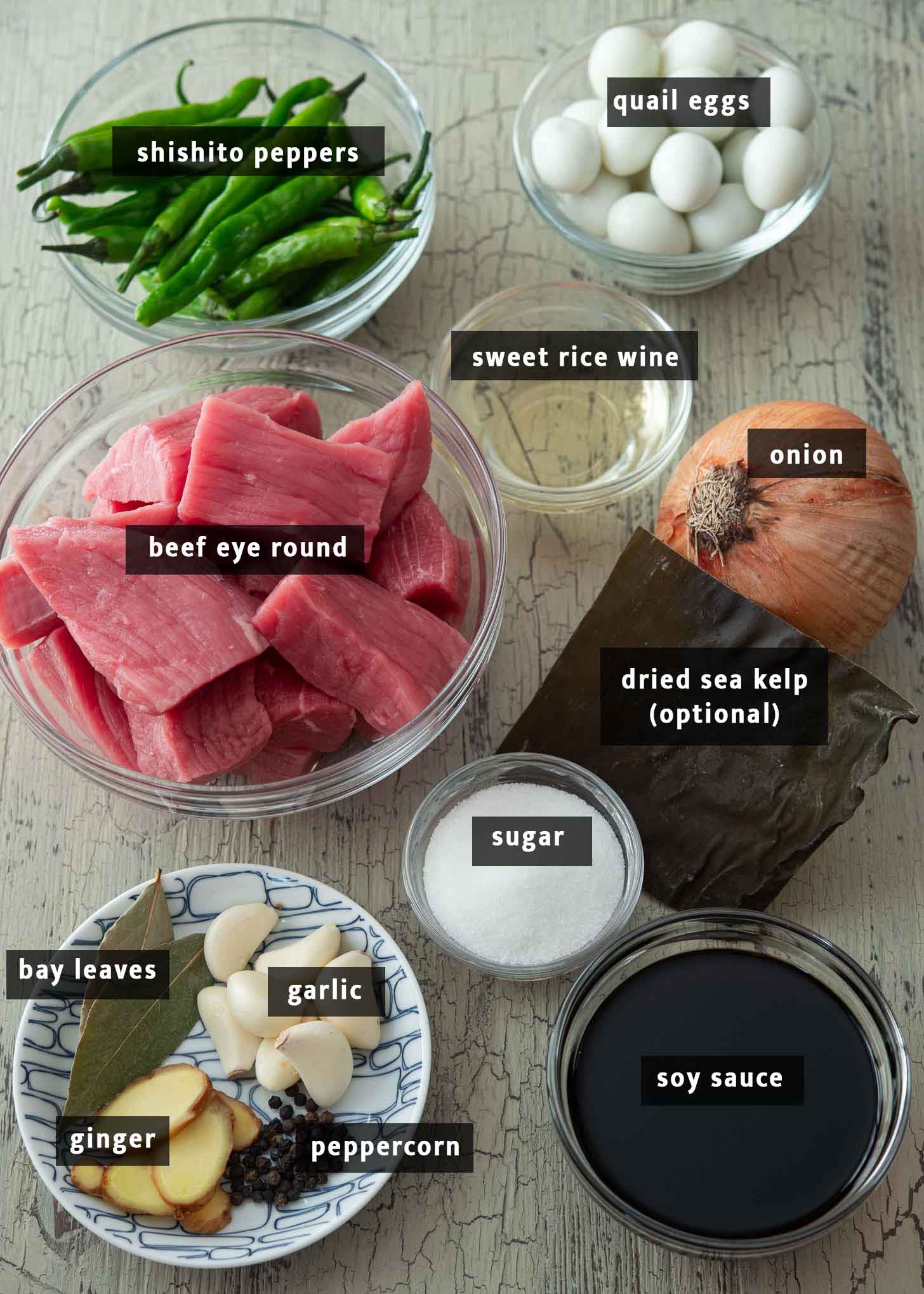
- Beef: While beef eye round (hongdukkaesal, 홍두깨살) is commonly used, some prefer brisket (yangjimeori, 양지머리), flank steak (chimatsal yangji, 치맛살 양지), or shank meat (satae, 사태) for this recipe.
- These cuts offer richer flavor and better texture. If you have a big piece of beef, cutting it into smaller blocks can speed up cooking.
- Eggs: Either quail eggs or regular eggs work well. Use peeled hard-boiled eggs.
- Shishito Peppers: These are mild green chili peppers and are commonly available in many grocery stores. If you can’t find them, substitute with another fresh chili peppers or simply skip this ingredient.
- Aromatics: Ingredients like onion, garlic cloves, ginger slices, bay leaves, and whole black peppercorns are crucial to enhance the broth’s flavor. These are the same aromatics used in Korean gukmul (basic broth), which is why the flavor is so clean and familiar.
- Seasonings: Soy Sauce, sweet rice wine, and sugar This essential ingredient seasons and infuses flavor into the beef.
- Dried Sea Kelp (optional): This ingredient can introduce an extra layer of umami taste. If unavailable, it’s okay to omit.
Pork Jangjorim: In Korea, pork is often used instead of beef due to its cost. Choose lean cuts such as pork loin or tenderloin when making this Korean soy-braised dish as a substitute for beef.
How to Make Jangjorim
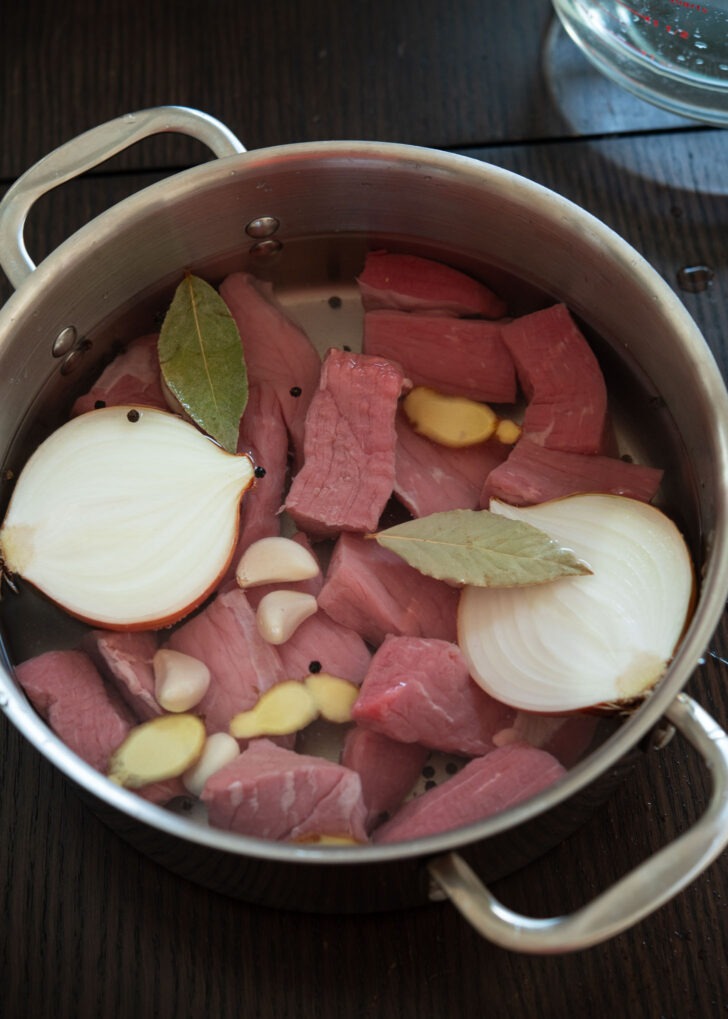
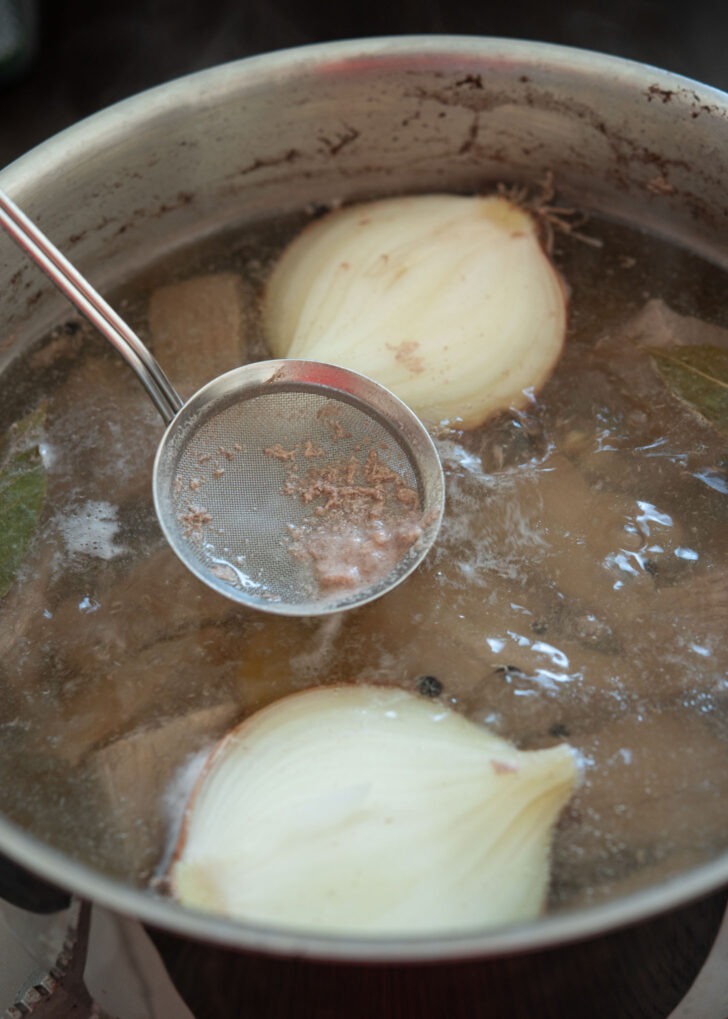
Make the Broth. Add the beef to a pot with onion, garlic, ginger, bay leaf, and peppercorns, then cover with cold water. Bring it up slowly, skim the foam, and let it simmer until the beef turns tender. Keeping the lid slightly open helps tame any strong aroma.
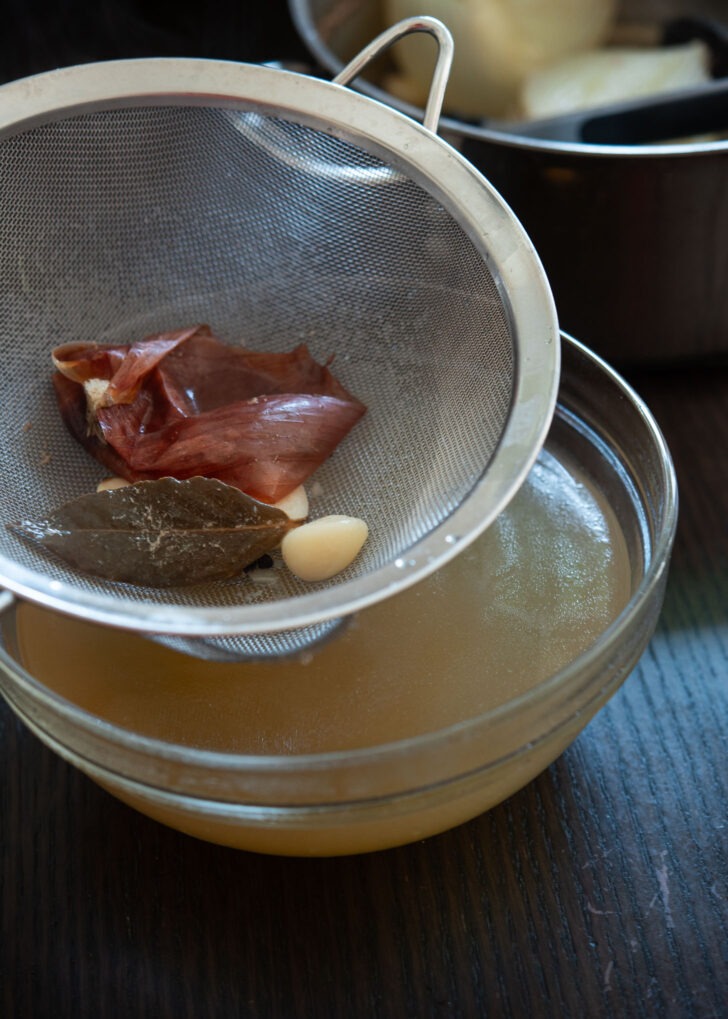
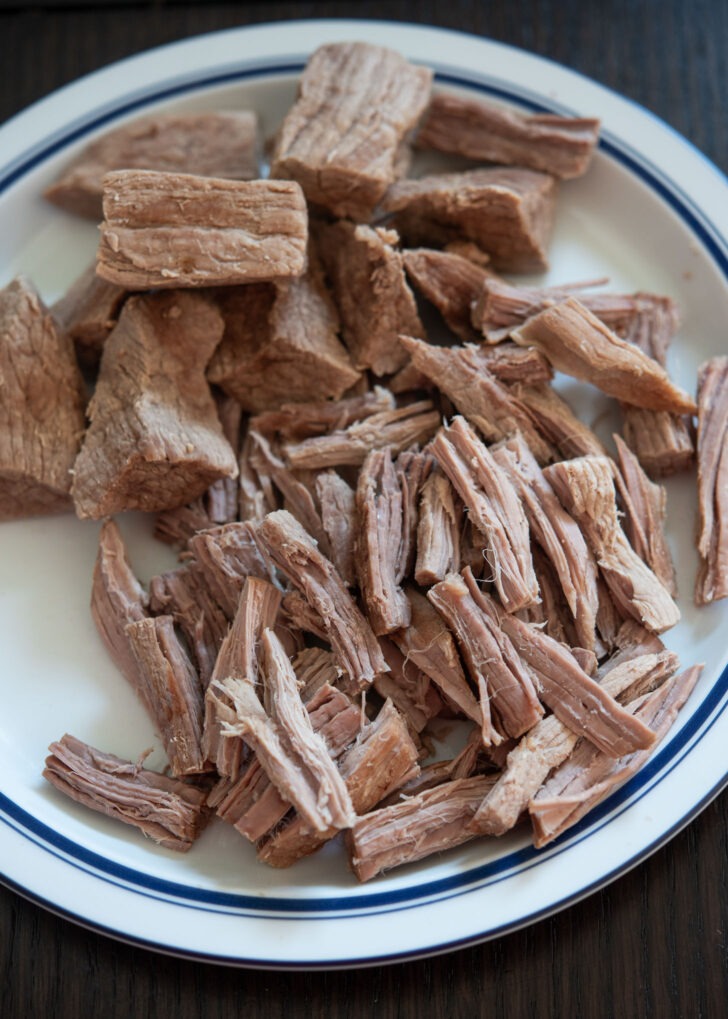
Prep the Beef. Take the meat out and let it cool just enough to handle. Strain the broth and set aside a few cups for the braise. Shred or thinly slice the beef.
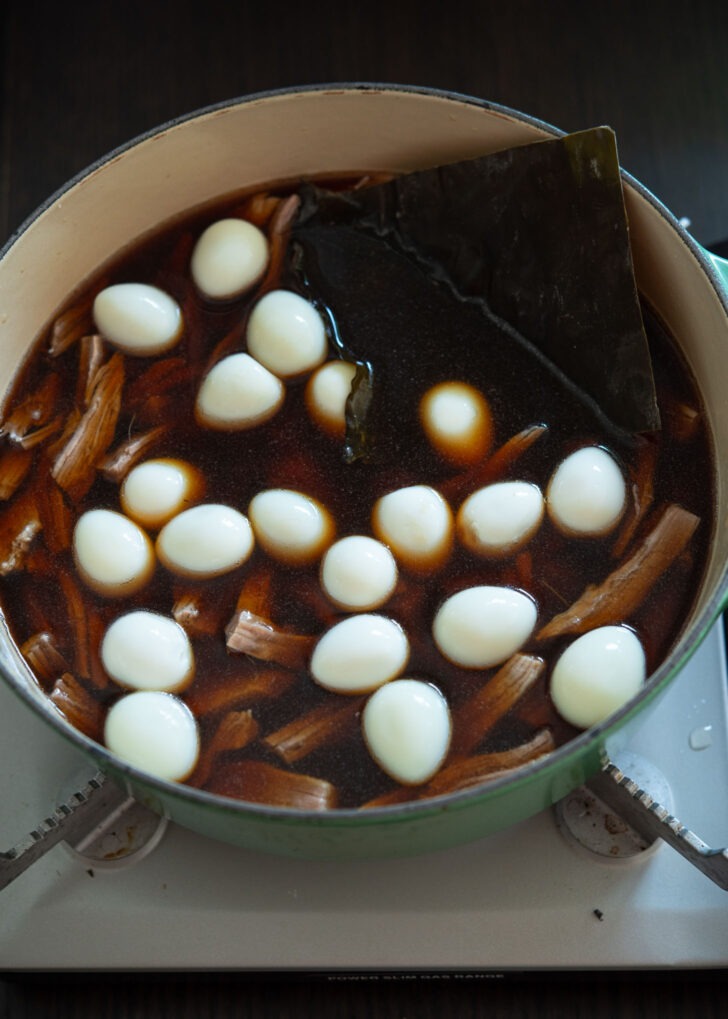
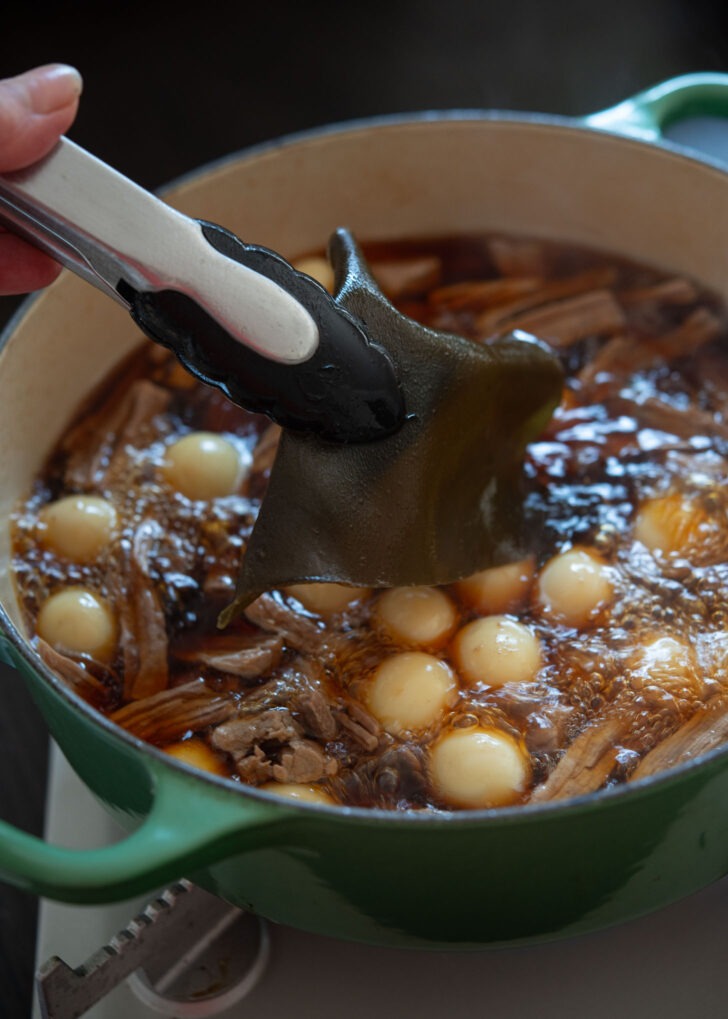
Build the Braise. Pour the reserved broth into a clean pot with soy sauce, sweet rice wine, sugar, and a small piece of dried kelp if you want extra depth. Add the beef and quail eggs and let everything gently bubble together. Remove the kelp partway through so it doesn’t overwhelm the sauce.
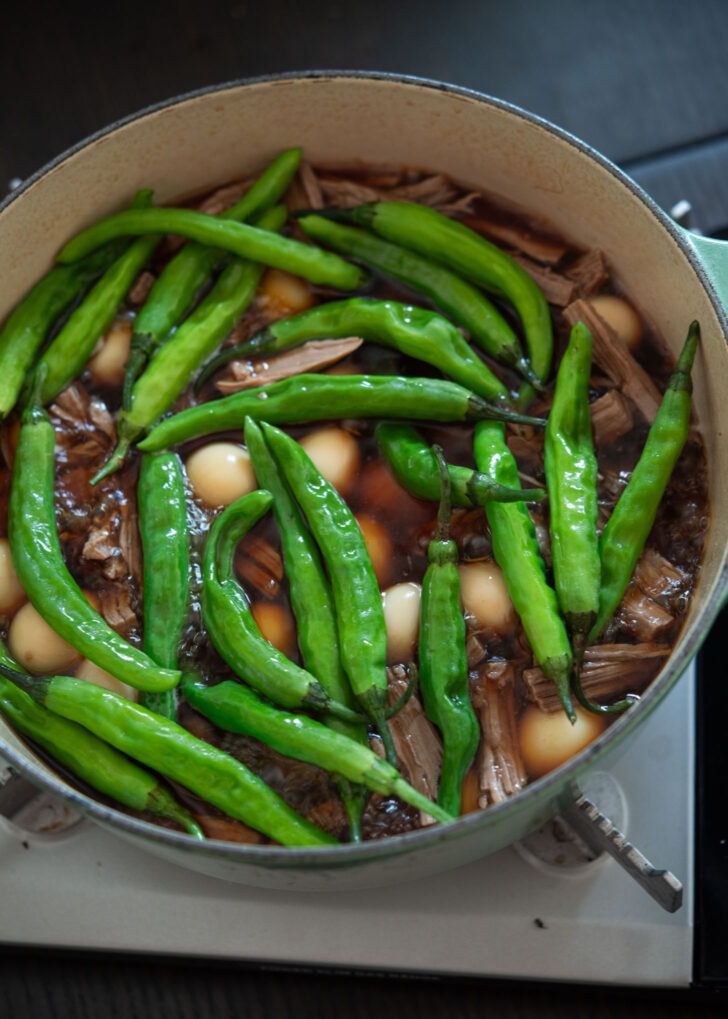
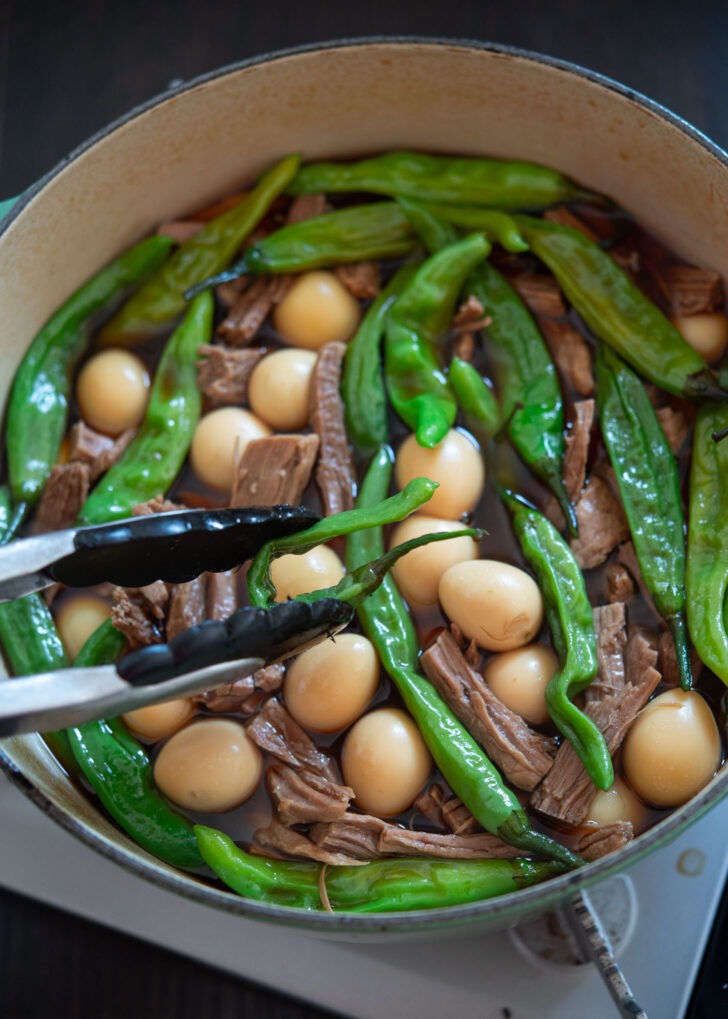
Finish with Peppers. Add the shishito peppers near the end and simmer until they soften. Give everything a good stir and let it cool — jangjorim always tastes even better once the flavors settle in the fridge.
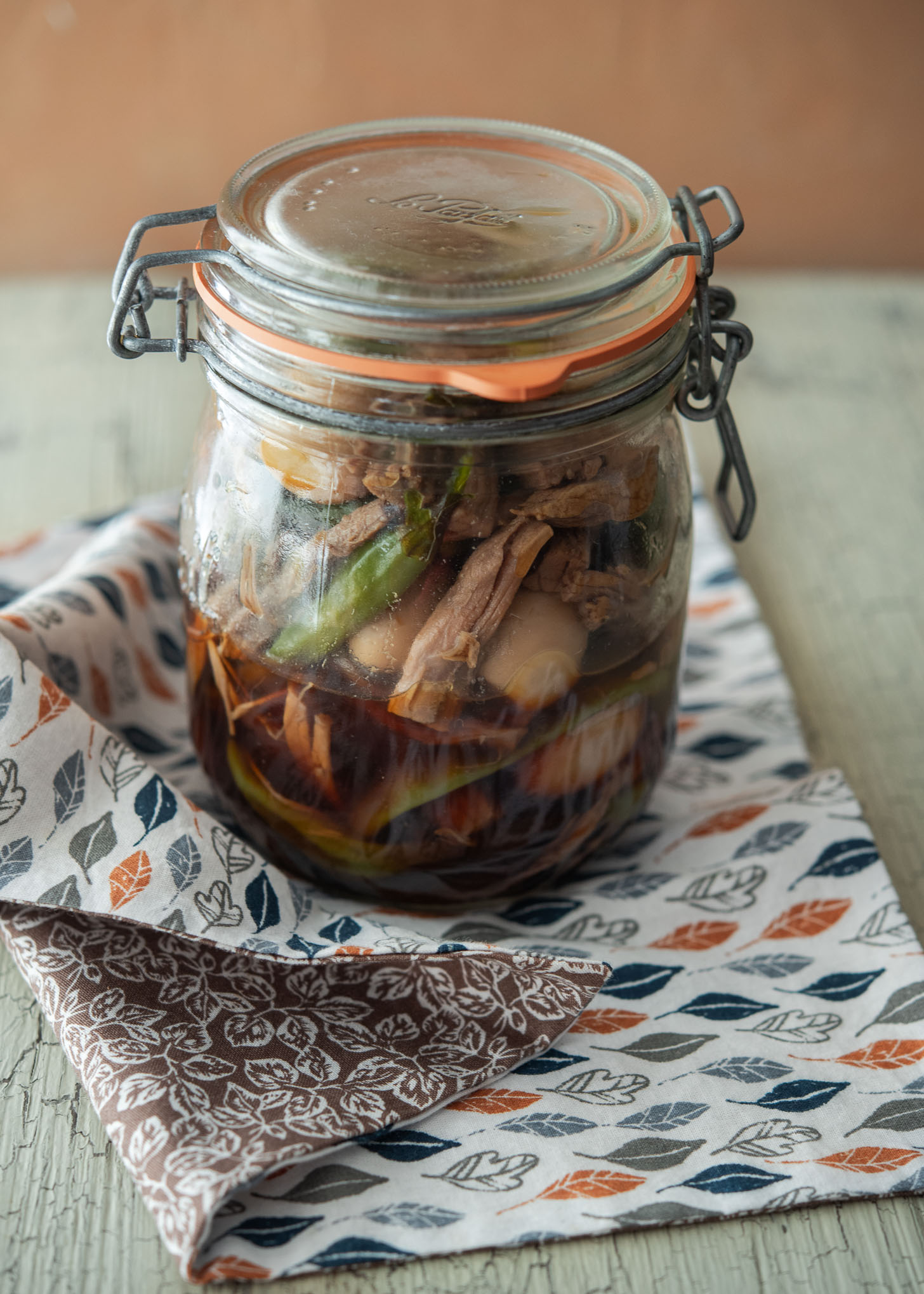
Keeping Jangjorim Fresh
Jangjorim keeps well because of the soy-based sauce, it lasts up to two weeks without losing flavor. Just store it in an airtight container and make sure the beef stays submerged in the braising liquid.
If you notice a layer of fat on top after it chills, that’s completely normal. I usually pop the container in the freezer for a short chill so the fat firms up and can be lifted off cleanly. On busy days, simply warm the jangjorim for a few seconds to melt the fat back in. Both ways work.
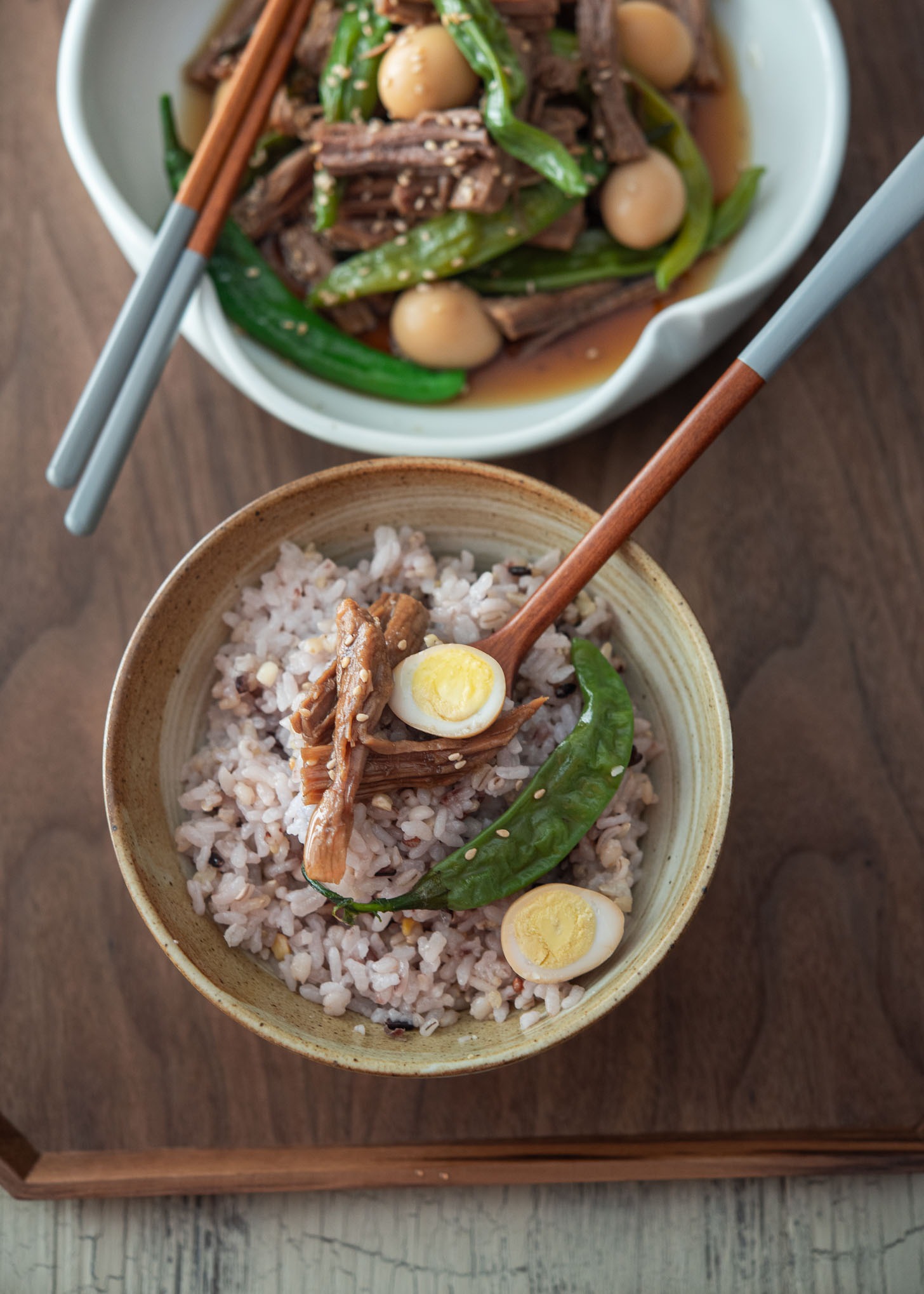
What to Eat with Jangjorim
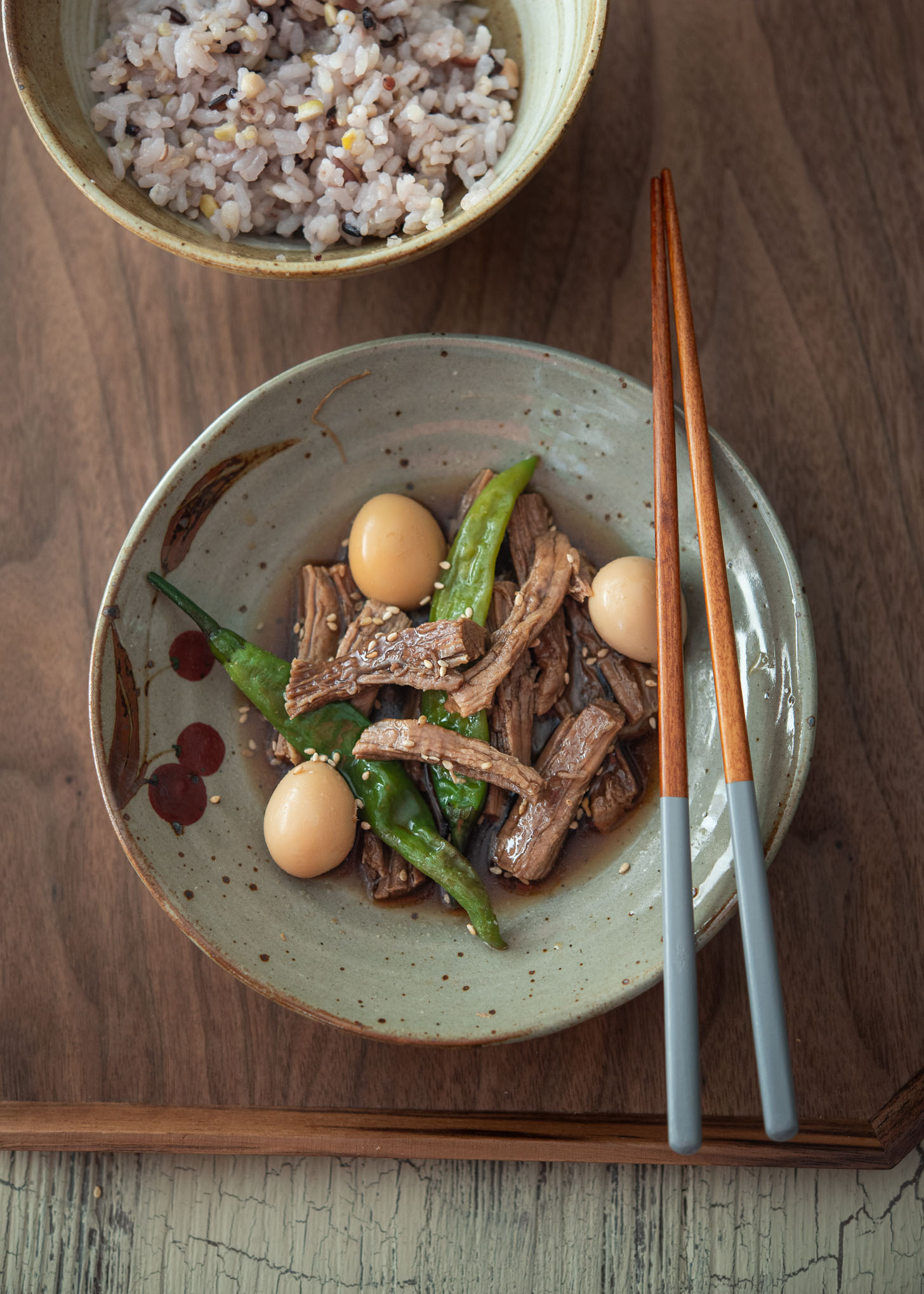
Jangjorim is one of those side dishes that instantly turns a simple bowl of rice into a full meal. On busy days, I’ll spoon the beef, eggs, and a little of that salty-sweet sauce over warm steamed Korean rice and call it dinner. If I’m feeling a bit more wholesome, I’ll pair it with my nutty multigrain rice—the jangjorim sauce seeps into every grain in the best way.
I usually serve jangjorim in small portions with enough sauce to coat the rice. And don’t be shy with the braising liquid (jangjorim juice); a spoonful mixed into your rice is the real highlight.
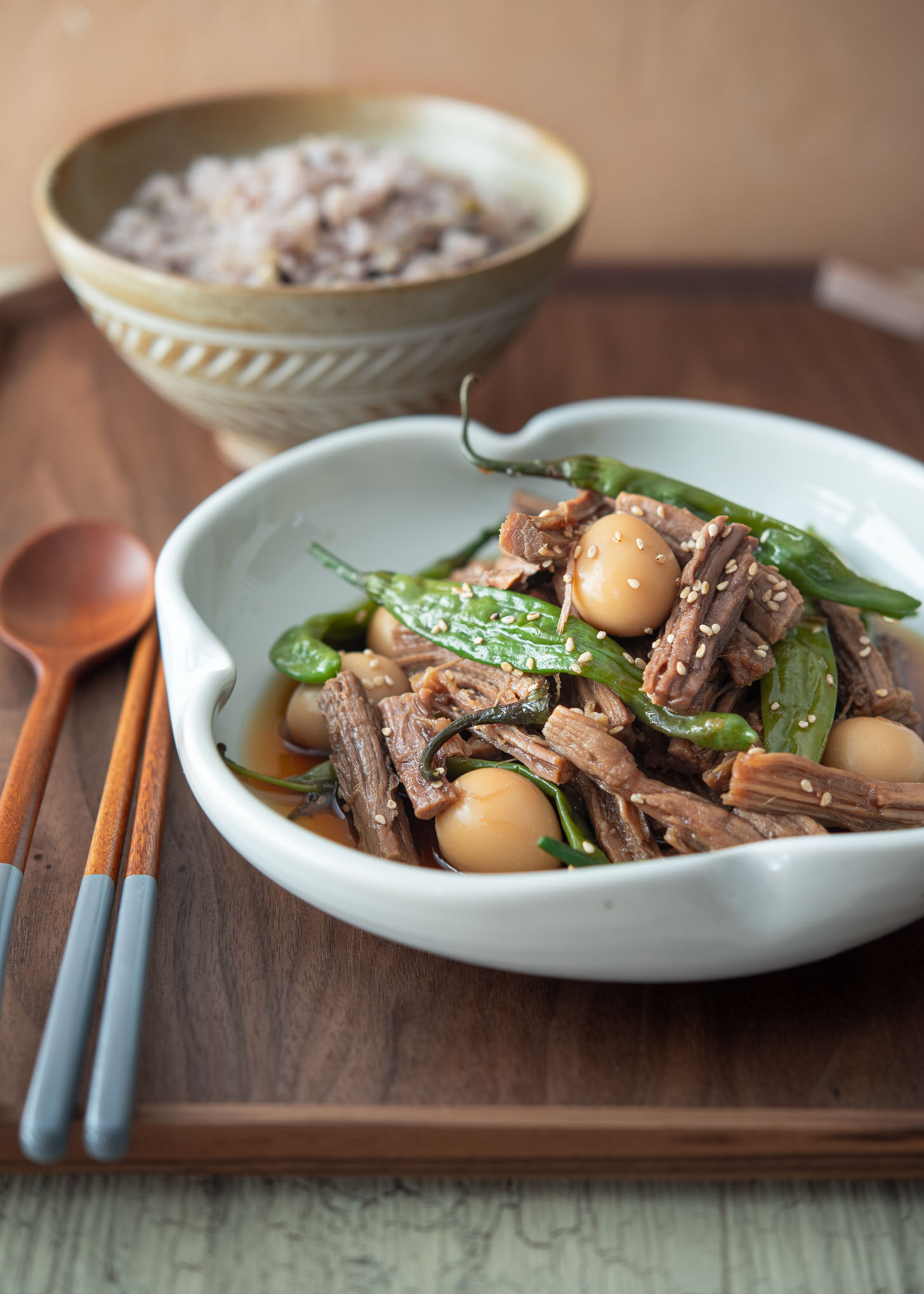
Originally published on April 19, 2011, this recipe has been updated with new images and additional information.
Jangjorim (Soy Braised Beef with Eggs)
Recipe Video
Ingredients
- 1 1/4 lb (560 g) beef eye round, brisket or flank steak, cut into 3-inch chunks
- 5 oz (150 g) quail eggs or 6 regular eggs, hard boiled and peeled
- 3 oz (85 g) shishito peppers, optional
For broth
- 1 medium onion, cut in half
- 7 cloves garlic
- 3 slices ginger
- 2 bay leaves
- 1 tsp black peppercorns
- 5-6 cups (1 liter) water
For sauce
- 1/2 cup (120 ml) soy sauce
- 1/4 cup (60 ml) sweet rice wine (mirim)
- 2-3 tbsp sugar
- 1 piece dried sea kelp (dashima), optional
Instructions
- In a large pot, combine the small blocks of beef with onion, garlic cloves, ginger slices, bay leaves, and black peppercorns. Add 5-6 cups of cold water, ensuring the ingredients are fully submerged. Bring to a gentle boil.
- As it boils, skim off any foam or scum that rises to the surface. Lower the heat to medium and let it simmer for 30 minutes without a lid partially covered. This helps to gamey odor from the meat to escape.
- Remove the meat from the pot and set it aside to cool. Strain the braising liquid over a large bowl or another pot, reserving about 3 cups. Discard the aromatic veggies. Save the remaining broth for Korean soups and other dishes.
- Once the beef has cooled for 5-10 minutes, either shred it into bite-sized pieces or slice into thin strips.
- In a clean pot, combine the reserved broth, soy sauce, sweet rice wine, sugar, and, if using, a piece of dried sea kelp (dashima or kombu). Mix well. Add the shredded beef and quail eggs. Bring the mixture to a boil over medium heat for 15 minutes, uncovered. Ensure you remove the sea kelp after boiling for 5 minutes.
- Incorporate the shishito peppers and let them cook for an additional 5-10 minutes, or until they've softened. Stir the mixture thoroughly and then allow it to cool to room temperature.
- To store: Transfer the beef, eggs, and peppers into a clean glass container. Pour the sauce over, ensuring all ingredients are fully submerged. Always store it in the refrigerator.
Quick question. I have a hard time getting shishito peppers where I live. What, if any, peppers would make a good replacement?
You can skip the peppers if they’re hard to find or substitute with any large, mild green chili for a similar flavor.
This sounds so delicious! Can’t wait to try it. Quick question — We bought half a cow from a local rancher this year. I have several cuts of beef eye round that are 1/2 pound. Do you think I could I use three of them? Would I need to modify the cooking time? Thanks!
Eye round is perfect for this particular beef dish. I use it all the time.
What is the name of the brand for that Korean Rice Wine?
Is this the same recipe when Koreans also put hard boiled egg along with the beef? My MIL makes something like this but she also puts hard boiled eggs which are delicious.
Yes, it is. You can add the hard boiled egg along with the beef.
Thanks Christina. I am happy that you found many recipes you grow up with. Hope you can try some soon.
I LOVE your site, and every single recipe here. I am so grateful–there are foods that I have yet to find in cookbooks, that I grew up with. Thank you for sharing! I've been clicking all over your site, and bookmarking so many recipes.
You're welcome. I am glad you like it.
Fabulous! We had it as a main course with rice. Loved the flavors.
Beef and spices. This is like the perfect recipe! It is delicious! Thanks for sharing!
This looks great! I have never had this side dish, usually I get kimchi or spicy potatos as side dishes when I visit a Korean restaurant. I am sure I will give this recipe a try sooner or later, it looks too good to miss! Thanks for sharing this wonderful recipe :).
Yup, that's how I usually enjoy. So good together.
Jenn
I am glad that you mentioned about the ratio. I totally forgot to add the
amount of Korean soy sauce (gook-ganjang) in the recipe. I fixed it and it
should be on the post.
I would not recommend Chinese soy sauce in any Korean recipe since it has
very different flavor. Kikkoman is, however, great to substitute for regular
soy sauce (not the Korean style, gook-ganjang soy sauce).
I know it sounds confusing but Koreans use two types of soy sauce. One is
just regular typical soy sauce that most people use, like Kikkoman.
And the other is called goo-ganjang, the Korean style soy sauce. It is
thinner and saltier. You can sub with 1/2 amount of fish sauce if you can't
find it.
Hope this helps.
jangjorim reminds me of my mom. She'd always make it and bring a batch for me when I was in college. Your recipe for it looks so delicious and clean. Yeah I always hated that it would congeal with fat particles when chilled…gross. But nothing beats jangjorim, rice and kimchi!
julie
Thanks for the recipe. What ratio do you recommend for Korean soy sauce and (regular?) soy sauce? Also, would Chinese dark soy sauce substitute well for Korean soy sauce? Is Kikkoman soy sauce acceptable for the regular soy sauce? Thanks.