

Ojingeo Bokkeum (Spicy Korean Squid Stir-Fry)
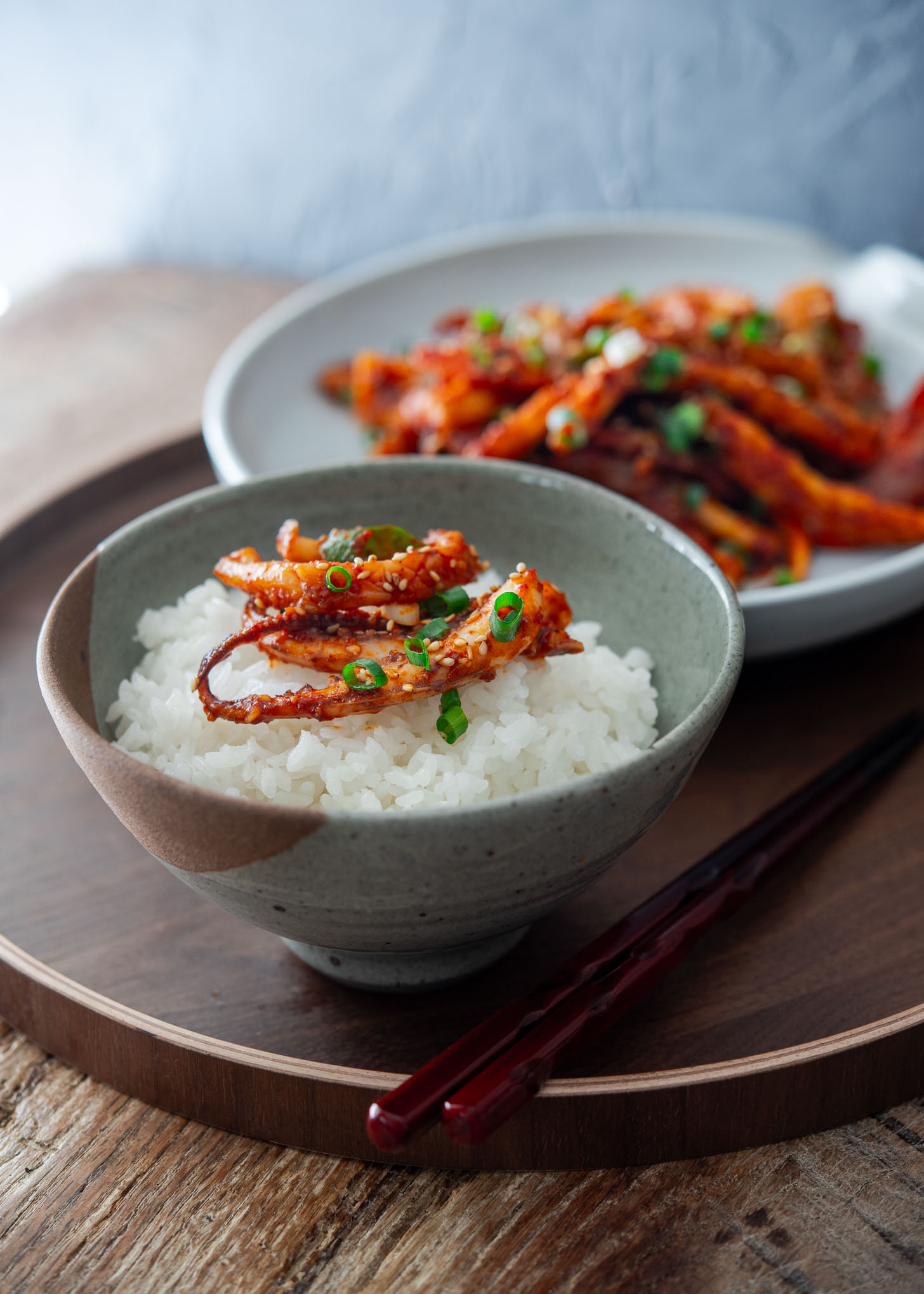
A quick Korean spicy squid stir-fry you can whip up in about 30 minutes. Tender squid, crisp veggies, and a bold gochujang sauce come together in one hot pan, making this an easy weeknight dupbap-style meal for anyone who loves seafood with a little heat.

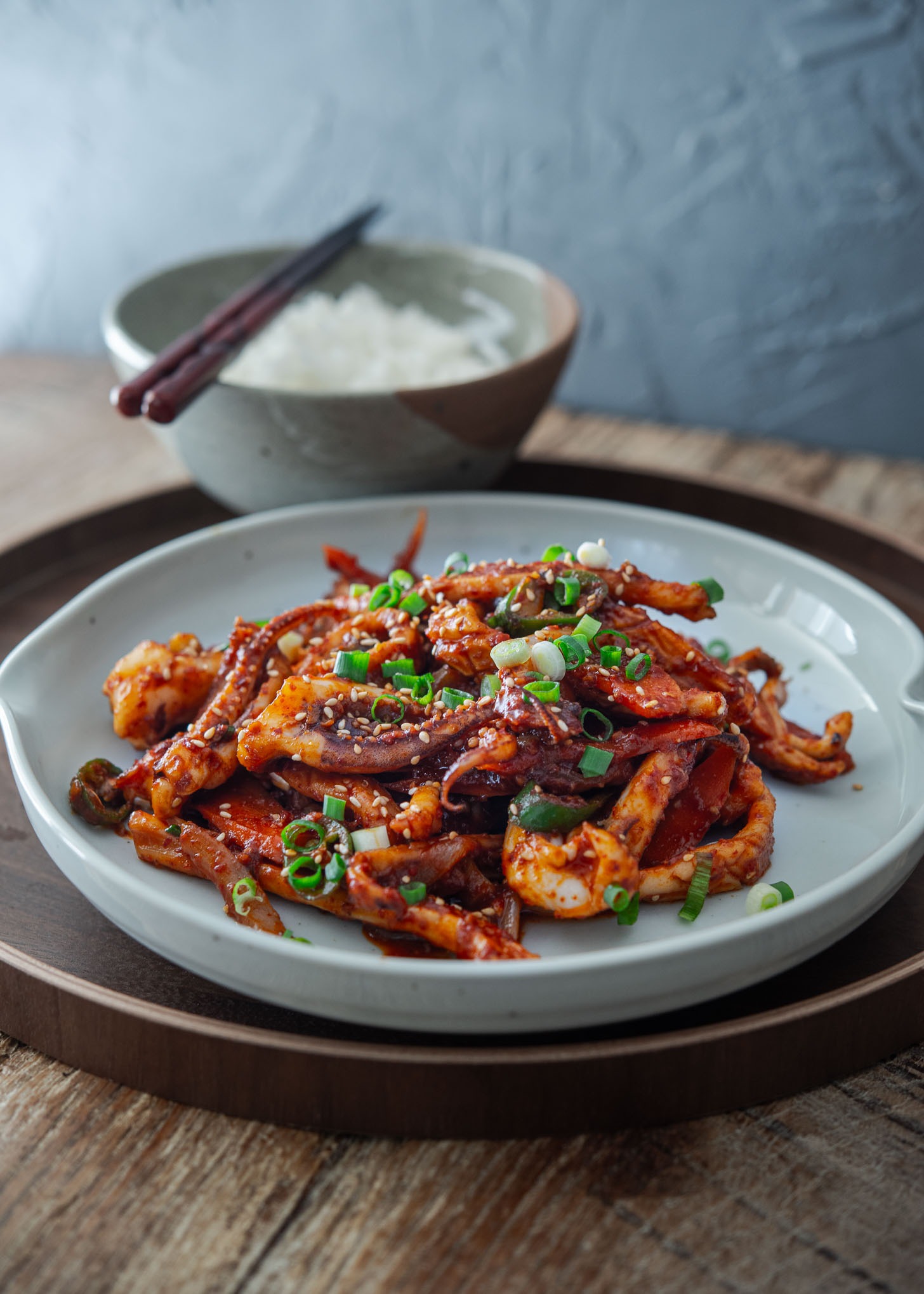
Ojingeo bokkeum (오징어볶음) is a quick, Korean spicy squid stir-fry made with gochujang, gochugaru, and fresh vegetables. Stir-frying over high heat keeps the squid tender and lightly chewy — never rubbery — and the sauce reduces into a glossy, spicy-sweet coating that’s perfect over rice.
If you’re searching for a simple Korean squid recipe that packs flavor without extra steps, this is the one. With pre-cleaned squid, the whole dish comes together in about 10 minutes.
Get new recipes via email:
If you enjoy mixed seafood-and-meat dishes, my pork and squid stir-fry (osam bulgogi) has the same spicy-sweet flavor profile with a heartier twist.
Ingredients You Need for Korean Spicy Squid
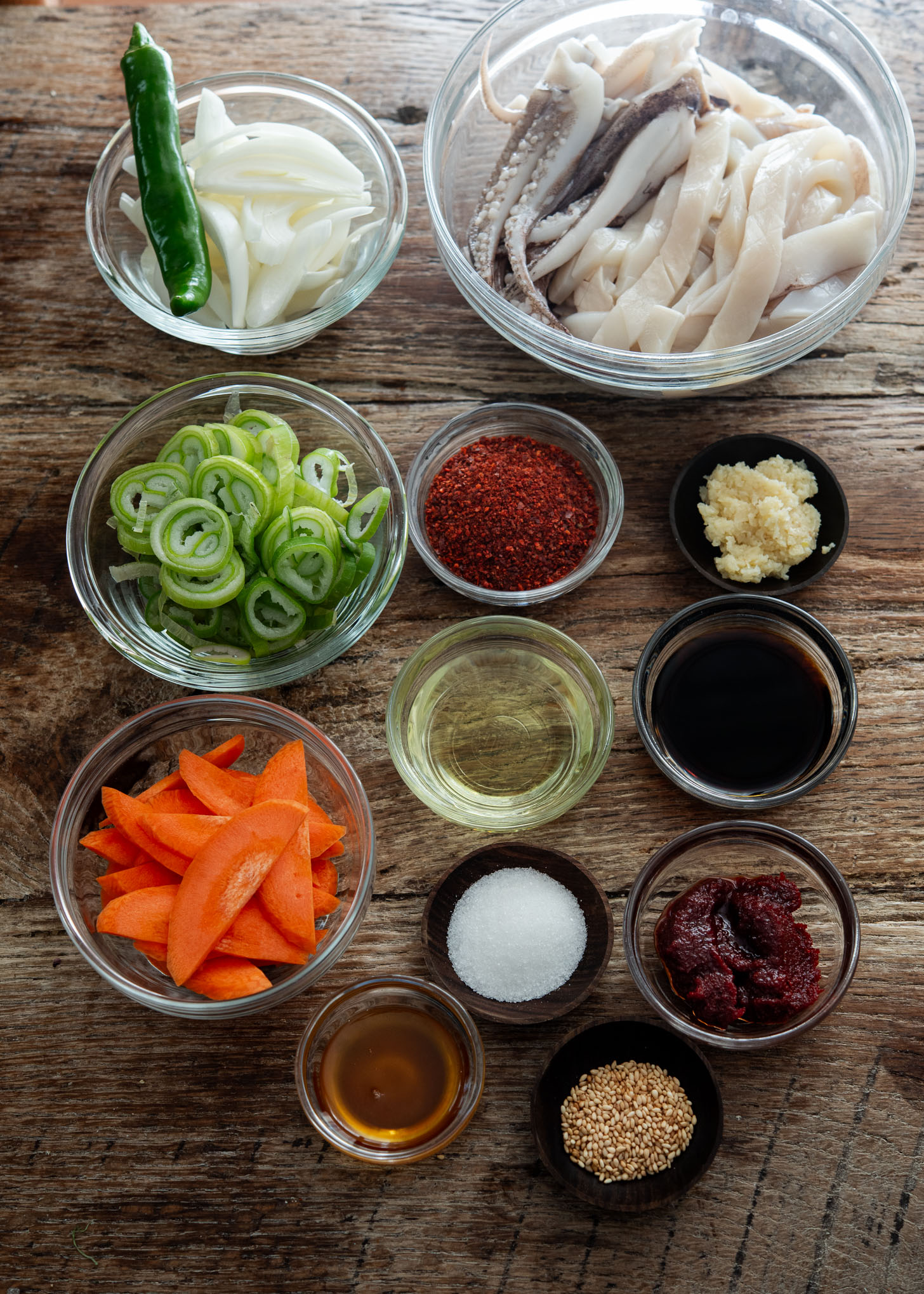
- Squid: Fresh is best, but frozen whole squid is also suitable. Avoid pre-cut squid as it may not taste as good.
- Vegetables: Onion, Asian leek (optional), carrot, garlic, and fresh chili (optional but recommended).
- Seasoning: You only need a few everyday items from a typical Korean cooking pantry, such as soy sauce, gochujang, gochugaru, sugar, black pepper, sesame oil, and sesame seeds.
How to Clean Squid (Quick Guide)
You can often find whole squid that’s already cleaned in the freezer section at Asian grocery stores or Korean markets. But if you can’t find it or prefer to do it yourself, cleaning fresh squid is easy.
Here’s how:
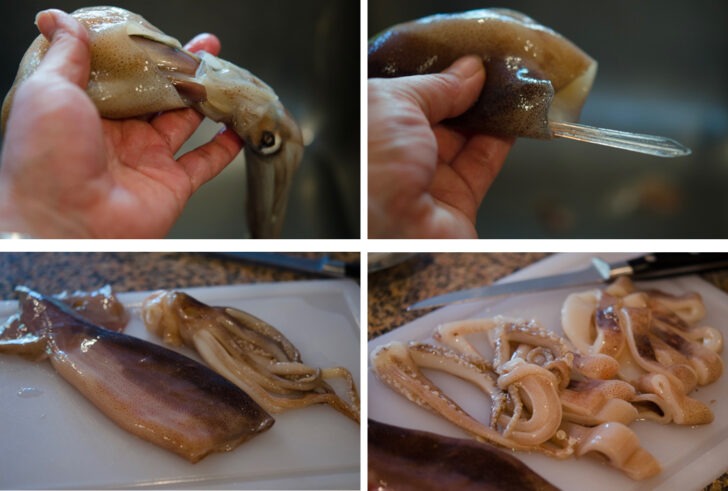
If using whole squid, remove the head and innards, separate the tentacles above the eyes, remove the beak, pull out the quill, peel the skin if you like, and rinse. Many Korean markets also sell pre-cleaned frozen squid if you prefer convenience.
How to Make Ojingeo Bokkeum
A common issue with many ojingeo bokkeum recipes is they tend to release a lot of liquid during the cooking process leading to a watery sauce that dilutes the flavors. However, by using the stir-frying techniques and tips in my tutorial, you’ll avoid this issue and create a delicious, flavorful Korean squid dish that tastes better than any others you’ve tried.
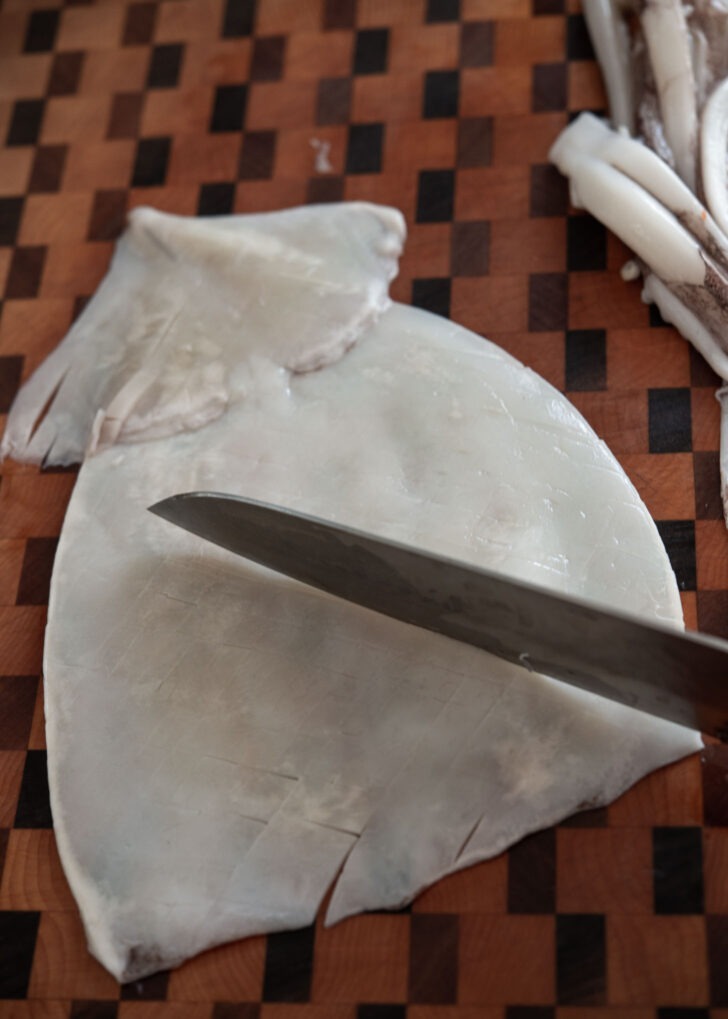
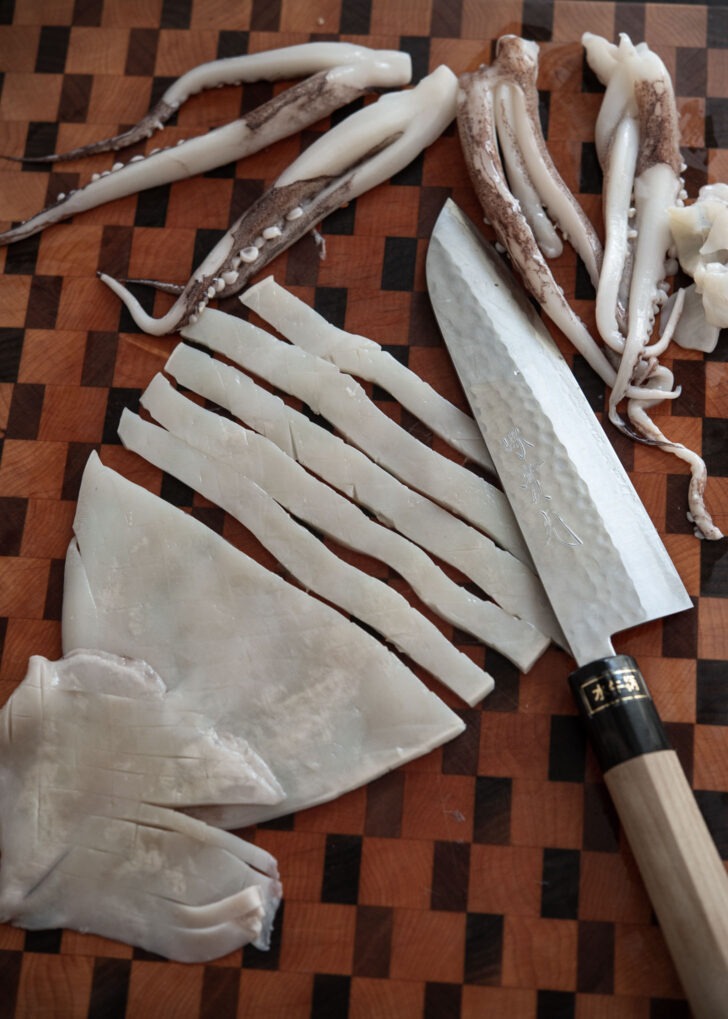
Prepare the squid. You can slice the tube into rings, or open it for strips. Korean cooks often open the tube and lightly score the inside in a diamond pattern—this helps the squid stay tender and hold more sauce. After scoring, cut the body into strips and trim the tentacles into bite-size pieces.
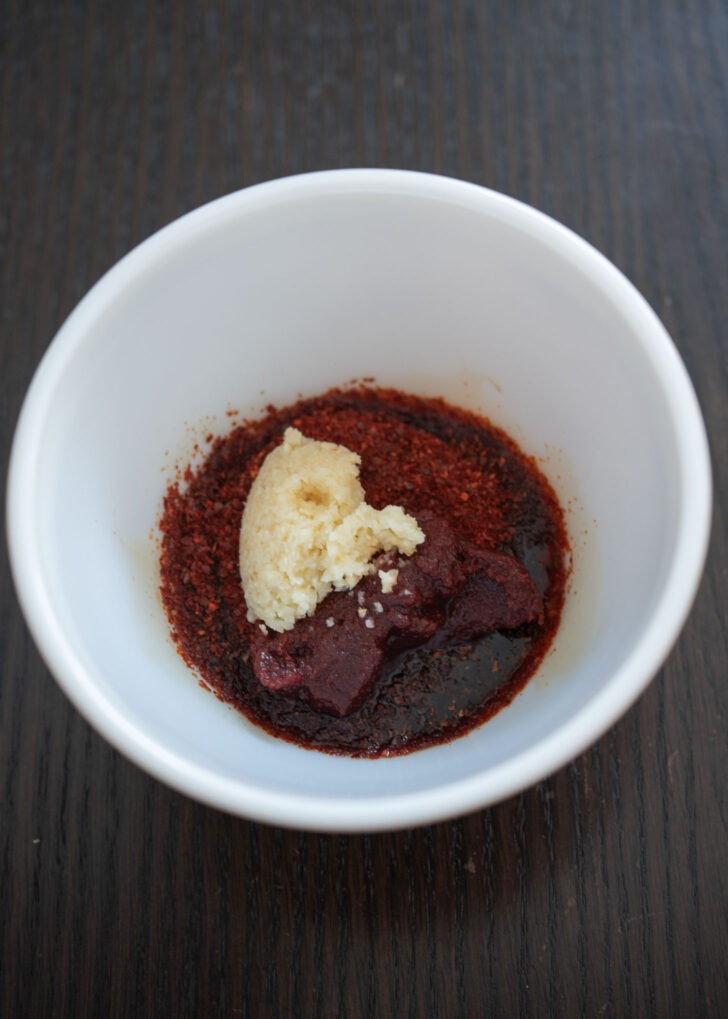
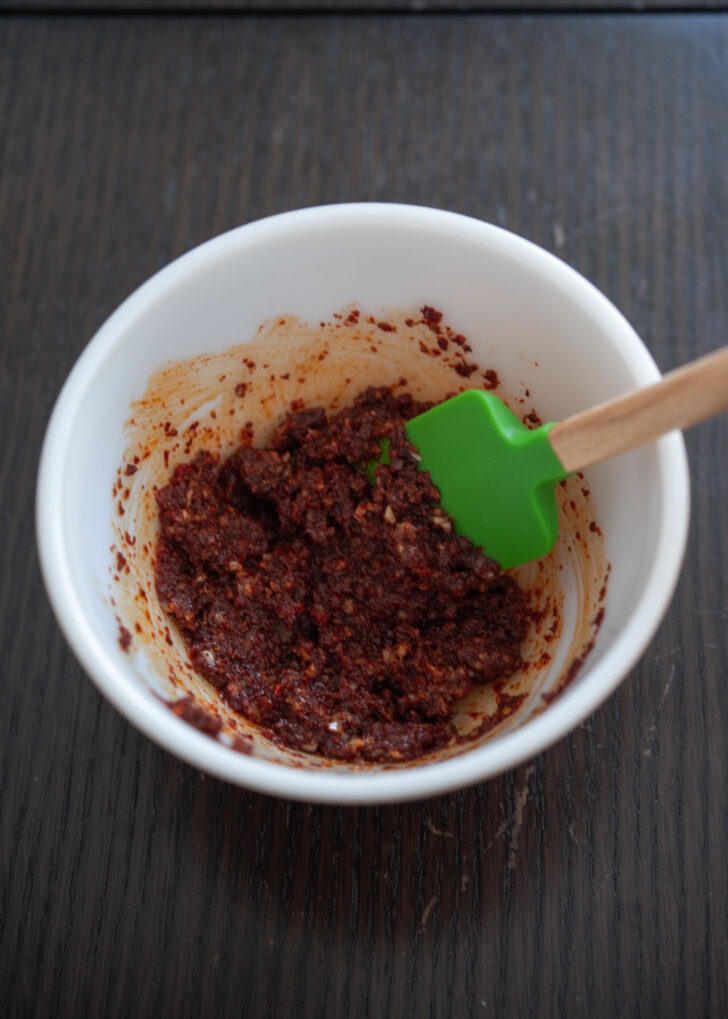
Make the spicy sauce. In a small bowl, mix together gochugaru (Korean chili flakes), gochujang (chili paste), soy sauce, minced garlic, and a pinch of black pepper. Set this sauce aside for later.
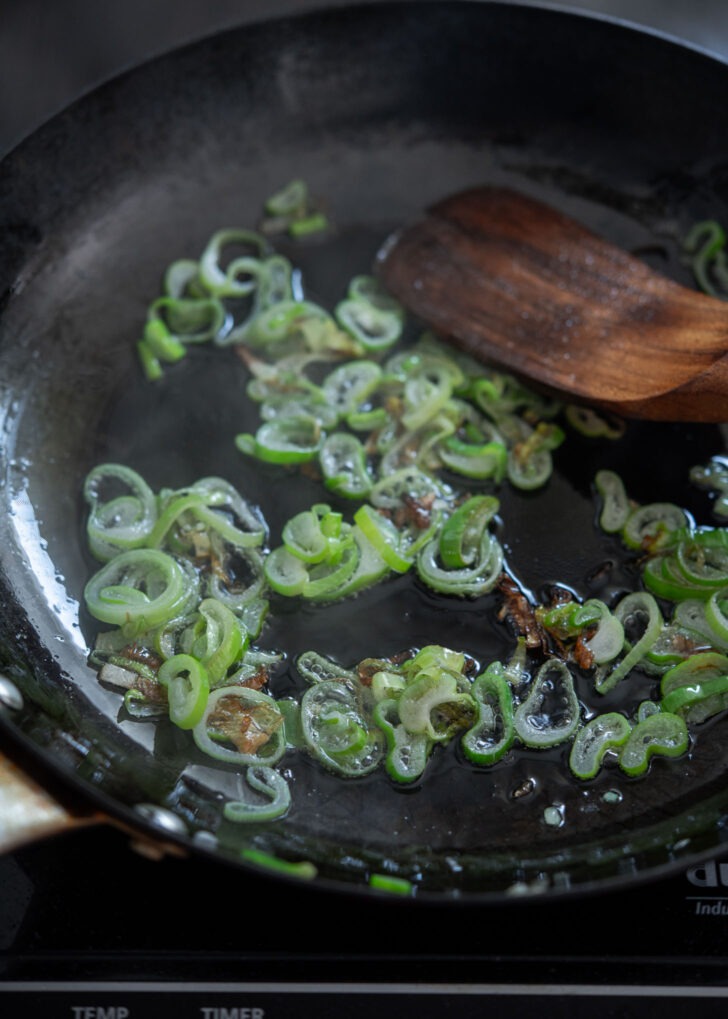
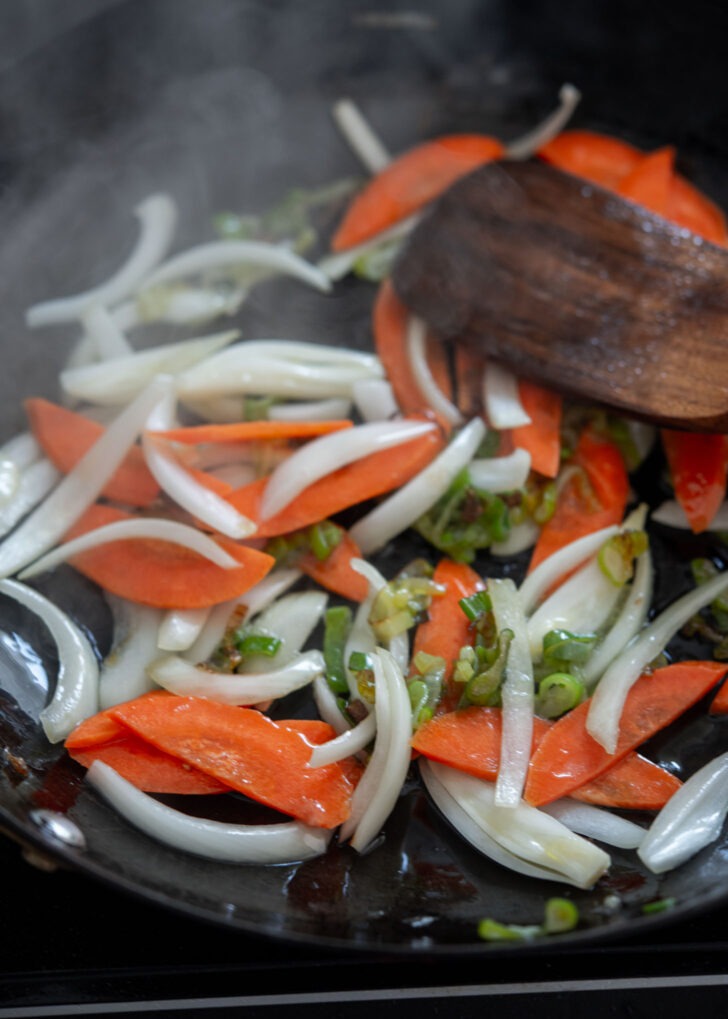
Infuse Asian leek in oil. Heat a little oil in a hot skillet and stir-fry the Asian leek (or green onion) just until fragrant. This step seasons the oil and adds depth to the dish. Add the onion and carrot and cook briefly to soften
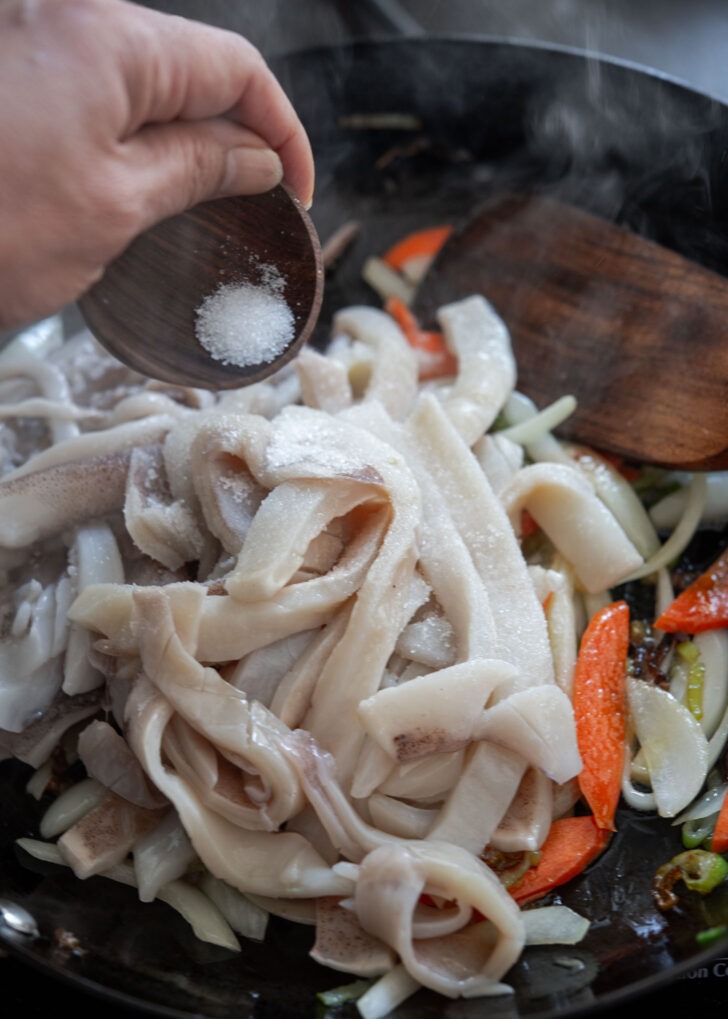
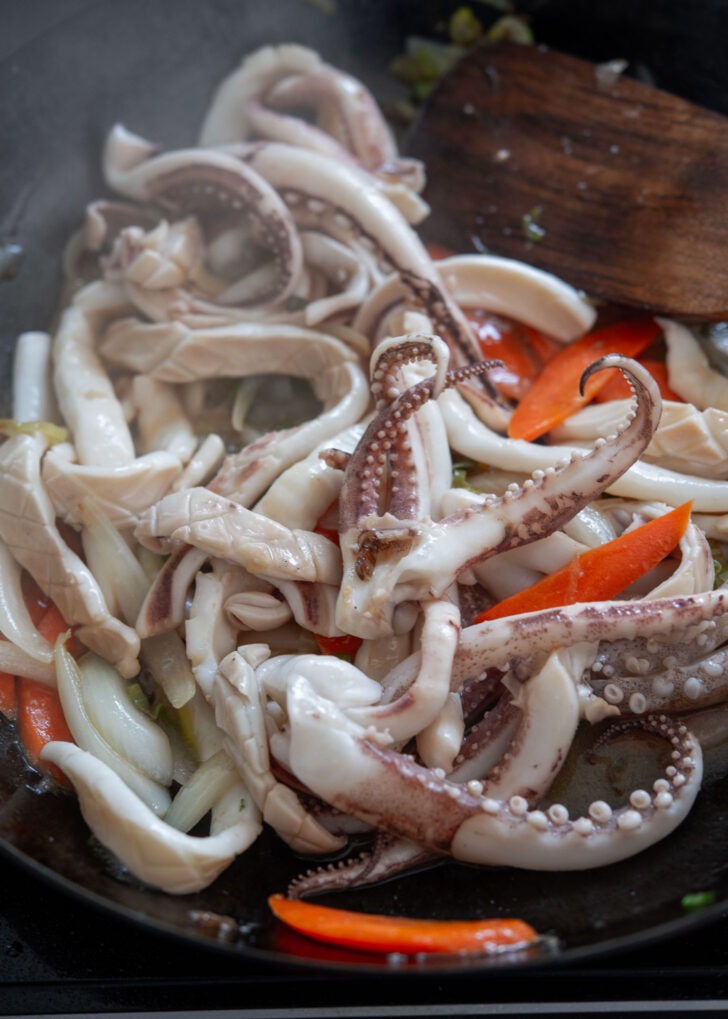
Quickly Sear the Squid. Add the squid with a small sprinkle of sugar and give it a quick toss just until it begins to curl. Push it to one side of the pan—this isn’t the stage to fully cook it yet.
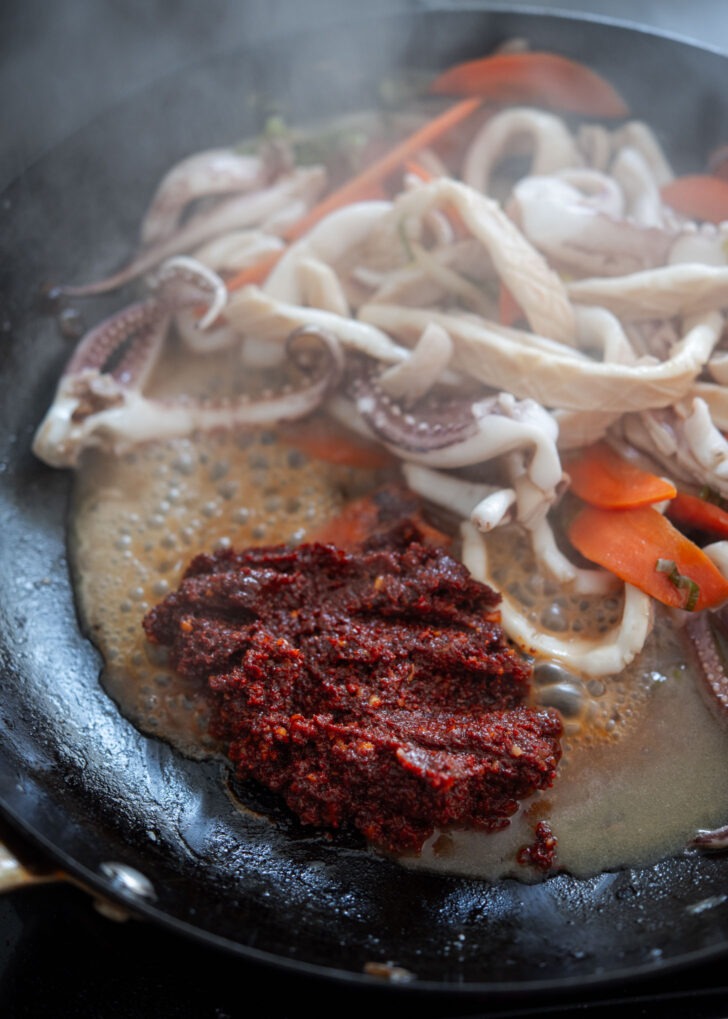
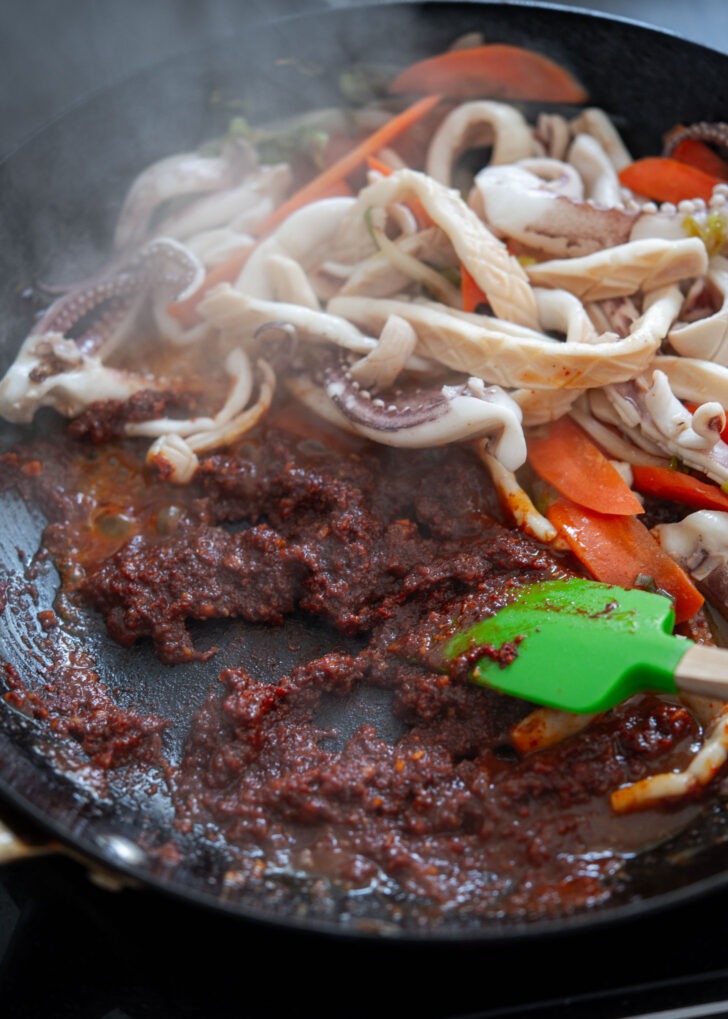
Reduce the Spicy Sauce. Pour the sauce into the open side of the pan and let it sizzle in one spot. Cooking it briefly on its own helps concentrate the flavor and reduces excess moisture. Keep the heat high until the sauce thickens.
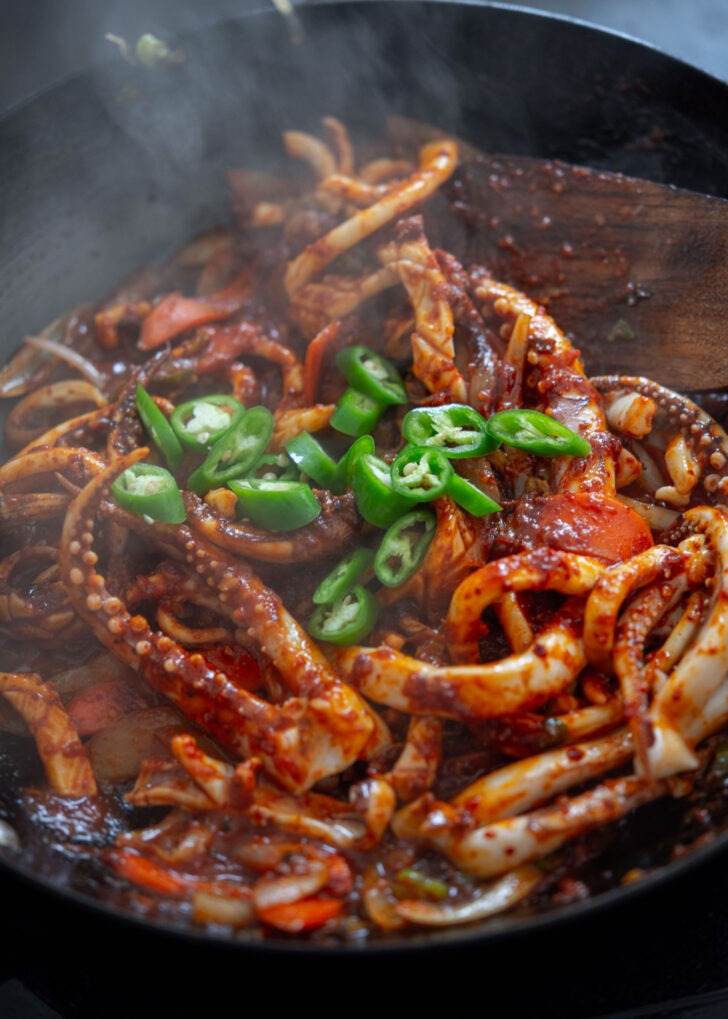
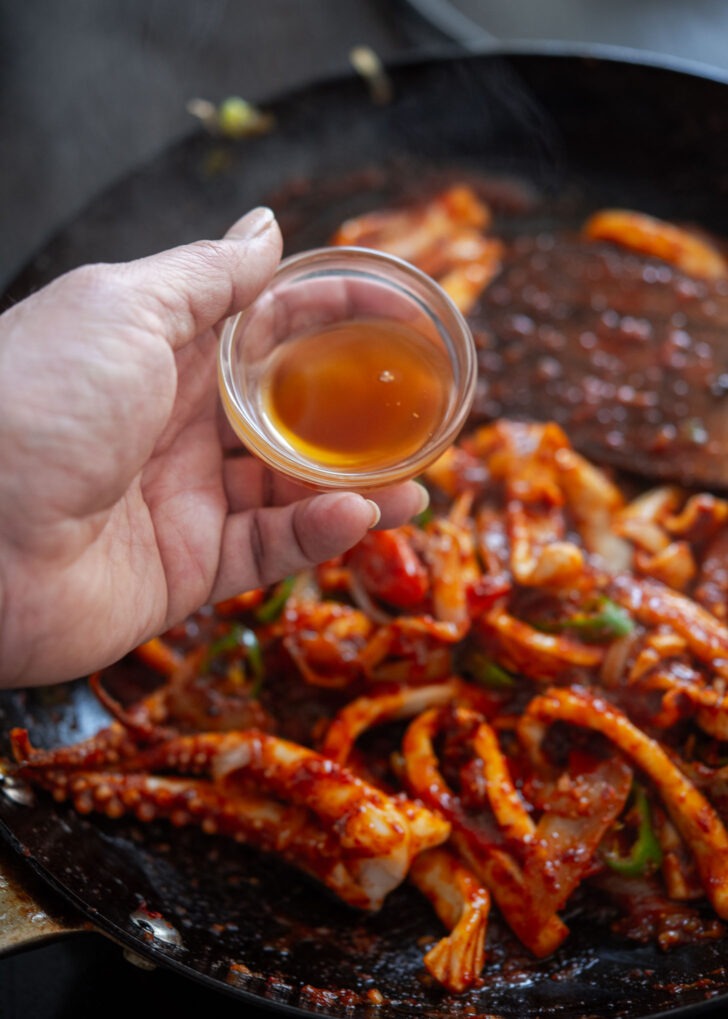
Bring Everything Together. Fold the squid and vegetables into the reduced sauce and give it a quick toss. Add fresh green chili if you want extra heat. Remove from the heat, finish with a drizzle of sesame oil, and sprinkle with toasted sesame seeds.
Serve your spicy squid stir-fry hot over white rice for an easy dupbap-style meal. For another quick Korean seafood option that also shines with high-heat cooking, try my spicy pan-seared mackerel (gogalbi).
How to Keep Squid Tender (Korean Cooking Tips)
Quick, high-heat cooking is essential for tender squid in Korean stir-fries. Scoring the squid helps it cook evenly and absorb the sauce, while reducing the sauce separately keeps moisture under control. These small techniques make a noticeable difference in texture.
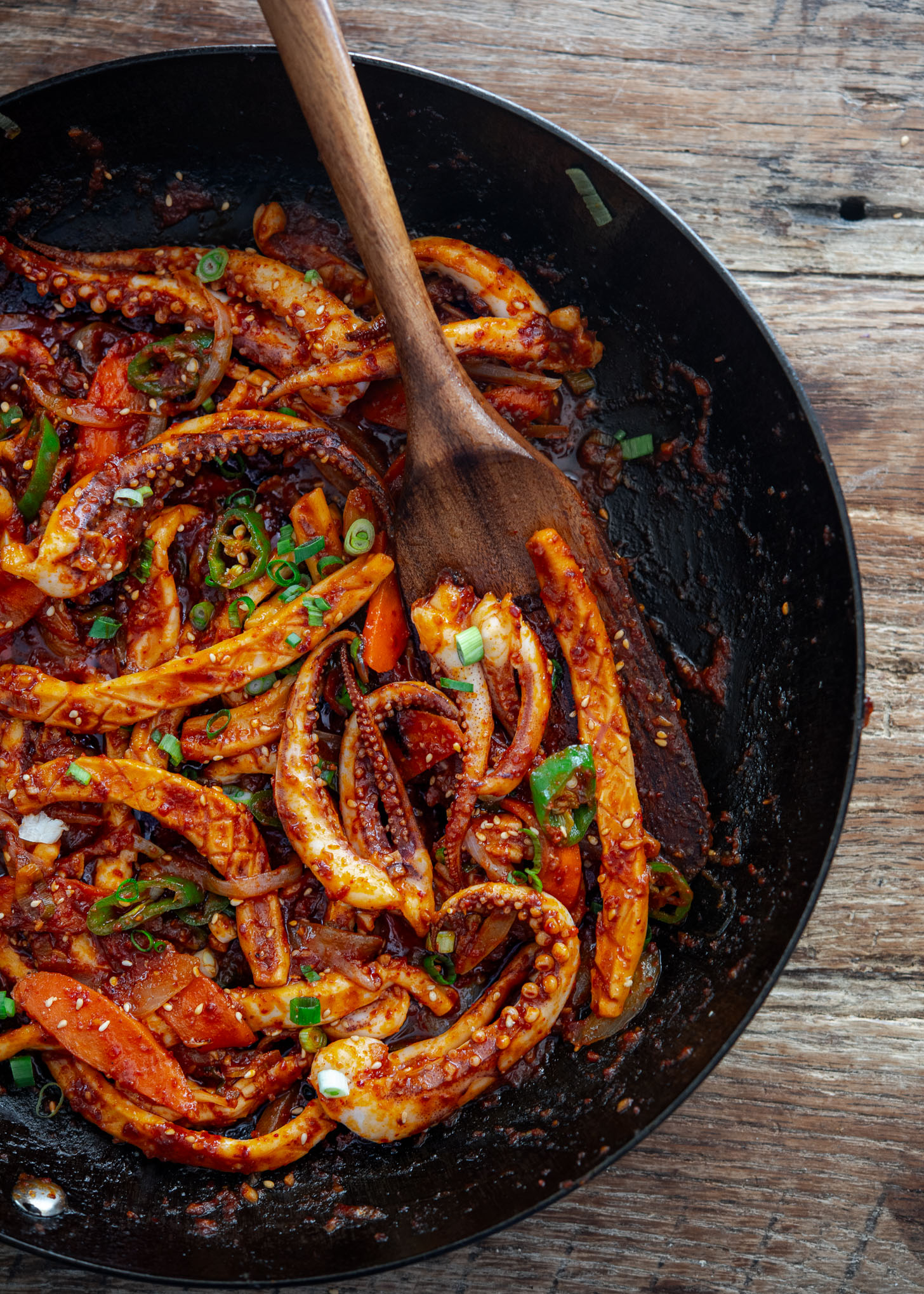
Cook’s Note: I first shared this recipe back in September 2014. Since then, I’ve updated it with new details, pictures, and a tutorial video to show you just how easy it is to make this dish.
Ojingeo Bokkeum (Korean Spicy Squid Stir-Fry)
Recipe Video
Ingredients
- 2 tbsp (30 ml) cooking oil
- 3/4 cup (70–80 g) chopped Asian leek, or green onion
- 1/2 medium onion, sliced
- 1/2 carrot, thinly sliced
- 1 (about 14–16 oz / 400–450 g) large squid, cleaned
- 1 tbsp (12 g) sugar
- 1/2 tbsp (7 ml) sesame oil
- 1 tbsp (9 g toasted sesame seeds
- 1 green onion, to garnish, optional
Spicy Sauce
- 2 tbsp (30 ml) soy sauce
- 2 tbsp (12–14 g) Korean chili flakes (gochugaru)
- 2 tbsp (40 g) Korean chili paste (gochujang)
- 1 tbsp (15 g) minced garlic
- 1/2 tsp (1.5 g) black pepper
Instructions
To prepare the squid
- Keep the squid tube whole and cut it into rings. Or open up the tube to slice into strips.
- This step is optional, but it's a common technique before cutting the squid into strips. Lightly score the squid body in a diamond pattern (about 1/4-inch squares). This not only makes the squid hold more sauce but also gives it a unique appearance. Then, slice the squid body into strips and cut the tentacles into pieces of your preferred size.
To make the sauce
- In a small bowl, mix together gochugaru (Korean chili flakes), gochujang (chili paste), soy sauce, minced garlic, and a pinch of black pepper. Set this sauce aside for later.
To stir-fry
- Heat oil in a large skillet over high heat. Add sliced Asian leek (or green onions) and stir-fry for 30-60 seconds, until the aroma is released and the leek is slightly caramelized. Toss in the onion and carrot, continuing to stir-fry for another minute.
- Add the prepared squid and a sprinkle of sugar. Stir-fry everything together for about a minute. Then, push the squid mix to one side of the pan. Do not fully cook the squid at this point.
- Pour the spicy sauce into the other side of the pan, tilting it so the sauce gathers in one spot. This method draws out moisture from the squid. Stir-fry the sauce until the moisture has almost evaporated, about 30 seconds, keeping the heat high.
- Mix the squid mixture back with the sauce, add fresh green chili if you like, and toss everything together for another 15-30 seconds.
- Take the skillet off the heat, drizzle sesame oil over the top, and garnish with toasted sesame seeds. Serve your spicy squid stir-fry immediately with white rice for a delicious meal.
Made this recipe tonight. The family loved it. I added sliced yellow pepper and sliced cremini mushrooms as well. Delicious!
Wonderful! So happy to hear that your family enjoyed it. Thank you so much!
you are not alone. also a lot of non korean people love those super beautifull animals, and we love it spicy.
best greeting from berlin/germany and the spicy squid lover scene here, and thanks for the inspiration. i learned out of you comments, that i cooked it to hard/hot/long to reduce the juice – so it got little gummy. next time i´m taking more time and “simmer” it :))).
Made and eaten. Delicious! Thank you 🙂
Wonderful! Thanks!
Holly, this spicy squid looks amazing. And I love squid! It’s great in soups and calamari, and now this dish! I haven’t made squid myself before, so thanks for the tip about getting squid that is pre-cleaned.
Love, love, love this dish. can’t wait to see squid at my grocery store, so I can try this. Everything I’ve tried of yours is outstanding so I’m sure it will be a hit. Thanks Holly!
Hi Julie
Great to hear that there is someone who loves squid. And I am so happy that my recipes turned out great for you. Keep your Korean cooking to the max in your kitchen.
I love squid. It is a quick dish to cook. Thanks.
Yeah, one more squid lover! You are right. Squid is a great to cook with and delicious!
My mouth is already watering thinking of this dish. I love squid. It is a quick dish to cook. Thanks.
Great looking dish! I do like it, but I’ve had it overcooked more than once — and then it can be really tough (as you mention). So short cooking (or really long slow cooking) is the only way to go with this.
Yeah, if you overcook the squid, they will become very tough. SO either short cooking like stir-fry or long simmering is the best to enjoy.
Yummmmmm…my mouth is watering as I look at the delicious photos. I’m in the same boat as you – this is one of my favorite Korean dishes, but my husband and kids won’t go near it. I never get to make it because of that reason, but might just have to cook it for myself. Maybe with some thin noodles (“so-myun”). Thank you for sharing.
Somyun noodle is a great choice to go with this squid stir-fry. I feel ya. Sometimes we just need to take care of our cravings, right?
I love squid! I’ve only ordered this at the restaurant so I’m glad I have the recipe now. Tks!
Hi Susan, Hope you get to try this at home. If you love squid, you will love this recipe!