

Spicy Pork Bulgogi (Jeyuk Bokkeum)
Spicy pork bulgogi, also known as jeyuk bokkeum, is a Korean pork stir-fry made with thinly sliced pork and a bold gochujang marinade. This quick stovetop recipe uses high-heat caramelization to create juicy, deeply flavored pork in about 20 minutes. Serve it with rice, fresh lettuce wraps (ssam), or simple banchan for an easy, weeknight meal.
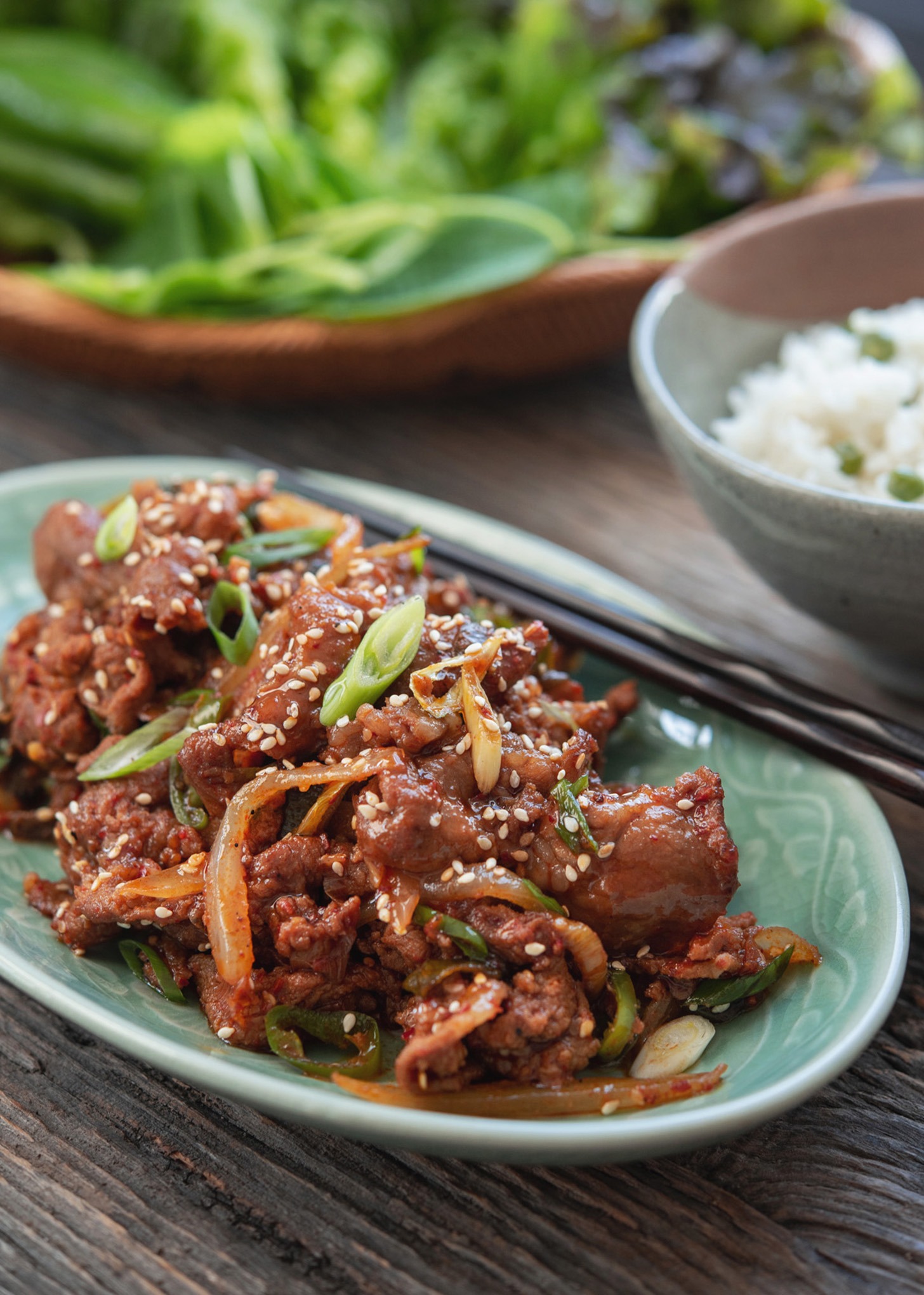
Jeyuk bokkeum (제육볶음, or dwaeji bulgogi) is one of the most common Korean spicy pork dishes served at home and in everyday restaurants across Korea. It’s bold, chili-forward, and meant to be cooked fast over high heat so the sauce caramelizes instead of turning watery. After years of testing, I found that building flavor in the pan first makes all the difference.
The key to great Jeyuk Bokkeum isn’t just the sauce. It’s how you cook it. If the pan isn’t hot enough, the pork steams instead of sears. That’s why I caramelize sugar before adding the meat. It creates depth quickly and gives you that glossy finish without overcooking the pork.
Get new recipes via email:
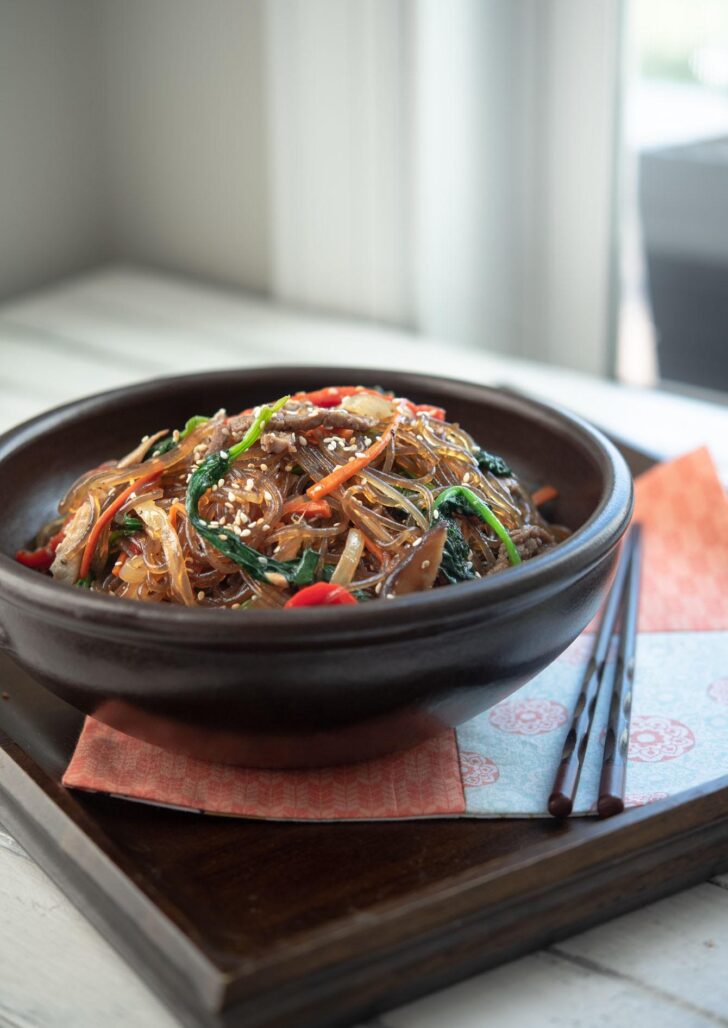
If you enjoy this high-heat gochujang stir-fry method, my spicy gochujang chicken stir-fry with cabbage uses the same pan technique with chicken and vegetables.
Technique That Builds Smoky Depth
Caramelized Sugar First:
Instead of relying on long marinating, I caramelize sugar with leeks in hot oil before adding the pork. This builds a subtle smokiness in the pan and helps the sauce cling and glaze instead of turning watery.
Cook Immediately or Marinate Briefly:
You can cook the pork right after mixing the sauce. A short rest in the fridge is fine, but it is not required. The flavor develops in the pan, not from sitting in the marinade.
Choosing the Right Pork and Sauce
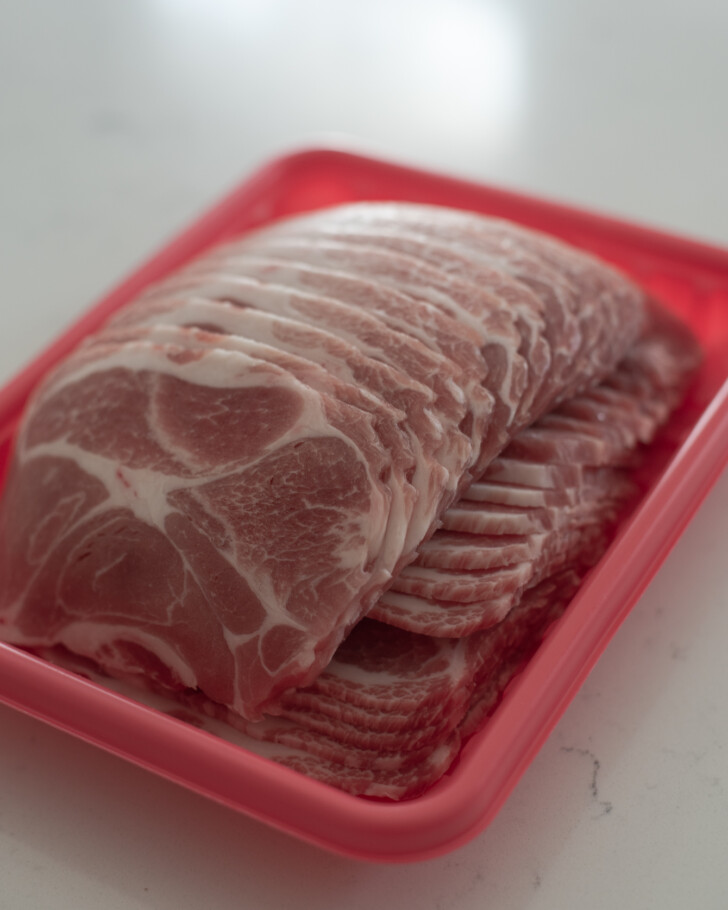
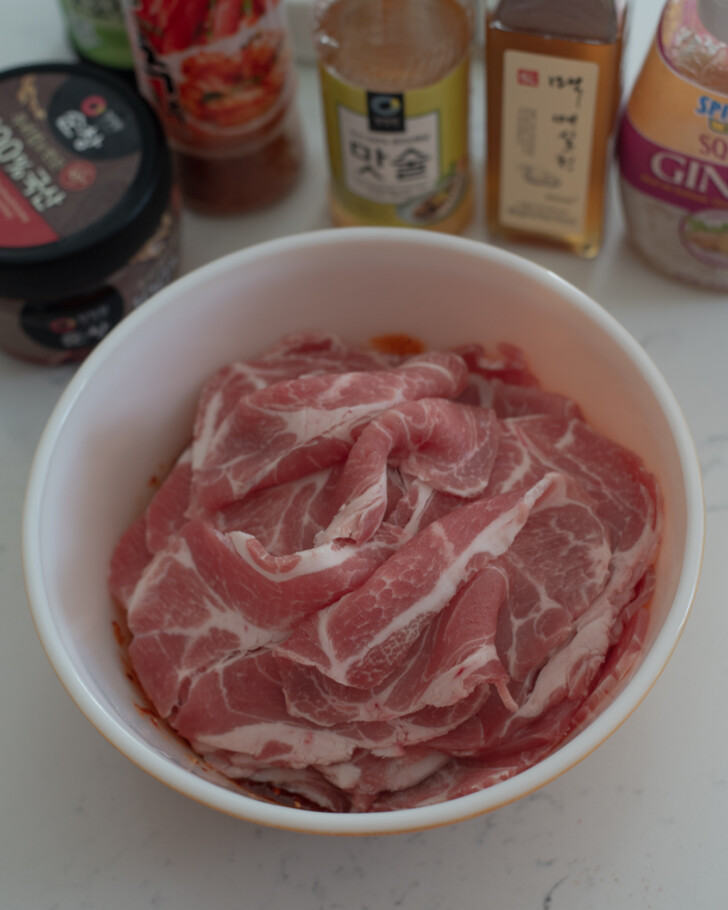
For the best texture, choose pork with visible marbling so it stays tender over high heat. Pork shoulder, also called moksal, or pork butt works best because the fat renders quickly and keeps the meat juicy.
The sauce is built on gochujang for heat and depth, supported by gochugaru, soy sauce, rice wine, sugar, garlic, and ginger. This balance gives the pork its signature spicy-sweet glaze.
How to Cook Spicy Pork Bulgogi (Jeyuk Bokkeum))
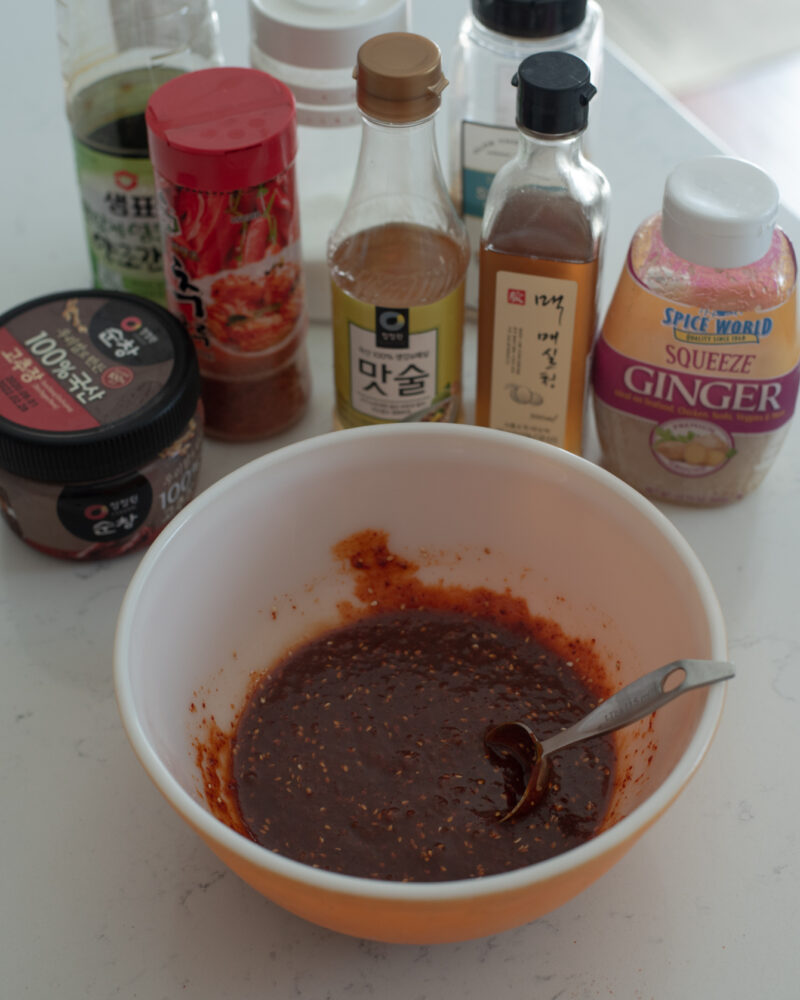
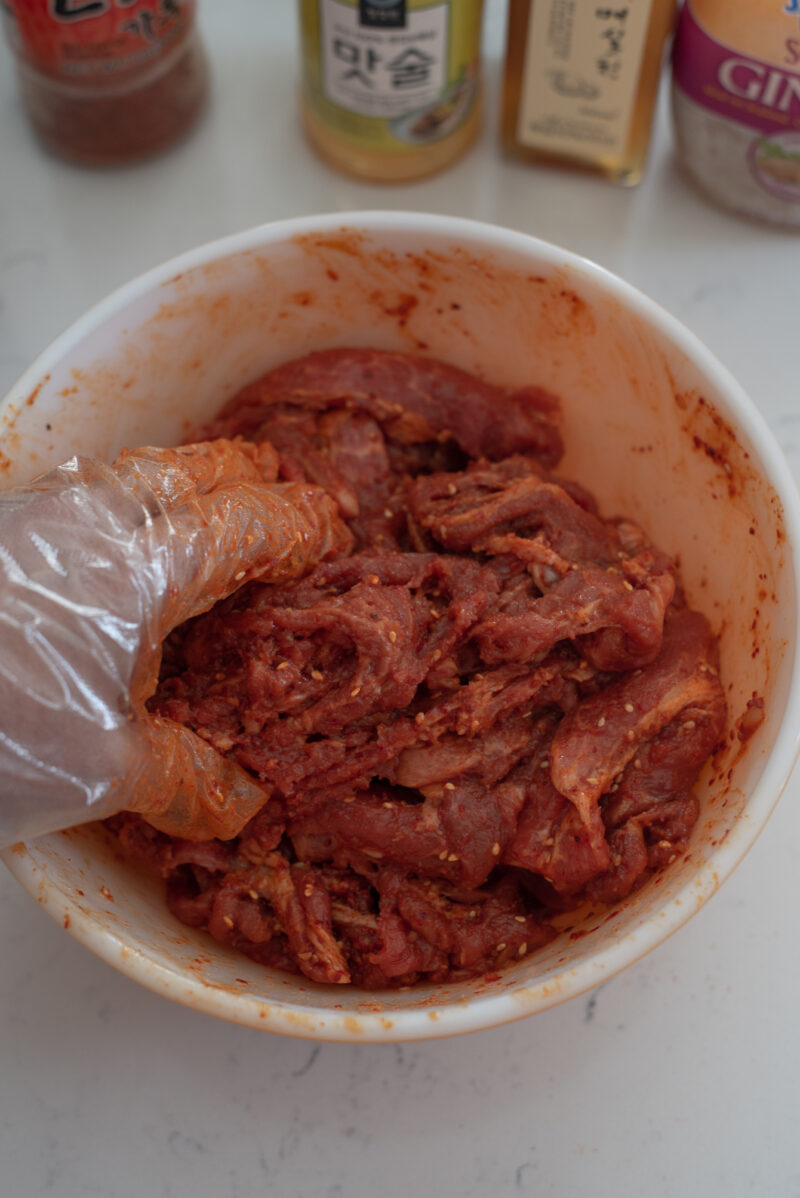
Make the marinade. Combine the seasoning ingredients until smooth, then toss with the pork. Thin slices coat evenly and cook quickly.
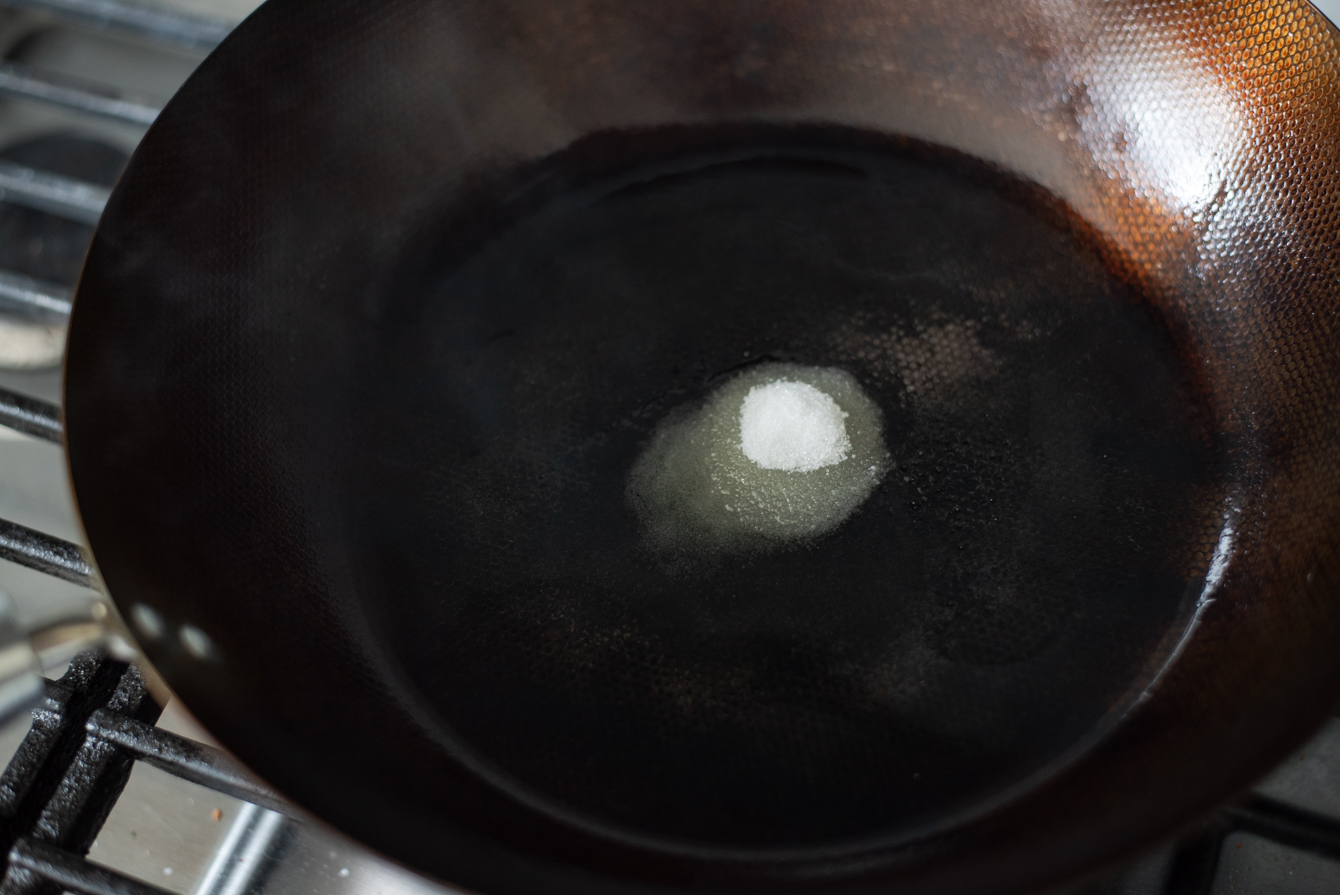
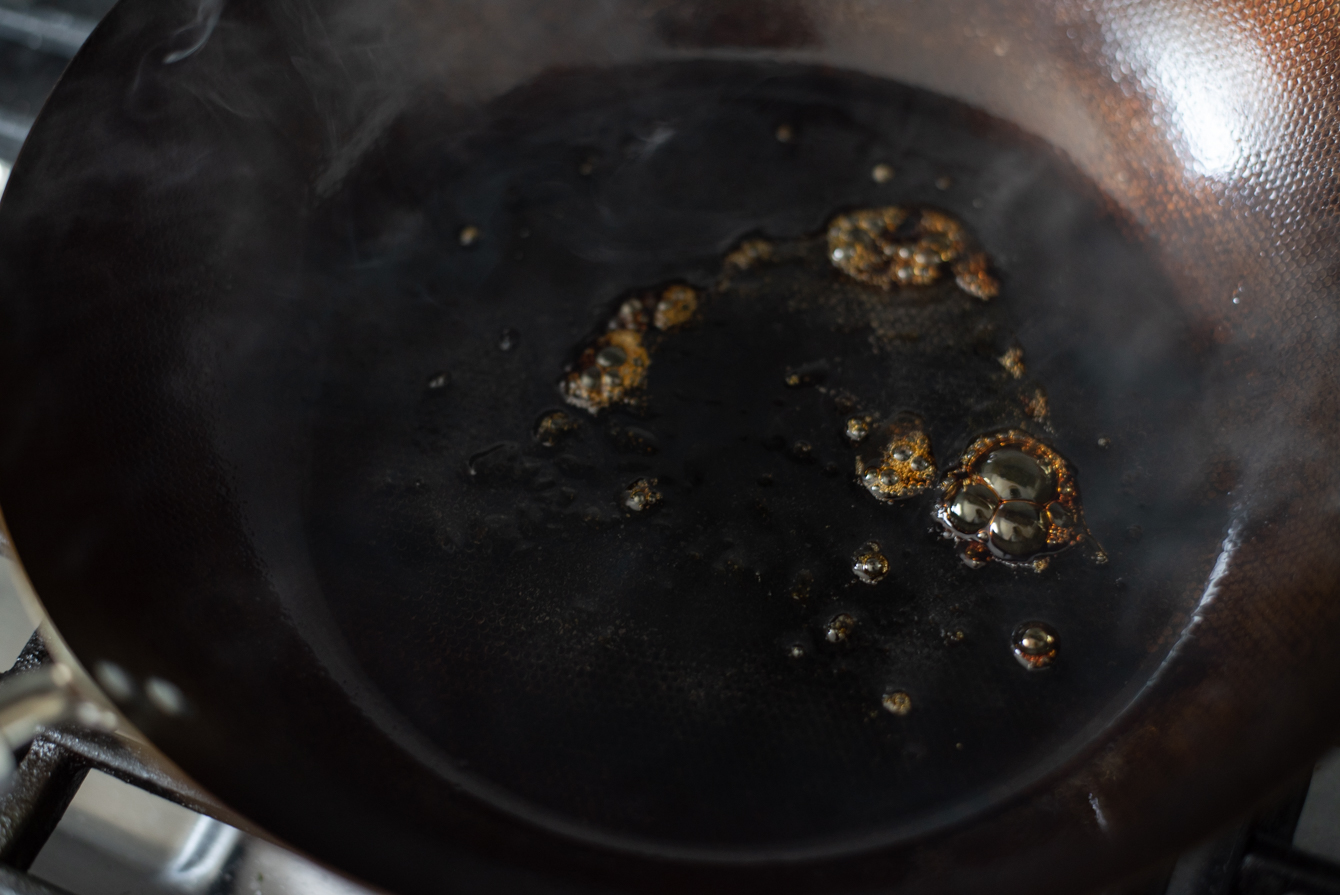
Caramelize the Sugar. Heat a little oil, then sprinkle in the sugar. Let it melt slowly over medium heat until it turns a deep amber color. This builds a smoky sweetness that mimics the char you’d get from grilling. Be patient and don’t stir too soon; once the sugar darkens, swirl the pan gently to keep it from burning.
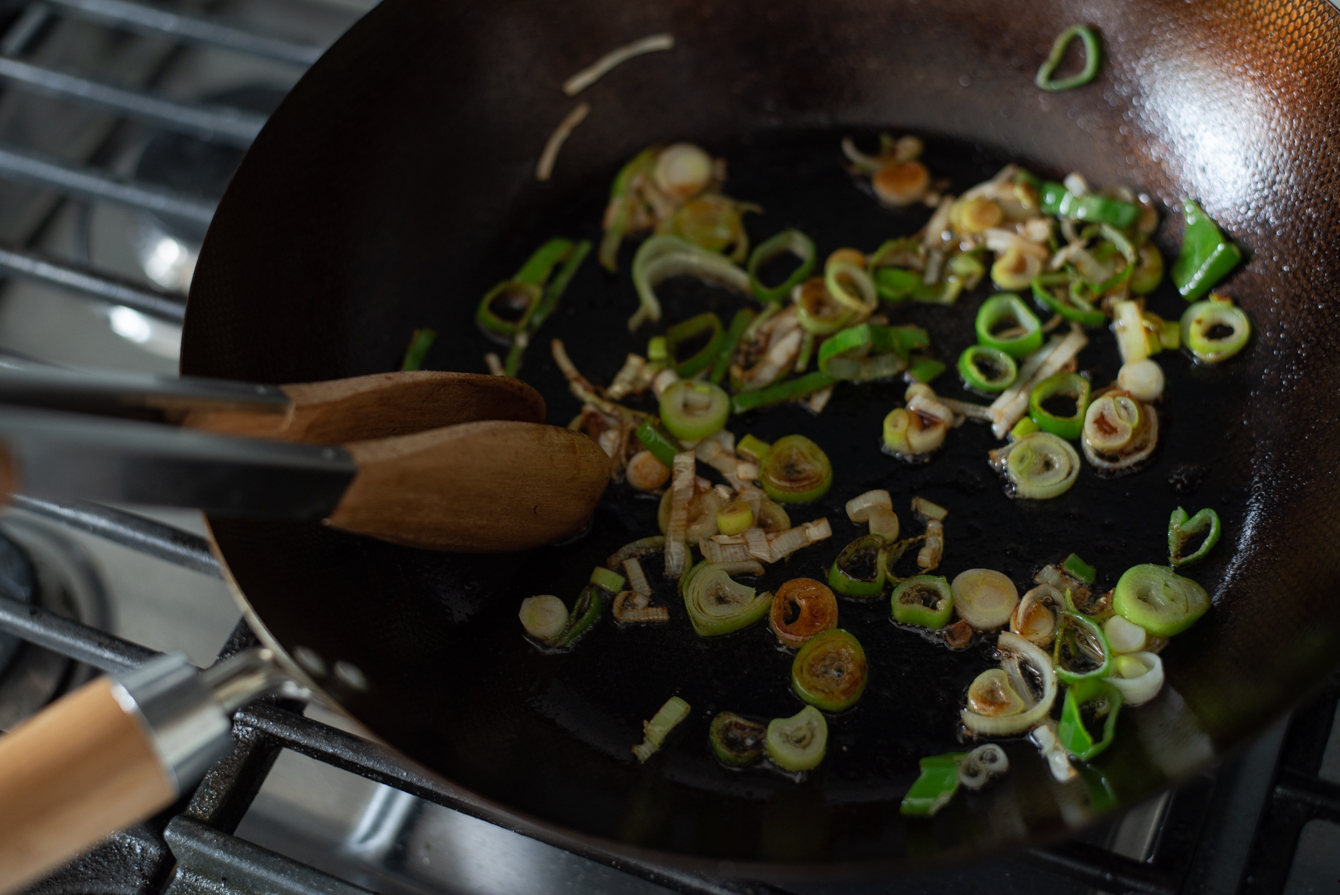
Add leeks. Add chopped Asian leek (or green onion) and sauté briefly to flavor the oil to build aroma.
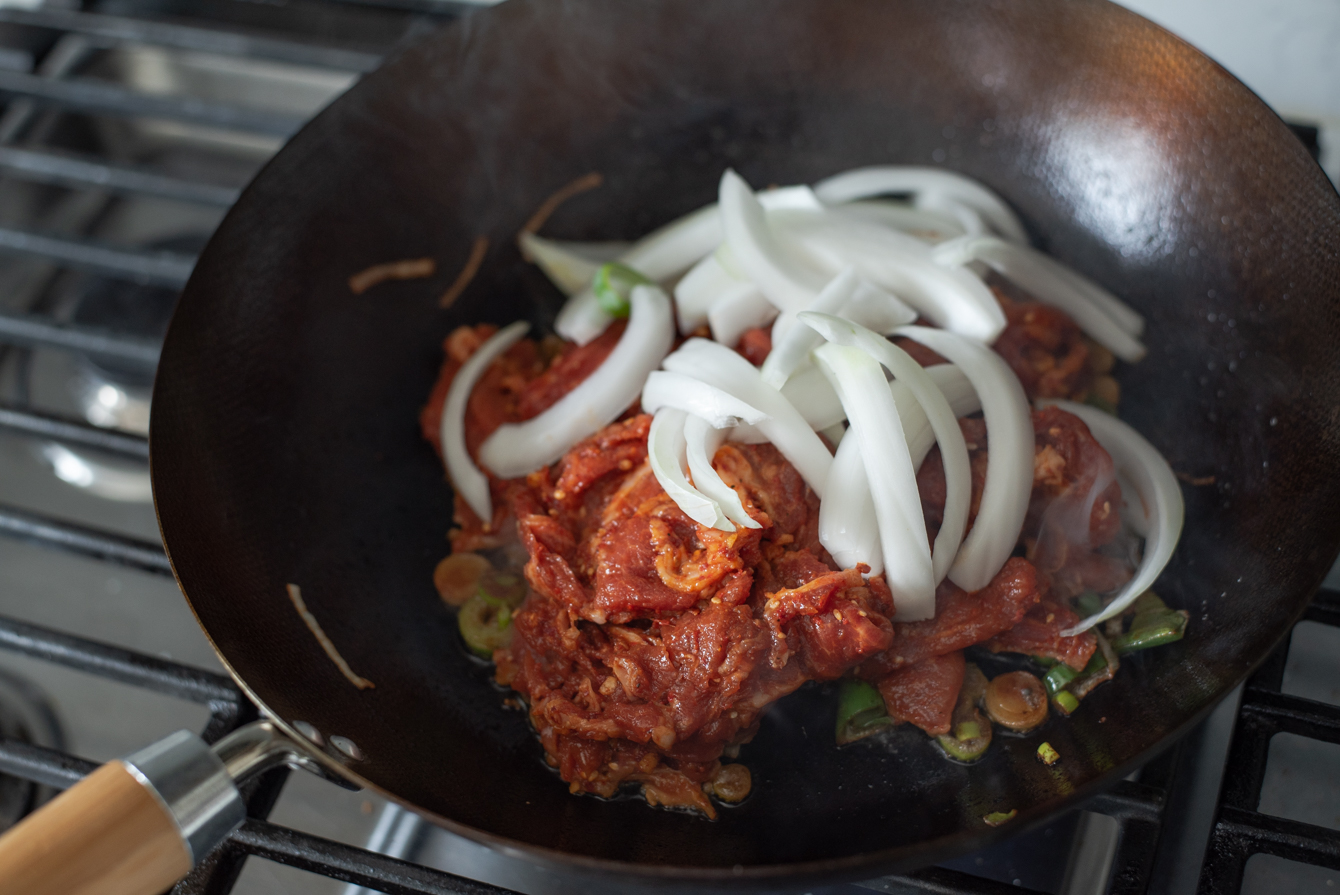
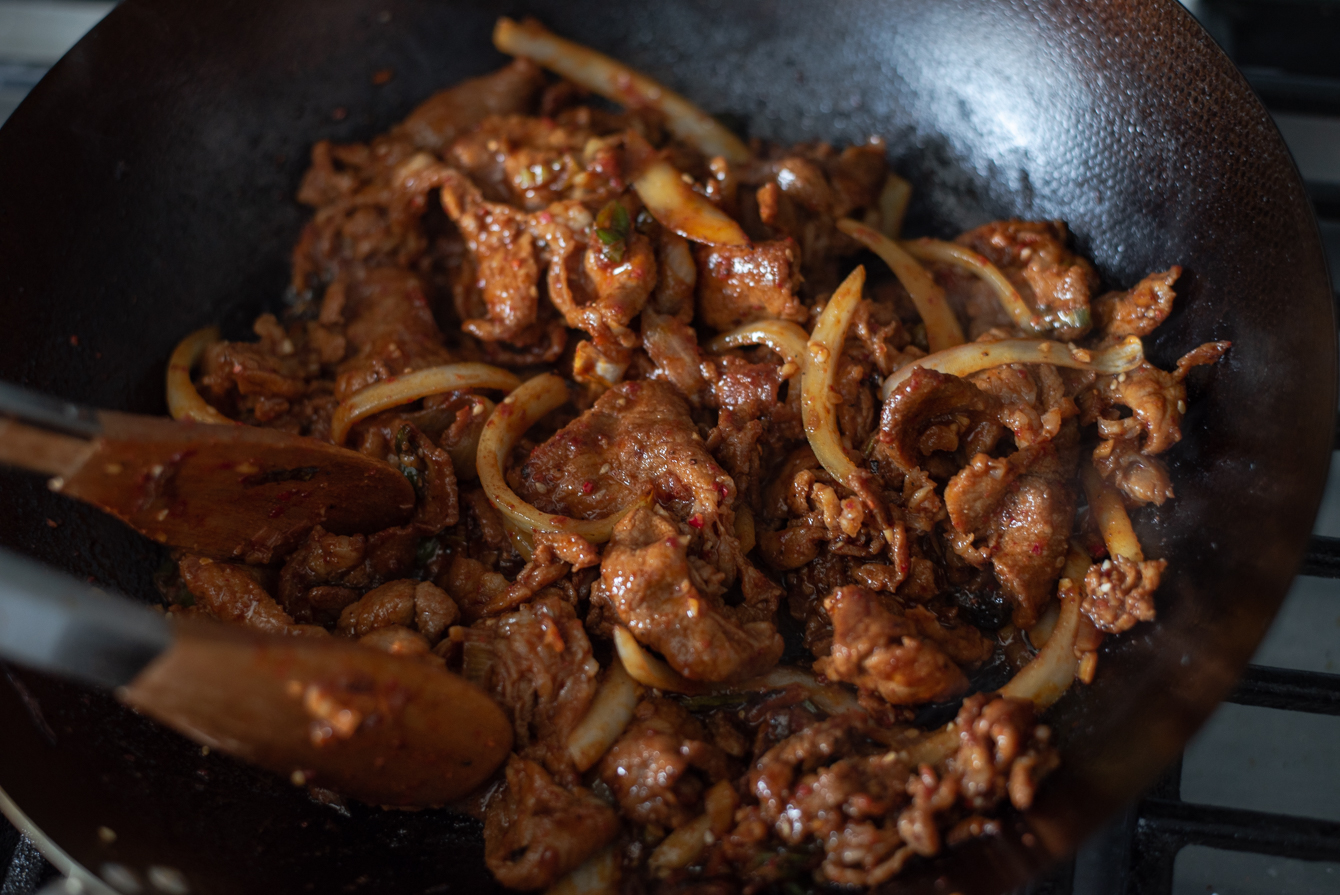
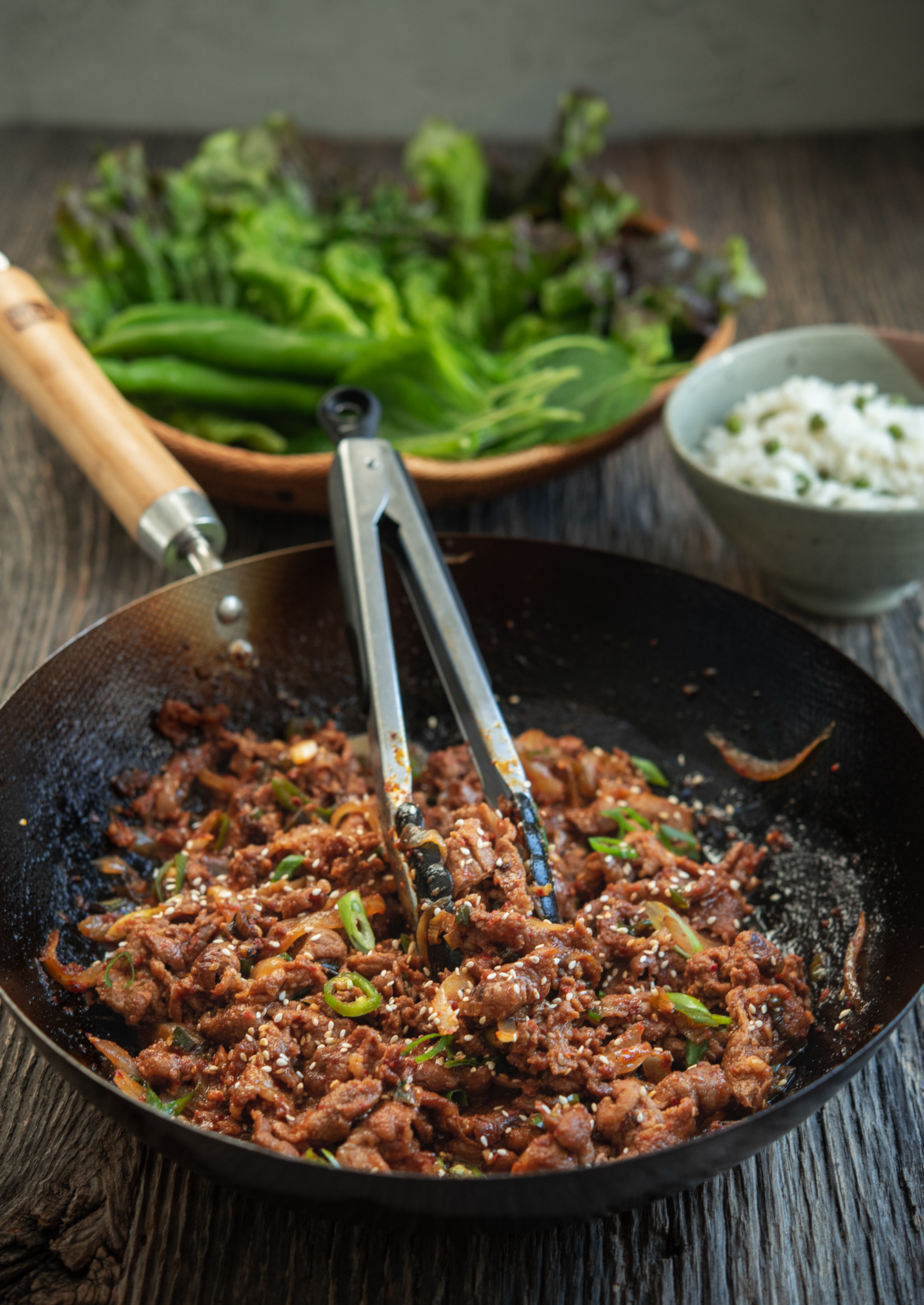
Stir-Fry the Pork. Add pork and onion to the hot pan. It should sizzle on contact. Let it sear without overcrowding so the sauce reduces and clings instead of steaming. Stir-fry until the pork is just cooked through and tender with a glossy coating.
Serving Ideas & Korean Meal Pairings
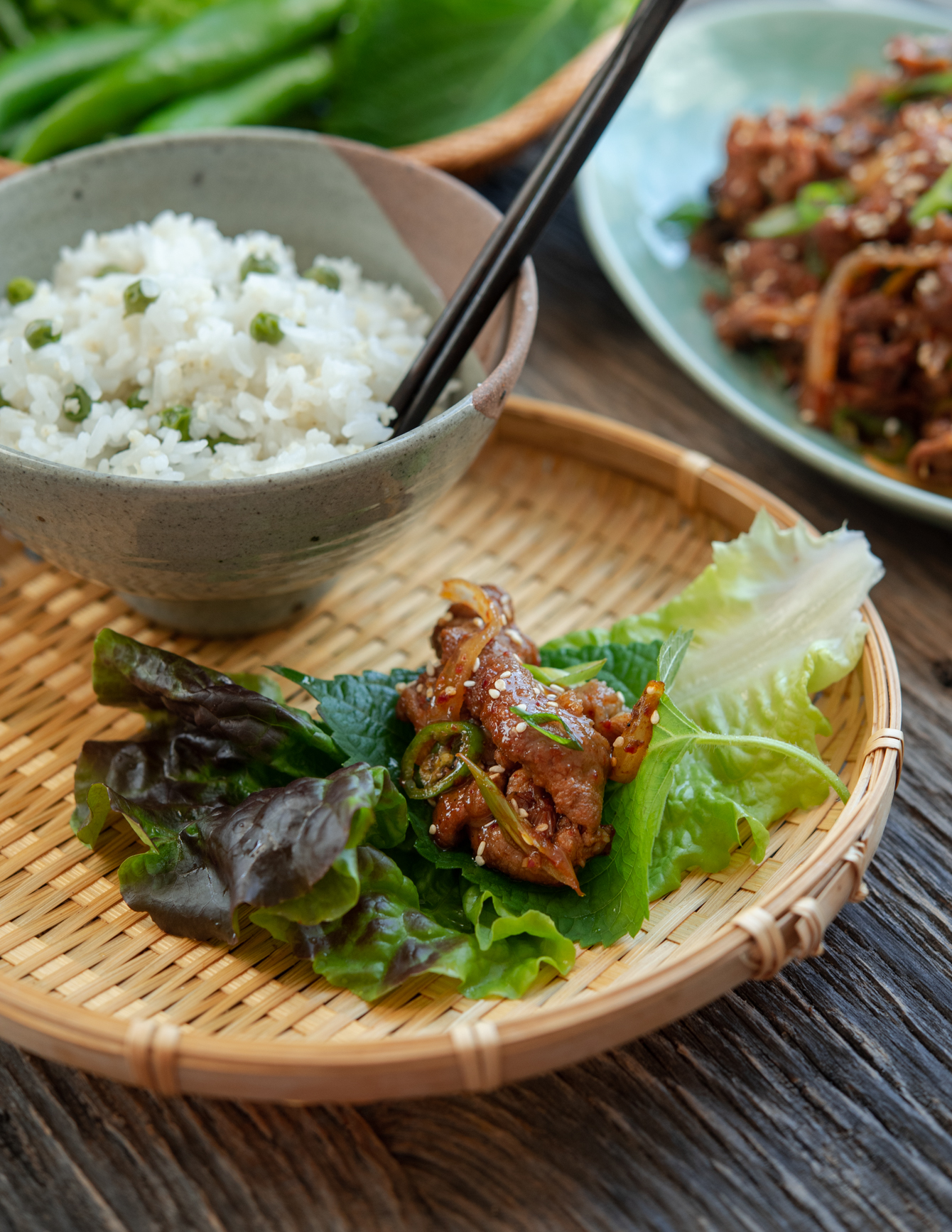
Pork bulgogi is typically served with steamed rice and a few simple Korean vegetable side dishes. It is also commonly wrapped in crisp lettuce or aromatic perilla leaves, which balance the heat and add freshness.
For a fuller meal, many Korean families enjoy it with a comforting bowl of traditional doenjang jjigae with tofu and vegetables to complete the meal. However you serve it, the combination of spicy, smoky pork and fresh, clean flavors never disappoints.
Love this recipe? Rate it and share your experience in the comments below! On Instagram? Tag me to showcase your creation. For more delicious recipes, subscribe to our newsletter!
Spicy Pork Bulgogi (Jeyuk Bokkeum)
Ingredients
- 2 lb (900 g) pork shoulder , or pork butt, very thinly sliced
- 2 tbsp (30 ml) canola oil
- 2 tsp (8 g) sugar
- 1 Asian leek , or 4 green onion, chopped
- 1/2 large onion, sliced
For seasoning paste:
- 6 tbsp (90 g) Korean chili paste (gochujang)
- 1-2 tbsp (6–12 g) Korean chili flakes (gochugaru)
- 2 tbsp (30 ml) soy sauce
- 2 tbsp (30 ml) sweet rice wine (mirim)
- 2 tbsp (24 g) sugar
- 3 cloves garlic, finely minced
- 1 1/2 tsp (7 g) ginger paste
- 1 tbsp (15 ml) sesame oil
- 1 tbsp (9 g) toasted sesame seeds
- 1/2 tsp (2 g) black pepper
Instructions
- To make the seasoning paste for pork, combine chili paste, chili flakes, soy sauce, rice wine, sugar, garlic, ginger puree, sesame oil, sesame seeds, and black pepper in a small mixing bowl; mix well.
- In a large mixing bowl, separate each slice of pork and put them in a bowl. Add the seasoning paste and mix well (Wearing a disposable food glove is helpful). You can make this step ahead of time and let it marinate in the refrigerator up to 24 hrs. Or you can go straight to stir-fry without marinating at all.
- Heat 2 tablespoon of oil in a deep skillet or wok over high heat. Add 2 teaspoon of sugar and swirl the pan around. Let the sugar turn brown and caramelized.
- Quickly add the chopped Asian leek (or green onion) and stir-fry for 30 seconds to infuse the oil. Add pork and onion. Stir-fry pork and onion until they are fully cooked and tender, about 3-4 minutes. Serve immediately with rice and lettuce (if desired).
Notes
Recipe Success Tips
- Slice Thinly: Cut pork about ⅛ inch thick for even cooking and better sauce absorption. If slicing at home, freeze the meat briefly to make it easier to cut clean slices.
- Use High Heat: Cook over high heat to evaporate moisture quickly and allow the sauce to reduce and cling. A cast iron skillet or carbon steel wok retains heat best. Avoid nonstick pans, which cannot maintain high temperature.
- Do Not Overcrowd: Cook in batches if needed. Leaving space between slices allows proper searing instead of steaming.
Hello,
How do I slice the pork?
Slice the pork thinly across the grain so it cooks quickly and stays tender. If the meat is slightly frozen, it’s even easier to slice. Hope you enjoy the recipe!
How do you make this without the marinade sticking to the pan and burning instantly? I could make the first batch of meat fine, but I had to spend like ten minutes scrubbing it before doing the second batch, there was this 0.5 cm layer of black burnt stuff. I’d prefer to not to have to deal with that clean-up next time. Was using a non-stick pan the problem (I don’t have other ones)? Or did I get the heat setting wrong?
Hi! That can definitely happen with spicy marinades since the sugar and gochujang burn quickly. Try cooking the pork over medium to medium-high heat instead of high and don’t overcrowd the pan (too much sauce at once can caramelize too fast). You can also oil the pan between batches or add a splash of water to loosen the sauce if it starts sticking. A non-stick pan is fine, just keep the heat moderate. Hope that helps for next time!
Hi, I bought Sun Hee Gochujang Korean hot chilli paste. Is this correct paste? I tried a little to taste it, boy that is HOT. There is no way that I am putting 6tbs of that in. Might try two teaspoons at most.
Commercial gochujang varies in flavor and heat depending on the brand—some are much spicier than others! I’m not familiar with that specific brand, but it sounds like you got a particularly hot one. If you prefer less heat, try reducing the gochujang to half and adding more soy sauce instead. You can also cut back or skip the gochugaru, as it adds extra spice. Just a heads-up—this recipe is for 2 lb (900g) of pork, serving about 6-8 people, and 6 tablespoons of gochujang is a pretty standard amount for that quantity. Hope that helps!.
Absolutely delicious! This will definitely be a part of our meals from now on. It was spicy but not burn your mouth hot. The flavor was so good! The only addition was some cubed zucchini that was added because I needed to use it up.
Can I use ground pork for this recipe? Thanks!
Hi Lzzy
Ground pork will work with the recipe. Hope you like it. Thanks.
This was amazing! My first time cooking Korean food and it turned out so good I could eat it everyday. Regards from Sweden!