

Bibim Naengmyeon (Spicy Cold Buckwheat Noodles)
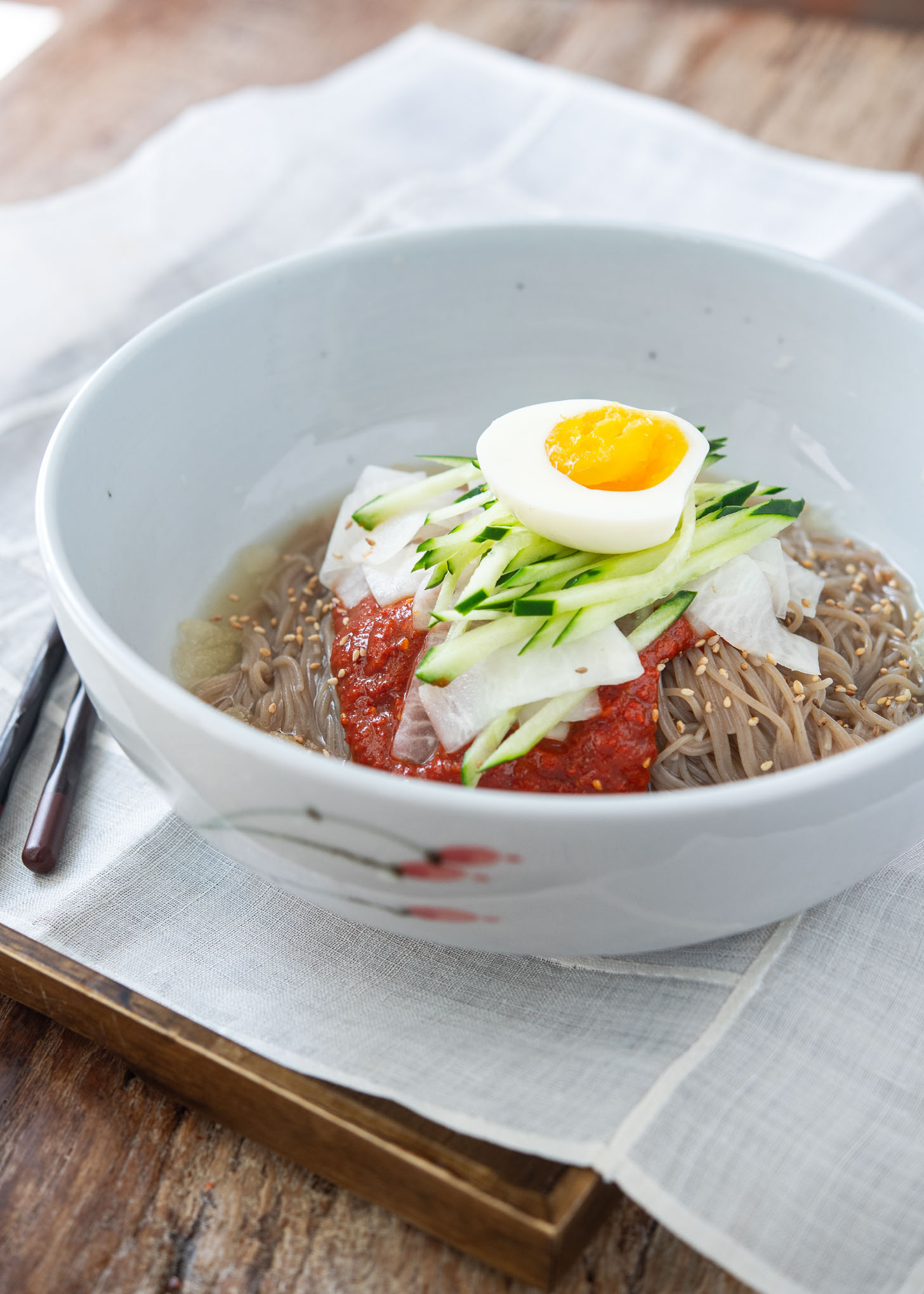
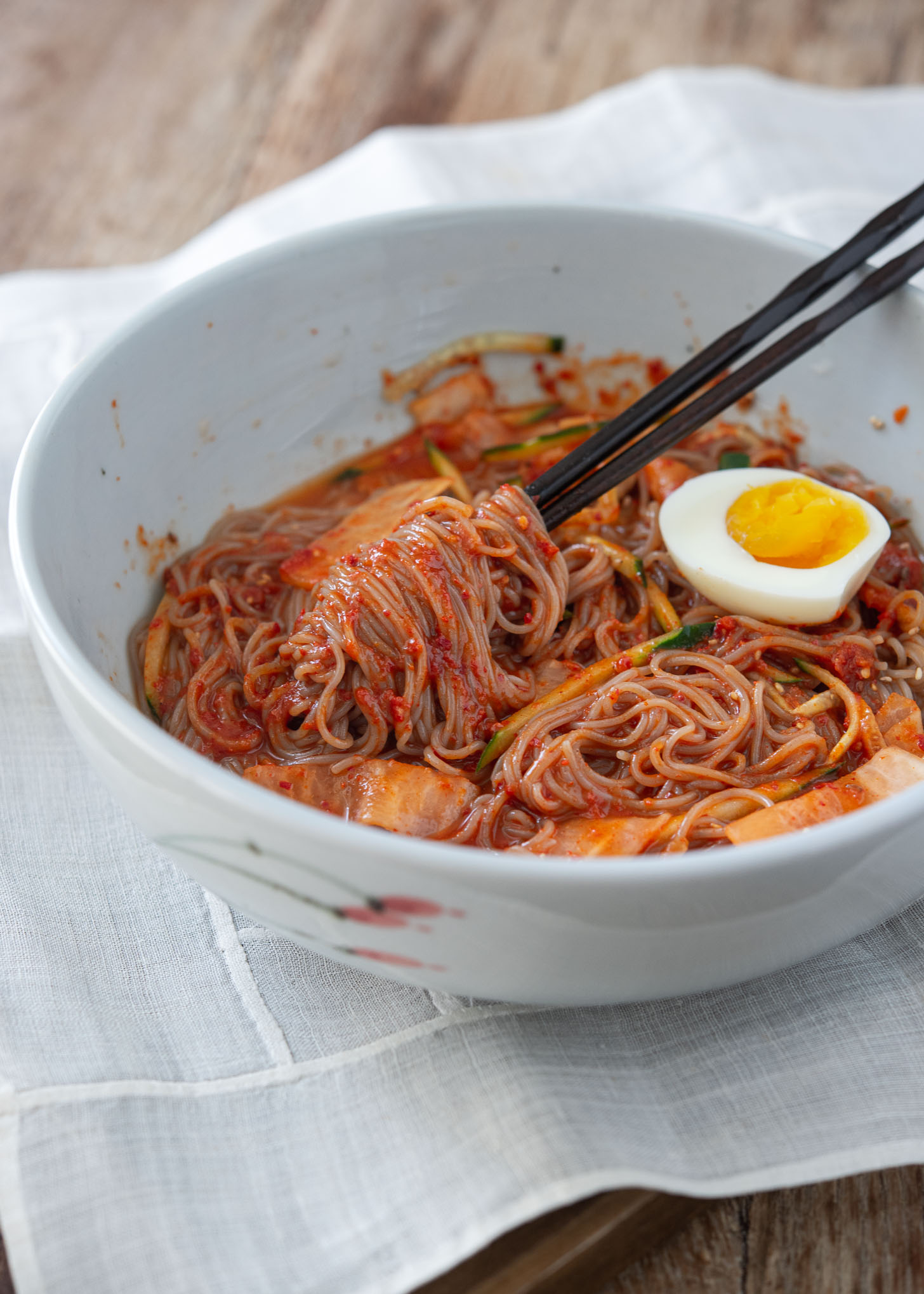
Bibim naengmyeon is a spicy Korean cold noodle dish made with chewy buckwheat noodles and a bold gochugaru sauce, topped with crisp cucumber and egg. This no-cook, summer-ready meal comes together in about an hour and delivers a refreshing, flavor-packed bowl you can easily make at home.
Get new recipes via email:
I didn’t grow up eating much bibim naengmyeon, and honestly, I regret it every time I slurp down a bowl of these spicy, chewy noodles. Naengmyeon comes from Korea’s northern regions, so it wasn’t something I had often in my southern hometown.
As my tastes evolved, so did my appreciation for it—especially bibim naengmyeon, where cold buckwheat noodles are tossed in a bold, spicy sauce and topped with crisp vegetables. There’s also a broth-based version called mul naengmyeon, but I tend to reach for the spicy one.
Over the years, I’ve tested countless versions to recreate that restaurant-style flavor at home. This is the one I keep coming back to—bright, spicy, and slightly fruity for balance, with a shortcut to make it more doable.
Prefer something milder with a kimchi kick? Try my Bibim Guksu (Cold Korean Noodles with Kimchi)—it’s made with wheat noodles and has a slightly tangier, lighter profile that’s just as slurp-worthy.
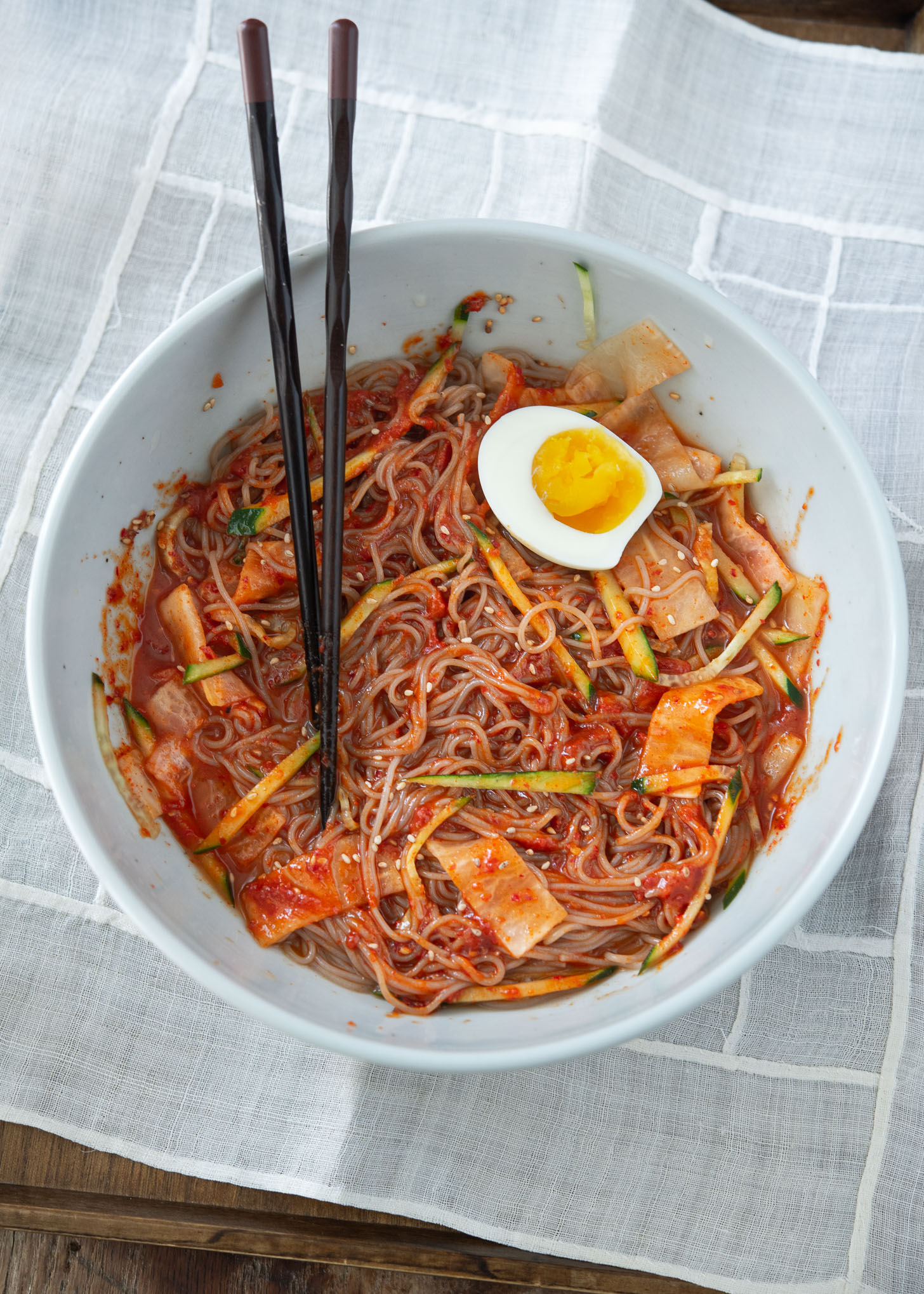
Over the years, I’ve tested countless versions to recreate that restaurant-style flavor at home. This is the one I keep coming back to—bright, spicy, and slightly fruity for balance, with a shortcut to make it more doable.
If you’re looking for something refreshing and bold for summer, this dish delivers.
Prefer something milder with a kimchi kick? Try my Bibim Guksu (Cold Korean Noodles with Kimchi)—it’s made with wheat noodles and has a slightly tangier, lighter profile that’s just as slurp-worthy.
Bibim Naengmyeon vs Mul Naengmyeon
Bibim naengmyeon is served without broth and tossed in a spicy gochugaru-based sauce, giving it a bold, punchy flavor.
Mul naengmyeon is served in an icy, tangy broth with a lighter, more refreshing taste.
Both use chewy buckwheat noodles, but the experience is completely different—one is spicy and saucy, the other cool and brothy.
When Koreans Eat Naengmyeon
Naengmyeon is especially popular during the hot summer months, when cold, refreshing dishes are most appealing. It’s also commonly served after Korean BBQ pork belly (samgyupsal) as a cool, spicy way to finish a meal.
Key Ingredients for Bibim Naengmyeon
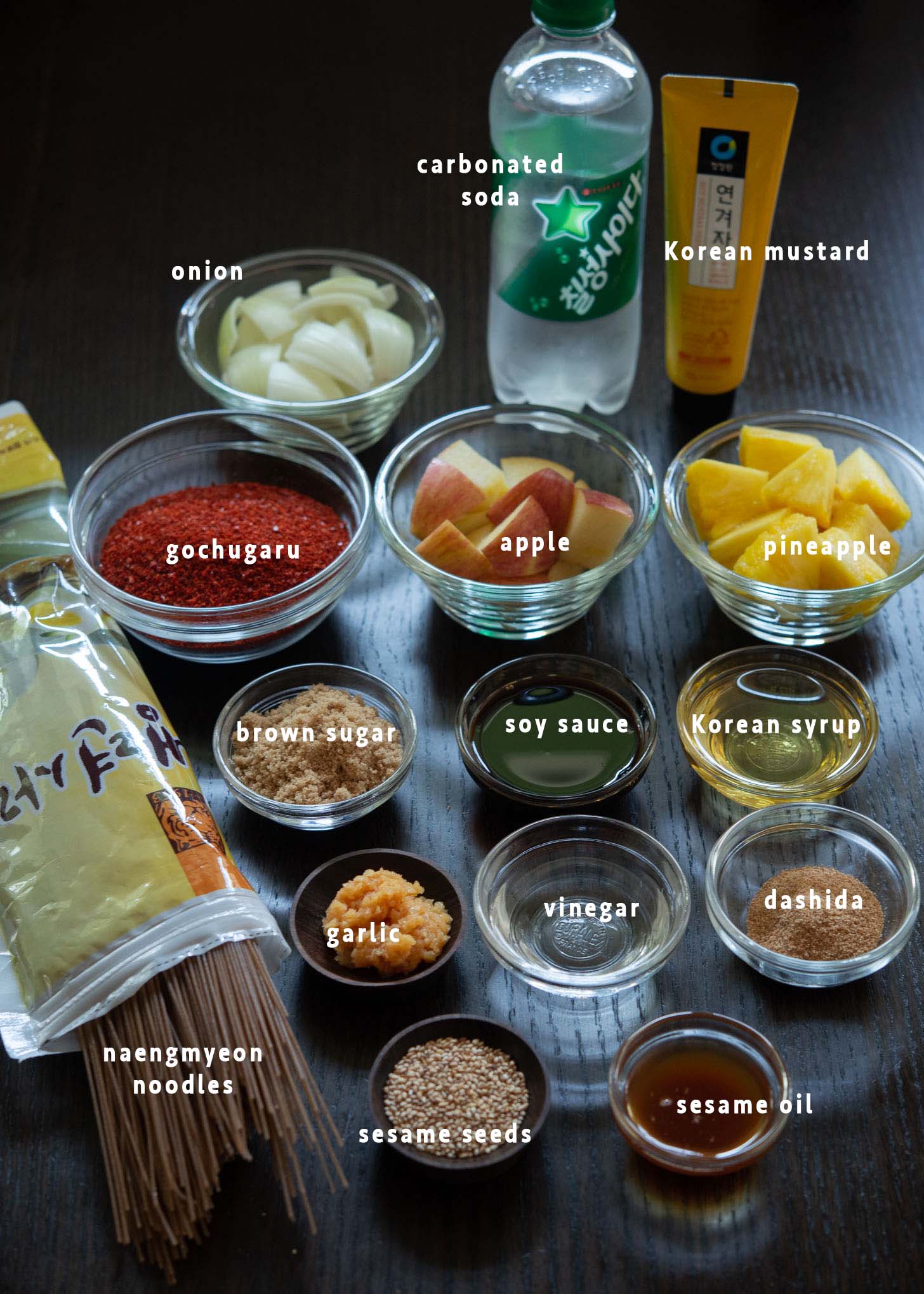
Naengmyeon Noodles (Buckwheat-Based)
For authentic bibim naengmyeon, use dried naengmyeon noodles (naengmyeon sari, 냉면사리) made with a mix of buckwheat and wheat flour. They’re chewy, slightly nutty, and hold up well under the sauce.
Some brands come pre-cut, but if you get long bundles, simply snip them with kitchen scissors before serving. That’s what many Korean restaurants do.
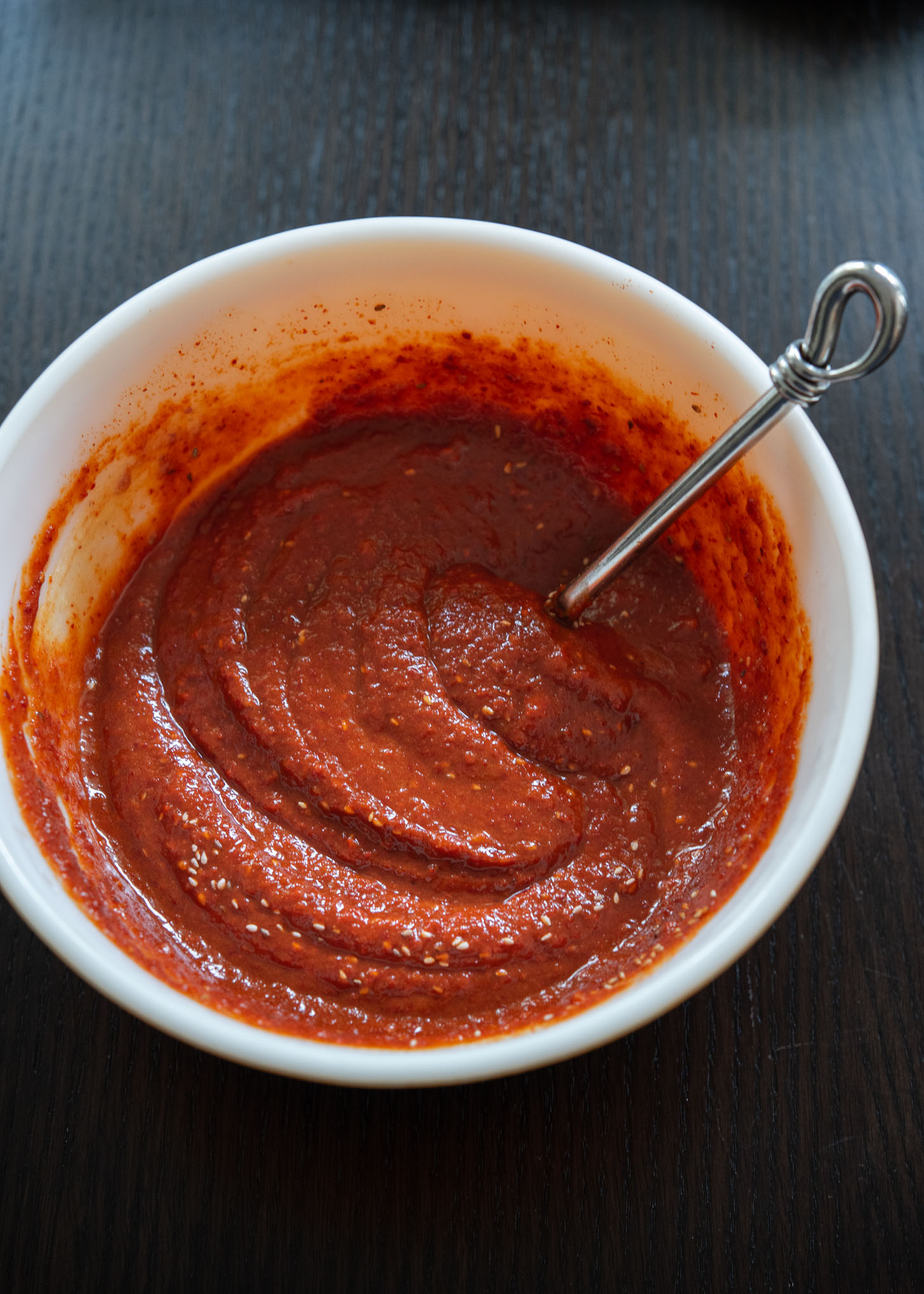
Bibim Sauce (Spicy Chili Sauce)
Instead of gochujang, I use gochugaru (Korean red chili flakes) as the base. This mirrors a North Korean-style sauce more closely and gives the noodles a cleaner, brighter heat.
The sauce starts with gochugaru, soy sauce, and vinegar, but fresh apple and pineapple round out the heat with a subtle sweetness. It’s a simple way to get restaurant-level flavor at home.
Make the sauce ahead of time and chill it for at least 20 minutes, or overnight if you can. The flavor improves as it rests.
Beef + Broth (Optional but Delicious)
Thinly sliced boiled or roasted beef is a classic topping. A small amount of cold beef broth helps loosen the noodles and adds depth.
I use dashida (Korean beef stock powder) mixed with soda and mustard, then freeze it into a slush. It’s not strictly traditional, but it’s a method used in many restaurants and works well.
If you prefer a meat-free version, a light mushroom stock is a good alternative.
How to make Bibim Naengmyeon (Spicy Cold Buckwheat Noodles)
This dish comes together quickly once your sauce and toppings are ready. Check the recipe card below for full measurements.
Quick Beef Broth (Optional)
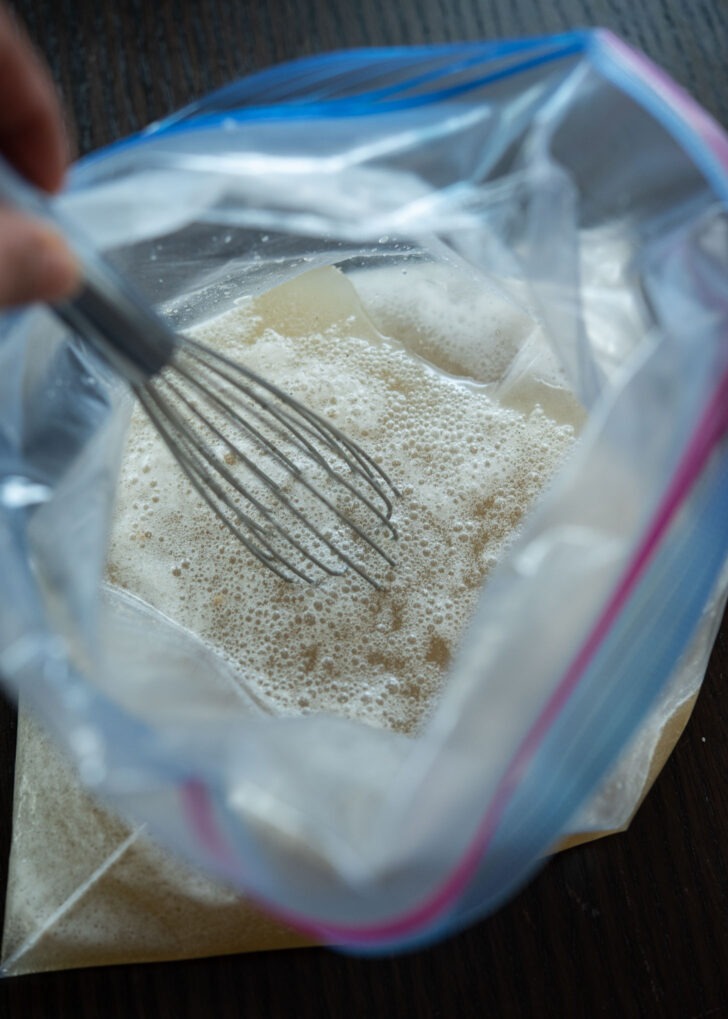
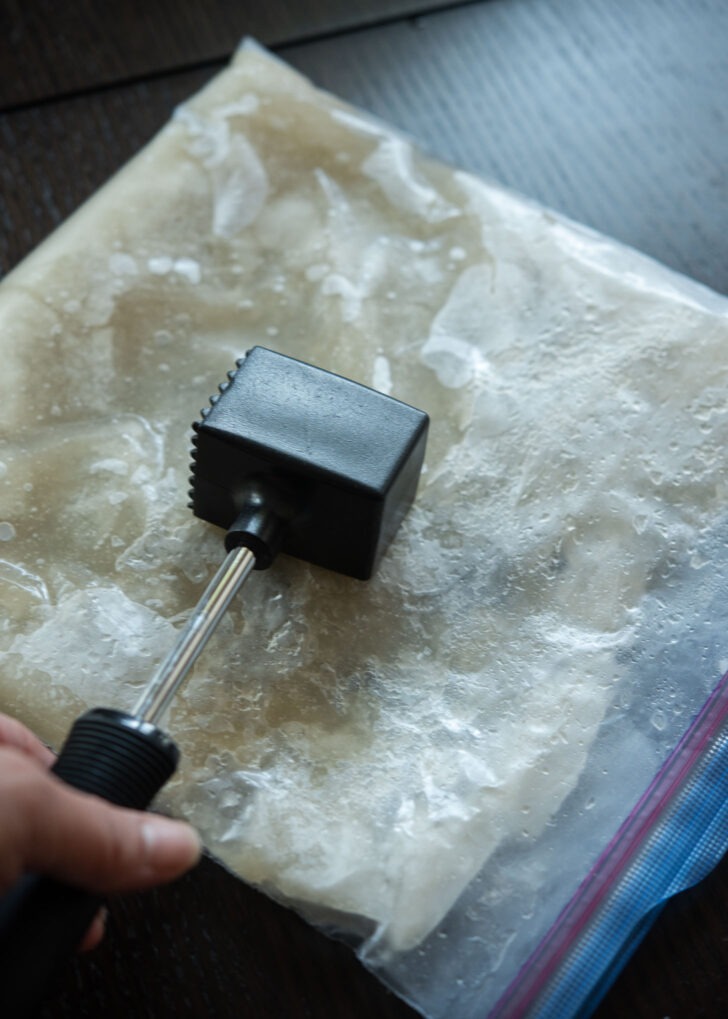
For restaurant-style flavor with less effort, mix water, a carbonated drink, Korean beef stock powder (sogogi dashida), and a dab of mustard. Freeze it flat in a zip-lock bag for 1–2 hours until slushy, then crush it just before serving. It adds a subtle depth and helps loosen the noodles.
Bibim Sauce
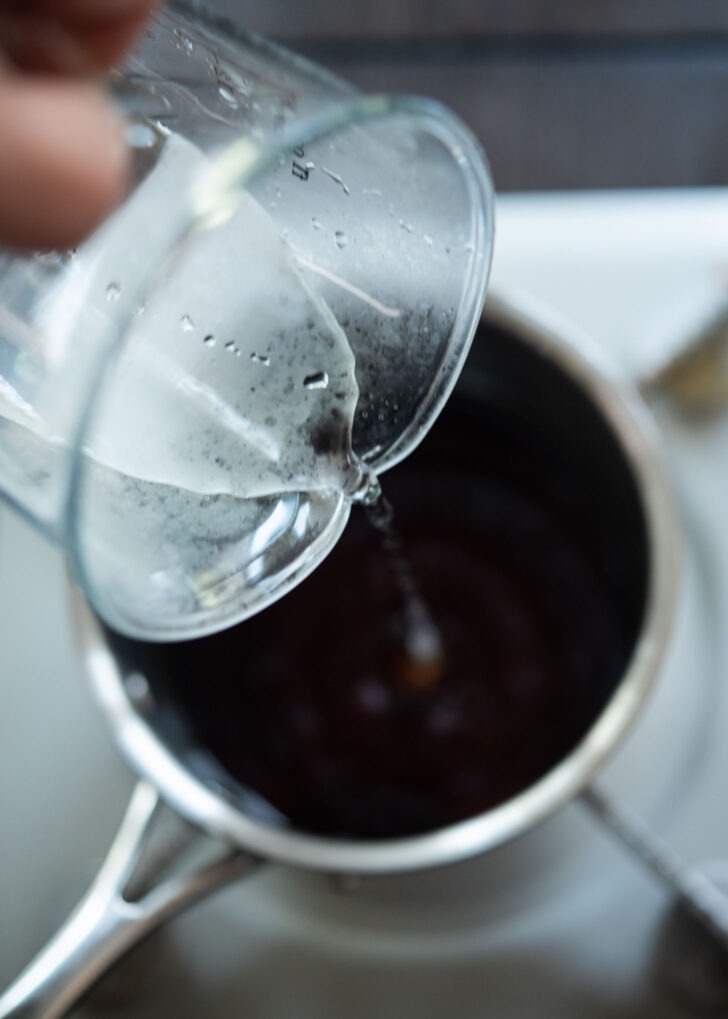
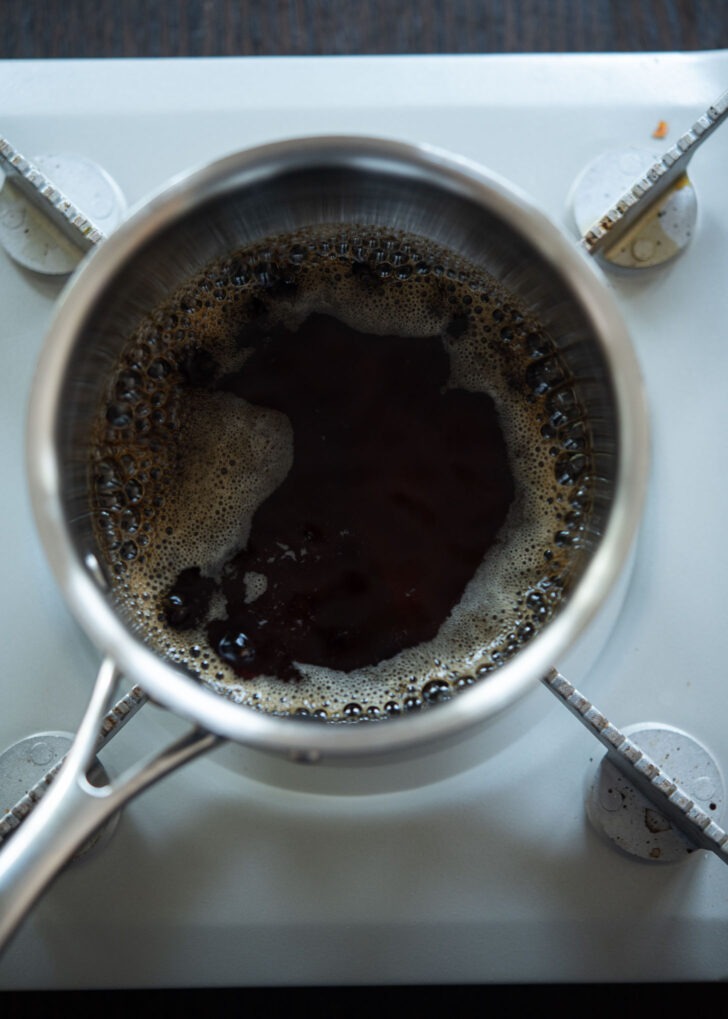
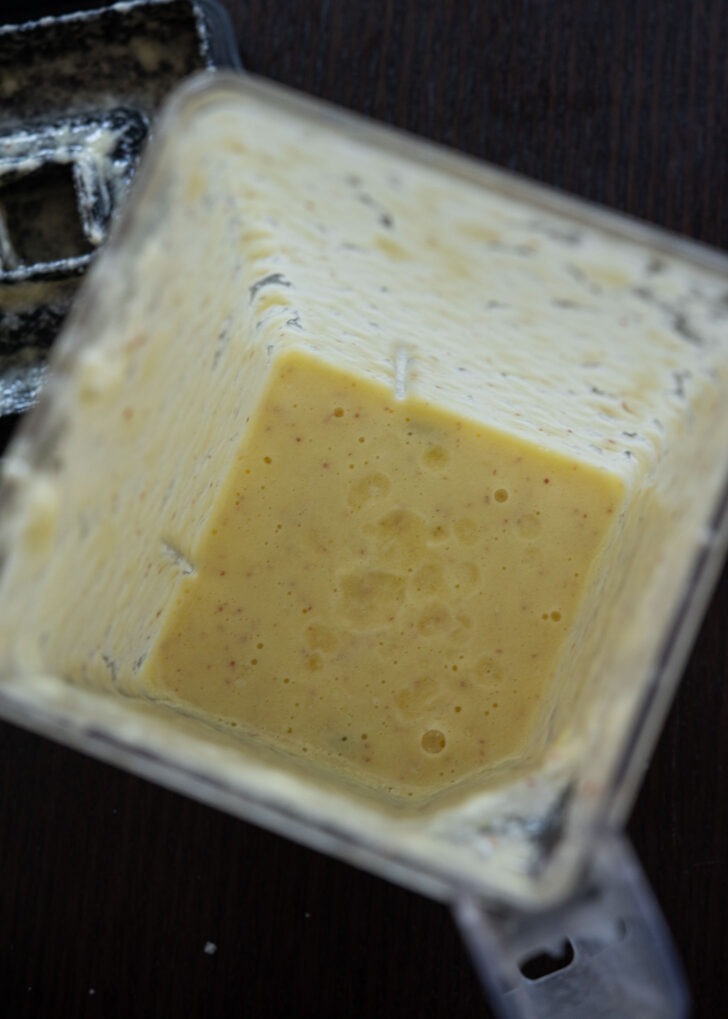
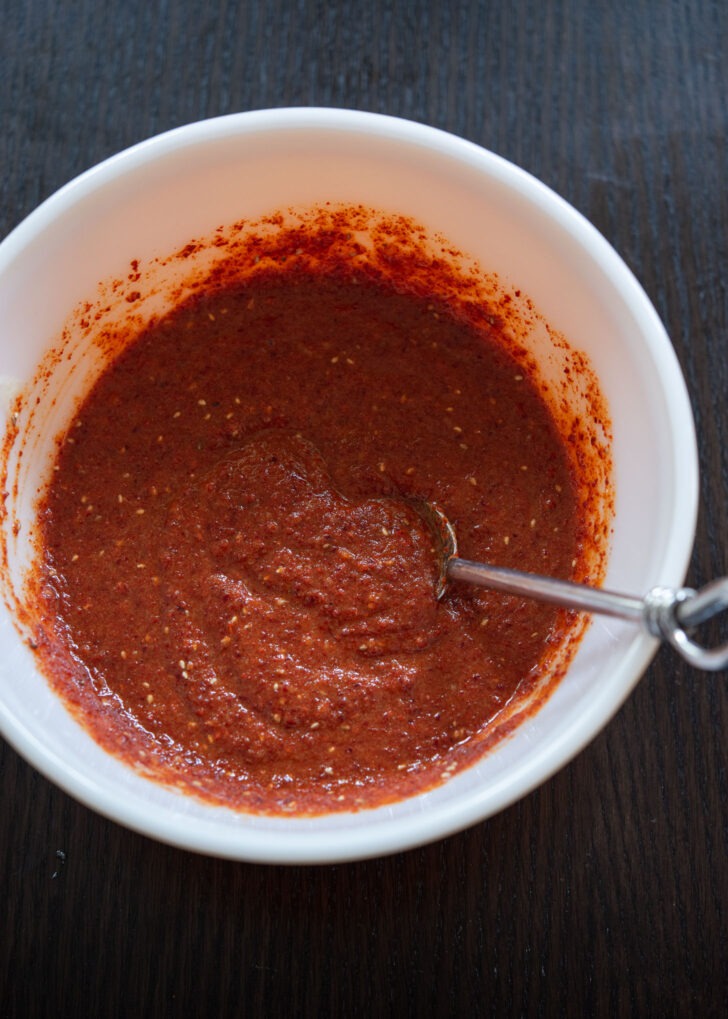
Start with a boiled soy sauce base, then blend in aromatics. Stir in gochugaru, sugar, sesame oil, and a touch of mustard. Chill until ready to use.
Radish Topping
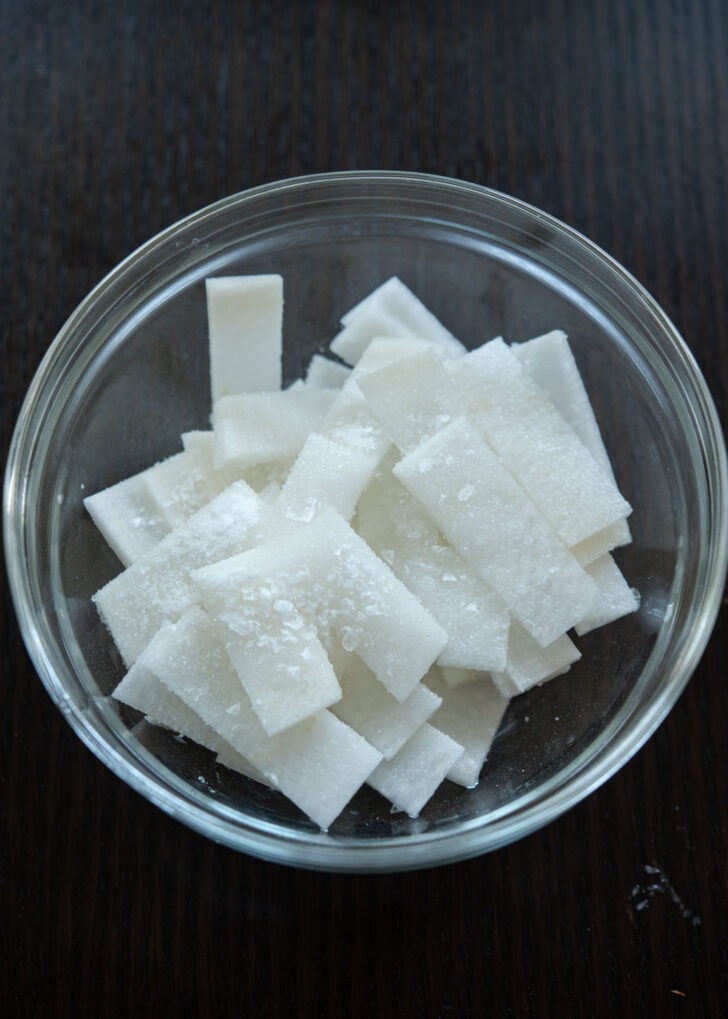
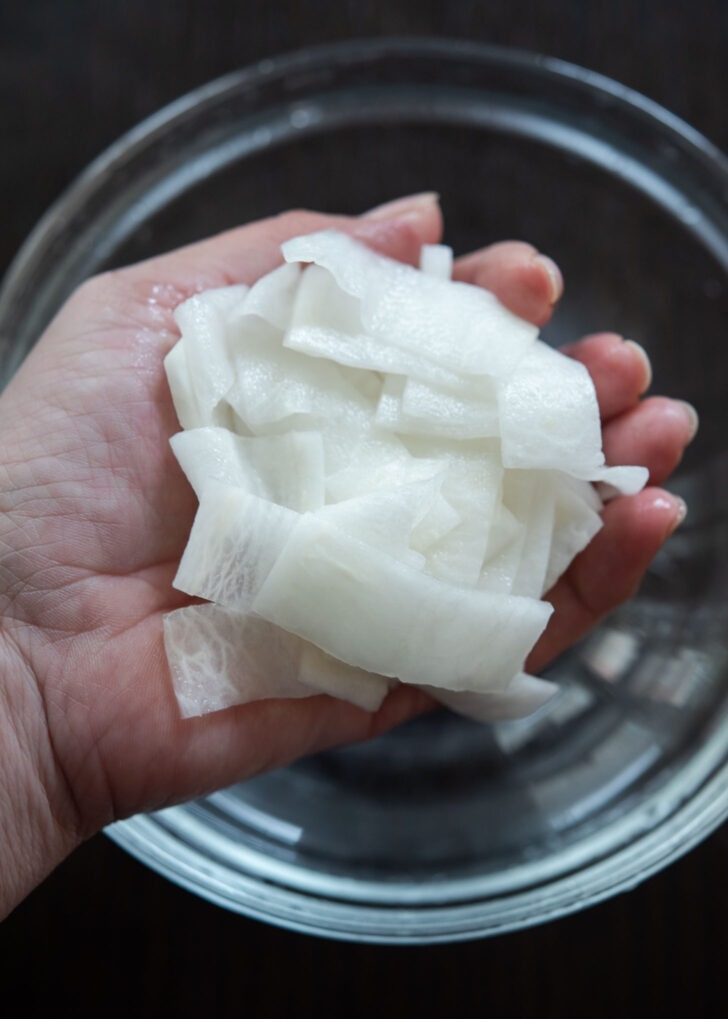
For crunch and contrast, I make a quick-pickled radish—just salt, sugar, and vinegar. It only takes 20 minutes and brightens the whole bowl.
Noodles
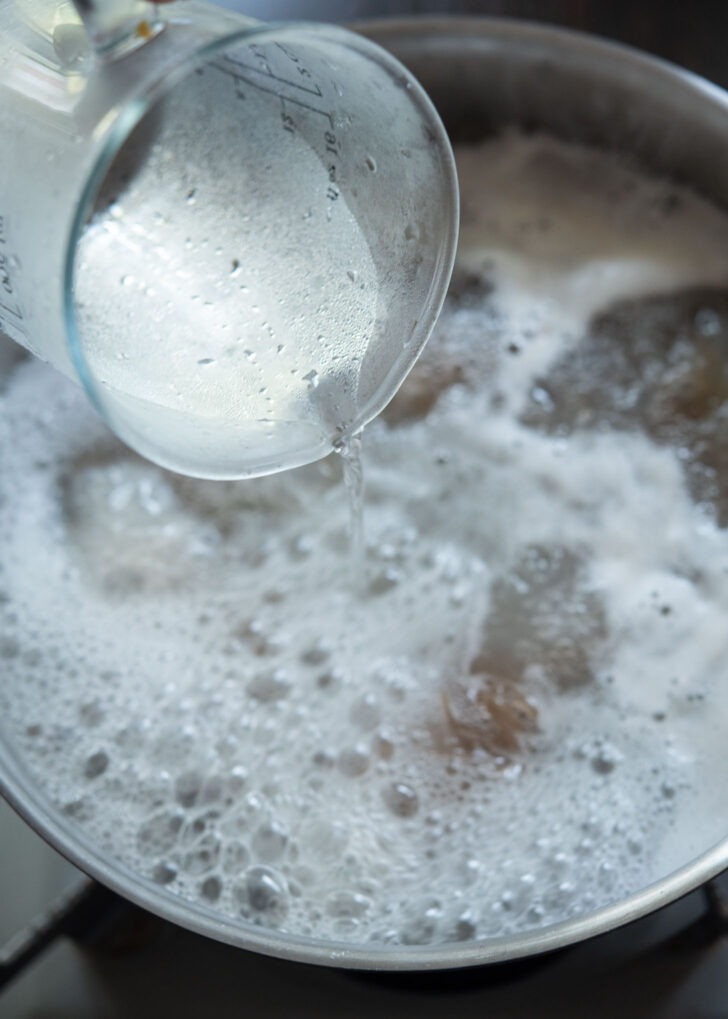
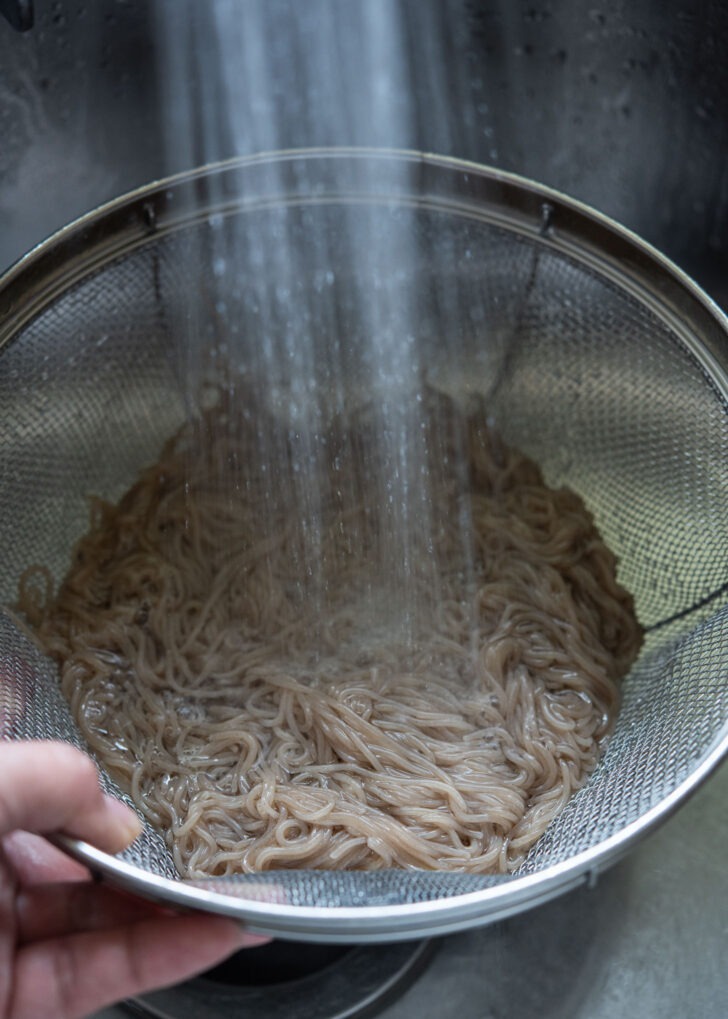
Cook the noodles according to package directions. For extra chew, add a splash of cold water when the pot boils and repeat 2 to 3 times. This temperature shock helps tighten the starch and gives the noodles that signature elastic bite. Rinse thoroughly under cold water and drain well.
Assemble and Serve
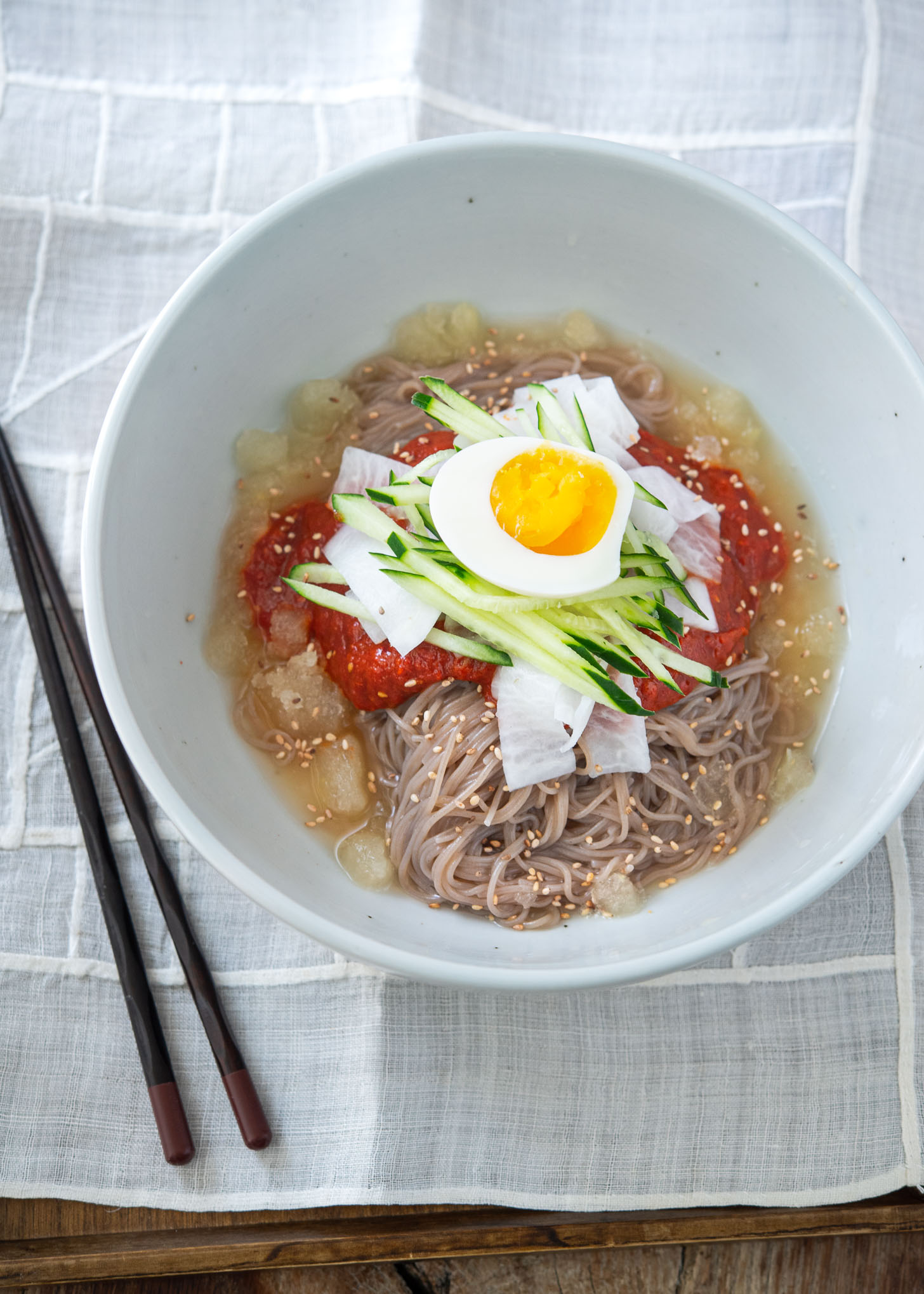
Add a small amount of icy broth if using, then place the noodles in a bowl. Top with sauce, pickled radish, cucumber, pear, and a boiled egg. Sprinkle with sesame seeds.
At the table, adjust the flavors to your liking with a little extra mustard or vinegar to dial up the tang and spice to your taste.
If you’re craving more chilled noodle dishes like this, you’ll find plenty of options in my Korean noodle recipes collection.
Love this recipe? Rate it and share your experience in the comments below! On Instagram? Tag me to showcase your creation. For more delicious recipes, subscribe to our newsletter!
Bibim Naengmyeon (Spicy Cold Buckwheat Noodles)
Ingredients
- 8 servings Korean naengmyeon noodles
- 1 Asian cucumber, sliced to thin matchsticks
- ½ (about 150g) Korean pear or Asian pear, thinly sliced, optional
- 4 hard boiled eggs, sliced in half
Optional beef broth
- 4 cup (960 ml) water
- 1 cup (240 ml) lemon lime flavored carbonated soda
- 2 tbsp (15 g) Korean beef bouillon powder (sogogi dashida)
- 4 tsp (20 g) Korean mustard, or 2 tbsp dijon mustard (30 g)
Quick radish topping
- ½ (about 300 g) Korean radish or daikon radish, cut into 1/2-inch wide, 2-inch long thin strips
- 1 tbsp (15 g) salt
- 2 tbsp (25 g) sugar
- 2 tbsp (30 ml) vinegar
Bibim naengmyeon sauce
- ¼ cup (60 ml) soy sauce
- ½ cup (120 ml) water
- ½ (about 100 g) apple, peeled and diced
- ½ medium onion, peeled and diced
- 5 oz (150 g) fresh pineapple, or 3 rings of canned pineapple
- 1 clove garlic
- 3 tbsp (45 ml) water , or pineapple juice
- 1 cup (80 g) Korean chili flakes (gochugaru)
- ¼ cup (60 ml) white vinegar, or more
- ⅓ cup (70 g) brown sugar
- 4 tbsp Korean syrup (80 g), or 3 tbsp honey (60 g)
- 2 tbsp (30 ml) sesame oil
- 1½ tsp (7 g) ginger puree, or ½ tsp ginger powder
- 1 tsp 95 g) Korean mustard , or 2 tsp dijon mustard (10 g)
- 1 tsp (5 g) salt
- 1 tbsp (9g) toasted sesame seeds
Instructions
To make optional beef broth
- In a zip-top bag, whisk together water, carbonated drink, beef bouillon powder, and mustard. Seal the bag tightly and lay it flat in the freezer for 1-2 hours until it becomes partially frozen.
To make naengmyeon sauce
- In a small pot, combine soy sauce and water. Bring it to a full boil over high heat, then remove from the heat and let it cool.
- In a blender, combine onion, garlic, apple, pineapple, and 3 tablespoons of water. Puree until smooth.
- Transfer the puree into a mixing bowl. Add the soy sauce mixture, Korean chili flakes, brown sugar, Korean corn syrup or honey, ginger paste, mustard, sesame oil, and sesame seeds. Mix well. Let the sauce chill in the refrigerator for at least 20 minutes or overnight.
To make radish topping
- Combine thinly sliced radish with salt, sugar, and vinegar in a mixing bowl. Let it sit for 20 minutes. Rinse the radish slices once and firmly squeeze out excess moisture. Set aside.
To cook noodles
- Bring a pot of water to a boil. Add the noodles and stir. When the water returns to a boil, add a shot of cold water. Repeat this process until the noodles are soft and chewy according to the package directions. Drain the noodles in a colander and rinse them under running cold water. Drain again.
To assemble bibim naengmyeon
- If using naengmyeon broth, crush the partially frozen broth with a meat hammer. Add 1/2 cup of the icy broth to the bottom of the serving bowl.
- Place the cooked noodles in the bowl and add about 6-8 tablespoons of the bibim naengmyeon sauce on top. Garnish the dish with pickled radish, cucumber, Korean pear (if desired), and a hard or soft-boiled egg. Sprinkle toasted sesame seeds over the dish according to your preference. Enjoy your homemade bibim naengmyeon!
Excellent! Lots of ingredients and chopping, but the result was worth it.
Hope this is acceptable, to ask: I use Gojuchang in many recipes. Because it is in the fridge it is difficult to mix with, e.g. cucumbers. . Is there a recommended way to liquify or soften Gojuchang? Thanks.
Pour a small amount of Sprite, about 2-3 tablespoons, directly into a 1lb gochujang container and let it sit on the counter for 30 minutes. After that, stir to blend, loosening the paste. Add more Sprite if necessary. Hope this tip is helpful!
I’m excited to try this recipe, but I was just wondering what the reason is behind boiling the soy sauce and water together before adding it to the sauce?
Boiling soy sauce can help to intensify the flavor and get rid of any possible unwanted odors. However, this step is optional and can be skipped if preferred.
This was really good, I loved the heat. But now I’ve got two cups.of the sauce left over, any suggestions for what to do with it?
Use to sauce up any types of noodles – rice noodles, wheat noodles, vermicelli, etc. You can even toss with ramen noodles (without the seasoning powder), too. Top with some sliced cucumber and a hard boiled egg, and you have a simple noodle meal in no time since you have the sauce ready.
Loved the recipe! My fiancé wants the cold ice soup broth to mix with it. Would you mind sharing the recipe for that as well? I’m having trouble finding a recipe he likes it paired with.
Hi Holly,
I tried this wonderful recipe yesterday and it was delicious, like all of your recipes I cooked so far.
Now I’ve got a question about the soba noodles. When I opened the package I found a couple of sachets containing maybe 3-4 tablespoons of a liquid of light orange color. As all the descriptions are in Korean I have no idea how to use it. Could it be used as an additional sauce to your spicy goodness? Or is it a helper for the lazy cook and thought to be used as the only sauce?
And I got another question. I was finally able to find some frozen Eomuk / 어묵. Here, too, they added some spice. It is a small sachet with a reddish powder. Could it be, that I need to dissolve it in water to make some spicy sauce? Or is it to sprinkle over the Eomuk, because I found no numbers indicating an amount of liquid to use?
Vague questions, I know, but I hope you’ll have a way to help me.
Thank you!
Bee
Hi Bee
The sachet might be the sauce that comes with the noodles. But I am curious why it is light orange in color. Usually complimentary sauce in the package for this noodle is usually deep in red color. Have you checked the expiration date?
The reddish powder might be the mild chili powder that you can sprinkle directly over your 어묵soup. Taste it fist to see if it is edible to make sure, though. 🙂
Glad to hear that you got some Korean cooking going on! Happy eating!
Yes, I checked the date and it is fine. If I decifer the looking like handwritten letters correctly the name of the liquid should be 냉면 용 육수.
I will try the powder by sprinkling it on the Eomuk and you’ll here from my self-experiment in case I survive it, OK?
Thank you!
Oops, that should be *decipher of course. (Sometimes I’m just too lazy or too distracted by my kids to check the dictionary and see the obvious mistakes too late.)
Had this for supper and it was delicious! Great recipe.
Hey! Your recipe looks absolutely yummy~ I will try making it very soon!
The sauce must be made one or two days before being eaten right? Should we keep it in the fridge after making it?
Thanks!
Yes, keep the sauce in the fridge.
How do you get the noodles to be chewy? I’ve tried doing as you said with rinsing in ice water but it never comes out as chewy as when I get them at restaurant. Do I let it sit in the fridge? Also the noodles tend to clump up. How do I keep it from sticking together?
Can you use gochu jang as well for the sauce?
You can, but I highly recommend to use the chili powder instead. Paste will bring different texture to the sauce.
한국전통음식을 소개하면서 소바라고 설명하는 것은 부적절하다고 봅니다. 냉면은 이북지방 고유 음식이고 일본소바와 얼마나 관련이 있는지는 의문입니다.
영문판 위키에서 냉면을 검색해봐도 소바라는 단어는 보이지 않습니다. 삭제 또는 정정 부탁드립니다.
의견 감사합니다. 그렇군요, 소바는 일본말이라 냉면으로 표현하기는 적절하지않군요. 정정하겠습니다.
This looks wonderful! Lovely pics, as always, and a great recipe. I’ll definitely be trying this!
That sauce sounds amazing! I’m definitely going to make it once I get my hands on some pineapple! I love the chewy texture of the noodles.
wow… i bet that sauce is nuthin like the little packets you get with the prepacked Naengmyeon you get at the k.market 🙂 i gotta give it a try!
thanks
This looks fantastic! I can’t wait to try it! I love Beyond Kimchee!! Keep up the great work!!
Welcome back! Sounds like you had a great vacation. But no matter how much fun a vacation is, I, too, always enjoy returning home. Particularly if I have a dish like this to look forward to! What a great recipe. I love pasta and I love spicy, so this sounds wonderful. Great flavors, and pretty easy to make – what could be better?
I am visiting where I grew up right now.
.Funny how it used to be home and great place to visit, but Florida is home now. I love your step by step your photos.are great!..I so want to try this…I might have to ease up on the heat a bit though.
Welcome home! I love this recipe — so unusual and exotic, but still somehow comfort food. And pineapple is a surprise ingredient! I can’t wait to try this.
Thanks Ann. Pineapple adds nice flavor to the sauce without tasting any. Hope you can give this a try.
What stunning pictures. Cold noodles are all I eat nowadays. Too hot to have anything else! Thanks for the bibim naengmyun recipe. I always eat the packaged ones, but now I know.
Mabel
Thanks Mabel. I guarantee this spicy Naengmyeon will beat your summer heat. Tastes far much better than the package kind.
I love this! I was never a big fan of nengmyon when I lived in Korea but now I love it! Funny how my appetite changes overtime! This looks fabulous.
Believe me, my appetite changes every day. Naengmyeon is great dish to turn up the lost appetite.
I totally agree with the sentiment that home’s the best. Thanks for posting all the step by step photos, korean food is one of my favourite, this recipe looks so delicious, time to visit my favourite korean restaurant soon. Thanks for sharing 🙂
Yes, Korean food is my favorite too. Thanks for stopping by!
I tried this once and simply loved the texture of the noodle and the ultra spicy sauce 🙂 Certainly a great dish for a place like Malaysia where its summer all year round. Thanks for the recipe Holly! I hope you had great vacation.
Hi swan, good to hear from you. Of course I believe any Malaysian can handle the spicy Korean sauce. Just perfect match!