

Easy Hotteok (Korean Sweet Pancake)
Make hotteok at home with chewy dough and a molten cinnamon-sugar filling. This quick stovetop version cooks in minutes and brings the cozy flavor of Korea’s street-food markets right into your kitchen, perfect as a warm snack or dessert.
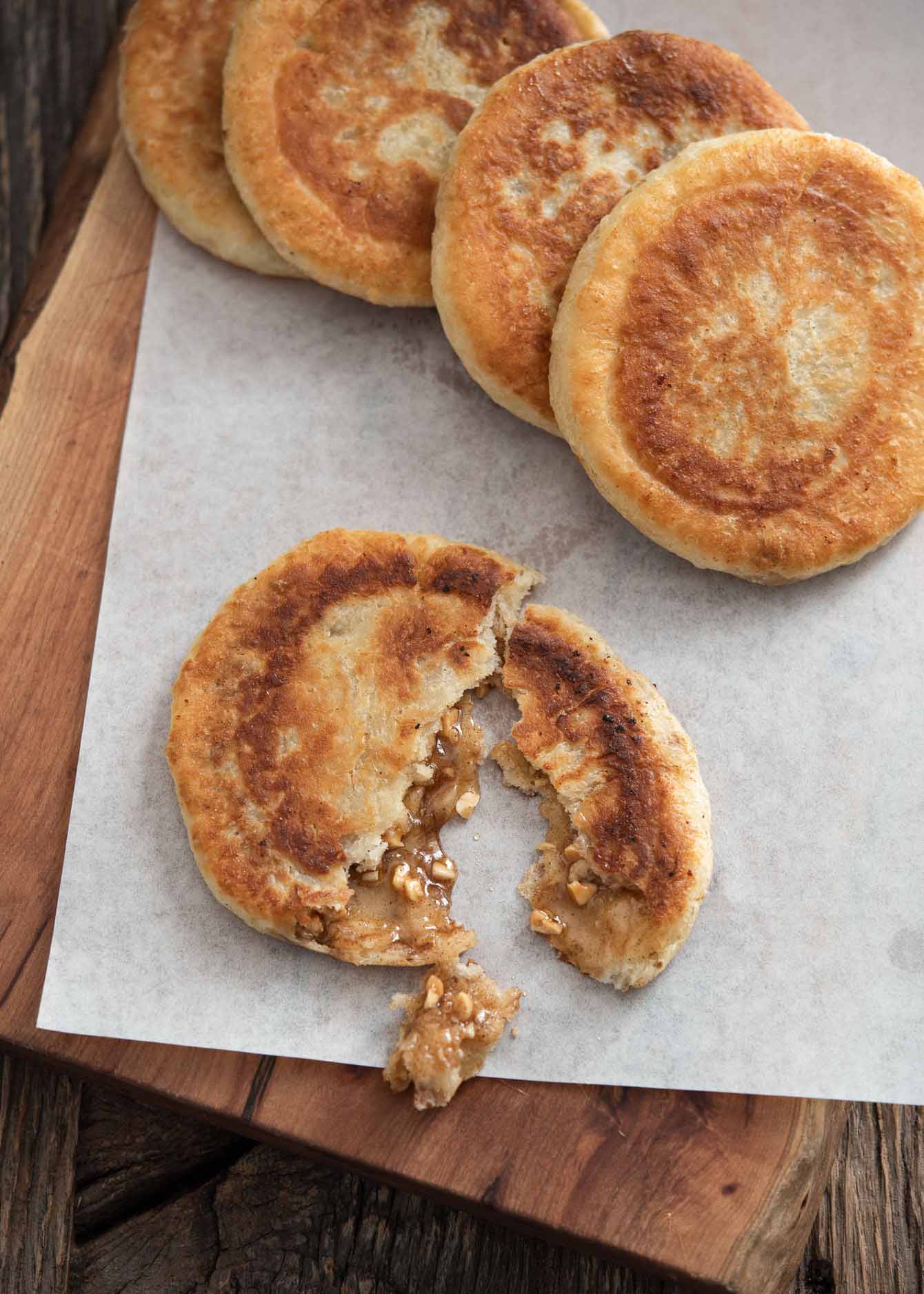
Hotteok (호떡) is one of Korea’s most beloved winter street snacks—golden pancakes with a warm, syrupy center of brown sugar, cinnamon, and nuts. Vendors press them flat on hot griddles, and the sweet filling melts into a gooey crunch that keeps you coming back for more.
Living in Korea, I’ve tried countless versions, from the old-school stalls in Seoul to the famous ssiat hotteok in Busan, stuffed with seeds and nuts after frying. That one was nutty, crunchy, and so good my husband wanted seconds—but the line stretched too far!
Get new recipes via email:
These days you’ll see creative twists like red bean, Nutella, or even cheese, but I always return to the classic cinnamon-sugar hotteok. With a few street-vendor tips I’ve picked up here, you can make them at home with the same crispy, chewy texture and molten center—no store-bought mix needed.
If you’re craving something warm but a little softer than hotteok, hoppang (Korean steamed buns filled with sweet red bean paste) are just as comforting on cold days. For more cozy Korean desserts and snacks, browse my Korean sweet treats collection for more ideas.
Key Ingredients & Tips for Hotteok
- Flour blend: After testing many versions in my kitchen here in Korea, I’ve found that combining all-purpose flour with sweet rice flour (chapssal-garu) gives the best chewy texture. Even a small amount of sweet rice flour keeps the pancakes soft after cooling. A touch of baking powder lightens the dough so it’s not dense.
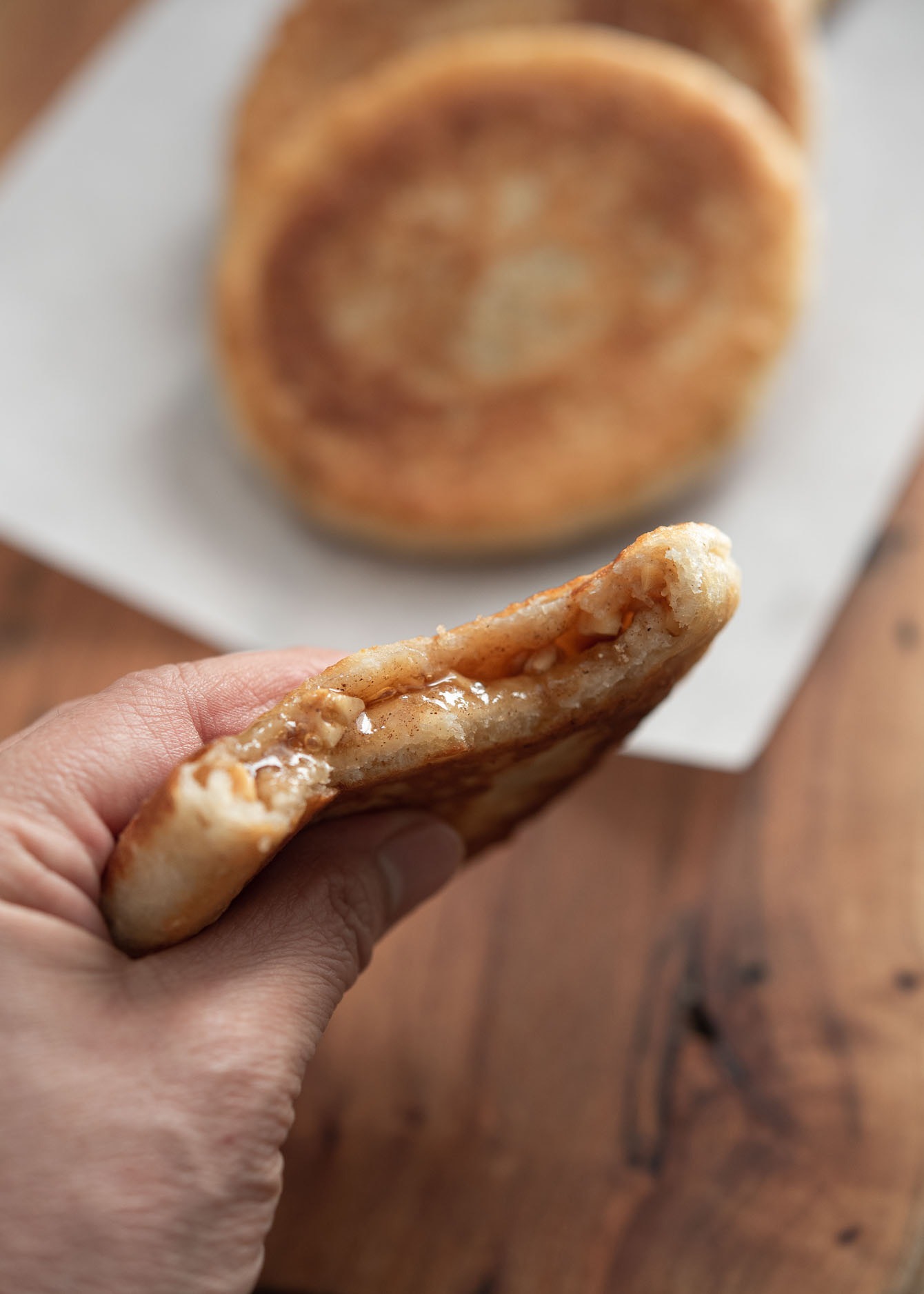
- Sugar filling: Street vendors often mix brown and white sugar with a spoonful of fine breadcrumbs to keep the syrup from crystallizing. I use that same trick at home, and it really makes a difference in creating a smooth, molten filling. Cinnamon adds warmth, and chopped peanuts give the familiar nutty crunch. You can easily adapt this with other nuts or seeds, but this classic version is the one I cherish.
How to Make Hotteok from Scratch
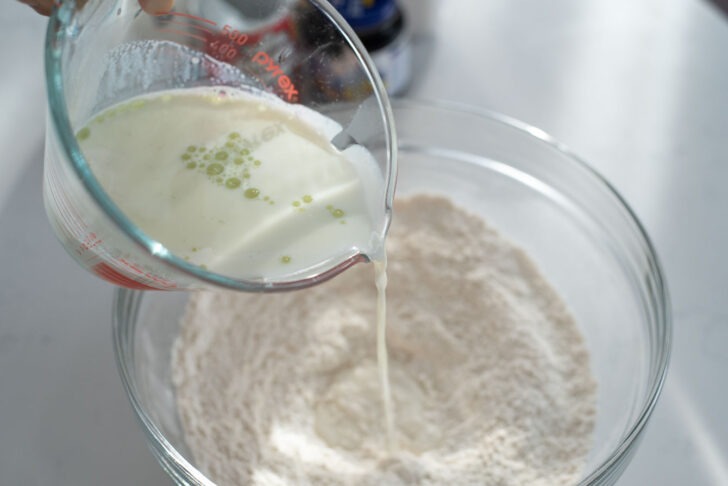
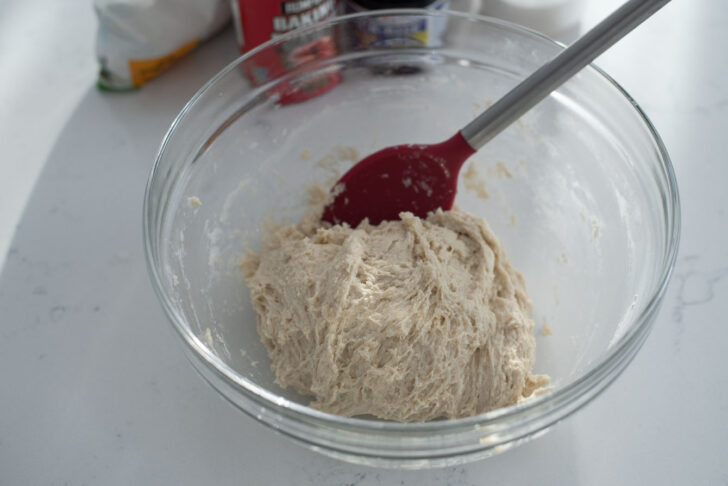
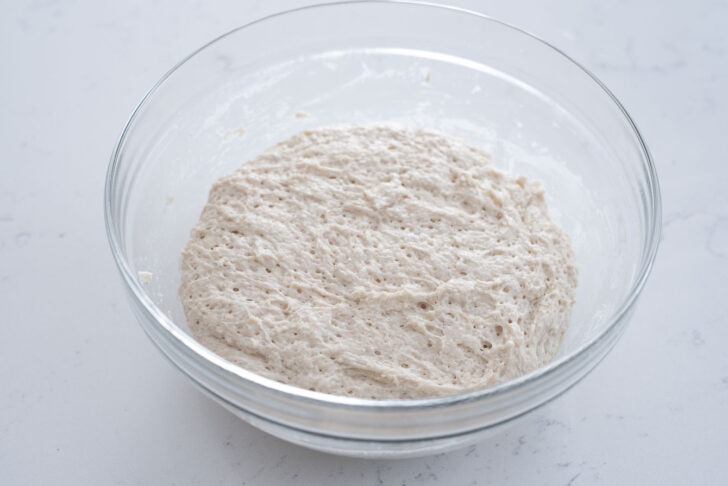
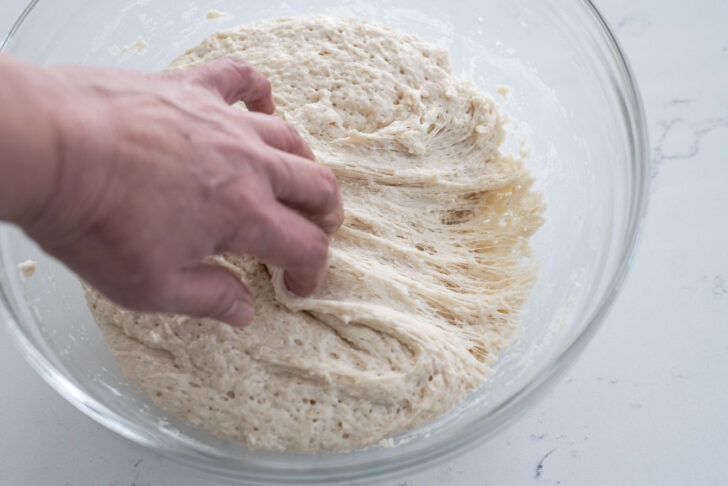
Make the dough: Mix dry ingredients, stir in warm milk and oil, then let rise until doubled.
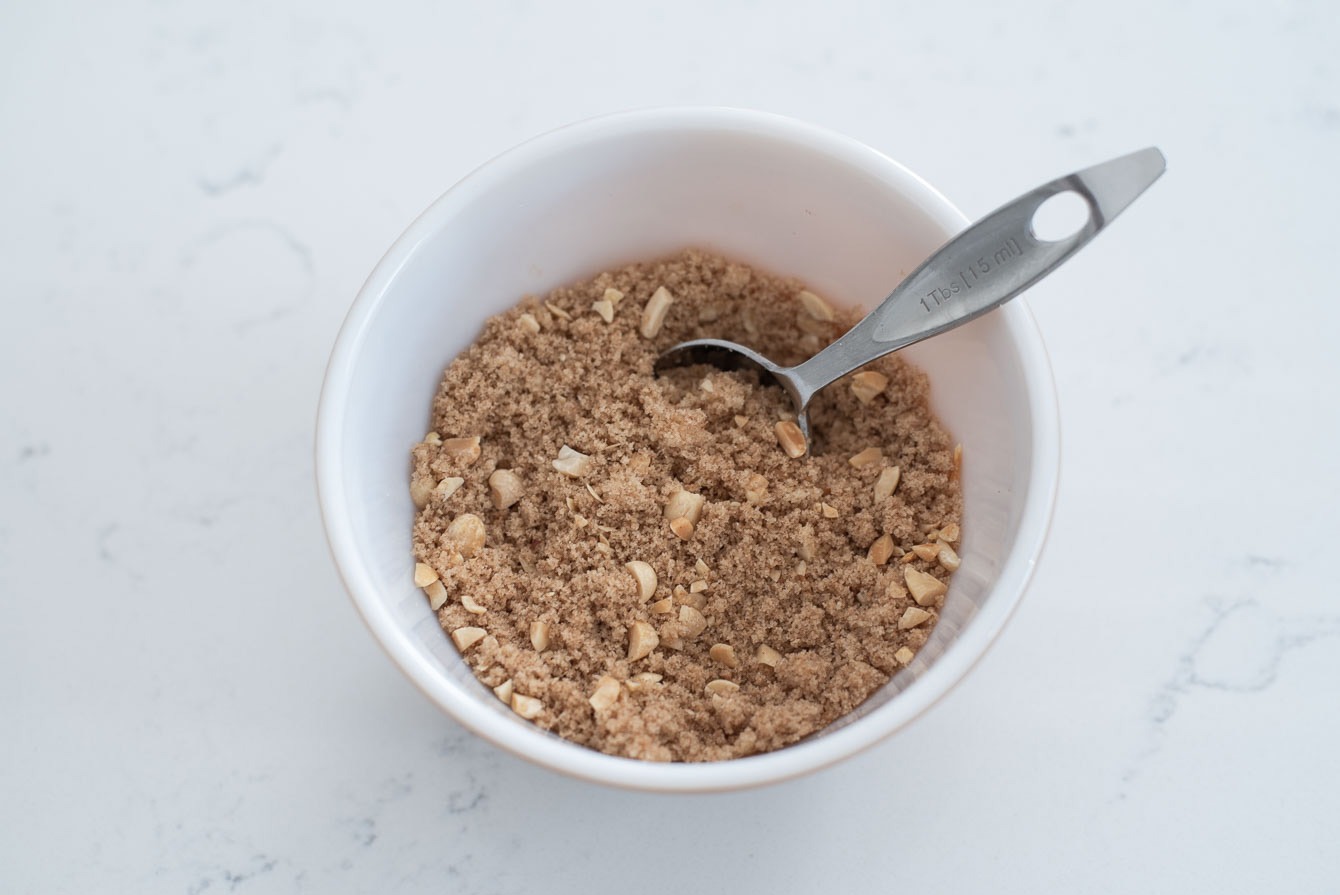
Prepare the filling: Combine sugars, cinnamon, peanuts, and breadcrumbs.
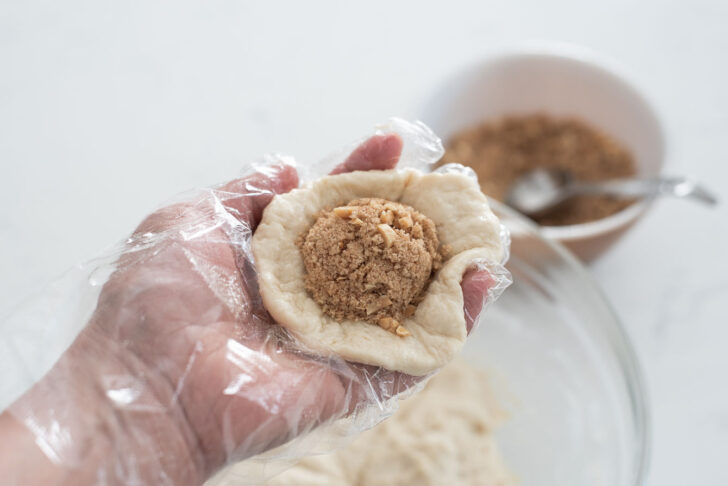
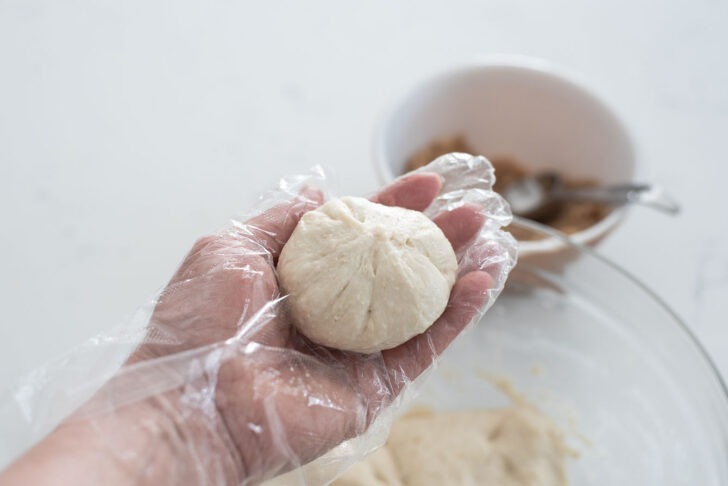
Shape the pancakes: Flatten the dough, add filling, pinch to seal tightly.
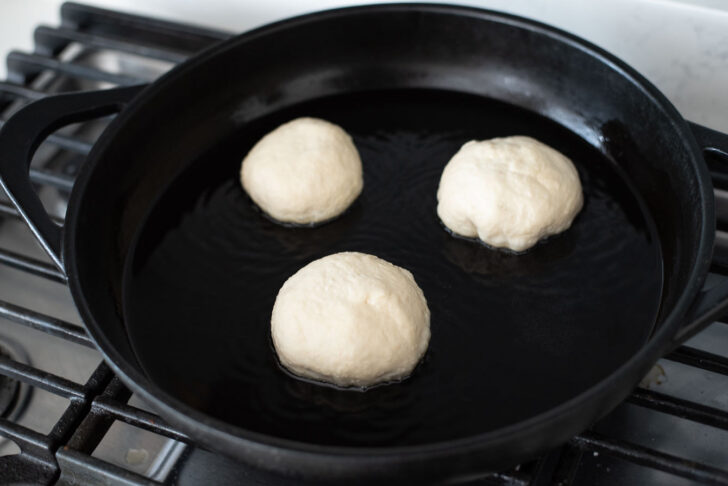
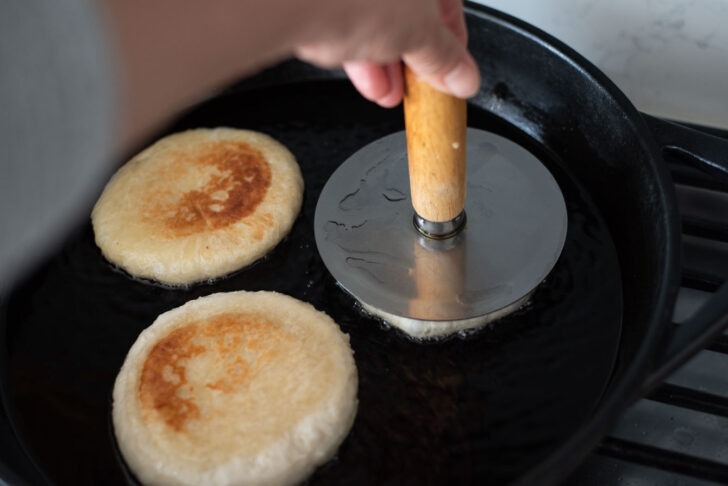
Pan-fry to golden crisp: Cook seam-side down, flip after 30 seconds, press gently, and cook until golden on both sides.
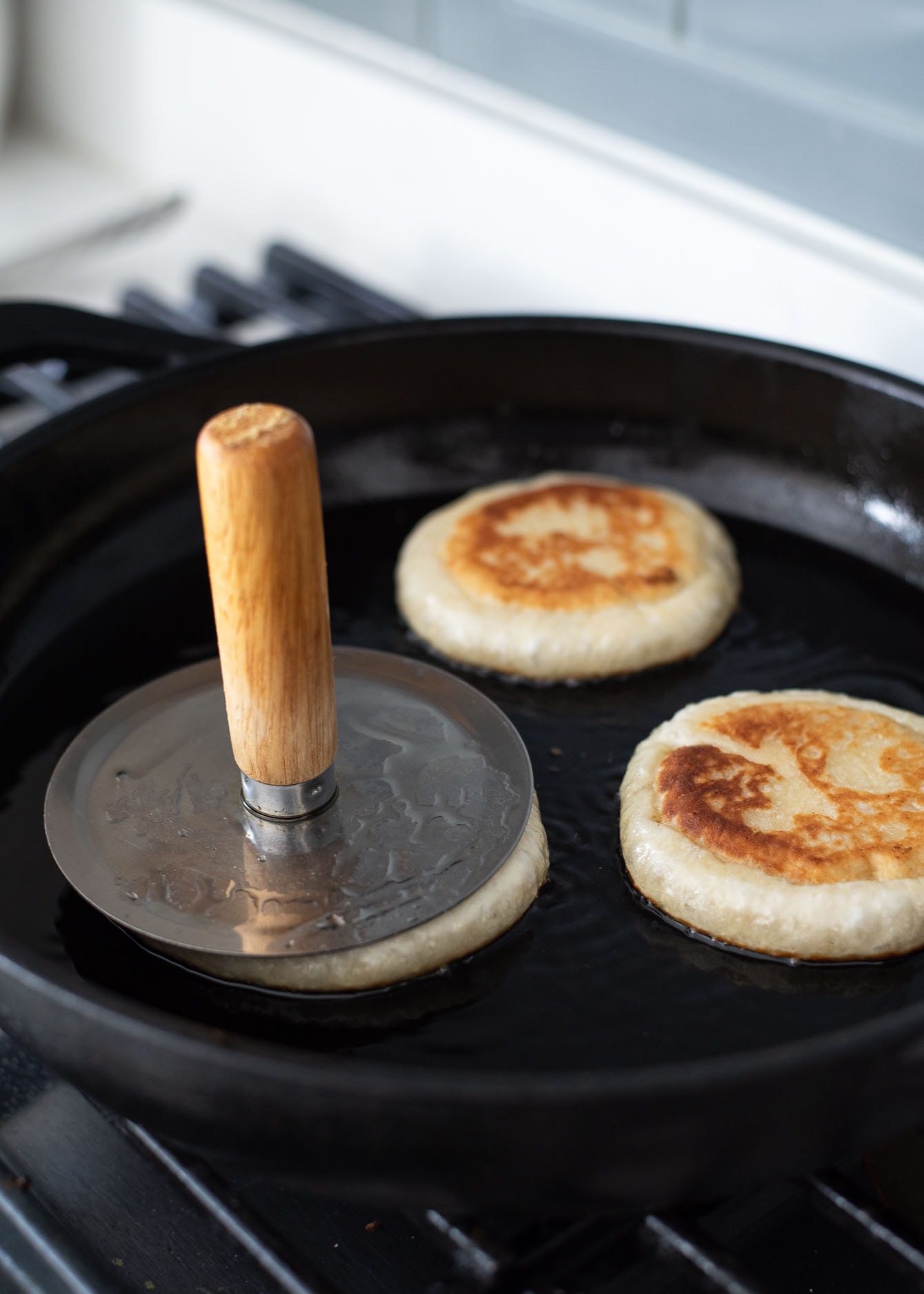
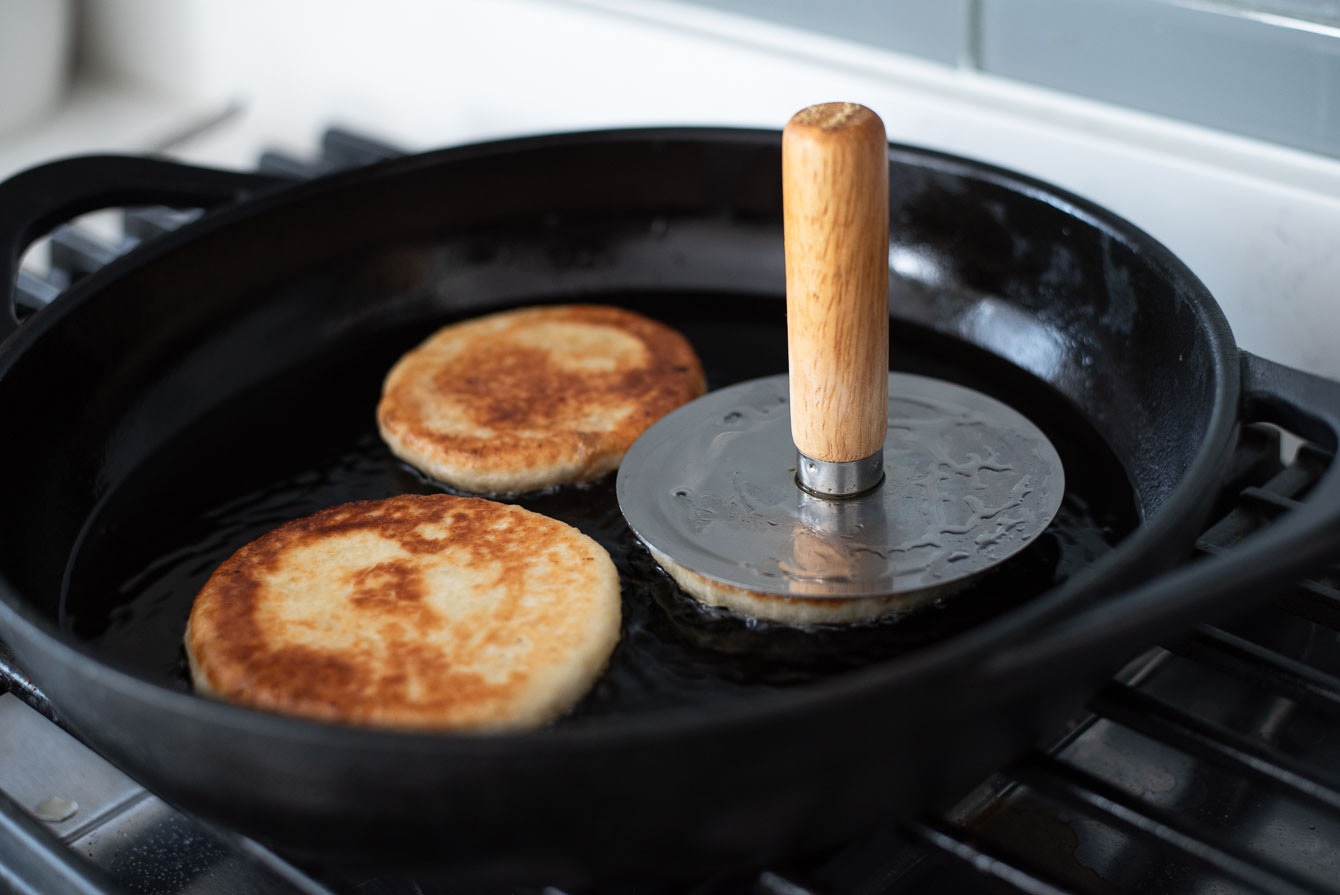
Using a Hotteok Press: This handy tool has a flat stainless steel base and a wooden handle, perfect for shaping hotteok or dalgona candy. You can find it in Korean markets or online. No press? No problem—a round bowl with flat bottom or a burger smasher works too!
Serving Hotteok the Street-Food Way
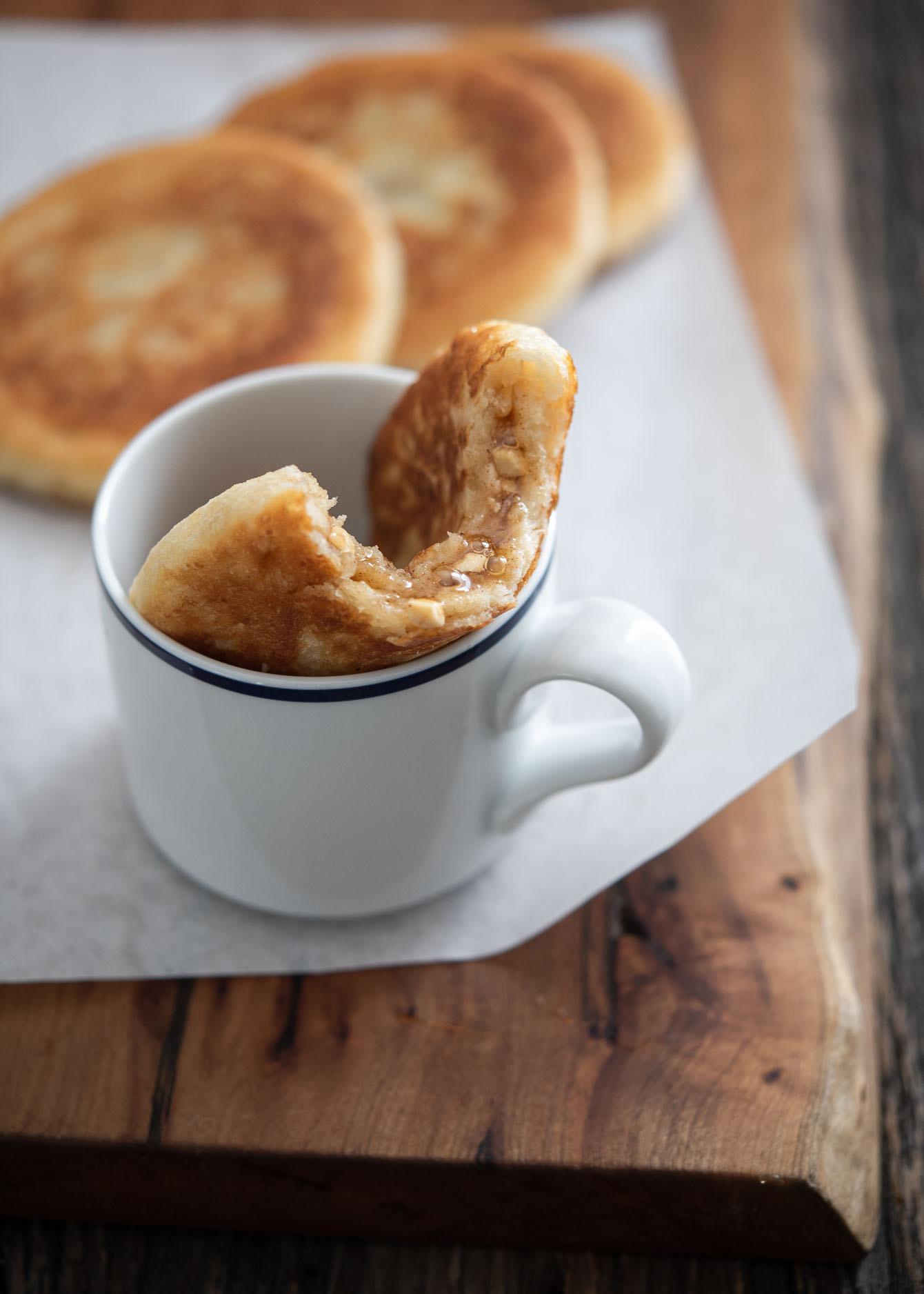
In Korea, I often see vendors tuck each pancake into a small paper cup. It keeps your hands clean, catches the drips, and makes it easy to enjoy while walking the street. It’s a simple trick that brings the full street-food experience home.
More Korean Street Snacks to Try
If you love hotteok in the winter, you’ll also enjoy Bungeoppang, the iconic fish-shaped pastry filled with sweet red bean. For a full list of cozy Korean street food treats, check out my Korean Street Food Recipe Round-up.
Love this recipe? Rate it and share your experience in the comments below! On Instagram? Tag me to showcase your creation. For more delicious recipes, subscribe to our newsletter!
Hotteok (Korean Sweet Pancakes)
Recipe Video
Ingredients
- 2 1/2 cup (375 g) all purpose flour
- 1/2 cup (40 g) sweet rice flour (chapssal-garu)
- 1 tbsp (12 g) sugar
- 2 tsp (6 g) instant yeast
- 1/2 tsp (2 g) baking powder
- 1 tsp (6 g) salt
- 1 1/3 cup (315 ml) lukewarm milk, more if needed
- 1 tbsp (15 ml) oil
- more oil for pan-frying
Hotteok filling
- 1/3 cup (70 g) light brown sugar
- 1/3 cup (60 g) granulated sugar
- 1 tsp (3 g) cinnamon
- 1 tbsp (8 g) fine breadcrumbs, or 1 tsp flour
- 4 tbsp (30 g) peanuts or any nuts of your choice, finely chopped
Equipment
Instructions
- Mix flours, yeast, baking powder, sugar, and salt with a whisk in a large mixing bowl. Heat milk to lukewarm and add oil. Pour the milk/oil mixture into the flour mixture and mix to combine with a spoon for 1-2 minutes. The dough should be on sticky.
- Cover the dough mixture with plastic wrap and let it rise until doubled in volume, about 1-2 hours. You should see the spider web-like gluten development when the dough is pulled.
- Meanwhile, make the hotteok filling by mixing sugars, cinnamon, breadcrumbs (or flour), and peanuts in small bowl.
- Divide the dough into 8 equal portions. Grease your hands with a little bit of oil. Take one portion of dough and flatten it in your hand in a cupping shape. Put 1 1/2 tablespoonful of brown sugar filling on the center of the dough.
- Pull the edges of the dough together, pulling toward the center, and pinch together to seal. Make sure you seal it completely by pinching well. Repeat the other dough portions in the same manner and place them on a greased platter.
- Heat a generous amount of oil in a large griddle or skillet over med-low heat. Place the filled hotteok dough, seam side down and maintaining space from each other, in the griddle and let it cook for 30 seconds.
- Flip to the other side and press down on the dough with a hotteok press or spatula until it becomes about 1/2-inch thick. Do not press it too thin; you don't want to tear the dough and explode the filling inside.
- Cook hottoek until golden brown on both sides, about 1-2 minutes per side. Lower the heat if it browns too quickly. Serve warm—just be careful, the molten filling stays piping hot!
Notes
The syrup inside the hotteok that just came out of skillet will be extremely hot. So be cautious when you offer it to young children. In Korea, they’re often folded into a paper cup to catch the syrup and make them easier to eat. Try this at home for the full street-food experience.
It is one of my favourite Korean snack. Can’t wait to try your recipe. Just wonder if I couldn’t finish eating all the hotteok in one go, can they be stored in the fridge and reheat on the pan the next day?
Unfortunately, leftover hotteoks are not so great. They will get hardened and won’t taste the same. I would fry only the amount of hotteok you need at the time and keep the rest of the dough in the fridge, and make more fresh hotteok on the next day.
Hi Holly,
I can’t decide whether I prefer this one or the one made with masa harina. I like this one for its chewiness and the fact that it still taste very good upon reheating. Now I wish I have tried those from the famous stall at Namdaemun market when I was in Seoul. That would give me a good reference point of what a great hotteok should taste like. I didn’t buy from them coz both times when I passed that stall, the line was very long.
They both good. I sort of like the corn hotteok a little better since it give a nice corn flavor. There are several different varieties of hottek throughout Seoul, and I would suggest to hunt them down and try them all next time you visit Seoul. So good~!
Hi! I was wondering what would be the best way to par make these goodies and store them so I can fry them fresh, I’d like to take them to my grandparents for christmas but I dont want to carry a big bowl of dough and start making them there, any suggestions for a traveling hotteok connoisseur? I wont be traveling far…maybe like an hour or so…
Hi Jeff
Hotteok tastes the best when it is freshly made. With any fried food, it tastes the best when hot. I wouldn’t recommend to travel with already fried hotteok because the sugar syrup will soak into the dough and the dough will get hard as it cools. The best way is to carry the dough in a covered container and make the hotteok fresh at your grandparents and serve them hot. So much better!
Will it turn out fine if I use regular rice flour along with normal flour? I don’t have glutinous rice flour.
The glutenous rice flour will give the chewy sticky texture. You can still use regular rice flour but it won’t be as chewy.
Thanks for the reply! So what do you suggest, should I use rice four and regular flour together, or just go with only regular flour?
Try with regular flour only. In olden times, hotteoks were made with only regular flour. You need to eat them soon after they are fried (while hot), otherwise they will get harden soon.
OMG you are awesome! I used to buy this in Eastwood (Australia) at this place. I bought one and then 1 minute later went back and bought another – I was hooked. Sadly the place is closed and I don’t live close by anyway now. But…now I can make it! Woohoo! 😀 😀 😀
I used a previous hotteok recipe before (no rice flour) but tried this today… I think rice flour really makes all the difference! Plus the brown sugar + nuts mixture makes for a great filling! I used chocolate the last time around (which is equally as delicious) but I will be doing it with brown sugar again in the future. Didn’t use enough filling though, so it didn’t become as caramelised as in the image, but I will probably be using this recipe from now on 🙂 thank you!
Hi,
Do you think the recipe will still work if I use rice flour instead of all purpose flour in the same ratio? Thanks.
Hi Jos
If you use rice flour only, the texture of hotteok will become sticky mochi-like texture. Also it won’t rise much at all. You will need the all-purpose flour for the right texture.
Just tried these although it’s no longer winter, but I just couldn’t resist. They were delicious! This will become a regular treat during cold days.
Thank you.
Hi Holly!
I’ve only just discovered your blog, and am hooked already!
I’ve never had hotteok, so I plan to make some ASAP – could I use soy milk instead of dairy though? If so, would it be best to use unsweetened?
Thanks in advance!
Nicole
PS I loved your post about coming here to Chiang Mai, especially the photos of Patara. Did you meet Dodo while you were there? He’s such a wonderful ele… and really looked after me when I had a panic attack in the jungle! It’s absolutely true what Pat says – that there can sometimes be an empathetic link between ele and human. 🙂
Hi Nicole
Yes, you can use soy milk instead. Thanks for your sweet comment. Do you live in Chiangmai? I miss that wonderful town very much and all the elephants as well. Hope your hotteok will turn out good. Cheers!
Hi Holly,
Thank you for the advice – much appreciated.
Yes, I live in Chiang Mai … I love it here!
I’ll let you know how the hotteok turns out 🙂
i have a.question about the yeast. Did you pour everything inside the pack?
Yes.
I’ve been eying this recipe for awhile now. I’m finally going to give it a try for Christmas morning. I think they will be a big hit
Is it possible you could give me the flour recipes in grams please? I tried it and it came out nice but it didn’t rise. I also read that 1 cup of normal flour to glutinous is different?
Hi! What can i use as a replacement for the Glutenous rice flour? Is there any replacement for it? Can’t I just use regular rice flour?
You can use regular rice flour but the texture won’t be the same.
I just made these, big success! ^-^
Trouble is, I have a lot of dough left, and nobody to make them for until much later today.
how long can you keep the dough for? And would you keep it in the fridge?
Thank you! 😀
Hi Aimee
Good to hear your Hotteok turned out well. You can keep the leftover dough in the fridge for about a day. It will continue to rise but it is okay. If you store more than 1-2 days, then it will develop very yeasty smell in the dough.
I have just made these, not difficult at all but they turned out yummy. It would be nicer/helpful if more people post comments after they have actually tried out the recipe…. Thanks so much for this recipe, I am a korean, living where there aren’t many Koreans, I haven’t had hottok in years!
Hi Mary
That is just wonderful. I am glad your hotteok turned out so well. Hope you get to explore more Korean recipes at home. Aren’t they just the best?
If you must eat gluten free, and thus cannot use normal flour, what do you recommend instead of the plain all purpose flour? Thanks! 🙂
Try with white rice flour (Not-glutenous) mixed with a little bit of almond flour and tapioca flour to substitute for the plain wheat four. It won’t have the exact same flavor or texture of the original recipe but I think you will get similar.
I’ve just made these using a brown rice flour blend (extra fine brown rice flour, potato starch & tapioca flour) and xanthan gum in place of the all-purpose wheat flour. The dough comes out a little bit dry/less stretchy, but the taste is still fabulous! I’ve never eaten hotteok before so I cannot comment on whether or not the taste is different, but to me they tasted like delicious cinnamon buns! My whole family loved them!
Went to Korea for the 2nd time. Hotteok was the 1st thing I looked for. I also found a Hotteok press! Yey! Despite the language barrier, the shop keeper was able to figure out what I was looking for 🙂
That is so awesome that you found the press. You gotta make some hotteok soon and let me know how it turned out!
Oh I love this! I remember having this whenever we visited Korea. They are so delicious. While, I cook everything from scratch, I had no idea how to make this from scratch. I’m ashamed to say, I have bought the package ones from the Korean store. Lol. Thanks for putting up a recipe for this!
Hello Holly! i just tried this recipe this morning and my family loves it! it taste so good!! Keep up the great job!! i love the way you show us the step-by-step on how to do a recipe, love your blog. Inspire me to cook more 🙂 cheers
Thank you Sendy
Wonderful recipe Holly! The glutinous rice flour made a HUGE difference. Thank you so much for sharing this awesome recipe! 😀
Thank you Jessica. I am glad that you found my blog, too. Hope you enjoy the recipes and let me know if yo need any assistance.
Ahn-young haseyo! I am a Mee-gook ajumah married to a Korean man, and I recently discovered your blog. I love your descriptions about the food, and the photos that help to explain the process. It really helps me to visualize the how behind the recipe since I didn't grow up making K food. Thanks! I hope to make pumpkin porridge soon and the steamed egg, which is one of my husband's favorite dishes. Keep up the good work! 🙂
Hi Louise
I am very happy to hear that you like my blog. For the recipe in Hotteok, you can totally omit the nut. It won't change the flavor since the amount of nut in the recipe is very little, and it is mainly for crunch texture in the filling. Hope you can make them soon.
Hello.
First thing I have to say, is that I absolutely adore the way you lay out your blog and recipes. Your ironic comments make something that I already adore doing even more fun. (I lead an exciting life here[!])
Anyway, I was wondering whether there are any alternatives to the nut part since some of my family are allergic to them. Do you have any suggestions?
Thank you 🙂
@62d2b295db51d762cf77dc79d426b005
Hi Caroline
You got a deal for that press. I think I paid more for mine. What a bummer! 🙂
Have fun making hotteok and let me know how it turned out.