

Korean Beef Rice Bowl with Radish (Mu-Bap)
Korean beef rice bowl with radish (mu-bap) is a weeknight comfort — simple ingredients, cozy Korean flavor, and ready in about 30 minutes. Tender radish cooks right into the rice on the stovetop, then gets topped with quick ground beef bulgogi and a drizzle of savory sauce. It’s an easy, homey rice bowl you can enjoy on its own or with a side of kimchi.
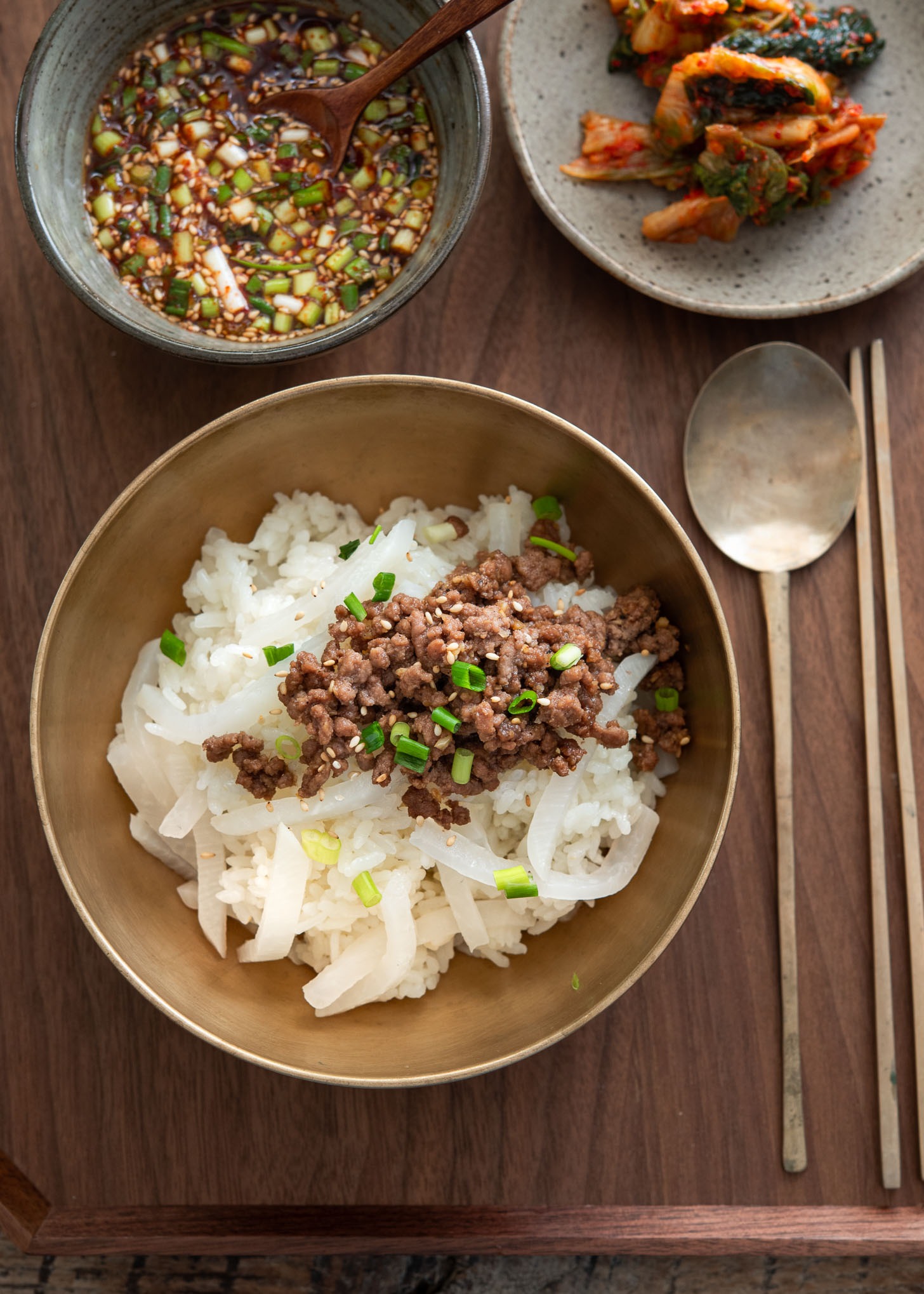
When the cold season rolled in, my mother always made radish rice (mu-bap, 무밥). She’d remind us, every single time, that winter radish is like medicine, packed with nutrients and sweeter than anything you’ll find in summer.
And as usual, she was right. There’s something about Korean radish that makes even a plain rice bowl feel comforting.
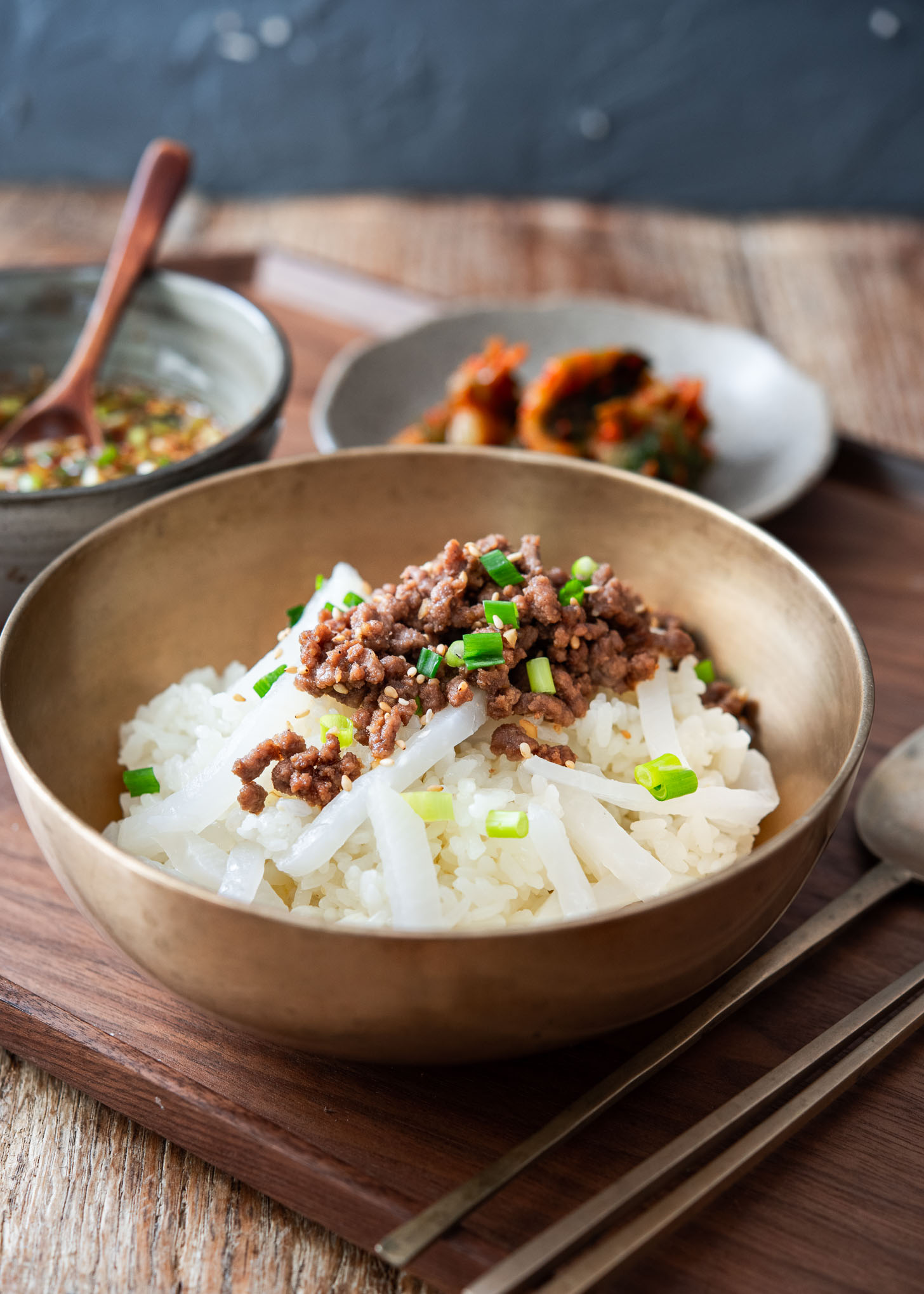
In her kitchen, radish rice was often topped with whatever bulgogi she had left from the night before. It became a cozy beef rice bowl that came together in the same time it took to cook rice on the stove, because she simmered the radish and rice together in one pot.
Whenever I find a half-used radish in my fridge, I think of her mu-bap — and I catch myself telling my kids the same thing she told me: “Eat your radish!”
These days, I rarely have leftover classic beef bulgogi, so I make a quick ground beef topping instead. It turns this humble radish rice into a satisfying, nourishing weeknight meal.
Why This Rice Bowl Works So Well
- The radish cooks with the rice, so you get extra flavor without extra time.
- Ground beef bulgogi adds flavor quickly without complicated extra prep.
- It’s flexible — perfect for using up that half radish sitting in the fridge.
Ingredients for My Radish Rice Bowl (Mu-bap)
Korean Radish (Mu): Korean radish brings a mellow, natural sweetness to the rice—especially in winter, when the flavor is at its best. As it cooks, the radish softens and releases moisture into the rice, giving the bowl a gentle, savory depth. Choose a firm radish with bright green shoulders for the best flavor.
Short-Grain Rice: Korean short-grain rice is ideal here. Its slight stickiness helps the radish cook evenly and lets the flavors absorb into the grains.
Dried Kelp (Dashima), optional: A small piece of dried kelp adds gentle umami to the rice without overpowering it. I recommend it if you have some on hand, but the dish still works well without it.
Ground Beef: This is my quick, weeknight-friendly topping. Ground beef takes on bulgogi seasoning quickly, making it an easy protein topping. If you want the full version with measurements, you can find it in my Ground Beef Bulgogi post.
- Seasoning basics: Korean soy sauce, garlic, sugar, and sesame oil.
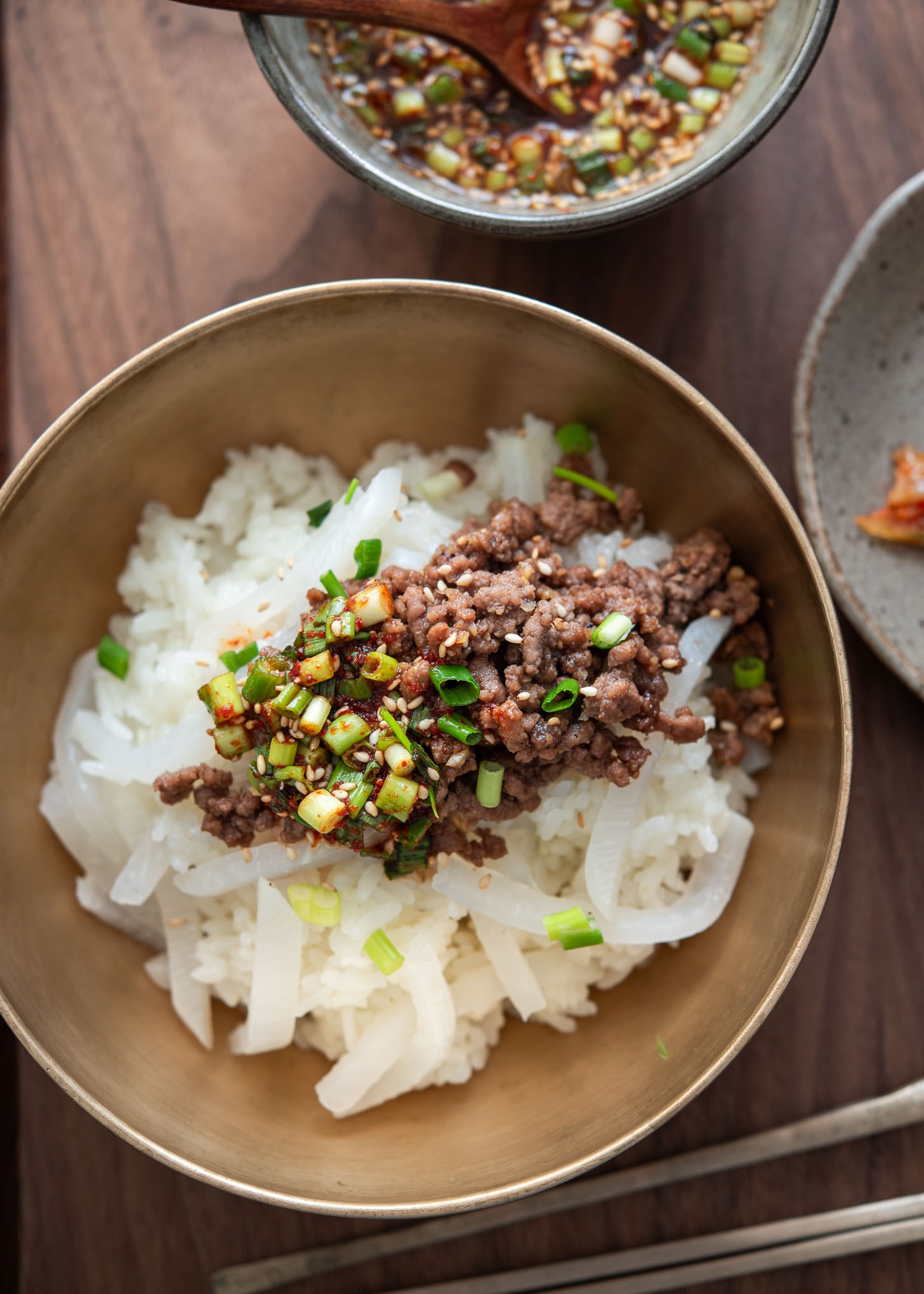
Topping Sauce: A simple mix of soy sauce, gochugaru, garlic, green onion, and sesame oil. It adds a bright, savory finish to the bowl.
How to Make Korean Beef Rice Bowl with Radish
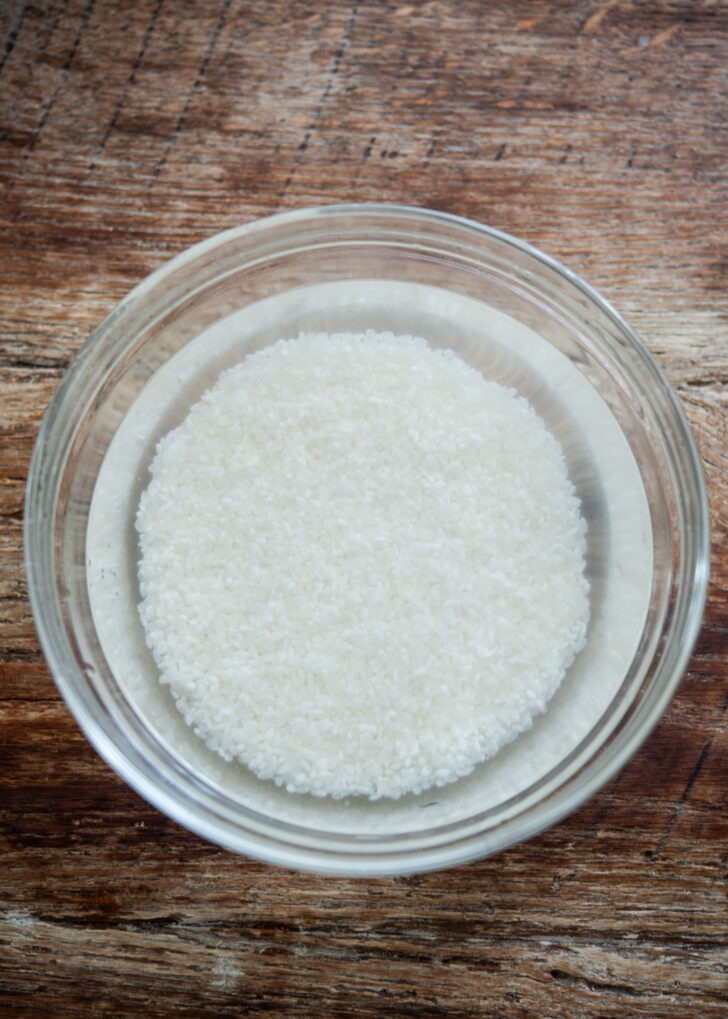
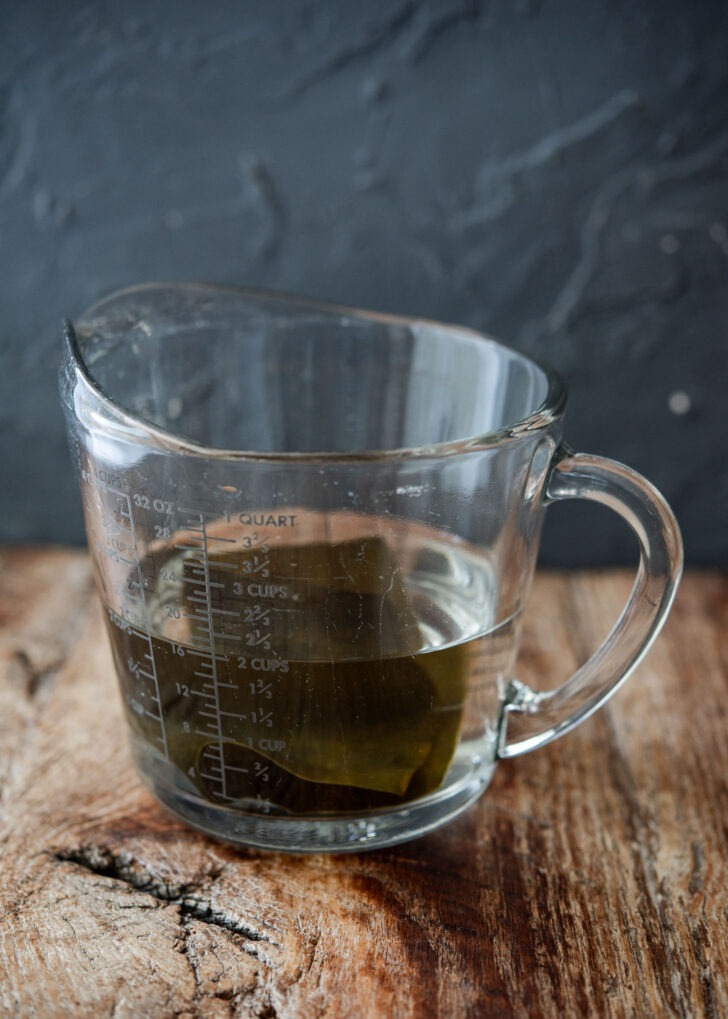
For good mu-bap, the rice and radish need time to cook together so their flavors blend. Soak the short-grain rice for about 15 minutes. This helps the grains cook evenly. While it soaks, make a quick kelp stock by letting a small piece of dried kelp sit in cold water. This optional step adds a subtle umami base.
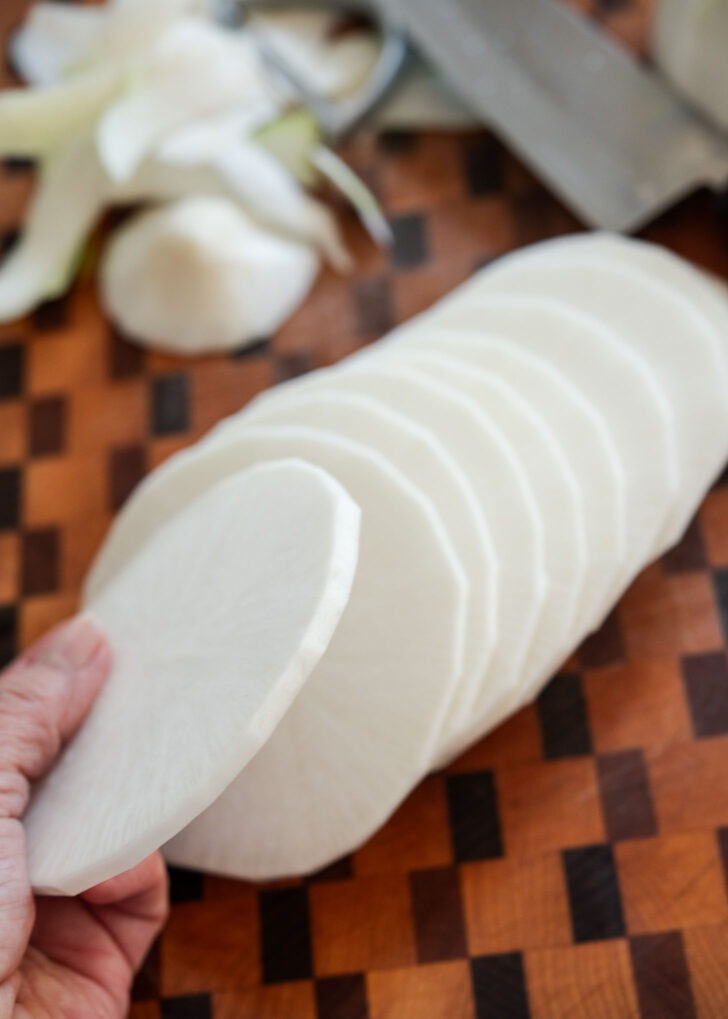
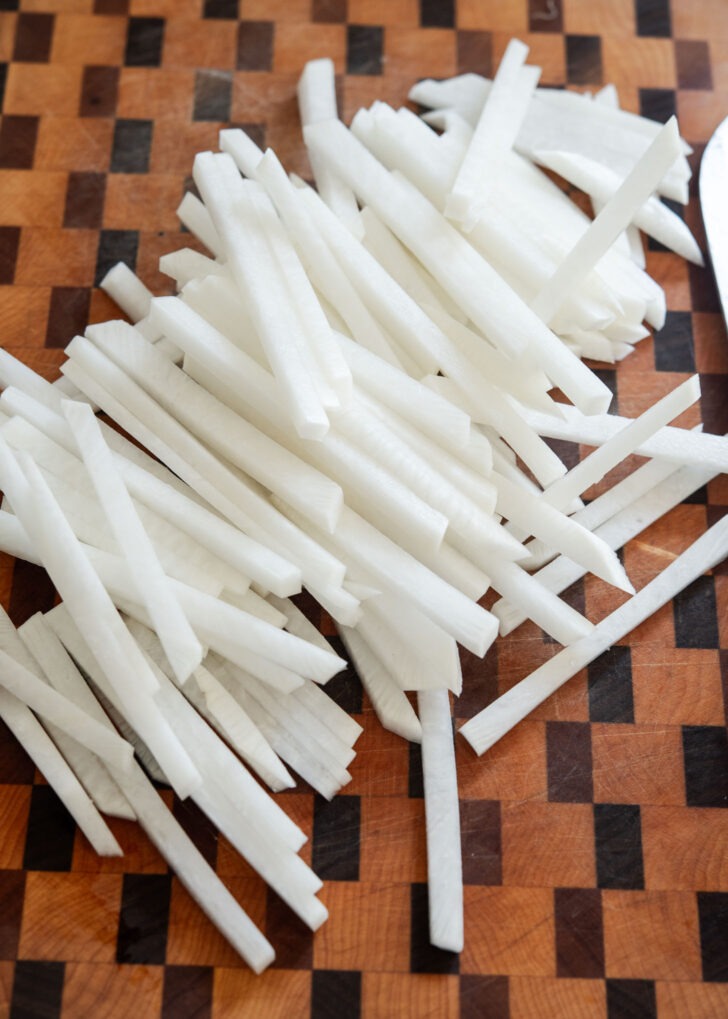
Slice the radish into ¼-inch matchsticks so it softens at the same rate as the rice.
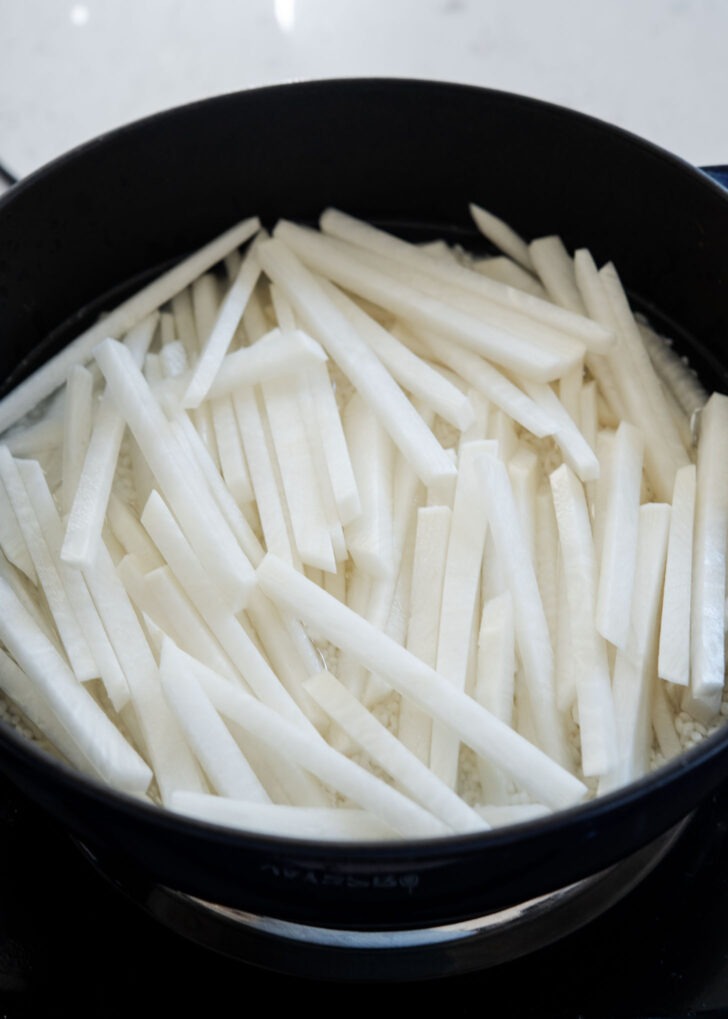
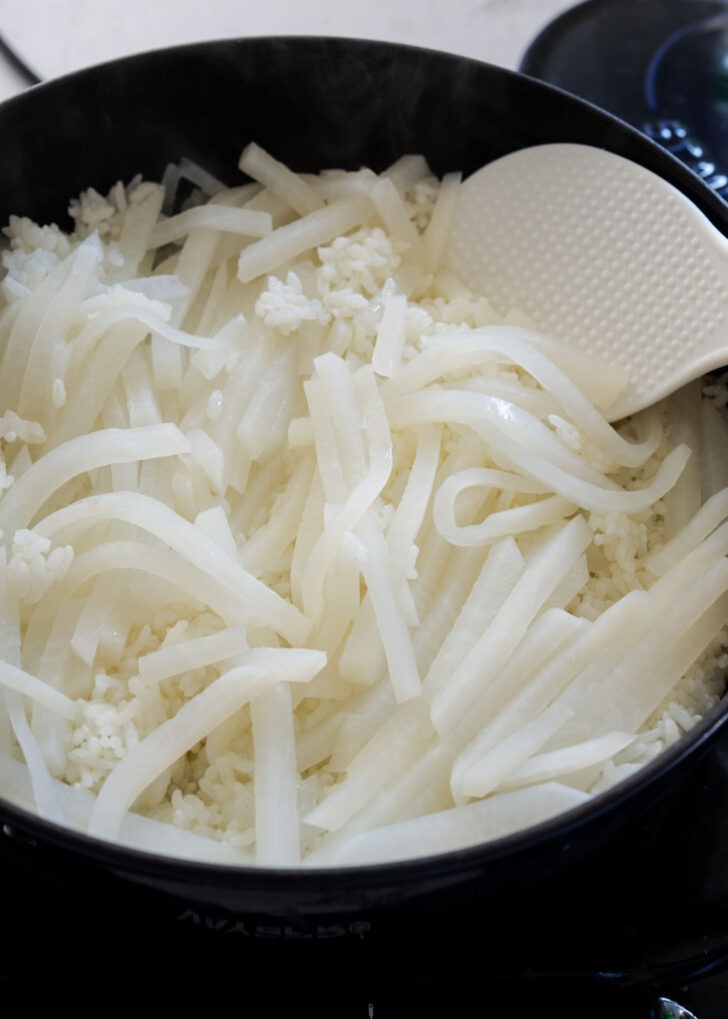
Drain the soaked rice and place it in a heavy-bottomed pot. Spread the radish matchsticks evenly on top, then pour in the kelp-infused water using a simple 1:1 ratio of raw rice to liquid.
Bring the pot to a gentle boil, then reduce the heat and let it simmer until the rice is cooked through. When the heat is off, keep the lid closed and let the rice rest; this tteum (뜸) step allows the residual steam to finish cooking the grains and soften the radish without breaking it apart.
Once the rice has rested, lightly fold the radish into the rice. Use a gentle hand, cooked radish is delicate.
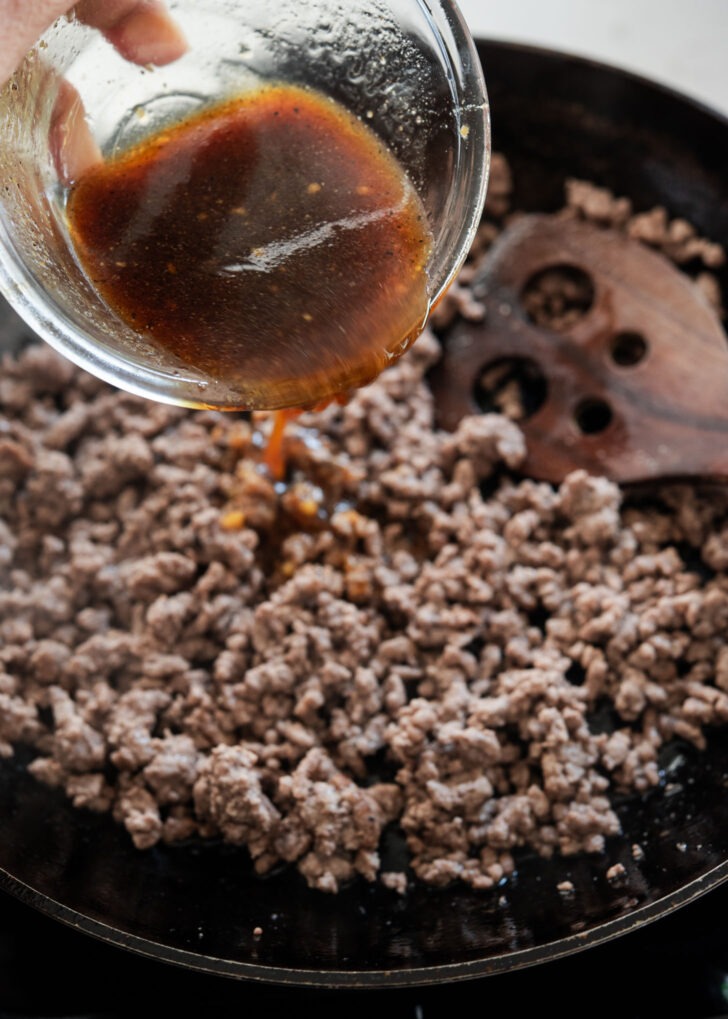
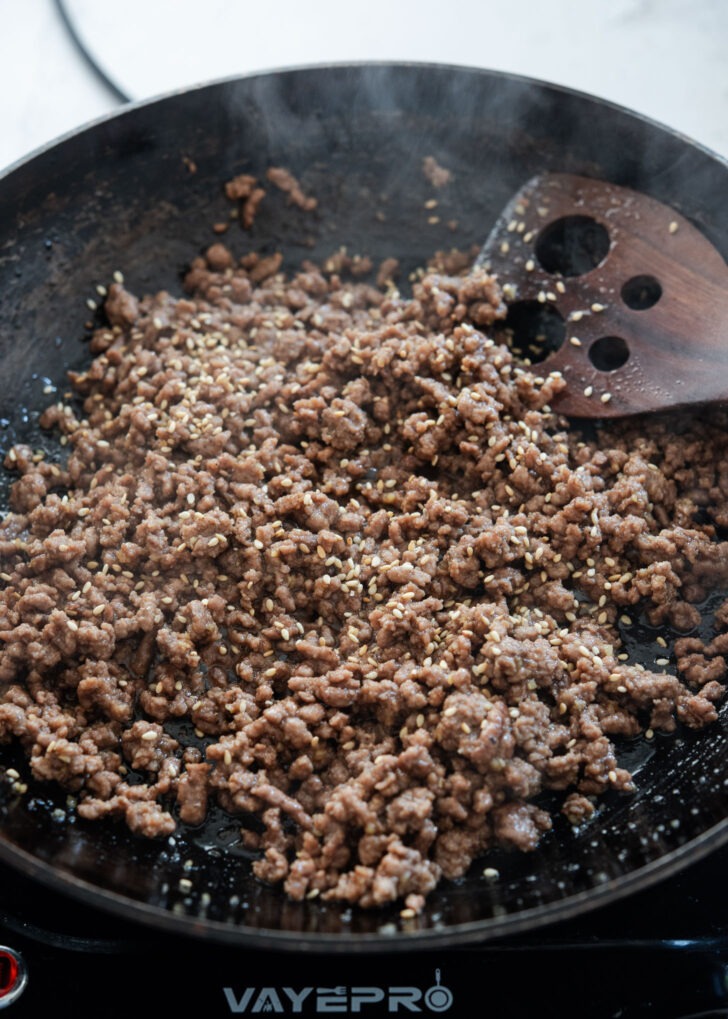
While the rice rests, prepare the ground beef bulgogi with its seasoning sauce. It cooks up fast.
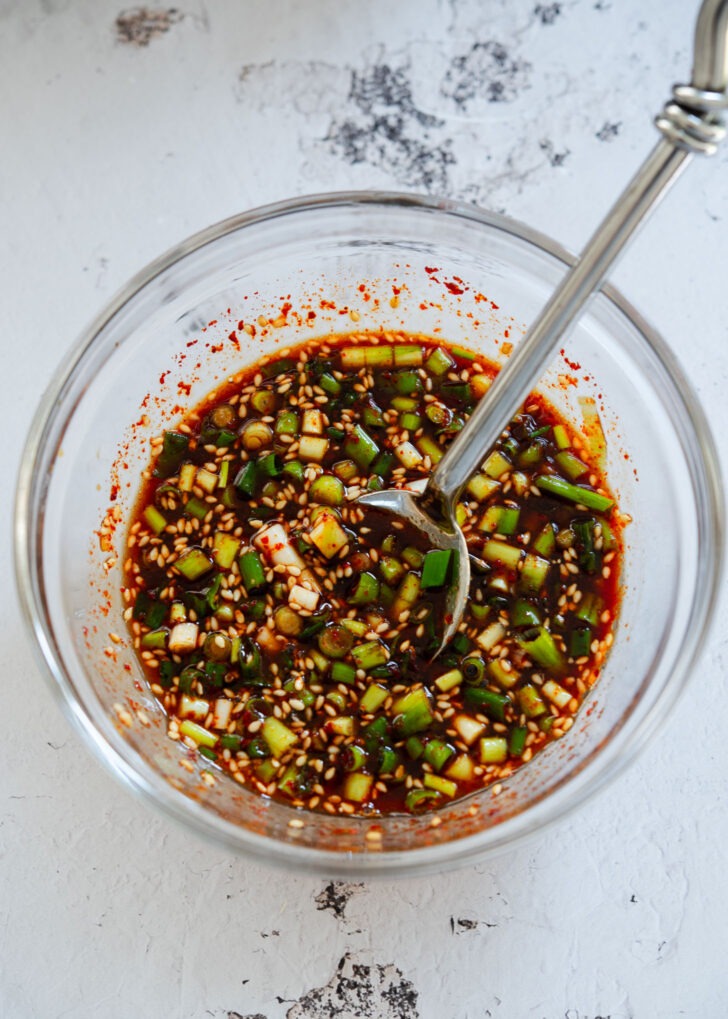
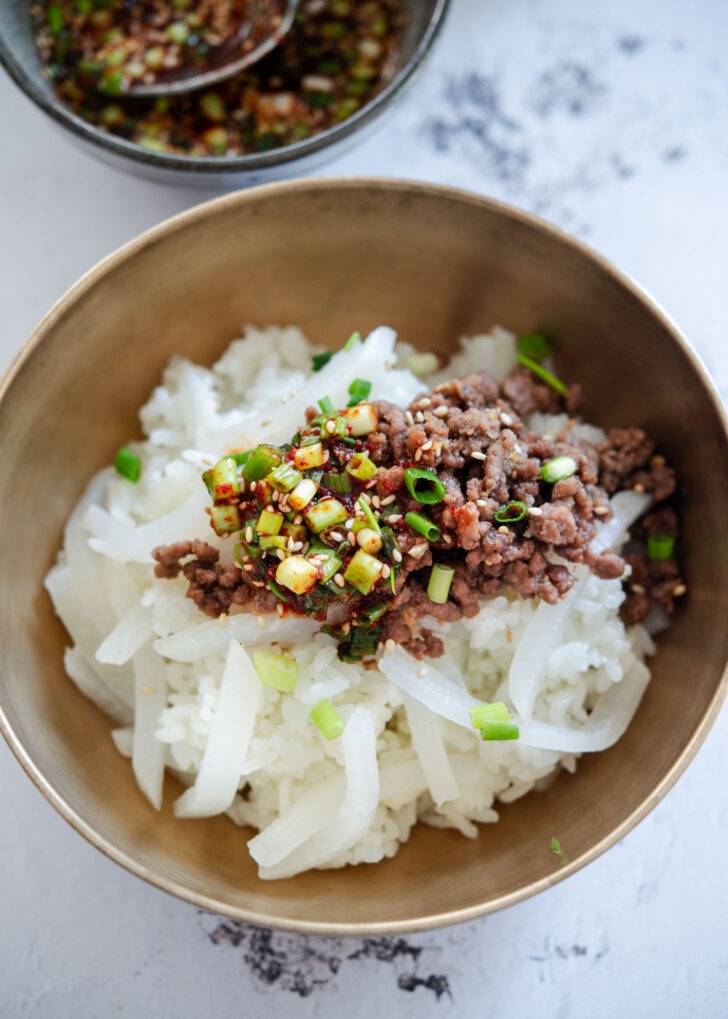
Mix the topping sauce. and spoon over the radish rice with the warm beef in a bowl. To eat, just give it a quick mix — the same way you would with bibimbap. It’s a comforting one-bowl meal on its own, though a side of kimchi never hurts.
If you love mu-bap as much as I do, you might remember the fresh oyster version from my cookbook, Korean Cooking Favorites — another favorite in my home during radish season.
And if you enjoy simple Korean rice bowls, take a look through my Korean rice dishes for more ideas.
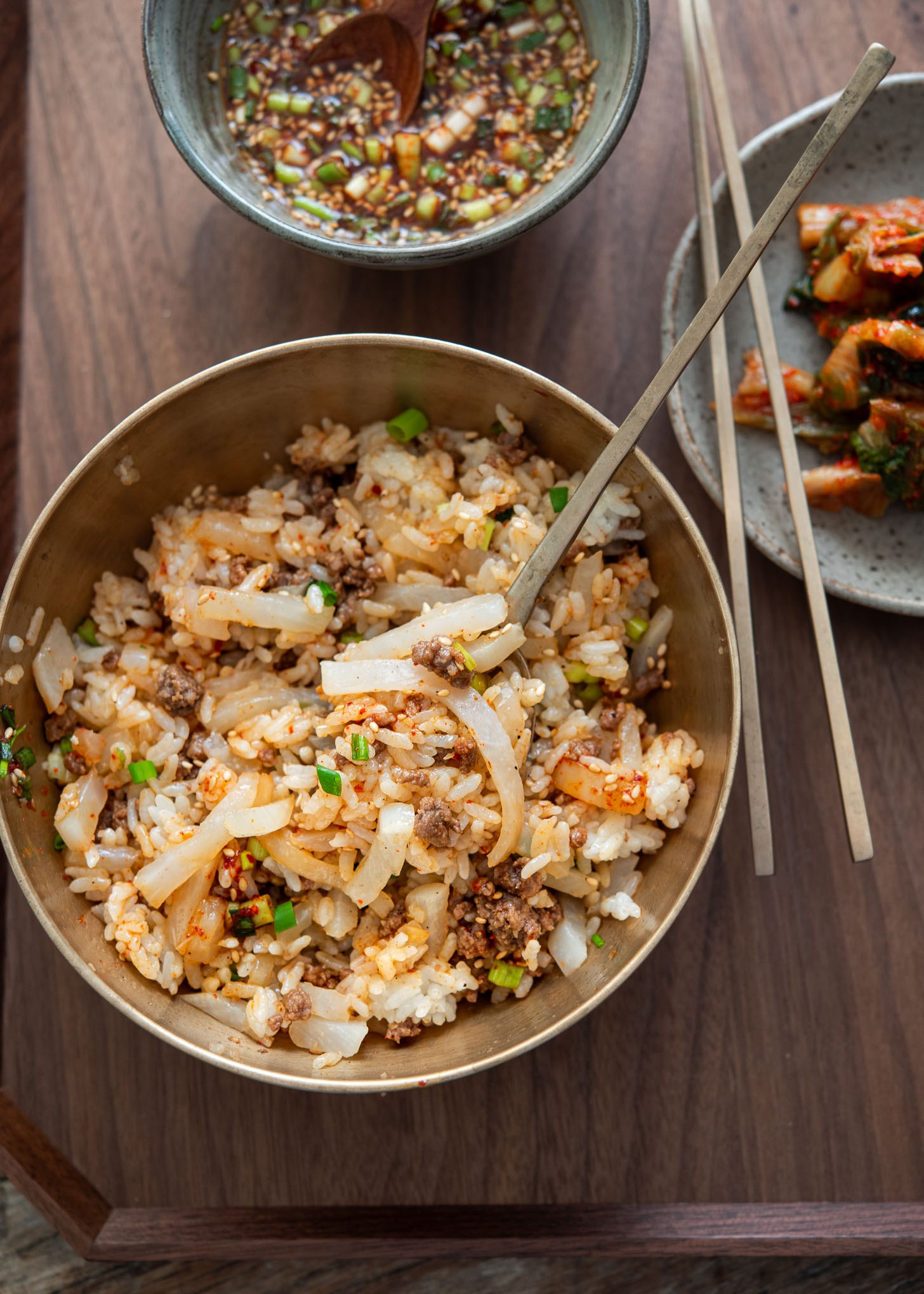

Korean Beef Rice Bowl with Radish (Mu-bap)
Ingredients
- 1 ¼ cup (250 g) short grain white rice
- 1 lb (450 g) Korean radish, peeled and cut into 1/4-inch (6 mm) matchsticks
- 1 large piece (10–15 g) dried sea kelp (dashima), see note below
- ⅔ lb (300 g) ground beef bulgogi, for topping
For dressing sauce
- 3 tbsp (45 ml) soy sauce
- 1 tbsp (8 g) Korean chili flakes (gochugaru)
- 1 tbsp (15 ml) water
- 1 tbsp (15 ml) sesame oil
- 1 tbsp (9 g) sesame seeds
- 1 tbsp (15 ml) Korean plum extract (maeshil-cheong), optional
- 1 green onion finely chopped
Instructions
- Rinse the short-grain rice until the water runs clear. Cover with fresh water and soak for 15 minutes, then drain well. While the rice soaks, place the dried kelp in 2 cups (480 ml) cold water and let it steep. Remove the kelp before cooking.
- Place the drained rice in a medium pot and spread the radish on top. Pour in the 1 ¼ cup (240 ml) kelp water (or plain water). Bring to a gentle boil over medium heat. Reduce to low, cover, and simmer for 10 minutes. Turn off the heat and let the rice rest, covered, for 10 minutes. Gently fluff the cooked rice and radish together with a rice paddle. Avoid stirring too vigorously to keep the radish pieces intact.
- To make the dressing sauce, combine soy sauce, gochugaru, water, sesame oil, sesame seeds, plum extract (if using), and chopped green onion in a small bowl.
- Scoop the radish rice into serving bowls. Top with warm ground beef bulgogi and drizzle with 1 tablespoon (or more) of the dressing sauce. Mix lightly and enjoy.
This is an excellent tasty for the senses beef dish! The Daikon Radish makes it memorable and I could eat this daily!!! Delicious
I love hearing that! The daikon radish adds such a lovely sweetness to the beef and rice. So happy you enjoyed it enough to want it every day!
I tried this recipe – it turned out great but I have a question about the dressing – when I made mine, I followed your recipe to the T but my dressing turned out to be a little too salty than I like. Is there a tip for making it less salty? Thanks for sharing!
I usually use low sodium soy sauce. If your sauce is too salty, add more water to dilute it.
Such a delish recipe 🙂
언니, 감사합니다 ^^
Thank you so much for your helpful tips and recommendations! I am so glad to get your personal recommendations on rice cookers ^_^ Guess it is time for me to invest in one!
Hi Erica
I sometimes cook this dish in one of those dutch oven pot (Le crueset) and it worked fine. You have to cover with a heavy lid to prevent for the steam to escape, and needs a little longer simmering time so that it cooks thoroughly from top to bottom.
However you can't beat the convenience of rice cooker. I can only give a feedback on Korean brand because that is only thing I have used so far.
I highly recommend to get an "electric pressure rice cooker". It cost more than regular kind but worth for me because I have been using mine for nearly 10 years and never had any problem. I have been using it at least 3 times a week. Most Koreans use these pressure rice cooker these days.
And they are built tough like a tank.
The flavor and the texture of rice is unbeatable. It takes less water and cooks faster. You can use it for making other dishes as well. I often make Galbi Jjim in there and works beautifully.
The brand I am using is called "Cuckoo"-very famous pressure rice cooker company in Korea. You can find their rice cookers in major Korea grocery stores in the U.S these days with English manual. Amazon sells Japanese brand but I don't know its quality. As far as I know, Koreans are the one started electric rice cooker in their rice cooking.
Another good and cheaper alternative is getting a stove top pressure cooker. You can get it through amazon. It is a lot cheaper and yields the same results as electric one. But you have to control the heat and the time yourself. I think it will require a little practice and feel for how much water you have to use to cook your rice with this.
Hope this helps, Erica.
Have a great weekend!
I tried making this last night, and the combination of flavors was delicious! I love the texture of the cooked radish, yumm… unfortunately I had to use a stovetop method since I don't have a rice cooker, and the cooking process didn't work very well (I ended up having to take out the beef and radishes and finish cooking them in the microwave because they didn't cook all the way through over the rice). If I were to go out and buy a rice cooker, what kind would you recommend?
What a great recipe! Excellent use of radishes. I rarely cook radishes – I don't know why, because I like them. Maybe it's the latent kid in me resisting? Anyway, great job detailing recipe preparation, execution. Thanks.
Meagan Ness
Well, it depends on the type of pot and the heat. I say boil them first and reduce heat to low and wait until the boil to settle down. Cover with lid and let it simmer for about 15-20 minutes. Turn off the heat and let it sit for 5-10 minutes before you open the lid. Toss and serve with dressing.
How long would I cook it in the pot?
Yup, I'm Malaysian 🙂
@9ddada242b78c88059a25a727b6c7e93
That's the daikon radish, the Japanese style radish. You can certainly use that.
@a6ede97a7ed9b73768af26ec737d9ece
Thanks Angelica. How's your Korean study coming along?
@6d0fc56428f9bc99e542b35874bbf1ed
Do you live in Malaysia?
Katherine
Thanks Katherine. Hope you can give it a try.
@af703376c0e8d41592fbf2ac395d7da1
You certainly are! 🙂
Erica Sommermann
It is called 누룽지 (nuroongji). If you cook rice in a stone pot it forms easily. I love the texture and the flavor.
Meagan Ness
Of course you can make in the pot. Cast iron or heavy type of pot works the best but any pot will do the job.
This looks so yummy…! I am still struggling to find that type of radish here in Germany. I only know the long white one.
I wonder if you still check this site out. You can find this kind of radish at asiakauf.com – good luck.
@beyondkimchee: lovely, lovely site with beautiful photos and great recipes. Thank you! <3
Looks good! Can I make it in a pot and not a rice cooker (since I don't have one)?
mmm, looks delicious! This sounds like total comfort food, and the prep seems so straightforward, it would work great for dinner on a busy night. Is there a special name in Korean for the crispy rice layer that forms on the bottom of the cooker? I'd love to learn what the word is (in 한글) ^^
I like radish, so I'm an adult (:
Wow, this looks so amazingly delicious! I love Korean food but always have the hardest time making it – this is a fabulous step by step guide 🙂
Oh! You're in Malaysia! Welcome to Malaysia:)
This dish looks tasty. The green radish? I used to made soup with it.
This looks great! Can't wait to try it….thank you 😀