

Authentic Doenjang Jjigae (Korean Soybean Paste Stew)
This authentic Doenjang Jjigae is the ultimate Korean comfort food. Made with earthy, fermented soybean paste and a secret rice water (ssaltteumul) base, this stew delivers a rich, velvety umami depth that plain water can’t match. It’s a healthy, high-protein meal packed with silken tofu and fresh vegetables—ready in just 20 minutes.
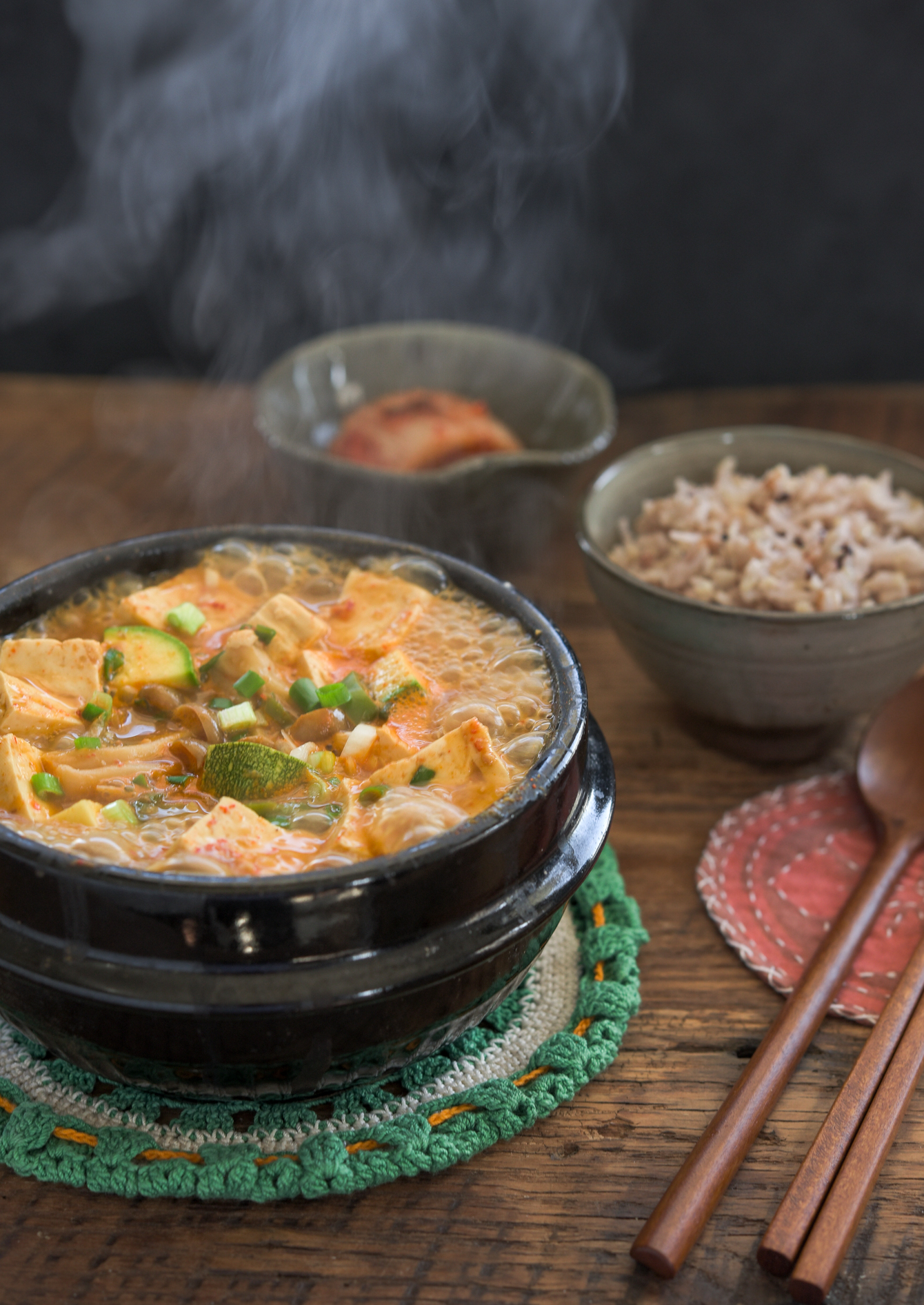
There is a specific sound in a Korean home that means dinner is ready. It is the rhythmic clink of a spoon hitting the side of a bubbling stone pot.
Growing up in Korea, Doenjang Jjigae (된장찌개, Korean Soybean Paste Stew) was the soul of our table. It’s a classic Korean soybean paste stew made with doenjang, tofu, and vegetables.
I have spent decades perfecting the balance between the earthy fermented paste and the sweetness of the vegetables. Many quick versions taste flat. My mother taught me a secret that changed everything: using ssaltteumul (rice water) as the base creates a silky, rich body that plain water cannot match.
This is the ultimate version I have refined through years of home cooking and professional recipe testing. It is comforting, high in protein, and purely authentic.
If you prefer something with a sharper, fermented kick, my classic kimchi jjigae with pork and tofu is the spicy cousin to this earthy soybean version. Both are essential staples in any Korean kitchen.
Get new recipes via email:
The Secret to a Deep Umami Broth
Forget the plain water. To get restaurant-quality depth at home, you need a strong foundation.
Rice Water (Ssaltteumul): Use the milky water from rinsing your rice as the broth base for a velvety texture (see my specific tip below).
The Anchovy Kelp Base: Simmer dried anchovies and kombu for 15 minutes. If you are in a rush, a high-quality bouillon tablet works, but rice water remains the key to that authentic mouthfeel.
- Make it Vegan: Simply swap the anchovy stock for a dried shiitake mushroom and kelp broth. The deep umami of the doenjang ensures you won’t miss the seafood.
Key Ingredients for Doenjang Jjigae
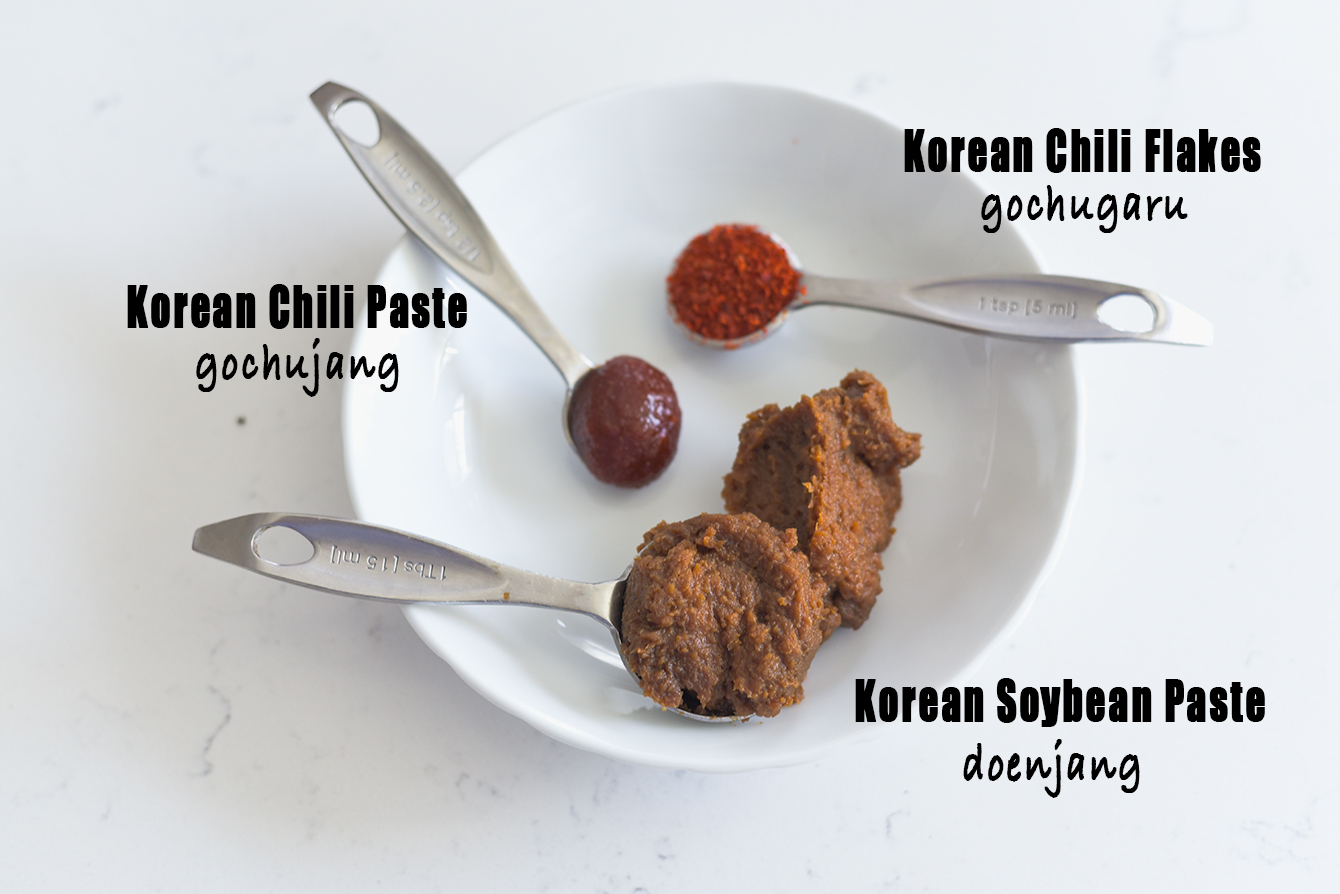
The Doenjang (된장): The paste is the heart of this dish. I recommend brands with simple ingredients like Chung Jung One, Sempio, or O’Food. A quality paste should be golden brown and nutty. If it looks too dark or smells sour, your stew will suffer.
Add Gochujang and Gochugaru for Depth: A small spoon of gochujang enriches the broth, while a pinch of gochugaru adds gentle heat. Together, they round out the earthiness of the doenjang without overpowering it.
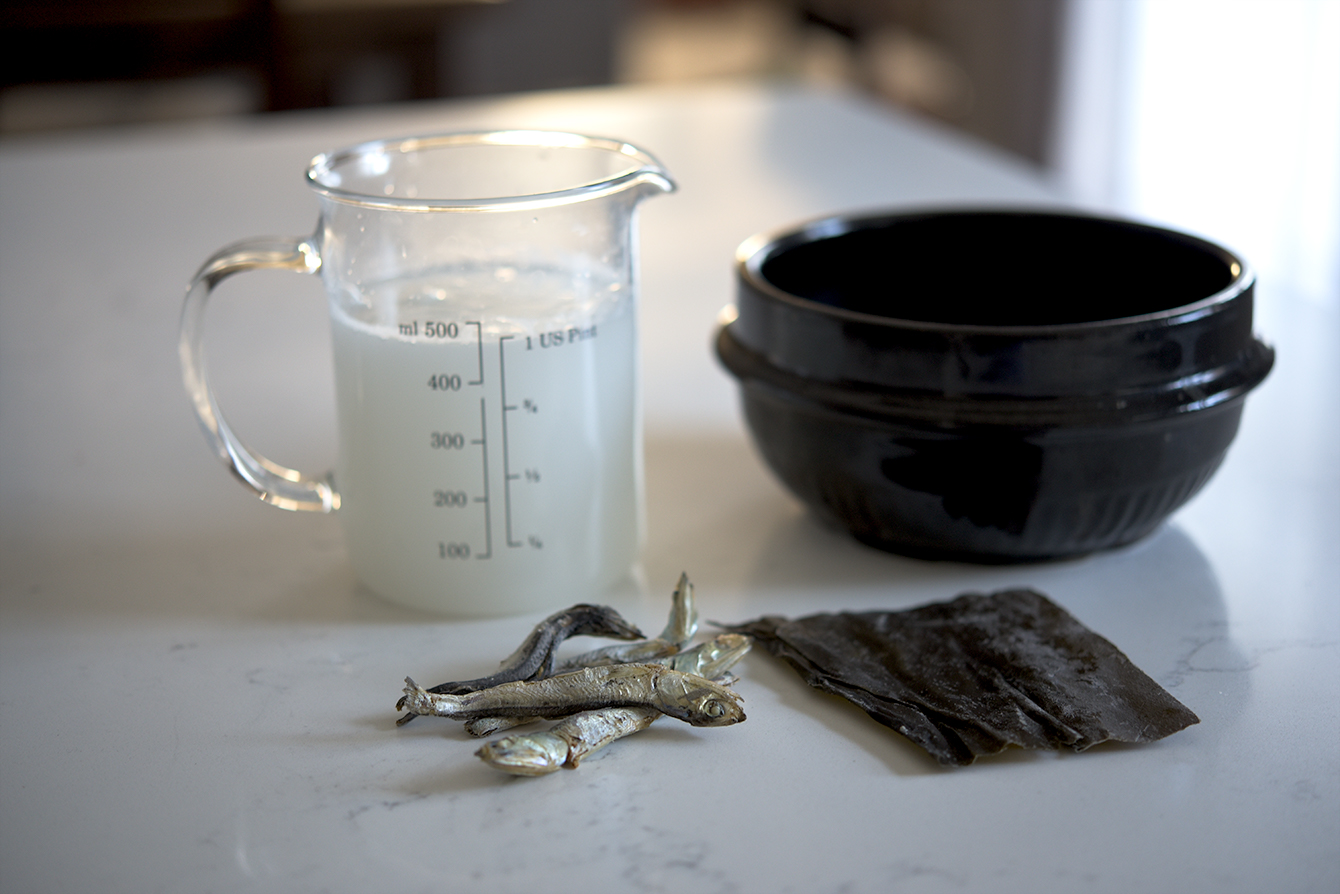
Hyegyoung’s Tip: Use Ssaltteumul (쌀뜨물, Rice Water)
In my kitchen, I never throw away the water from rinsing rice.
- Rinse and Discard: Give your rice a quick first wash to remove dust.
- Collect: On the second or third rinse, rub the grains together and save that milky water. The starches act as a natural emulsifier, binding the fermented paste to the broth for a rounded, velvety flavor.
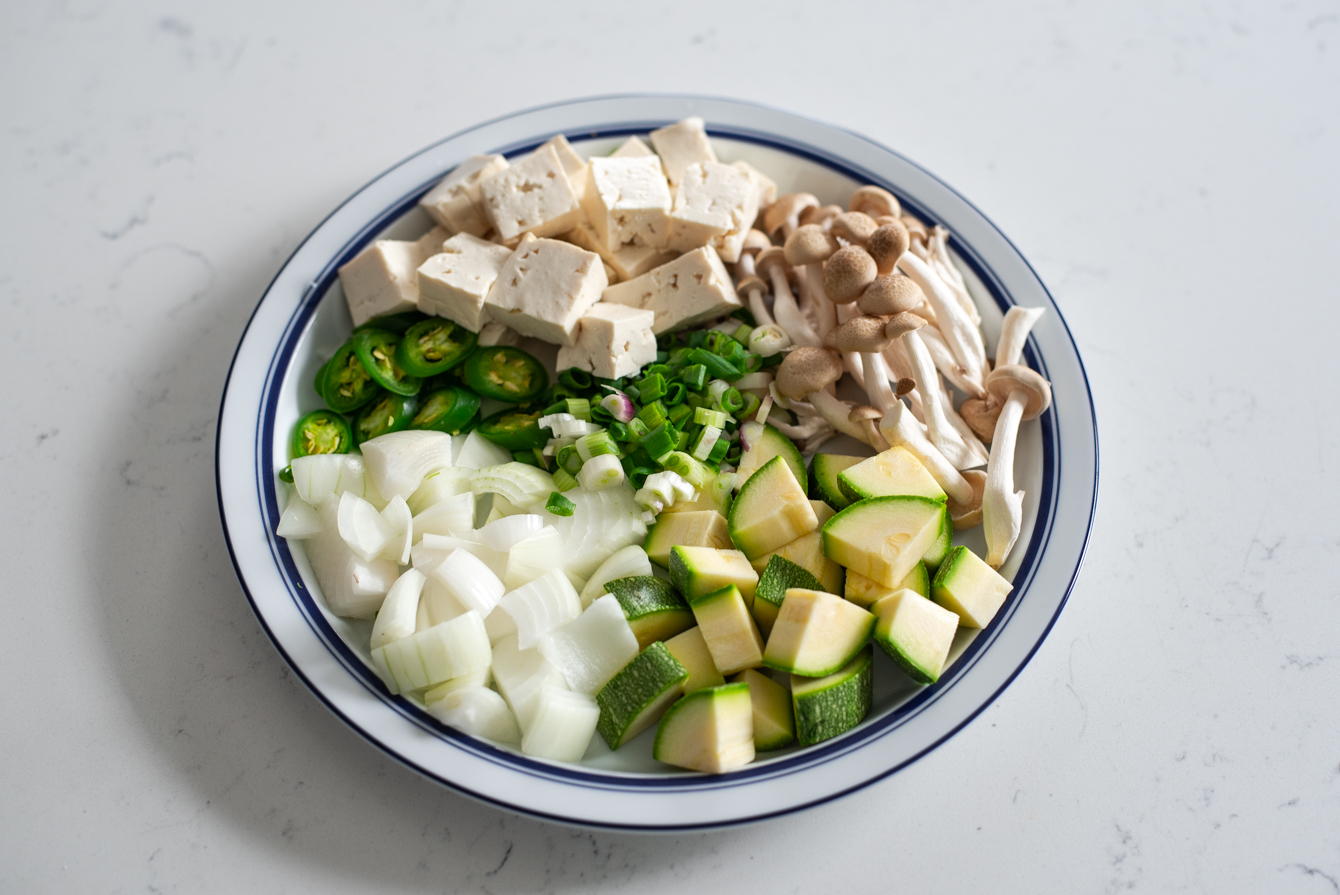
The Vegetables and Tofu: Layering is key. Start with the onions to let them soften and soak up the savory brine. Add the zucchini, tofu, and mushrooms midway through the boil so they stay tender but keep their shape.
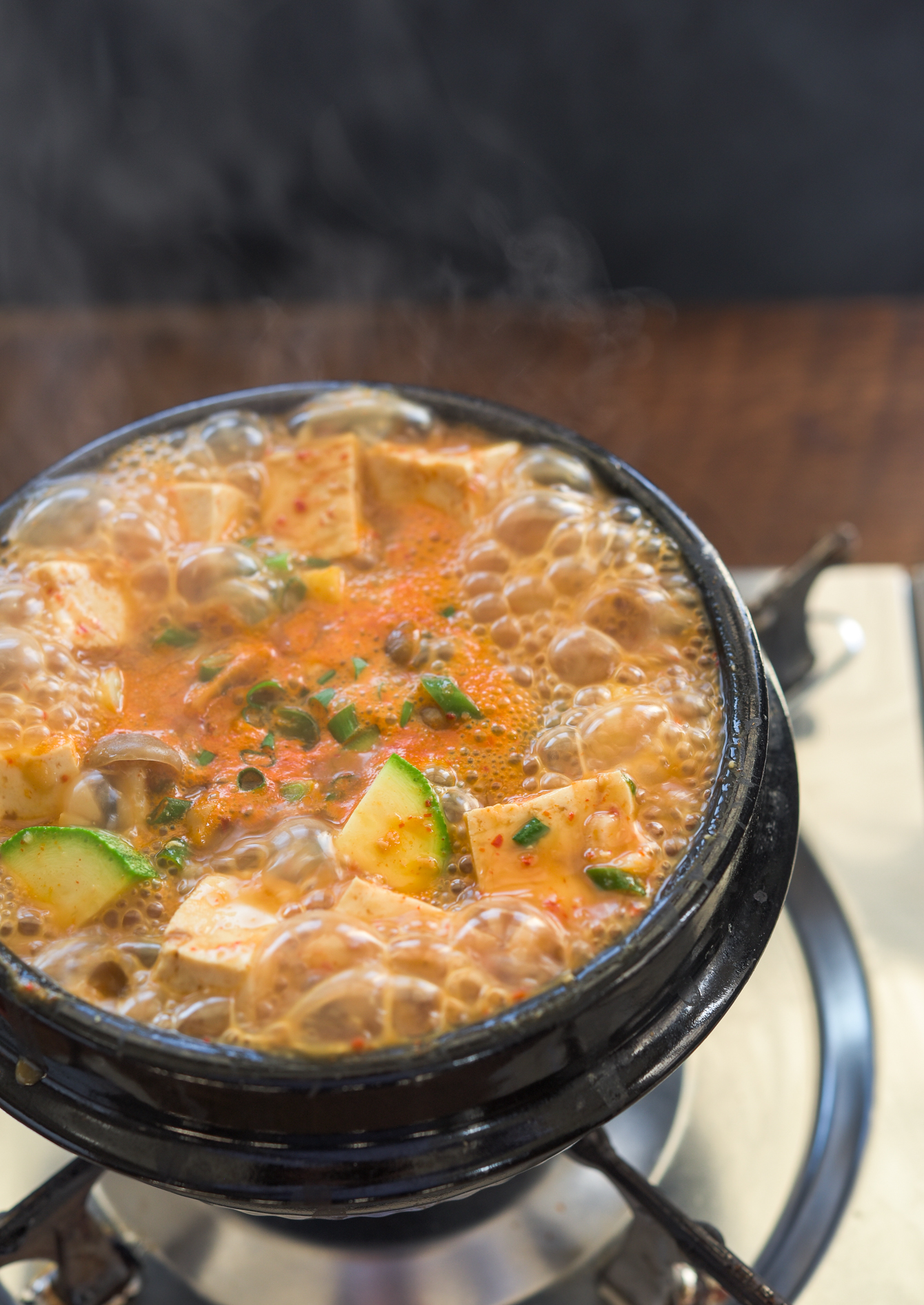
Note on Ttukbaegi (Korean Stone Pot): A ttukbaegi (Korean stone pot) keeps the stew hot and bubbling all the way to the table. It’s not essential, but that sizzling moment brings pure nostalgia to anyone who grew up with Korean home cooking.
How to Make Authentic Doenjang Jjigae
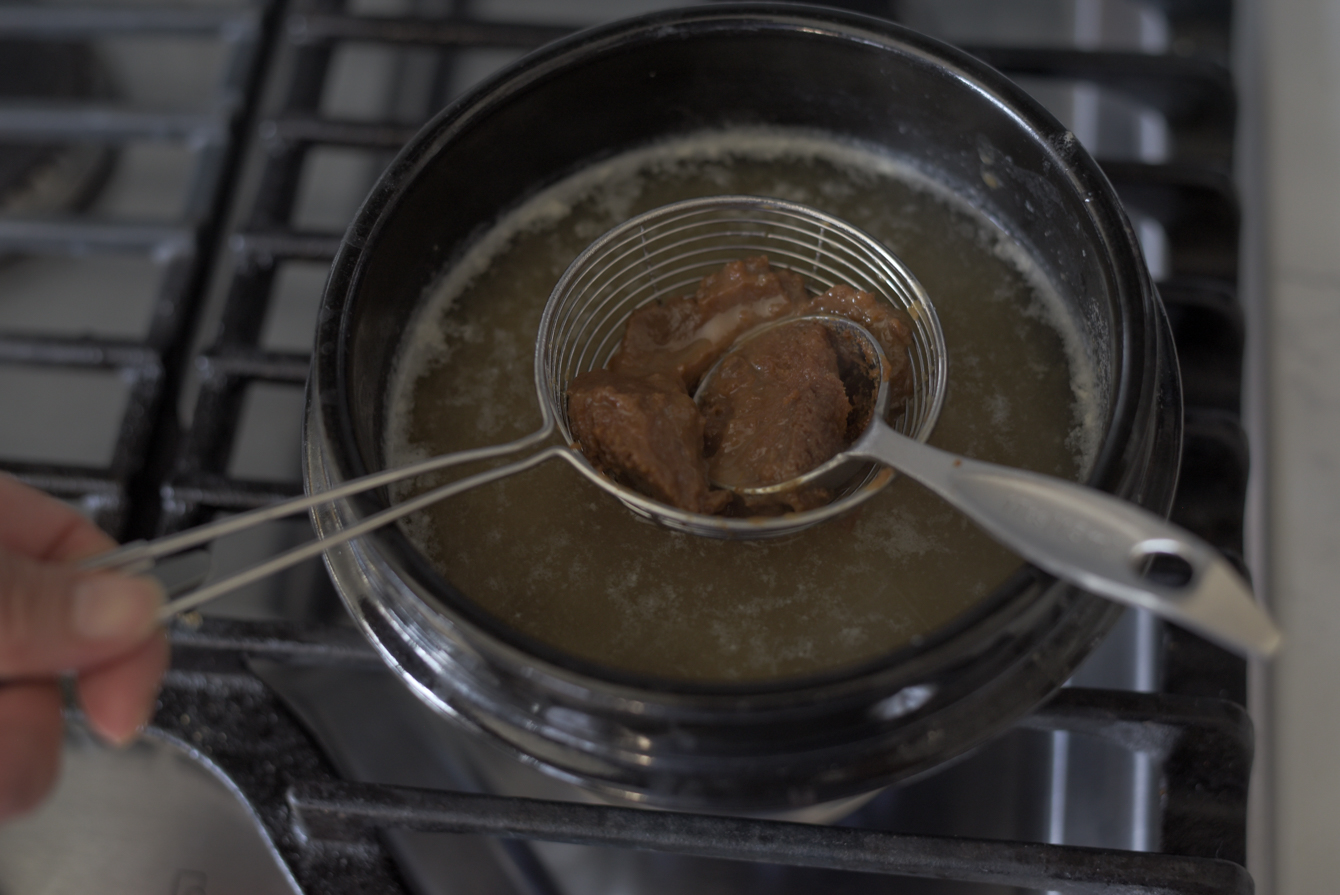
Whisk for a Smooth Broth. Use a small mesh strainer to dissolve the doenjang into the boiling rice water. This prevents salty clumps of beans at the bottom.
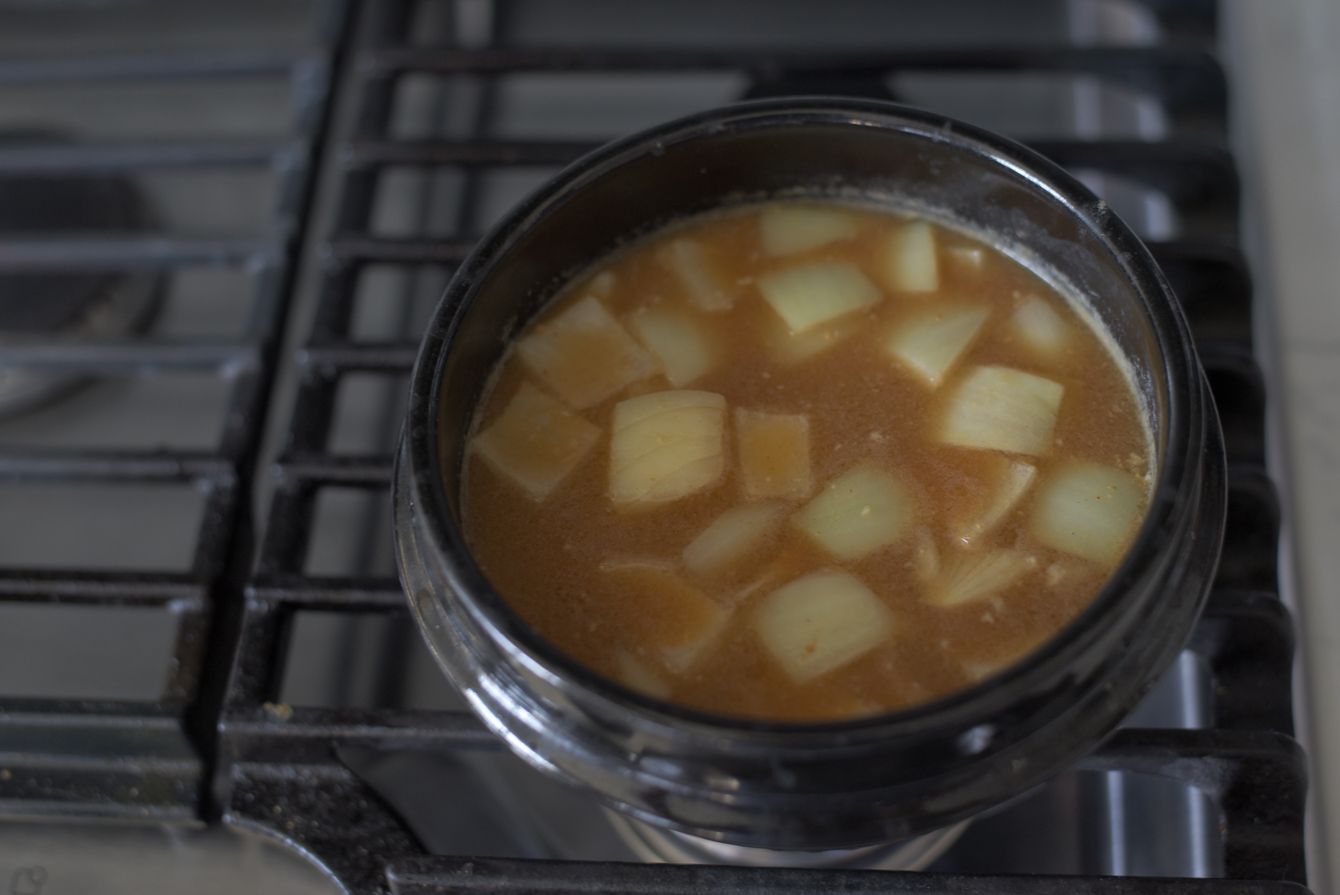
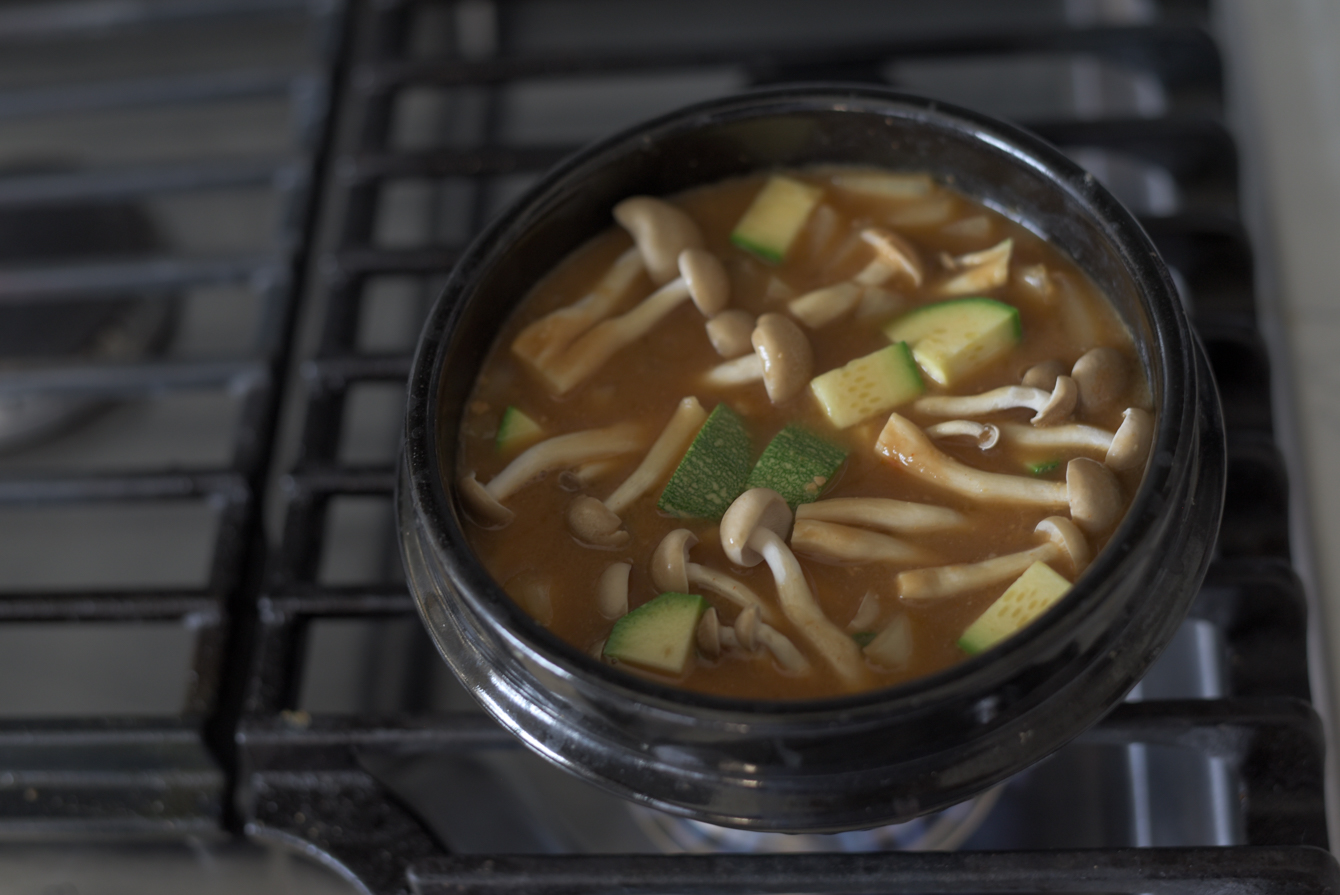
Add the onions first to soften, then the zucchini, tofu, and mushrooms midway through. Let them soften and release their sweetness. Watch for the broth to turn a deep, rich ochre. It should taste slightly saltier than you expect, as the tofu and vegetables will balance it out.
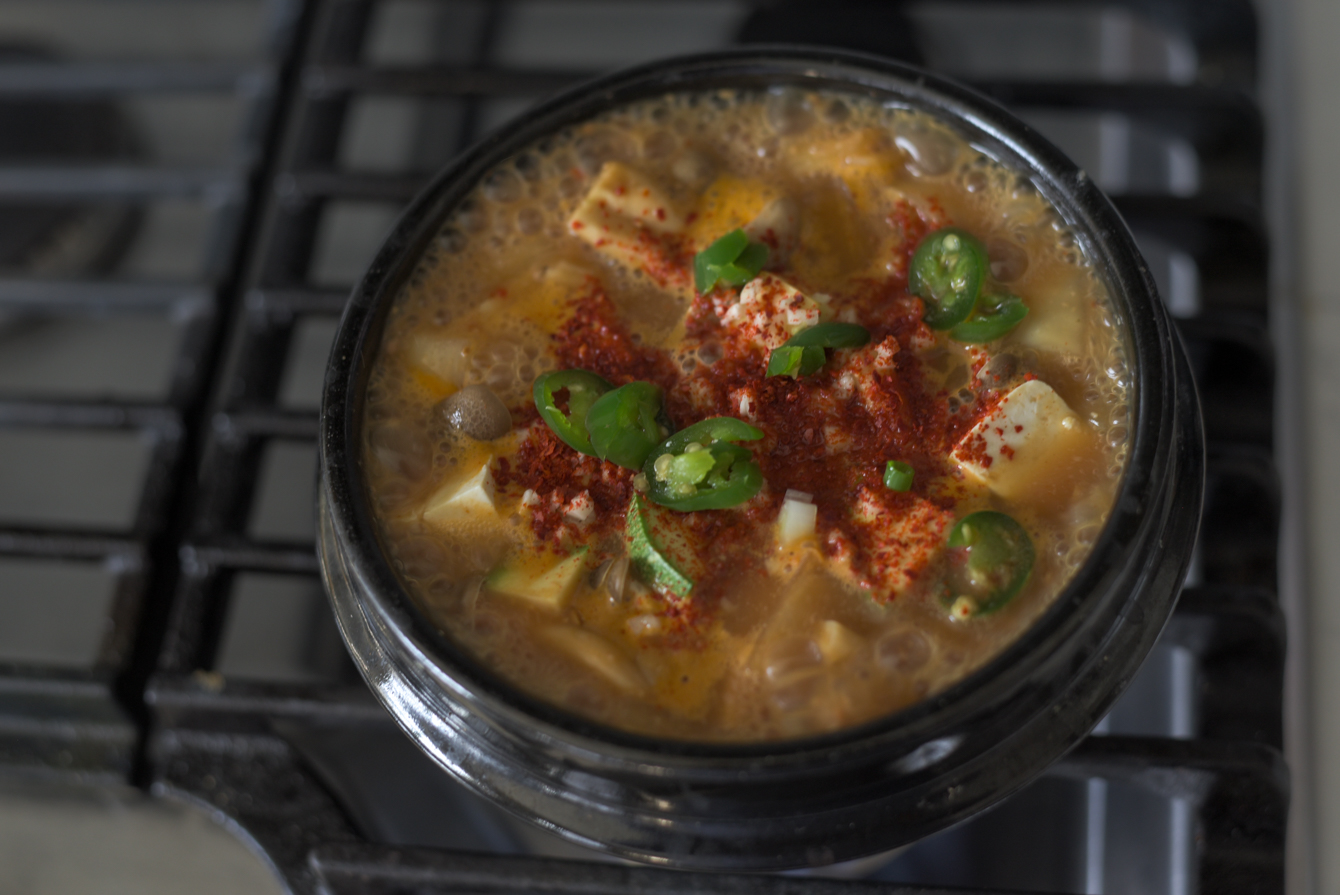
Near the end, sprinkle in a little gochugaru and fresh chili slices for extra heat. Let the stew simmer until rich and fragrant. If you use a ttukbaegi (stone pot), turn off the flame a minute early. The stone retains heat and will finish the cooking perfectly.
If you enjoy this stew, I also share a beef version in my cookbook, Korean Cooking Favorites. It’s one of the variations I make when I want something extra hearty.
What to Serve with Soybean Paste Stew
In Korea, this stew is the ultimate palate cleanser. Its savory profile is the perfect match for the smoky richness of grilled meats. If you are planning a Korean BBQ dinner at home, this pot should be bubbling right next to your grill and serve with rice. It cuts through the fat of the meat and keeps you reaching for more.
If you prefer a stew that is light and fiery kick, you absolutely have to try my silken sundubu jjigae with seafood. It is my go-to recipe when I want that signature soft tofu melt-in-your-mouth experience. It is another essential staple in my collection of authentic Korean stews, where I share all the traditional techniques to help you master that deep, restaurant-quality broth at home.
I first shared this recipe in November 2011 and recently updated it with clearer instructions and fresh details. If you try it, please leave a rating and comment — I love hearing how it turns out in your kitchen. And if you enjoy Korean home cooking, you’re welcome to join my newsletter.

Doenjang Jjigae (Rich Korean Soybean Stew)
Recipe Video
Ingredients
For Anchovy Stock
- 2 cups (480 ml) rice water, see note below
- 5 large dried anchovy, deveined
- 1 piece dried sea kelp (dashima)
For Stew
- 2 heaping tbsp (30 g) Korean soybean paste (doenjang)
- 1 tsp (5 g) Korean chili paste (gochujang)
- 1/2 (about 50 g) small onion, chopped
- 1 (about 120 g) small zucchini, diced
- 4 oz (115 g) soft tofu, diced
- 2 oz (56 g) mushroom, optional
- 1 clove garlic, finely minced
- 1 tsp (3 g) Korean chili flakes (gochugaru), optional
- 1 fresh chili, sliced
- 1 green onion, finely chopped
Equipment
- 1 qt (1 liter) stone pot or regular soup pot
Instructions
- To make the anchovy stock, combine rice starch water, dried anchovy, and sea kelp (dashima) in a stone pot or soup pot and bring to boil. Reduce the heat to low and simmer for 3-4 minutes. Discard the anchovies and sea kelp.
- To prepare the stew, use a mini scoop strainer or slotted spoon to dissolve the pastes into the stock. Add the onion and bring to a gentle boil over medium heat.
- When the broth starts to boil, add zucchini, tofu, and mushrooms, then reduce to medium-low heat and let it simmer for 2-3 minutes.
- Near the end of cooking, stir in garlic, chili flakes, and fresh chili slices. Once done, turn off the heat and top with chopped green onion for a fresh, aromatic finish.
Hi Holly, I'd like to make this soup, but Doenjang paste is impossible to find where I live. Would miso be an acceptable substitution?
Hi Trang
Thanks for the compliments. Hope you can visit my site as often as you can.
@8d9f8fcf78188c19595f52aa36ac77b0
Hi Duncan
Yes, we are excited to have your young family in our home as well. Have a safe drive to KL.
Hi Holly, this is Duncan from Kuantan. You have a beautiful blog and quite a talent for cooking. What a lovely idea to be doing this blog for your children – you can’t go wrong when it comes to food.
@c01c21604566414f02d0c6fc1bbc8346
Hi there
Thanks for visiting my blog. I am not so familiar in cooking with Indian ingredients so I am glad that I found your blog as well. Look forward to learn great Indian recipes from you.
@d228db5f32b3cdbde75d46a8917c0b61
Thanks Bee. You are welcome to my site anytime.
I love your blog. The recipes are clear and the photos are just too professional, like they are taken out of a cookbook.
I love any kind of Korean soup, especially during the kind of winter in the Midwest region of the U.S.
Wow, that is impressive. He's got some Korean factor in his taste bud.
@e5ff742b14eddf1a5cd63be711b937b1
Hi Caroline
yes, you can omit the chili flakes and fresh chilies, too. Hope you nephew would enjoy the stew you made.
my five year old son loves this soup. i will use your recipe next time!
Hi Holly
Thank you for the recipe. Iam going to cook this for dinner. Will it be much different if I omit the chillie flake? Because my young nephew still could not take spicy food yet.
Thanks.
Caroline
wow definitely looks like comfort food. any kind of stew or soup bubbling in a hot claypot is heaven.
Your blog is something I was looking for – detailed instructions on how to make Korean everyday food. I am currently living in Seoul and want to learn more about Korean home cooking before we move again. Thanks for all the tips and recipes! Well come here more often.
I love Korean food and I am really happy to have bumped upon your blog today!! Loved this jijigae recipe. Following you now. I would love your visit to my blog on Indian/Hong Kong food!
@ff5a7342455262aefc19b0703b5a1649
Yes, cook more for your parents. Sharing food with your loved ones is like sharing your heart. It will bring precious memories.
Sophia
Hi Sophia, I am sorry about your grandfather.
Your description of how your grandfather enjoyed the stew was so right! Many Korean men, especially older generation, would do that. My father didn't burp but he did slurp his soup or stew though.
@a6366f025ddce6dd53bdcb8a1d6ccbeb
Thanks. Yes, I do remember, too, of the smell of Doenjang Jjigae in my house or my friends house as a child. It was the natural alarm for us that the dinner is almost ready. I love the smell…
Hyosun Ro
Thanks, Hyosun! A pot of Doenjang Jjigae and a grilled fish is one of the most common humble dinner and I often miss that. Hope you enjoyed your coffee and had a great Saturday morning.
S. Z.
Thanks for the comment.Yes, the rice starch water will thicken the stew quite nicely and brings deeper flavor, too. Give it a try and let me know how it turned out.
Hollly, this is a touching post. I've loved your blog ever since I knew about it. I love you even more now that you are finally doing a doenjang jjigae post, because I've always wanted to make one, but never could. Maybe it's the rice starch water that was missing.
Holly – I am very sorry about your father. That's so sad. You're right this is no. 1 comfort food for Koreans, especially men. This makes me hungry for it, and I am just having my first cup of morning coffee.
I don't think this could look or sound more delicious! It brings back awesome memories of my childhood in Korea. Thanks for the recipe, I love your blog!
I love doenjang jjigae, very comforting indeed – I'm sorry about your father…
This stew moves me too, because it reminds me of my grandfather who passed away three years ago. I will always have the image of him slurping noisily at the stew, and us burping at the same time.
Oh Holly, sorry to hear about your father. This makes me think, I must cook more for my parents when I see them. What a comforting stew this is – I can see why this could be the way to someone's heart!