

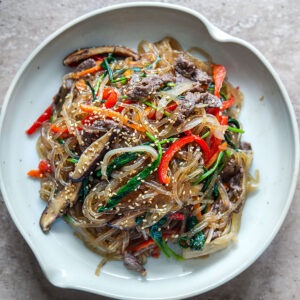
Japchae (Korean Glass Noodle Stir-Fry)
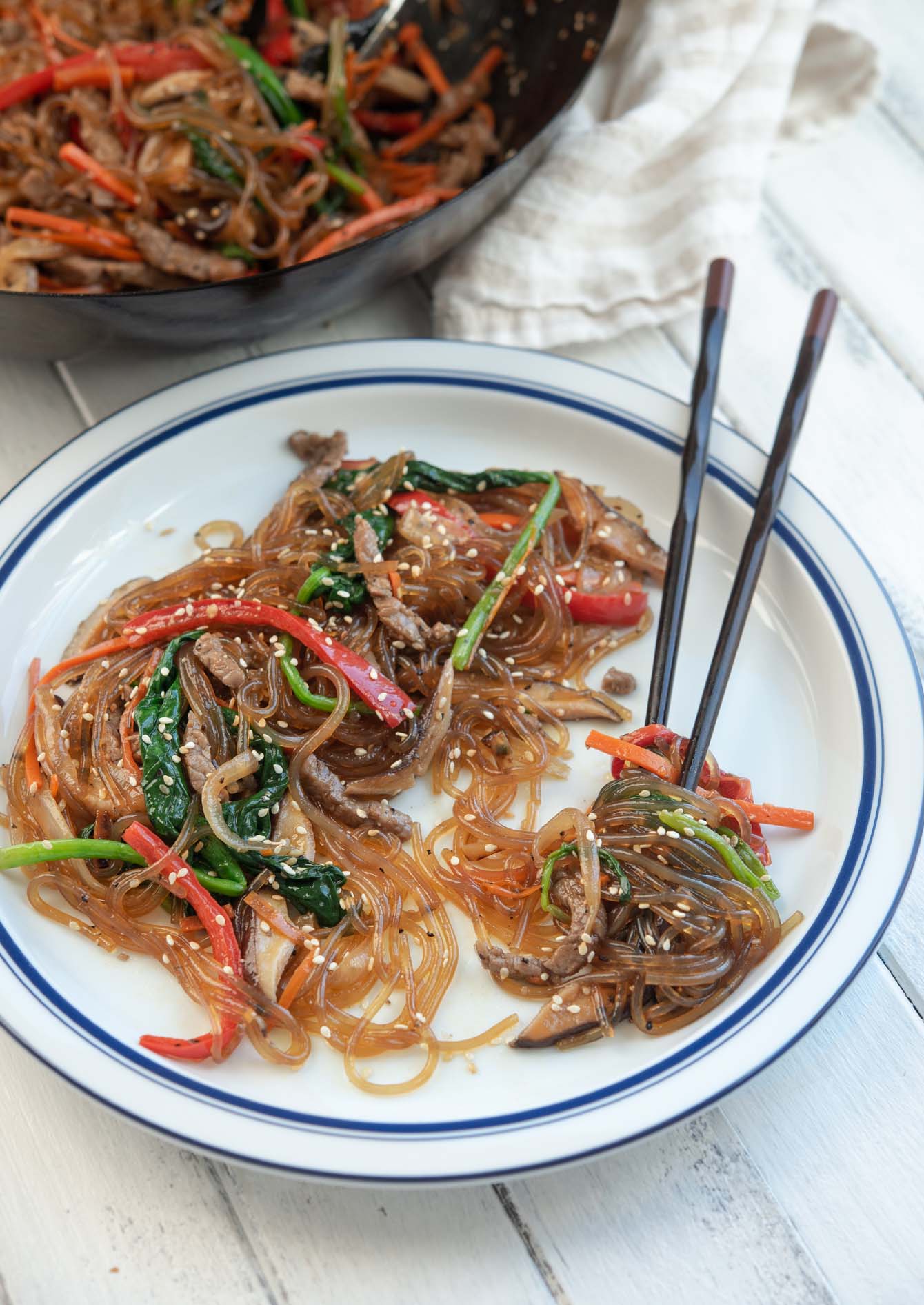
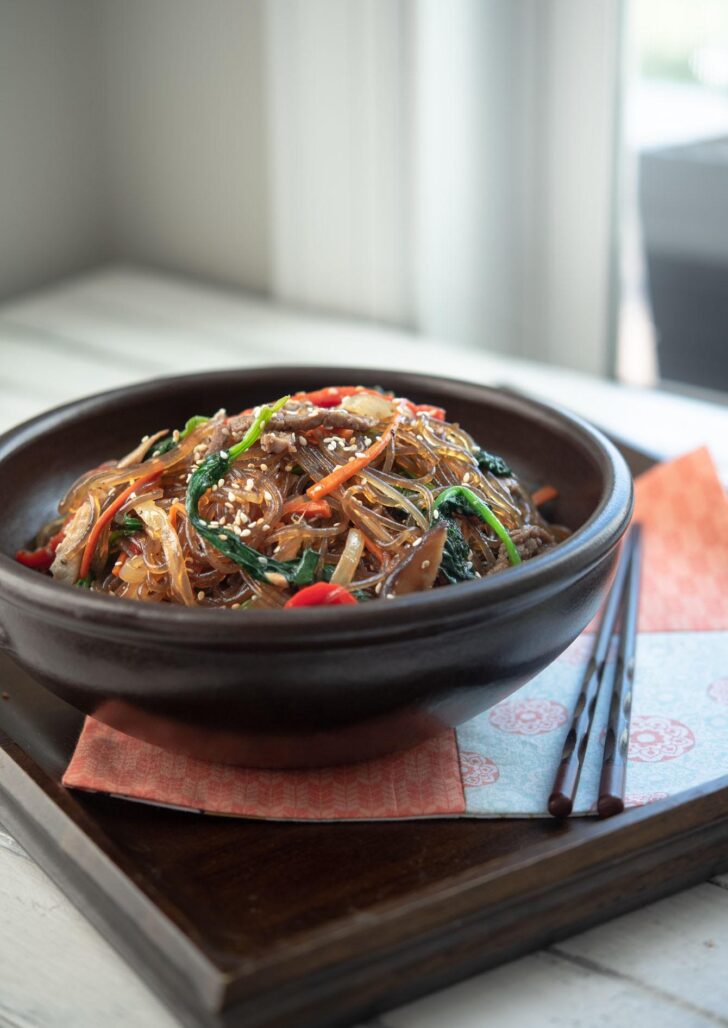
Japchae is a classic Korean glass noodle stir-fry made with chewy sweet potato noodles, thinly sliced beef, and colorful vegetables in a savory-sweet soy sauce. This streamlined method cooks everything in about 35 minutes, making it practical for weeknights while still worthy of holidays and special gatherings.
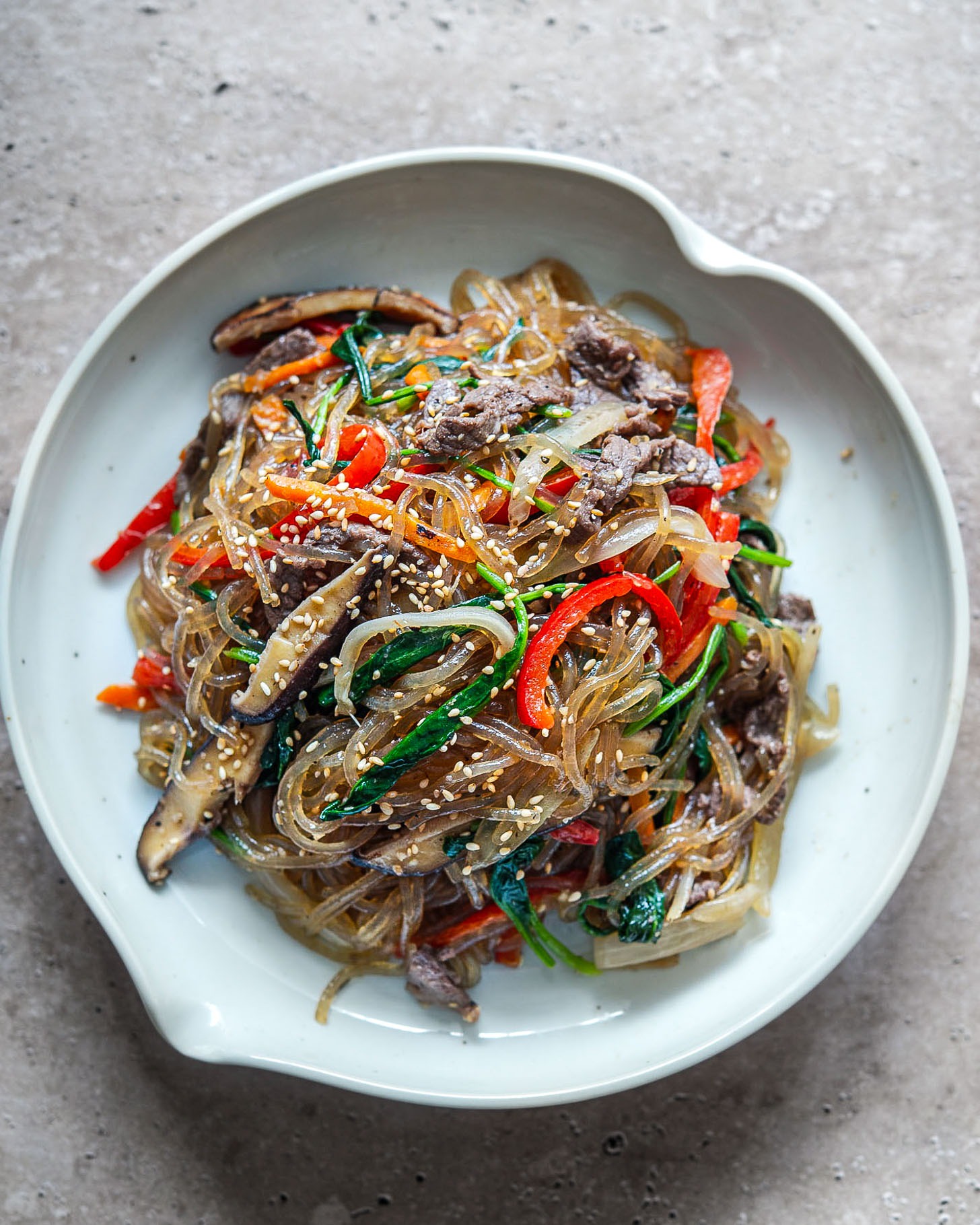
I first learned to make japchae (잡채) while I was in college in the U.S., homesick and craving something familiar. A Korean professor’s wife showed me a way to prepare it that kept the traditional flavor and texture but simplified the cooking process. That method stayed with me.
In Korea, japchae is more than just a noodle stir-fry. It’s a dish expected at holidays, birthdays, and family gatherings, often made in large batches and served at room temperature so everyone can share. The balance of chewy noodles, well-seasoned beef, and lightly sautéed vegetables is what makes it memorable.
Get new recipes via email:
Over the years, I’ve refined that technique so it stays true to the authentic flavor while reducing extra steps and pans. It’s the version I cook when I want something comforting yet celebratory, whether I’m serving it alongside my traditional Beef Bulgogi or building a Korean-style meal with my classic bibimbap.
If you’re craving more noodle comfort, explore my full collection of Korean noodle dishes. Many of them are just as satisfying and weeknight-friendly.
Why This Japchae Method Works
- Protects the noodles’ texture. Sweet potato glass noodles (dangmyeon) can easily become soft and sticky if overboiled. Soaking them first and finishing them in the pan keeps them chewy and springy, which is the texture japchae is known for.
- Balances seasoning without extra steps. Instead of cooking each ingredient separately in multiple pans, this method builds flavor in stages within one pan. The vegetables stay vibrant, the beef remains tender, and the noodles absorb the savory-sweet sauce evenly.
- Stays true to Korean home cooking. Japchae has always been flexible in Korean kitchens. While beef is traditional, it can easily be made vegetarian or adjusted based on seasonal vegetables, as long as the signature balance of soy sauce, sweetness, and sesame oil is preserved.
- Practical for modern cooks. This technique keeps the classic flavor and texture intact while simplifying the process, making it realistic for weeknights without losing its celebratory feel.
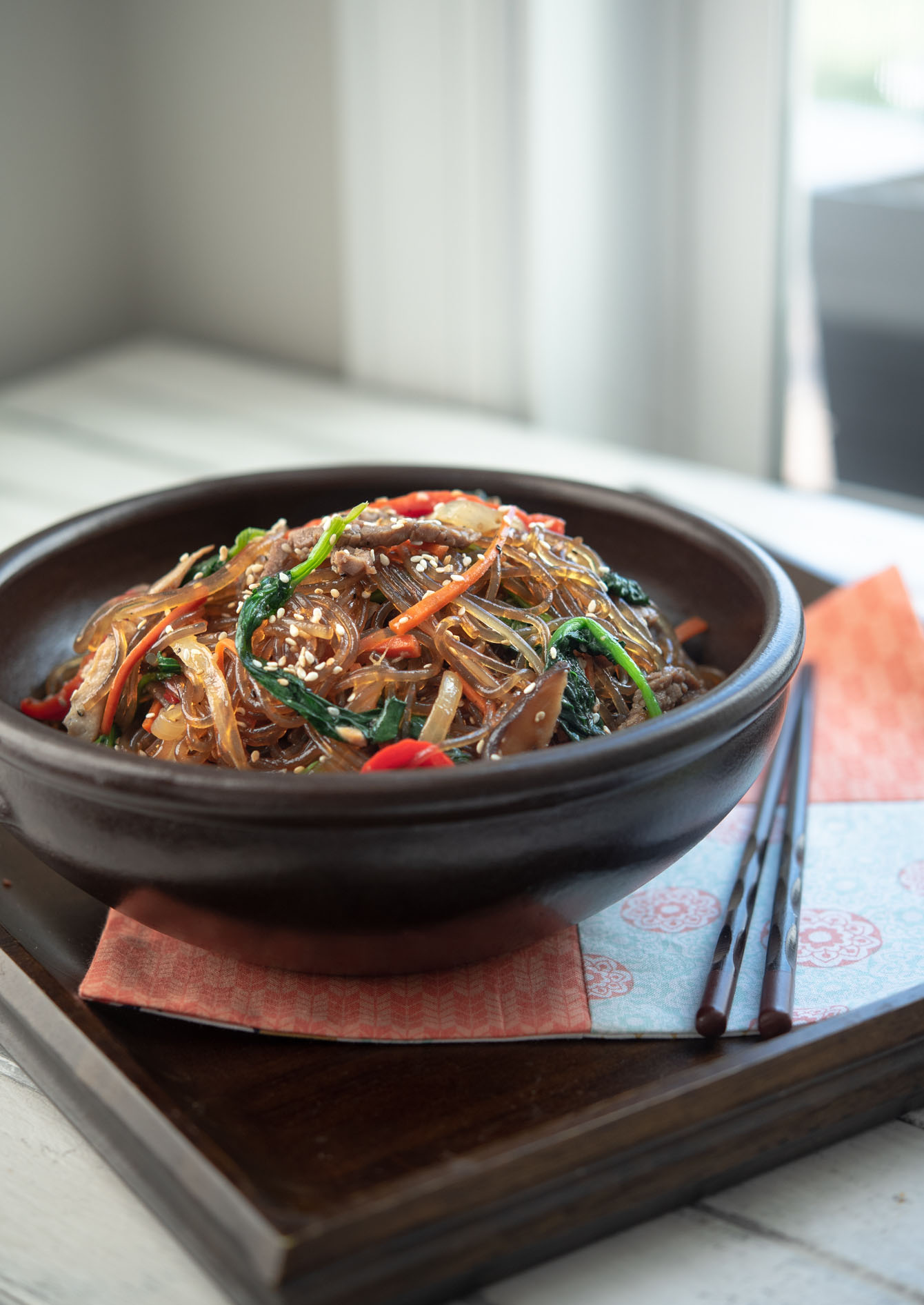
What You Need to Make Japchae
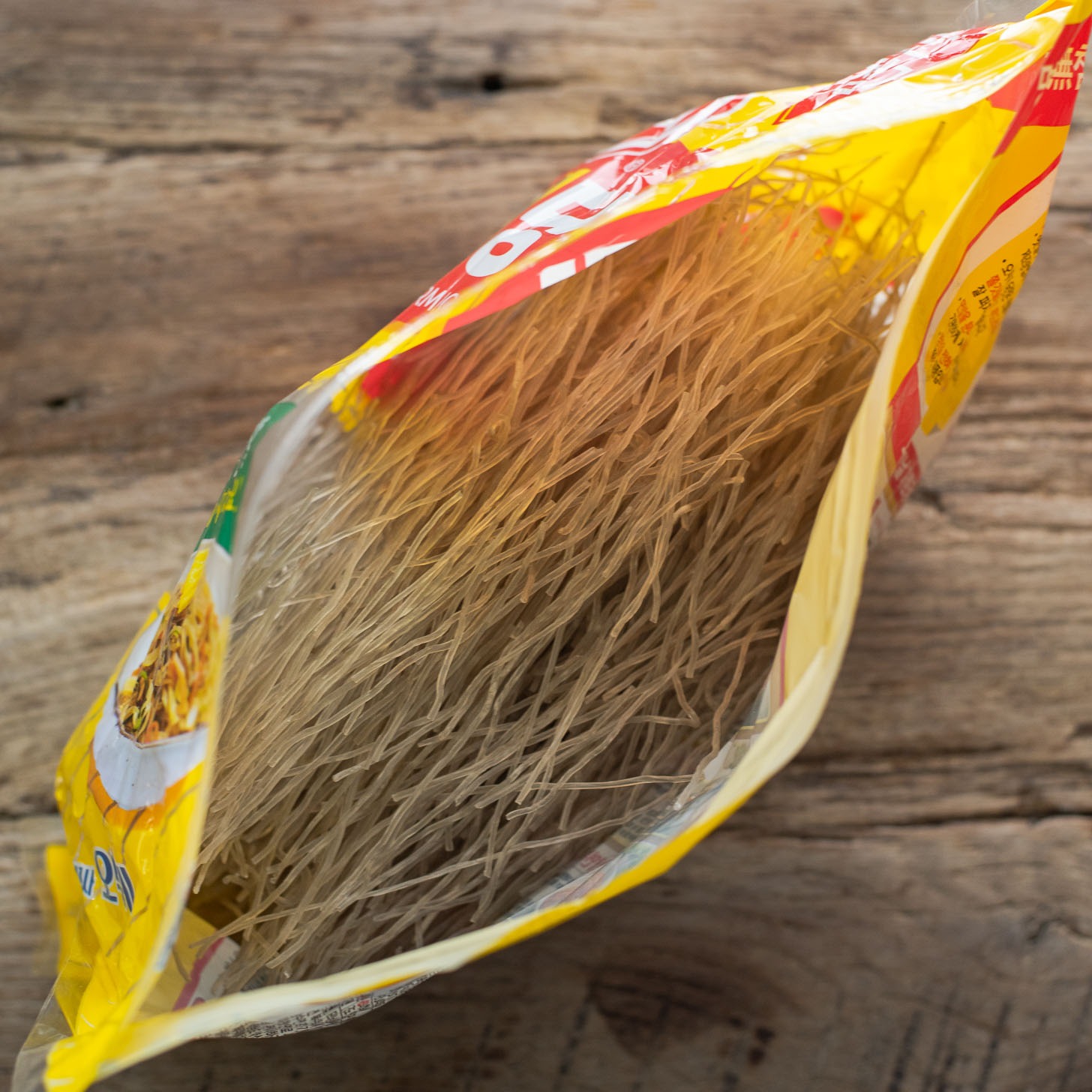
Dangmyeon (Korean sweet potato glass noodles): These translucent noodles are made from sweet potato starch and give japchae its signature chewy texture. I soak them in hot water instead of boiling, which softens them gently and allows them to finish cooking in the pan without becoming overly soft.
Beef: Thinly sliced sirloin or striploin works best for tenderness. A quick marinade of soy sauce, sugar, garlic, and sesame oil seasons the meat deeply and helps it blend seamlessly with the noodles rather than tasting separate.
Vegetables: Japchae is known for its balance of color and texture. Onions, carrots, bell pepper, mushrooms, and spinach are traditional choices. Stir-fry the firmer vegetables first, then add mushrooms and spinach at the end so the greens stay vibrant and the texture remains distinct.
Japchae Sauce: The sauce must be balanced. Sweetness from sugar and mirin, savoriness from soy sauce and garlic, and nuttiness from sesame oil. I mix it in advance so it coats the noodles evenly the moment they hit the pan, which helps the noodles absorb flavor without clumping.
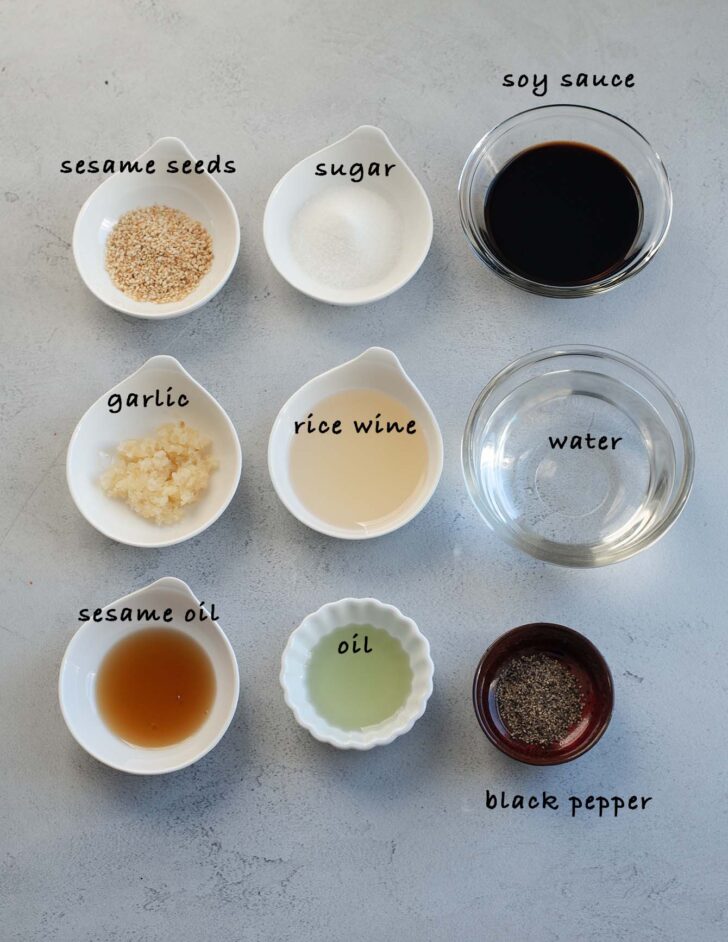
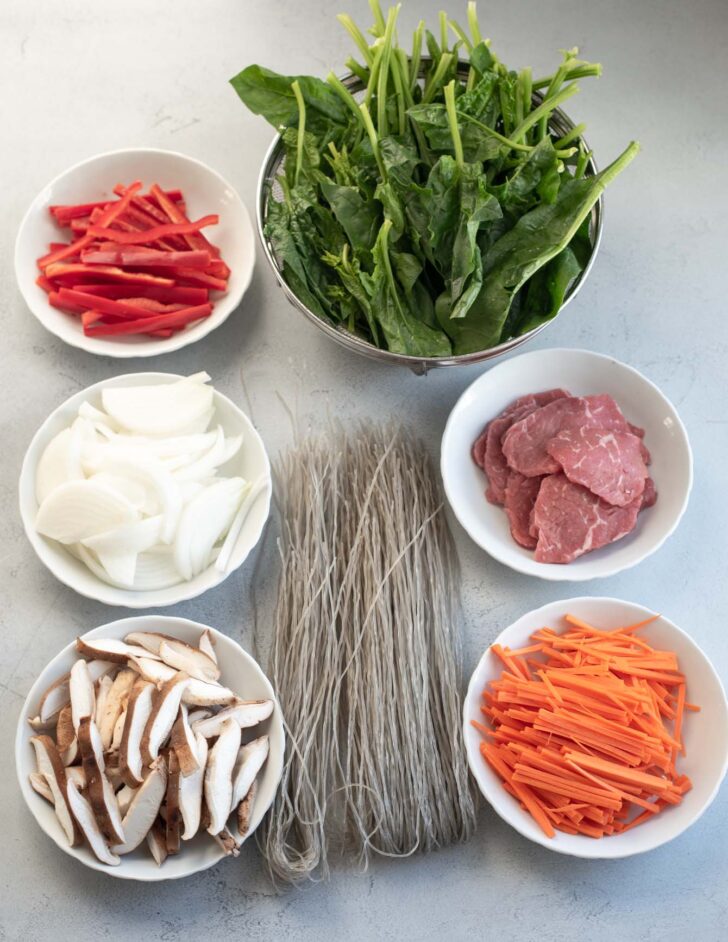
How to make Japchae (Step-by-Step)
These step-by-step photos walk you through the process. For exact measurements, scroll down to the printable recipe card.
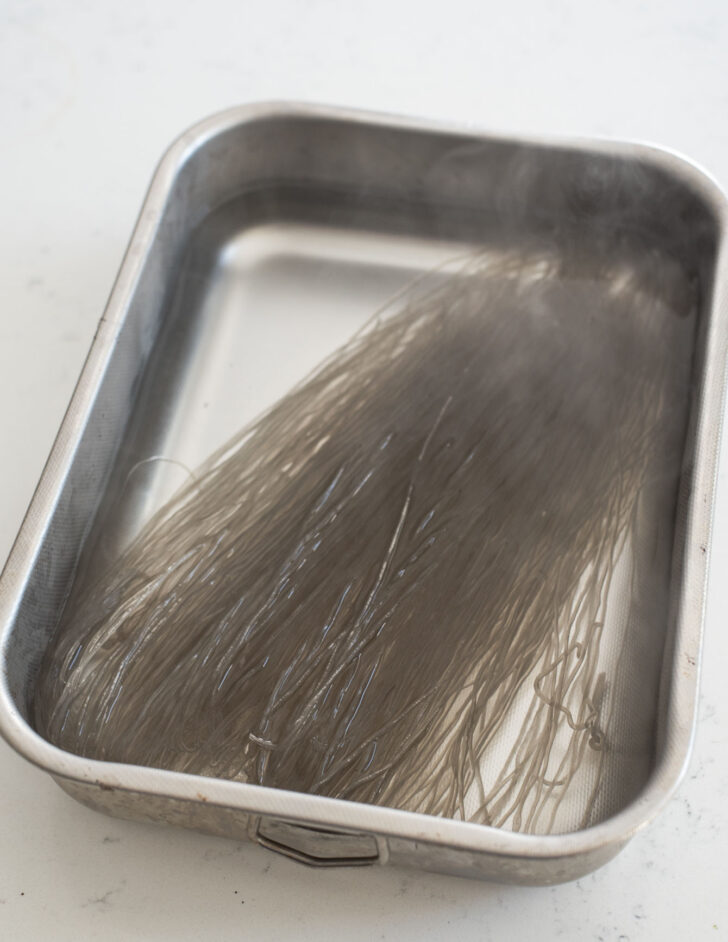
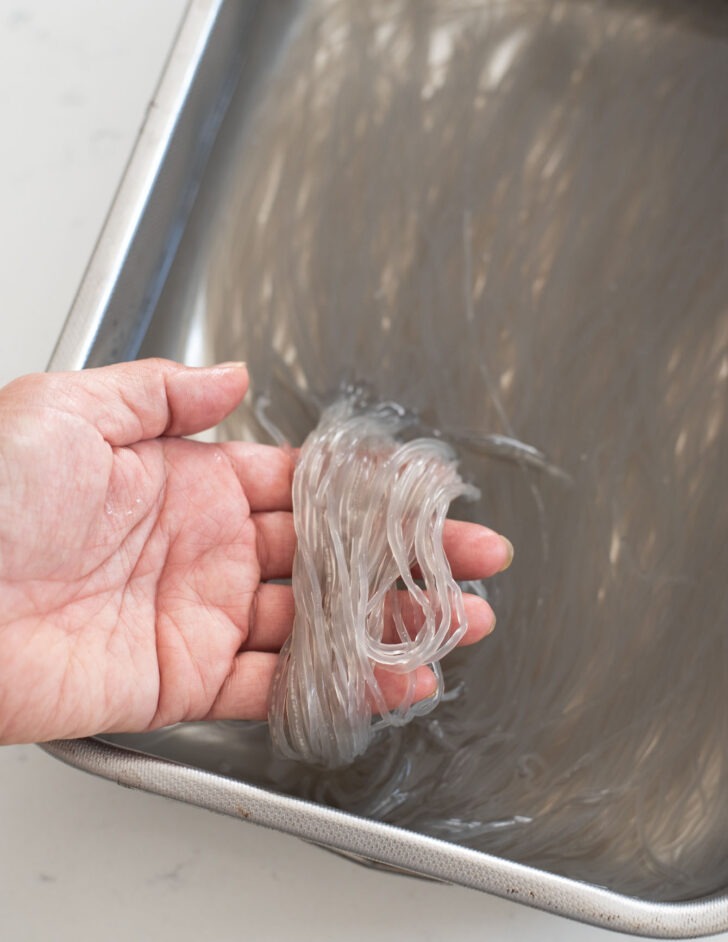
Soak the noodles. Soak the dangmyeon in hot water for about 15 minutes, then drain. This softens them gently so they finish cooking in the pan without becoming overly soft or sticky.
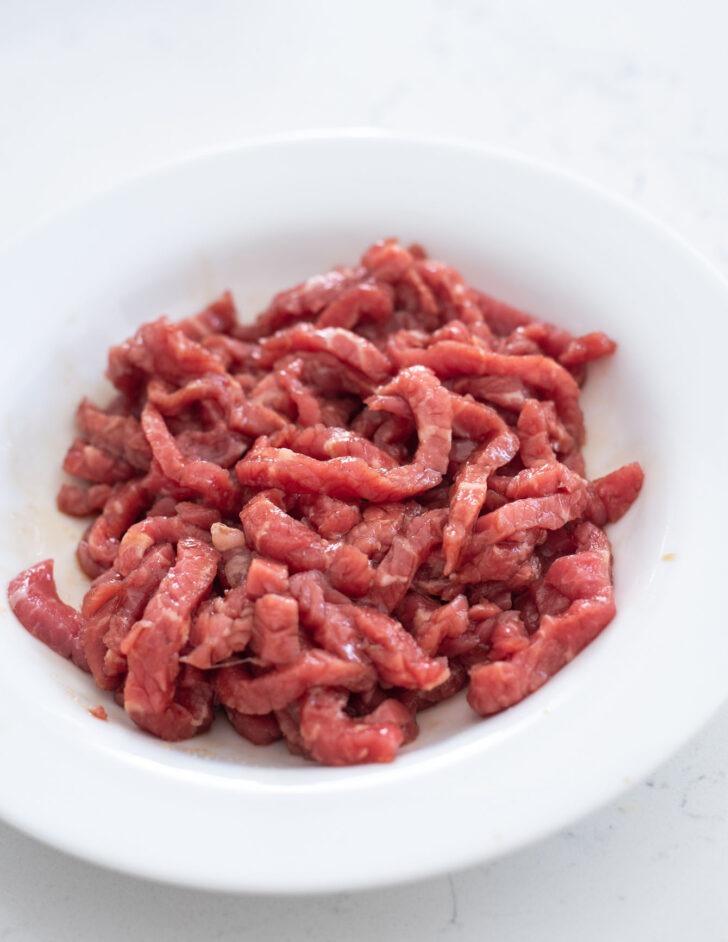
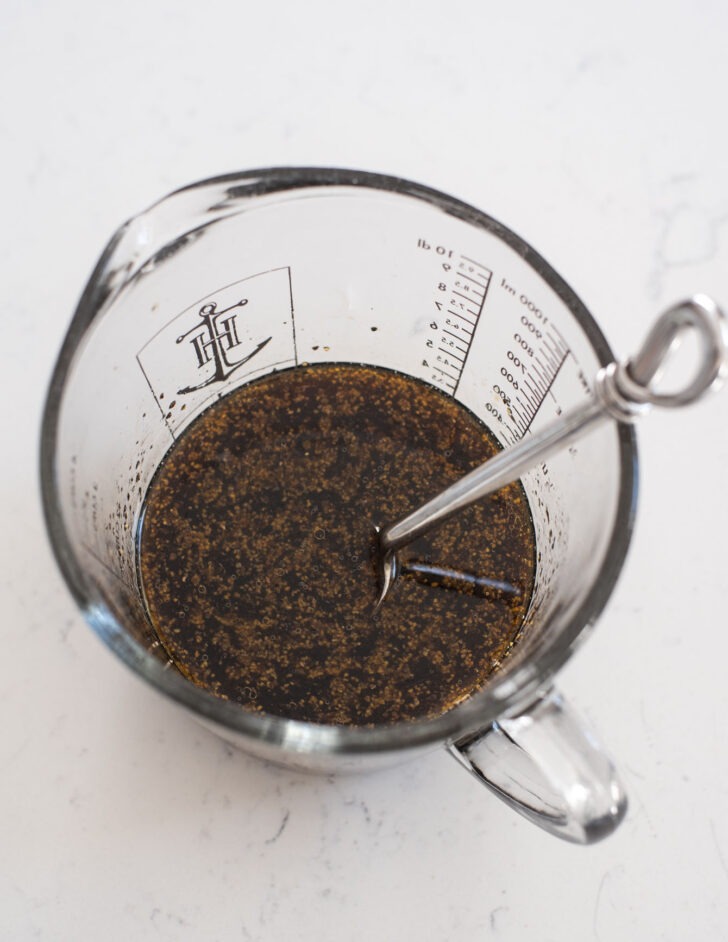
Marinate the beef. Combine thinly sliced beef with soy sauce, rice wine, and sugar. This quick marinade seasons the meat deeply and keeps it tender. While the beef rests, mix the sauce ingredients so they’re ready to use.
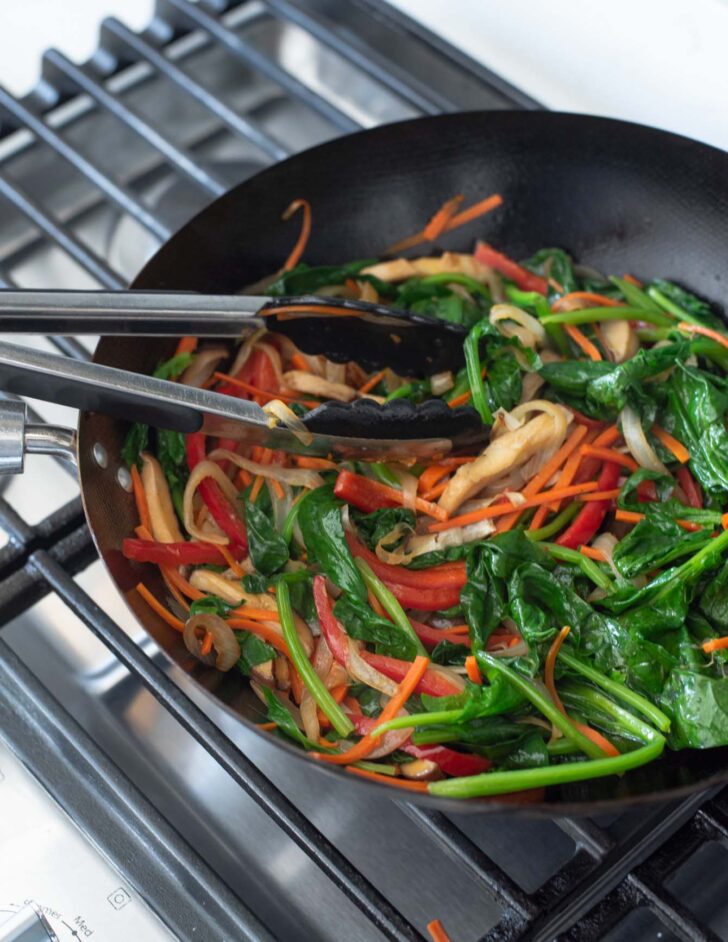
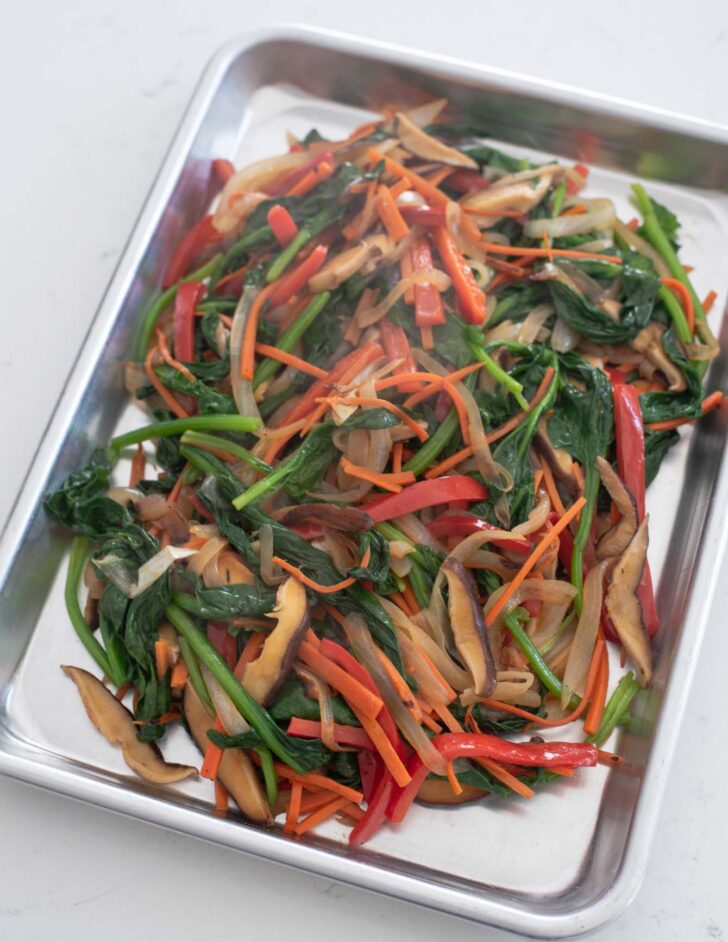
Stir-fry the vegetables in stages. Cook firmer vegetables first, then add softer ones later. Japchae tastes best when each ingredient keeps its color and slight bite rather than blending into a single texture. Transfer the vegetables to a platter once cooked.
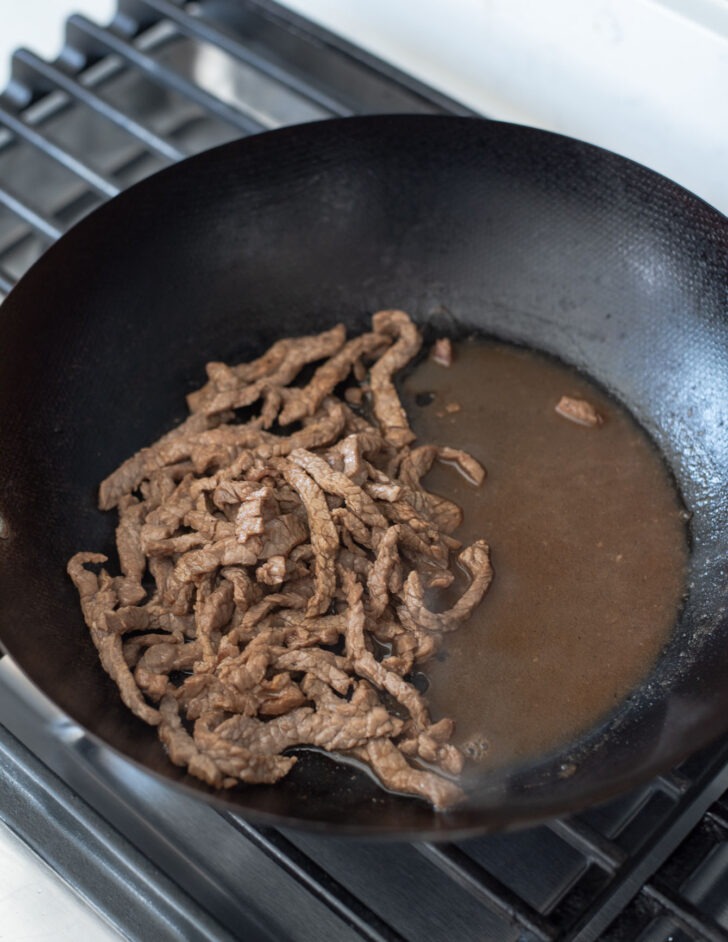
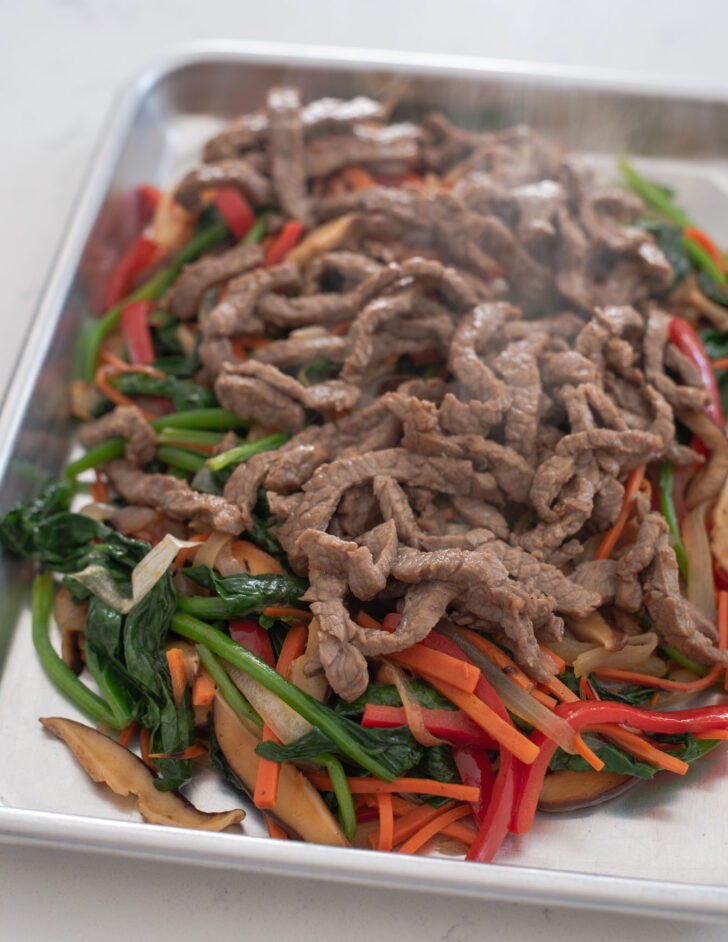
Cook the beef. Stir-fry the beef in the same pan until just cooked through. Keep the flavorful juices in the pan; they form the base for seasoning the noodles.
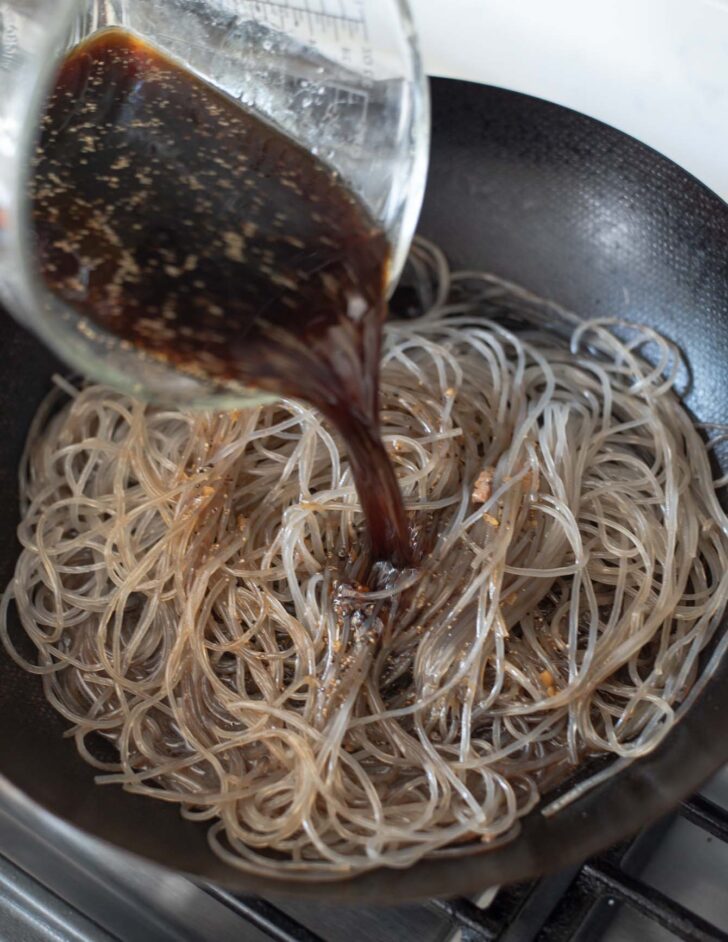
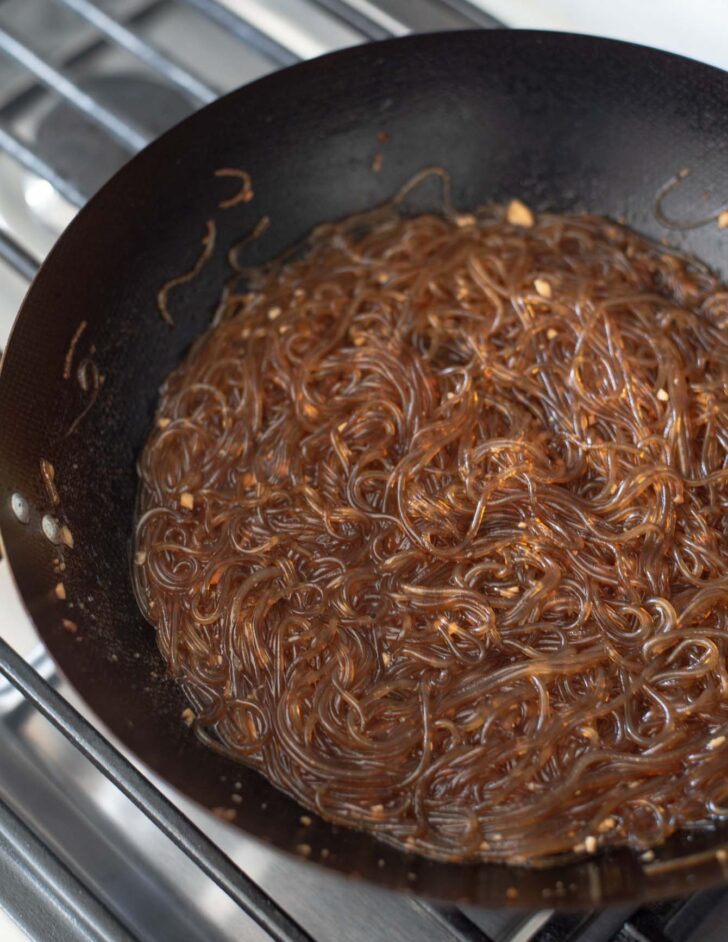
Cook the noodles with the sauce. Add the soaked noodles to the pan along with the sauce. Stir-fry until tender and glossy, allowing the noodles to absorb the seasoning evenly.
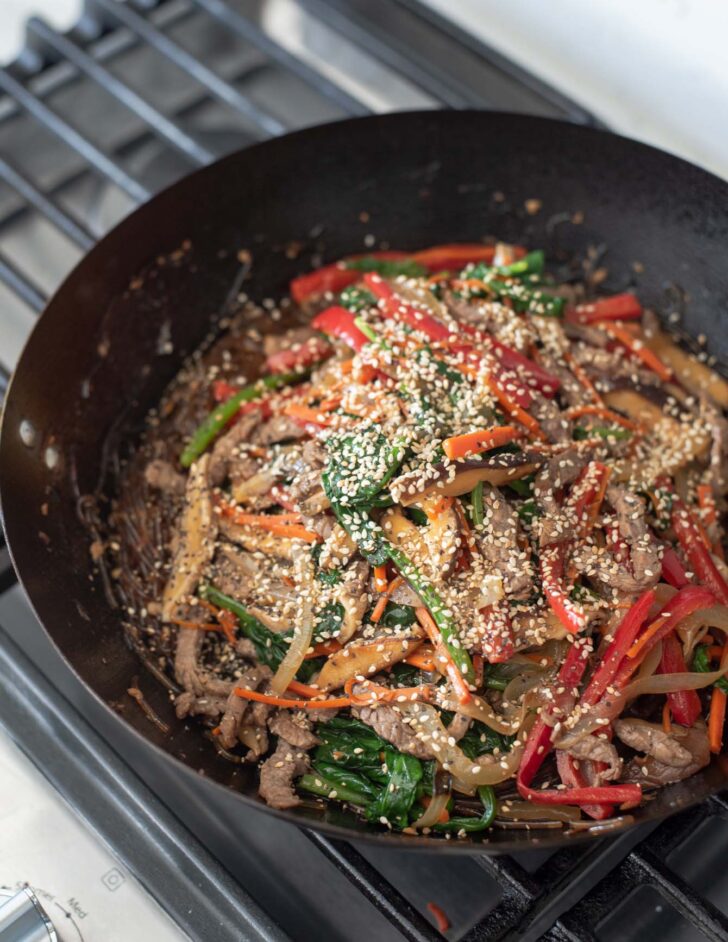
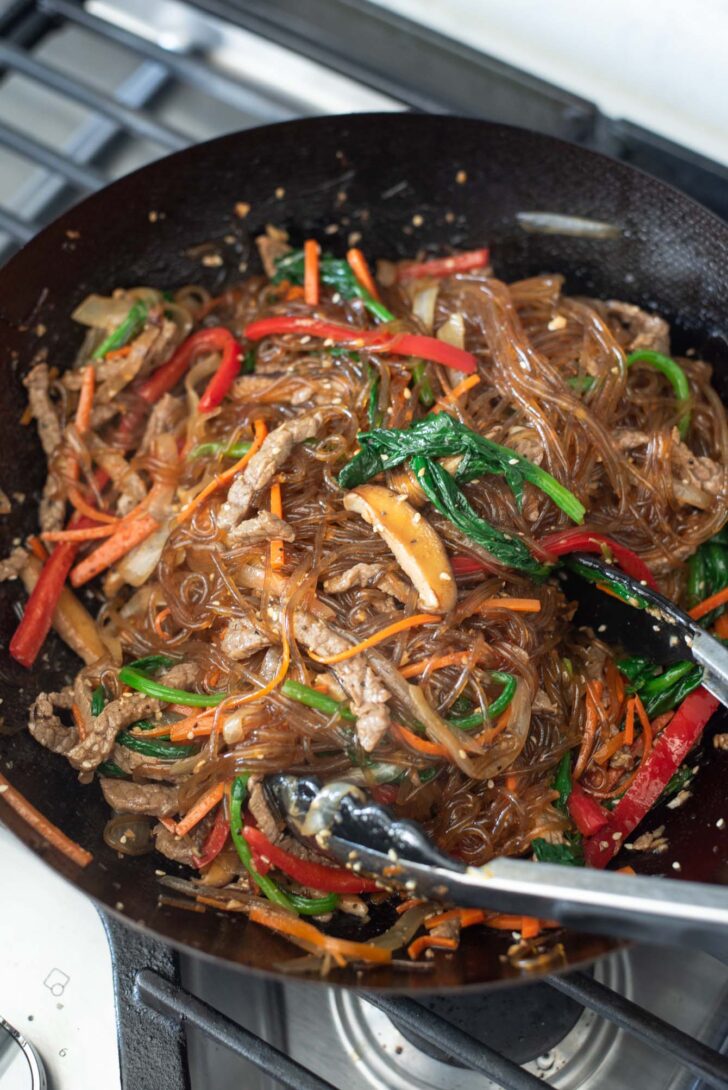
Combine and finish. Return the vegetables and beef to the pan. Toss gently, then finish with sesame oil and sesame seeds. Adjust sweetness or soy to taste, as many Korean households do.
How Japchae Is Traditionally Served
Japchae is typically served as part of a shared Korean meal, especially during holidays and special gatherings. It’s often placed at the center of the table alongside rice, kimchi, and light soups such as tteokguk (Korean rice cake soup), allowing everyone to take small portions.
Unlike many stir-fries, japchae is commonly enjoyed at room temperature. This makes it especially practical for potlucks and celebrations where dishes are prepared in advance.
Make Ahead and Storage
Japchae can be made several hours in advance and served at room temperature, which is why it’s popular for gatherings. Store leftovers in an airtight container in the refrigerator for up to 3 days.
To reheat, warm gently in a skillet over low heat with a small splash of water to loosen the noodles. Avoid microwaving too long, as the noodles can become overly soft.
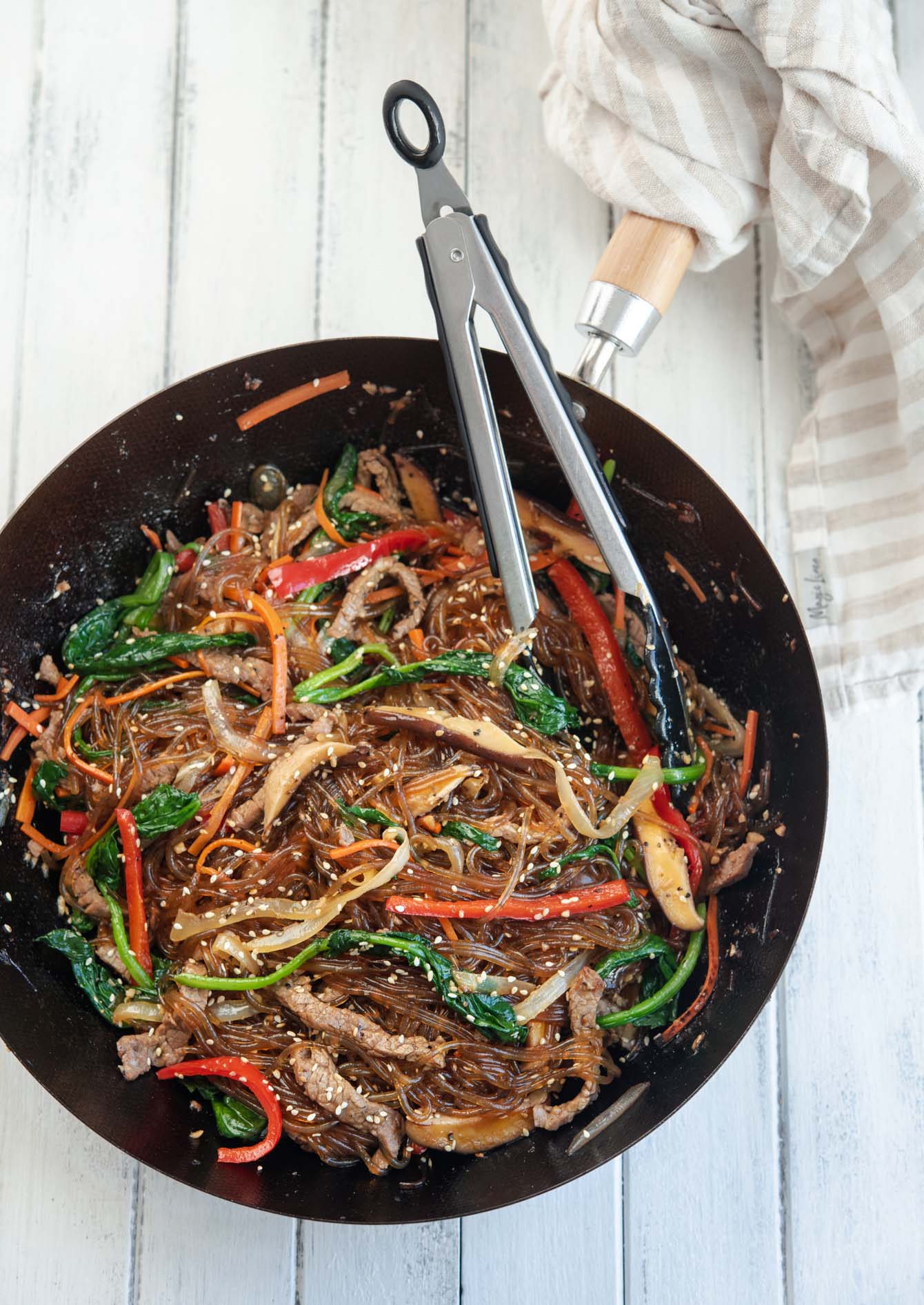
Originally published in March 2010. This post has been updated with new photos and improved step-by-step details to help you make Japchae easily at home, while preserving its authentic flavor.
Japchae (Korean Glass Noodle Stir-Fry)
Recipe Video
Ingredients
- 8 oz (226 g) Korean glass noodles (dangmyeon)
- 6 oz (170 g) beef sirloin, or pork loin. See note below for the vegan/vegetarian option
- 2 tbsp oil
- 1 medium onion, thinly sliced
- 1 medium carrot, cut into thin matchsticks
- 1 small red bell pepper, thinly sliced
- a few pinches salt
- 5-6 shiitake mushrooms, sliced
- 1 bunch (about 6 oz, 170 g) spinach, cleaned
- 1 tbsp sesame oil
- 1 tbsp toasted sesame seeds
For meat marinade
- 1 tbsp (15 ml) soy sauce
- 1 tsp sugar
- 1 tbsp (15 ml) sweet rice wine (mirim)
For japchae sauce
- 4 tbsp (60 ml) soy sauce
- 1/2 cup (120 ml) water
- 2-3 tbsp sugar
- 2 tbsp (30 ml) sweet rice wine (mirim)
- 1 tbsp (15 ml) oil
- 2 cloves garlic, minced
- 1/2 tbsp black pepper
Instructions
For the glass noodles
- Soak the glass noodles in hot water for 15 minutes, then drain and set aside. .
For the meat seasoning
- Slice beef (or pork) into thin match sticks (about 1/4-inch thick) against grain and mix with marinade ingredients. Set aside.
For the Japchae sauce
- Combine all japchae sauce ingredients in a bowl. Set aside.
To cook Japchae
- Heat 1 tablespoon oil in a large skillet or wok over medium high heat. Add onion, carrot, pepper, and a pinch of salt; stir-fry until soft but have a slight crunch. Add sliced shiitake mushrooms and another pinch of salt. Continue to stir-fry until soft. Add spinach at the end and stir-fry until spinach is wilted. Remove the skillet from the heat and transfer the vegetables to a large plate to cool.
- Reheat the pan over high heat with the remaining 1 tablespoon oil, add the beef (or pork) and stir-fry until fully cooked. You will see the juice coming out from the meat. Transfer the meat to the large plate with the reserved vegetables, reserving the juice in the pan.
- Add the drained glass noodles to the pan with the meat juices. Pour the japchae sauce over the noodles and toss to combine. Let the noodles cook over medium heat until they are soft and the sauce liquid is mostly absorbed into the noodles, about 3-4 minutes.
- Reduce the heat to low. Add the vegetables and meat back to the pan over the noodles. Add sesame oil and sesame seeds. Toss well and adjust seasoning to taste.
Notes
- Let the cooked vegetables and beef cool slightly before combining. Mixing while piping hot can cause excess moisture and soften the noodles.
- Use kitchen scissors to trim the noodles into shorter lengths after cooking. This makes serving and eating much easier.
- Finish with sesame oil and sesame seeds at the very end. Adding them off heat preserves their aroma.
- For gluten-free japchae, use gluten-free soy sauce such as tamari.
- For a vegetarian or vegan version, omit the beef and skip the meat marinade. The noodles and vegetables still carry plenty of flavor.
Love this recipe? Rate it and share your experience in the comments below! On Instagram? Tag me to showcase your creation. For more delicious recipes, subscribe to our newsletter!
Time intensive but good for 1st time. I didn’t have fresh garlic so used my Momoya fried buttered garlic chips. I did get toasted
sesame seed oil and added my leftover NongShin ramen packet since I didn’t have red peppers!
Will make again! I took a pic but it won’t post here.
My husband and I loved this recipe! It had a little too much black pepper for my 3 year old and 1 year old so I’ll probably try it again with less.
So happy to hear that! Yes, reducing the amount of pepper is great for young children. Thank you so much for your comment!
You know its a keeper of a recipe when your teenagers practically empty the pan, before you dish yours up.
This recipe is the bomb, so good! I add about a 1/8 tsp of chili g arlic paste to it to give it a bit of a kick
I had this dish for the first time at Korean restaurant on a trip to California in April and it was amazing. When I got back home I looked for a recipe and found yours. It is just as amazing as what I got in the restaurant. My wife said it tasted just like it. I will be making this again and again.
Amazing taste! Easy to make. Hardest part was finding the right noodles. Can’t wait to make this recipe again.
Hi Maria
So happy to hear that you loved this recipe. I love making Japchae with this recipe and enjoy it every single time. Thanks.
Fantastic! Great spices and wonderful texture.
So great to hear that you loved this japchae. Thank you so much!
Great noodles. Wonderful taste and texture.
One of my all-time favourite Korean dishes! Looks delicious, Holly!
Delicious. I used the wrong noodles but it was still good. I also didn’t have spinach so used cabbage and that worked well.
That’s great! Cabbage will work great with japchae! Thanks for the comment. I appreciate it.
Hello! I can’t wait to make this recipe next week to celebrate the opening ceremony of the Olympics in South Korea! Can you tell me a substitute for the 1T of rice wine ? I prefer to not cook with alcohol! Thanks!
You can omit the wine. Enjoy the opening ceremony with Japchae
Should I increase the proportions of anything else if i am omitting the rice wine?
No need to increase anything.
Yum it turned out delicious thanks
One of my all time favorites and deceptively easy to make.
Hello. I used to eat Japchae a lot while I was an exchange student at HUFS in Seoul. Now You have given me an opportunity to remind this tasty dish. Will try more of your recipes. Thanks a lot. Greetings from Poland. Jacek
Hi Jacek
Glad to hear that you like Japchae. Hope you get to try my recipe and let me know if you have any questions. Cheers!
Your blog is a new discovery for me and I’m so excited I found it!! Being half Korean, many of these dishes are very familiar to me. Sadly, I never took the time to learn from my mother when she was cooking in the kitchen. Since she is no longer here, I am deeply grateful for these WONDERFUL tutorials you’ve presented. I find your clear descriptions and colorful photos very helpful. A few days ago, I made the cucumber kimchi and tonight, I made the Japchae. What a treat…to take me back to my childhood with all the familiar smells of red pepper, garlic, sesame seeds and soy sauce…ah, mom would be proud <3 Both dishes were just as delicious as I remember. Thank YOU!!!
Thanks for your sweet comment. It is my utmost pleasure to hear that my recipes are helping other people to remember their childhood memories. Food has a great power to do that. Hope you continuously enjoy your Korean cooking.
Hi Holly,
I have tried all your 3 recipes for Japchae and all 3 are lovely. We end up taking 2nd and 3rd helpings. Thank you.
That is so great! You made my day so happy!
Wow! I ran across your website by accident looking for a “chocolate sour cream cake” recipe, what a great mistake “what is this kim chee thing?” I thought to myself. Japchae recipe, I love to eat it but I can make it too? With your great recipe, photos and instructions I made my first batch of the most amazing Japchae, even better than the ones I have at our little Korean restaurant in Hawaii. Thank you thank you. I have read many of your recipes and cannot wait to try them. They all look so good. My only thought is “what recipes can I share with you?” I just made my mother’s famous “won ton” filling and thought how I wish I could share these with you. Maybe you already have a recipe for good won tons? Let me know if you don’t.
thank you thank you again.
Hi Deanna
Thank you so much for your lovely comment. You are so kind to offer me a recipe in return and I appreciate your thoughtfulness. I LOVE wonton and would love to get your mother’s recipe. Please, share with me. Also I am so happy that you liked my Japchae recipe. Homemade is always better, isn’t it?
Hi Holly,
I was anxious making this because it’s my first time trying Asian food with its different ingredients and way of cooking.. But It turned out very well! Despite few minor changes, I liked this dish so much, and would make it again for sure 🙂
Thanks for the recipe!
Hi Holly,
I was anxious making this because it’s my first time trying Asian food with its different ingredients and way of cooking.. But It turned out very well! Despite few minor changes, I liked this dish so much, and would make it again for sure 🙂
My favorite! Liked the tip about placing the beef on paper towels to drain. Thank you!
i have fallen in love with your recipes!! :*
Thank you for this! I am going to follow your instructions and try to make this myself. Well done!
Nicely done. Thanks for the photos. It always a big plus to know what brand to buy when cooking. What brand do you like to use for rice wine? Also, what is the white and yellow strips topping on the noodles? Thank you!
You can use any brand for rice wine. The yellow and white strips on the dish are fried, then thinly sliced egg yolk and egg white.
Hi, just wanted to say, I enjoyed this blog post. It was inspiring.
Keep on posting!
Hello there! Would you mind if I share your blog with my myspace group?
There’s a lot of folks that I think would really enjoy your content. Please let me know. Many thanks
That would be great! Thanks.
I really love this noodle – Japchae (now i know exactly its Korean name). Will try it tomorrow
Thanks a lot
Hello, i think that i saw you visited my web site so i came to “return
the favor”.I am trying to find things to improve my web site!
I suppose its ok to use some of your ideas!!
I made this few nights ago and it was really delicious. I love the crunch of the carrot. And I’ve never had potato noodle before, but it’s so satisfyingly chewy. But, the most important lesson I took from this post is how to get rid of dirt from spinach!! For the life of me, I’ve never thought to soak spinach before so that the dirt can be washed off and settle at the bottom. Previously I would only rinse under running water and as such there are always stubborn grains of dirt on the spinach.
Hello! Thanks for the recipe! My family absolutely loved this dish. They gobbled it up like they haven’t eaten in days! 🙂
I just started a blog and I noticed that your fabulous blog started with japchae too! Love you site!
I got to do this one today. My husband, who is constantly comparing my cooking with his Korean mother’s cooking, loves it!! He admitted, I cooked this one better than my mother in law…. Thank you so much!
Thank you Janeth. I am so happy to hear that.
Hello!
Just so you know…the font you used for the first four pictures doesn't work so well for some computers. I'm on XP and I'm using chrome and it comes up as gunk. If I use Firefox things look great but I don't think Chrome likes the font.
I just copied and pasted it into an email and it looks just fine!
I am Korean student in Japan. I want to try this someday.
I made this tonight and it was delicious! I've tried for years to find a japchae recipe that was "right" and this is it. Thank you 🙂
You can double the recipe. However, the amount of seasoning on each ingredients doesn't have to be exact to the T. Adjust (+ or -) the seasonings depends on your taste. Japchae is a dish that you can season along as you make. Have a fun making!
Hello hello! I absoulutely love your blog and I'm looking forward to trying all these recipes! Just one question, for this recipe, can you double it by just doubling all the ingredient amounts? Or should it be in another ratio? Thanks so much for all the effort that you put into making this blog fantastic!!
Everything is okay. Although the symbols under the first three pictures are undicipherable, when I copy and paste the garbled paragraphs using wordperfect 11 the words (recipe) comes up in English! I have no idea why this occurs but since I can read it it's okay. Thank you. ^^
Hello! Actually, the email I wrote you was changed from the original. I copied and pasted the symbols under the first, second and third picture, but for some reason they were deleted in my post. 'Okay, I am nervous right now. This is my' isn't what I was saying..seems like it was part of yours…. I don't kwow.. –; The first English words I can see on my computer are "slice beef (cross grain) into 1/4" inch strips." This is under the fourth picture. For some reason the first few paragraphs are all strange symbols. I'll check on another computer someother time.. Thanks.*^.^*
@039abfd1fc430a33159afb6b9a81148d
Hi! how can I help you? Because I can see my words clearly under the first picture. All it says is that this was my very first post and how nervous I was.
I cannot read the begining ..right under the first picture..starts like..Okay, I am nervous right now. This is my please help!!! Thank you ~! *^.^*
Okay, I am nervous right now. This is my very first blog posting and I don't think anybody will find this or read this posting but why am I still nervous? Would you allow me to go and grab plateful of Japchae and I will continue to write this down as I am eating….?
Japchae (잡채) is perhaps the most famous Korean noodle dish. It is a must for any banquet or feast table. You can eat this dish alone or with some rice. This can be a great vegetarian dish as well if yo omit the beef. The key to making flavorful Japchae is seasoning each ingredient separately. Let me show you how you can make this beautiful dish to impress your significant others. Are you ready?
Japchae is new to my ears. But I like spicy foods. Maybe that's why I fancy Korean Cuisine. A lot of their foods recipe have one or two spicy ingredients in it like gochujang and gochugaru. Thanks for sharing this recipe. I'll definitely make one for our Korean Night. Korean Noodles and Korean TV – a healthy dose of Korean Idols like GDragon and TOP! 🙂
T is for tablespoon, and t is teaspoon.
does 'T' stand for teaspoon or tablespoon?
wow thanks for the very very detailed instructions and photos!
Very helpful cooking hints – i love Japchae! However, I'm lazy, and I cook the ingredients (except noodles) one after the other in a large frypan: onions, garlic, then carrots, followed by mushrooms. Then spinach, and lastly the noodles (which have been prepared per your recipe). I season each batch of ingredients. Then I add pinenuts just before serving (as my dish is vegetarian).
@Laura
Great! I am so happy to hear that you like the recipes. You Japchae looks fabulous! I want some now! 🙂
i fell upon your blog from foodgawker (originally looking for choco chip cookies) and TOTALLY fell in love with it. not only did i make the cookies today (btw, they're the BEST choco chip cookies i've ever tasted), i made 잡채 today for dinner =)it's my first time making it, your recipe and instructions were so easy to follow. thanks so much!
nice first post! looking forward to following your blog 🙂
masa
this is a famous Asian dish. hmm, looks very delicious. I love vegetables and the colors of it when mixed on noodles. planning to cook a good asian food soon.
I am glad that I taught you something. You can be creative and add other veges in the recipe. Some people add red or green peppers in the dish. I'm not a big fan of bell peppers in Japchae. To me the smoky flavor of peppers overpower the dish, but it is personal preference. I think zucchini or squash can be good addition as long as you use toward the skin part. The seeded area can be mushy and watery. Hope this helps.
I just made Japchae for a big dinner party on Sunday – served 21 people and still had tons of leftovers! I followed this recipe fairly closely, even before I found this blog, but I think you WERE the one who taught me how to make it. One difference was that I added some zucchini and summer squash, cut in matchsticks. Good stuff!