

Doenjang Pork (Maekjeok)
Easy Korean doenjang pork (maekjeok) marinated in savory soybean paste and broiled to juicy perfection. This simple recipe brings rich, caramelized flavor to your table—perfect for Korean BBQ nights or an impressive, no-fuss dinner.

I first came across Korean doenjang pork, or maekjeok, while watching the old K-drama Daejanggeum (대장금). That show highlighted so many palace dishes, but maekjeok—pork marinated in doenjang (fermented soybean paste)—immediately caught my eye. It was once served to royalty, which made me wonder why I’d never heard of it before.
Funny enough, this royal dish eventually became a beloved meal in everyday Korean homes. I’ve always found it funny that maekjeok was reserved for kings and nobles, considering doenjang was on everyone’s table back then.
Get new recipes via email:
Thankfully, its deep, savory flavors are now something we can all enjoy—without any fuss or fancy ingredients. All you need are thin slices of pork and a handful of everyday Korean staples.
A quick toss in the marinade is enough to infuse it with that rich doenjang goodness. Even better, there’s no long wait—just 10 minutes is plenty, though you can marinate it longer if you want to prep ahead.
Traditionally, maekjeok was grilled over an open flame, but broiling is easier and works beautifully. This easy recipe for maekjeok is too good not to share.
Even commoners like us can eat like royalty. Give it a try and see for yourself!
What You’ll Need to make Doenjang Pork

Here are my notes on the key ingredients so you can get the best results:
- Pork: I like thinly sliced pork shoulder (mokssal, 목살) for its marbling and how well it takes on the marinade. Find it at Korean or Asian markets, or have your butcher slice it thin.
- Doenjang: Korean fermented soybean paste is essential—no substitutes here. Use any brand you can find; they all bring their own unique depth. It is a key ingredient in my doenjang pasta recipe as well.
- Chives: I use Asian chives (buchu) because they have a wonderful, slightly garlicky fragrance that pairs so well with pork. If you can’t find them, green onions make a fine stand-in.
- Marinade: Along with doenjang, you’ll need Korean soup soy sauce, sweet rice wine (or mirin), sesame oil, garlic, and a touch of sugar to balance the flavors.
How I Make Doenjang Pork (Maekjeok)
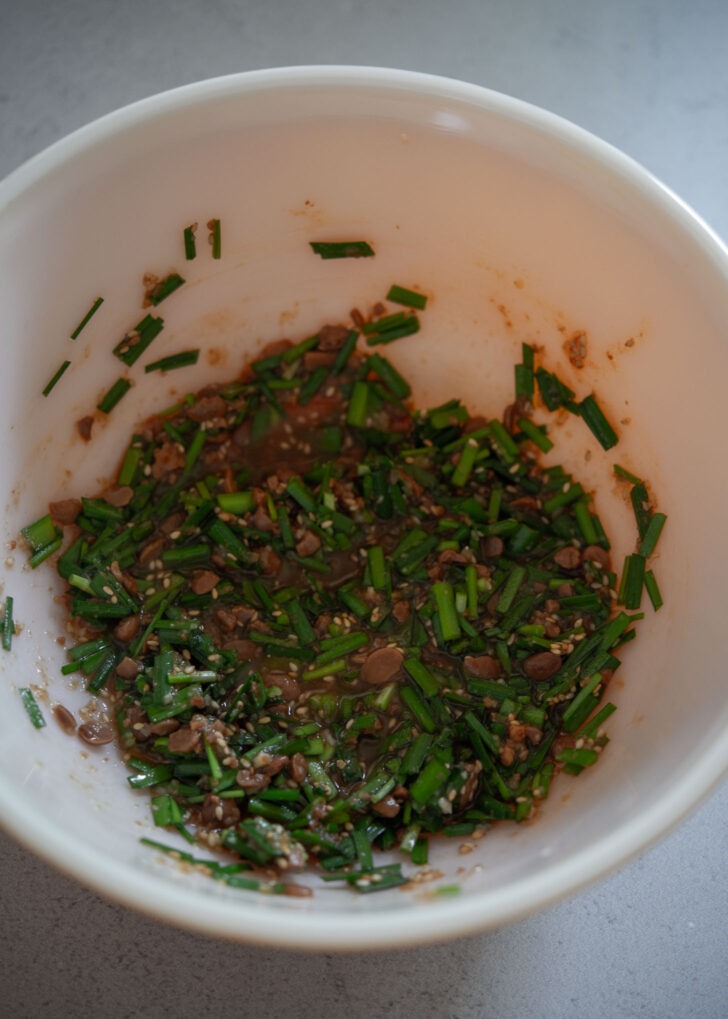

Start by mixing all the marinade ingredients in a large bowl, then add your pork slices. Use your hands to coat everything well. Let it rest for about 10 minutes—just enough for the flavors to soak in. Meanwhile, preheat your broiler.


Place the pork on a lightly oiled wire rack over a baking sheet. Broil about 4 inches from the heat for 5 minutes, flip, then broil another 5 minutes until nicely charred and cooked through. That’s it—easy, deeply flavorful, and ready in no time.
How to Serve
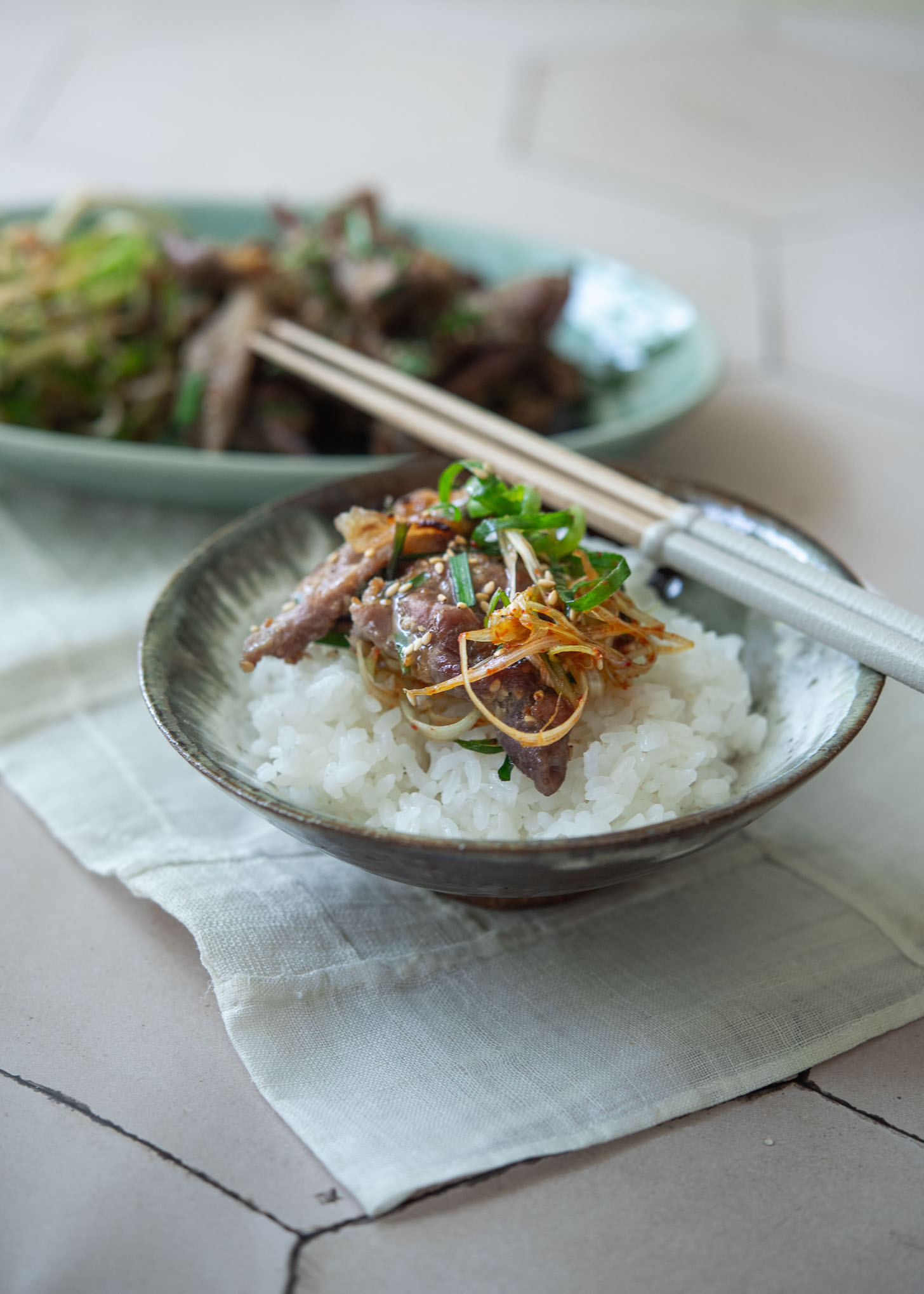
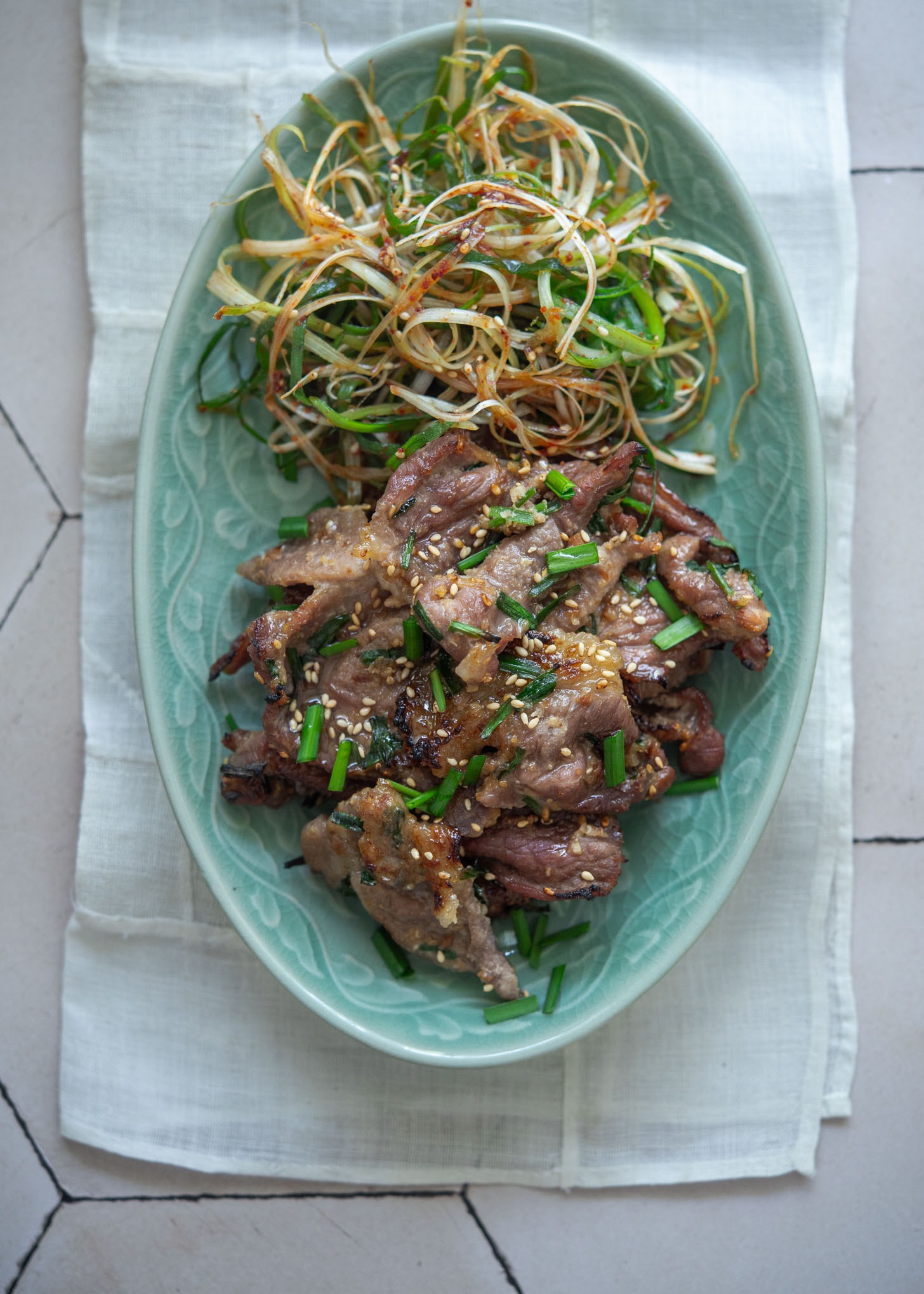
I love this donejang pork over a bed of pa-muchim (Korean green onion salad) with a bowl of rice—nothing beats that combo. You can also wrap it in fresh lettuce leaves like you would with spicy pork (jeyuk bokkeum), or toss in some perilla leaves for extra herbal punch, just like my chicken bulgogi. However you serve it, each bite is loaded with savory, nutty doenjang flavor.
Love this recipe? Rate it and share your experience in the comments below! On Instagram? Tag me to showcase your creation. For more delicious recipes, subscribe to our newsletter!

Korean Doenjang Pork (Maekjeok)
Ingredients
Doenjang marinated pork
- 1 1/2 lb (680 g) pork neck (shoulder) , thinly sliced
- 1 cup (50 g) Asian chives or green onion, chopped
- 4 tbsp (60 g) Korean soybean paste (doenjang)
- 1 tbsp (15 ml) Korean soup soy sauce (gukganjang)
- 4 tbsp (60 ml) water
- 2 tbsp (25 g sugar
- 3 cloves garlic, minced
- 2 tbsp (30 ml) sweet rice wine (mirim)
- 1 tbsp (15 ml) sesame oil
- a few dashes freshly ground pepper
- 2 tbsp (30 ml) Korean corn syrup (mulyeot), optional
Korean green onion (leek) salad
- 1 Asian leek or 4 green onion, white and light green part, very thinly sliced
- 1 tbsp (6 g) Korean chili flakes (gochugaru)
- 1 tbsp (15 ml) soy sauce
- 1/2 tbsp (6 g) sugar
- 2 tsp (10 ml) cider vinegar
- 1 tbsp (15 ml) sesame oil
- 1/2 tbsp (4 g) toasted sesame seeds
Instructions
- In a large bowl, mix together the doenjang, Korean soup soy sauce, sesame oil, rice wine, garlic, sugar, and Korean corn syrup (if using). Stir in the chopped chives.
- Add the sliced pork and toss well with your hands so each piece is evenly coated. If the pork is cold, let it sit for 10–15 minutes to take the chill off and absorb the flavors. Meanwhile, preheat your oven’s broiler.
- Place a wire rack over a baking sheet and lightly spray it with cooking oil. Arrange the pork slices in a single layer so they don’t overlap.
- Set the pan about 3–4 inches below the broiler. Broil for 5 minutes, keeping a close eye to prevent burning. Flip the pork pieces and broil another 4-5 minutes, until the edges are browned and slightly crispy. keeping a close eye to prevent burning.
- Serve hot over a bed of Korean green onion salad (pa-muchim) with a bowl of rice. Enjoy!
For the Korean green onion (leek) salad
- Soak the sliced green onions (or leeks) in cold water with 1 teaspoon of vinegar for 10 minutes, then drain well.
- In a bowl, combine the Korean chili flakes, soy sauce, sugar, vinegar, sesame oil, and sesame seeds. Add the drained green onions (or leeks) and toss gently with chopsticks or tongs until evenly coated.

mmmm…Yummy I love korean food
hmmm…yummy,this is great!!I will try this recipe..:)
pretty good…
Nice to meet you, I am from China, Mr. Liu,
You are in Chinese cabbage! I also had very good
This looks pretty incredible. I'll have to try to do something like this sometime.
Korean foods that are not so popular also look like delicious!
좋은 글 남겨주셔서 감사합니다. Sugar crafter 일 늘 관심은 있었지만 한번도 도전해 본적이 없어요. 참 흥미로울것 같아요. 가끔 한국음식 만들어 보시면 금장 익숙해지실거여요. 감사합니다.
I believe there are several types of Chinese bean paste. If they are made of soy, it will work. However you need to adjust the amount since their saltiness varies. For the Korean soy sauce substitute, unfortunately the Chinese soy sauce can't replace. They are quite different. Instead use fish sauce if you have. But use less amount sine fish sauce is far saltier than Korean soy sauce for soup.
hehe a few years back I was one of those giggly teenage girls crazy about following every episode of her favourite korean drama! this looks like one yummy recipe!
안녕하세요~
오늘 처음 블로그에 들어오게되었어요
한국음식을 이렇게 멋지게 소개해 주시다니요!
저는 런던에 거주하는 교민입니다. 홍콩에서 살다가 영국으로 이주한지
20년이 되었는데 한국음식은 제대로 배워본적도 없고 자신도 없었어요.
직업이 Sugarcrafter라 케익만 만들다 보니…ㅎㅎ
너무 멋진 요리들 ~ 정말 저도 따라서 만들어 보고싶어요
글도 너무 재밌고 맛깔스럽게 쓰시니 읽는 재미도 쏠쏠하네요~
감사합니다~~
This looks fantastic! I have two questions about potential substitutions (I can get the Korean ingredients at a local market, but if there's a way to use items I already have, that's always good)… For the Korean soy sauce, is substituting a Chinese soy sauce possible? Or are these very different? And similarly, for the Doenjang paste, is this similar (it looks similar) to a Chinese brown-bean paste?
Many thanks, and looking forward to trying this recipe!
OMG YUMM!
Hi, I see you have a nice blog.
Submit it for "Blogomania : The Bloggers' Paradise" and win cash prizes along with a chance to get published.
Enter the Bloggers' Paradise at www.blogomania.cognizance.org.in
Your blog makes me miss Korea so much…I cannot wait to try making this dish! I love Korean food! 🙂 Thank you for sharing!
Daejanngum – this is the K-series that sparks my interest in Korean food!:) Tks for the recipe. Will definitely try it!
Yes, I like to watch dramas or movies with good values and lessons, yet still entertaining.
The drama itself is quite long to finish but you will learn a lot about Korean cuisine and the Palace life. The story is very uplifting, too. I loved it.
Doenjang paste is somewhat different than miso. It is more pungent and yield stronger in flavor. Miso is milder and slightly sweet. You can try this recipe with miso, it will work but slightly different in taste.
I don't have much space left in my fridge for other sauces, one level is full of Thai curry pastes, gochujang, miso, etc. How different is doenjang from Japanese miso?
You know, I'm also a Korean 100% inside and out. And I never watch Korean drama and can't get Korean pop singers straight. You watch one, you've watched them all, and as for the talents…heck they all look the same to me.
Anyway, Dae Jang Geum is one show I watched AND loved. Rare for me too, but it's a jewel in the drama industry.
And I love this recipe…love the way you cooked it! That's really smart. And what do you know…I have all the ingredients I need except the pork!
This looks unbelievably good indeed! I can't wait to make this! Thanks for posting this great recipe and mentioning that Korean drama..that's definitely something I would enjoy watching too.
I think we need to get some of those fermented soya paste in our kitchen at home, thanks !
Ha! I watched the series in Europe and I became glued to the tv set. It's so interesting, soaps with modern subjects have nothing on it!
The sauce sounds delicious. I like the fact that I can just put it in the oven and let it cook 🙂
Looks Delicious!