

Crunchy Bomdong Salad (Korean Spring Cabbage Geotjeori)
This Bomdong Salad (Korean Spring Cabbage Geotjeori) is a crunchy, 15-minute side dish featuring sweet apple slices and nutty spring greens. Tossed in a zesty, savory fish sauce chili vinaigrette, this fresh Korean cabbage salad is the perfect unfermented kimchi for grilled meats or a trendy bibimbap bowl—no brining required!
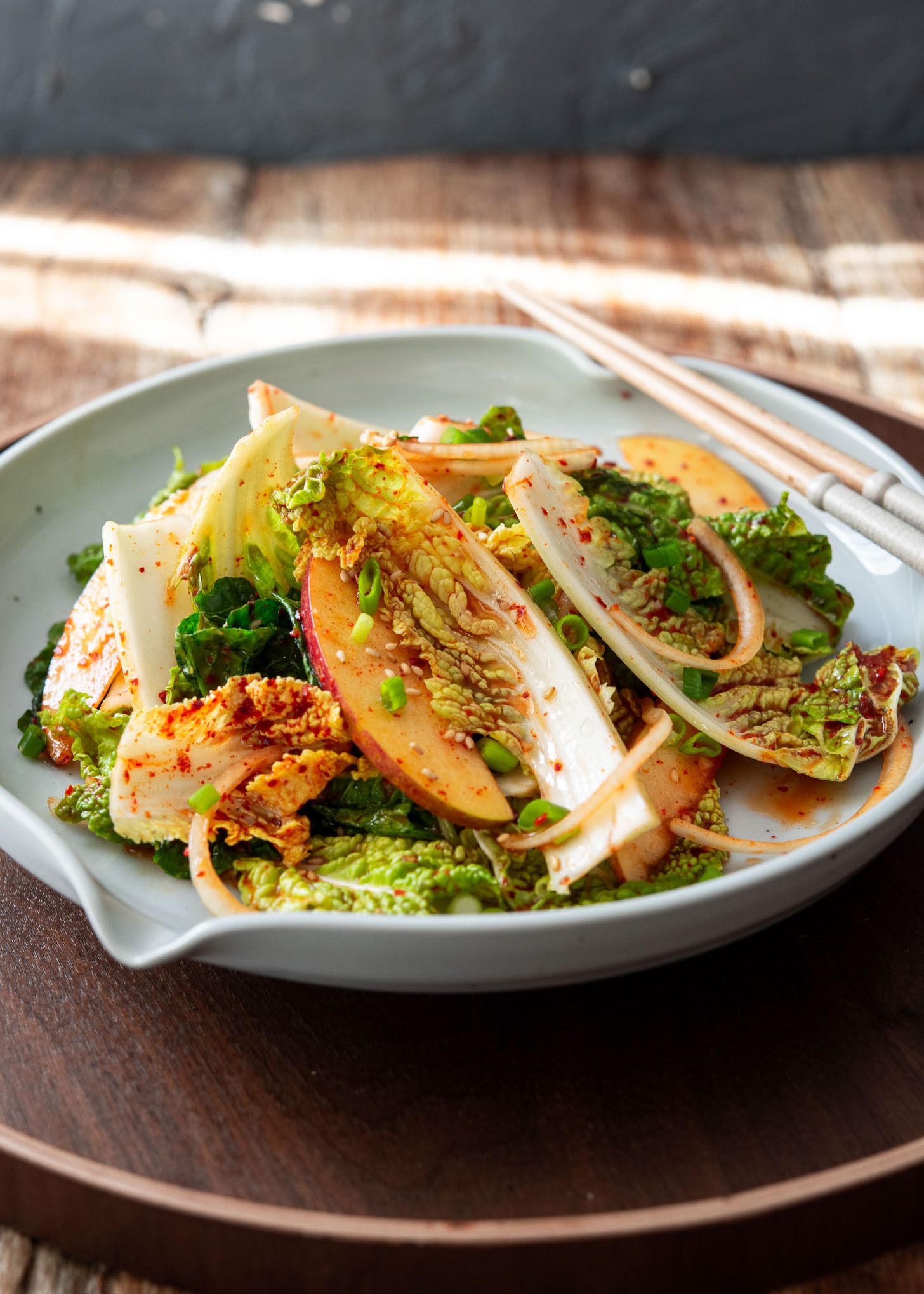
When I was a kid growing up in Korea, I didn’t need a calendar to tell me winter was over. The moment my mother returned from the local market with a bundle of those frost-kissed greens and served a bowl of bright, crinkly Bomdong Salad (봄동 샐러드), I knew the frozen ground had finally thawed. She always looked for the ones with the dust of the field still on them, knowing those were the sweetest.
In Korea, these cabbages are affectionately called the “flowers of the field” because they grow flat against the earth, spreading their leaves wide to soak up the first bits of spring sun. Unlike the tightly tucked Napa cabbages we use for winter kimchi, Bomdong is tender, nutty, and surprisingly sweet. It’s nature’s way of saying, “Wake up! Spring is here!”
While many traditional geotjeori recipes rely solely on the saltiness of fish sauce, I love adding a splash of vinegar and fresh apple to my spring version. It brightens the nutty flavor of the bomdong and makes it feel more like a vibrant salad, which is exactly what I crave when the weather warms up.
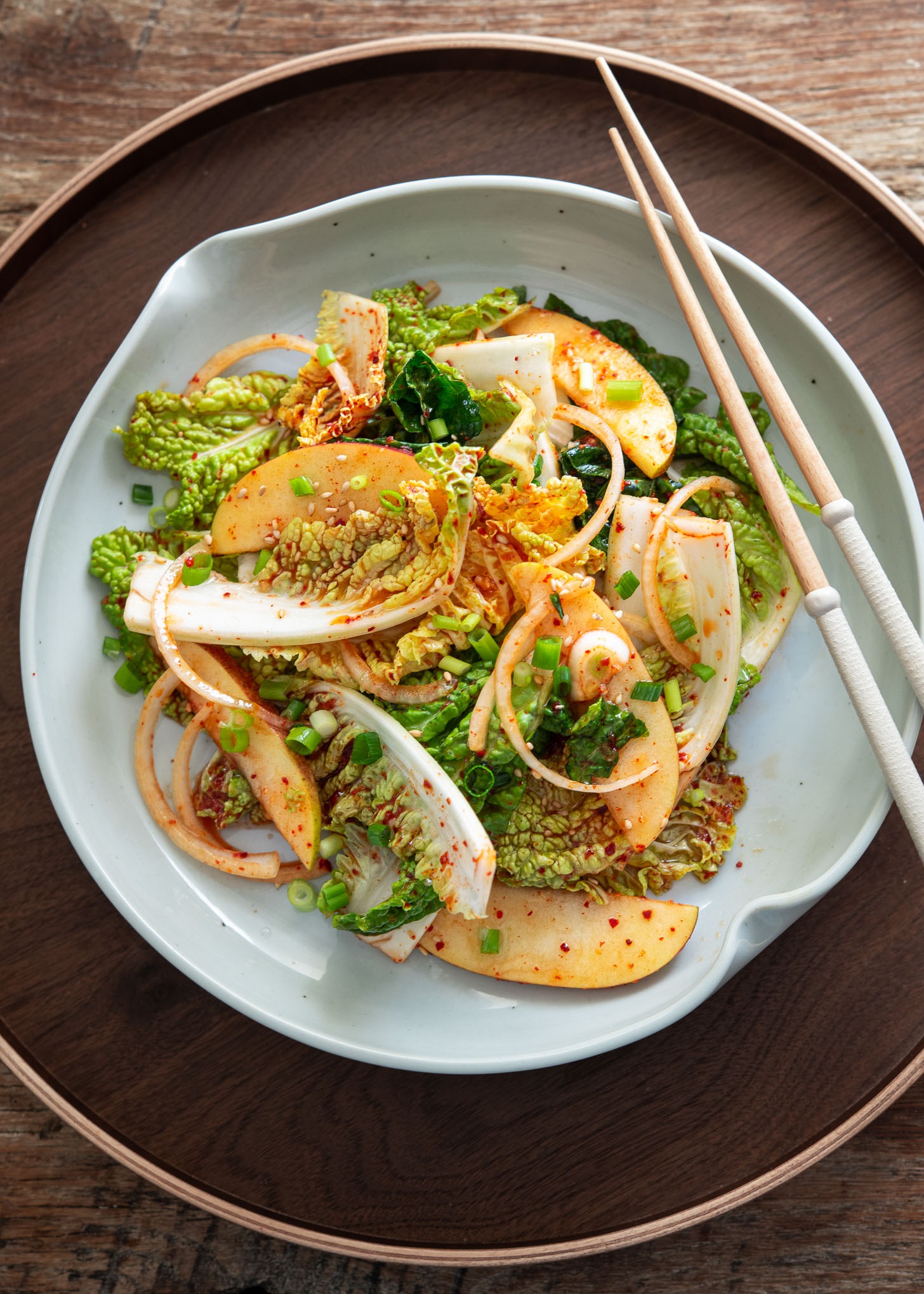
Why You’ll Love This 15-Minute Spring Salad
If you’ve ever found traditional kimchi a bit intimidating, this is your entry point. This isn’t a complex fermentation project; it’s a type of Korean geotjeori (fresh salad) that you toss and eat immediately.
While my authentic napa cabbage kimchi geotjeori uses a traditional salted cabbage technique and a rich, savory seasoning, this 15-minute version is designed to be bright and salad-like without the wait.
- The Texture: Imagine the crunch of a hearty kale salad but with the sweetness of a sugar snap pea. Fresh apple adds a natural sweetness and a refreshing, crisp finish.
- The Dressing: My version uses a zesty chili-based vinaigrette. It’s tangy, a little spicy, and incredibly refreshing; perfect for cutting through the richness of grilled meats.
- Zero Stress: No brining, no waiting, no specialized fermentation jars. Just chop, toss, and crunch.
Choosing the Best Bomdong
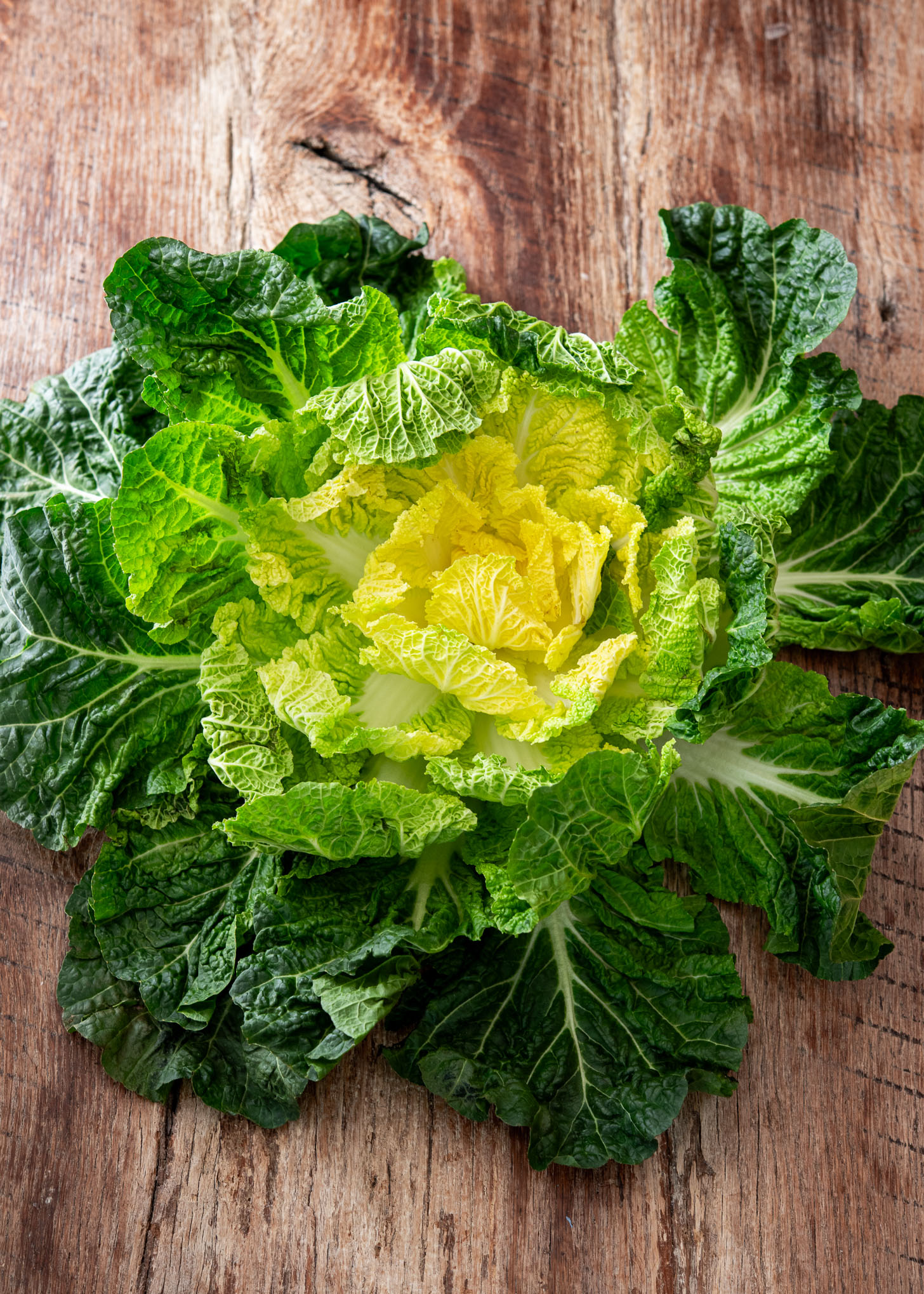
When you’re at the Korean market, look for the heads that look like they’ve been flattened. You want leaves that are vibrant green on the outside and buttery yellow in the center. Those yellow inner leaves are the “gold”. They are the sweetest part of the plant.
If bomdong is not available, substitute with regular napa cabbage heart (the yellow part in the center) or even baby bok choy. While the flavor profile shifts slightly, these substitutes still deliver that signature spring crunch.
How to Make Bomdong Salad
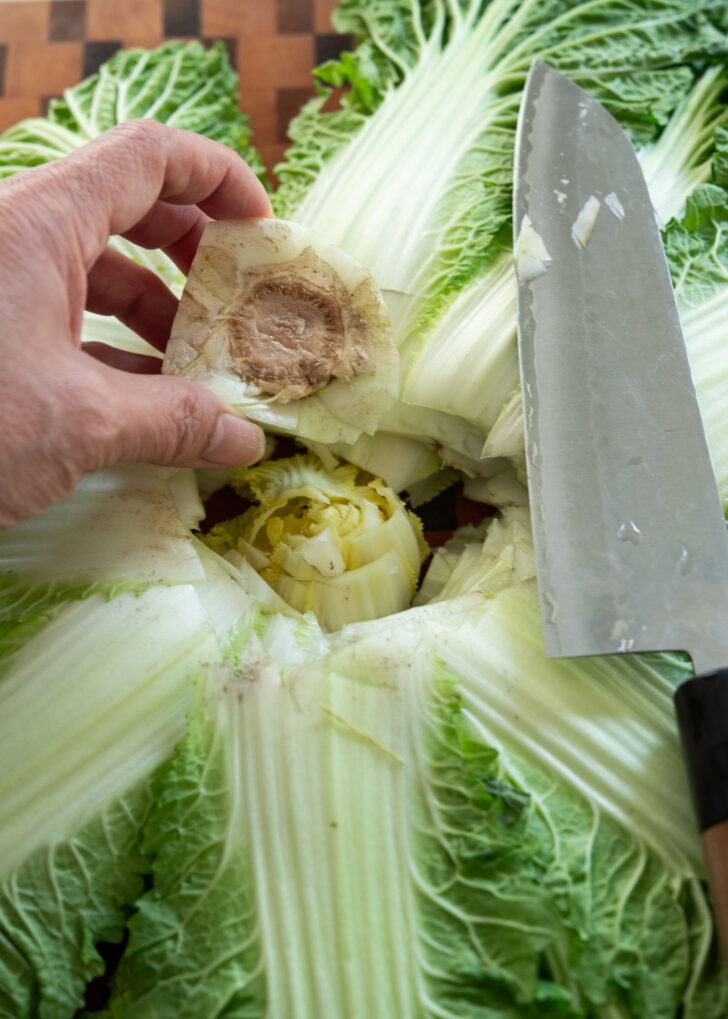
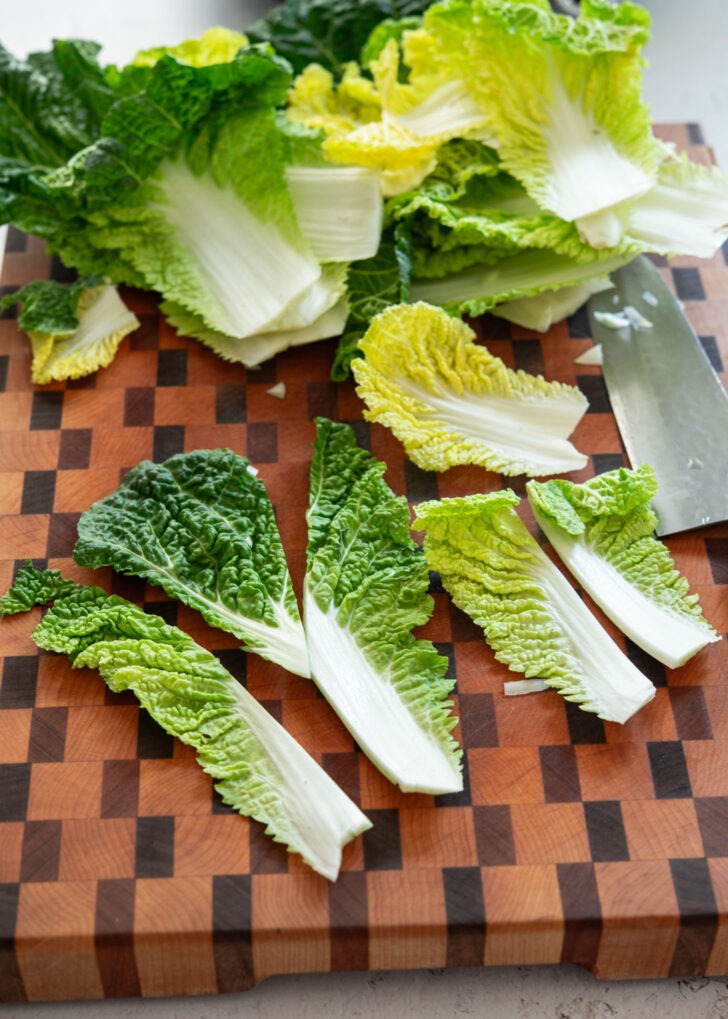
The “Flower Cut” and Prep. Start by flipping the cabbage root-side up and trimming the base of the stem so the leaves fall away like flower petals. Slice each leaf into bite-sized pieces, ensuring you include both the crunchy white stem and the ruffled green edges for a perfect textural contrast.
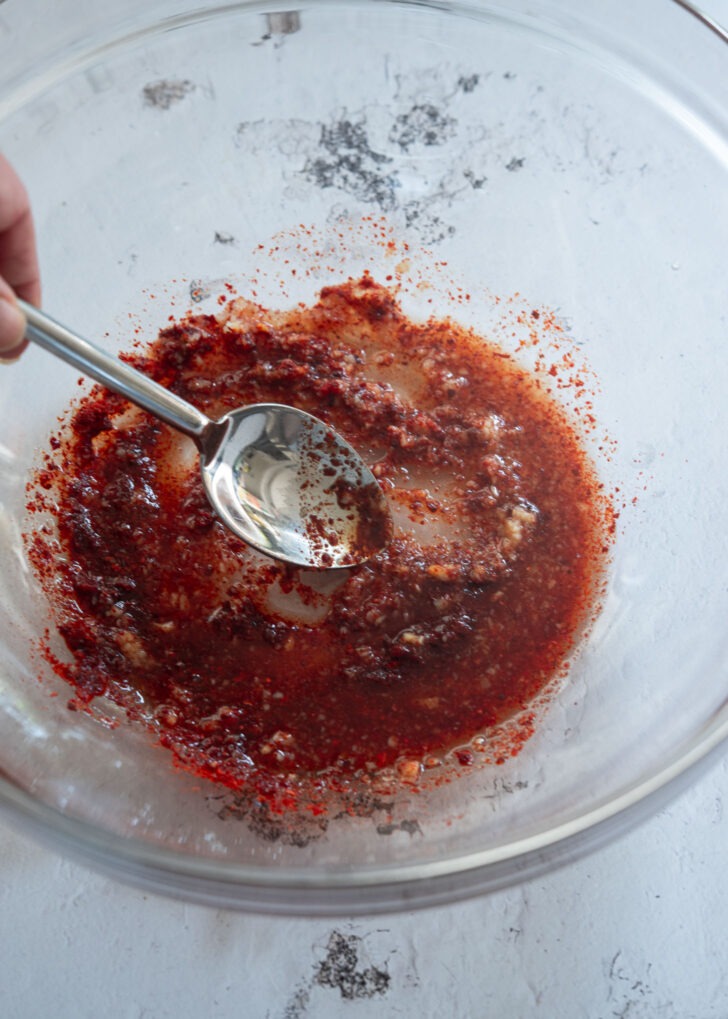
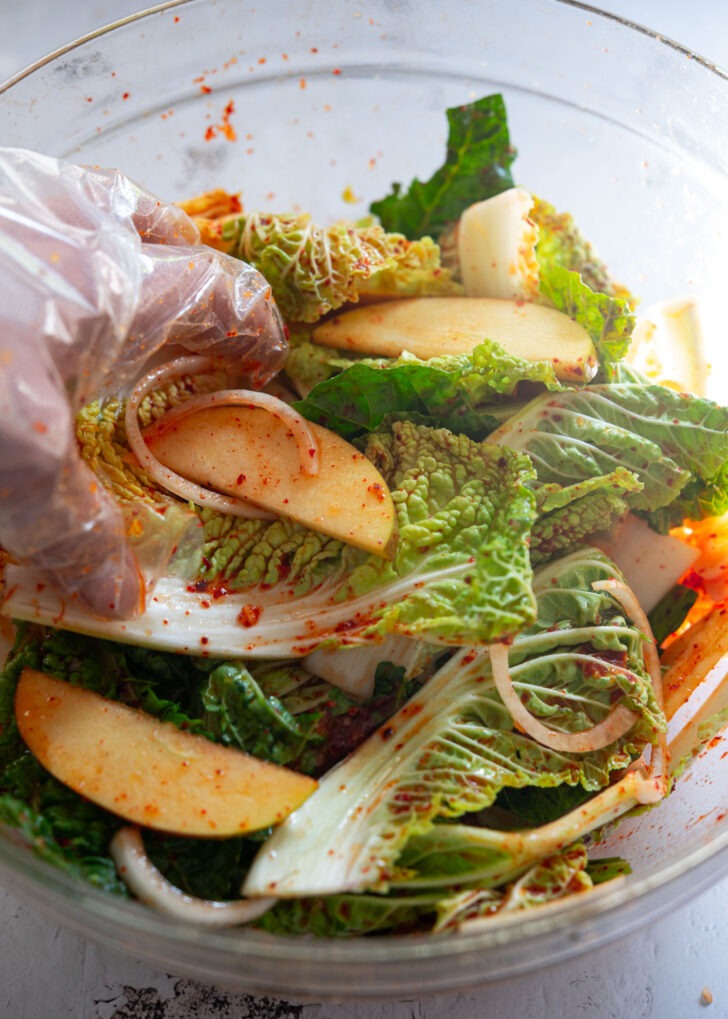
Seasoning and Toss. Whisk the gochugaru, fish sauce, vinegar, and aromatics in a large bowl. Add the cabbage, apples, and onions, then don’t be afraid to get in there with your (gloved) hands! You want to gently massage the dressing into the leaves so they soften just a tiny bit. If you just use tongs, the dressing stays on the surface. We want that spicy vinaigrette to really marry the cabbage.
Ways to Enjoy Bomdong
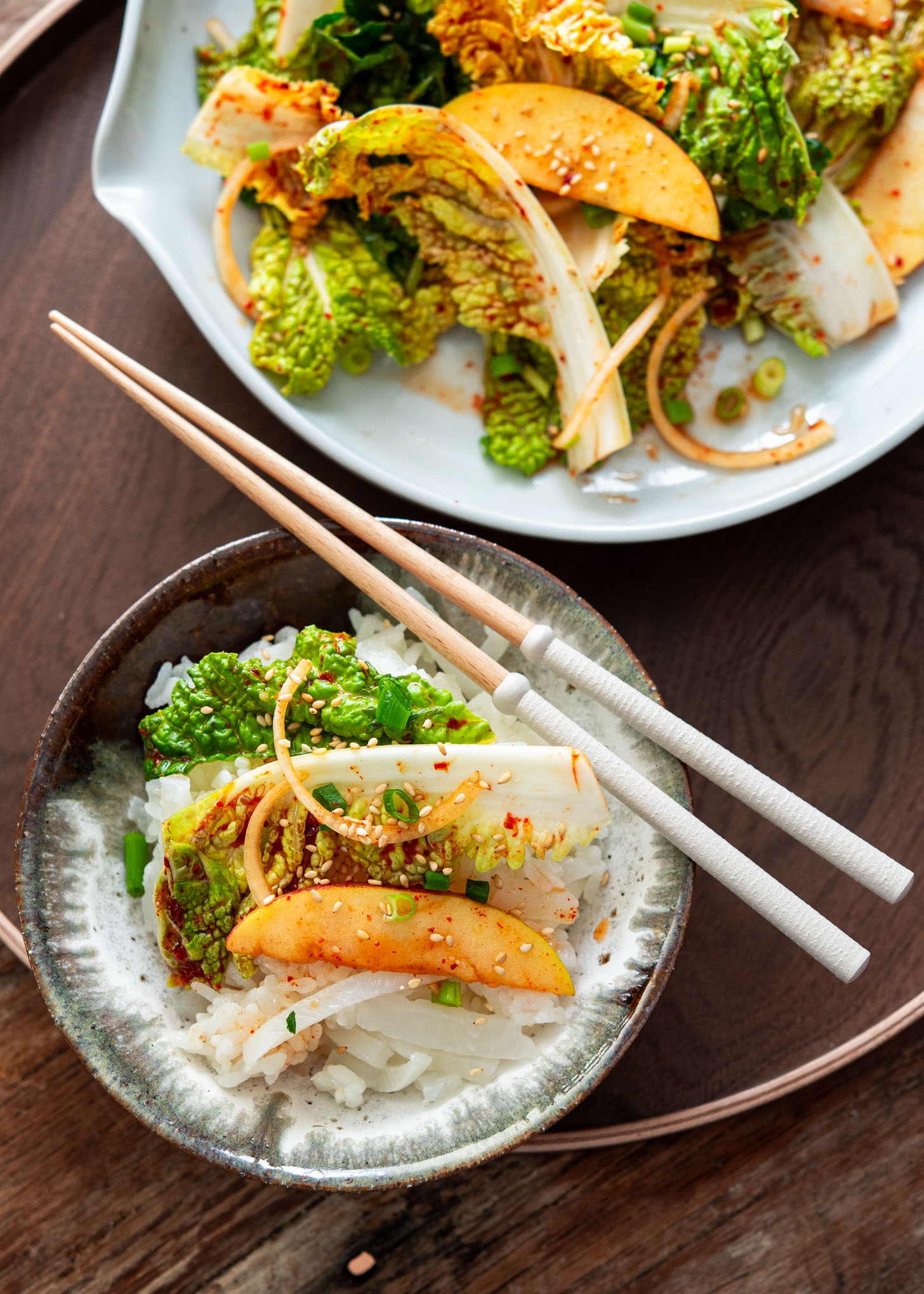
While this is a classic Korean-style salad, the trendiest way to eat this in Korea right now is in a Bomdong Bibimbap. Simply take a big bowl of warm rice, add a generous heap of this salad, a fried egg, a spoonful of gochujang, and a massive drizzle of sesame oil. It’s the ultimate “Spring Detox Bowl” that’s taking over my social feed, and honestly? It’s better than any fancy cafe salad I’ve had lately.
Because of the zesty vinegar and sweet apple slices, this salad is also my absolute favorite pairing for rich, grilled meats. I highly recommend serving it alongside my easy Korean grilled pork belly (Samgyeopsal-gui); the acidity of the cabbage and apple perfectly balances the savory char of the pork for a restaurant-quality meal at home.
Love this recipe? Rate it and share your experience in the comments below! On Instagram? Tag me to showcase your creation. For more delicious recipes, subscribe to our newsletter!

Bomdong Salad (Korean Spring Cabbage Geotjeori)
Ingredients
- ½ lb (227g) bomdong spring cabbage, or napa cabbage or baby bok choy
- ½ onion, thinly sliced
- ½ sweet red apple, thinly sliced with skin on
- 1 tbsp (6g) Korean chili flakes (gochugaru)
- 1 tbsp (15 ml) apple cider vinegar
- 2 garlic cloves, minced
- ½ tsp (2 g) ginger paste
- 1 tbsp (15 ml) fish sauce
- 1 tbsp (15 ml) plum extract , or 2t honey
- 1 tbsp (15 ml) sesame oil
- 1 tbsp (9g) toasted sesame seeds
Instructions
- Trim the Cabbage: Place the bomdong root-side up and cut off the base of the stem. The leaves will fall away like flower petals.
- Cut into Bite-Sized Pieces: Slice the leaves into manageable pieces, making sure each one has a bit of the crunchy white stem and the ruffled green top.
- Whisk the Dressing: In a large bowl, combine the gochugaru, fish sauce, apple cider vinegar, garlic, ginger, and plum extract. Whisk until it becomes a smooth, vibrant red paste.
- The Hand-Toss: Add the cabbage, apples, and onions to the bowl. Use your hand to gently massage the dressing into the crinkly leaves until every piece is evenly coated.
- Final Garnish: Drizzle with sesame oil and toss once more. Sprinkle with toasted sesame seeds and serve immediately to enjoy the peak "spring crunch."
Delicious!!!! I’m still looking for the plum tea. I noticed there are a lot of varieties of fruit teas. It’s not really a “tea” but a warm fruit beverage? Can you explain more about these type of teas?
The Korean plum tea I used in this recipe is actually plum extract. It is named as “tea” but it is for to make tea with (to mix with water). It is basically using green plums, which is very sour and almost bitter, fermented with lots of sugar to extract the juice in them. That creates sweet and tangy flavor. Most Koreans make call this “maeshil jjeup”. Most Koreans use homemade kind in their cooking but I have seen this extract in a bottle or in a can at the store. It is not that easy to find in the stores outside of Korea, though. However adding this extract to the dishes makes some difference in overall flavor.
@Anonymous
Hi there,
Sorry for the late reply. I have been traveling so far and doesn't get much access to internet. I am glad that you like the salad. I am not sure what you mean by young dong lettuce.
Is there Korean name for it?
love the dressing recipe. used romaine and nappa cabbage. thanks..do you know the recipe for the young dong lettuce salad dressing? would like to have another variation..pls. reply..thanks again
I finally made this dish this morning. It turned out really tasty. This is the first time I've used the plum tea as a seasoning ingredient. I love it when I discover a secret ingredient. The plum tea lends a sweet, tart, and something 'je ne sais quoi' that vinegar alone would not. It was a pain in the neck to find, though. I scoured both the wanchai and causeway wet market looking for it. People mostly shook their heads when I showed them the chinese characters and one young man actually said 'no' before even looking at the words. I thought that was funny. I got so desperate that I asked my husband to get it for me in Korea while he was there last week. But I finally found it at the Korean store in TST….not sure why I didn't think of that first. Anyway, I guess it's part and parcel to making a great dish.
The Korean store still had the mountain garlic, but not the young cabbage. So, I just substituted iceberg lettuce and it still turned out fine.
Yes, you can get the wild garlic at the Korean store at TST if they still have in stock.I am glad that you got the Santoku knife. It rocks in your hand, isn't it?
Wow! I love dishes like this. Where can I get the Korean wild Garlic? At the Kimberley Korean stores?? BTW, I ended up getting the Dick" Santoku knife at the Pantry Magic and I love using it.