

Korean Black Bean Noodles (Jajangmyeon)
Jjajangmyeon, or Korean black bean noodles, is made with thick, chewy noodles coated in a rich chunjang sauce with pork and vegetables. This easy stovetop recipe comes together in about 40 minutes with a glossy, deeply savory finish.
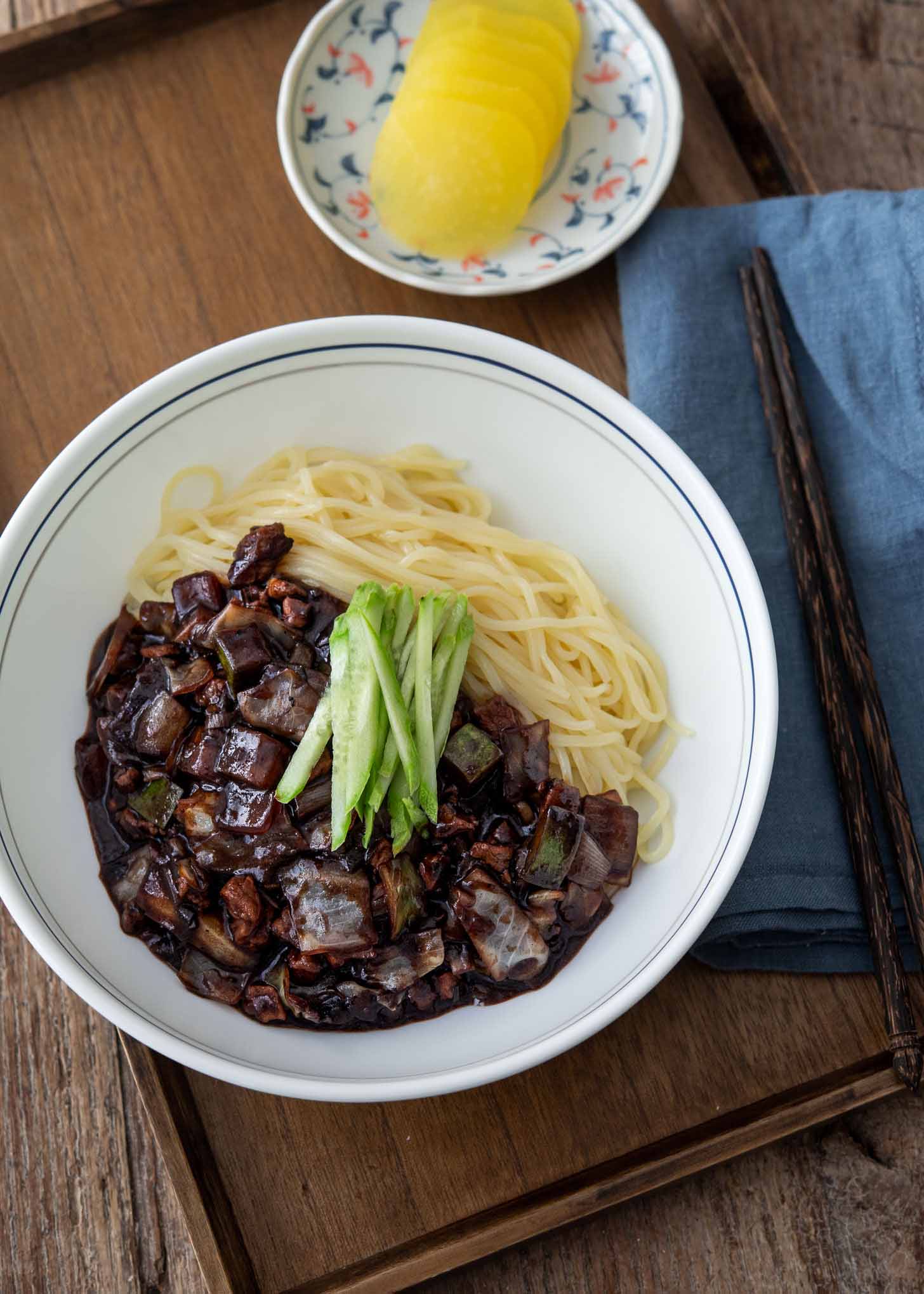
Jajangmyeon holds a special place in my heart, and I often crave it. My parents would treat me to Korean black bean noodles at our neighborhood Korean-Chinese restaurant whenever I memorized my times tables perfectly. I think I was in 3rd or 4th grade. As you can tell, I wasn’t exactly a math genius!
You can’t resist the thick, chewy wheat noodles covered in rich, savory black bean sauce. It’s Korea’s version of mac ‘n cheese – total comfort food!
Get new recipes via email:
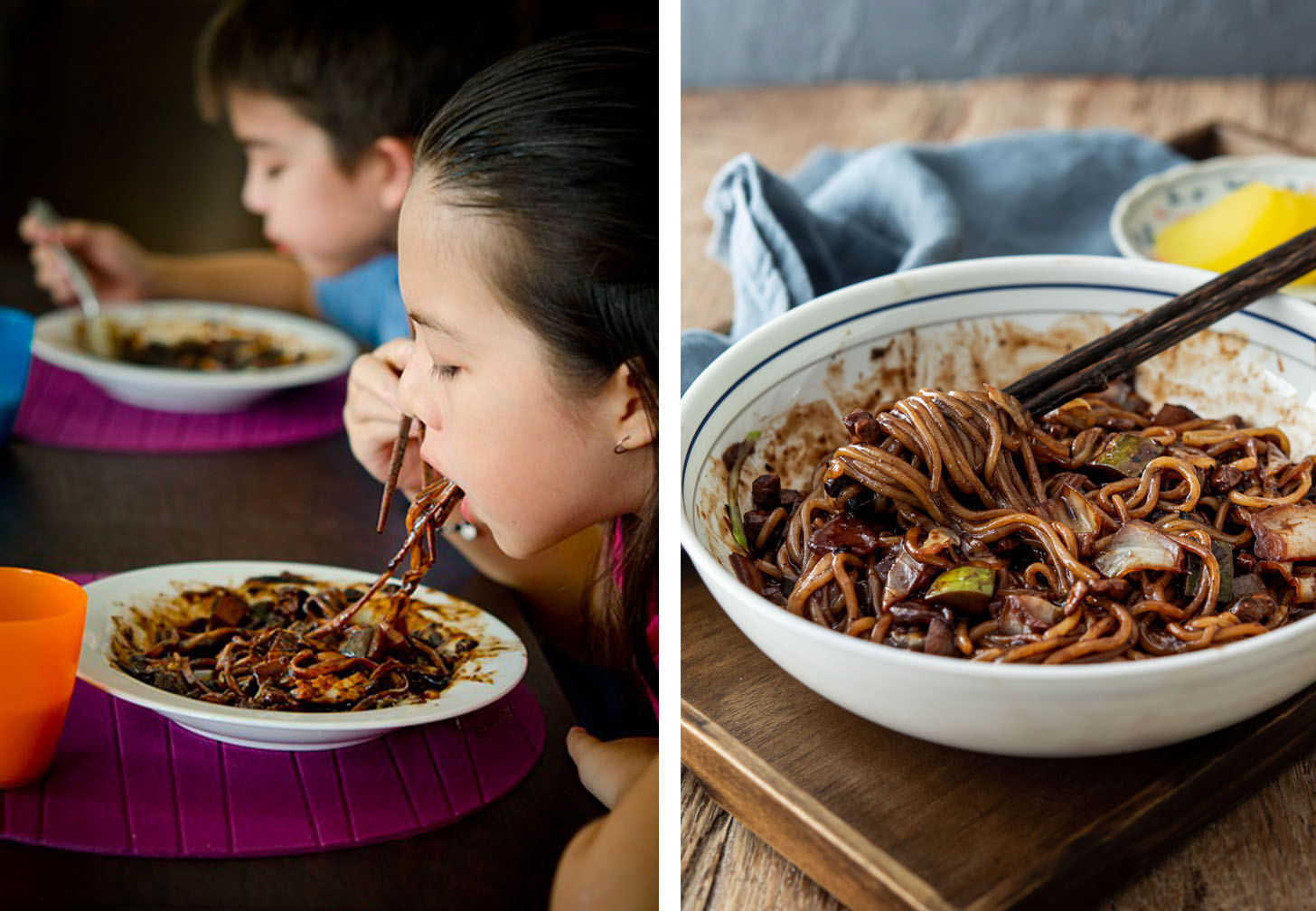
Slurping noodles with black bean sauce often leaves dark smears around your mouth, just like you wouldin K-dramas, but who cares about how you look when you’re in noodle heaven? Your napkins will take care of it at the end.
With this recipe, you can enjoy authentic restaurant-quality jajangmyeon using store-bought wheat noodles, black bean paste, and a hint of lard. Yes, Lard!
You’ll understand why so many Koreans are nostalgic about it. Who knows, they might have gotten the same jajangmyeon reward for memorizing their times tables.
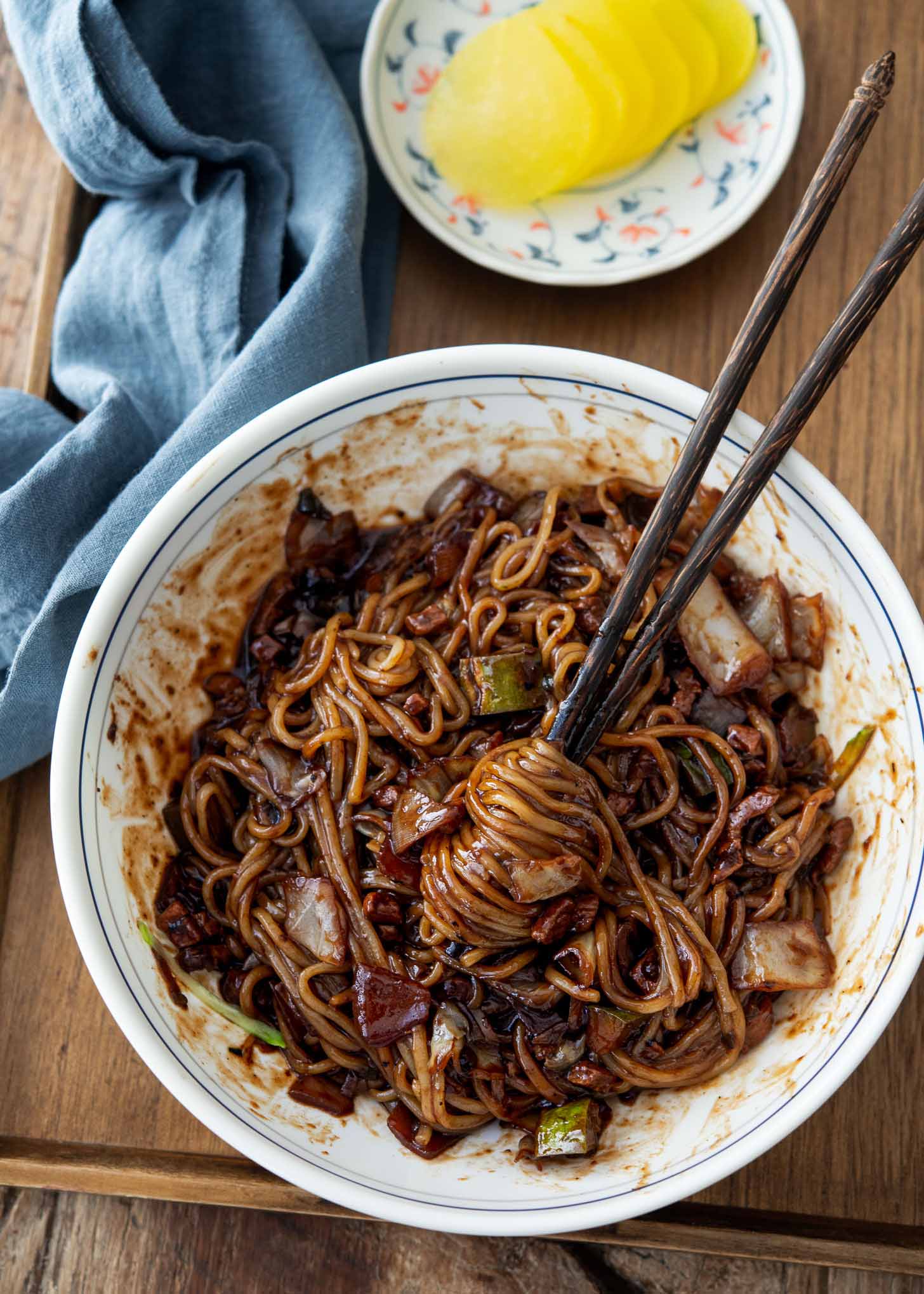
Jjajangmyeon: Thick Noodles in Black Bean Sauce
Jjajangmyeon (짜장면), also spelled jajangmyeon (자장면), has roots in Chinese zhajiangmian, but in Korea it evolved into a distinct comfort dish with its own flavor and style. If you dine in Korean-Chinese restaurant, you will find people eating this noodles paired with other dishes like Jjamppong (spicy seafood noodle soup) and Tangsuyuk (sweet and sour pork).
The dish is made with wheat noodles and a thick black bean sauce built from chunjang (춘장). The sauce is cooked with pork and vegetables, then poured over the noodles just before serving.
What makes it stand out is the texture. The sauce is dense and glossy, and it coats each strand of noodle rather than soaking in. That contrast between chewy noodles and rich sauce is what gives jjajangmyeon its signature bite.
At home, the key is getting that sauce right. Once the chunjang is properly fried and balanced, the rest comes together quickly on the stovetop.
Choosing the RIght Noodles
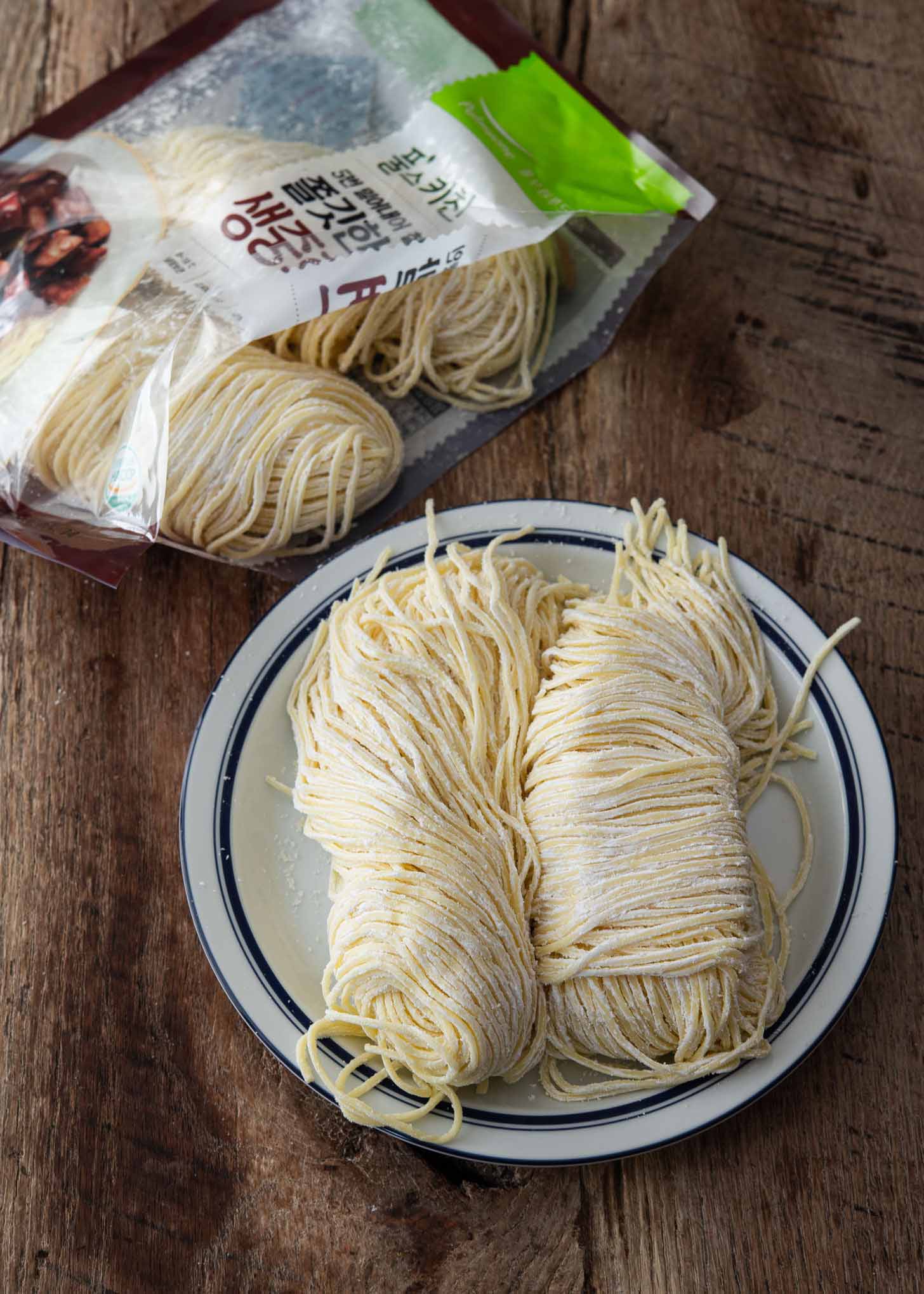
Noodles are key to jajangmyeon’s chewy, bouncy texture. While hand-pulled noodles are the gold standard, various commercial wheat noodles also do justice to the dish’s hearty sauce.
You can buy these wheat noodles easily at most Asian grocery stores, usually labeled as udon and jajangmyeon (우동 짜장면) or jungwhamyeon (중화면).
For the best texture, look for fresh noodles in the refrigerator section of Asian grocery stores or Korean markets. However, if you’re in a pinch and can’t find these specific types, udon noodles or dried spaghetti make acceptable substitutes.
Just keep in mind that dried noodles may not hold their shape as well as their fresh counterparts once cooked.
Jajangmyeon Sauce
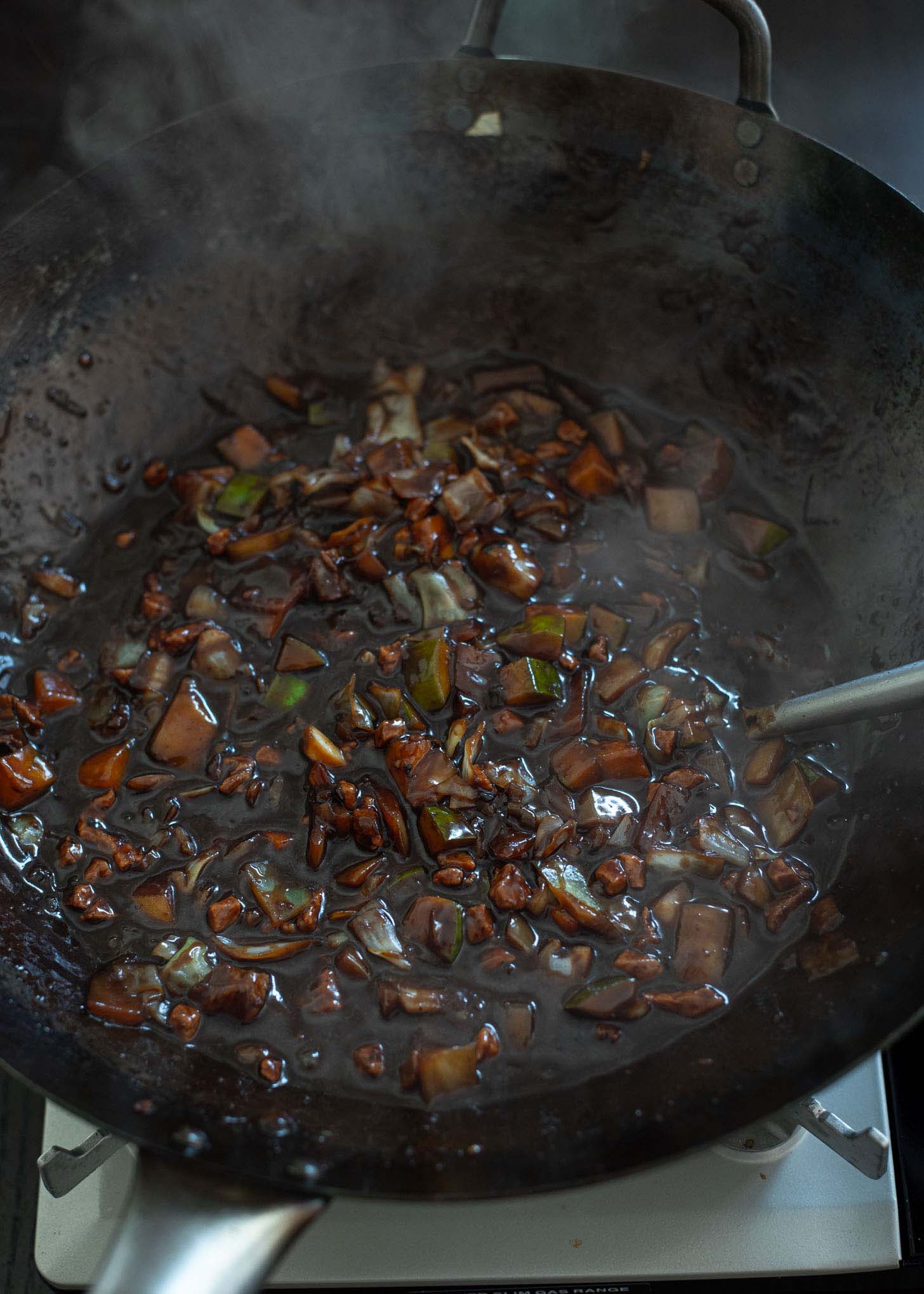
Jajangmyeon sauce is made from a thick, sweet, and savory black bean paste called ‘chunjang.’ It’s stir-fried with diced pork, vegetables like onions and sometimes zucchini or potatoes, and a bit of sugar to add sweetness.
This mixture is simmered until until they are soft and the flavors meld into a rich, thick sauce that’s dark, almost black. This sauce is then poured over noodles to create the classic jajangmyeon dish.
Key Ingredients for Jjajangmyeon
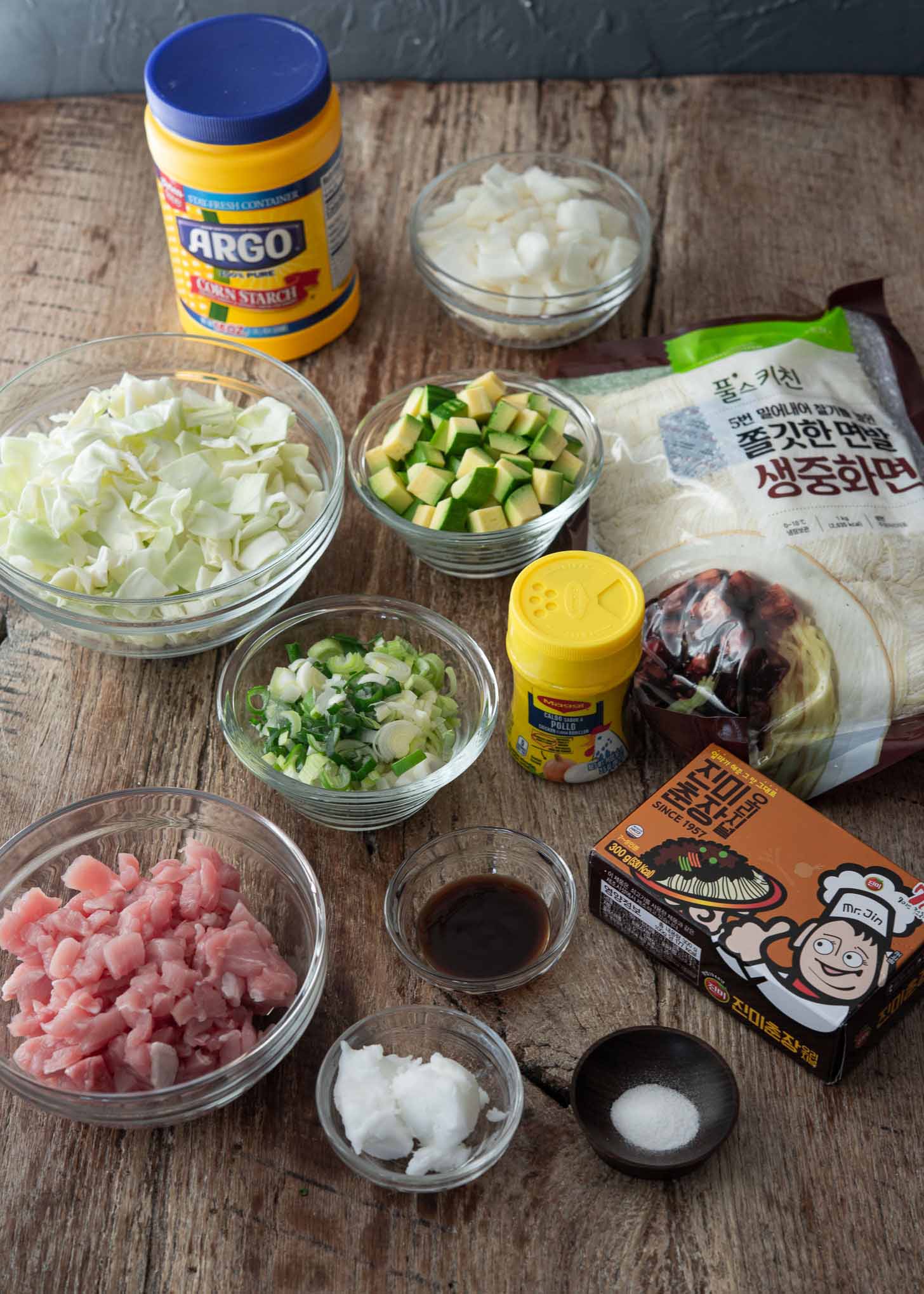
Besides the jajangmyeon noodles, you’ll need the following ingredients:
- Pork: Choose loin or shoulder cuts for the best texture.
- Chunjang: The key to authentic jajangmyeon is this Korean black bean paste, Fry it in oil or pork fat to create the rich jajang sauce. Avoid using Chinese black bean paste; it’s different and will change the flavor of the dish.
- It is available in jars or packets at Korean markets usually found in the same isle with gochujang and doenjang pastes.
- You can also find pre-roasted chunjang , which is ready to use without extra frying.
- Lard: Use it to add depth to your sauce, or choose oil for a lighter version.
- Asian Leek or Green Onion: These bring a subtle sharpness and fragrance to the dish.
- Mixed Vegetables: Typically onions, cabbage, and zucchini are used for their complementary flavors and textures.
- Oyster Sauce: Adds a touch of umami and depth.
- Cornstarch Slurry: A simple blend of cornstarch and water that thickens the sauce.
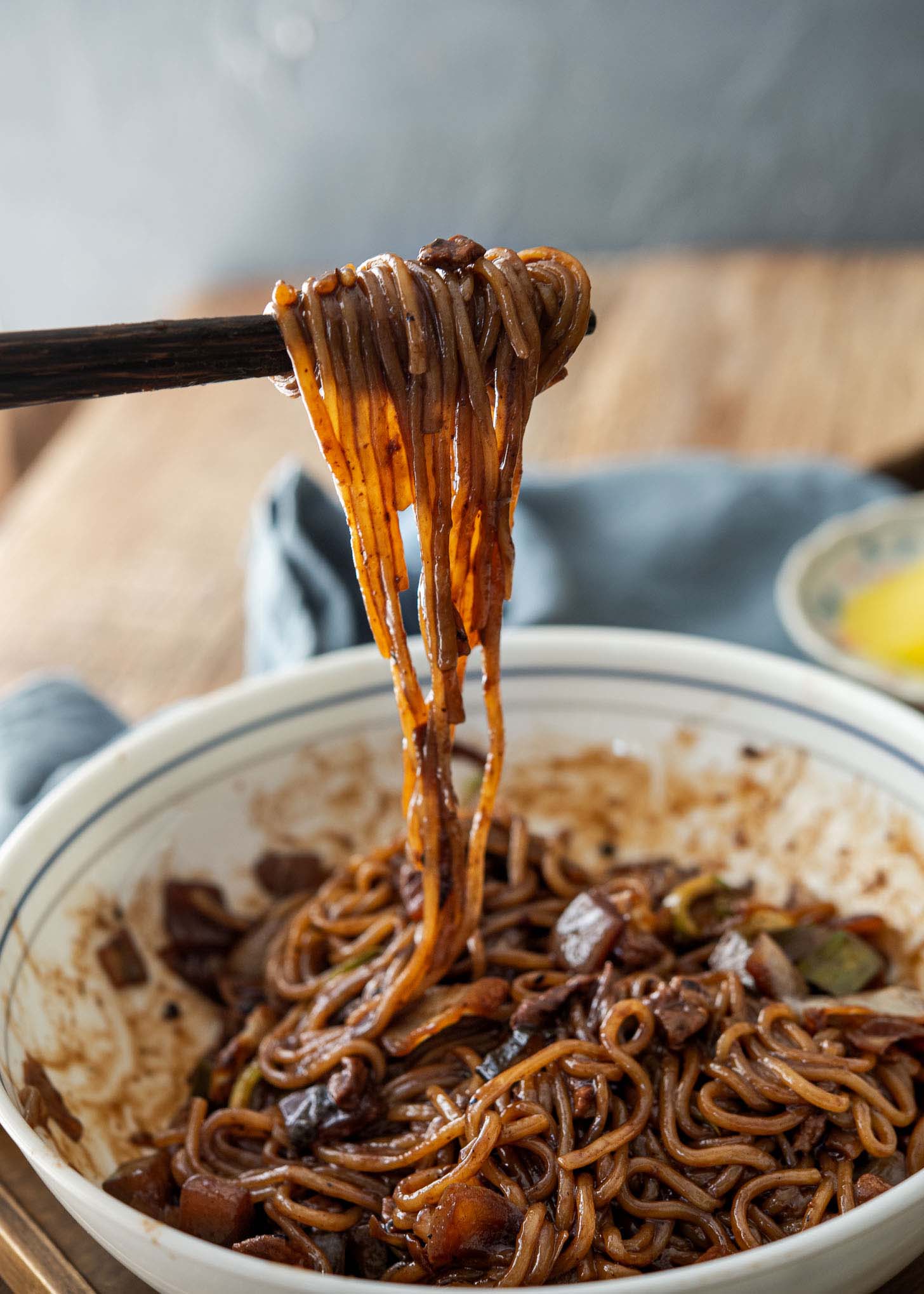
How to Cook Jajangmyeon
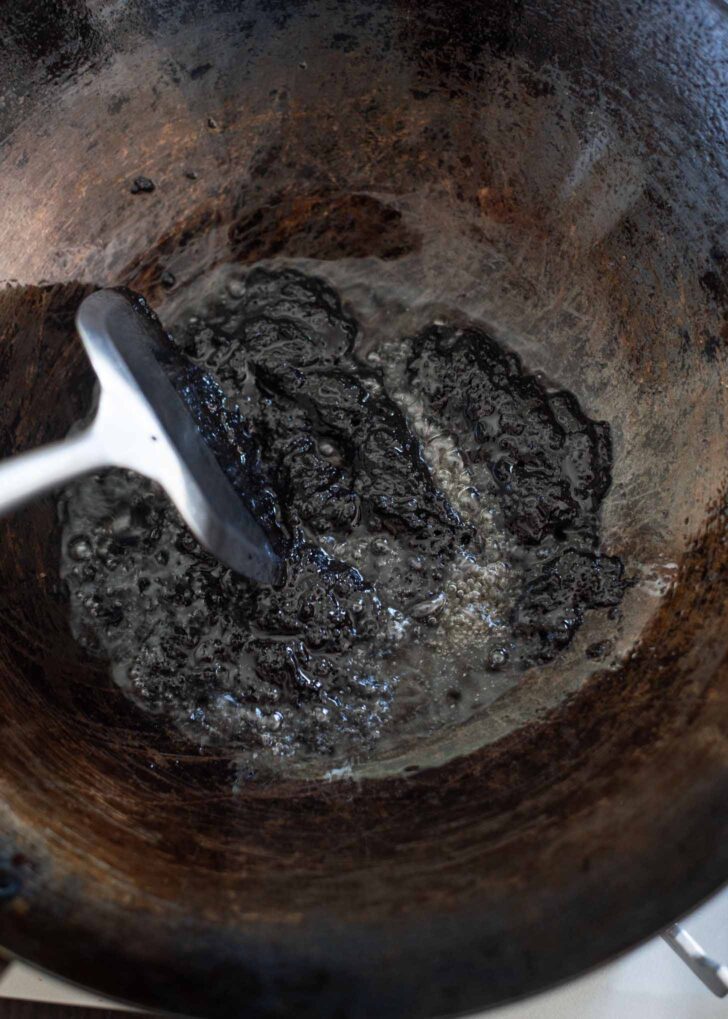
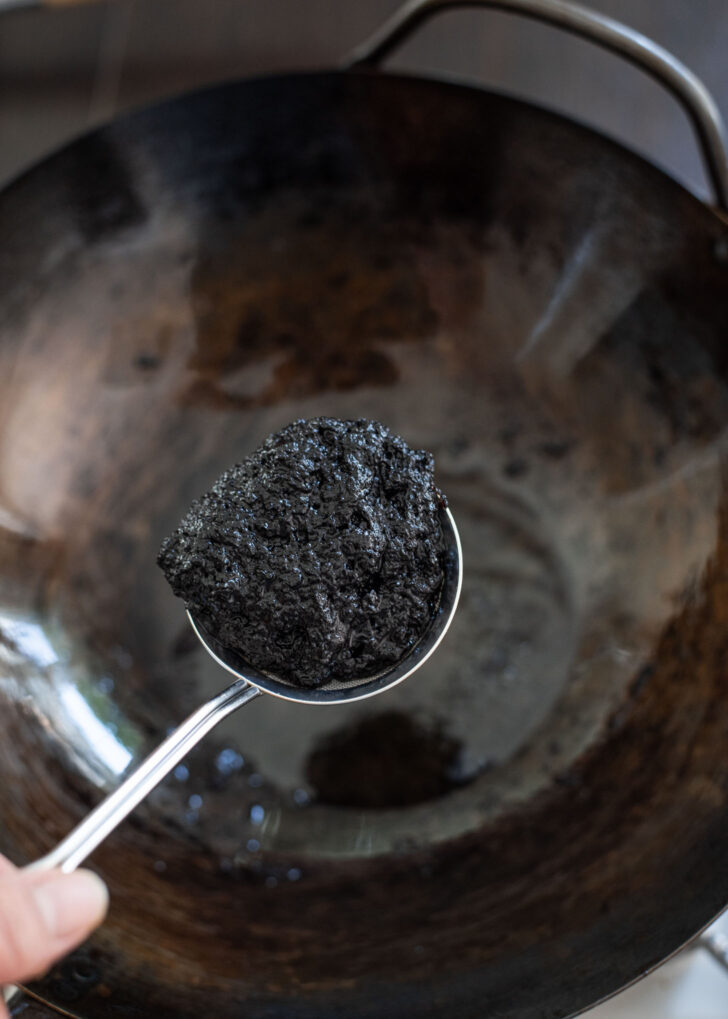
Fry the chunjang to remove bitterness. Push the pork aside and cook the black bean paste in oil for a few minutes. This step is key to getting a smooth, rich sauce.
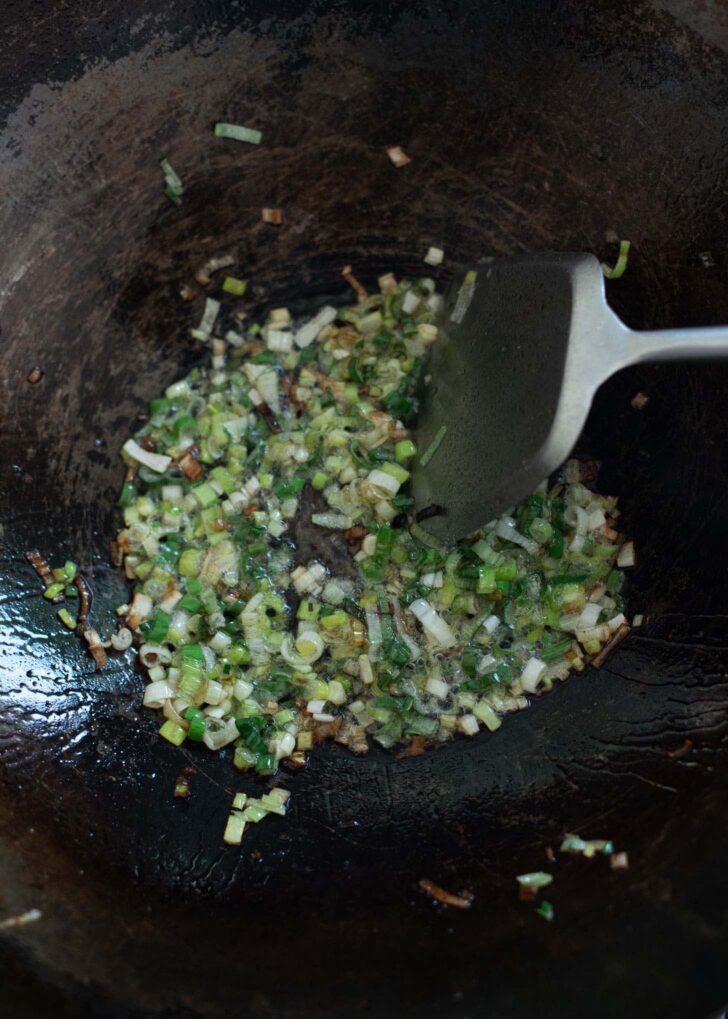
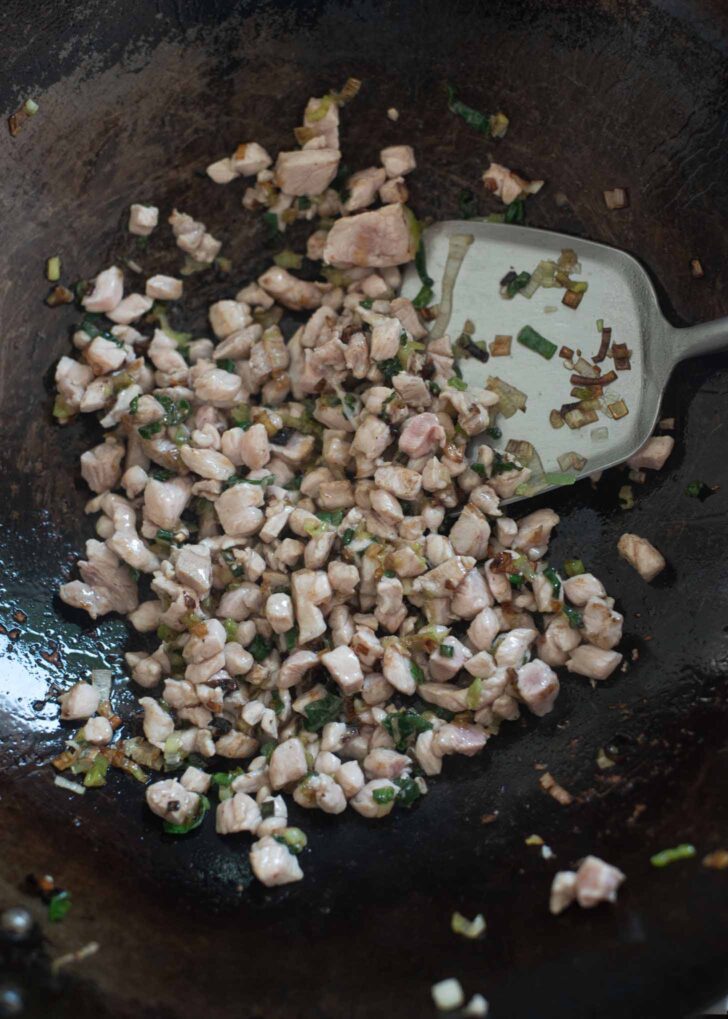
Cook the pork until lightly browned. Start by sautéing the pork in oil or lard until it begins to caramelize. This builds the base flavor for the sauce.
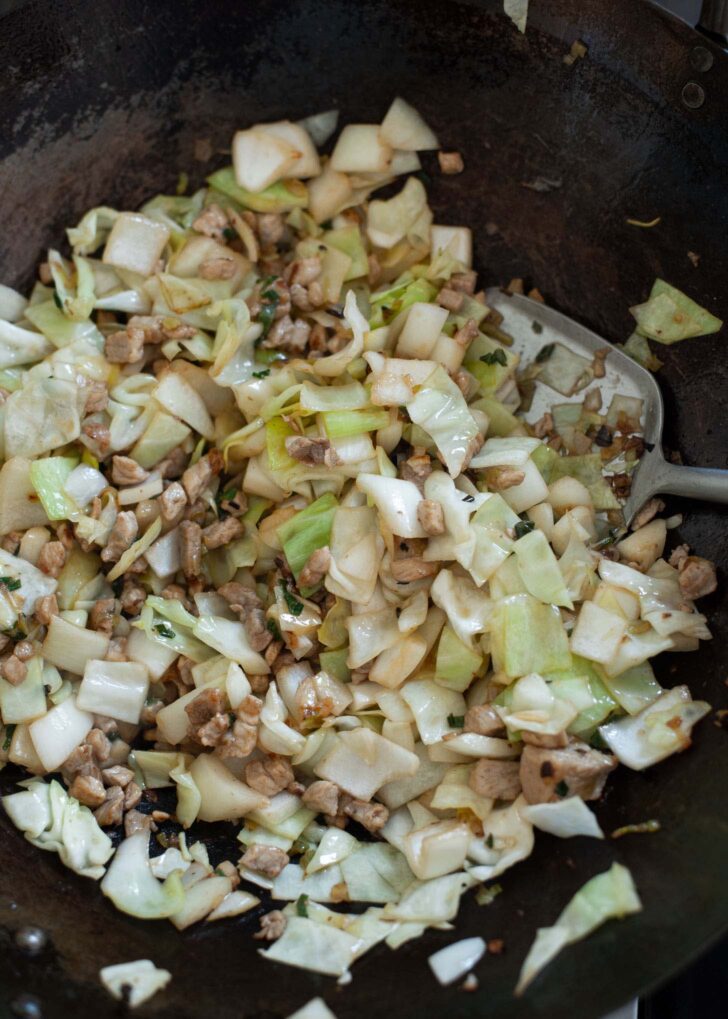
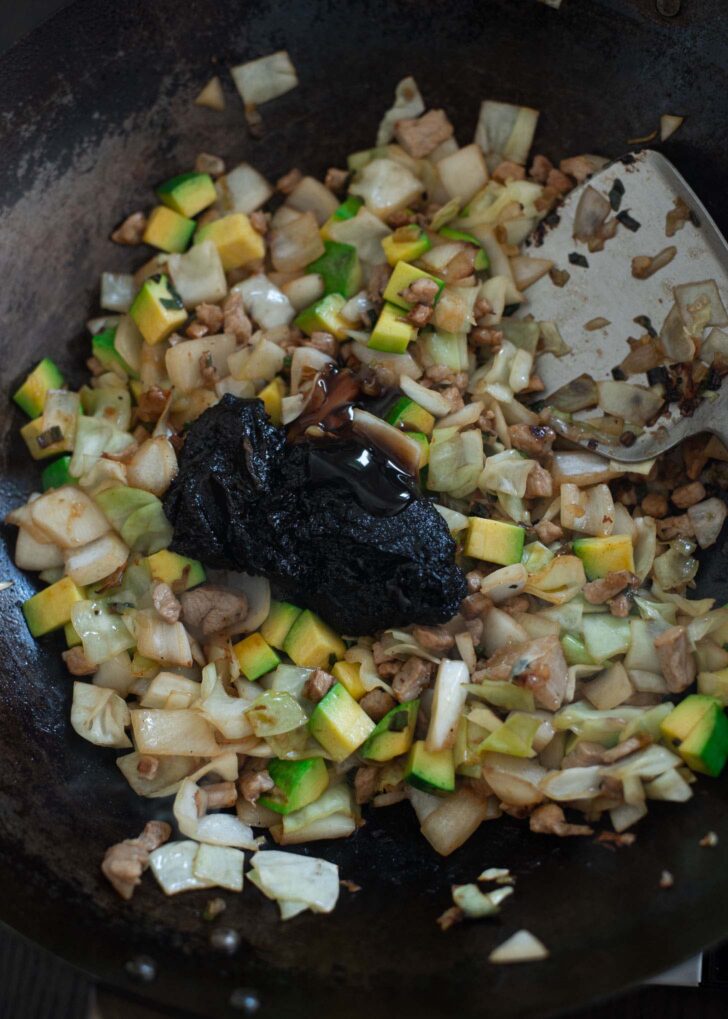
Cook the vegetables. Add the onion, cabbage, zucchini, and Asian leek or green onion, then stir-fry until they start to soften. They should still hold their shape, since they will continue cooking once the liquid goes in.
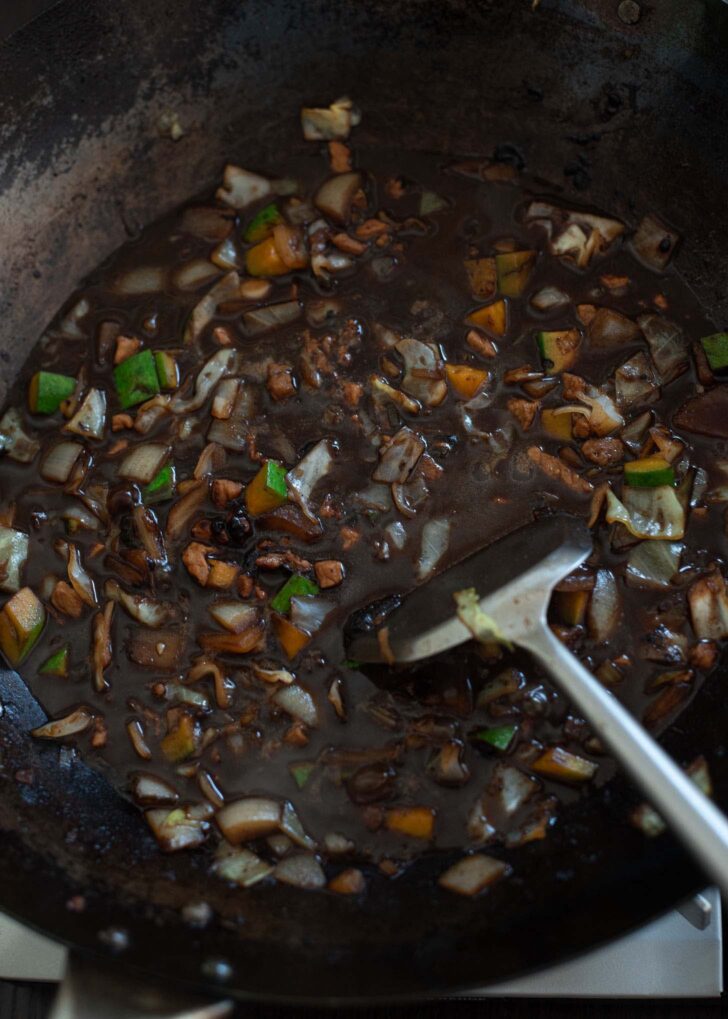
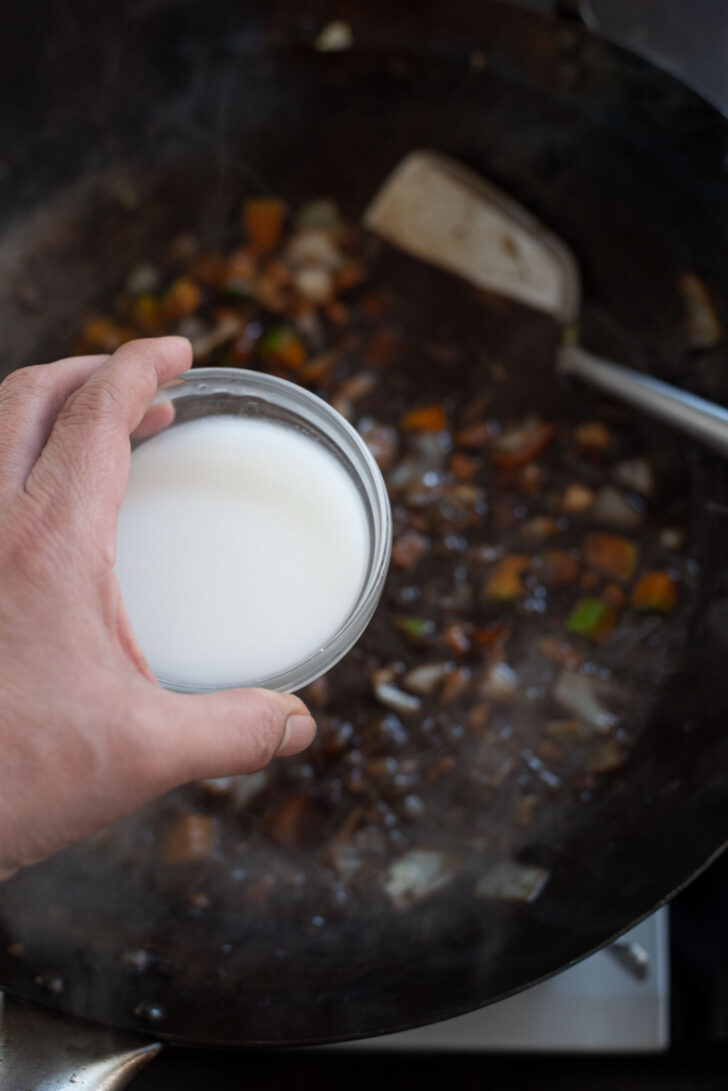
Simmer until thick and glossy. Pour in the water or stock and let everything simmer so the vegetables, pork, and chunjang come together into one sauce. Once the flavors have melded, stir in the cornstarch slurry and cook until thick and glossy.
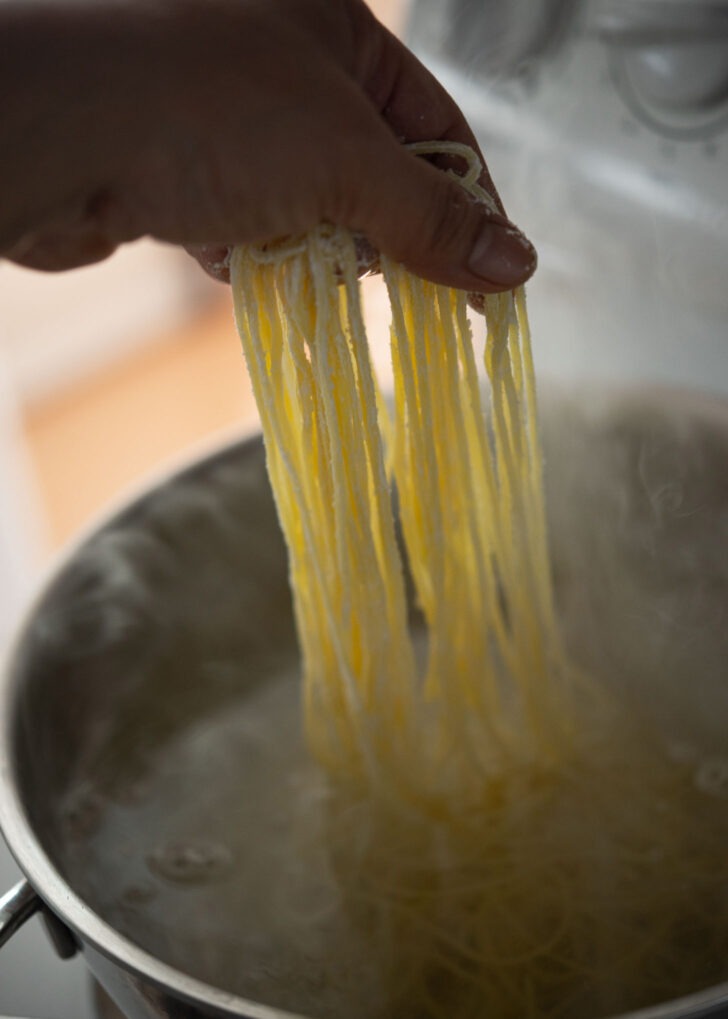
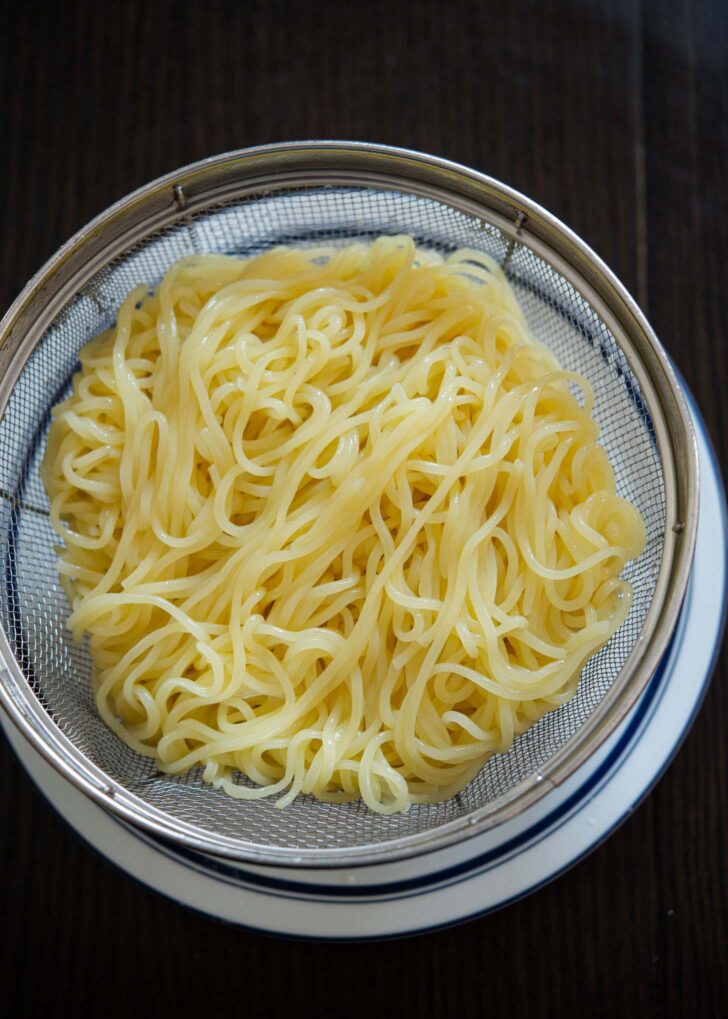
Serve with freshly cooked noodles. Spoon the sauce over hot noodles just before serving so the noodles stay chewy and the sauce coats them well.
How to serve
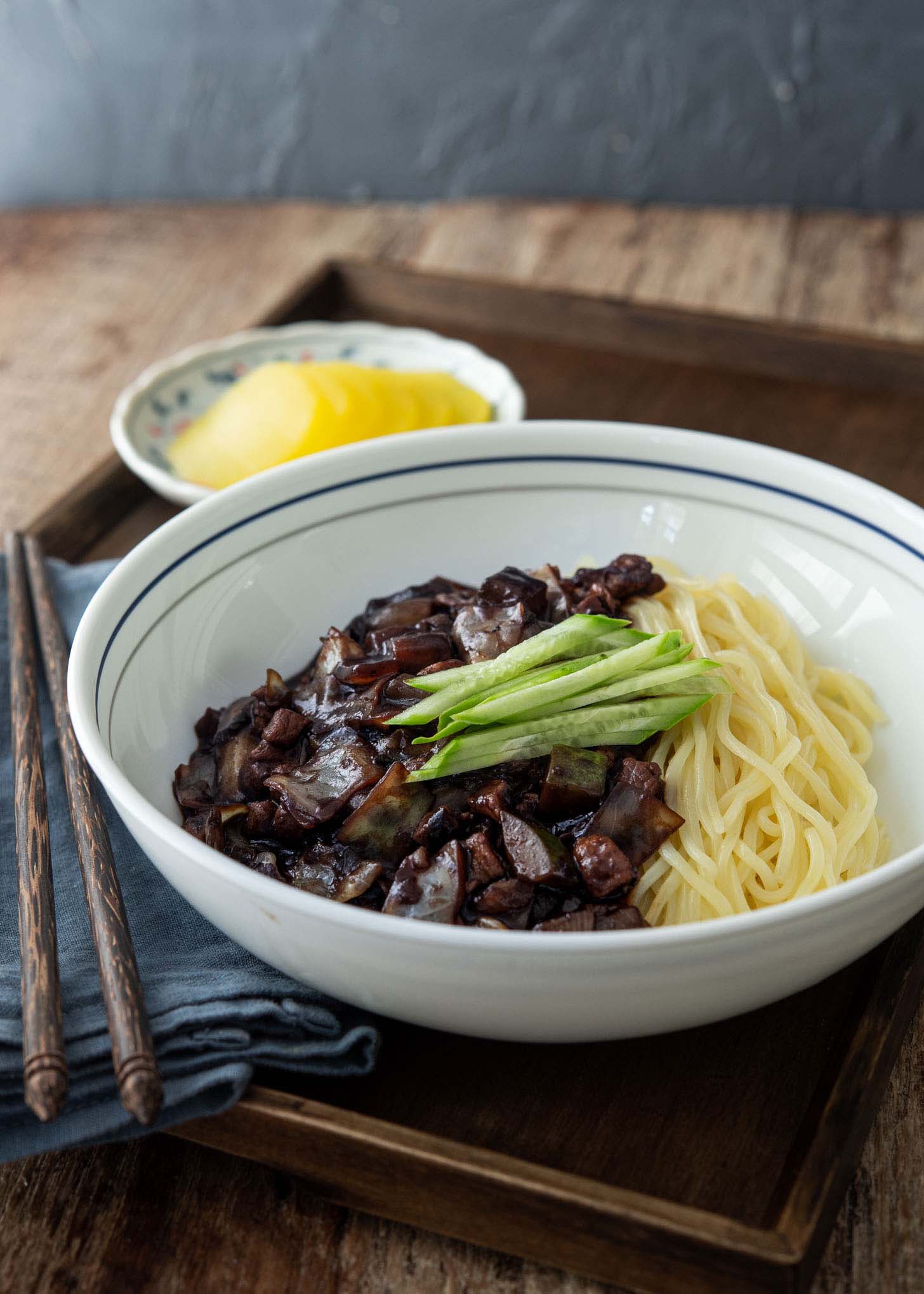
Place noodles in each serving bowl and ladle the jajang sauce over them. Garnish with julienned cucumber if desired. You can also serve the sauce over cooked rice, called jjajangbap (짜장밥). This noodle is always accompanied by danmuji (pickled radish), and some like to serve with green onion kimchi as well.
Many enjoy adding a fried egg on top of their jajangmyeon, although this is a matter of personal taste. Most importantly, be sure to eat it quickly before the noodles become too soft — soggy noodles are not enjoyable!
My Best Cooking Tips
- Fry the chunjang properly: Cooking the black bean paste in oil for a few minutes removes bitterness and deepens the flavor. Don’t skip this step, or the sauce can taste flat.
- Use lard for deeper flavor: Lard gives the sauce a richer, more rounded taste. Oil works, but you’ll notice the difference if you’ve tried both.
- Build flavor with aromatics: Asian leek or green onion adds a subtle savory depth. Let it cook slightly with a bit of sugar to bring out a mild caramelized note.
- Boost umami if needed: A pinch of chicken bouillon powder or using stock instead of water can add extra depth, especially if your chunjang is on the lighter side.
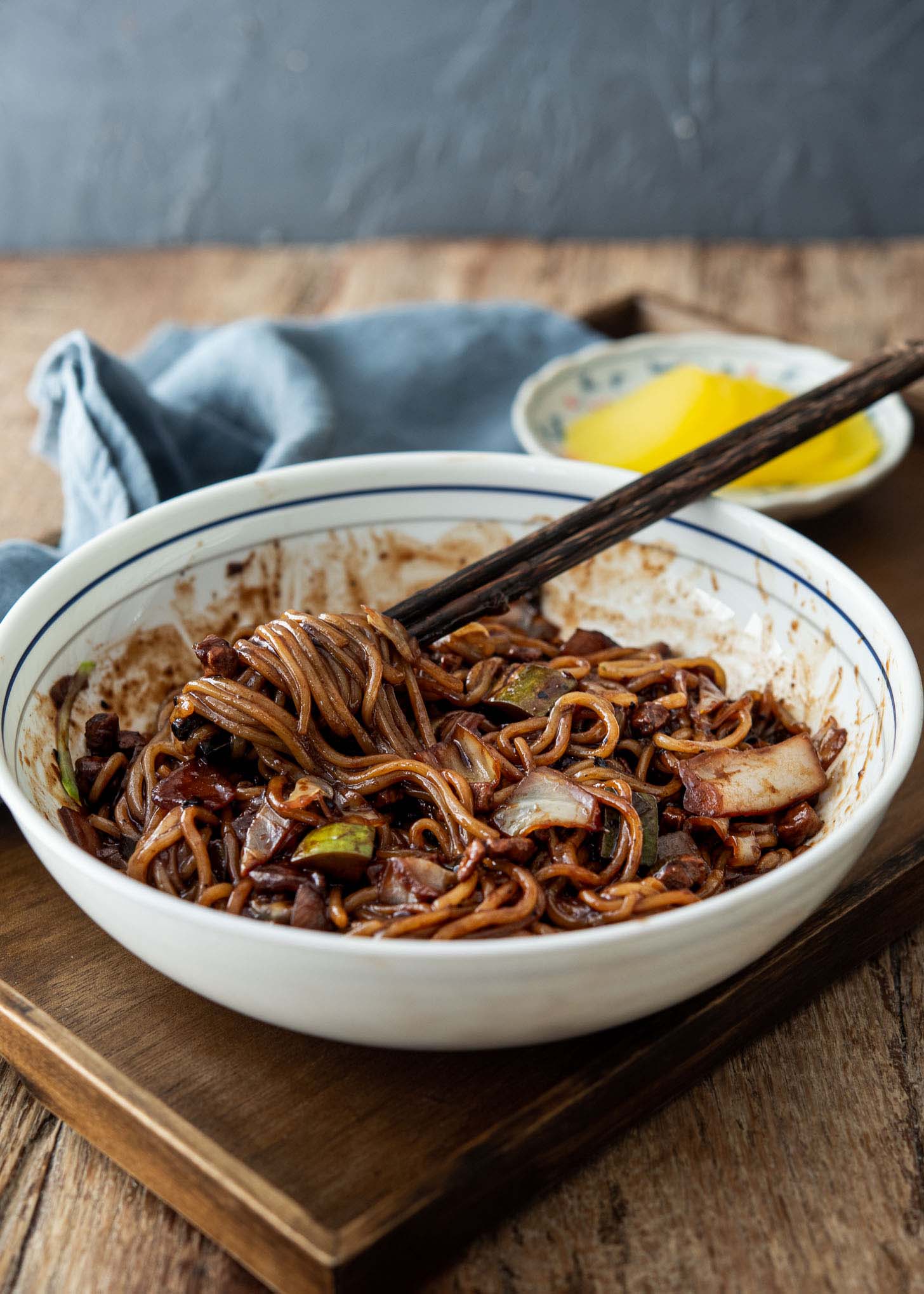
Love this recipe? Rate it and share your experience in the comments below! On Instagram? Tag me to showcase your creation. For more delicious recipes, subscribe to our newsletter!
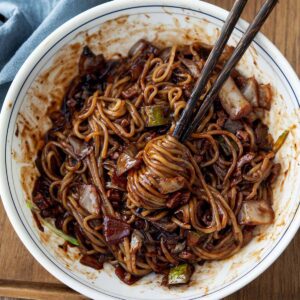
Korean Black Bean Noodles (Jajangmyeon)
Recipe Video
Ingredients
- 4 servings jjajangmyeon noodles, fresh or dried noodles
- 5 tbsp (75 g) Korean black bean paste (chunjang)
- 4 tbsp (60 ml) oil
- 2 tbsp (30 g) lard, or oil
- ½ cup (60 g) chopped Asian leek, or green onion
- 2 tsp (8 g) sugar
- ½ lb (225 g) pork, chopped into small pieces
- ¼ about 5 oz (150 g) small cabbage, chopped
- 1 small onion, chopped
- ½ zucchini, chopped
- 1 tbsp (15 ml) oyster sauce
- 1 ½ cup (360 ml) water
- 1 tsp (4 g) chicken bouillon powder
- 1 tbsp (8 g) cornstarch , mixed with 3 tablespoon water (45 ml)
- ¼ cucumber, sliced to matchsticks to garnish, optional
Instructions
For Jajangmyeon Sauce
- To pre-fry Korean black bean paste (chunjang), heat oil in a wok over medium-low heat, and add chunjang paste. Stir-fry for 2-3 minutes. Use a fine mesh strainer to scoop the paste onto a small plate and set aside. Discard the oil and clean the wok.
- Heat lard in the wok over medium-high heat. Add the leek and sugar, stir-frying until the leek is slightly caramelized. Add pork and cook until no longer pink.
- Stir in cabbage and onion, cooking until slightly softened. Add zucchini pieces and toss. Mix in the reserved chunjang paste and oyster sauce, ensuring that all meat and vegetables are coated evenly.
- Pour in water and chicken powder, stirring well. Bring the sauce to a boil and cook for 3 minutes. Add the starch slurry and cook until the sauce thickens.
For Noodles
- Meanwhile bring a pot of water to boil. Add the noodles and cook according to the package direction, and drain. Be careful not to overcook them.
- Place a portion of noodles in each bowl and ladle the sauce over them. Garnish with optional cucumber matchsticks, if desired. Alternatively, you can serve the sauce over cooked rice, creating a dish known as jjajangbap (짜장밥).Note: Jjajangmyeon is traditionally accompanied by pickled radish slices. However, a modern twist involves pairing the dish with green onion kimchi (pa kimchi), which creates a delightful combination.
I’m just wondering, what do Korean people do who are celiac or sensitive to gluten? I see many recipes that call for wheat noodles which I need to avoid. Is best substitute, sweet potato starch noodles or something else?
Many people choose rice noodles as a substitute for wheat noodles.
Popular recipe and I can see why! Just delicious. I’m lucky to have a great again market within a few miles so getting ingredients is easy. Lots of fun learning what to do with them.
Holly, your site is a life saver. I first had Korean food in 1962 when I lived in Korea for three years as a US military dependent. Then I went back in 1967 as a Latter-day Saint missionary for 2 1/2 years. I’ve eaten a lot of 짜장면, but this is the first recipe I’ve found that reminds me clearly of those days long ago. (Of course, after so many years, perhaps my taste buds are forgetting what things tasted like!) Thank you for this recipe. Like all of the others that I’ve tried, this is great.
Hi James
Thank you for sharing your recollection of Jjajangmyeon and your time as a missionary. Which mission did you serve in? I had the opportunity to serve in Busan for the church in the early 90s. It’s hard to imagine what your experience must have been like in the 60s, as it was even before I was born. Your comment has brightened my day. Thank you for sharing.
Made this for my Korean wife today because she had been complaining about missing Korean food. I’m not the best in the kitchen, grilling is more my thing but this recipe was so easy to follow and turned out great! Thank you so much for making this website can’t wait to try more of your recipes.
Side note – the one thing she had to say that could have made it better was that it didn’t taste as strong as she is use to. I’m guessing I should have used a bit more bean paste, any thoughts?
Hi John
It’s great to hear that this recipe went well. You are a wonderful husband to cook for your wife. Yes, you can add more paste to make the flavor more intense. Hope you get to try other recipes soon. Let me know if you have any question regarding any of my recipes. Thanks for the comment.
Actually it is not a “Chinese dish” they have a similar black noodle in China but it’s not started in China. Yes it is started by Chinese but it’s started in Korea by these Chinese who have migrated to Korea. When they migrated to Korea due to wars, freedom from communists and they wanted to leave a mark so their descendants can have something to call their own. That’s where Jjajangmyeon came to be and most Chinese folks hate this dish because it’s made by Chinese that fled their so-called great land. You cannot find jjajangmyeon in China probably if you find a Koreatown if it exists in China.
I had this for the first time today in a restaurant and I’m hooked! What a wonderful meal for a dreary, cold Winter day. I’m very happy to have found this recipe – I can’t wait to try it. Thank you!
Thank you for the recipe. I’ve been on a hunt for jjajangmyeon that tastes like those I had in Korea. I’ve tried many different recipes, but none had that particular flavor. I even rendered my own pork fat and used the lard to see if that was the secret, but it wasn’t. what do they put in Korea to give it that particular flavor?
Hi! My local supermarkets don’t sell the black bean paste 🙁 I could only get the black bean powder. May I know how do I cook with the powder form, please? Thank you very much!
I would look for the instruction on the package. If not, after frying the meat and vegetables, add the powder and give it a good stir, and pour water to barely cover everything in a pan. The mount of powder is really depends on how deep flavor you desire. You can always add more so I would start with minimum amount for the serving size that you are making.
How much do you thing the recipe would change if I omitted the pork and used something like tofu instead?
It won’t have the same texture but I believe it will still taste good. I would fry the tofu to crisp before you add to the sauce though.
Awesome! I’ll have to try making this soon 🙂
I can’t find any store that has black bean paste. I got all the ingredients except black bean paste. Is there a substitute for black bean paste?
I only got ottogi jjajang (3 minutes); I don’t know what to do, What should I do?
That is a ready-made sauce. You can just heat it up, and pour over noodles or rice and serve.
hi. is the sauce originally sour? i’ve bought one and cooked but it make my noodles become sour taste. so i not sure is the sauce rotten or what.
No, the sauce shouldn’t be sour. Did you check the expiration date?
Thanks for this recipe. Had this since I was in high school and just had a craving for this 10 years later. I really wanted to know how to make the sauce and didn’t want to resort to buying instant noodles.
My husband lived in Korea for a number of years, and loves Korean food. This is one of his favorite dishes. I’ve never tried it at home. Lotte supermarket in Falls Church has a restaurant that makes it. But now, I need to try!
I am so glad to see this recipe! I’ve been craving it for 8 years ever since my sister-in-law visited and made it for me. I can’t wait to get to cooking! Going to see what else I can find, I miss so much of my mother-in-law’s cooking.
Hope you get to find all the ingredients you need to make this recipe. It is one of the most requested noodle dish that my kids are asking for and even the grown-ups like it, too. Hope my recipe will turn out as good as your sister-in-law’s.
Hi … I have a couple of questions. I am american but I grew up in Killeen Texas which just happens to have a very large amount of Koreans in the area because we are right next the ft hood army base and because of the u s army having a base in Korea many army guys married korean women and brought them to the US. I am white but I love Asian food because I had so much good Asian food I could order anytime. I LOVE this dish, I was going to make myself some the other day and asked my husband to get the black bean paste and he brought back black bean garlic paste … Can I use that? Also I have tried to add oyster sauce in when I make Asian food and I really don’t like it in my cooking at home but I like stuff with it like brown sauce and moo goo gai pan … Is the stuff in the u a just bad or cod I be using it wrong … How much is normal for a dish and how do you add it in?
Hi Aubrey
Hmmm…, the black bean garlic paste might not bring the same result because of the strong garlic taste in the sauce. You can definitely try it, though. Some like to add garlic in the sauce. In any case, unless it is pre-roasted bean paste, try to fry the paste in the oil first to get rid of the bitterness.
For the Oyster sauce, I am not sure if I understand your question right, but adding a little bit of oyster sauce can enhance the flavor of this noodle dish. For most other Asian dish, you don’t want to overuse it, too. It is quite salty and not the healthiest condiment. I would say about 1 tablespoon per 4 serving recipe, but it can vary depends on the dish you are making.
I just made this for dinner but I’m not really sure what it’s supposed to taste like since I’ve never tried it before. Is jjajangmyun supposed to be sweet? Mine was a bit bland and the only flavour I could taste was salt. Is it because I didn’t put enough black bean paste?
Jjajangmyun has mild yet distinctive its own flavor from the black bean paste. It is not spicy and can be very slight sweet but not much. If yours is salty, I wonder if you used the right kind of black bean paste. Did you use Korean style black bean paste?
This recipe was easy and simple to follow which it made it very helpful. The final product of this recipe did not turn out to be like the professional picture. We had to substitute some ingredients like the Korean black bean paste with Chinese black bean sauce. The noodles were also substituted with spaghetti because it was something that we could find at our local supermarket. These substitutions didn’t really change the recipe that much but the color of the sauce was different. The color of our dish turned out brownish but that was due to the paste sauce we used. Even though we had those substitutions, the recipe turned out really good and it also taste very good. If I had to redo this, I would like to have slimmed down some of the portions of the vegetables because it was just too much. I would also like to use Asian noodles and the Korean brand black bean sauce instead to see if it would have tasted any differently. The final product consists of noodles on the bottom with the black bean sauce mixed with vegetables and pork layered on top. To top off the dish, we had fresh slices of cucumber. I would like to recommend this recipe to another person because it was a easy recipe that anyone can follow and our final dish turned out amazing.
This recipe was pretty awesome. The instructions were easy to follow. The final product looked really close to the pictures on here and it tasted really good. There are some parts where we had to change the amount of stuff we had to put in, for example the amount of black bean sauce, there wasn’t enough black bean sauce to coat the noodles so we added a little bit more in. In the end it had a more of the color that is usually seen with jjajangmyun. It looked brown and really sticking and gooey looking, just the way I like it. This recipe was pretty good, nice and clear instructions and good amounts of stuff to make it, the only thing is that we changed the amount of black bean sauce.
This recipe was really helpful and it even provided pictures on the website on each step, so it made it even easier to follow. Although we followed the final product, our picture didn’t turn out so much like the professional picture, which is okay. It tasted really good and my friends said it tasted like their parents’ jjajangmyun!
We altered the noodles and the brand of the black bean paste because we couldn’t find the Korean brands of the noodle and paste. We went went Chinese black bean paste and replaced the Korean noodles with spaghetti noodles because we could get that at our local food market. We used half wheat spaghetti noodles and white noodles. It turned out pretty well, although our color wasn’t the same as the picture. Our toppings and everything were more brownish than blackish. Either way, once again, it was delicious.
What I would do differently is maybe just go for the Korean brand ingredients, if it wasn’t for the fact that I lived far from the Korean market and so on. I would also measure the toppings that we used more, instead of rushing it and going with what looked right in my eyes since it’s hard to measure how much cabbage we could have used with me eyes.
This is what the final product looked like: noodles good, and the toppings were overflowing. Cucumbers tasted good as well.
I would always recommend this recipe to someone. Just because I couldn’t do it, doesn’t mean that someone else couldn’t.
If you use spaghetti noodles, I think you really miss much of what makes the dish taste so good. The noodles need to have that chewy, firm taste. Two Korean fresh noodle brands that work pretty well for me are: Assi and Choripdong.
And actually, I’ve used fresh lomein noodles (brand Twin Marquis) with good results.
You can get Korean black bean paste online from hwww.mart.com — search for ‘black bean paste’ there. I think the brand I used was Haioreum.
Had the Chinese jajiangmian on a side street in Taipei Taiwan, and it was unforgettable even after several decades!
I made this last night, but used clear noodles I had purchased for another recipe (which I now cannot find!). I was trying to get rice noodles originally, and these had beans and peas as the ingredients. ??? In any case, it was very good. Next time, I’ll make it spicier, and replace the potatoes with something else. I’m also going to try to find authentic bean paste at the Asian grocery store. The only kind I found in the regular grocery store was Kikkoman brand.
I am glad that this recipe turns out well with clear noodles. Making it spicier sounds great, too.
Dear Holly, I love your blog! There is an HMart in my area. What aisle/section of the store can I find the Chinese black bean paste? I have asked a couple of workers there and it seems they really don’t know where things are. Thanks!
Black bean pastes should be in a condiment aisle where you see Korean pastes. Korean style black bean paste should be next to Korean soy bean pastes, and the Chinese black bean pastes are usually displayed across the aisle. I have seen Korean black bean pastes that are already pre-roasted so that you don’t need to fry-up to get rid of the bitterness. Have a fun shopping!
This looks so good. I found you on Pinterest and having never even had this dish, I can’t wait to make it. How many ounces of noodles serves 4?
Thanks!
Thank you !
I think you nailed this recipe. Was looking around for a good jajang myun recipe.
Tried one from a different site and it was pretty off.
Your recipe captured the flavors and textures I remember. I used cube bellies for the meat and substituted potato starch in place of the cornstarch to avoid that chalky taste that cornstarch sometimes seems to add..
Hello~ i cant eat pork so can i change it to meat or anything else?
You can try with ground beef.
Hi Holly!
I am dying for some jjajangmyun – have been craving it. But, I am now eating vegan and am hoping to adapt it to a more oil-free vegan style by omitting the oyster sauce and pork. But Is the oil absolutely needed? I plan on sautéing the vegetables in water, like I normally do, but is the black bean paste absolutely needing to be sautéed with oil?
Thanks so much! Can’t wait to try!
I would recommend you to use the powdered form of black bean instead of paste. With the powder you don’t need the sauteing. You can make this noodle into vegan dish as you like. If you can’t find the powder, you will need to saute in oil to get rid of the bitterness. You can boil, of course. But it won’t taste as good. A little bit of healthy oil like grape seed oil or canola oil will make the dish more flavorful.
I used black bean paste that was labeled: “Black Bean Paste / Roasted” (Brand was Haioreum). I assumed it had been pre-roasted so I skipped the step where you sautee the black bean paste and the result tasted fine to me.
Hey I have a question..is jjanjgmyun supposed to be sweet? is salt not required?? sorry too many questions lol 😀
Jjajangmyun is not sweet. The black bean paste itself has plenty of salt in it but you can always add some salt for your taste.
Thank you for posting this! My husband and I lived in Korea for 4 years, and jjajangmyun was and still is one of our favorite dishes. I hope you don’t mind that I linked your recipe on our own blog! We were so happy to try this out 🙂
Great recipe, thanks! Made it today and it was absolutely delicious. Will make it again soon for sure.
I really love korean food,but i live in india.do u know of any way i could lay my hands on the bean paste u mentioned?
You can use Chinese black bean paste if you have access to Chinese groceries.
Very good recipe. I love Jjajangmyun 🙂
When I was an undergrad, one way I paid for school was working as a waiter at a popular Chinese restaurant. Every evening after we finished dressing and prepping our stations, the head chef (he was Korean) would make the staff meal. One day he made Jjajangmyun and it was heavenly. I requested this again and again but it never appeared on the staff menu again from him. I never saw this again until I just happened upon your site.
I made it last night and introduced it to my children. It is not often we find something that stops the chatter at the dinner table. The only thing we heard was slurping sounds. And yes, there were many black-rimmed smiles.
Thanks
So great to hear your children liked the noodles!
As always, your recipes never disappoint! I made this for dinner last night and my husband (who spent a number of years in Korea) said, “I can’t believe can cook like this and you’ve never been to Korea”. That is a compliment to you, Holly; your step-by-step instructions make it an easy dish to prepare. The distinctive black bean flavor with the texture of the noodles makes it addictive. Leah Baik is right—an egg on top would have been fabulous, but we enjoyed it without. I love your recipes, Holly. Thanks for sharing.
Nancy, I am so happy to hear you made this noodles and your husband complimented. Thanks for your sweet comment. I appreciate it.
I love Jjajangmyun. I first had it when I was in Hawaii for my studies. But when I moved back to Malaysia, all I could find was those instant noodle kind. And for years that had been the only Jjajangmyun I get to eat in Malaysia. Then I went to Korea last year and I realized the instant noodle kind does not even come close to the ones I ate in Korea. I actually ate it a couple nights in a row as to get as much Jjajangmyun as I can before coming back to Malaysia. Thank you for sharing the recipe. Now I can go get the ingredients and make my own Jjajangmyun at home. Thank you so much.
I love that this simple, savory meal is considered a special treat in Korea! Black bean sauce is one of my favorite flavors. I can’t wait to try this.
This is one of my favorite Korean food!! Yay for the authentic recipe. Thanks Holly!
When I was a child, I could not eat enough of this! I still love eating Jjajangmyun!
My kids love jajangmyun too!! Yours looks great!
these look absolutely beautifully amazing. Must find some free time to make this…
YUM! A recipe for jjajangmyeon…so exciting as we haven’t had this since leaving Korea for fear that any versions not be the same as we’re used to. This one looks pretty damn authentic. Thanks!!!
I’ve never had the Korean version, looks good and I hope to try it one day. 🙂
Oh, I love jjajangmyun, and your photos are absolutely mouthwatering! I just don’t eat it very often since it’s stuck in my mind that it is not healthy food…especially with the step of frying the sauce in oil. Actually, I’ve always been curious about this frying step; if the point is to cook the paste at high temperature (as would be the case with the oil-frying) to remove the bitter taste, couldn’t this oil-frying step be omitted and instead replaced with just boiling the sauce (also high temperature cooking) at a later step, without adding the original frying oil? Or is there something about this oil-frying technique that I am not understanding? I have tried making jjajangmyun with my boiling idea (no frying), and I did not notice a bitter taste. But even though it tasted good and was a little healthier, I felt guilty for not making it the traditional Korean way. Can you help me understand this frying step a little better?
Hi Erica
As you know, the reason we fry the paste in oil is to remove the bitterness and the rawness from the wheat flour that had been added to the paste. The frying in oil also help create some nutty flavor in the sauce as well. You can certainly use boiling method but the overall flavor of the sauce won’t be as tasty. You know fat makes the flavor.
If you go to the popluar Jjajangmyun restaurants, chances are they will use lots of shortening or even lard to fry their paste to make the sauce. Some even add MSG to bring more flavor. For that reason Jjajangmyun is known for unhealthy. Although I grow up eating restaurant Jjajangmyun often, I don’t like to feed my family the noodles made with unhealthy fat. You can make the dish a lot healthier at home. (However I do have the occasional craving of the old time restaurant flavor though)
As you follow my recipe, you fry the paste in oil – the paste doesn’t soak up the oil much, then drain the most oil except just a little to fry the rest of the ingredients. Use healthy oil such as grape seeds or canola, and it shouldn’t be too bad.
I hope I answered your question alright.
Thanks, Holly, yes, your explanation is so nice! ^_^ I guess I have been shy of trying the frying step, but with your helpful guidance maybe I will try it sometime at home. Have a great rest of the week!
Mmmmm! Yes! I prefer Jjajjangbap with a fried egg on top, but either way it’s so good.
I can hardly wait to try this! I just discovered your blog about 2 or 3 weeks ago, and absolutely love your dishes AND your pictures. You make it soooo easy to do South-Asian/Korean food right at home. I cannot say thank you enough!
Gosh, this has such terrific color! And the flavors sound wonderful – I love black bean sauce. And anything with noodles in it certainly gets my attention. 😉 Great dish. And when I eat it, I know already I’ll be making slurping noises!