

Dongchimi (Korean Radish Water Kimchi)
This dongchimi recipe keeps things simple: Korean radish, a clean brine, and time. The result is a chilled, vegan water kimchi with a crisp bite that cuts through BBQ, spicy dishes, or even works as a quick cold noodle broth. Hands-on prep is minimal.
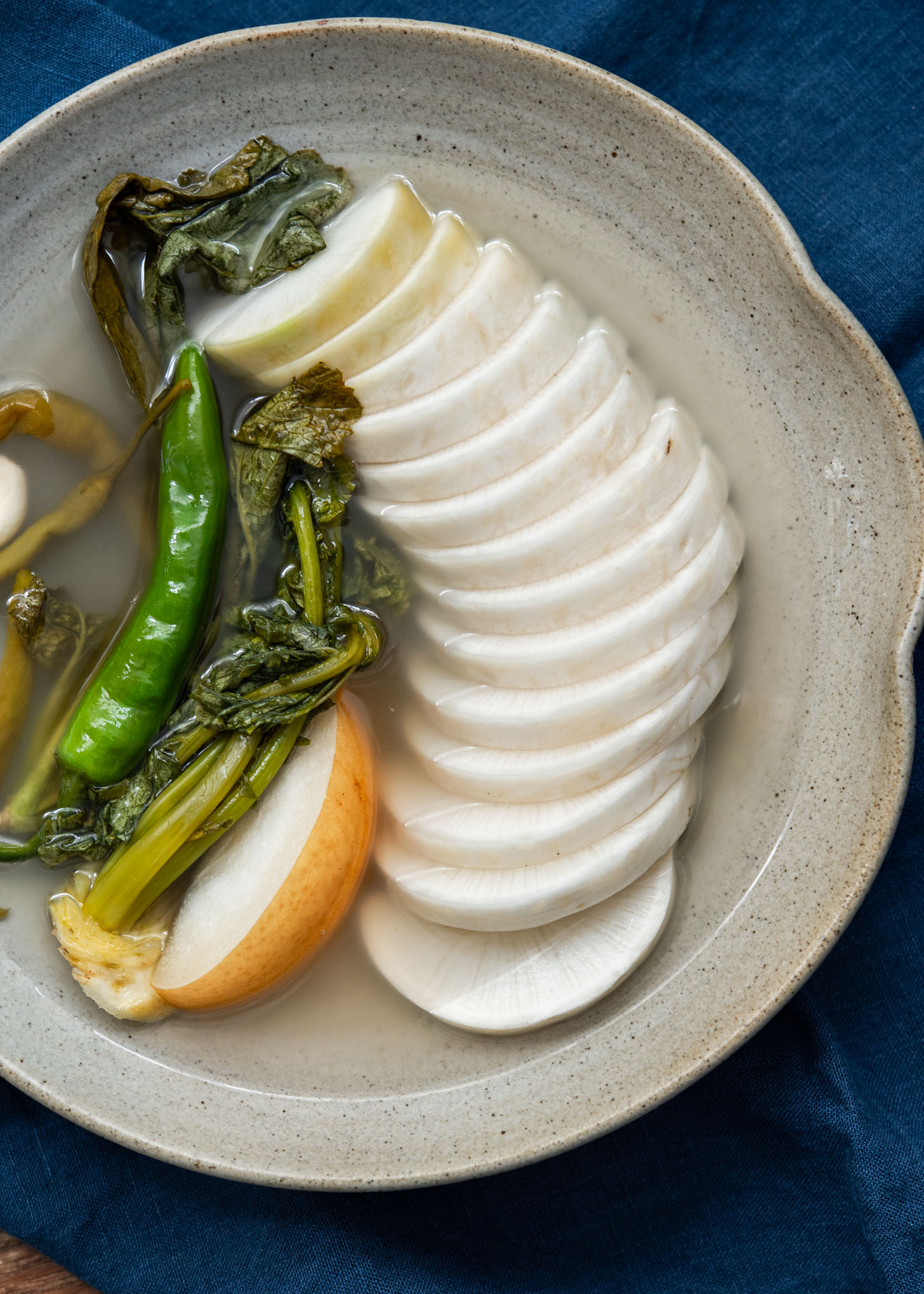
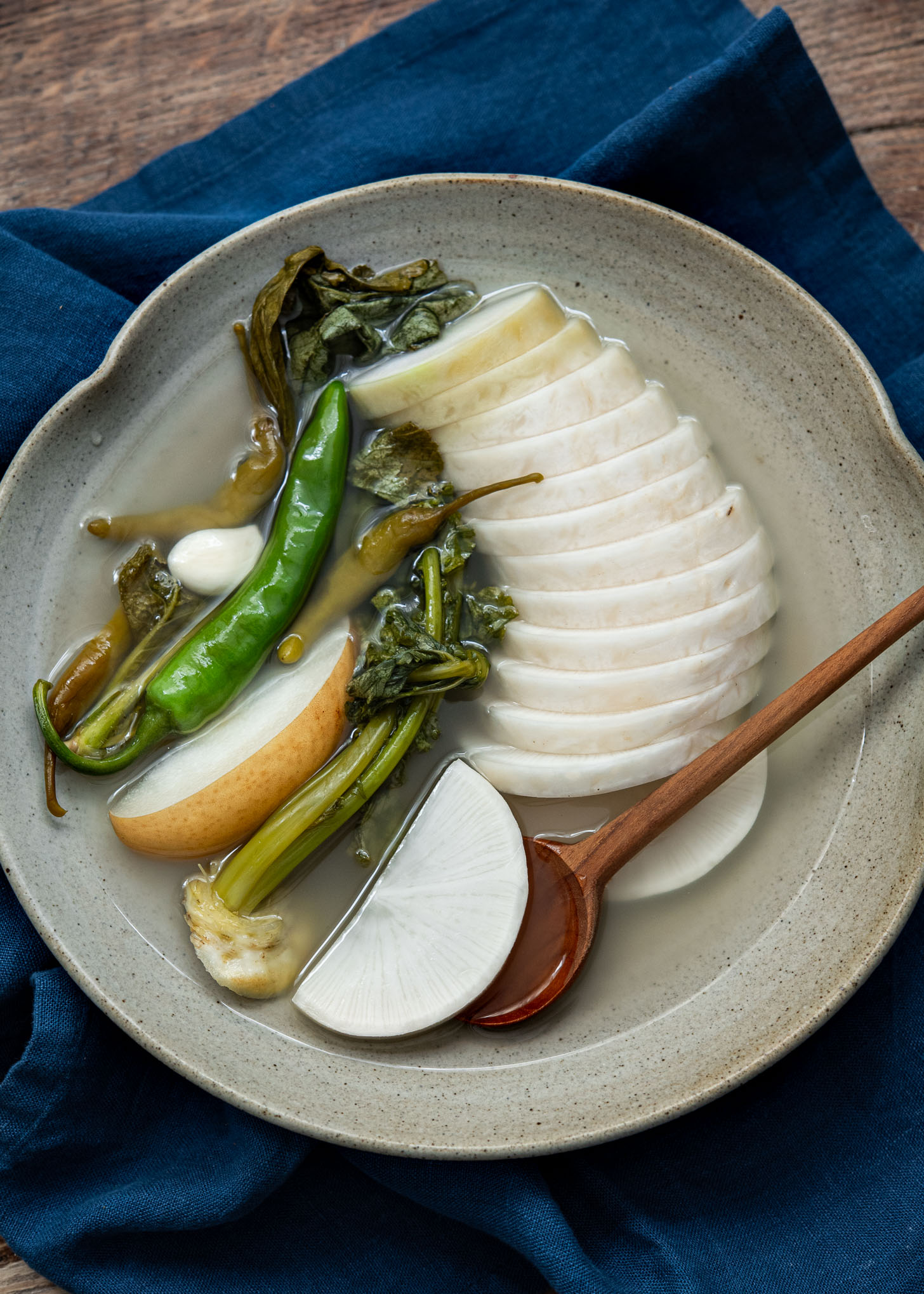
Winter break at my grandparents’ house always came with two things: fire-roasted sweet potatoes and a chilled bowl of dongchimi (동치미). This simple radish water kimchi showed up only in winter, but its clean, tangy brine cut through the cold in a way I didn’t appreciate until I was older.
My grandma even used the brine to make cold noodle soup — unusual for winter, but surprisingly refreshing. As a kid, the pale radish in clear brine didn’t look exciting, yet I still reached for it like a snack. The crunch was bright and almost sweet, the kind of flavor only homemade food seems to have.
Get new recipes via email:
My mother made a large batch every winter, right next to her Kimjang cabbage kimchi. She followed my grandmother’s old-fashioned style: no fish sauce and no salted shrimp. “Let nature do the work,” she’d say. When I made my first batch the same way, it worked — clean, crisp, quietly perfect.
The Way I Make Dongchimi
Dongchimi changes from region to region, and every family has its own habits. It’s different from Nabak kimchi, which uses thinly sliced radish and a more seasoned brine, but they share the same clean, water-based style.
My method stays close to what I learned at home — simple, traditional, and built for long winter storage.
- I avoid using whole radishes because the brine takes too long to penetrate. In Korea, you’d choose cheonsu-mu (천수무), the classic winter radish, but it’s hard to find abroad. Using a good Korean radish cut in half lengthwise brines faster yet keeps its crunch for months.
- I never cut the radish into small cubes; they soften quickly and lose that winter-dongchimi snap.
- And I skip the fish sauce and salted shrimp entirely. With the right salt, a touch of maesil-cheong, and natural fermentation, the broth develops a sharp, refreshing taste — naturally vegan-friendly.
What You Need for Radish Water Kimchi
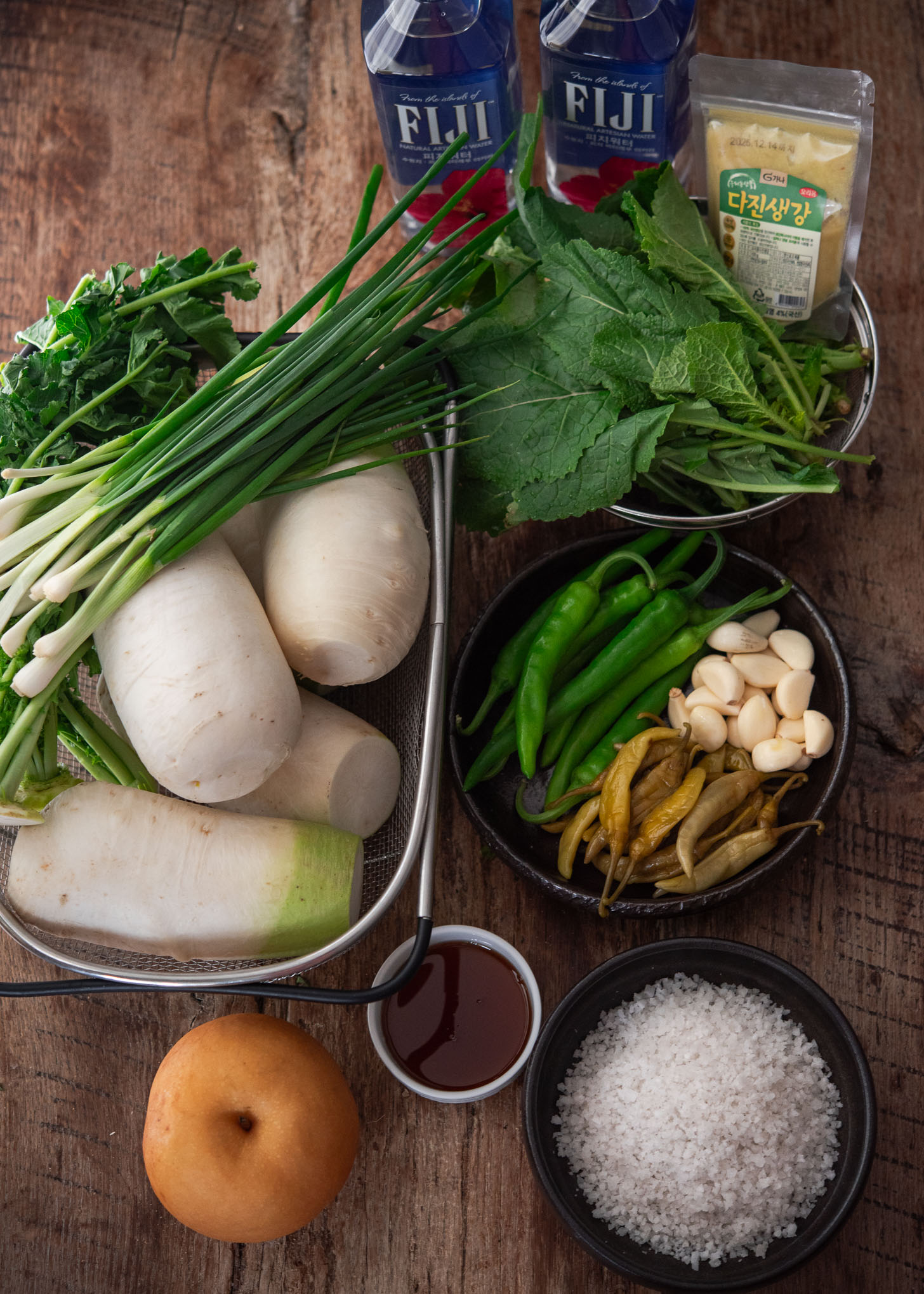
Korean Radish (mu, 무): Choose small, slender Korean radishes that feel firm and heavy. Look for green tops and smooth skin without cracks. Other radishes don’t hold their crunch or develop the same subtle sweetness. If you want a heartier radish dish, try my Kkakdugi (radish kimchi) recipe.
Korean Solar Sea Salt (Cheonil-yeom, 천일염): Use naturally aged, de-bittered Korean solar sea salt. It’s gentler and helps the brine ferment with a clean finish.
Water: Since dongchimi is a water-based kimchi, good water matters. Use artisan mineral water for the cleanest fermentation.
Korean Plum Extract (Maesil-cheong): Adds light sweetness to balance fermentation. Homemade or store-bought both work. Add 1–2 tablespoons of sugar if you prefer a rounder flavor.
Chili Peppers: Salted pickled chilies are traditional, but fresh green chilies are a simple substitute.
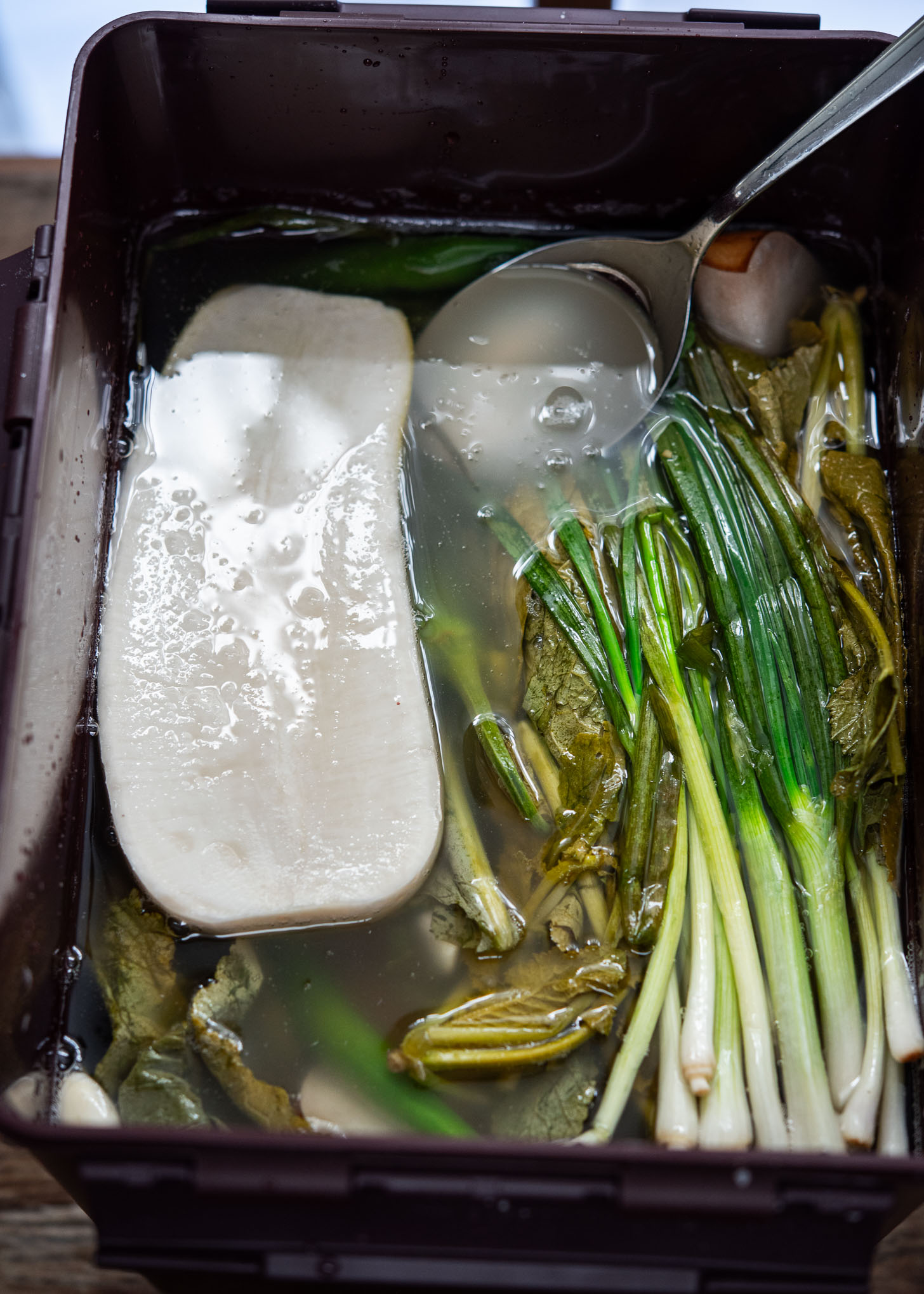
Add-Ins: Korean pear, mustard greens, green onion, radish stems, garlic, and ginger add depth and help cover the radish during fermentation.
How to make Dongchimi (Step-by-Step)

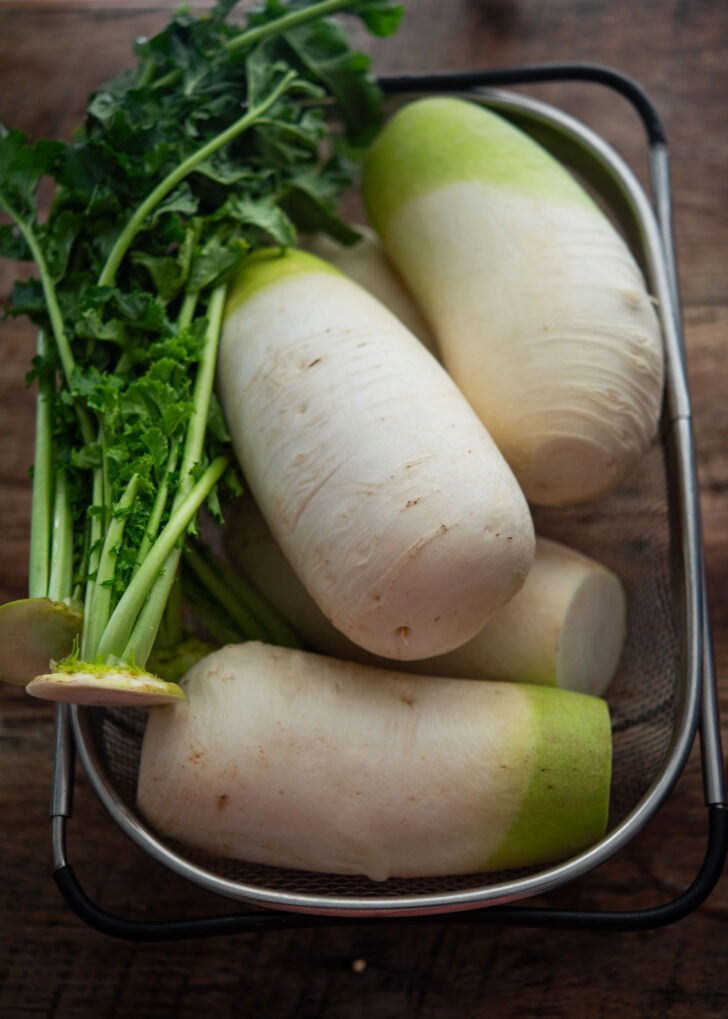
Prep the radish. If your radish has greens attached, trim the greens and set aside only the tender leaves in the center. Scrub the radish well and do not peel — the skin helps it stay crisp through long fermentation.

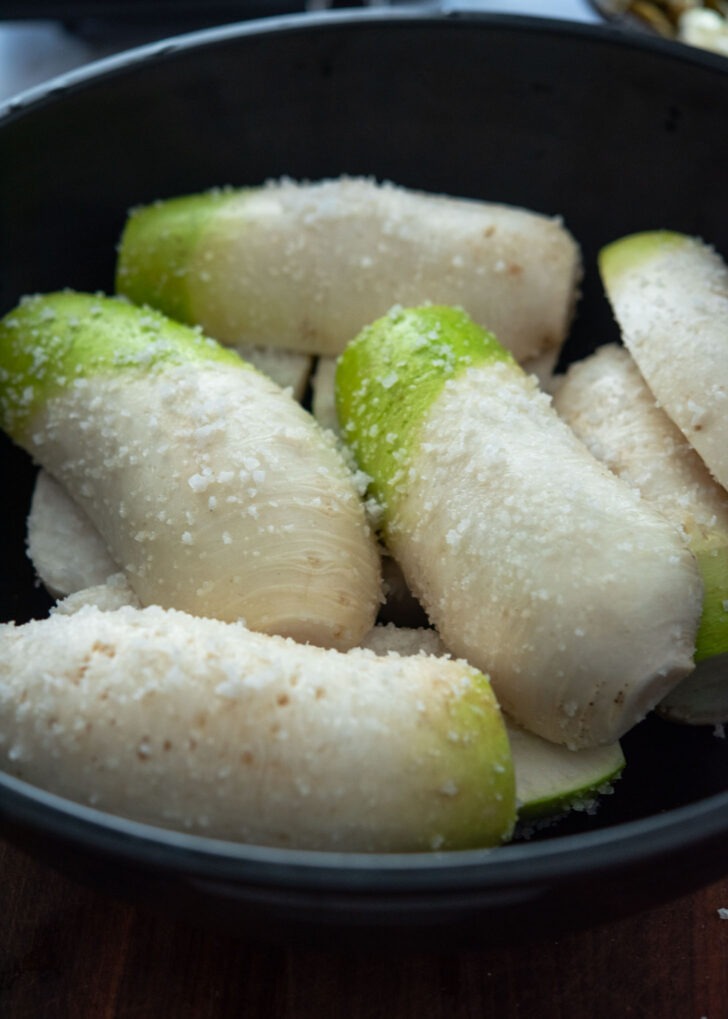
Salt and brine. Cut the radish in half lengthwise. While still wet, coat with salt generously and stack in a bowl or kimchi container and let them sit for about 3 hours.

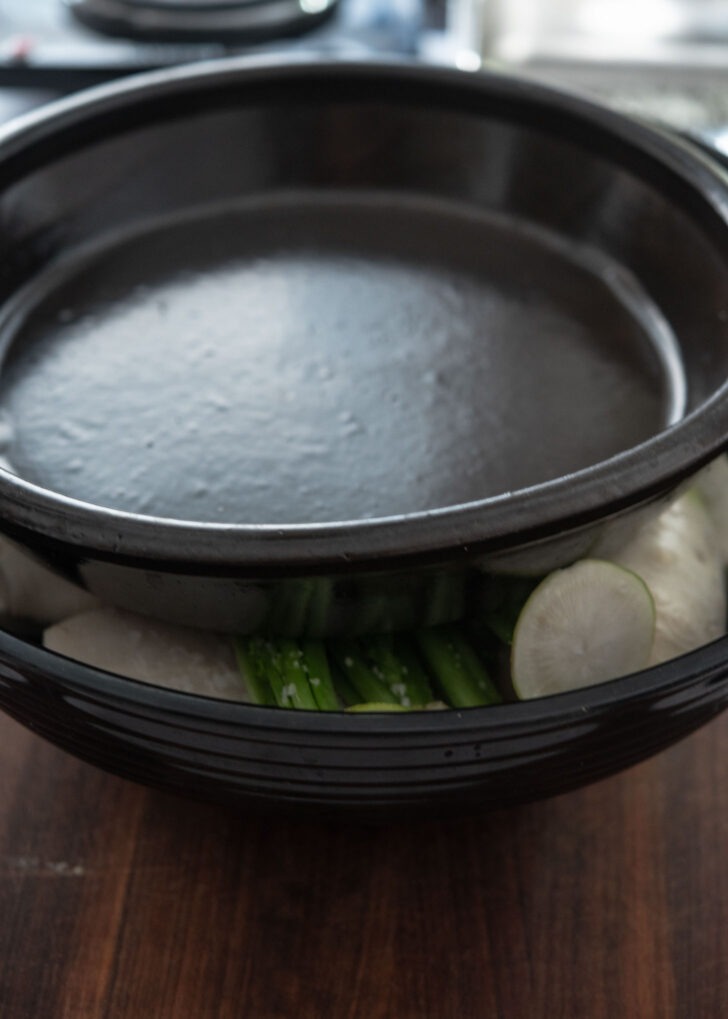
Salt the greens during the last 30 minutes and weigh everything down with a heavy plate so the salt draws out moisture evenly.
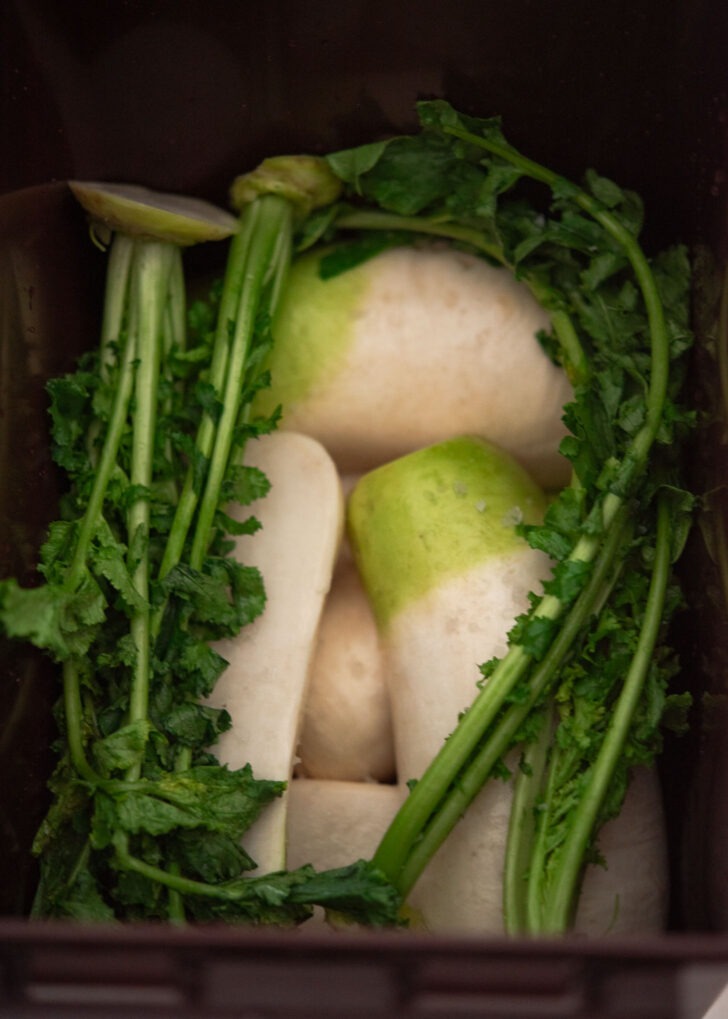

Build the flavor base. Transfer the radish and greens to a clean container without rinsing. Add pear, chilies, and aromatics. Place minced ginger in a small tea bag if you want a clearer broth.

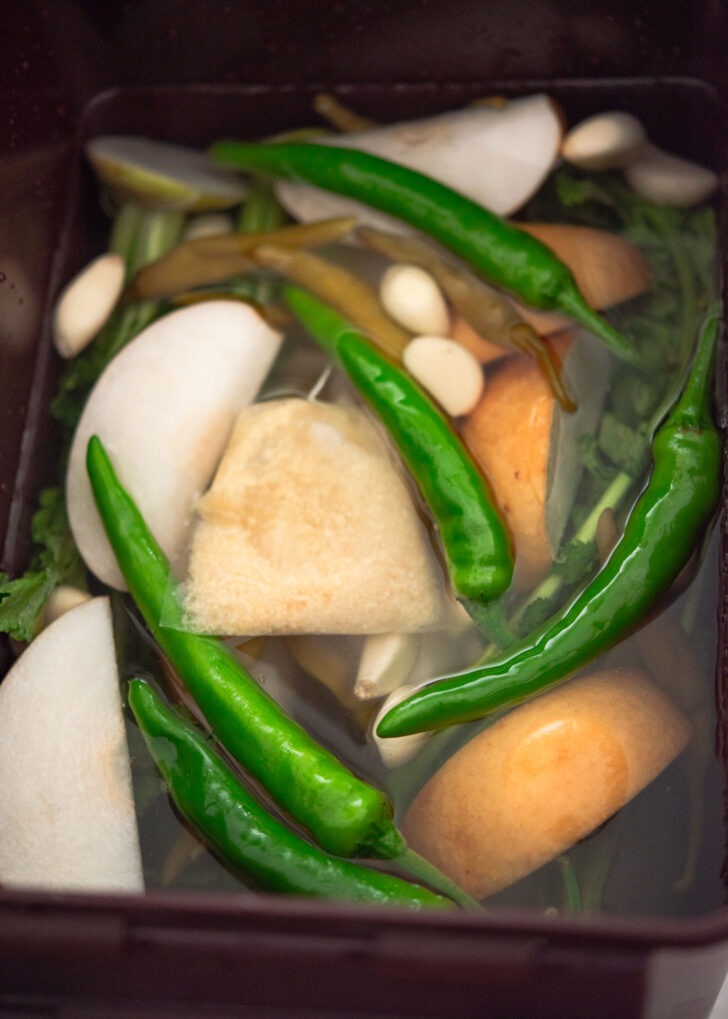
Make the brine. Mix 1 liter of water with maesil-cheong and 2 tablespoons of salt, then pour over the radish. Add the remaining water to fully cover. I place the minced ginger in a tea bag so it infuses the flavor without clouding the brine.

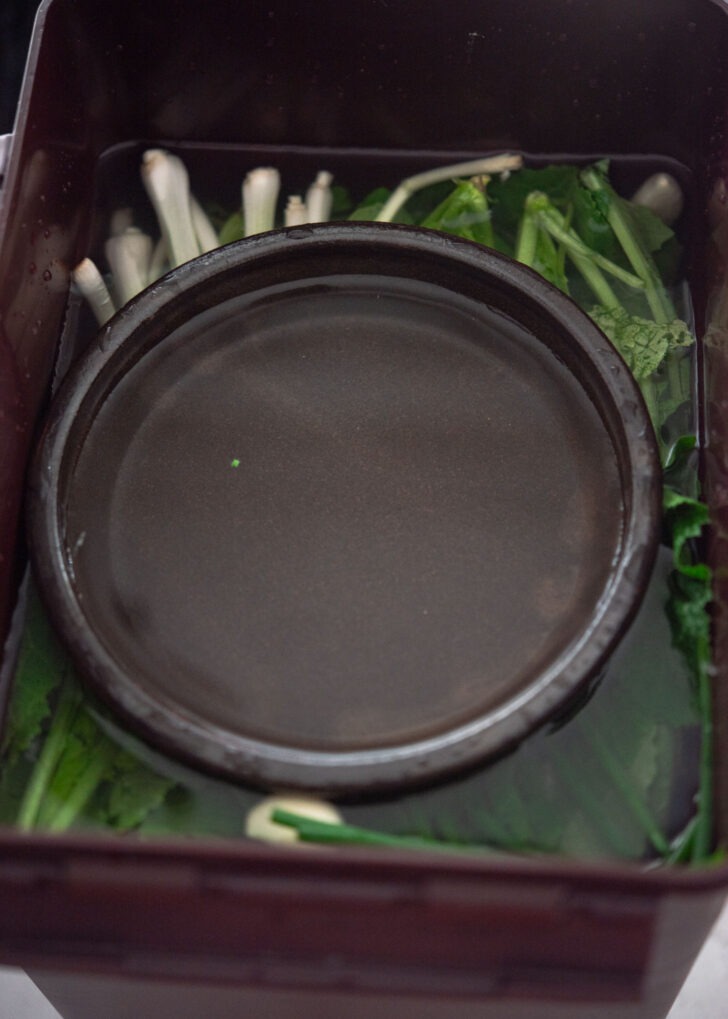
Top with greens and press down so everything stays submerged. The brine should taste slightly saltier at this stage than you want in the final kimchi (Add more salt if needed). It naturally dilutes as the radish releases water.

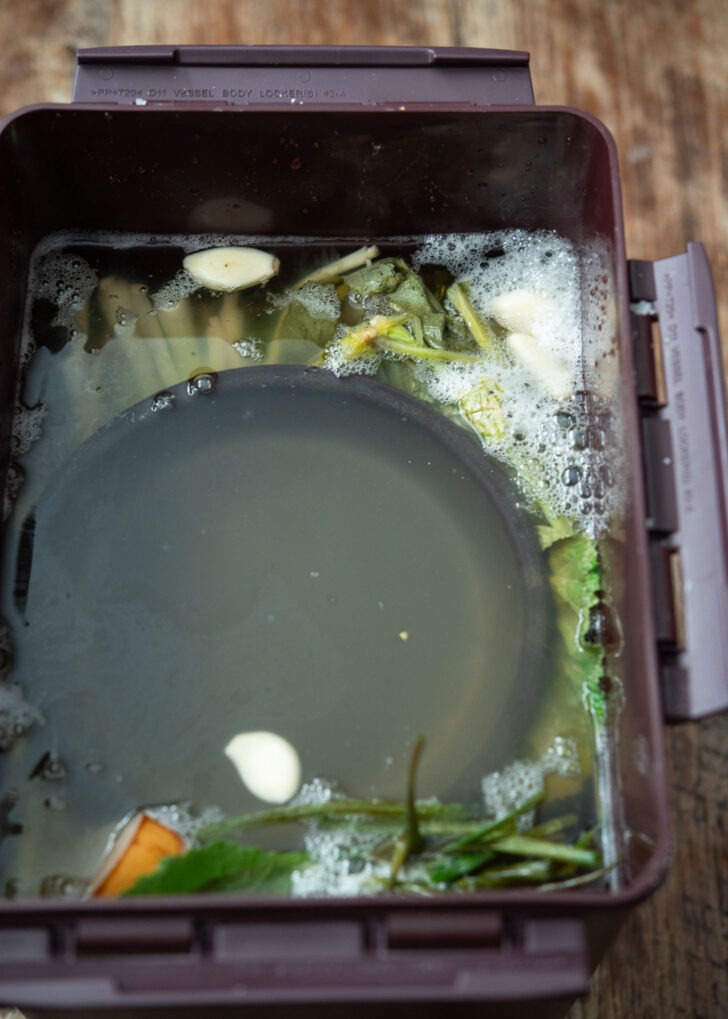
Ferment at room temperature. Leave at room temperature for 4–5 days. Gentle bubbles indicate healthy fermentation. Foam is normal; skim if you prefer.
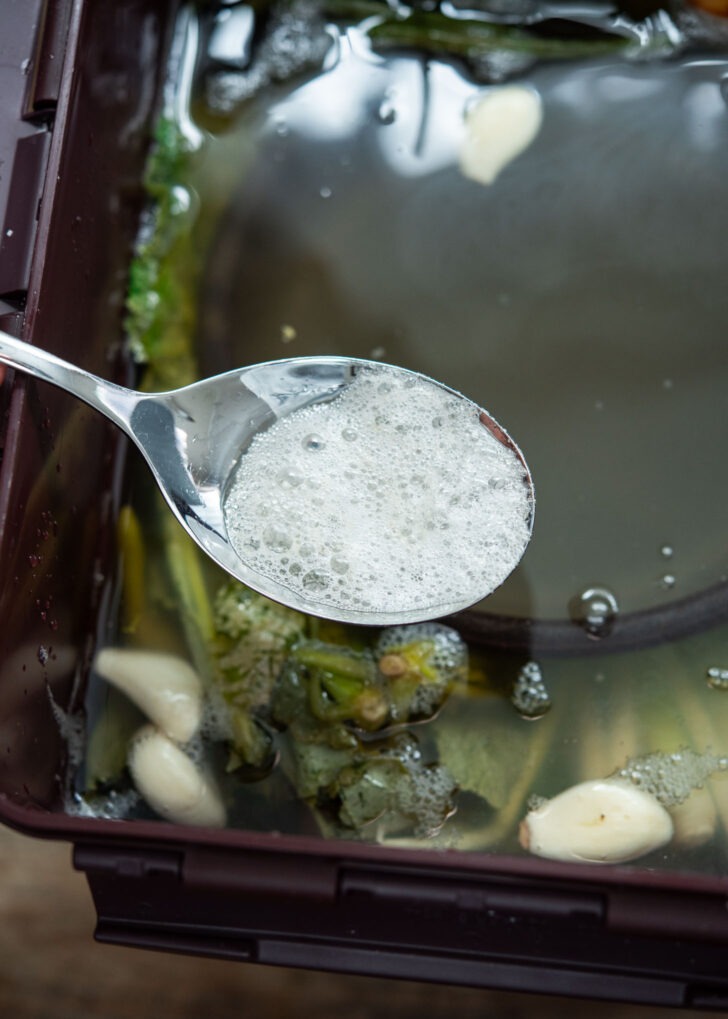
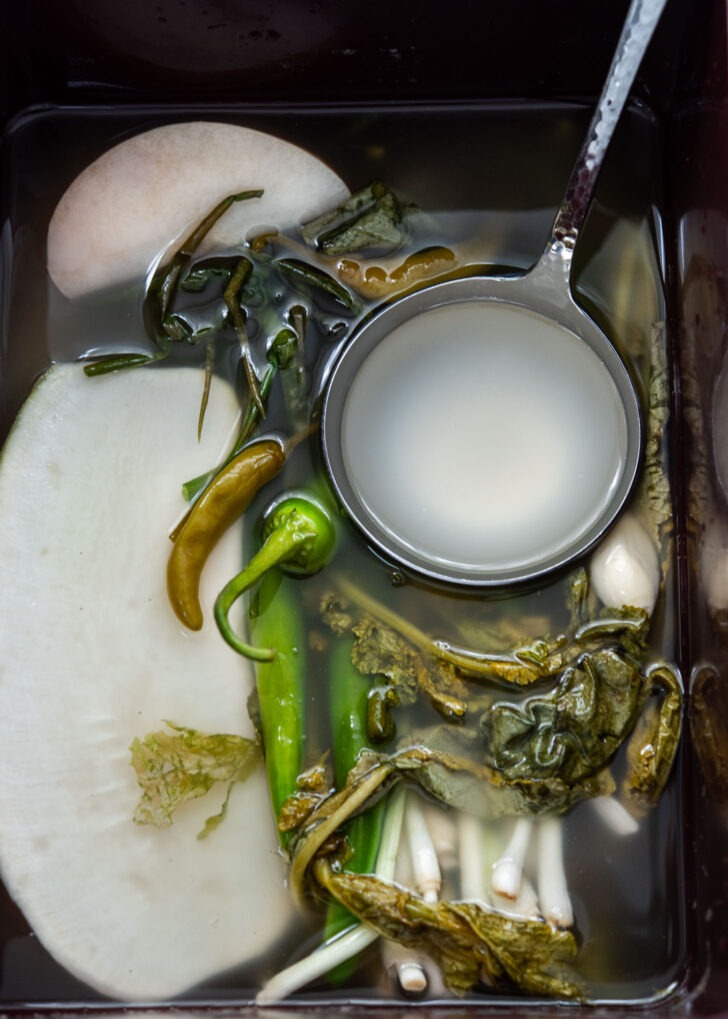
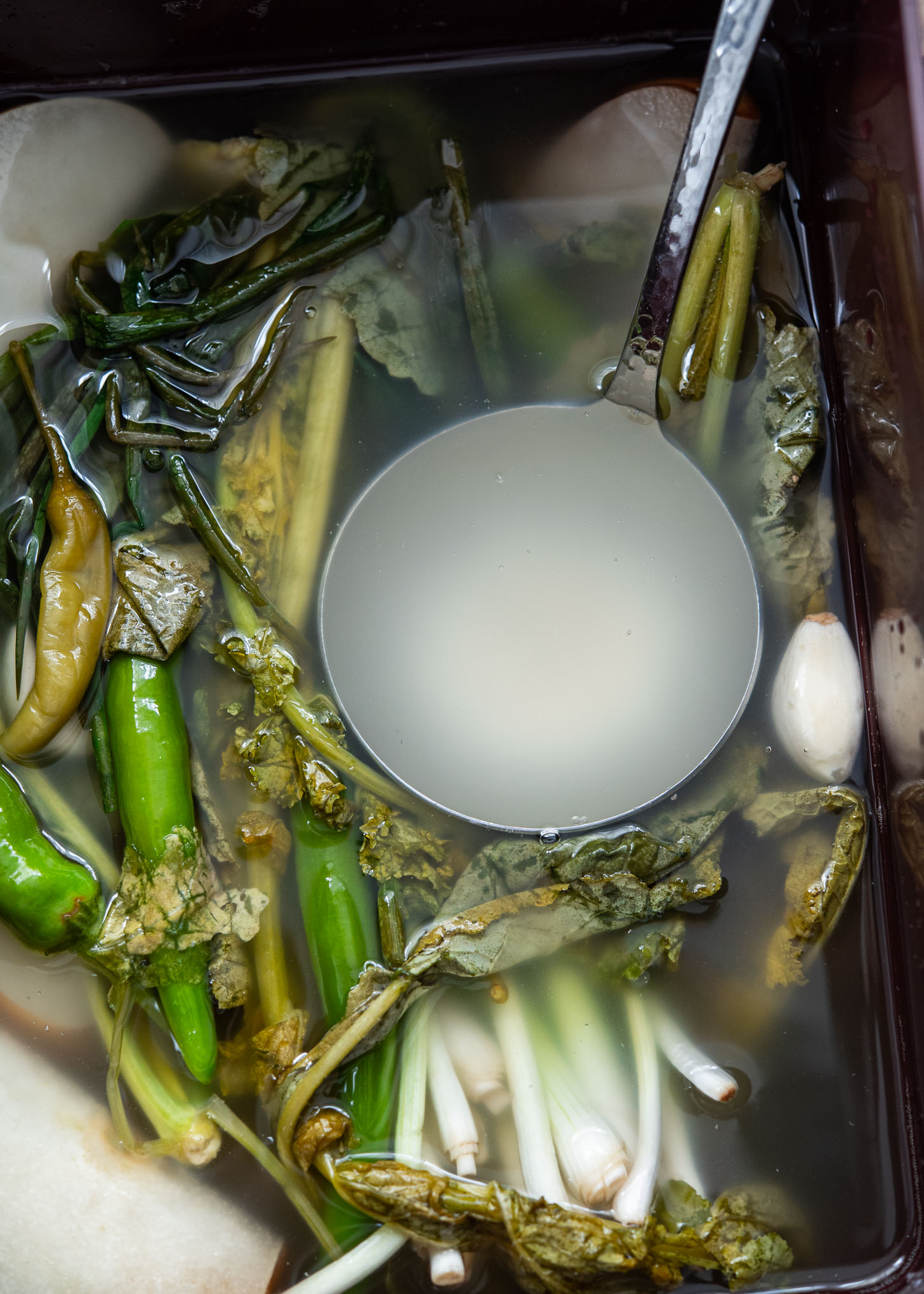
Move to cold storage. Once the brine tastes lightly tangy, transfer the container to the refrigerator. The flavor sharpens over the next several days and should be ready to eat.
Keeping Dongchimi Fresh in the Fridge
Refrigerator Storage: Once the dongchimi moves into fridge, it keeps well for several weeks to months. The radish stays crisp the longest during the first 3–4 weeks, and the flavor deepens slowly as it continues to ferment.
Keeping the Radish Crisp: Make sure all radish stays fully submerged in the brine to prevent softening.
When the Brine Tastes Flat: As the radish releases more liquid, the flavor can mellow — normal for long-stored dongchimi. A small pinch of salt or a splash of maesil-cheong can brighten it.
Refreshing the Brine: If the brine level drops, add cold water mixed with a tiny bit of salt. Avoid adding fresh raw ingredients at this stage. It can disrupt the fermentation.
Serving Ideas
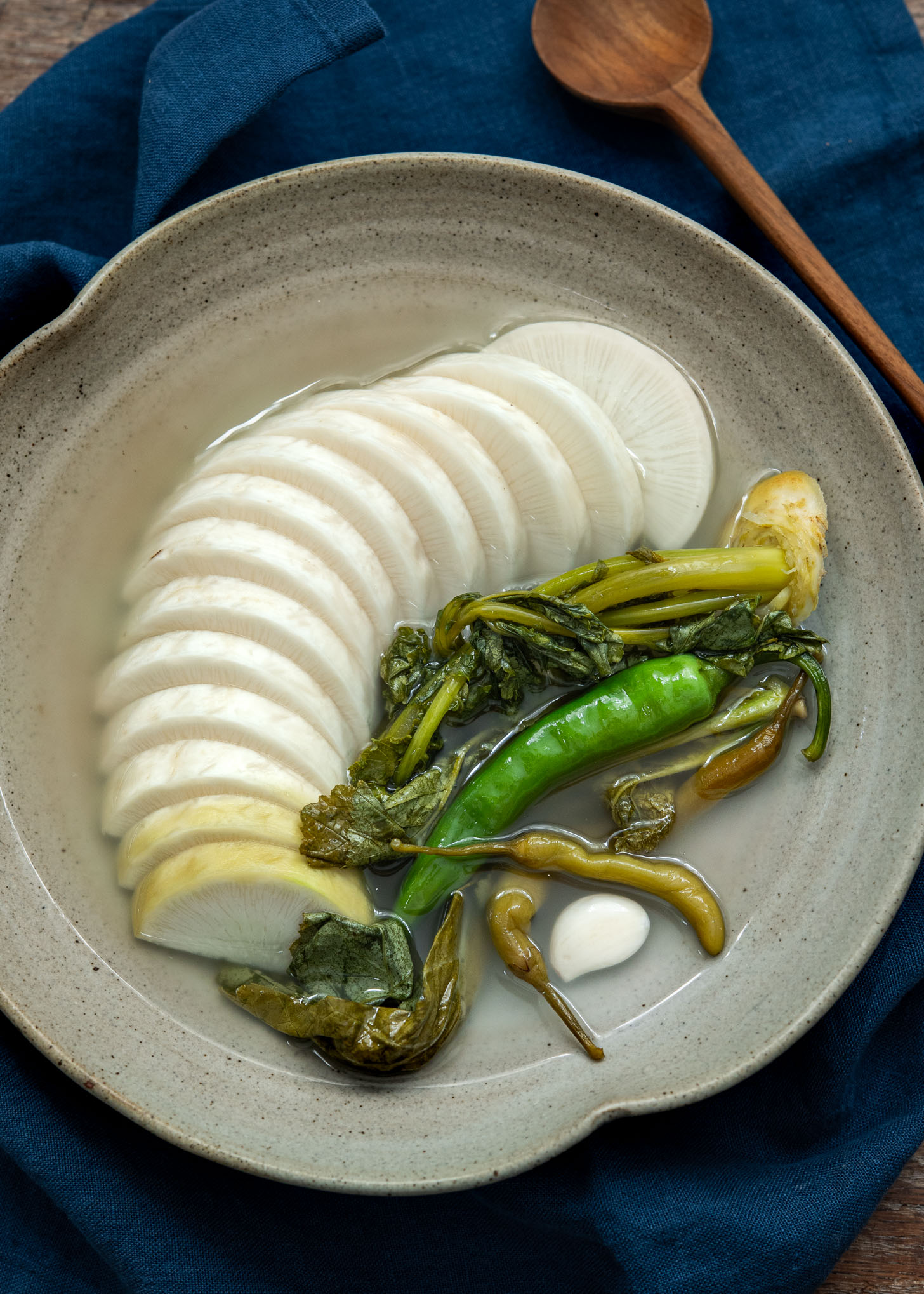
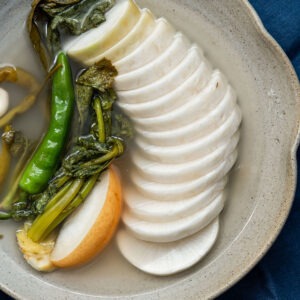
When you’re ready to eat it, lift out a radish half, slice it, and ladle the chilled brine over the top with a few greens — simple and refreshing.
I grew up enjoying dongchimi with roasted Korean sweet potatoes, and I still like setting a small bowl on the table with Korean BBQ. The clean, icy broth resets your palate between rich or spicy bites.
It also makes an easy base for cold noodles. A handful of thin noodles, a few radish slices, and a ladle of brine turn into a light, cooling meal.
If you’re building out your winter kimchi collection, explore more in my Korean kimchi recipes category.
Love this recipe? Rate it and share your experience in the comments below! On Instagram? Tag me to showcase your creation. For more delicious recipes, subscribe to our newsletter!
Dongchimi (Korean Radish Water Kimchi)
Recipe Video
Ingredients
Radish & Greens
- 8½ lb (4 kg) korean radish , green part optional
- 5 oz (150 g) mustard green
- 3½ oz (100 g) green onion
Salt & Aromatics
- 1 cup (230 g) Korean coarse sea salt
- 10 salted pickled chilies, or 10 fresh green chilies (see note below)
- 1 about 1 ⅛ lb (500 g) Korean pear, seeded and cut into 8 wedges
- 20 cloves garlic
- 2 tbsp (12 g) minced ginger
Dongchimi Brine
- 4 liter (4 qt) artisan mineral water
- 4 tbsp (60 ml) korean plum extract (maeshil-cheong)
- 2 tbsp (28 g) Korean coarse sea salt
Equipment
- 1 kimchi container 10 liter (about 10 quarts)
Instructions
- If the radish comes with its greens, trim the greens discarding the tough outer leaves and keeping the tender center leaves. Scrub the radish well and do not peel.
- Cut each radish in half lengthwise. While the surface is still wet, rub with Korean solar sea salt to coat evenly. Place the radish halves in a large bowl or kimchi container and sprinkle additional salt on top.
- Let the radish brine for 3 hours. During the last 30 minutes, add the reserved radish greens and lightly salt them. Place a heavy plate or bowl on top to press everything down.
- Transfer the salted radish and greens to a clean kimchi container without rinsing. Sprinkle a little more salt over the radish.
- Add Korean pear wedges, garlic cloves, chilies, and ginger (place grated ginger in a tea bag for a clearer brine).
- To make dongchimi brine: In a large bowl, mix 1 liter of mineral water with plum extract and 2 tablespoon of salt. Pour this over the radish, then add enough additional water to fully submerge everything.
- Top the radish with mustard greens, radish tops, and green onion. Sprinkle a little more salt, then weigh everything down with a plate or bowl to keep the radish submerged. Taste the brine. It should be slightly saltier than you want in the finished kimchi. It will naturally dilute as it ferments. Add more salt if needed.
- Leave the container at room temperature for 4–5 days, until the brine tastes lightly tangy and small bubbles appear on the surface.
- Once fermented, transfer the container to the refrigerator. Dongchimi will continue to develop flavor as it chills and is best after another week in cold storage. To serve, slice a radish half and ladle the chilled brine over the top with a few greens. When stored in an air-tight container and kept fully submerged in the brine, dongchimi will stay fresh for up to 3 months.

Oh my, am not sure I did anything right, but I don’t think it spoiled. It’s just not crisp and clear. After the room temperature and chilled phases, I’ve got it in Mason jars. Now I have to figure out what to do with it.
It sounds like it may not be spoiled, so don’t throw it out just yet. A few things can cause softer radish or cloudy brine with dongchimi. If a true Korean radish wasn’t used, the texture can turn less crisp — Western radishes tend to soften more quickly. And if it stayed at room temperature a bit too long during the initial fermentation, you might see a light foamy, cloudy layer on top. That can happen with dongchimi and is usually harmless; just skim it off.
At this point, just keep it chilled and let it settle in the fridge for a few days. Dongchimi often tastes cleaner and the brine clears up a bit as it finishes fermenting cold. The most important thing is the smell. It should be fresh, lightly tangy, and not cheesy or rotten. If the aroma is good, it’s generally safe to keep.
Feel free to check back in after a couple more days in the fridge; dongchimi tends to improve as it mellows.
Dongchimi is my favorite, so much so that I’ve been buying jars of it at Hmart and usually use it alone, as a simple soup. Thank you for the recipe and process!
I’m so glad to hear that! If you already enjoy store-bought dongchimi, you’re going to love having a homemade batch. The flavor is cleaner and the radish stays so crisp.