

Traditional Korean Kimchi Recipe (Kimjang Kimchi)
Make traditional Korean kimchi the way families prepare it during kimjang season. This authentic whole-cabbage kimchi uses a slow brine, rich homemade stock, and a classic seasoning paste packed with garlic, ginger, and gochugaru. It’s a hands-on, flavorful recipe that takes a few hours from start to finish, but the results ferment beautifully and keep for months. Perfect for anyone wanting the deep, bold taste of real Korean kimjang kimchi at home.
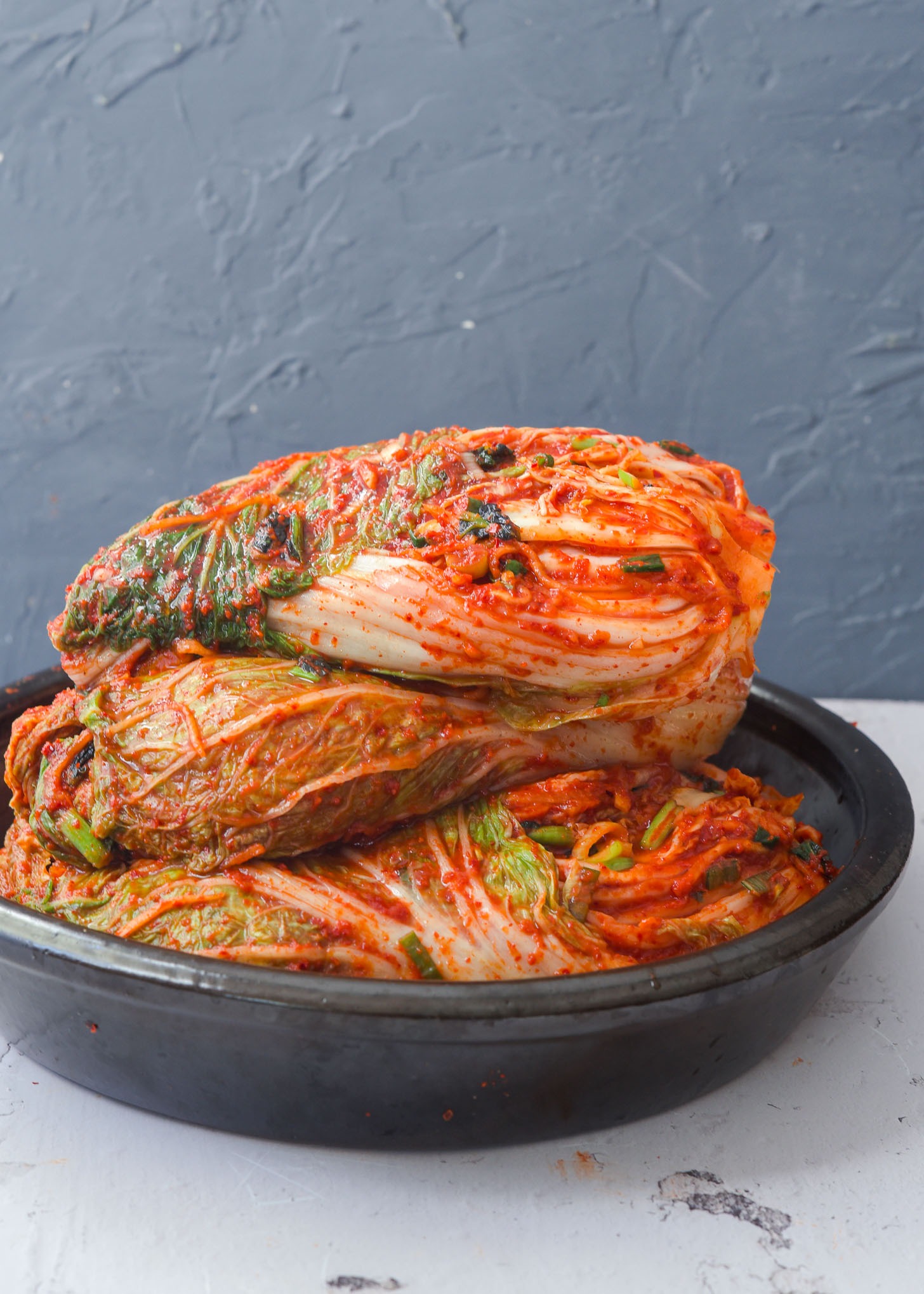
Traditional cabbage kimchi (baechu kimchi) is the epitome of all kimchi varieties in Korean cuisine, representing the heart and soul of authentic flavors. This iconic fermented food has been a staple on Korean tables for centuries, from humble homes to royal kitchens.
With over 200 types of kimchi—ranging from napa cabbage to crisp and refreshing radish—its versatility is unmatched. Among them, whole cabbage kimchi (tong-baechu kimchi or pogi kimchi) stands out as the most traditional and beloved variety.

Get new recipes via email:
While making with quick and easy kimchi recipe is convenient, it isn’t ideal for long-term storage and lack the deep, rich flavor that whole cabbage kimchi develops during fermentation. Mastering this traditional form of baechu kimchi allows you to connect with the authentic art of kimchi-making, particularly during kimjang (김장), Korea’s traditional kimchi-making season in late fall.
I’m thrilled to share this step-by-step guide to making traditional Korean kimchi at home. From salt brining to preparing the seasoning paste, assembling whole cabbage kimchi, and fermenting it for long-term storage, this tutorial has everything you need.
Learn how to make authentic homemade kimjang kimchi with bold, rich flavors that last for months!

Kimjang in Korean Homes
Kimjang (김장) is the long-standing Korean tradition of preparing enormous batches of kimchi to last through the winter, and it always felt like the unofficial start of the cold season in our home. When I was growing up in a big family household, my mother made kimjang every year—often with more than 100 heads of napa cabbage. Neighborhood ladies would gather in our courtyard, salting cabbages, mixing the seasoning paste, and chatting as they worked.
The next day, my mother would head to a neighbor’s house to help with their kimjang. It wasn’t simply about making kimchi; it was a shared winter ritual, a way of supporting each other when the weather turned cold.
In the past, kimjang kimchi was stored in giant earthenware jars (“onggi,” 옹기) buried underground to ferment slowly through the winter. Today, most families use kimchi refrigerators, but the heart of kimjang—the sense of community, generosity, and preparing food with care—remains the same.
For more traditional Korean kimchi ideas, explore my full kimchi recipes collection.

From Traditional Kimjang to a Smaller Batch
These days, most compact Korean households prepare 10 to 20 heads of napa cabbage for kimchi during kimjang season. For larger families, the amount can be even higher.
While this communal tradition is still celebrated, I’m sharing a simpler method that lets you enjoy the deep flavors of kimjang kimchi without the large-scale effort.
In this recipe, I’ll demonstrate how to make authentic Korean cabbage kimchi with just 2 heads of napa cabbage. This easier method reduces labor and effort while preserving the authentic taste.
If you’re cooking for a larger group or want to stock up, the recipe can easily be doubled or multiplied to suit your needs. It’s perfect for anyone who wants to experience the essence of kimjang in a more manageable way.
Note: If you’re worried about spice, try my non-spicy white cabbage kimchi! Made without chili flakes, it delivers a crisp, refreshing flavor that everyone—even kids—can enjoy.
Essential Ingredients for Traditional Kimchi Making

Choosing the Napa Cabbage
The key to excellent kimchi starts with choosing the right napa cabbage. Look for cabbages that are heavy for their size, about 5 lb, with tightly packed leaves that are crisp and fresh.
Avoid cabbages with wilted or yellowing outer leaves. Medium to large-sized cabbages are ideal for kimjang kimchi, as their leaves are sturdy enough to hold the seasoning while fermenting beautifully.

Korean Coarse Sea Salt
Using the right salt is critical for achieving authentic kimchi. Korean coarse sea salt (“cheonilyum, 천일염”) is the preferred choice due to its large, irregular crystals and natural mineral content. This type of salt dissolves slowly, allowing the cabbage to brine evenly without becoming overly salty. The subtle flavor it imparts is essential for balancing the bold spices in the kimchi seasoning.
Compared to table salt or finely ground salts, Korean coarse sea salt helps preserve the cabbage’s crisp texture during fermentation. For the best results, make sure to use authentic Korean coarse sea salt in your brining process.
Korean Chili Flakes (Gochugaru)
Korean chili flakes, or gochugaru, are vital for giving kimchi its vibrant red color and distinctive flavor. Gochugaru strikes a perfect balance of heat, smokiness, and a hint of sweetness, unmatched by other chili powders.
Coarsely ground gochugaru is best for kimchi as it blends smoothly into the paste and coats the cabbage evenly. When selecting gochugaru, look for a bright red variety labeled as a product of Korea.
High-quality gochugaru not only delivers authentic depth and complexity to kimjang kimchi but also enhances its beautiful scarlet red hue, making your kimchi visually appealing and flavorful.

Salt Brining
Salt brining is an essential step to evenly season the cabbage and achieve the perfect texture for fermentation. Traditional methods often involve soaking the cabbage in a saltwater solution for 8-10 hours—which can be quite a task, especially when it comes to finding a container large enough. (I’ve even resorted to using my kitchen sink or bathtub!)
My method is slightly different and more efficient than other approaches. After quickly dipping the cabbage in a saltwater solution, I sprinkle extra coarse sea salt on the thick white stems, which take longer to wilt than the leafy parts. Then, I place the cabbages in a large, heavy-duty plastic bag and tie it tightly to block air exposure.
This approach speeds up the process, reducing the brining time to just 3-4 hours. The bag method is also convenient, as it allows you to flip or toss the bag occasionally to ensure even brining without needing a large container.
With this method you will get evenly brined cabbage with flexible white stems and tender leaves. Thick plastic kimchi bags are available at Korean stores or online, but you can also use double-layered kitchen trash bags (13 gallon size) as an alternative.
Kimchi Stock and Rice Flour Paste
Another key element of authentic kimchi seasoning paste is the use of kimchi stock and rice flour paste. Kimchi stock adds a deep, umami-rich undertone to the seasoning. It is made with versatile ingredients that can be adjusted to your taste.
Common components include dried pollock fish head, dried anchovies, shrimp, sea kelp (kombu), apple, pear, and onion. If you prefer a lighter flavor, you can skip the fish head or other dried seafood while still achieving excellent results.
Once the kimchi stock is prepared, it is mixed with rice flour to create a smooth, syrupy paste. This paste helps bind the seasoning ingredients together and supports the fermentation process. The result is a cohesive and flavorful kimchi seasoning paste that promotes rich, balanced flavors as the kimchi ferments.
Kimchi Seasoning Paste
The seasoning paste is the heart of kimjang kimchi, packed with bold flavors that transform simple cabbage into a tangy, spicy masterpiece. Traditional paste ingredients include Korean chili flakes (gochugaru), minced garlic, ginger, fish sauce, and fermented salted shrimp.
Many families also add a touch of sweetness with grated pear or apple. Combine these ingredients with the kimchi stock and rice flour paste to form a thick, rich seasoning. Mix in julienned radish, green onions, and optional additions like mustard green for extra depth.
How to make Traditional Kimchi (Kimjang Kimchi)
Brining the cabbage


Prepare the Cabbage: Start by making a small slit at the base of the white stem with a knife, then use your hands to gently pull the cabbage apart into halves. Next, make another slit in the center of the stem of each cabbage half to loosen it further.


Make Salt Brine: Mix salt and water in a 1:10 ratio until the salt fully dissolves. Dip each cabbage thoroughly into the brine, letting the solution seep into all the leaves and crevices.


Sprinkle Extra Salt: Take the cabbage out of the saltwater and sprinkle coarse sea salt directly onto the thick white stems. Focus on the stems as they take longer to wilt compared to the leafy parts. Put additional handful of salt directly on the top of cabbage.


Brine the Cabbage in a Bag: Place the salted cabbage into a large plastic bag and tie it tightly to remove excess air. Let the cabbage wilt for 3-4 hours, flipping the bag halfway to turn the cabbage to the other side. This method helps the cabbage absorb the salt more efficiently and brines evenly.


Drain the Cabbage: Rinse the cabbage thoroughly with water a couple of times to remove excess salt. Place the cabbage in a strainer and gently press to remove extra water. Let the cabbage drain for 1 hour, while you prepare the kimchi seasoning.
Preparing Kimchi Seasoning Paste


Simmer Kimchi Stock: Combine dried pollock fish head, anchovies, sea kelp, radish, apple, pear, and Asian leek in a pot with water. Bring to a boil. Remove the sea kelp once boiling to prevent bitterness. Lower the heat and simmer for 30 minutes. Strain the stock, reserving 2 cups of liquid, and discard the solids.


Make Rice Flour Paste: Whisk sweet rice flour into the kimchi stock and cook over medium heat, whisking constantly, until the mixture thickens into a smooth paste. Remove from heat and let it cool.


Puree the Aromatics and Salted Shrimp: Combine onion, garlic, ginger, pear, and salted shrimp in a blender. Puree until smooth. If the mixture is too thick, add a small amount of kimchi stock to help the blender run smoothly.


Coat Radish Strips with Gochugaru: Using a mandolin slicer, julienne Korean radish into thin strips (1/8-inch). Toss the radish with 2 tablespoons of Korean chili flakes (gochugaru) until evenly coated. Let sit for a few minutes to soften and absorb the color.


Prepare Mustard Greens (Optional): Chop green aromatics like Asian leeks and green onions into thin slices. For an extra peppery kick, you can add Korean mustard greens (gat, 갓). Mustard greens are common addition in kimjang kimchi, but it is optional and can be omitted if preferred.
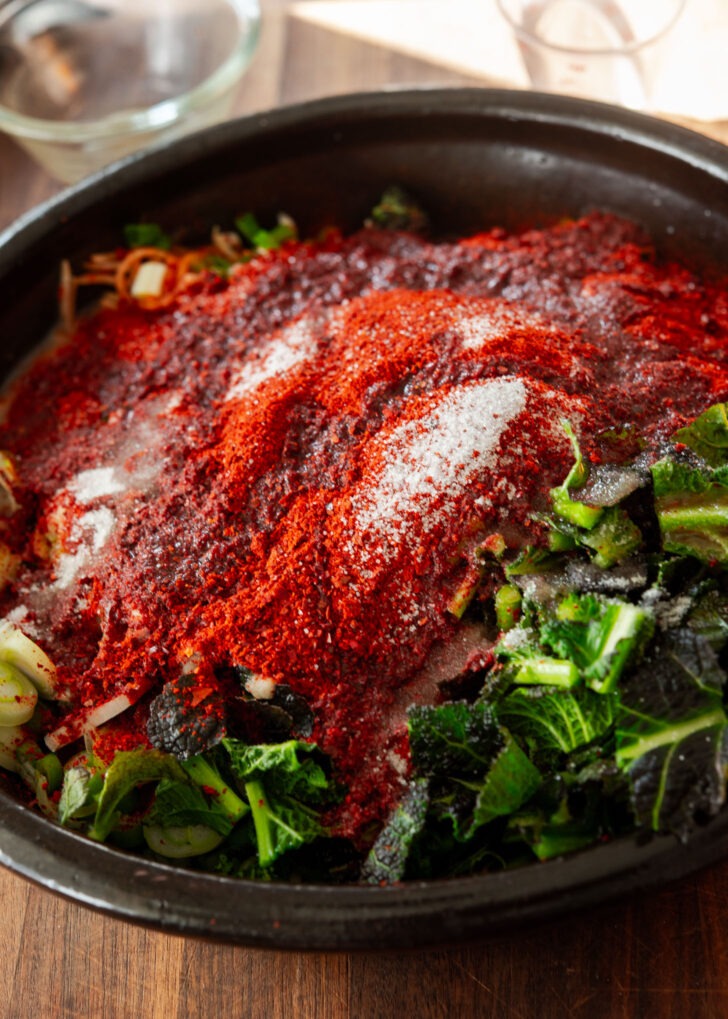

Mix Kimchi Seasoning Paste: Combine the radish, greens, rice flour paste, kimchi stock, aromatic puree, gochugaru, anchovy sauce, sugar, and Korean plum extract. Mix well until it forms a thick, cohesive paste.
Assembling Kimchi
Once the cabbage is brined and the paste is prepared, the process of assembling kimchi begins.


Spread the Seasoning Paste: Hold the cabbage with one hand and gently open the outer 1-2 leaves with your other hand. Spread the seasoning paste between each leaf, using just enough to coat evenly without overloading. Be gentle to avoid tearing the leaves.


Make Kimchi Bundle: After applying the seasoning paste to all the leaves, fold the cabbage leaves inward and wrap them with the large outermost leaf to create a neat, compact bundle. Place each bundle tightly into an airtight container or jar lined with a plastic bag. Press down firmly to remove air pockets.


Add Remaining Seasoning: Rinse the bowl with 1 cup of remaining kimchi stock (or water) to collect any leftover seasoning. Pour it over the kimchi bundles in the container. The liquid will develop into a flavorful kimchi brine during fermentation.
Cultural Tip: Pairing bossam (boiled pork belly) with freshly made kimchi is a long-standing Korean tradition, especially after kimjang—the big kimchi-making season. I vividly remember the bossam party my mother prepared to thank neighbors who came to help with our kimjang. The table was filled with steaming slices of pork and crisp new kimchi, and everyone gathered around to enjoy the fruit of our labor together.
Fermenting Kimchi


To ensure proper fermentation, it’s essential to keep air out of the container. Line the container with a plastic bag, add the kimchi, tie the bag tightly, and then close the lid securely. This method helps maintain freshness and supports long-term storage.
Leave the kimchi at room temperature for 1-2 days, depending on the weather, to jumpstart the fermentation process. After that, transfer it to a refrigerator or a kimchi fridge. While you can start enjoying the kimchi after this initial fermentation, allowing it to ferment for 1 week in the refrigerator will develop its full depth of flavor.
Kimjang kimchi will stay delicious for several weeks in the fridge and will continue to ferment over time, becoming tangier and more robust. Kimchi doesn’t expire—it evolves!
When it gets too sour to enjoy on its own, repurpose it into flavorful kimchi dishes like kimchi jeon (kimchi pancake) or hearty kimchi jjigae with pork. These dishes are the perfect way to enjoy aged kimchi at its peak.

Simple Tips for Making Great Kimchi
- Wear Gloves: When applying the seasoning paste, wear disposable kitchen gloves. This protects your hands from the chili and garlic while keeping the process hygienic.
- Use a Plastic Bag in the Container: Line your kimchi container with a plastic bag before filling it. This keeps air out, prevents staining, and minimizes odor.
- Don’t Overstuff the Container: Leave some space at the top of your container for the kimchi to expand as it ferments.
- Allergy-Friendly Alternatives: If you’re allergic to seafood or shellfish, replace the anchovy sauce and salted shrimp with Korean soup soy sauce and use sea kelp stock instead. This adjustment makes delicious plant-based kimchi, as shown in my vegan kimchi recipe.
- Get Creative with Kimchi Stock: Enhance your kimchi stock by adding other vegetables and fruits like pumpkin, mushrooms, or persimmons. Experimenting with these ingredients can make your kimchi truly one-of-a-kind.
- Plan Your Time: Kimchi-making isn’t something to rush. Set aside a day to make it, and enjoy the process. Put on some music or a podcast to make the experience relaxing and therapeutic.
- Place Baking Soda in the Fridge: As kimchi ferments, it produces gas and odor. Keep 1-2 boxes of fridge baking soda nearby to help eliminate any unpleasant smells.

Traditional Korean Kimchi (Kimjang Kimchi)
Recipe Video
Ingredients
Salt brine for cabbage
- 2 (about 5 lb / 2.3 kg each) napa cabbage
- 2-1/2 cups (360 g) Korean coarse sea salt, divided
- 10 cups (2.4 L) water
Kimchi stock
- 1 piece dried pollock fish head, or 20 dried baby shrimps
- 6 dried large anchovies
- 1 large piece dried sea kelp
- 4 oz (100 g) Korean radish
- 1 sweet apple, cut in half
- 1 Asian leek, or onion
Rice flour paste
- 1 cup (240 ml) kimchi stock
- 2 tbsp (16 g) sweet rice flour (chapssal-garu)
Aromatics
- 1/2 onion, diced
- 1/2 Korean pear, or bosc pear, diced
- 20 cloves garlic
- 1/2 oz (15 g) fresh ginger, diced
- 4 tbsp (40 g) Korean salted shrimp
Kimchi seasoning paste
- 1 lb (450 g) Korean radish, thinly julienned into 1/8-inch matchsticks
- 2 cups (250 g) Korean chili flakes (gochugaru)
- 1 Asian leek (white part only), thinly sliced
- 3-1/2 oz (100 g) green onion, chopped
- 10 oz (300 g) mustard green, chopped
- 1 cup (240 ml) rice flour paste
- 1/3 cup (80 ml) Korean anchovy sauce
- 2 tbsp (30 ml) Korean plum extract (maeshil cheong)
- 1 tbsp (12 g) sugar
Equipment
- heavy duty plastic bags or use double-layered 13 gallon size trash bags
- kimchi container 3 gallon (12 liter) in volume
Instructions
To salt brine the cabbage
- Begin by making a small slit at the base of the white stem with a knife, then gently pull the cabbage apart into halves using your hands. Afterward, make another slit in the center of the stem of each half to loosen it further.
- In a large bowl, combine 1 cup of sea salt with water, stirring until fully dissolved. Thoroughly submerge each cabbage in the brine, ensuring the solution coats all the leaves and crevices.
- Remove the cabbage from the saltwater and sprinkle coarse sea salt directly onto the thick white stems, as they take longer to soften than the leafy parts. Add an extra handful of salt on top of the cabbage for even seasoning.
- Place the salted cabbage in a large plastic bag and seal it tightly to remove excess air. Allow the cabbage to wilt for 3–4 hours, flipping the bag occasionally for even brining. This helps the cabbage absorb the salt thoroughly and ensures consistent brining.
- Rinse the cabbage thoroughly with water a few times to remove excess salt. Place it in a strainer and gently press to squeeze out excess water. Allow the cabbage to drain for 1 hour while you prepare the kimchi stock and seasoning.
To make kimchi stock and rice flour paste
- In a pot, combine dried pollock fish head, anchovies, sea kelp, radish, apple, pear, and Asian leek with water. Bring to a boil, then remove the sea kelp to avoid bitterness. Reduce the heat and simmer for 30 minutes. Strain the stock, keeping the liquid, and discard the solids.
- Whisk sweet rice flour into the kimchi stock and cook over medium heat, stirring continuously, until it thickens into a smooth, syrupy paste. Remove from heat and allow it to cool completely.
To make kimchi seasoning paste
- In a blender, combine the aromatic ingredients: onion, garlic, ginger, pear, and salted shrimp. Blend until smooth, adding a small amount of kimchi stock if needed to achieve a smoother consistency.
- In a large mixing bowl, toss the thin radish strips with 2 tablespoons of Korean chili flakes (gochugaru) until evenly coated. Let them rest for a few minutes to soften and absorb the vibrant color.
- Add the greens, rice flour paste, kimchi stock, gochugaru, anchovy sauce, sugar, and Korean plum extract to the radish. Mix thoroughly until it forms a thick, cohesive paste.
To assemble kimchi
- Hold the cabbage in one hand and gently separate the outer 1–2 leaves with the other. Spread the seasoning paste between each leaf, using just enough to coat them evenly while being careful not to tear the leaves.
- Once the seasoning paste is applied to all the leaves, fold them inward and wrap the cabbage with the outermost leaf to create a neat, compact bundle. Repeat with the remaining batches and place the kimchi bundles in a kimchi container. (See note below.)
- Rinse the bowl with 1 cup (or more) of remaining kimchi stock (or water) to gather any leftover seasoning. Pour it over the kimchi bundles in the container, then seal the lid tightly. The liquid will transform into a rich kimchi brine as it ferments.
To ferment and store kimchi
- To ensure freshness and support long-term storage, it’s important to keep air out of the container. Line the container with a plastic bag, tie it tightly, and securely close the lid.
- Leave the kimchi at room temperature for 1–2 days, depending on the weather, to kickstart fermentation. Then, transfer it to a refrigerator or kimchi fridge. While the kimchi can be enjoyed after this initial fermentation, letting it ferment for 1 week in the refrigerator will enhance its flavor.
- Kimjang kimchi will stay delicious for several weeks in the fridge. Over time, it will continue to ferment, becoming tangier and more robust in flavor.
Notes
Tips for Kimchi Success:
- Take Your Time: Don’t rush the process. Set aside a day, put on some music or a podcast, and enjoy the therapeutic experience.
- Wear Gloves: Protect your hands from chili and garlic while keeping things hygienic by using disposable kitchen gloves.
- Line Your Container: Use a plastic bag in your kimchi container to keep air out, prevent stains, and minimize odors.
- Allergy-Friendly Options: If you’re allergic to seafood, replace anchovy sauce and salted shrimp with Korean soup soy sauce for a tasty plant-based kimchi as you see in my vegan kimchi recipe.
- Experiment with Kimchi Stock: Add unique ingredients like mushrooms, pumpkin, or persimmons to your kimchi stock for extra depth and flavor.
- Leave Room in the Container: Avoid overfilling; leave space for the kimchi to expand as it ferments.
- Control Fridge Odors: Use 1–2 boxes of baking soda in your fridge to neutralize any strong kimchi smells.

Wow, this is an amazingly complicated recipe. Mind boggling how anyone thought to combine these ingredients. So delicious. Not sure I’ll try again.
Making kimjang-style kimchi is a labor of love—it’s a complex process, which is why most Korean home cooks do it just once a year for long-term storage. But the results are unmatched compared to quick versions, and it becomes the base for so many delicious dishes. I’m so glad you gave it a try! 😊