

Ssuk Beomuri (Korean Mugwort Rice Cake)
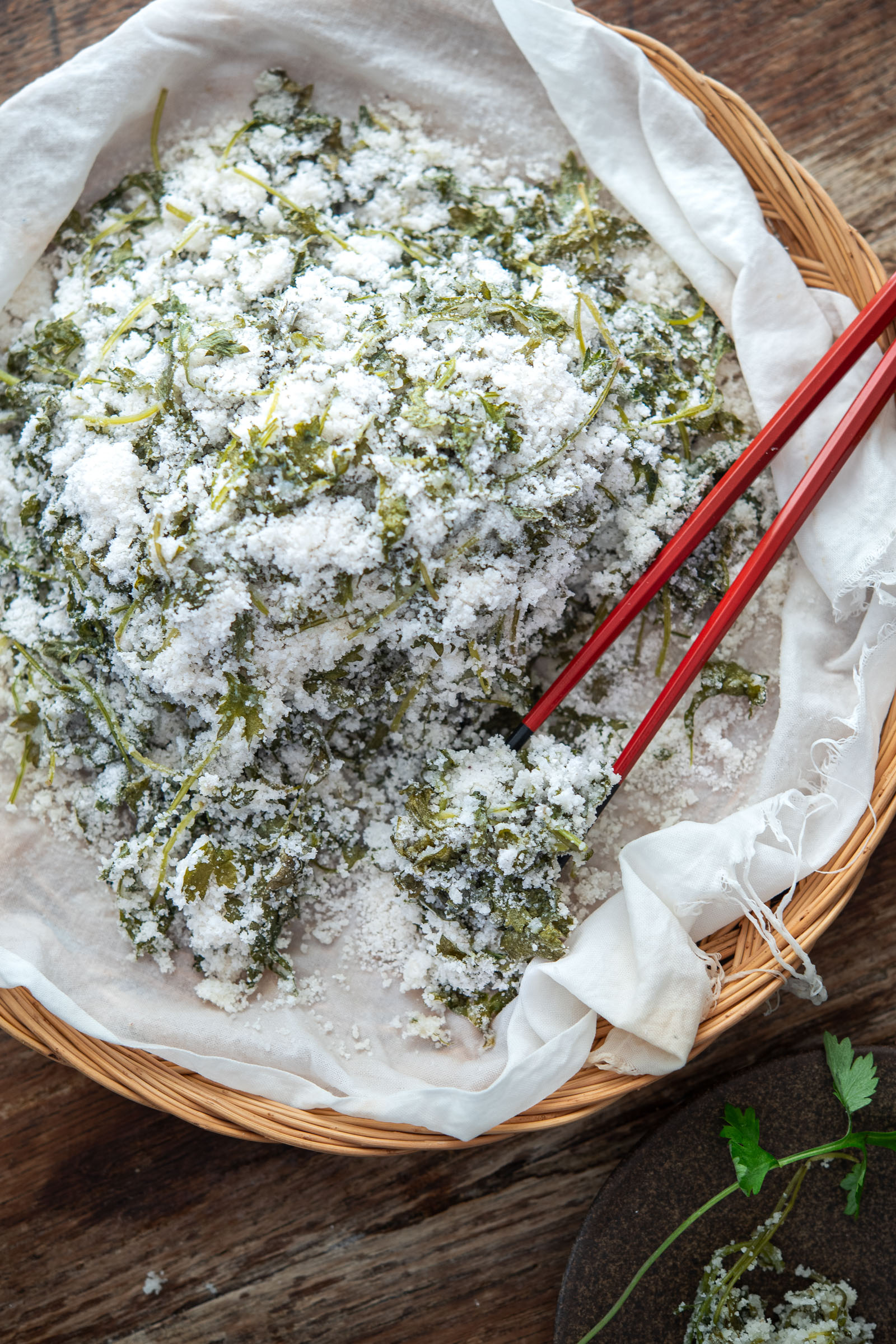
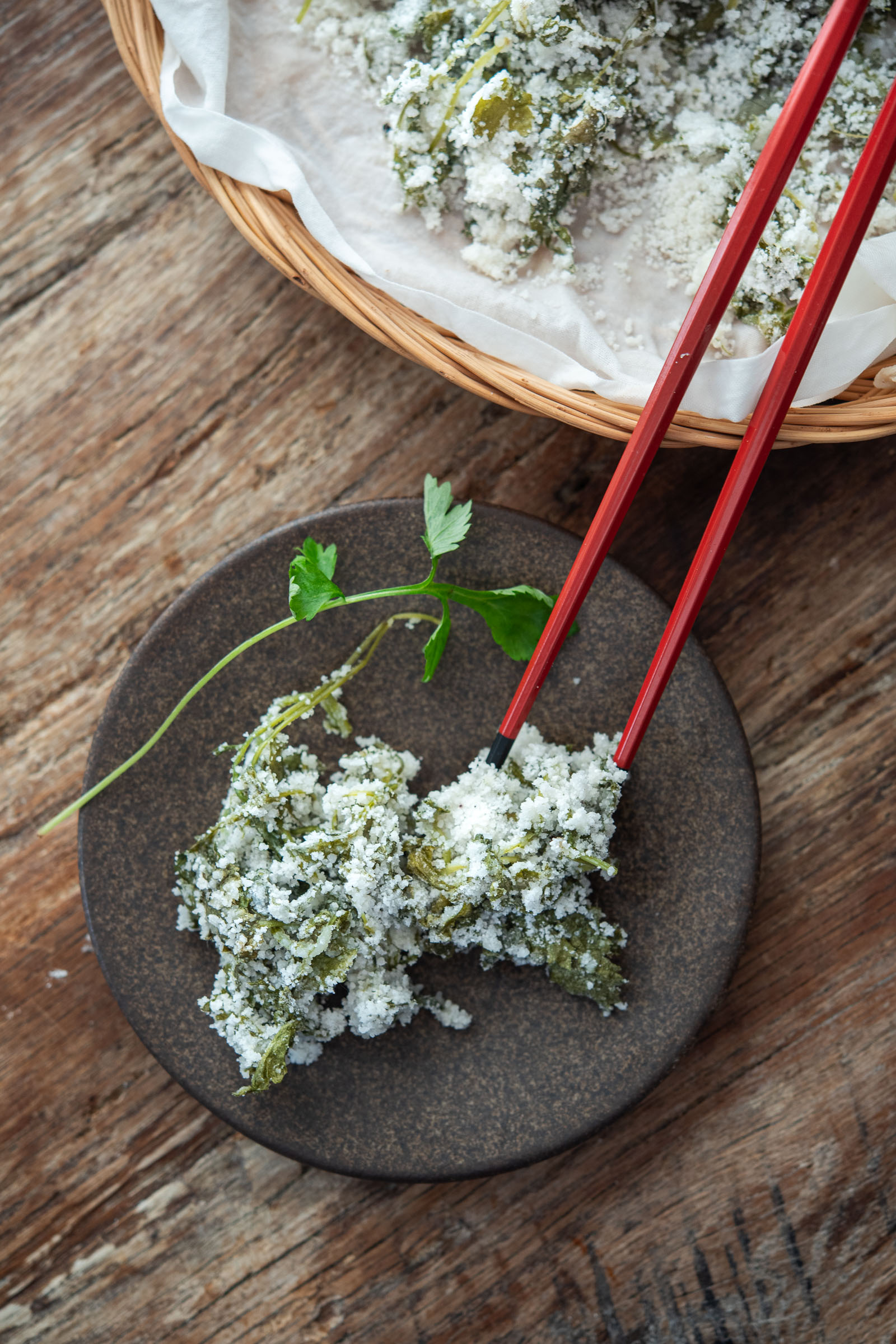
Ssuk beomuri is a traditional Korean mugwort rice cake made with rice flour and fresh ssuk, steamed into soft, crumbly tteok in the baekseolgi style. Naturally vegan and gluten free, this simple spring dessert highlights the earthy aroma of mugwort and cooks easily in a cloth-lined steamer.
Get new recipes via email:
Early spring in Korea always meant ssuk season when I was growing up. My friends and I would climb the small mountain behind our house to pick the first tender mugwort shoots of the year, stuffing them into little baskets with more enthusiasm than skill. When I brought them home, my mother would patiently sort through the greens, keeping only the real ssuk to make one of my favorite seasonal treats.
That treat was ssuk beomuri (쑥버무리) or beomul, a soft steamed mugwort rice cake made with rice flour and fresh ssuk. As it steamed, the whole kitchen filled with that deep herbal fragrance that only mugwort has. The warm cake came out tender, fluffy, and gently sweet, the kind of simple homemade snack that made an afternoon of foraging feel like a real accomplishment.
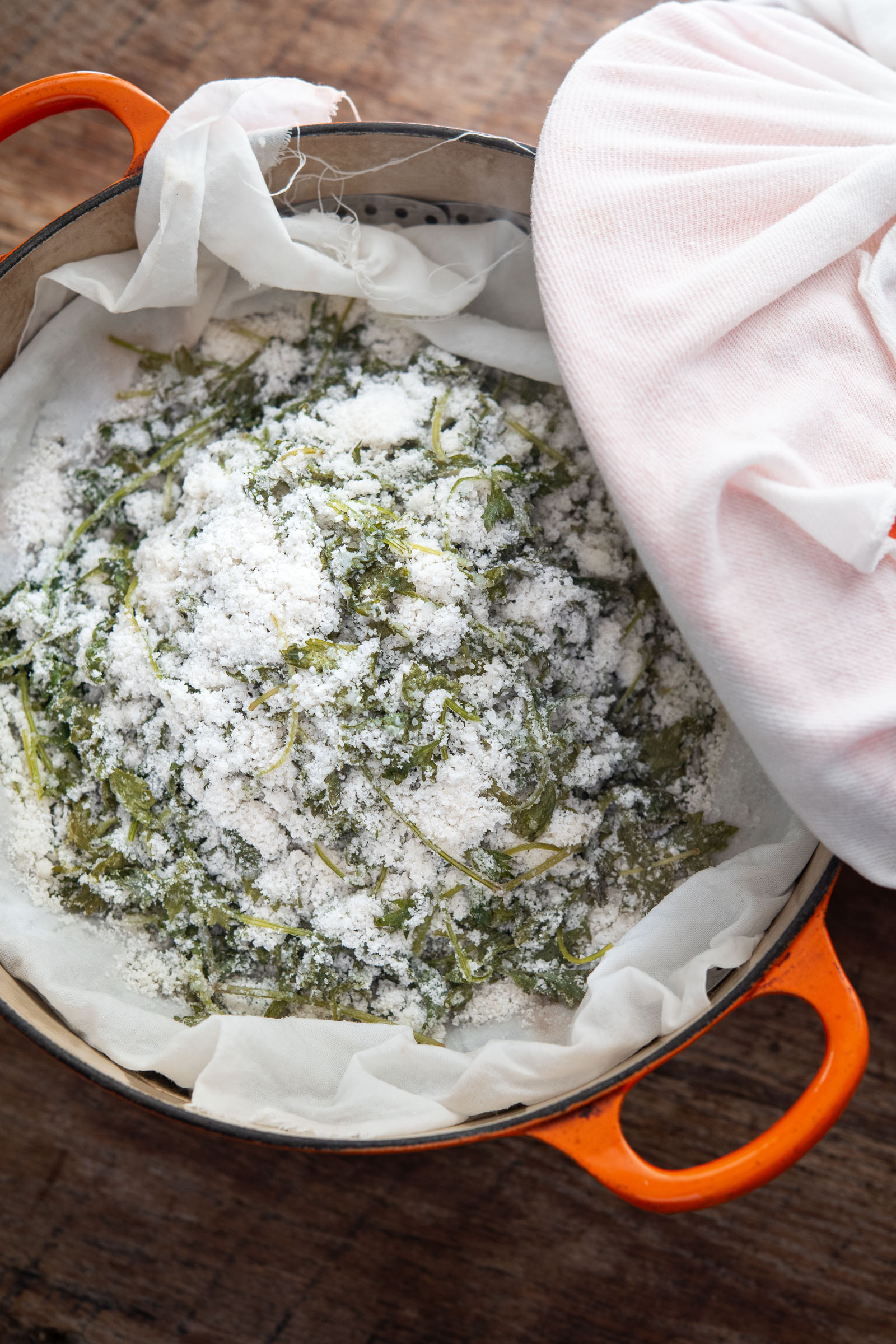
One thing I love about this recipe is how simple it is. Traditional ssuk beomuri uses just a handful of ingredients—rice flour, fresh mugwort, a little sugar, and enough water to moisten the flour. There’s no special mold required either. A basic steamer lined with a kitchen cloth is all you need.
It’s the same straightforward steaming approach used in many traditional Korean rice cakes, including my songpyeon half-moon rice cakes filled with sesame and honey.
How Ssuk Beomuri Is Different From Mugwort Tteok
Ssuk beomuri is often confused with mugwort tteok (쑥떡), but the two have very different textures. Mugwort tteok is typically made with pounded glutinous rice, giving it a chewy, stretchy bite.
Ssuk beomuri, on the other hand, belongs to the baekseolgi family of Korean steamed rice cakes. It is made with rice flour and steamed until soft and fluffy, with a tender crumb rather than a chewy texture.
Other Korean rice cakes have very different textures and preparation styles, such as the chewy pounded dough used in injeolmi sweet rice cake coated with soybean powder.
Choosing Fresh Ssuk (Korean Mugwort)
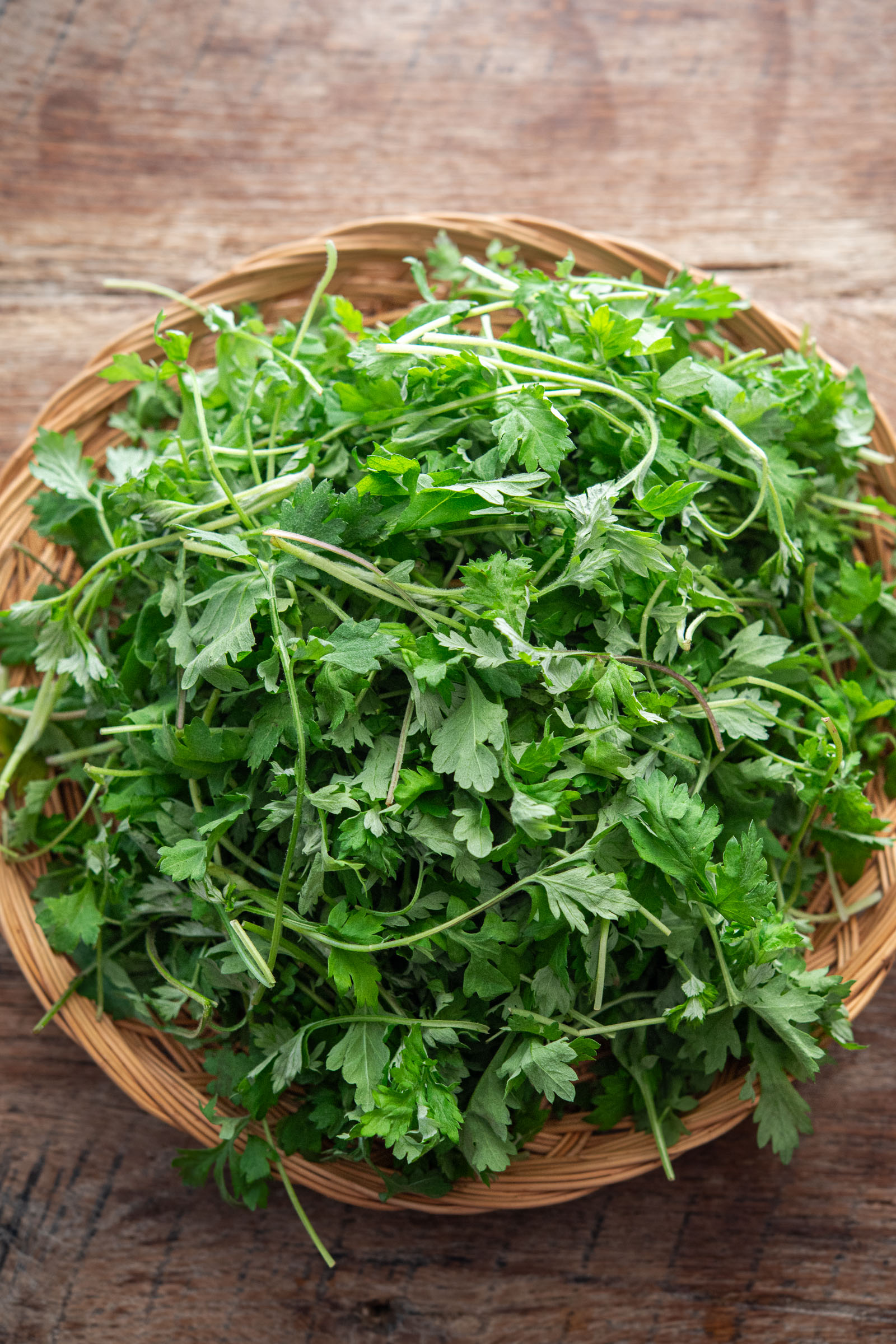
Fresh ssuk (Korean mugwort) has a distinctive aroma. Rub a leaf between your fingers and you’ll notice an earthy, slightly grassy fragrance with a gentle bitterness. That herbal scent is what gives ssuk beomuri its signature spring flavor.
Whenever possible, choose young, tender mugwort. Early spring shoots have soft stems and delicate leaves that blend easily into the rice flour mixture. If the lower stems feel thick or woody, simply trim that portion off and use the tender tops.
Young mugwort usually doesn’t need much preparation. Mix small leaves in whole, and chop longer sprigs so the mugwort distributes evenly through the flour mixture.
If You Can’t Find Fresh Ssuk
Fresh mugwort is seasonal and not always easy to find outside Korea. Many Korean markets carry it for a short time in early spring, but if it’s unavailable where you live, there are a few practical alternatives.
Japanese yomogi
The closest substitute is Japanese yomogi, which is essentially the same plant as Korean ssuk and can be used exactly the same way in this recipe.
Mugwort Powder or Dried Mugwort
If fresh mugwort is unavailable, mugwort powder or dried mugwort is a convenient year-round alternative that still provides the signature flavor.
Matcha powder
Add a small amount of matcha to the rice flour if you mainly want the green color. It won’t replicate the mugwort aroma, but it adds a gentle bitterness and pleasant green hue.
If none of these are available, the recipe can also be made plain in the baekseolgi style without herbs.
Key Techniques for Making Ssuk Beomuri
Making ssuk beomuri is simple, but a few traditional techniques make the difference between a fluffy rice cake and a dense one. Here are the key things I watch for when preparing this cake.
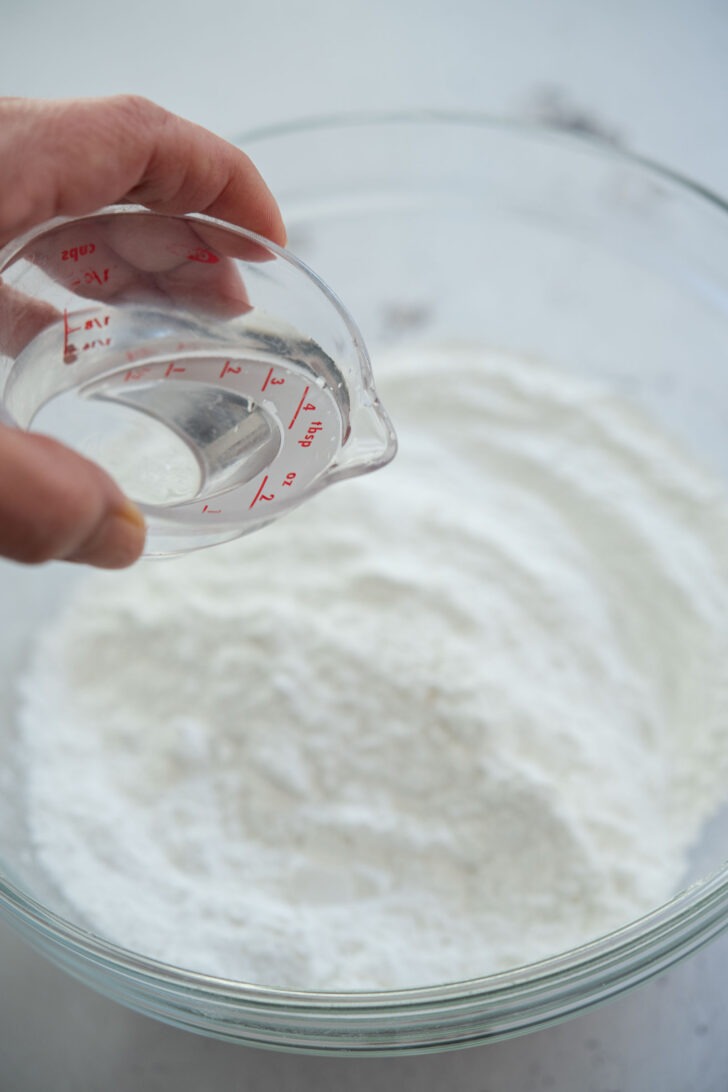
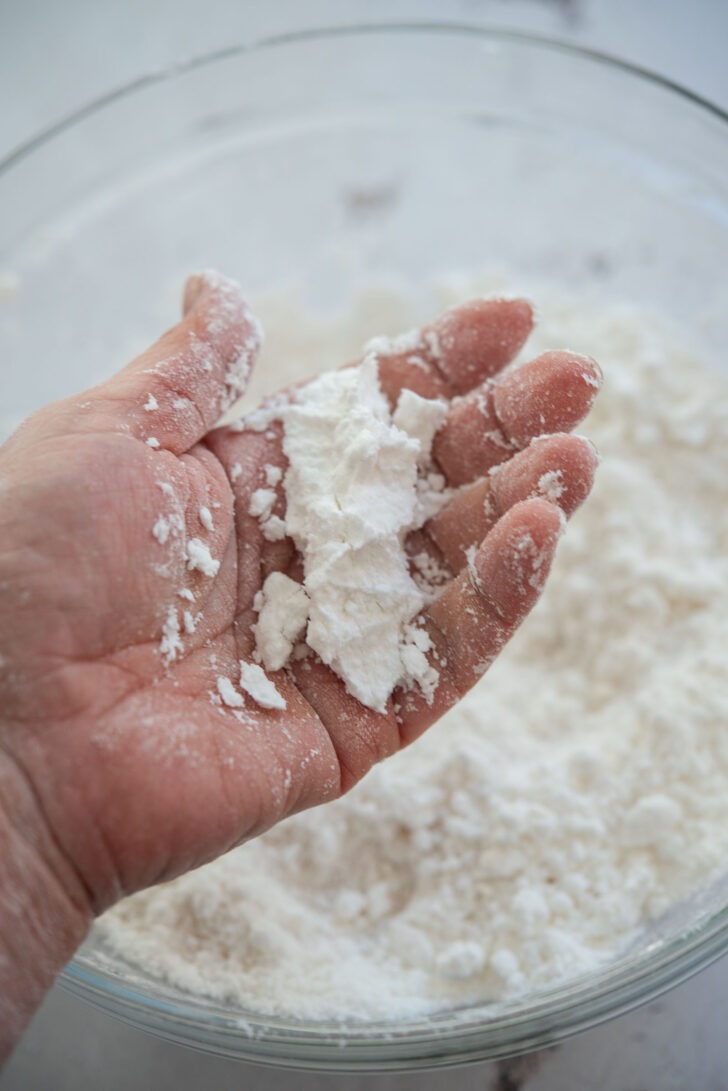
Moisten the rice flour to a sandy texture by rubbing small amounts of water into the flour. Rub the flour with small amounts of water at a time until it forms tiny sandy clumps. When squeezed in your hand, the mixture should briefly hold together but crumble easily when pressed. This crumb structure is what creates the soft, fluffy texture after steaming.
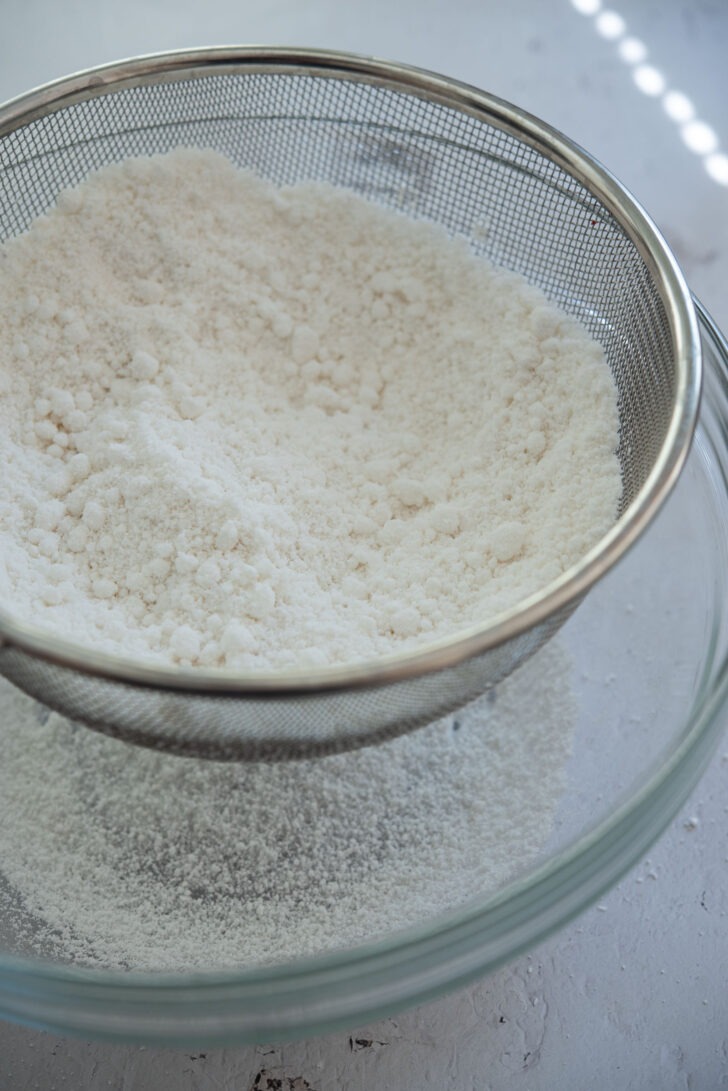
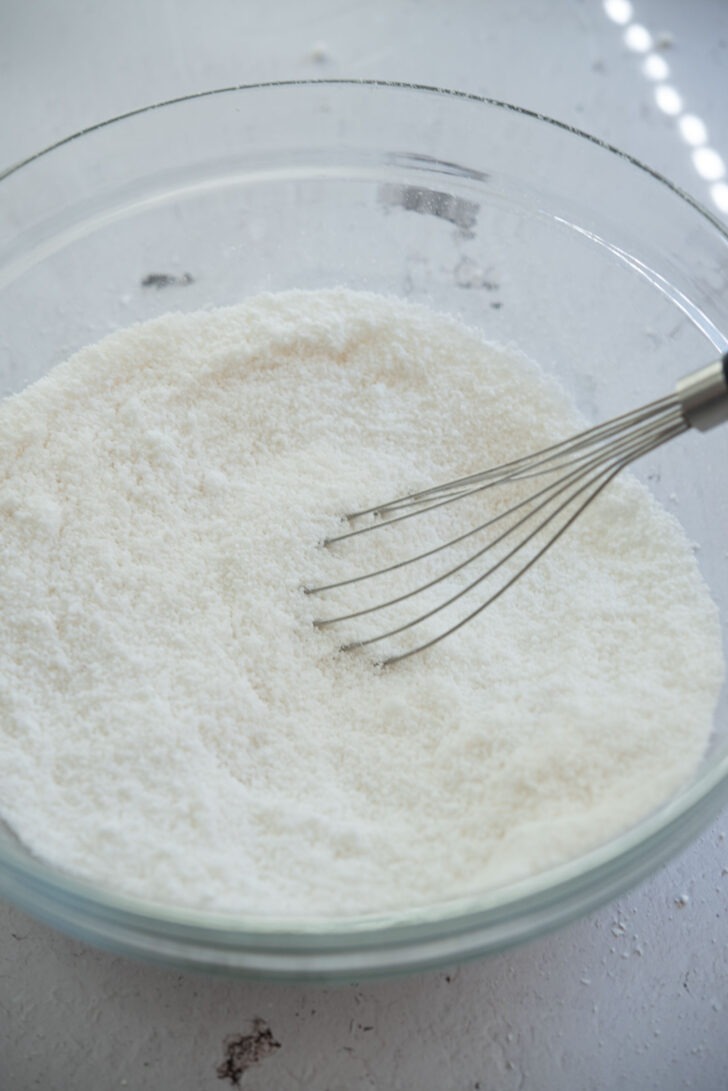
Sifting keeps the crumb light. Passing the moistened flour through a sieve breaks up the clumps and creates a finer texture. This step helps the rice cake steam into loose crumbs rather than compact pieces.
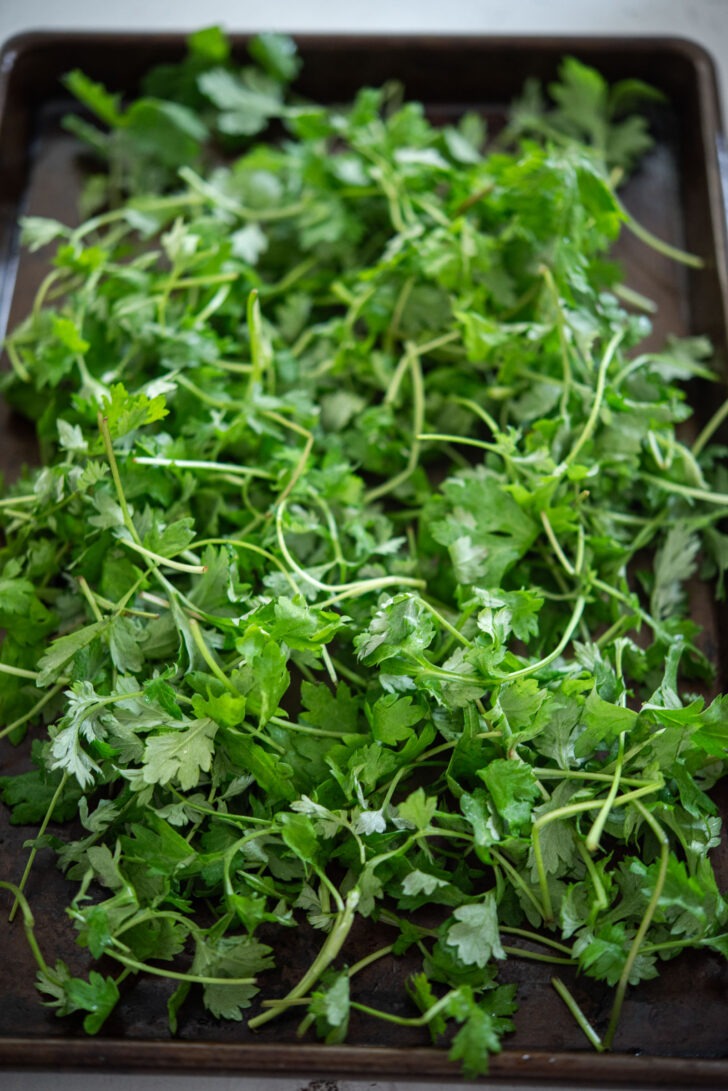
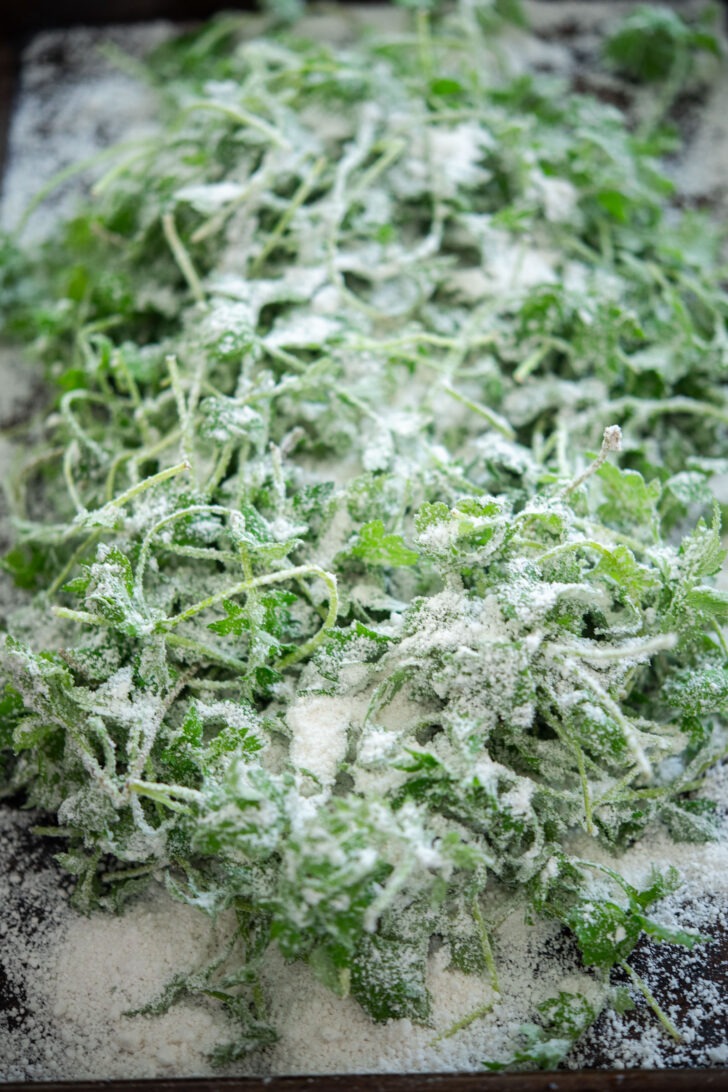
Coat the mugwort lightly. Fresh ssuk should be slightly damp so the rice flour can cling to the leaves. If the herbs are dripping wet, the flour will clump and the cake may turn sticky. If they are too dry, the flour won’t coat evenly.
Hyegyoung’s Tips: I usually rinse the mugwort and shake it well so only a light surface moisture remains. I also find that a large baking sheet works well for tossing the mugwort with the flour mixture.
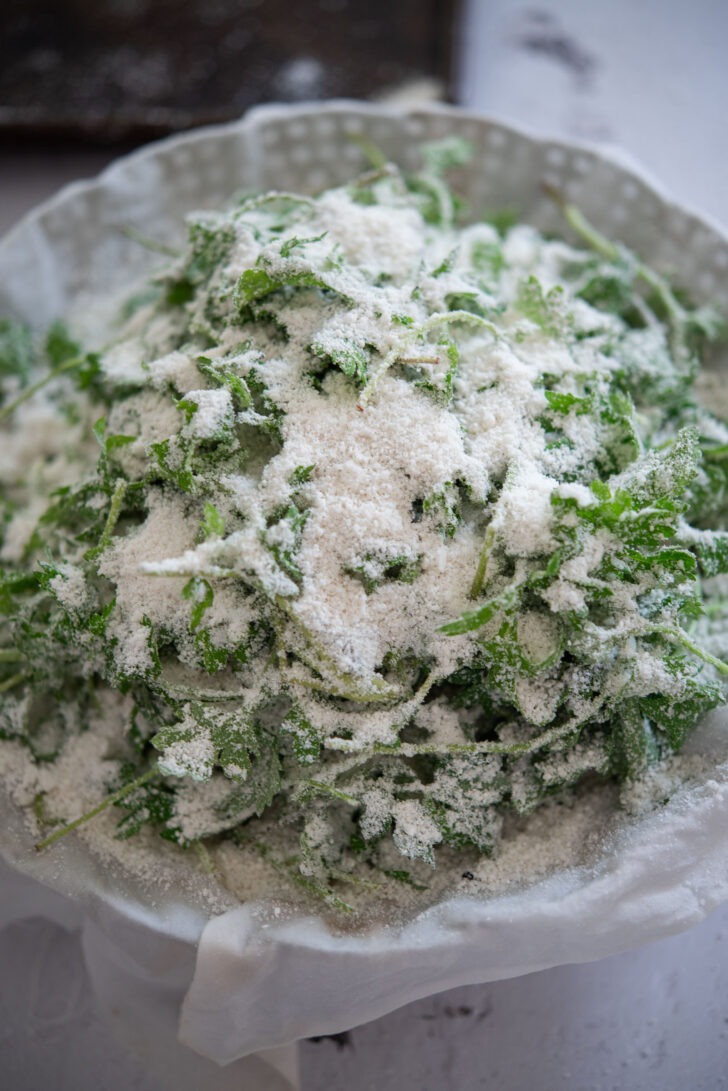
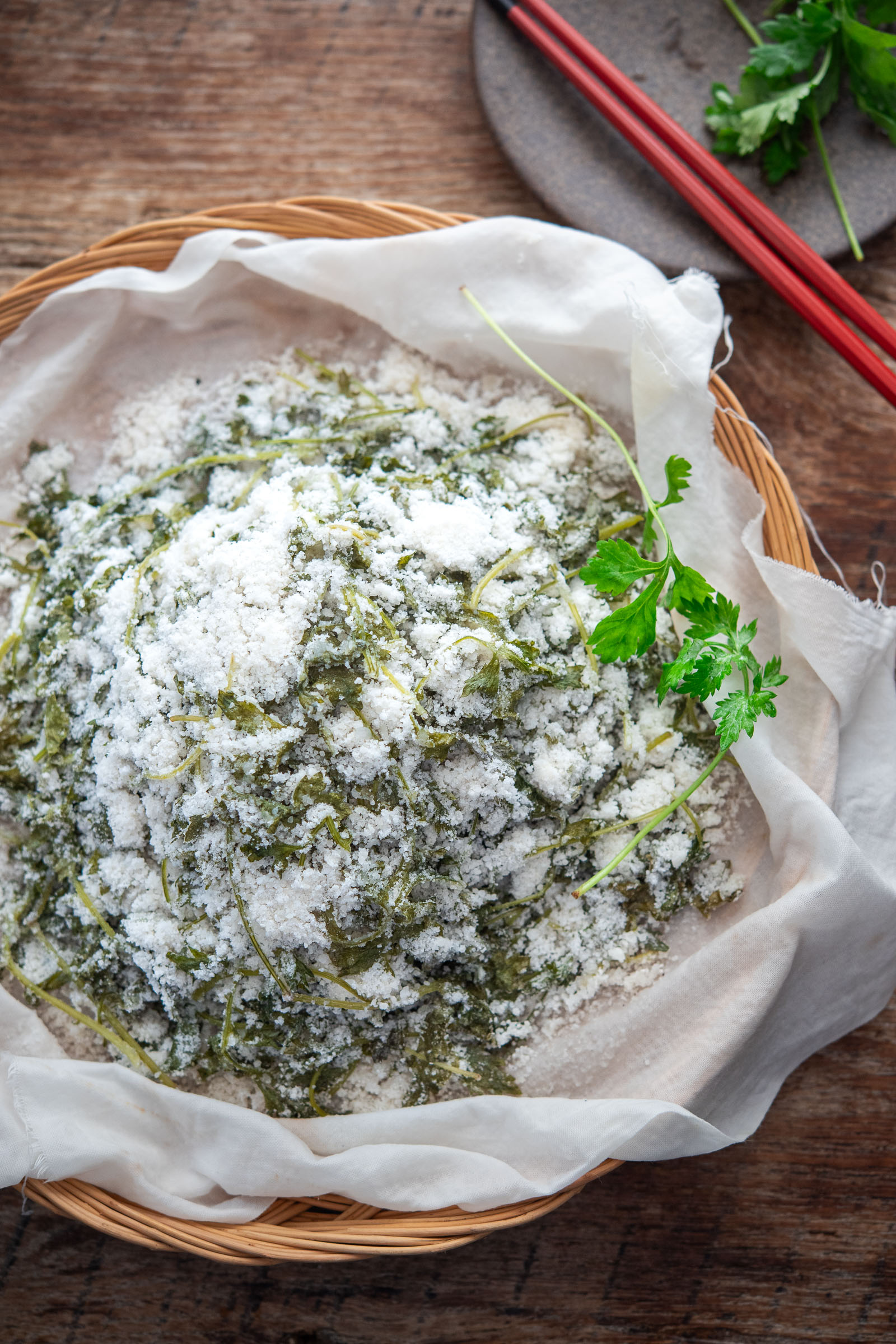
Layer the mixture loosely. When assembling the cake in the steamer, avoid pressing the mixture down. Loose layers allow steam to circulate, which keeps the cake soft and airy.
Pro Tip: Line your steamer basket with a damp kitchen cloth and sprinkle a little sugar over the cloth. This helps prevent sticking and makes it easier to lift the rice cake out after steaming.
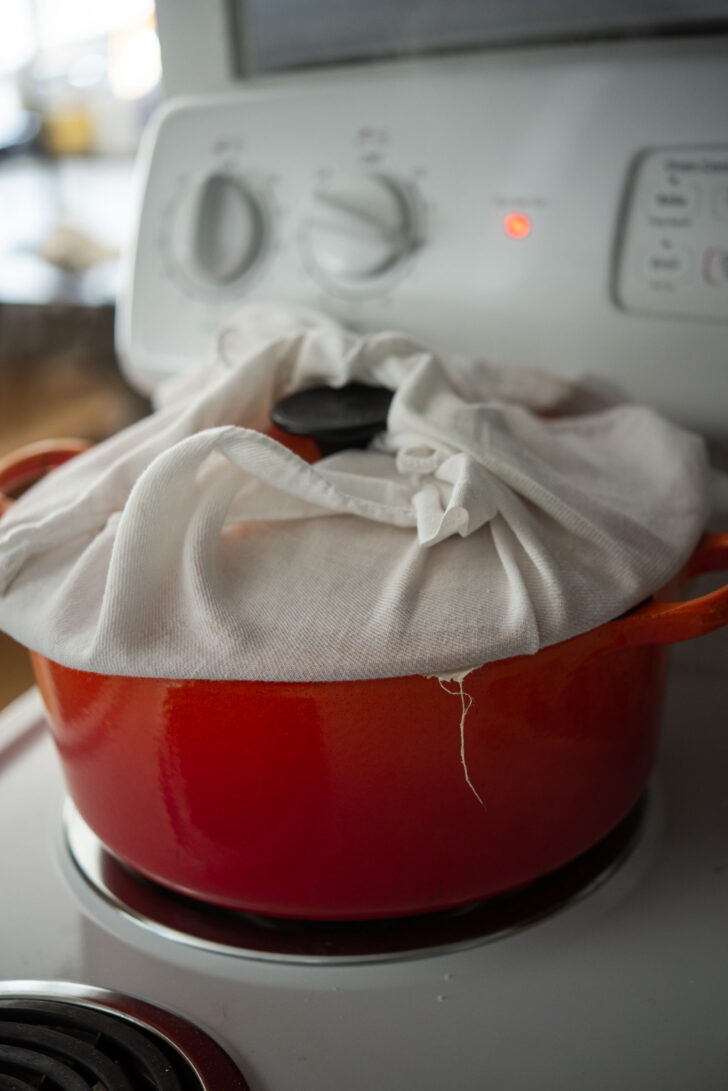
Wrap the steamer lid with a cloth. This traditional trick catches condensation so water doesn’t drip onto the cake while it steams. The finished ssuk beomuri should feel soft and crumbly with a gentle mugwort aroma.
Serving and Storing Mugwort Rice Cake
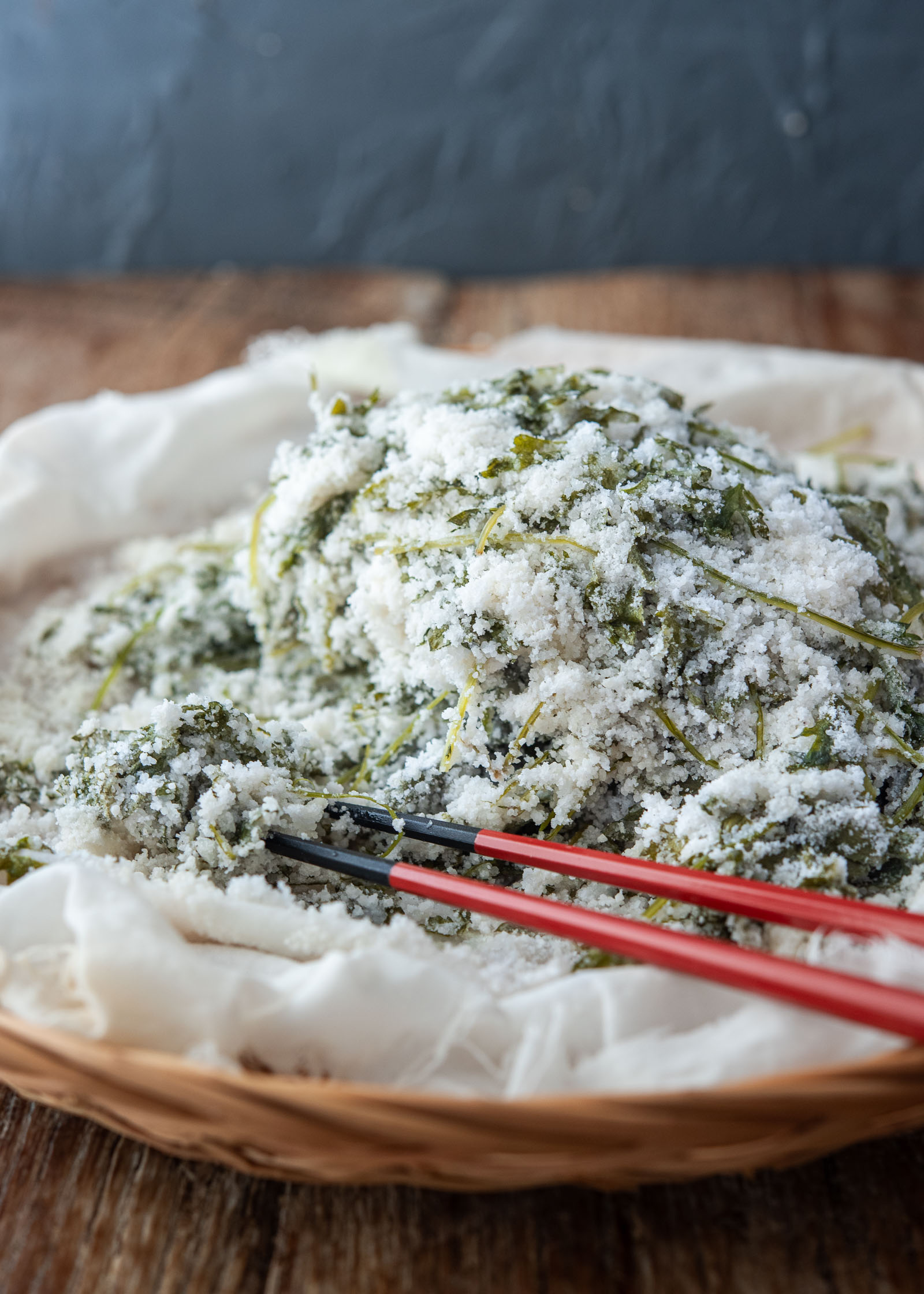
Enjoy ssuk beomuri warm, when the crumb stays soft and airy and the mugwort aroma is at its peak. Let the cake rest for a minute or two after steaming, then break it gently into loose pieces. It makes a simple afternoon snack alongside tea, similar to other lightly sweet Korean treats like my yakshik sweet rice dessert with chestnuts and jujube.
If you have leftovers, let the cake cool completely and store it in an airtight container in the refrigerator for up to 2 days. To refresh the texture, steam it again for a few minutes until warm. This brings back the soft, tender crumb much better than microwaving.
Love this recipe? Rate it and share your experience in the comments below! On Instagram? Tag me to showcase your creation. For more delicious recipes, subscribe to our newsletter!
Ssuk Beomuri (Korean Mugwort Rice Cake)
Recipe Video
Ingredients
- 3½ oz (100 g) fresh mugwort (ssuk), see note below
- 2 cups + 2 tbsp (270 g) rice flour
- 7 tbsp (105 ml water
- 4 tbsp (50 g) sugar
- ½ tsp (3 g) salt
Equipment
- steamer
- kitchen cloth liner
Instructions
- Prepare the mugwort: Rinse the fresh mugwort and shake off excess water. The leaves should be slightly damp but not dripping. If the stems are thick, trim the woody portion. Leave small leaves whole and roughly chop longer sprigs.
- Moisten the rice flour: Place the rice flour in a bowl. Sprinkle in the water gradually, rubbing the flour between your hands until it forms small sandy clumps that briefly hold together when squeezed.
- Sift and season: Pass the moistened flour through a sieve. Add the sugar and salt and whisk to combine.
- Coat the mugwort: Add flour mixture to the mugwort and toss gently until the leaves are lightly coated. A large tray or baking sheet works well for mixing so the herbs distribute evenly.
- Prepare the steamer: Line a steamer basket with a damp kitchen cloth and sprinkle a little sugar over the cloth.
- Layer the mixture: Transfer the mugwort mixture to the prepared steamer in loose layers, sprinkling a little extra flour mixture between layers if needed. Do not press the mixture down.
- Steam the cake: Bring water to a boil in the steamer pot. Place the basket over the pot and cover the lid with a cloth to catch condensation. Steam over medium heat for about 15 minutes, until the cake is fully cooked and fragrant.
- Rest and serve. Remove the steamer from heat and let the cake rest for 2–3 minutes. Lift the cloth and gently break the ssuk beomuri into loose pieces. Serve warm.