

Dakdoritang (Korean Spicy Chicken Stew)
Dakdoritang is Korea’s spicy chicken stew—tender bone-in chicken, potatoes, and carrots simmered in a bold gochujang broth. It’s cozy, hearty, and comes together in 50 minutes, perfect for a weeknight Korean comfort meal.
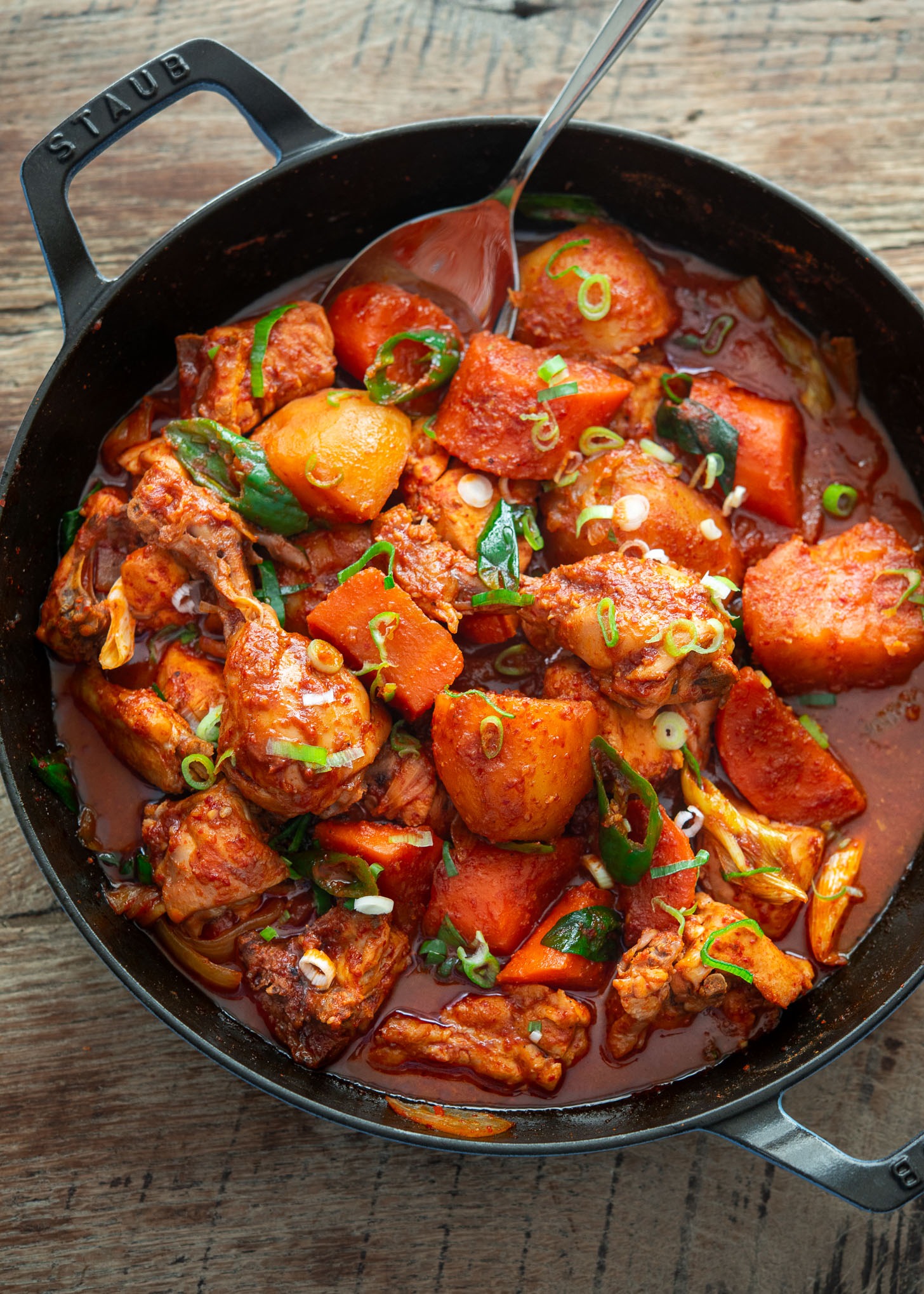
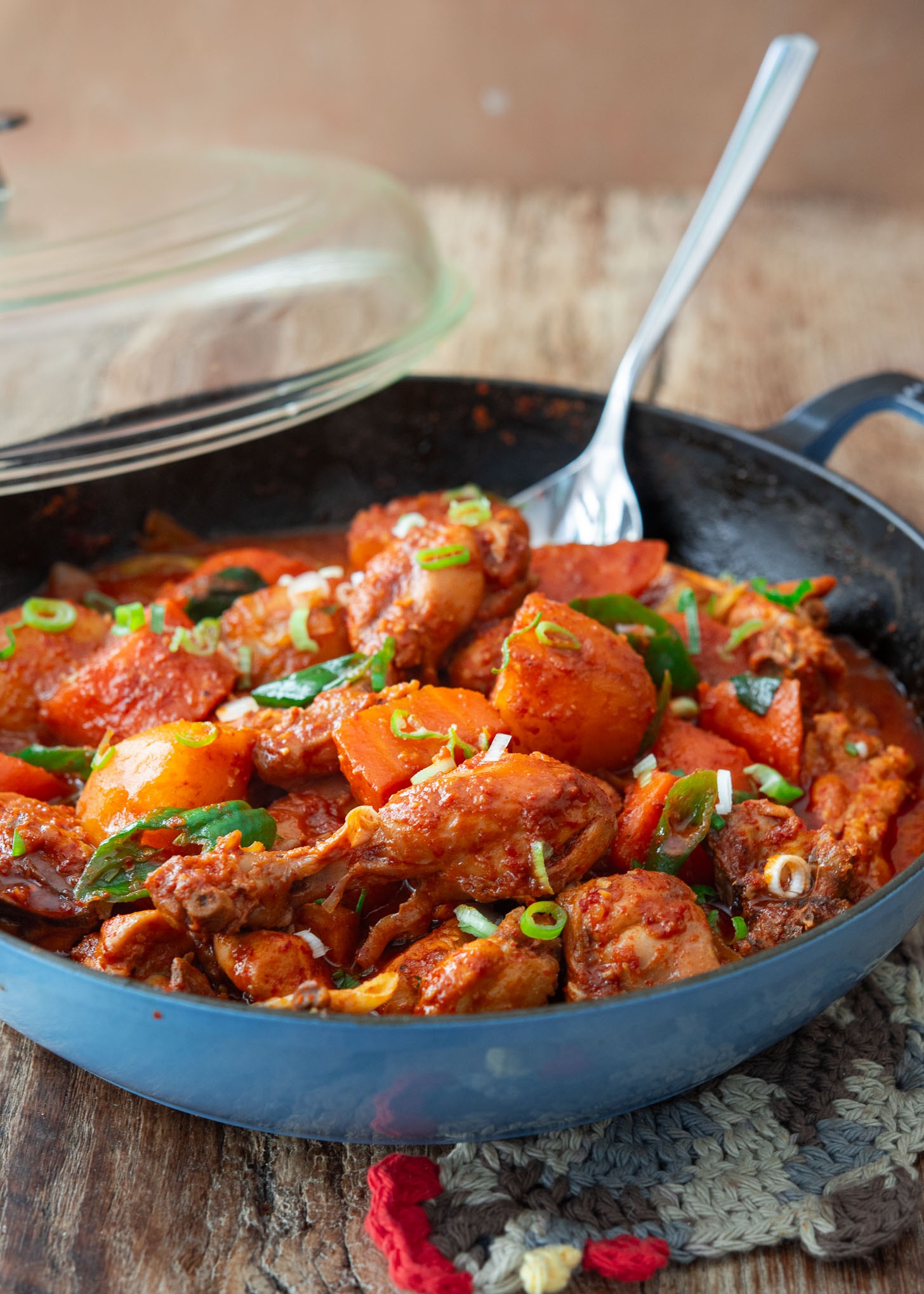
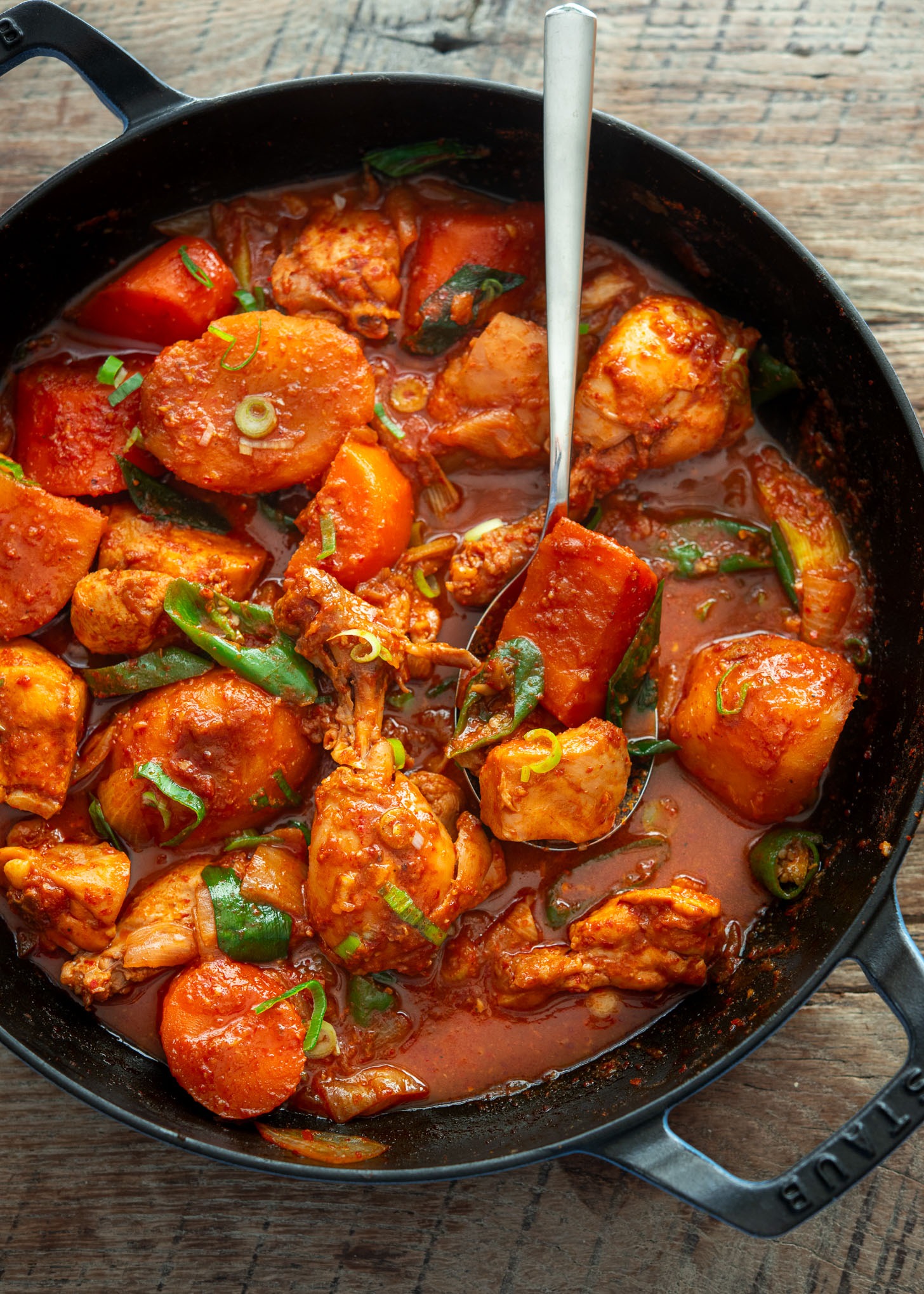
Korean cuisine knows how to do spicy stews—and Dakdoritang (닭도리탕), a spicy chicken stew also known as Dakbokkeumtang (닭볶음탕), is one you don’t want to miss. For me, it tastes like home: cozy, slightly fiery, and full of depth. The rich red sauce clings to every piece of chicken and soaks into the potatoes—comfort food with a kick.
I didn’t grow up eating it every week, but when this stew showed up on our dinner table, everyone leaned in a little closer. These days, it’s the dish I turn to when I want something hearty with a little heat.
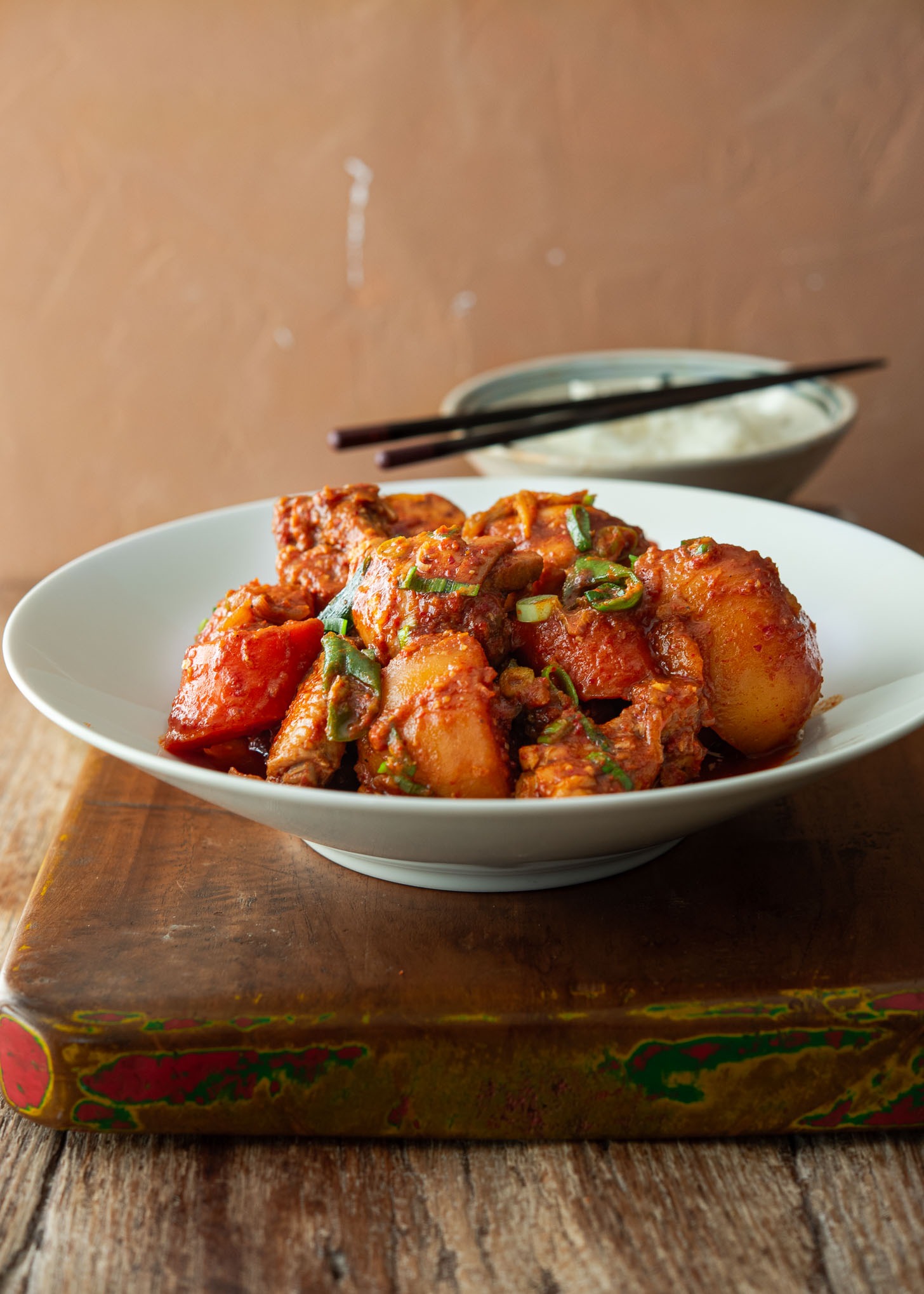
Get new recipes via email:
The heat is there, of course—but it’s the kind that builds slowly, balanced by a savory-sweet broth layered with garlic, ginger. I finish mine with a quick kelp stock—it’s the little touch that adds deep, lingering flavor.
This dakdoritang recipe is simple enough for a weeknight, yet full of traditional Korean flavor. Everyone who’s tried it swears it’s the best chicken stew they’ve ever had—and I’m not one to argue.
When spicy chicken isn’t everyone’s idea of a good time, I make my Andong Jjimdak instead. It’s soy-braised, loaded with slippery sweet potato noodles, and just as good at making a pot of rice disappear.
Ingredients You’ll Need
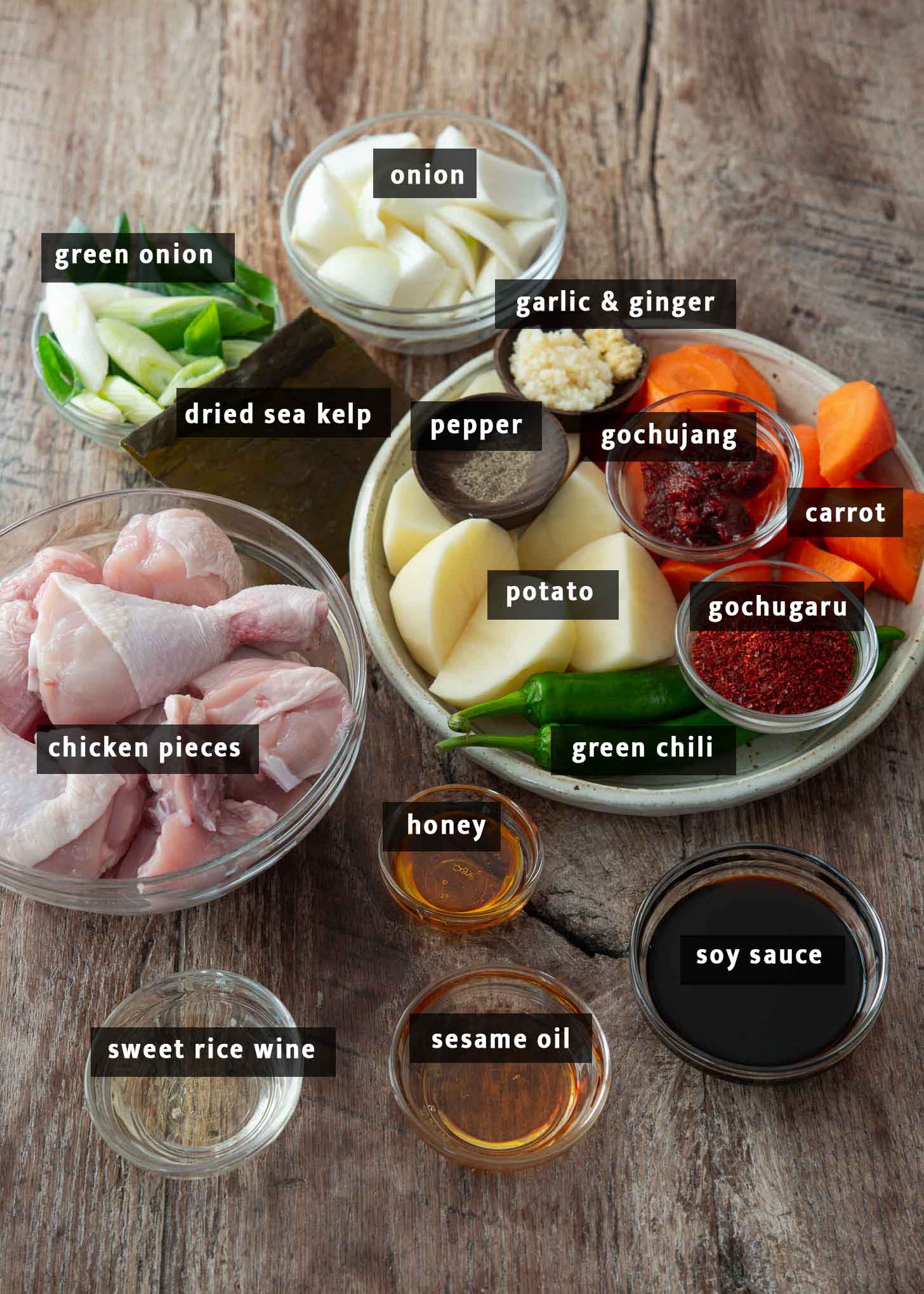
No fancy ingredients here—just everyday chicken, vegetables, and a gochujang-forward sauce. A piece of dried sea kelp adds depth with a quick homemade stock— my secret for extra flavor.
How to Make Dakdoritang (Spicy Korean Chicken Stew)
This visual guide walks you through the key steps of the process. For exact measurements, timing, and full instructions, scroll to the recipe card at the end of the post.
Prefer using a pressure cooker like an Instant Pot? You can make Dakdoritang that way too—check the Notes section in the recipe card for a quick Instant Pot version.
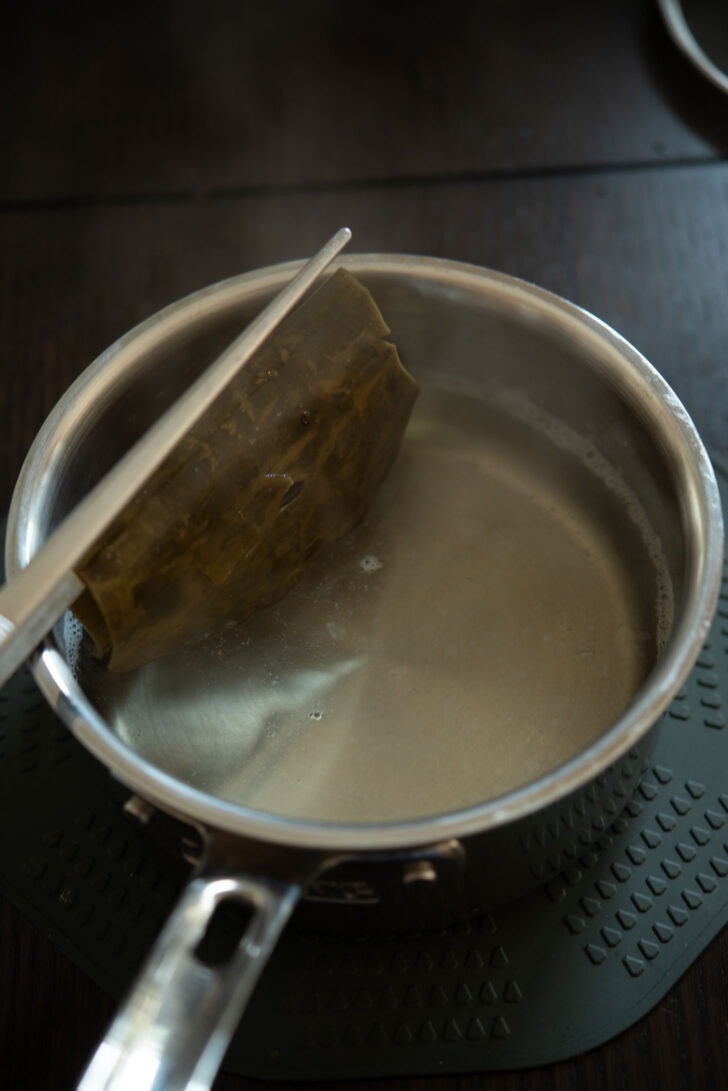
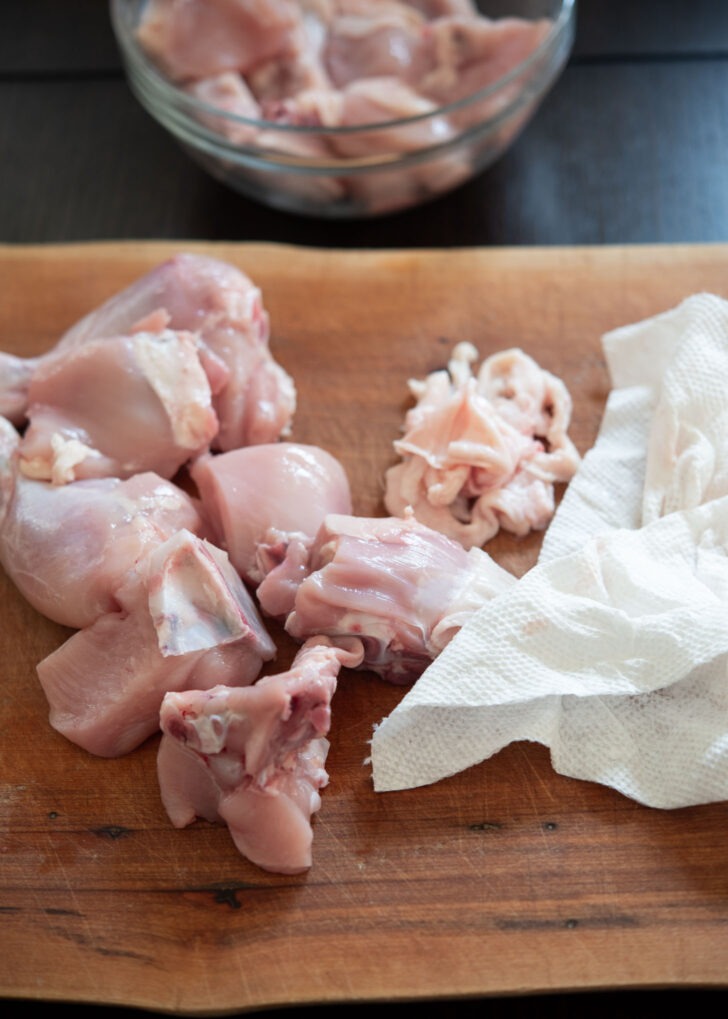
Make a quick kelp stock by simmering dried sea kelp in water for 5 minutes. While that’s going, you can remove the chicken skin if you prefer a cleaner-tasting stew—paper towels help with this step.
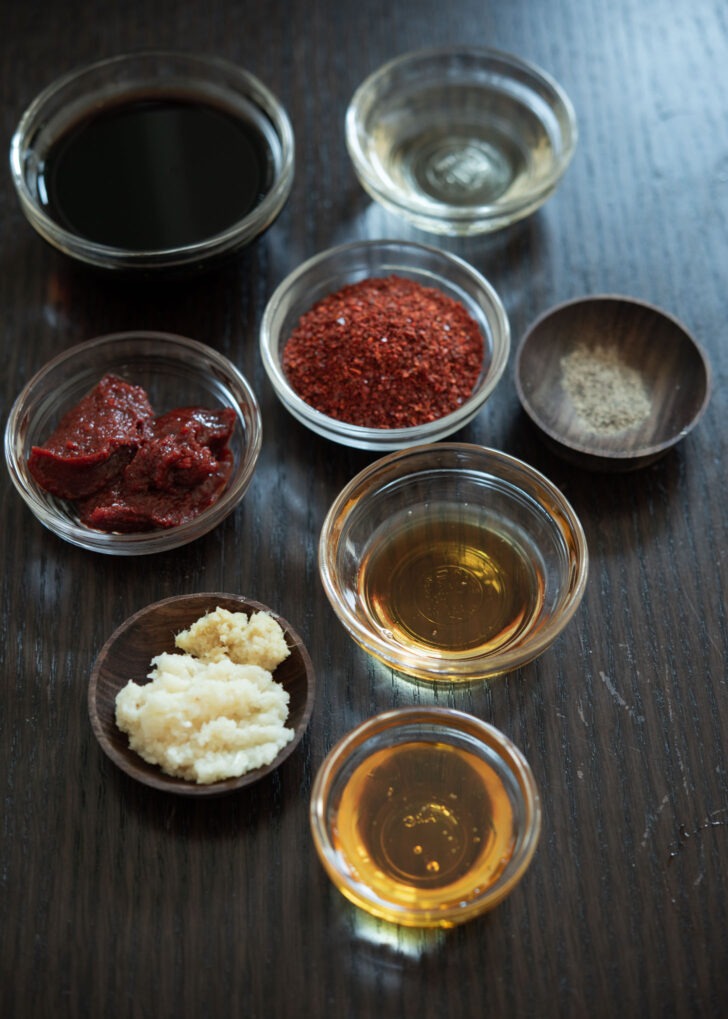
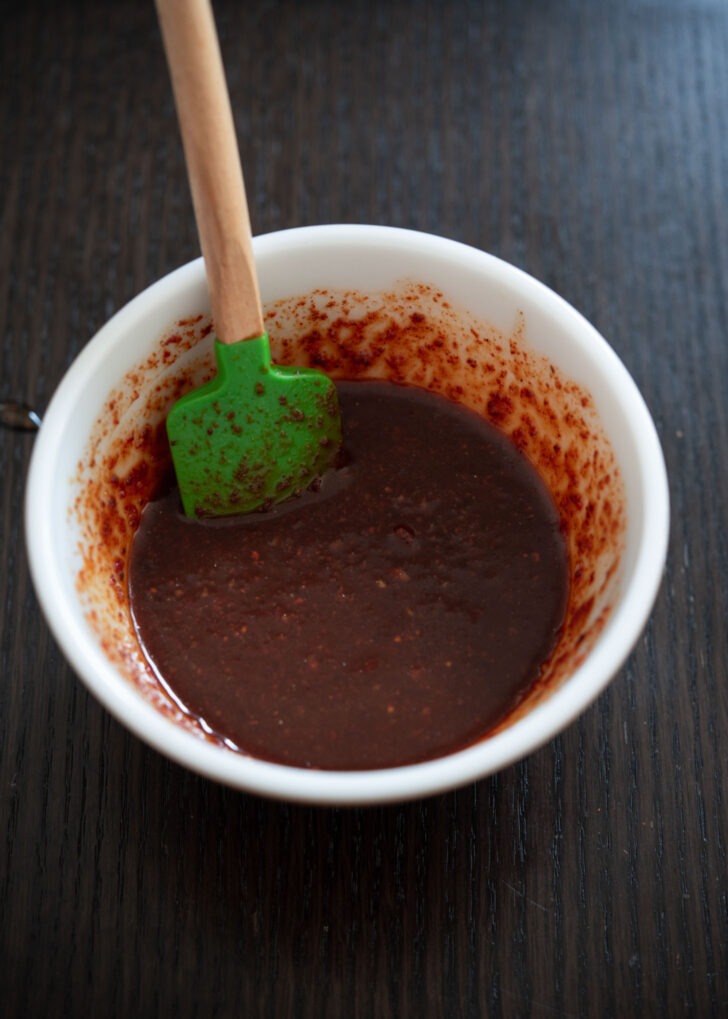
Stir together the seasoning paste in a bowl. I usually go for a full amount of gochugaru, but feel free to tone it down if you prefer a gentler kick.
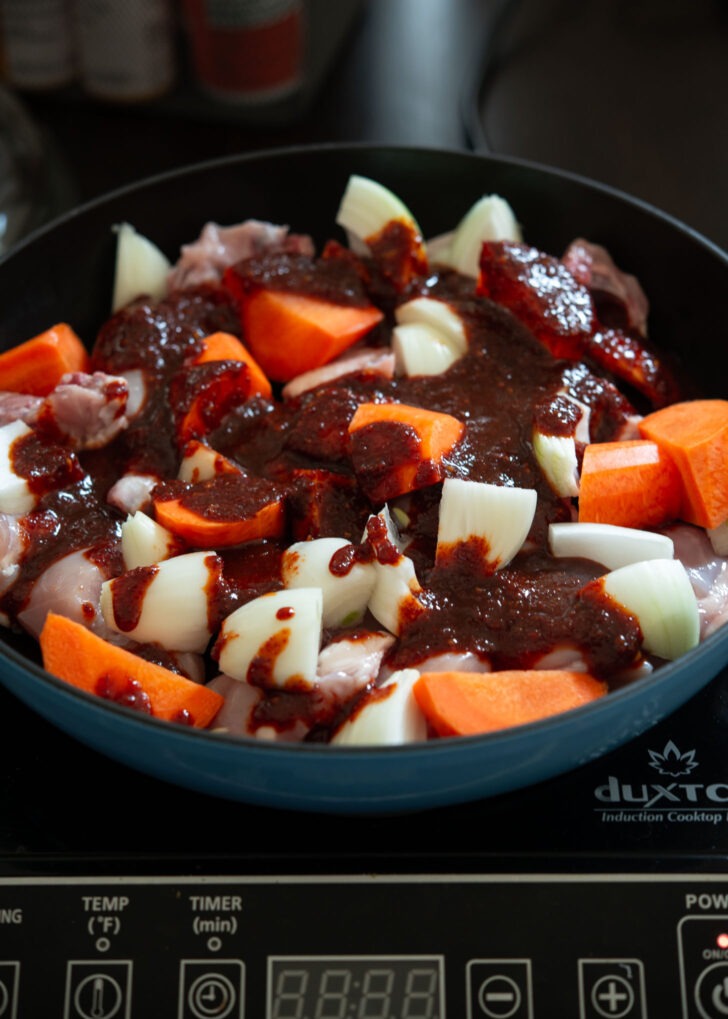
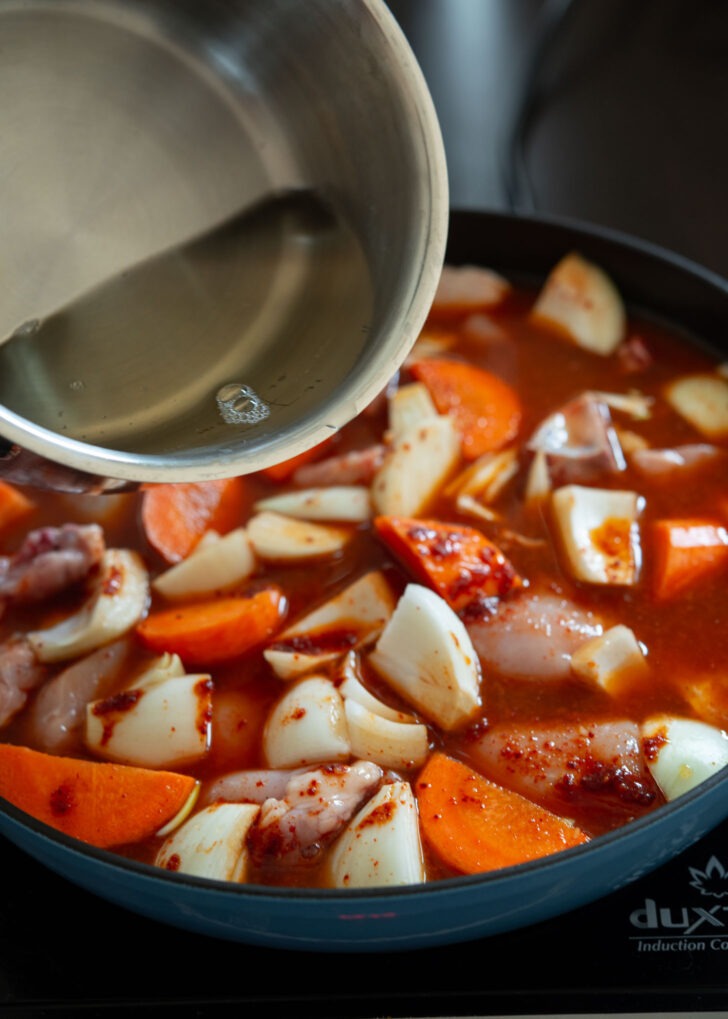
Add the chicken, onion, and carrot to a pot, then spoon the seasoning paste over the top. Pour in 2–3 cups of kelp stock, just enough to barely cover the ingredients. The exact amount depends on the size and depth of your pot.
You want enough liquid to create a stew with a rich, gravy-like broth that’s perfect for spooning over rice, not a thin soup or a thick sauce.
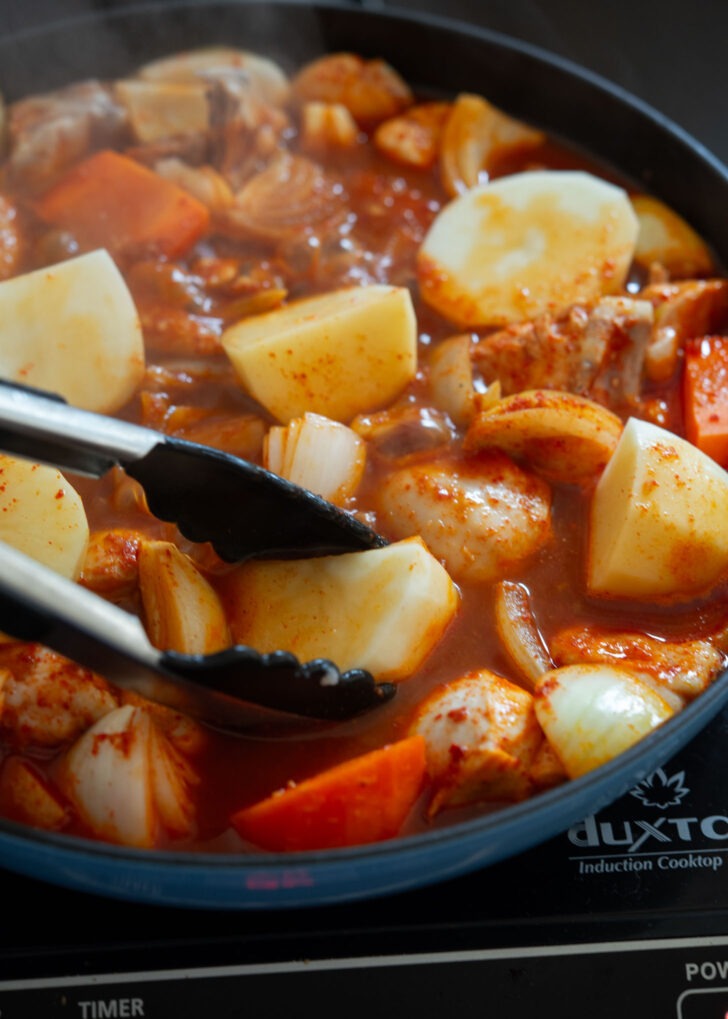
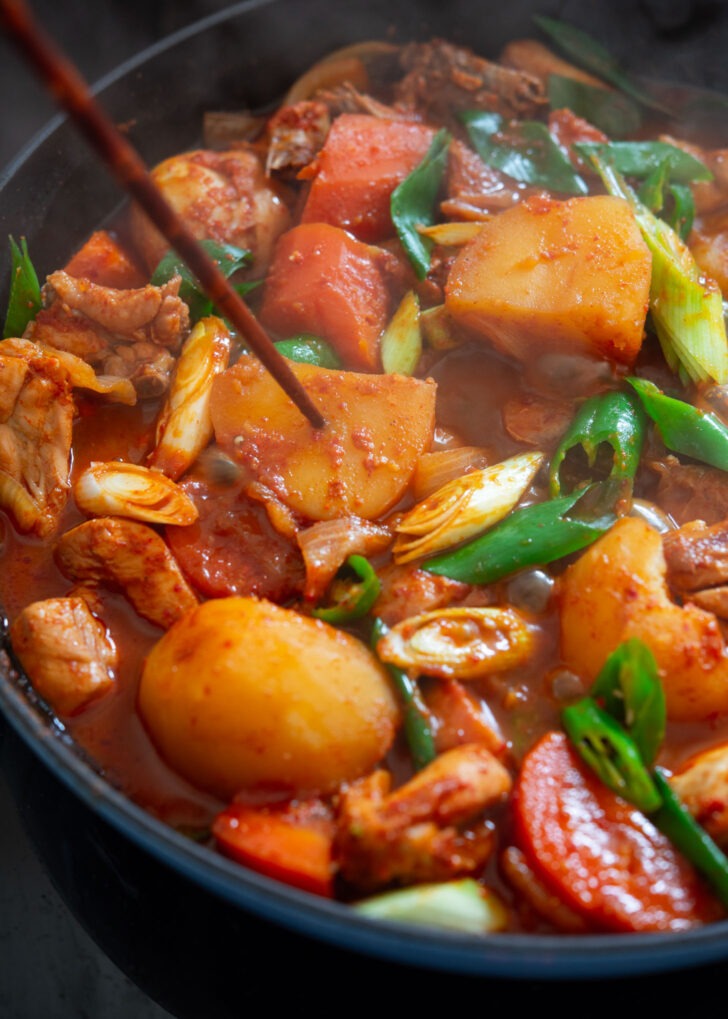
After 5 minutes, stir in the potatoes. Add the potatoes later so they don’t overcook while the chicken and carrots become tender. If they cook too long, they can break apart when you stir the stew and release starch, making the broth cloudy.
Lower the heat and simmer until everything is tender, about 20 minutes. Finish with green onion and chilies, simmering uncovered for a few more minutes to let the flavors come together.
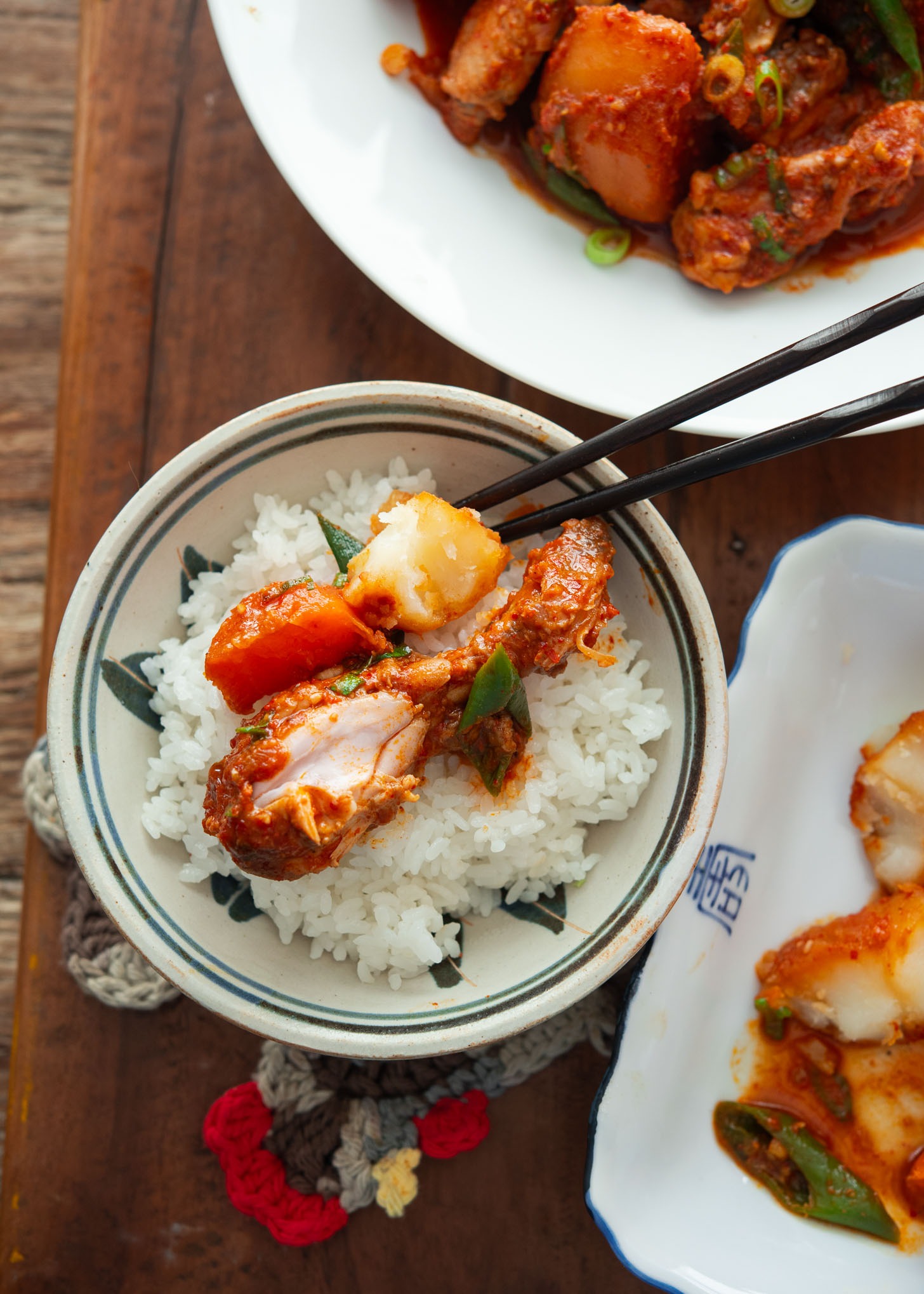
Still in the mood for something spicy but with more broth to slurp? My Dakgaejang is a fiery shredded chicken soup that hits the spot. And when one bowl of comfort leads to another, you’ll find plenty more in my Korean soups and stews collection.
Love this recipe? Rate it and share your experience in the comments below! On Instagram? Tag me to showcase your creation. For more delicious recipes, subscribe to our newsletter!

Dakdoritang (Korean Spicy Chicken Stew)
Recipe Video
Ingredients
- 2½ to 3 lb (1.1 to 1.4 kg) whole chicken, cut in to pieces, or bone-in chicken thighs and drumsticks. See note below.
- 1 (about 200 g) onion, diced
- 2 (about 250 g) carrots, roughly diced
- 1 lb (450 g) Yukon potato, peeled and cut into 1-1/2 inch chunks
- 2 green chilies, sliced
- 2 green onion, chopped
For sea kelp stock
- 4 cups (960 ml) water
- 1 large piece (about 10 x 10 cm) dried sea kelp (dashima)
For stew seasoning paste
- 2 heaping tbsp (about 40 g) Korean chili paste (gochujang)
- 2-3 tbsp (15–22 g) Korean chili flakes (gochugaru), see note below
- 4 tbsp (60 ml) soy sauce
- 1½ tbsp (30 g) honey
- 3 cloves (about 9 g) garlic, minced
- 1 tsp (5 g) ginger paste
- 2 tbsp (30 ml) sweet rice wine (mirim)
- 1 tbsp (15 ml) sesame oil
- 1 tsp (2 g) black pepper
Instructions
- Make the sea kelp stock: In a small pot, simmer 1 large piece of dried sea kelp in 4 cups (960 ml) of water over low heat for 5 minutes. Remove the kelp and reserve the stock.
- Prepare the seasoning paste: In a bowl, combine gochujang, gochugaru, soy sauce, honey, garlic, ginger, mirim, sesame oil, and black pepper. Mix well until smooth.
- Assemble the stew: In a large pot, add the chicken pieces, onion, and carrot. Spoon the seasoning paste evenly over them. Pour in just enough kelp stock to slightly cover the ingredients (about 2–3 cups).
- Add potatoes and simmer: Cover the pot and bring to a boil over medium-high heat. Cook for 5 minutes. Add the potatoes and gently submerge them in the sauce. Reduce the heat to medium, cover, and simmer for 15–20 minutes, or until the chicken is cooked through and the vegetables are tender. Spoon the sauce over the ingredients occasionally, avoiding vigorous stirring so the potatoes stay intact.
- Finish with chilies and serve: Add sliced green chilies and chopped green onion. Cook uncovered for another 3 minutes, then give it a final stir. Let the stew rest for 3–4 minutes. Serve hot with rice.
Notes
Add the chicken, onion, carrot, potato, seasoning paste, and 1½ cups (360 ml) of kelp stock to the Instant Pot. Secure the lid and set the valve to “Sealing.” Pressure cook on High for 8 minutes, then allow natural release for 5 minutes, followed by quick release. Use the sauté setting to simmer for a few minutes if you want to thicken the sauce. Stir in green chilies and green onion to finish. Storage and Reheating
Store leftover dakdoritang in an airtight container in the refrigerator for up to 3–4 days. Reheat gently in a covered pot over medium-low heat until the chicken is heated through. Add a splash of water if the sauce has thickened too much during refrigeration.
Can this be made with sweet potatoes?
Of course! Sweet potatoes will add more sweetness and it goes well with this chicken stew. Hope you enjoy it.
This recipe is genuinely perfect and an easy entry into Korean cuisine for any home cook.
I’ve made this nearly every three days since I discovered it on Christmas Eve, it is so flavorful for such little effort, and I follow the recipe to the tee each time.
Today, I had to use rotisserie chicken because I didn’t have uncooked chicken available, it is still very good, but do follow Holly’s recipe as closely as you can to preserve the spirit of the dish.
Thank you so much! That really means a lot. I’m honored it’s become part of your regular cooking, and I’m glad it still worked well with rotisserie chicken in a pinch. Thanks for trusting the recipe and sharing your experience!
Can I use boneless chicken thighs?
Thanks!
You can, but braise the chicken with the vegetables from the start and shorten the cooking time. You’ll also need to use a smaller amount of stock.
I have a Vietnamese exchange student with me this year. This was the first “home-style” dish I made for her. HUGE hit! She loved it! Kimchee fried rice was another hit! I will be on this site quite a bit! Thank you Holly!
How thoughtful of you to make Dakdoritang for your exchange student! I’m so glad to hear this Korean dish was a hit. I hope you’ll explore more recipes on my site, and please don’t hesitate to ask if you have any questions. Thank you so much!
Hi, can this be frozen?
Technically, yes, but the veggies will become quite mushy if you freeze and reheat them.
Hi,
Well I hate to be the only negative comment, but I made this and it was just okay. I am sure it is something I did, not the recipe. I used chicken legs and followed the recipe to the letter, except I had to use water instead of the broth. I just found it very hot with not much flavor. I love hot and spicy food, but I found this lacking. I sent it over to my 1/2 Korean daughter and Turkish son-in-law. It was too spicy for her (but she doesn’t eat super spicy), but he absolutely loved it. He even called me to tell me. So, I am sure it is just me. I won’t leave anything lower than 5 stars since he loved it so much.
Hi Fran
Thanks for your comment! The key ingredient that brings the stew’s flavor to life is the sea kelp stock, which adds depth. Using plain water might result in a less flavorful stew, but the other savory ingredients help compensate a little. I’m glad your son-in-law enjoyed the stew. Feel free to adjust the chili flakes to suit your heat tolerance. I hope you try it again and appreciate you taking the time to leave feedback. Thanks!
I’ve been making this for years after discovering Korean food on this site. Simply the most painfully delicious stew on earth. Thank you!
Question: when you say the chicken should be cut into pieces, approximately what size should they be? If substituting with thighs + drumsticks, does the same guidance apply? Thanks!
Hi Jen
Thighs or drumstick size is sufficient. For the breast, I recommend cut in half lengthwise. You can also use only thighs and/or drumsticks (with bone) instead. Hope this helps. Thanks!
Thanks so much for your super-quick reply! Excited to try this recipe ☺️
Made this meal last night — BEST Korean meal so far. So good and heartwarming, so flavourful. My new favorite meal EVER!!