

Samgyetang (Korean Ginseng Chicken Soup)
Samgyetang is a traditional Korean chicken and ginseng soup made with a whole young chicken stuffed with glutinous rice, garlic, and jujube, then simmered in a clean, herbal broth. It’s the nourishing soup Koreans turn to on the hottest summer days, but it tastes comforting and restorative any time of year.
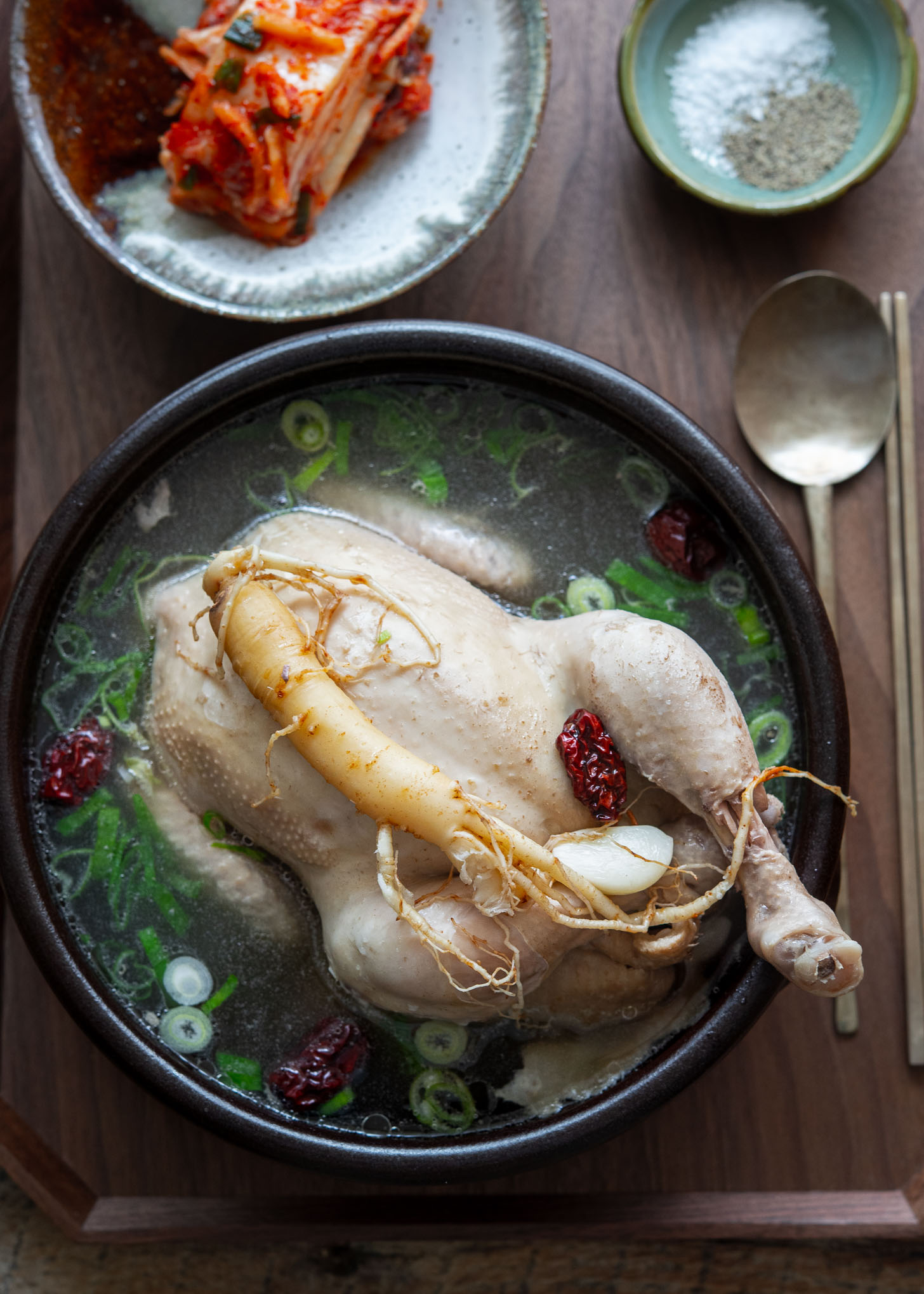
I grew up in Korea, where eating samgyetang in the summer was a yearly tradition in our home. As a teenager, I never understood the appeal. Why eat boiling soup on the hottest day of the year? I’d rather have a popsicle.
But now, I get it. Samgyetang is believed to restore your strength to fight the hot weather.
Get new recipes via email:
As I’ve gotten older, I’ve come to appreciate why Koreans turn to this herbal soup when the heat drains your energy. It’s not just food—it’s comfort, tradition, and a healing ritual.
The good news? Homemade samgyetang is easier than you think.
You don’t need special tools—just a pot big enough for a whole chicken and a few traditional Korean ingredients (I’ll guide you through them). And once you try it, you’ll see why it’s loved by generations.
If you’re curious about traditional Korean soups beyond the classics, this one belongs on your list—not just in summer, but any time you need a warm, nourishing meal.
If you love comforting Korean soups like this one, you might also enjoy Dak Kalguksu (Korean Chicken Noodle Soup)—a cozy bowl of hand-cut noodles in a rich chicken broth that’s perfect for cooler days.
Ingredient Notes
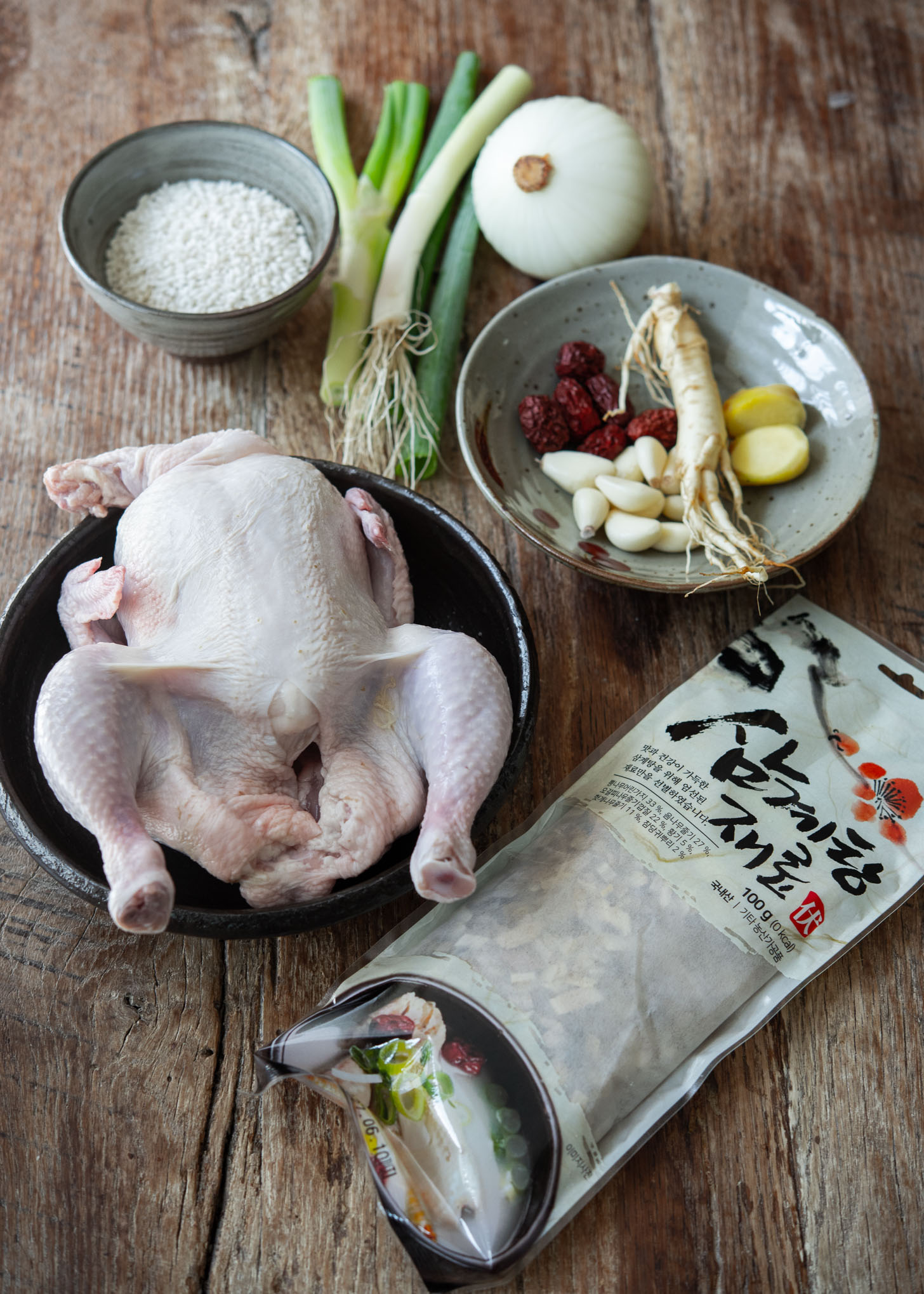
- Chicken: Korean restaurants often serve tiny spring chickens (about 1 lb / 0.5 kg) in individual clay pots. At home, I use a whole chicken around 2 to 3 lbs (1–1.3 kg)—easy to find and perfect for sharing. Cornish game hens (about 1.5 lbs) also work well for individual servings.
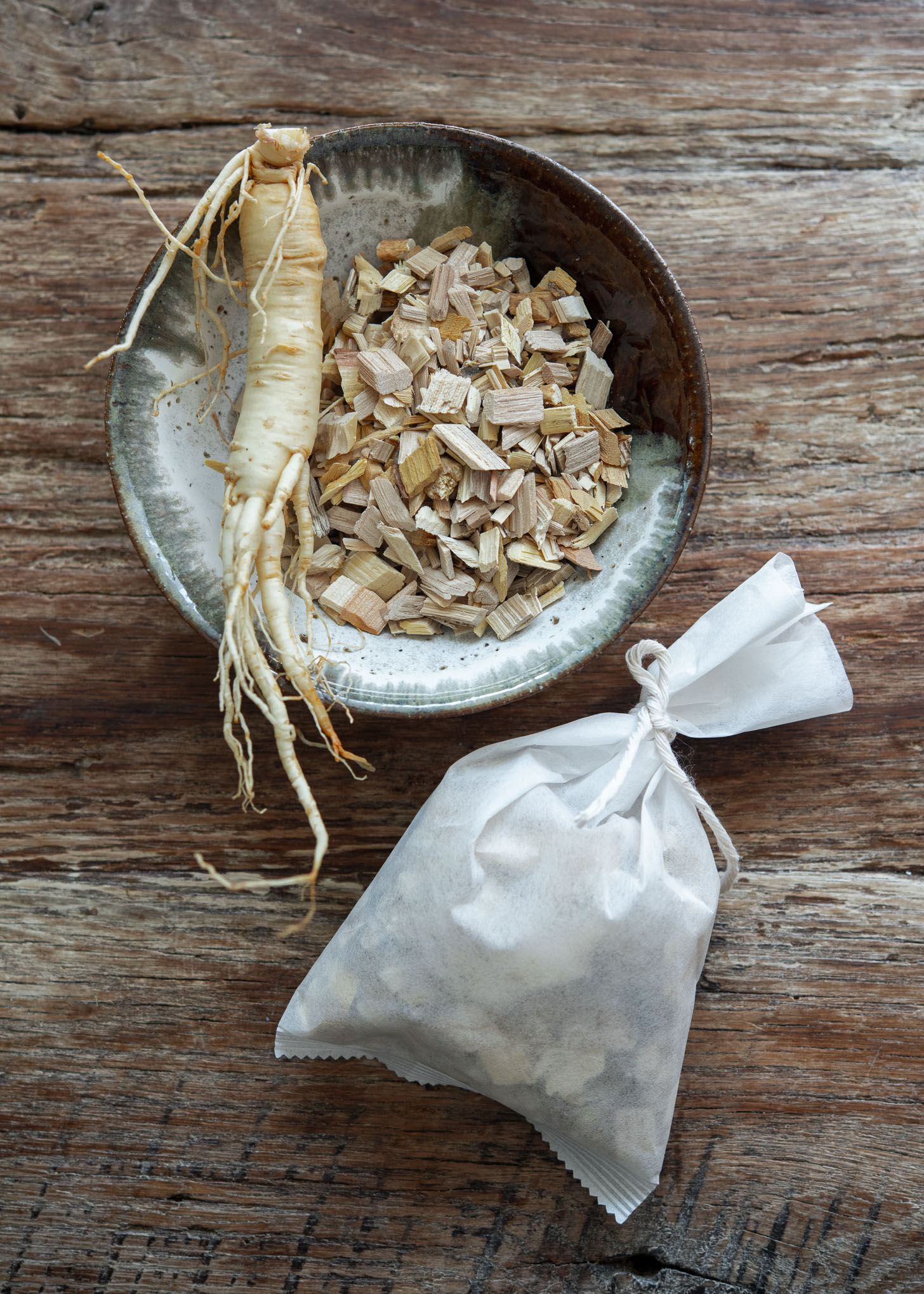
- Ginseng: Fresh Korean ginseng is ideal. It adds a clean, slightly bitter note to the broth. When fresh ginseng isn’t available, dried American ginseng is a good substitute, but you’ll need to soak it overnight to soften it. Even after a long simmer, dried ginseng stays tough and fibrous, so I let it infuse flavor, then discard it before serving.
- I buy fresh ginseng at Korean markets in summer when the quality is best. The flavor is noticeably cleaner.
- Herbal Pack (Medicinal Roots): Samgyetang often includes roots like astragalus, angelica, and milk vetch. I use prepackaged samgyetang herb kits from Korean grocery stores. They’re convenient and add a deep, earthy aroma to the broth. If you’re new to these herbs, don’t worry. The flavor is mild, earthy, and not medicinal.
- Glutinous Rice (Chapssal 찹쌀): Use Korean glutinous short grain rice. It’s stuffed into the chicken and absorbs the herbal broth as it simmers. Rinse and soak the rice for at least 30 minutes before using.
- Aromatics: I always add garlic, ginger, and jujube for warmth and depth. A bit of onion or Asian leek (daepa) builds a richer base—especially if you want a broth that tastes like it’s been simmering for hours.
- Seasoning: Traditionally, the broth is left plain so each person can season to taste. I like to add a splash of Korean soup soy sauce (guk ganjang) and a bit of tuna exract (참치액) while cooking for extra depth. Optional, but highly recommended.
Step-by-Step: Cooking Samgyetang (Ginseng Chicken Soup)
This visual guide walks you through the key steps of making samgyetang. For exact measurements, timing, and full instructions, see the recipe card at the end of the post.
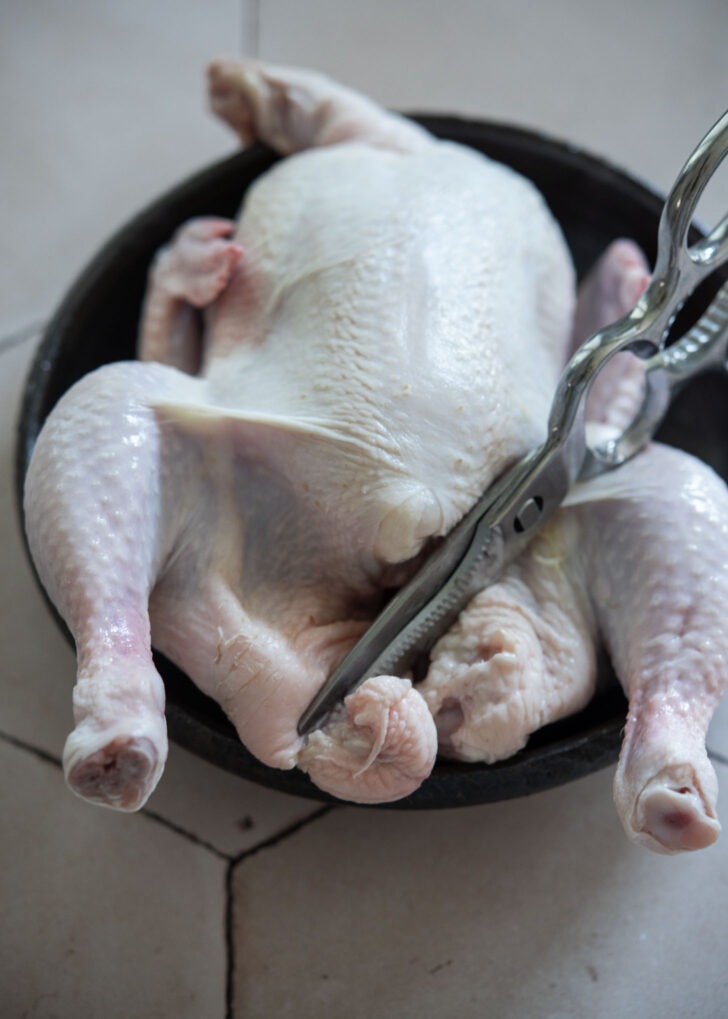
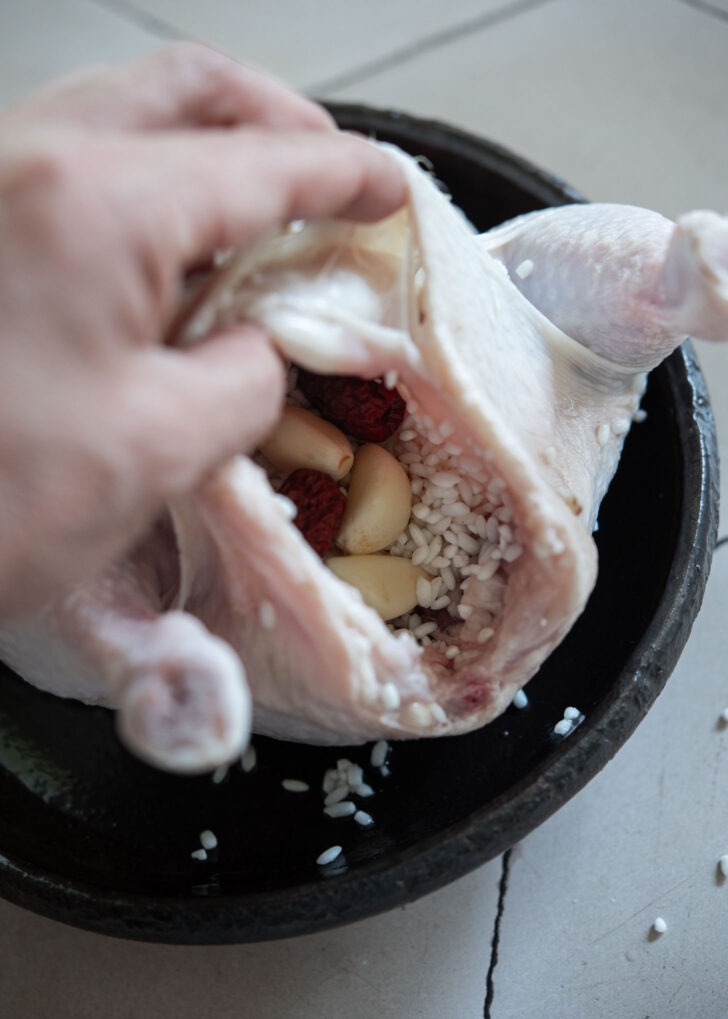
Trim the chicken and prepare the stuffing. Trim off the chicken tail and wing tips (I always remove the tail for a cleaner broth). Stuff the cavity with the soaked glutinous rice, a few dried jujube, and garlic cloves so the flavors infuse as it cooks.
Tip: Don’t overstuff the chicken with rice, fill the cavity about 70% full. This leaves enough space for the rice to expand as it cooks without bursting out.
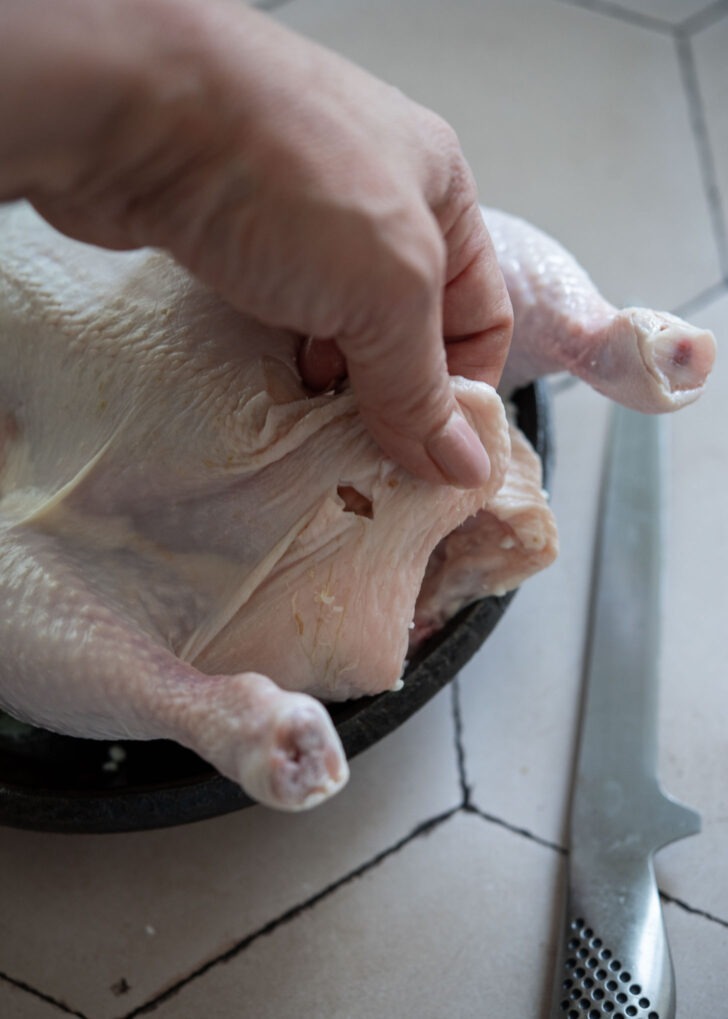
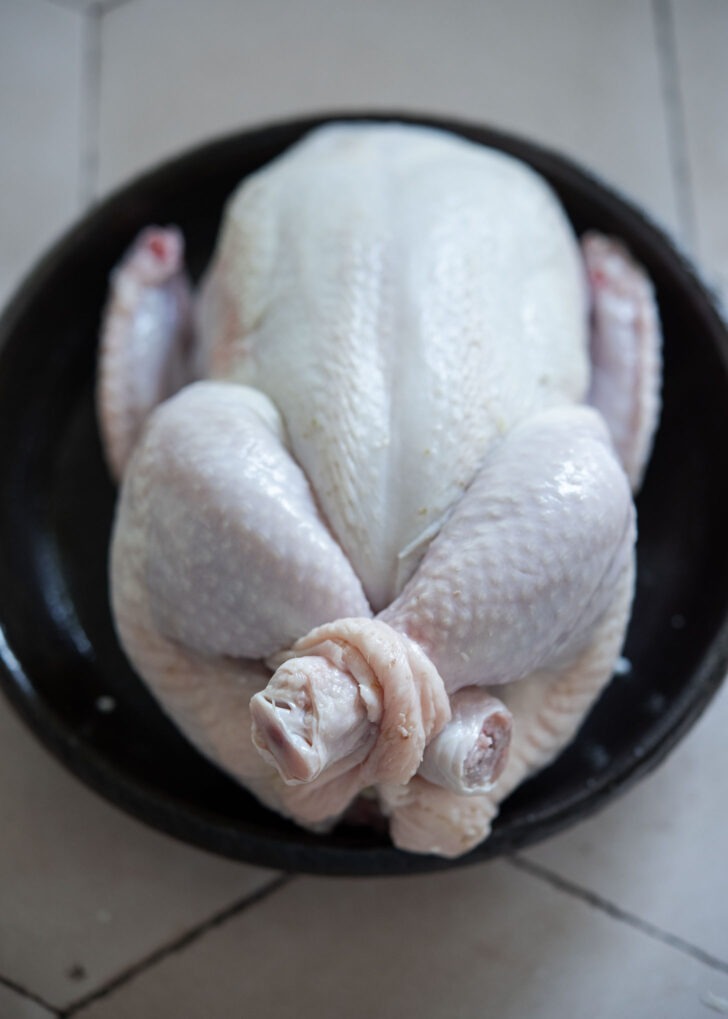
Secure the cavity. Make a small slit in the loose skin near the tail and tuck the legs through each side to hold everything in place. If you prefer, tie the legs together with kitchen twine — both methods work well.
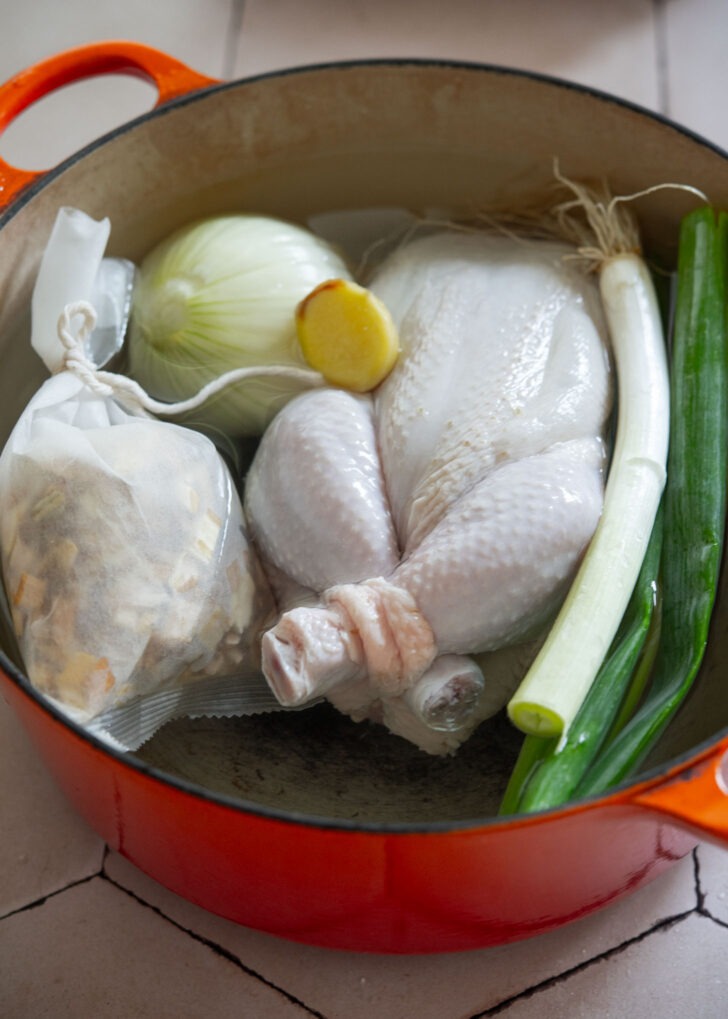
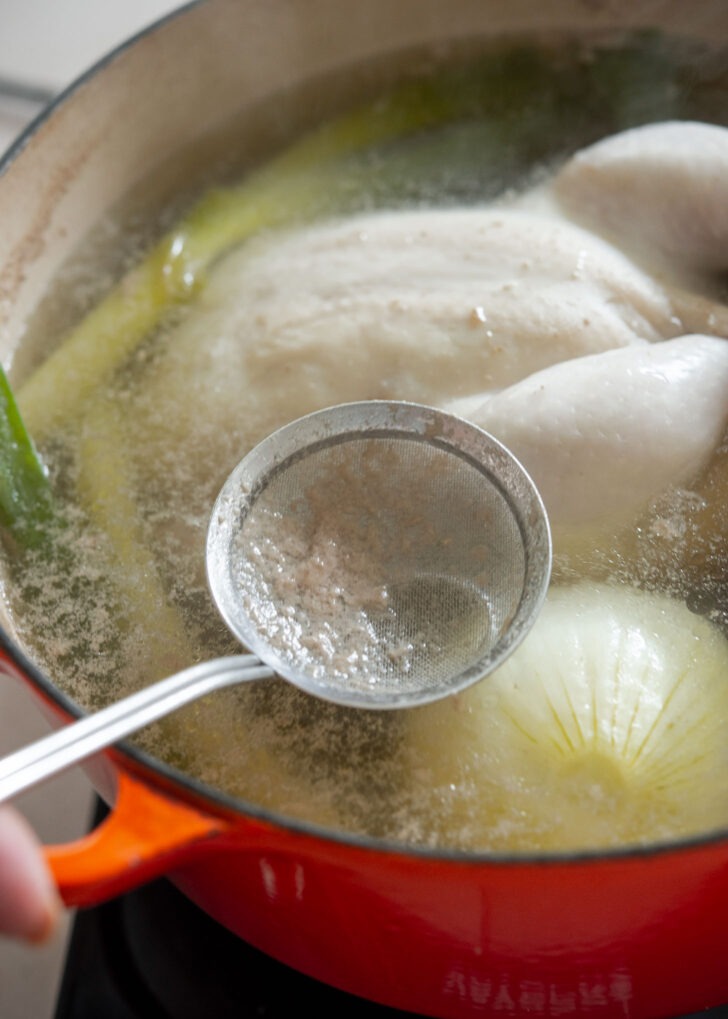
Start the broth. Place the stuffed chicken, herbal pack, ginger, onion, and leek in a large pot. Add enough water to fully cover the chicken and bring it to a boil. After about 5 minutes, skim off any foam or scum with a fine mesh strainer to keep the broth clear.
Tip: If you’re using dried ginseng, add it at the beginning with the chicken so it has enough time to release its flavor.
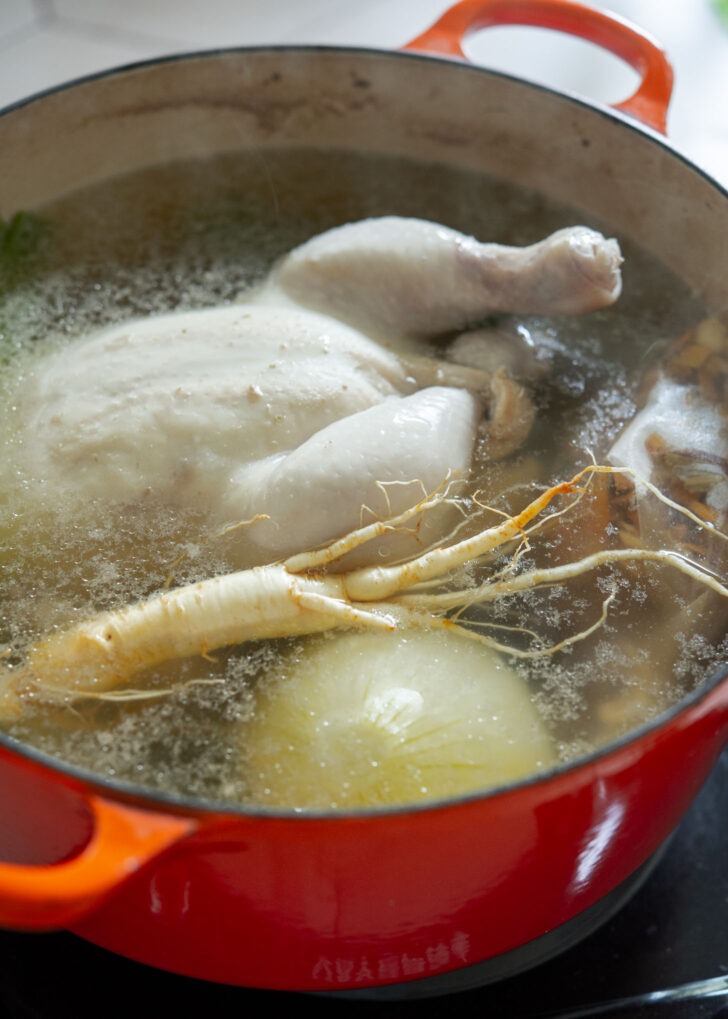
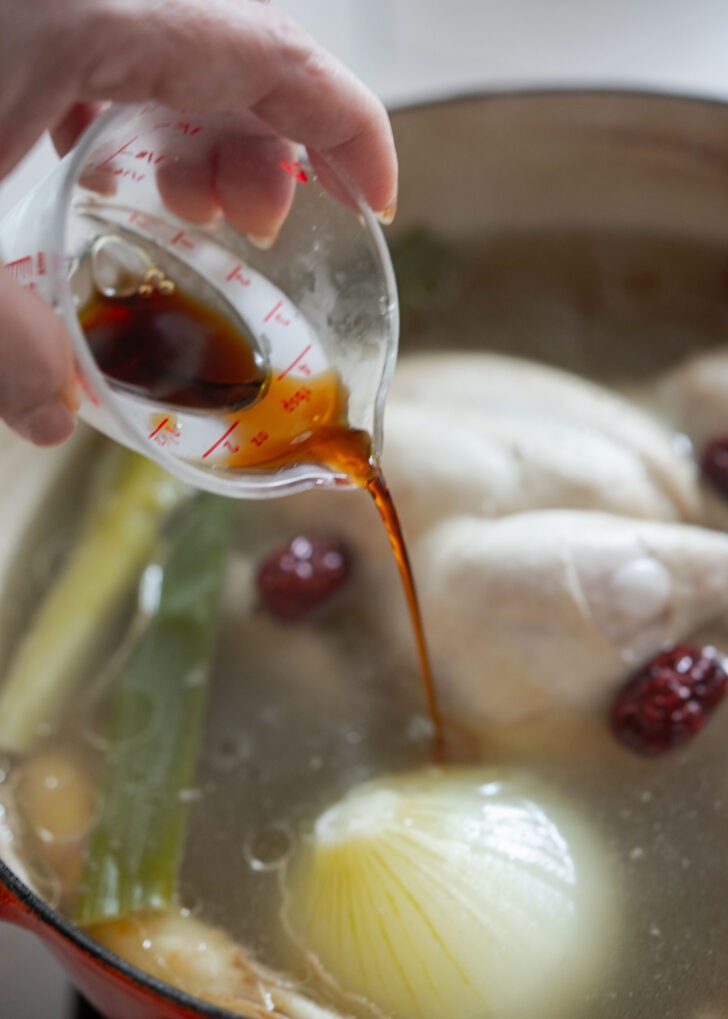
Simmer gently. Add the fresh ginseng, remaining garlic cloves, and extra jujube. Lower the heat and simmer for 30–40 minutes (a bit longer for larger chickens) until the meat is fall-off-the-bone tender and the broth is rich and aromatic.
Season lightly. Samgyetang is traditionally served with mild seasoning so each person can adjust their own bowl. I like to add a small splash of Korean soup soy sauce and a bit of tuna extract while the broth simmers — subtle, but it brings out the depth of the herbs and chicken.
How to Serve Samgyetang
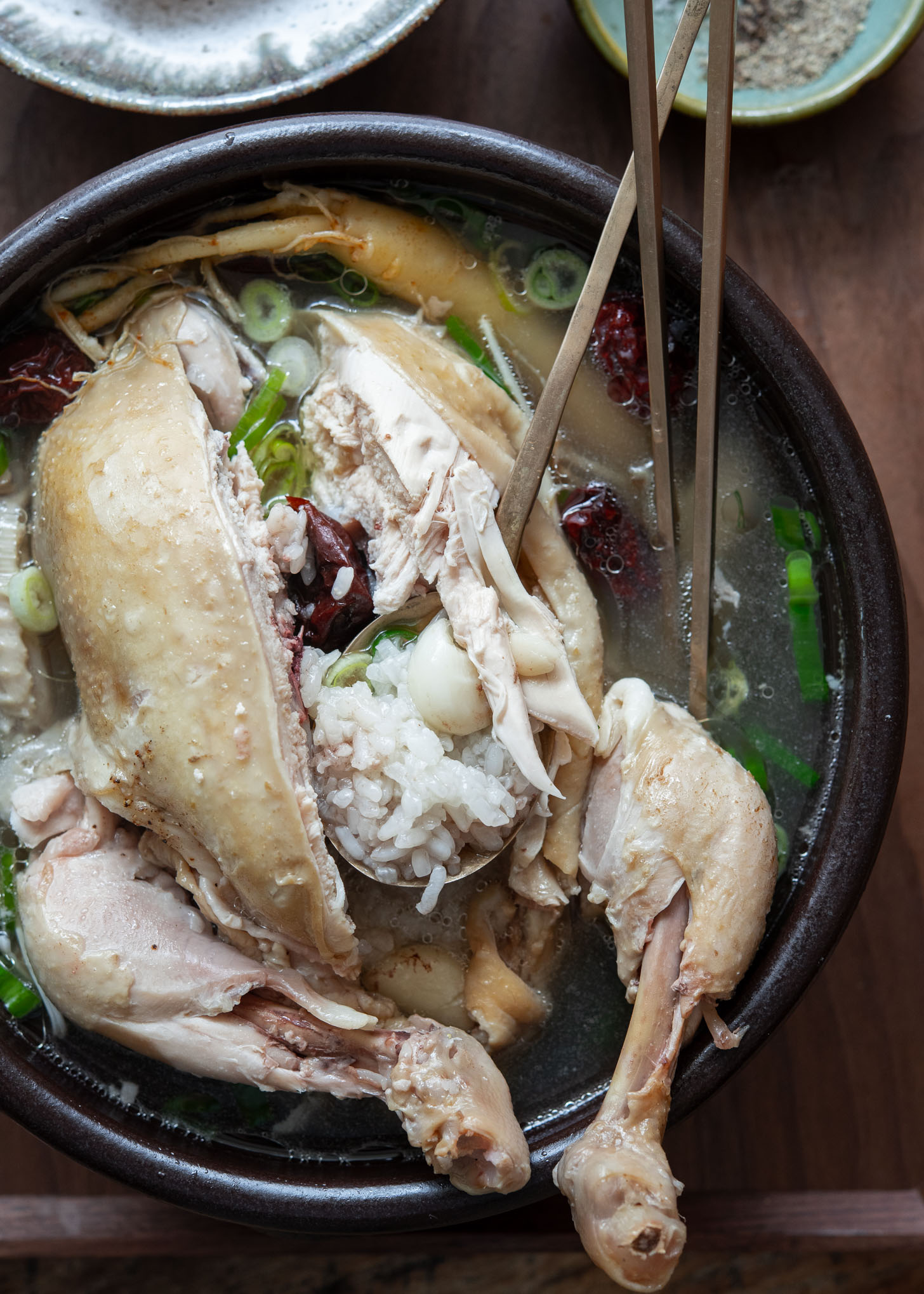
To serve, transfer the whole chicken into a large bowl and ladle the steaming hot ginseng broth over the top. Garnish with handful of green onion for color and freshness.
Keep in mind, samgyetang broth is intentionally lightly seasoned. Serve with small dishes of salt and black pepper for seasoning and dipping—it brings out the chicken’s natural flavor beautifully.
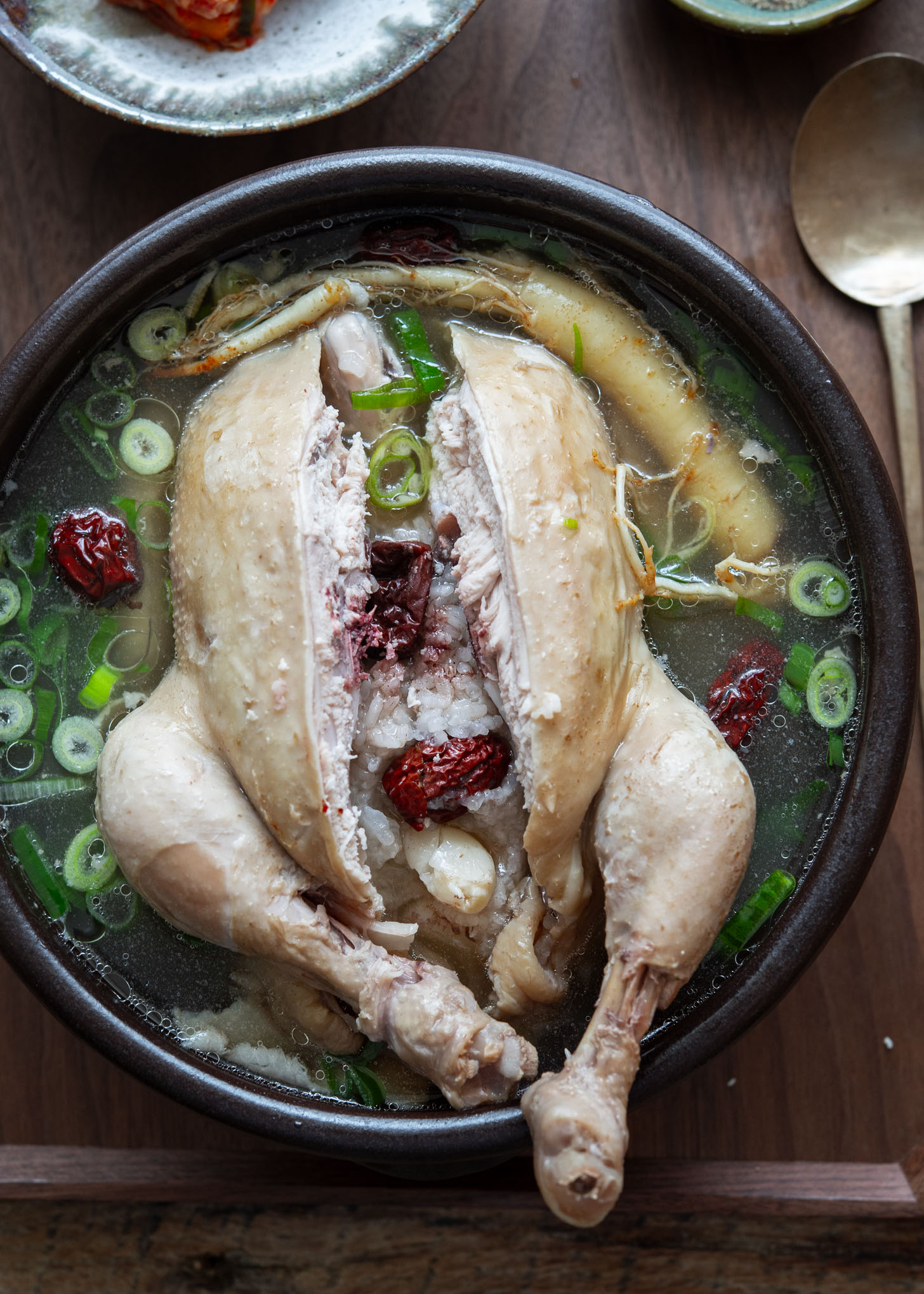
Use kitchen shears to gently cut open the chicken cavity and reveal the jujube infused sticky rice inside. The rice, softened by the herbs and broth, is one of my favorite parts of this dish.
Why Kimchi Matters Here
And don’t forget the most important part: you must serve this Korean chicken soup with cabbage kimchi or radish kimchi. The tangy, cold crunch of kimchi perfectly balances the warm, herbal richness of the soup—it’s the contrast that completes the meal.
Want to personalize your samgyetang? Some Korean cooks add extra soaked rice or even nurungji (crispy rice) to thicken the broth and enhance the flavor. Others go bold with a tangy mustard dipping sauce. You’ll find a few of these extra ideas in the recipe notes below.
If you love a soup that warms you from the inside out, take a look at my Korean soups and stews — lots of comforting bowls live there.
Love this recipe? Rate it and share your experience in the comments below! On Instagram? Tag me to showcase your creation. For more delicious recipes, subscribe to our newsletter!
Samgyetang (Korean Ginseng Chicken Soup)
Recipe Video
Ingredients
- 5 tbsp (60 g) Korean sweet rice (chapssal)
- 1 1.7 to 2.3 lb (about 0.8 to 1.2 kg) whole chicken , or 2 Cornish game hens
- 6 dried jujube, divided
- 10 garlic cloves, divided
- 1 onion
- 1 Asian leek
- 2 thick slices ginger
- 1 packet (about 100g) samgyetang herb kit
- 1-2 ginseng roots, fresh or dried depending on the size. See note below for dried ginseng
- 10 cups (2.5 liter) water
- 2 green onion, finely chopped
- salt and pepper, to taste
Instructions
- Rinse the glutinous rice several times until the water runs clear. Soak for at least 30 minutes while you prepare the other ingredients.
- Trim off the chicken tail (parson’s nose) and wing tips. Remove any excess fat or loose internal bits. Rinse the cavity and pat the chicken dry.
- Drain the soaked rice and stuff the chicken cavity with the rice (you may not need all of it), 3 garlic cloves, and 2 dried jujubes. Don’t overstuff—leave room for the rice to expand as it cooks. Secure the legs by either crossing them through slits made in the loose skin near the tail or tying them with kitchen twine.
- In a large pot, place the stuffed chicken, herbal pack, sliced ginger, onion, Asian leek, and enough water to fully submerge the chicken. Bring to a boil over medium-high heat. After 5 minutes, skim off any foam or scum from the surface using a fine mesh strainer to keep the broth clear.
- Add the ginseng roots, remaining garlic cloves, and jujubes. Reduce heat to medium-low and simmer gently for 30–40 minutes, or until the chicken is tender and cooked through.
- Lightly season the broth with salt to taste. For deeper umami, optionally add a splash of Korean soup soy sauce and tuna extract. Final seasoning can be adjusted at the table with salt and pepper.
- Remove the herbal pack, ginger slices, onion, and leek before serving. Transfer the whole chicken to a large bowl and ladle the hot broth over it. Garnish with chopped green onion.
- Serving Tip: Use kitchen shears to gently cut open the chicken cavity and reveal the rice inside. Serve with small dishes of salt and black pepper—these are used to season the broth to taste and as a simple dipping salt for the tender chicken. Serve with kimchi on the side.
Notes
- Extra sweet rice: If you enjoy the chicken-infused flavor of the stuffed rice, soak a little extra glutinous sweet rice, place it in a small pouch, and simmer it in the pot alongside the chicken.
- Naturally thickened broth: To make the soup slightly thicker, use rice starch water (the water from rinsing rice) instead of plain water. It creates a subtle, creamy texture.
- Nurungji variation: Some Korean restaurants add nurungji (scorched crispy rice) to samgyetang for a nutty, slightly creamy twist. I’ve tried it, but I still prefer the classic clear broth.
- Optional dipping sauce: A mix of soy sauce, vinegar, and Korean mustard (gyeoja) is sometimes used as a dipping sauce for the chicken. It’s flavorful, but I personally stick with salt and pepper to let the herbal notes shine.
5 Sterne
Danke!
Instead of dry ginseng root which you said its tough. I’ll go dig fresh ginseng root than do you leave it in the soup and chop it up.