

Tteokguk (Korean Rice Cake Soup)
This tteokguk keeps the broth clean and clear, built from a deep beef-and-vegetable simmer that tastes warm and comforting. Tender rice cakes and seasoned shredded beef go on top for the classic Korean New Year bowl—but it’s also the kind of simple, soothing soup you’ll crave any time of the year.
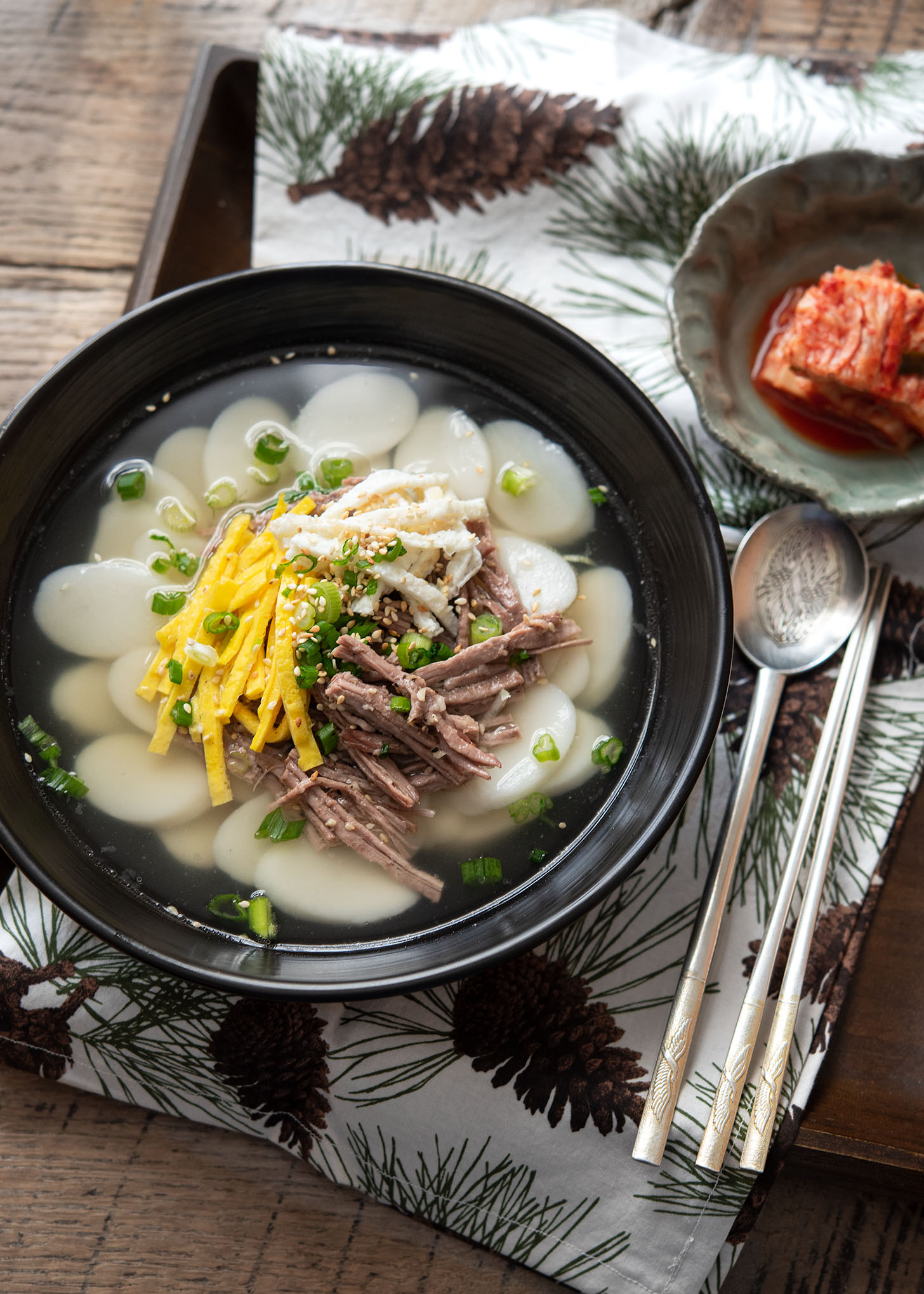
Tteokguk (떡국) is the soup that opened every New Year’s morning in my childhood—a warm bowl of chewy rice cakes and clear broth, and my mom reminding us to finish every last bite so the year would start “properly.” It’s one of those quiet food memories that never really leaves you.
When I began making tteokguk on my own, I naturally followed her method. Over time, though, I noticed the parts I wanted to refine—not the tradition itself, but the way I preferred the broth to taste and look.
Get new recipes via email:
I’ve always loved a soup that feels light and clean, where the beef and aromatics shine without getting lost. That small shift guided the way I make tteokguk today.
It still carries the same comfort and New Year meaning I grew up with, just prepared with a little more intention and clarity—literally.
How I Make Tteokguk a Little Differently
Maybe it’s just me, but I’ve never been a fan of cloudy tteokguk. Rice cakes are mostly starch, and when they cook directly in the broth, they release enough of it to mute the flavor and weigh down the soup.
So I changed one small thing:
I cook the rice cakes in a separate pot.
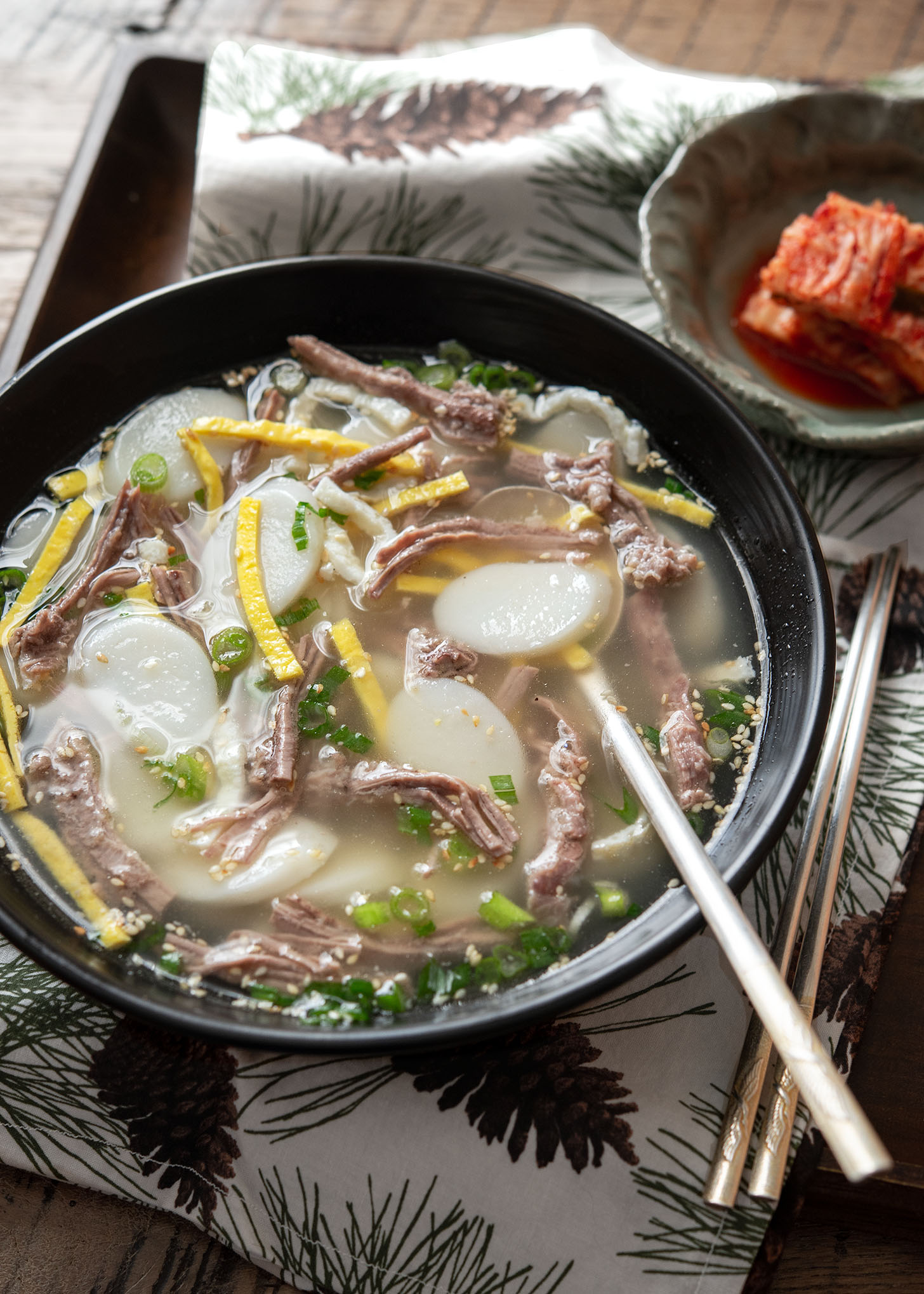
While the beef broth simmers, I boil the rice cakes separately. Then I drain them and add them to the bowl just before serving. The broth stays beautifully clear, the presentation is cleaner, and the rice cakes stay chewy instead of thickening the soup.
This small tweak gives the soup a clarity similar to a light galbitang and makes it easy to adjust the bowl—especially if you want to add a couple of mandu dumplings. It’s the same comforting tteokguk I grew up with, just a bit more refined. And all it takes is one extra pot of water.
Key Ingredients
Rice cakes (tteok): Thinly sliced garaetteok is essential. Fresh tteok softens quickly and stays pleasantly chewy, while frozen or packaged slices work well once soaked. I avoid thicker cuts because they release more starch and cloud the broth, which I try to avoid.
Beef (broth base): Brisket or flank is my go-to. Both cuts release a clean beef flavor without becoming greasy, and they shred beautifully for topping. The broth from these cuts has the gentle depth I associate with holiday soups — not too rich, not too heavy.
Aromatics and Broth Seasoning: Korean radish, onion, garlic, and a small piece of dried kelp (dashima) build a naturally sweet, balanced broth — the kind of clean flavor base you find in classic Korean soups. To season it, I use Korean soup soy sauce (gukganjang) for clarity and a small splash of Korean tuna sauce for quiet umami without darkening the broth.
Simple garnishes: Shredded beef, egg ribbons, green onion, and a bit of roasted seaweed finish the bowl the way many Korean families serve it on New Year’s Day — clean, warm, and full of texture.
How to Make Tteokguk (Step-by-Step)
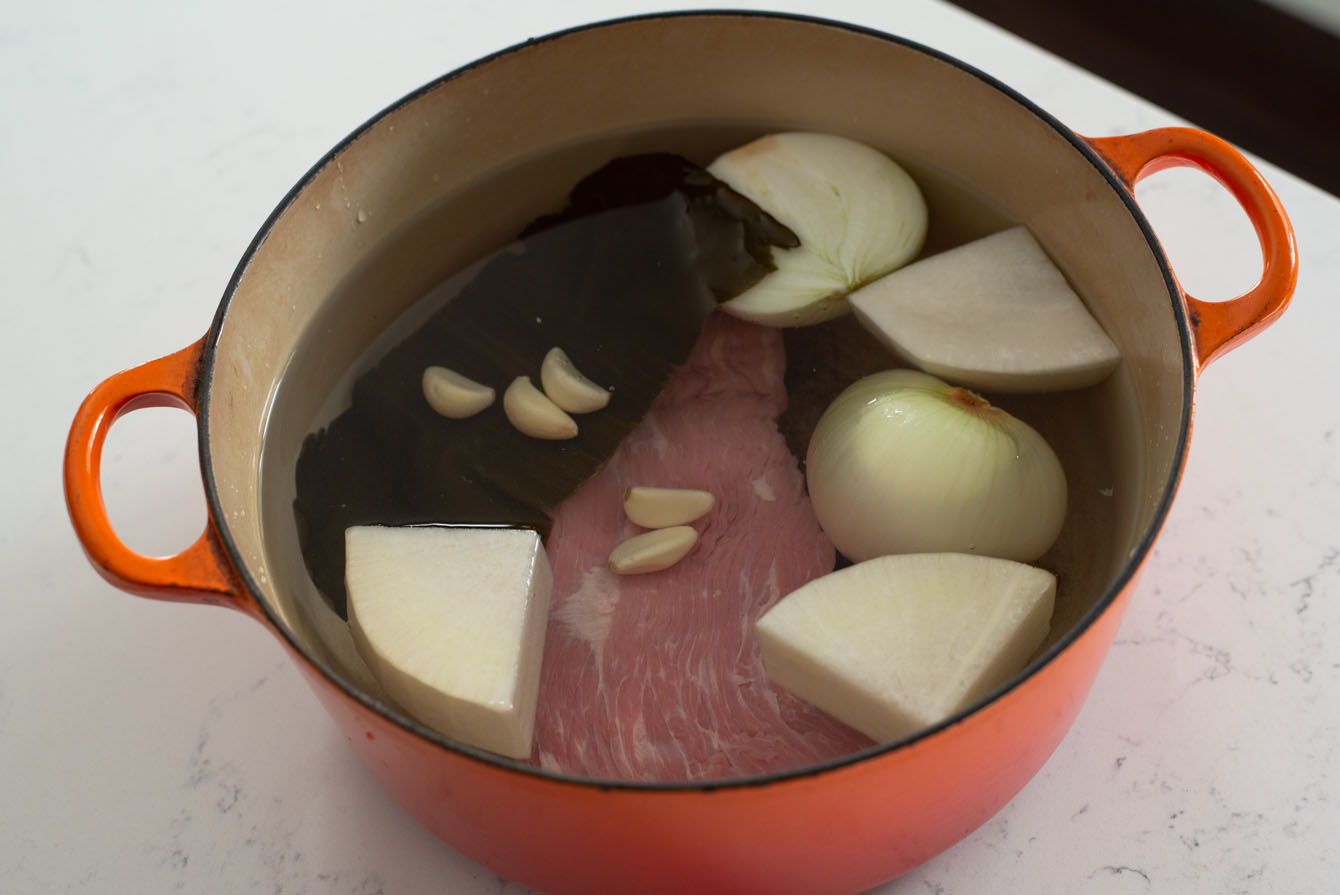
Build the broth. Simmer the beef with radish, onion, garlic, and a small piece of kelp until the broth tastes naturally sweet and balanced.
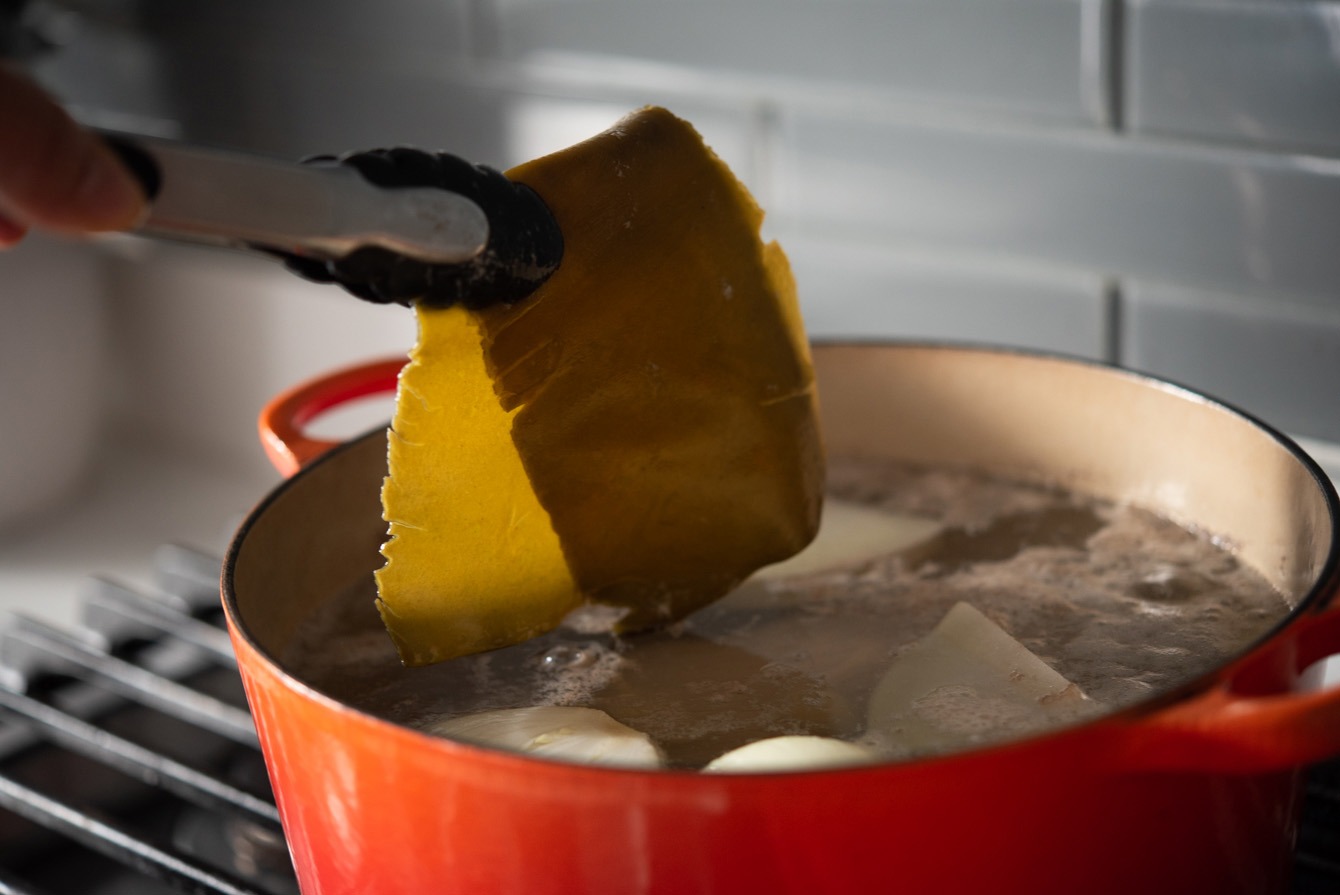
Remove the kelp early. it’s an easy way to keep the broth light and avoid any bitterness. This slow, gentle simmer is what gives tteokguk its clean flavor. After simmering, remove the beef, let it cool, and shred into thin strips.
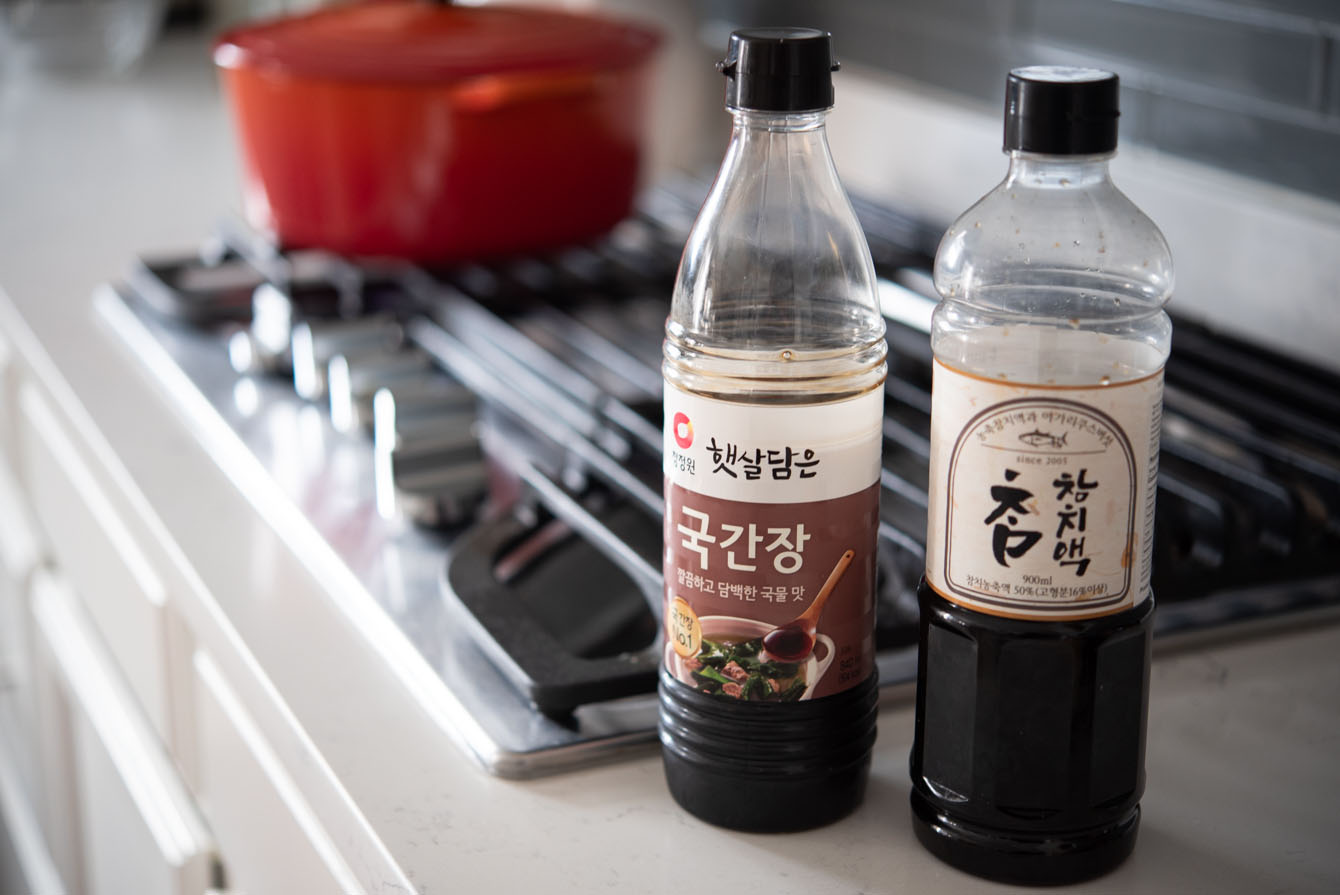
Flavor the broth. Add Korean soup soy sauce (guk ganjang), Korean tuna sauce, and a pinch of salt. Then, keep the broth warm until ready to serve.
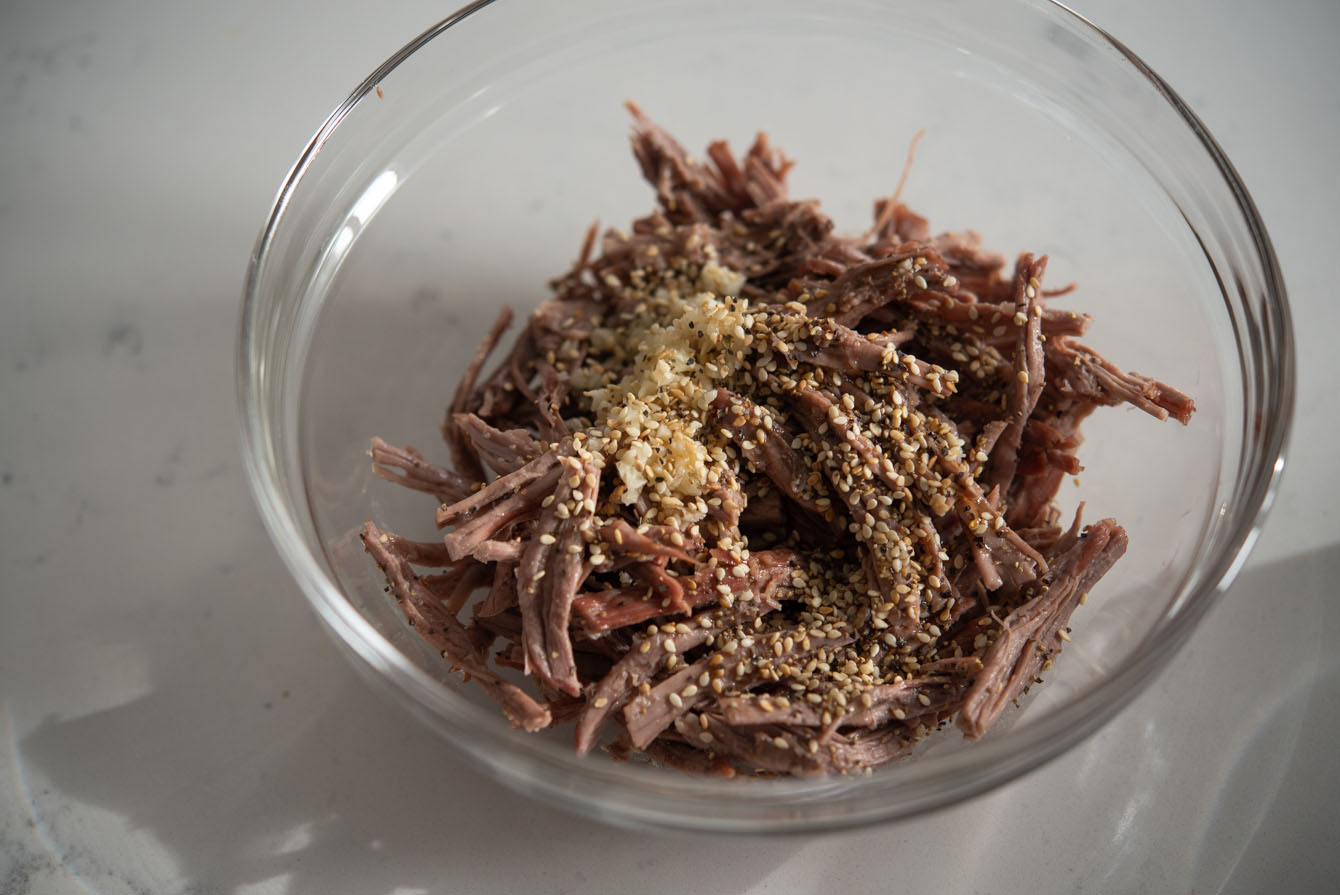
Season the beef. Once the beef cools, shred it and season it lightly. The seasoned beef becomes one of the best toppings for the finished bowl.
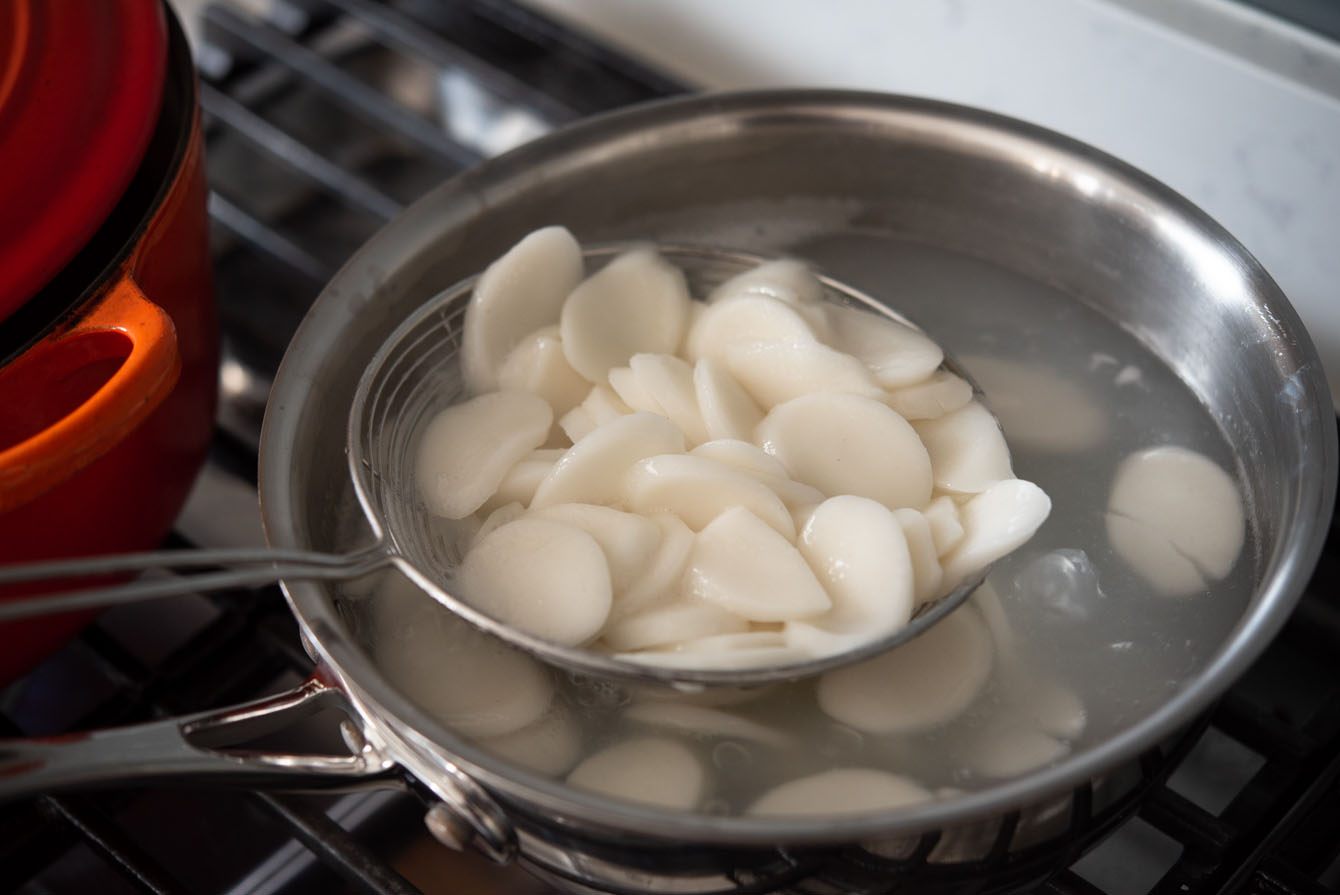
Cook the rice cakes separately. While the broth simmers, boil the rice cakes in a different pot. This is the key to keeping the broth clear. When cooked on their own, the rice cakes stay chewy without releasing starch into the soup.
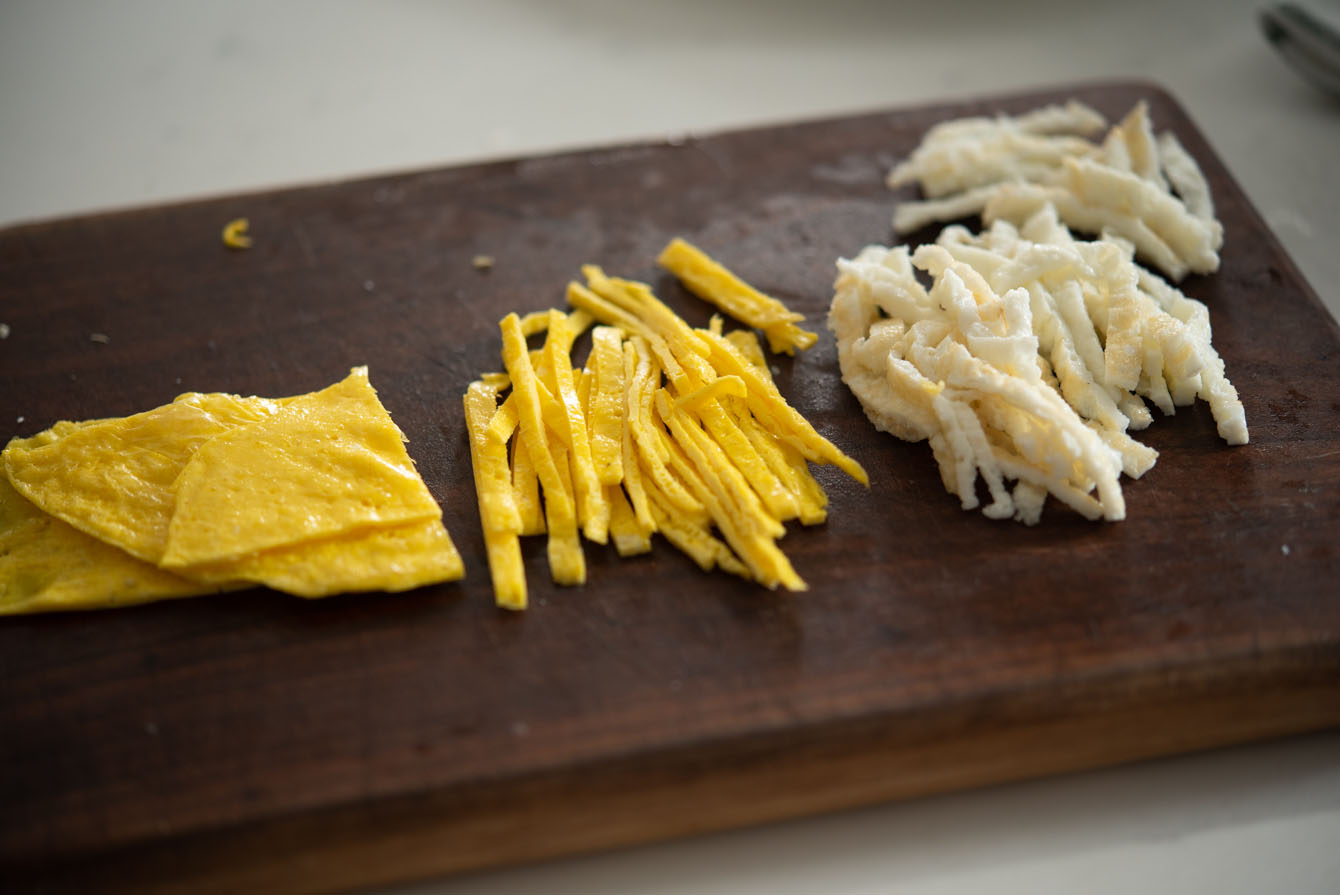
Make the egg garnish (jidan, Optional but pretty). Thin sheets of cooked whites and yolks add color and a classic New Year look. You can also swirl beaten egg directly into the broth for a quicker finish.
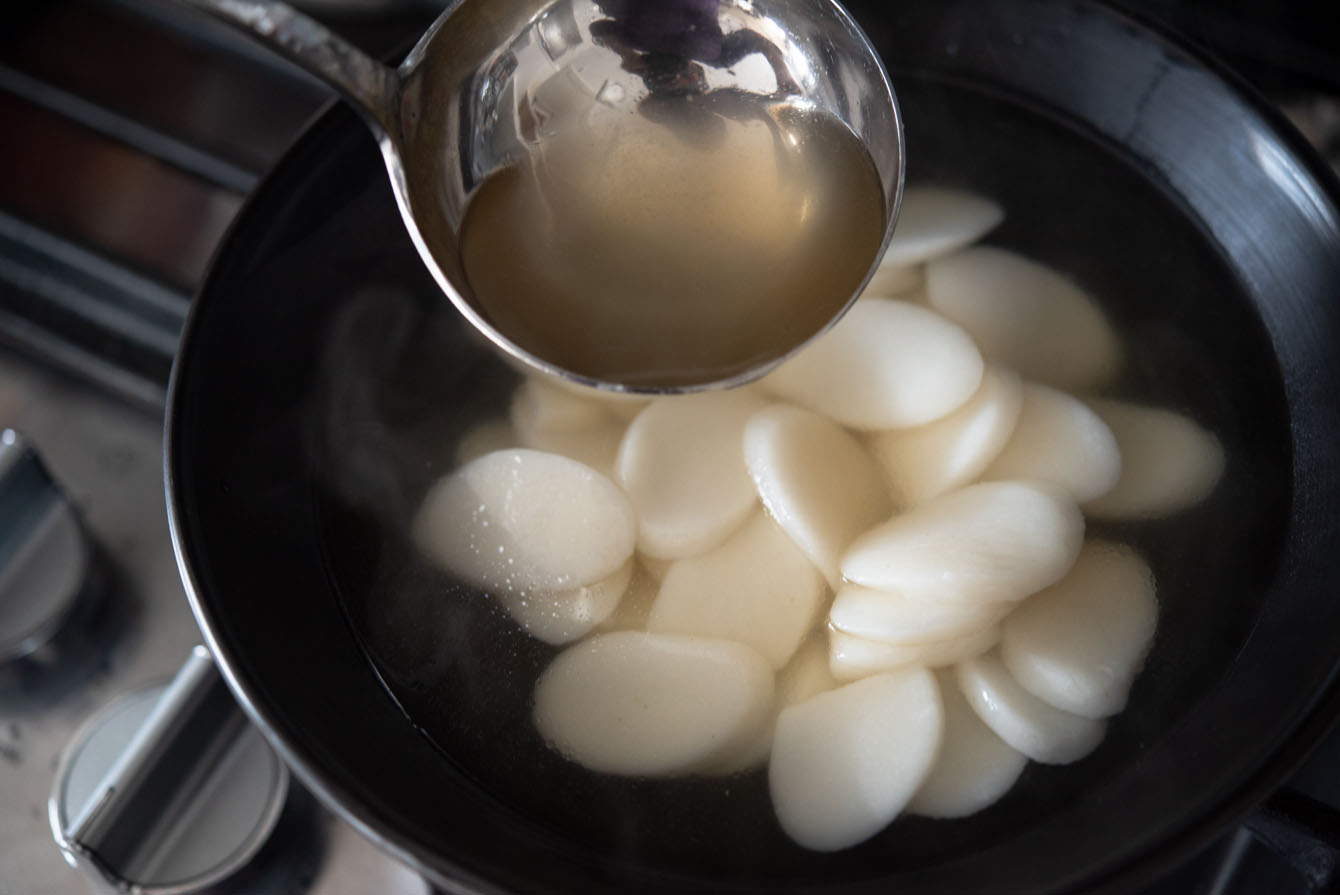
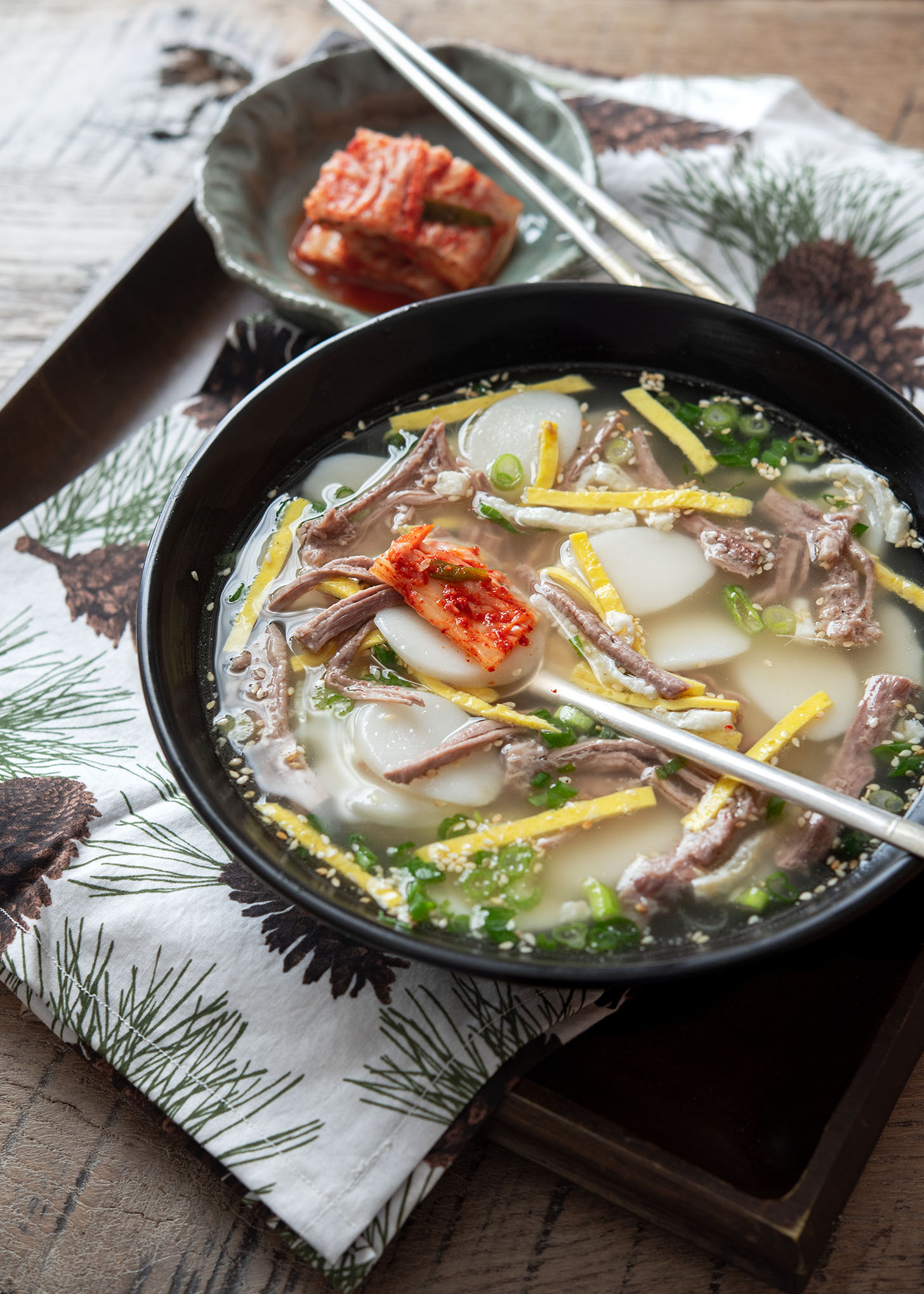
Assemble and finish. Add the cooked rice cakes to your bowl, ladle hot broth on top, and finish with seasoned beef, green onions, seaweed, egg strips. Serve tteokguk with a side of kimchi. Honestly, that’s all it needs.
If you’re preparing this soup for the Korean New Year, you can explore more traditional dishes in my Seollal foods roundup to build a full holiday table.
And if you enjoy dumpling soups, mandu-guk is another comforting bowl many families make alongside tteokguk. For more clean, cozy Korean soups, you can browse my Korean Soups & Stews collection.
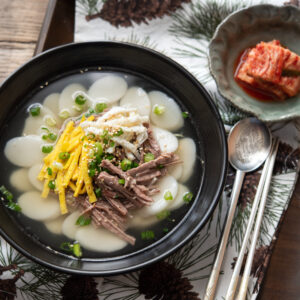
Tteokguk (Korean Rice Cake Soup)
Ingredients
For beef stock
- 1 lb (450 g) beef brisket or beef rump
- 4 large chunks (about 400–500 g total) Korean radish or daikon radish
- 3 large dried sea kelp (dashima)
- 1 large onion, halved
- 8 cloves garlic
- 12 cup (2.8 L) water
- 1 tbsp (15 ml) Korean soup soy sauce (gukganjang)
- 1 tbsp (15 ml) Korean tuna sauce
- salt, to taste
For beef seasoning
- 1 clove garlic, minced
- ½ tbsp (7 ml) Korean soup soy sauce (gukganjang)
- 1 tsp (5 ml) sesame oil
- 2 tsp (6 g) toasted sesame seeds
For rice cake soup
- 2 lb (900 g) rice cakes
- 1 tbsp (15 ml) sesame oil
- 2 sheets roasted seaweed, crumbled, optional
- 2 green onions, finely chopped
- ½ tsp black pepper
- 2 eggs, separated, to garnish, optional
Instructions
- To make the beef stock: Combine the beef, radish, kelp, onion, and garlic in a large pot with water. Bring to a boil. As soon as the broth boils, remove and discard the kelp. Reduce the heat and simmer for 45–60 minutes, until the beef is tender. Remove the beef and vegetables. Strain the broth and keep it warm. Discard the vegetables and let the beef cool slightly. Season the broth with soup soy sauce, tuna sauce, and salt to taste.
- To season the beef: Shred the cooled beef into thin pieces and place in a bowl. Add soup soy sauce, minced garlic, black pepper, sesame oil, and sesame seeds. Mix well and set aside.
- To cook the rice cakes, If using frozen or packaged tteok, soak them in cold water for 10 minutes. Bring a separate pot of water to a boil. Add the rice cakes and cook until softened and floating, about 5 minutes. Drain and divide the rice cakes into serving bowls.
- Optional egg garnish: Beat the egg whites and yolks separately. Heat a lightly oiled skillet over medium-low. Pour each egg mixture in a thin layer, cooking about 1 minute per side without browning. Slice both sheets into thin strips.
- To serve: Ladle the hot beef broth over the cooked rice cakes. Top with seasoned beef, egg ribbons, green onion, and roasted seaweed. Add a few drops of sesame oil and black pepper. Serve immediately with kimchi.
Happy Korean American day! This soup was fantastic! Somehow the rice cakes I found at our local Asian market held their shape very well during multiple reheatings. The broth was outstanding and I was able cook the heck out of a rump roast chunk I’d had in the freezer for months. It was perfect. I live in Cleveland and am very fortunate to have many Asian markets near me. Heaven!
My favorite food is rice cake, I made authentic korean rice cake soup according to your recipe, it took only a short time to make and it tasted great, my daughter loved it, thanks for sharing!
Hello :3
I’ve tried your other rice cake soup recipe and it was delicious, so I thought about cooking this one for my mother after she comes back from her holiday trip. However, I won’t be home during the day. Do you think I could make this soup the day before and leave it for her to heat it up later? Would the rice cake survive soaking in the soup for several hours? Or could you recommend me another way how I can prepare this dish?
Thank you ever so much! You are reall the best <3
Love,
Nhung
Hi Nhung
Unfortunately you can make this recipe with rice cakes in the soup head of time. The rice cakes will get very soggy. If I were you, I will make the stock, simmer and shred the beef ahead of time. Then all you have to do is to heat the stock with beef and add rice cakes to cook together (add the eggs at the last minute). It will still take some time to prepare but a lot shorter than starting from the beginning.
Hope this helps.
Have just stumbled on your website looking for a ddukguk recipe for celebrating New Year – this is by far the best out there! Will be enjoying for dinner tonight (Happy Year of the Horse) and am already making plans for when the family will be eating kimchi stew….thanks. From the Aussie who loves eating (and is learning to cook) Korean!
You can leave it out. The anchovies and onions will make the flavor.
Hi! This looks soo good but I can't find any dried sea kelp around. Is there any substitute?
I love ddukguk! Always so comforting 😀 Happy New Year to you and your family!
This looks absolutely delicious! I will definitely make it soon. Seems to be perfect for the cold days we are having here. Thanks for posting!
Happy New Year! May you and your family blessed with more deliciousness this year!
Btw, I`ve finally bought ddukppoki and gochujang last week. Can`t wait to try out your recipe!
I've heard of rice cake soup but have yet to try it. Looks so good! Happy new year!