

Sujeonggwa (Korean Cinnamon Drink)
Make a batch of sujeonggwa, Korea’s classic cinnamon-ginger punch, in just about 35 minutes, then chill it for a light, refreshing dessert drink. Naturally dairy-free and easy to prepare, this cozy Korean beverage is perfect after a big meal or as a simple make-ahead treat for winter gatherings.
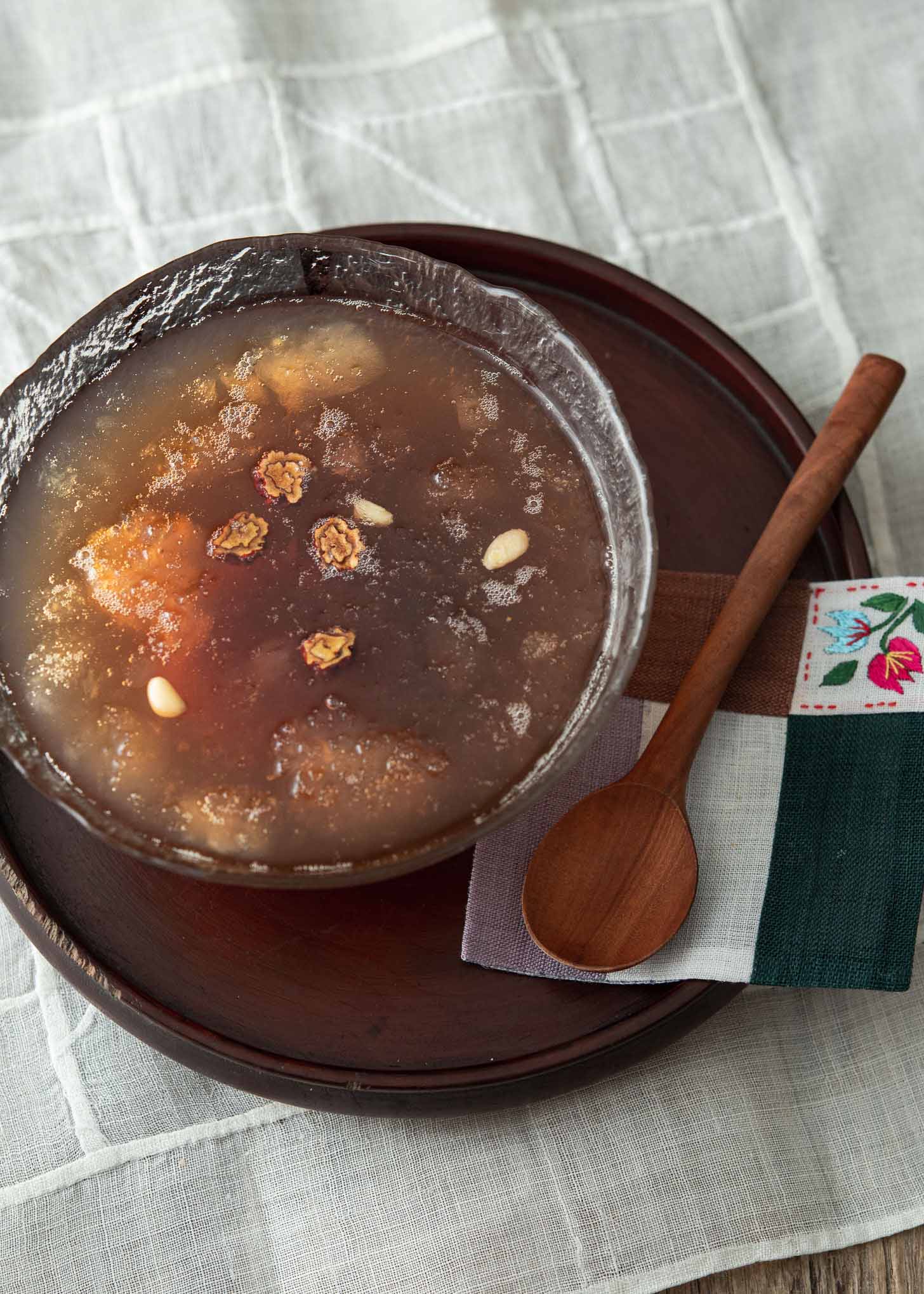
Sujeonggwa (수정과) has always been one of my favorite treats after a big meal at a Korean restaurant, that moment when the server brings out a tiny chilled cup and the heaviness of dinner suddenly melts away. It’s refreshing, lightly sweet, and has just enough cinnamon-ginger warmth to clear your palate.
At home, my mother made sujeonggwa every winter before the holidays. She simmered big pots of cinnamon and ginger until the whole house smelled like the start of a celebration.
Get new recipes via email:
As a child, I didn’t appreciate the strong spice, but as I grew older, those same flavors became something I looked forward to all season. Now, whenever I make it myself, it tastes like winter — cozy, familiar, and full of family memories in a single glass.
And the best part? This traditional Korean cinnamon drink is incredibly simple to make with just a few ingredients and a gentle simmer.
What I Love About This Korean Cinnamon Drink
Sujeonggwa has a way of fitting into whatever moment you’re in.
- Sujeonggwa is versatile. Serve it cold for a bright, refreshing finish after a heavy meal, or warm it gently when you want something soothing and cozy. It has the same light, cleansing finish I appreciate in dishes like dongchimi (radish water kimchi), but with the sweet aroma of cinnamon and ginger.
- During the holidays, I love turning it in a soft slushy punch that feels festive without being heavy. On quieter winter nights, the same recipe becomes a calming, ginger-forward tea that warms your hands and settles your body.
- It’s a true Korean dessert. In Korea, many desserts come in drink form. A chilled glass of sujeonggwa with a simple garnish feels elegant, traditional, and satisfying without being heavy.
Ingredients for Sujeonggwa
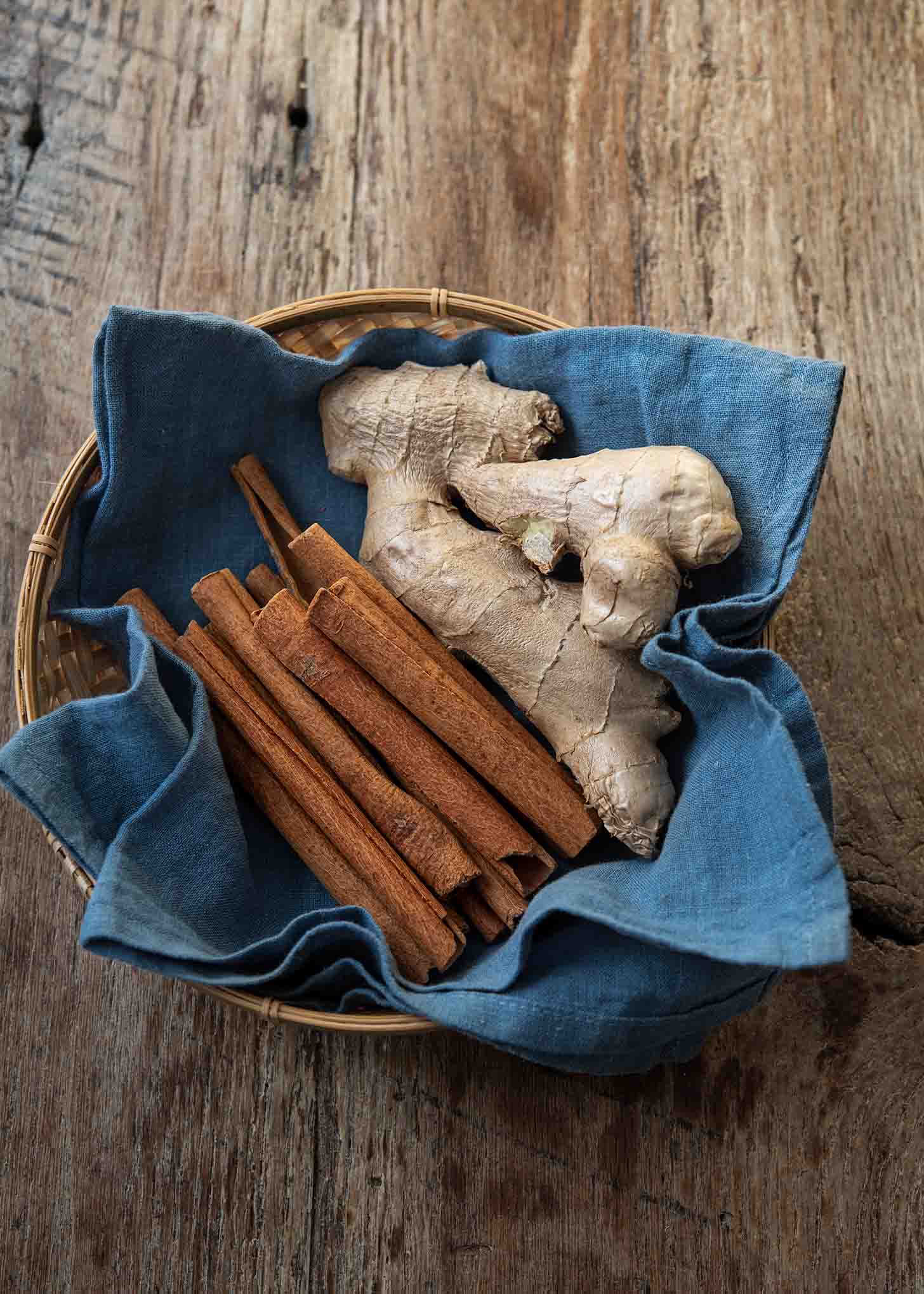
Cinnamon Sticks: I always use whole cinnamon sticks rather than powder. It’s the only way to get the clean, warm flavor Koreans expect in sujeonggwa. Powdered cinnamon clouds the drink and makes the spice feel harsh. Simmering sticks slowly brings out a deep, rounded aroma without bitterness.
Fresh Ginger: Fresh ginger is essential here. It adds gentle heat and brightness that balances the sweetness, and the flavor changes depending on how thinly you slice it. Thicker slices give a softer, milder ginger note; thinner slices bring sharper warmth. Koreans adjust this based on taste, and it’s a small detail that makes a noticeable difference in the final flavor.
Muscovado Sugar: I prefer using muscovado sugar because it gives sujeonggwa the deeper amber tone and soft caramel sweetness. If not available, light brown sugar works well too, but muscovado adds a rounder flavor that pairs beautifully with cinnamon and ginger.
How to Make Sujeonggwa
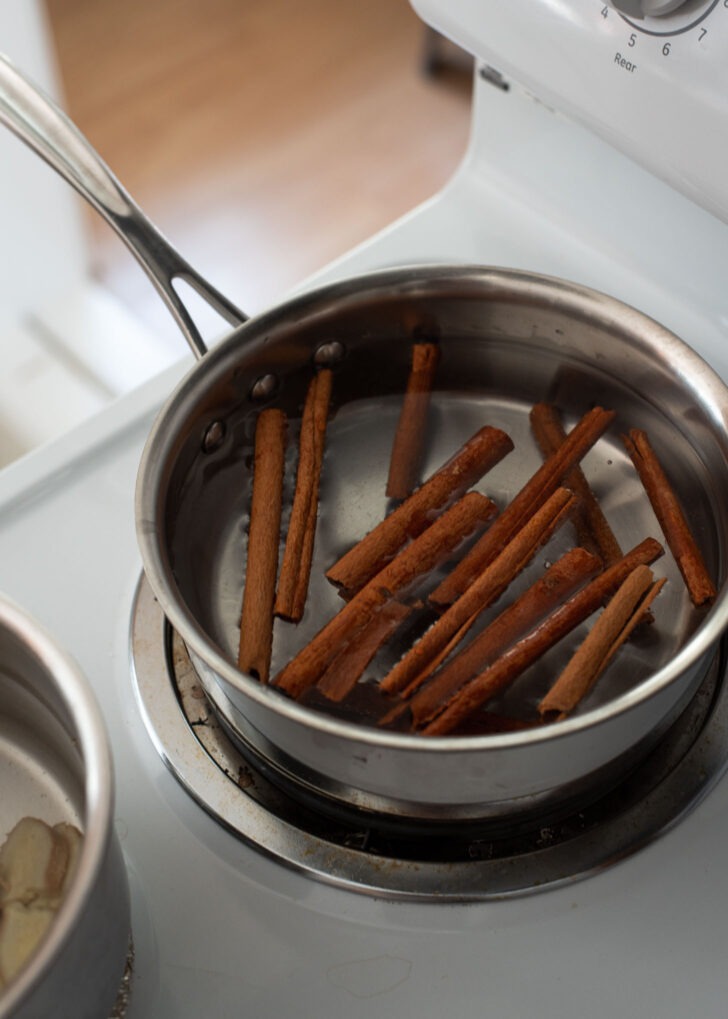
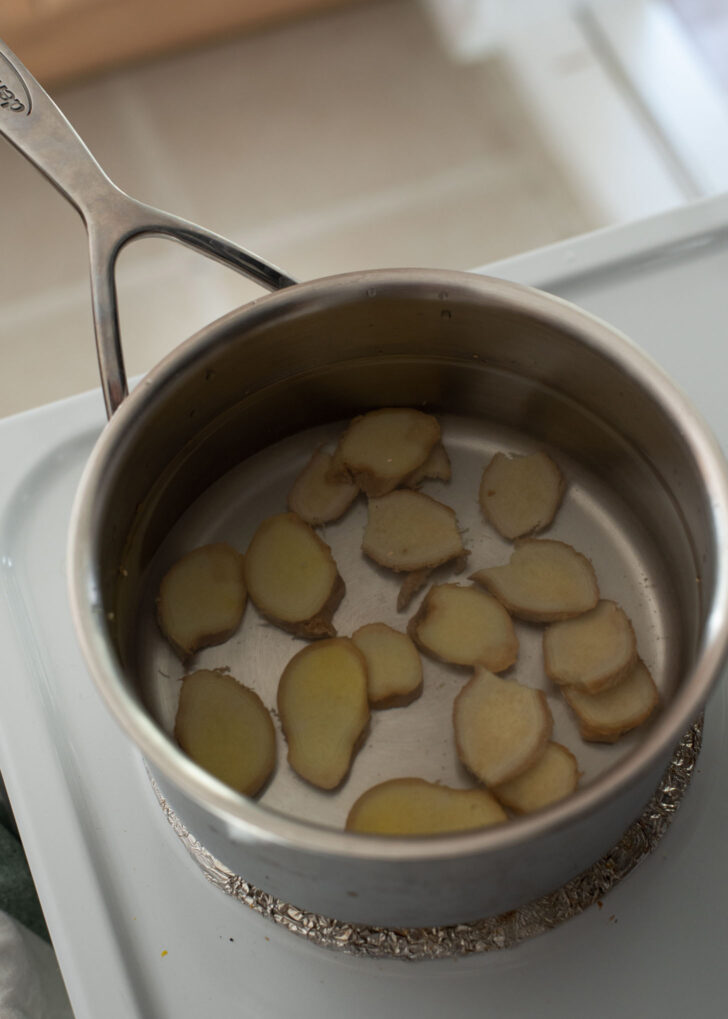
To make sujeonggwa, I prepare two medium pots — one for cinnamon sticks and one for sliced ginger.
It’s tempting to simmer everything together, but Koreans traditionally brew them separately for a reason: cinnamon releases its flavor quickly and can turn slightly bitter if overcooked, while ginger needs more time to soften and develop its warmth. Keeping them apart gives you cleaner, better-balanced flavors.
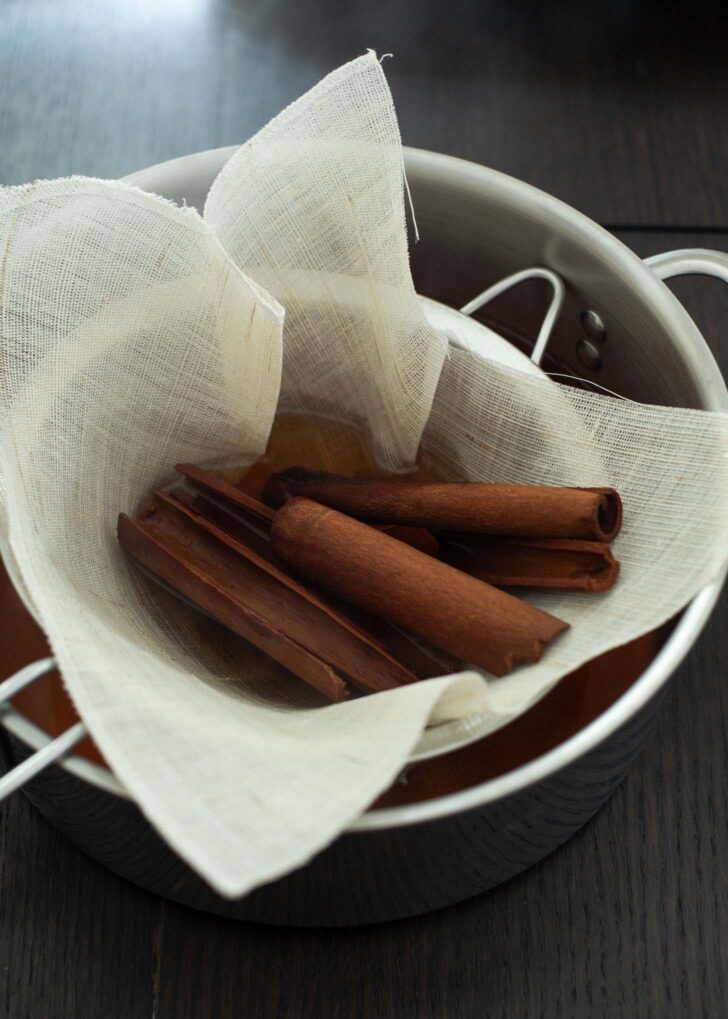
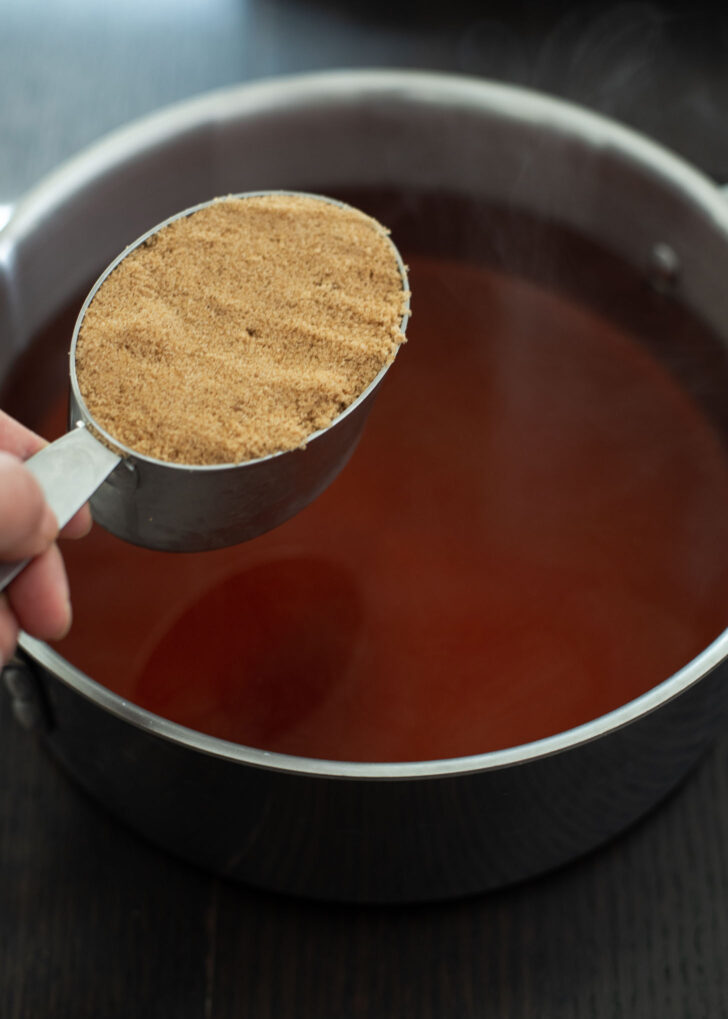
When both pots are done simmering, strain the liquids through a fine strainer or a piece of kitchen cloth. This small step removes the tiny particles that make the drink cloudy and gives sujeonggwa its clear, amber look.
Combine the strained liquids, stir in muscovado sugar until fully dissolved, and let the drink cool before chilling. It tastes even better after a short rest in the fridge.
Variations & Serving Ideas
Sujeonggwa is simple, but a few traditional touches, and a couple of modern ones, can shift its mood completely. These are the variations I grew up seeing at home and in Korean restaurants, and they make the drink feel more festive or comforting depending on how you serve it.
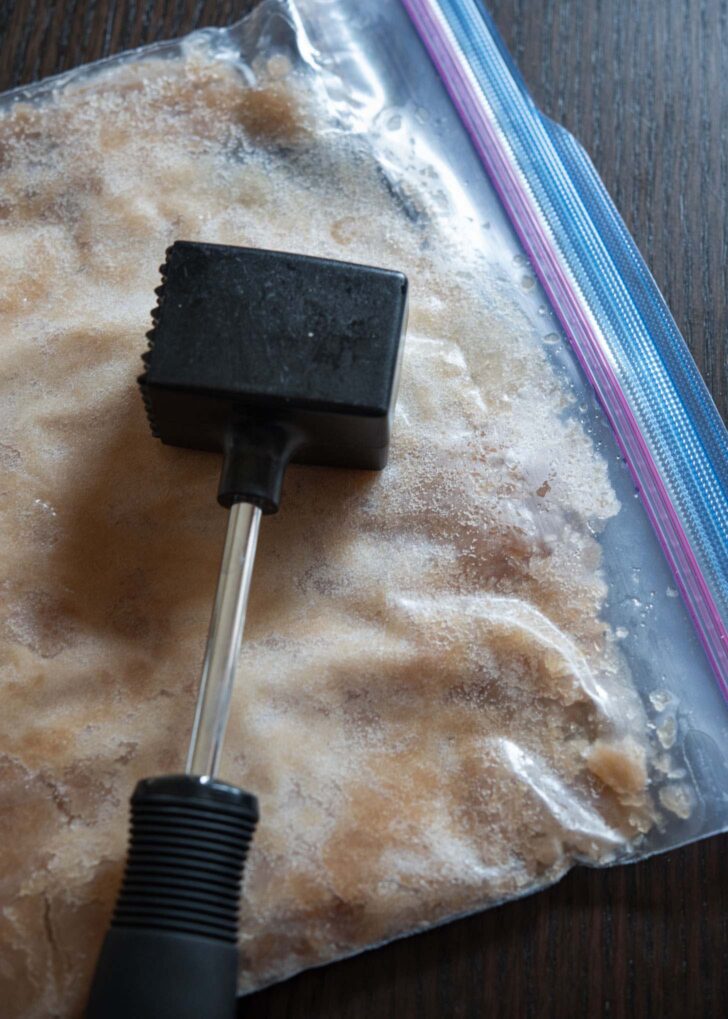
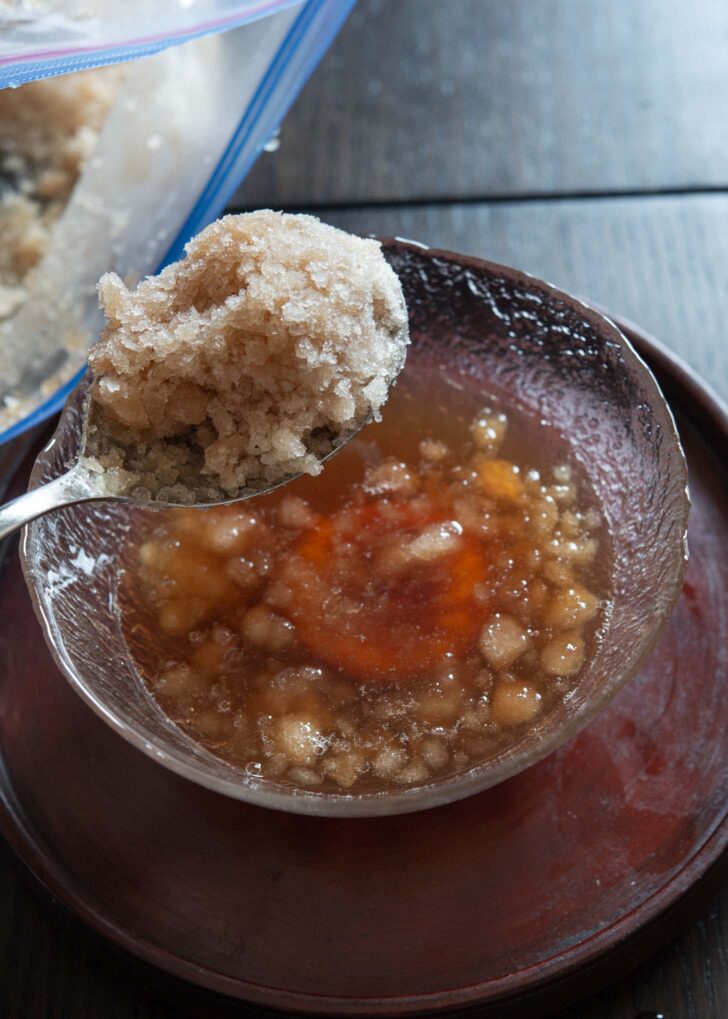
Cinnamon Ice (Holiday Punch Style)
Freeze a little sujeonggwa into ice cubes and add them before serving. The edges melt into a soft slush, turning the drink into a light holiday punch. Because the cubes are made from the drink itself, the flavor stays rich instead of watered down.
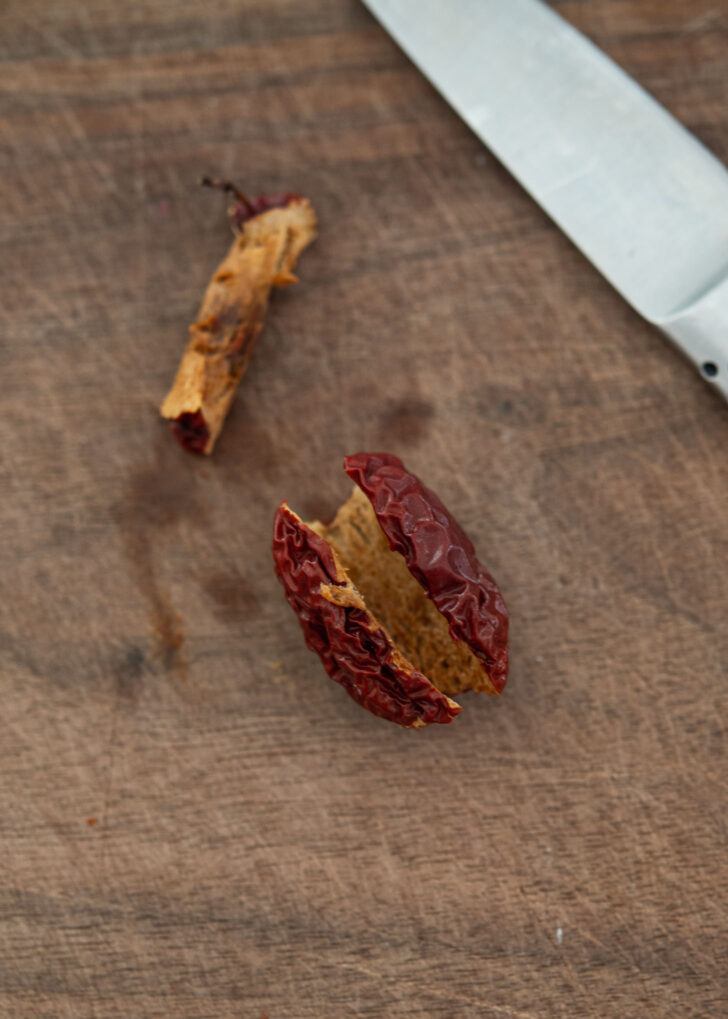
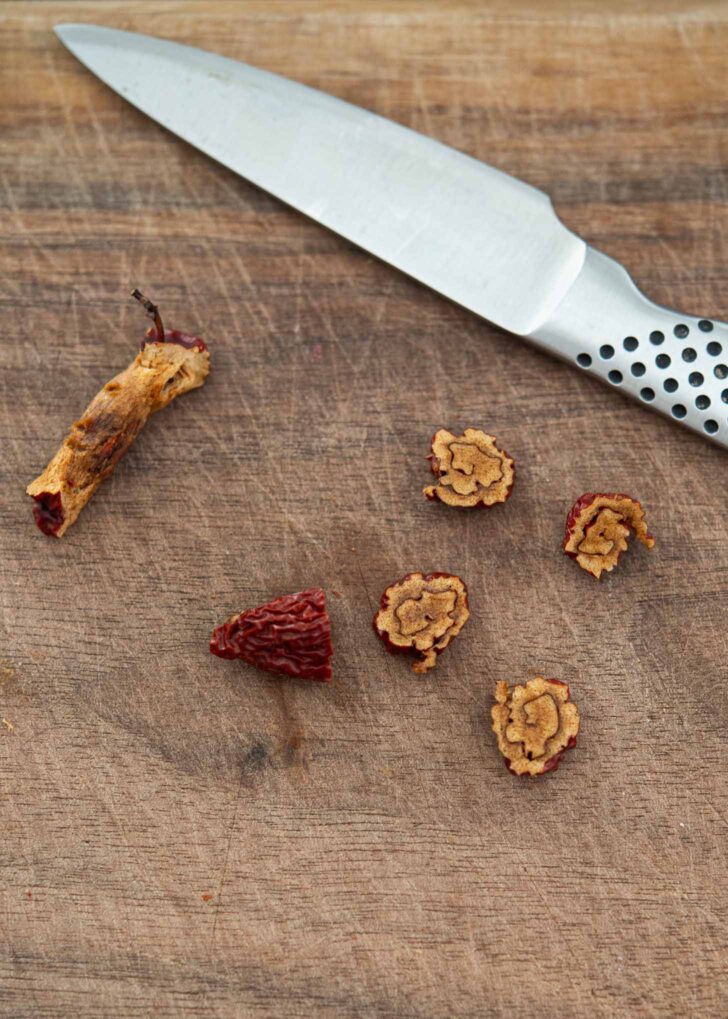
Dried Jujube + Pine Nuts (Traditional Garnish)
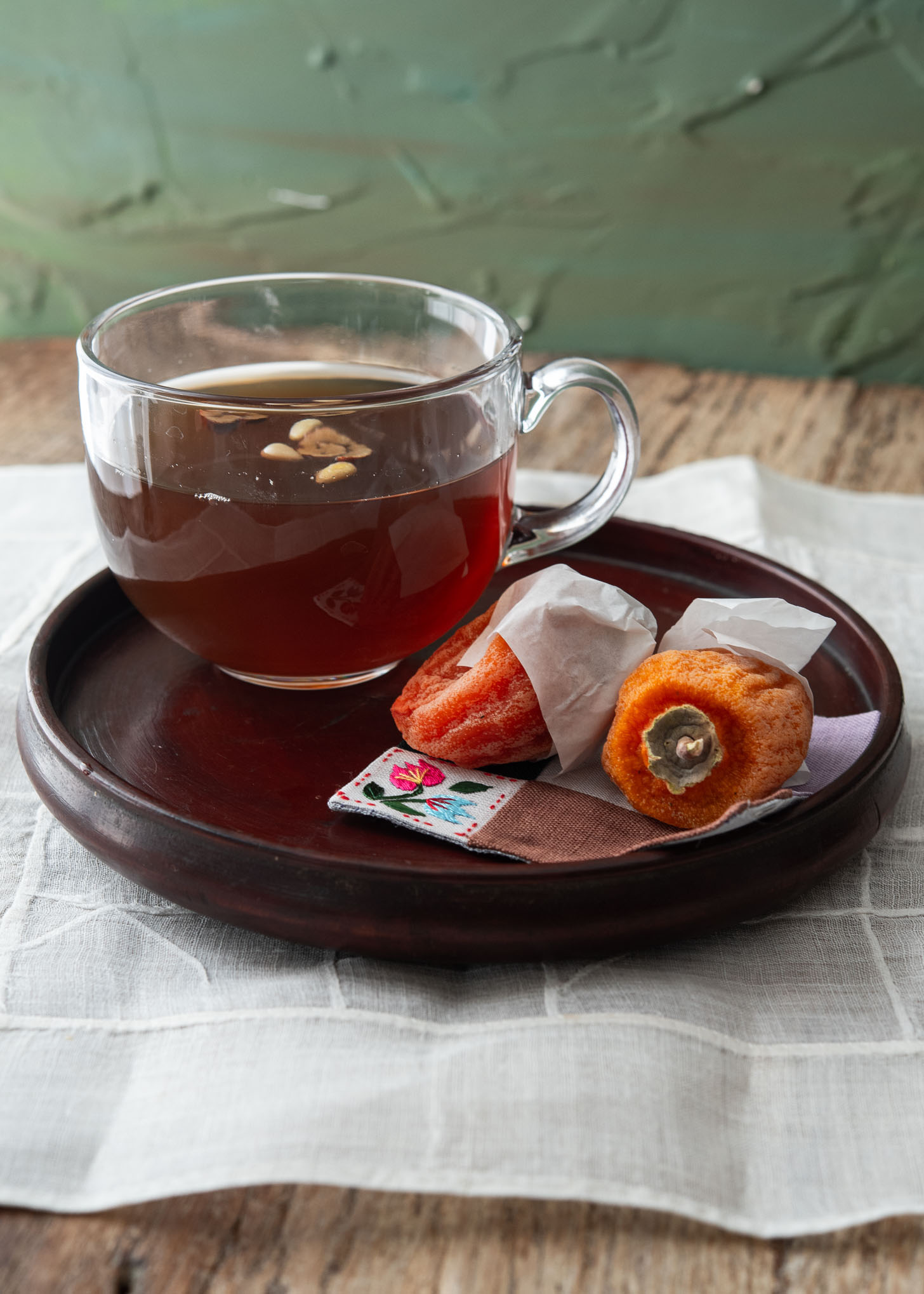
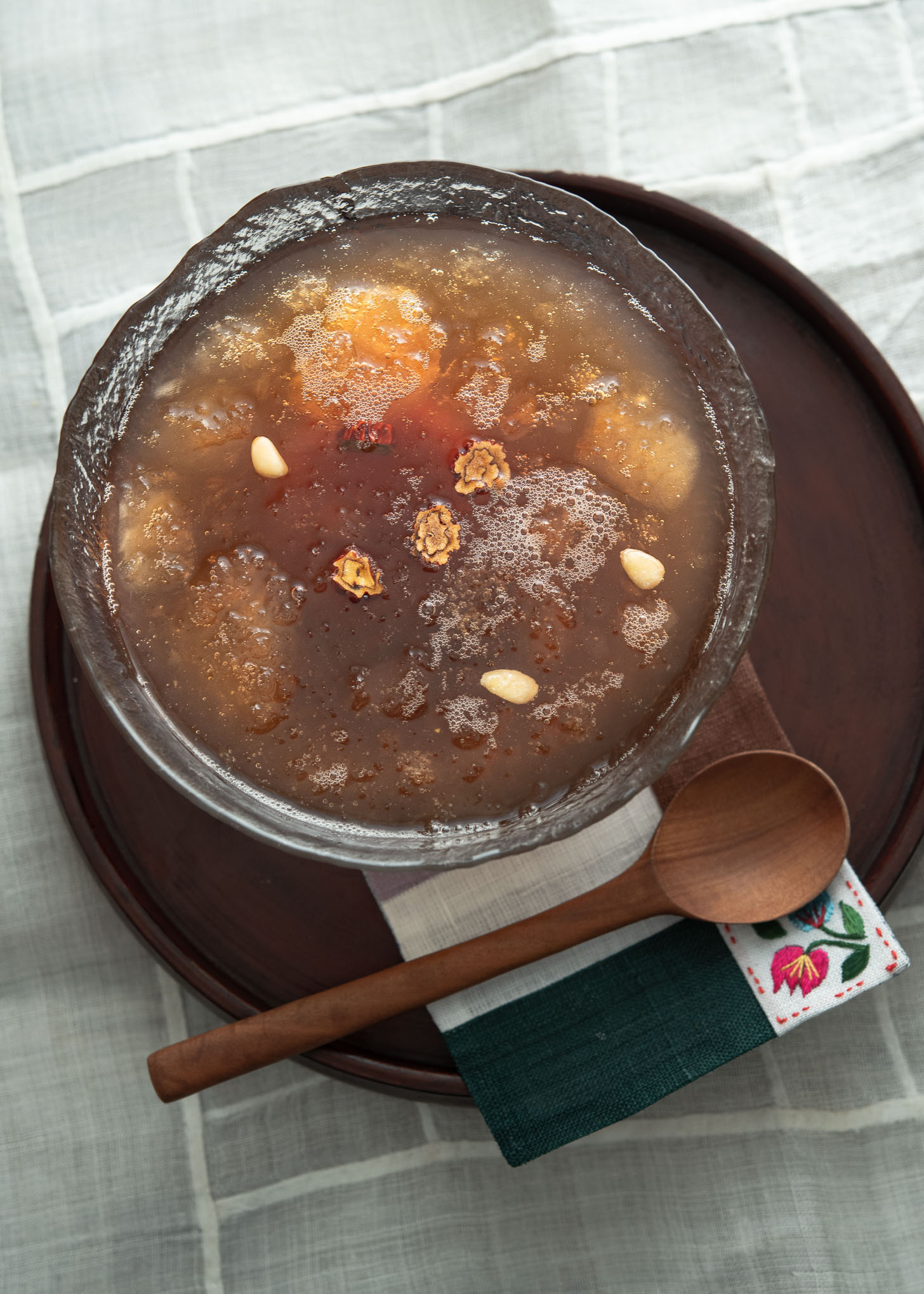
Pine nuts are the traditional garnish you’ll see in Korea, often floating on top of a tiny glass after a rich meal. Adding a thin slice of dried jujube brings a gentle aroma and an elegant look that feels very old-world Korean.
Dried Persimmon (Gotgam)
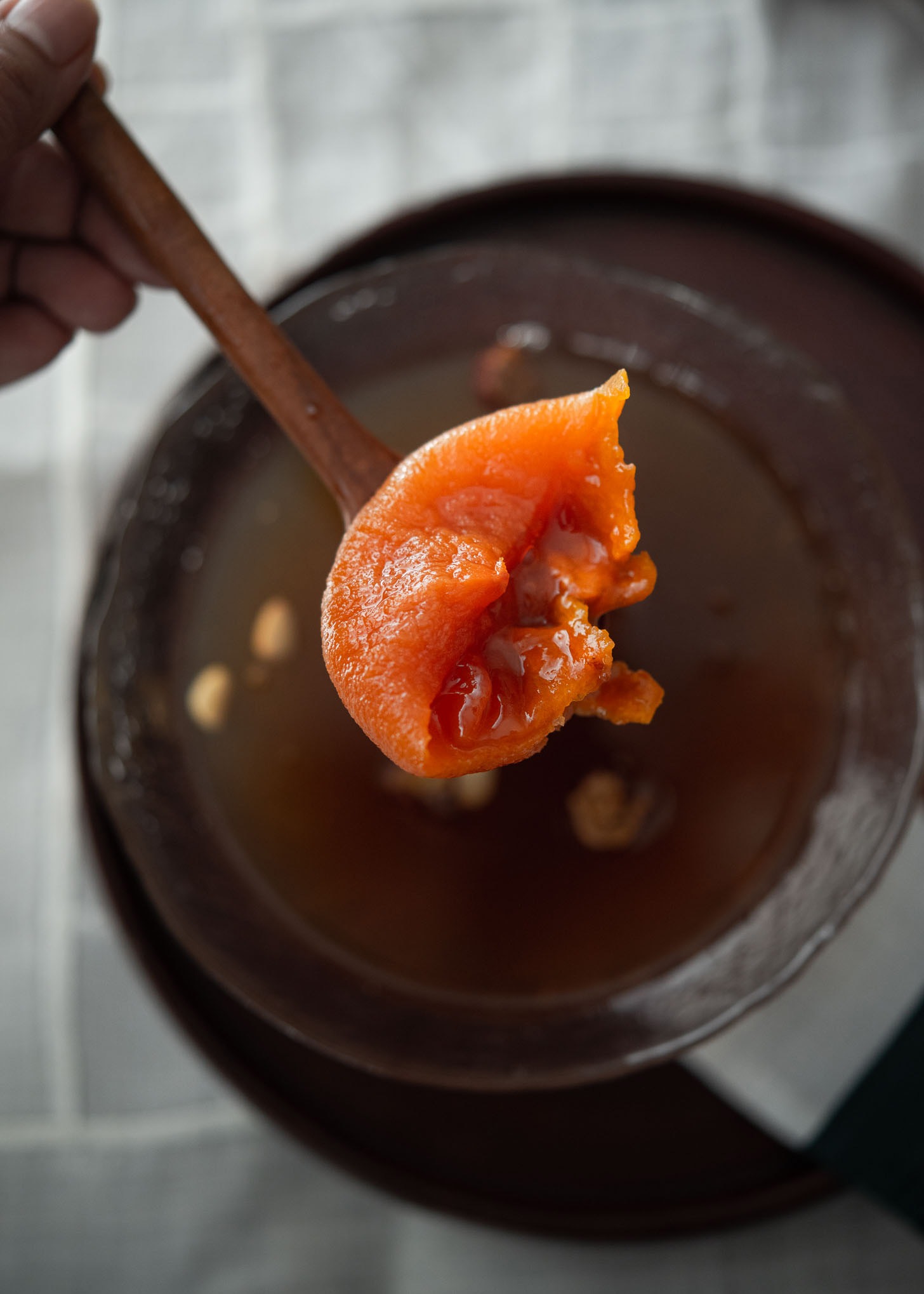
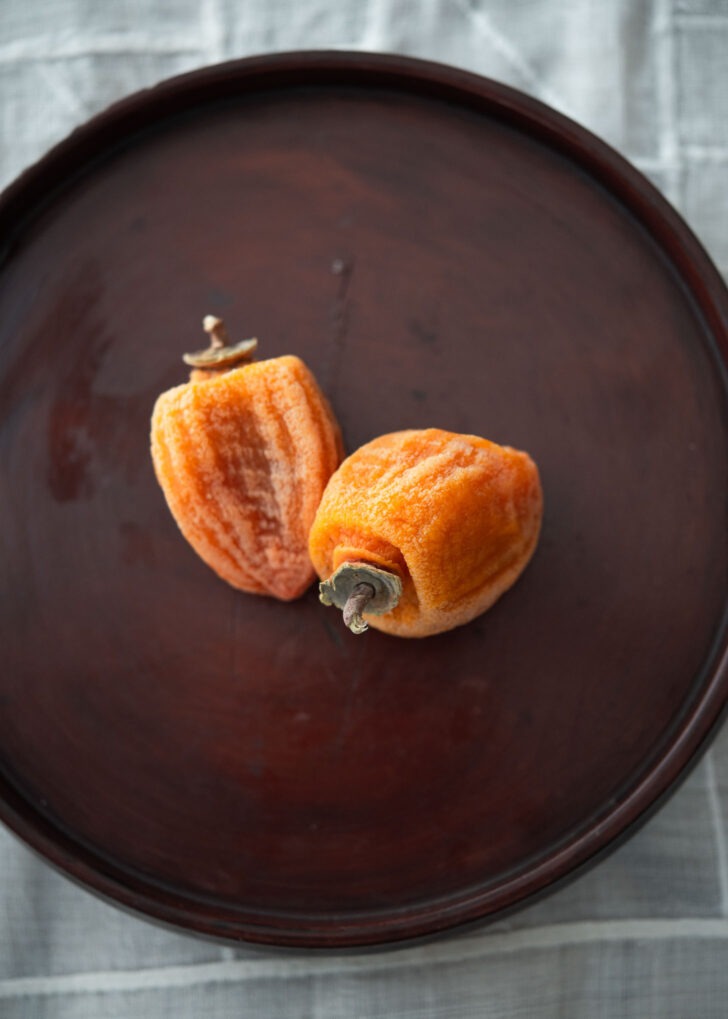
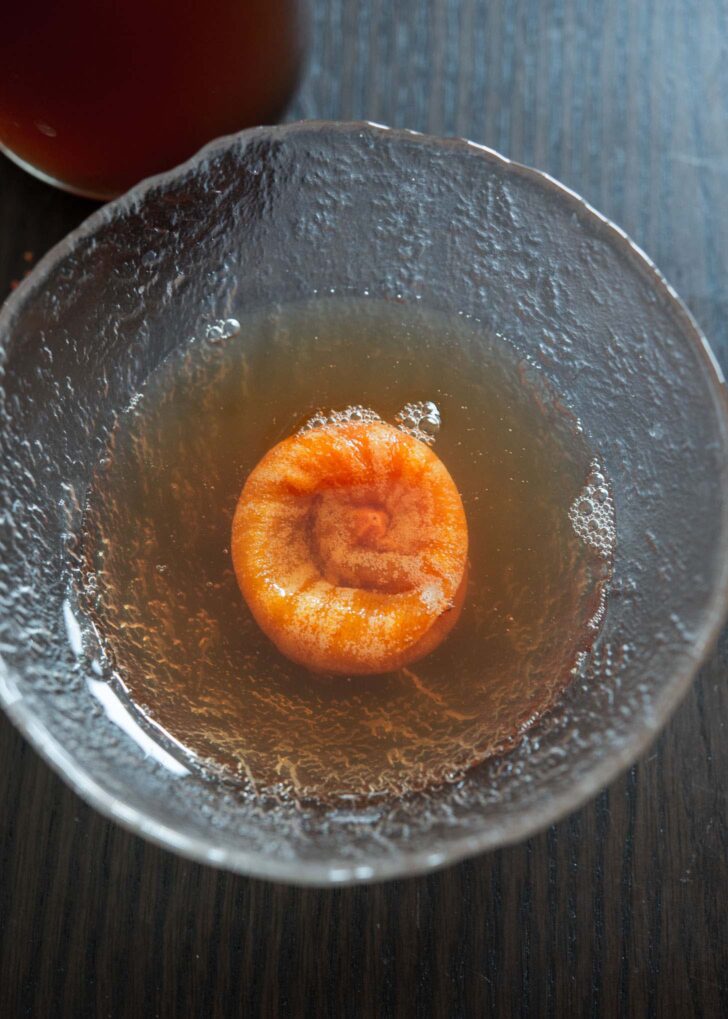
If you want the most traditional winter sujeonggwa, add a few slices of dried persimmon while the drink chills. Gotgam softens in the liquid and lightly perfumes the drink with natural sweetness. My mother always added it before serving guests during the holidays — it gives sujeonggwa the nostalgic flavor many Koreans associate with cold months and family gatherings.
Serve Chilled or Warm
Chilled sujeonggwa is a refreshing dessert after a heavy meal, while a warm version feels calming and restorative just like barley tea (boricha). The temperature alone changes the character of the drink.
Storage Suggestion
Sujeonggwa keeps very well, and the flavor deepens as it rests. After the drink cools to room temperature, transfer it to an airtight container and refrigerate. It will stay fresh for up to 2 weeks.
If you added dried fruits or pine nuts, remove them before storing and add fresh garnishes when serving — this keeps the texture and appearance clean. You may notice a little spice sediment settling at the bottom over time; that’s normal for a traditional brew. Give the drink a gentle stir before pouring.
If you enjoy light, refreshing Korean beverages like this, you might want to explore more recipes in my Korean drinks collection.
Love this recipe? Rate it and share your experience in the comments below! On Instagram? Tag me to showcase your creation. For more delicious recipes, subscribe to our newsletter!
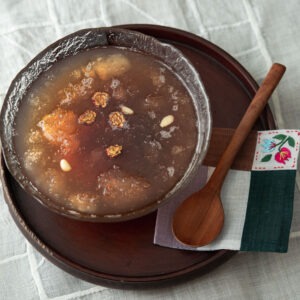
Sujeonggwa (Korean Cinnamon Ginger Punch)
Recipe Video
Ingredients
- 2 1/2 oz (70 g) cinnamon sticks
- 2 oz (56 g) ginger, thinly sliced
- 12 cups (3 liter) water, divided
- 1-2 cup (200-400 g) muscovado sugar, or light brown sugar
- dried jujube, as a garnish (optional)
- pine nuts , as a garnish (optional)
- dried persimmon, as a garnish (optional)
Instructions
- Prepare two pots that can hold at least 6 cups of liquid. In one pot, add cinnamon sticks, and in the other, add sliced ginger. Pour 6 cups of water into each pot, bring to a boil, cover with a lid, and simmer over low heat for 30 minutes
- Strain the cinnamon water and ginger water through a fine strainer into a large pot to remove any debris. Add sugar (adjust the amount for your liking) and stir until it is completely dissolved. Allow the drink to cool and then chill it in the refrigerator to serve it cold.
- Garnish the sujeonggwa with rolled jujube flower, pine nuts and dried persimmon when serving, if desired. For cinnamon punch ice: Freeze a portion of Sujeonggwa in a zip bag for at least 2-3 hours, then break up the ice into small chunks using a meat hammer or rolling pin. Add the ice to the punch to keep it cold and refreshing.If using dried persimmon as a garnish: It is recommended to soak the persimmon in the punch for 30-60 minutes beforehand, depending on the dryness of the fruit, in order to soften it and making it more enjoyable to eat with a spoon.
Would love to know how much lemon juice to add to help ease the kick from the ginger in the back of the throat. I know that acid can tone down Ginger but not take away its taste
The amount of lemon you use depends on how strong you want the lemon flavor to be. Start with a small amount and increase it according to your taste preference.
Question, light or dark muscovado?
Thanks,
K
Either one works fine. Dark muscovado will be better if you want the drink to be darker in color. Thanks.
I love cinnamon and ginger. I think I’m gonna love this drink
It looks so refreshing and gorgeously spicy. I can’t even begin to imagine what dried persimmon is like. Very exotic. i look forward to trying this drink in a Korean restaurant
Wow, this looks so terrific! Cinnamon is probably my favorite spice, and it combines so well with ginger. Really great flavor in this — thanks so much.
Hi beyondkimchee, do you think I can make this with cinnamon powder (which I have too many!)
Honestly, I have not tried with cinnamon powder so I can’t assure you the same taste, but I think you can get it close. Make sure you strain well to get the clean translucent tea after the simmering.
What an awesome punch. I’ve never heard of this before, but I love cinnamon and ginger and persimmons. I think this might even help my cold~
Yes, cinnamon and ginger are great home remedy for cold. You can heat it and drink as a tea.