

Crispy Kimchi Pancakes (Kimchi Jeon)
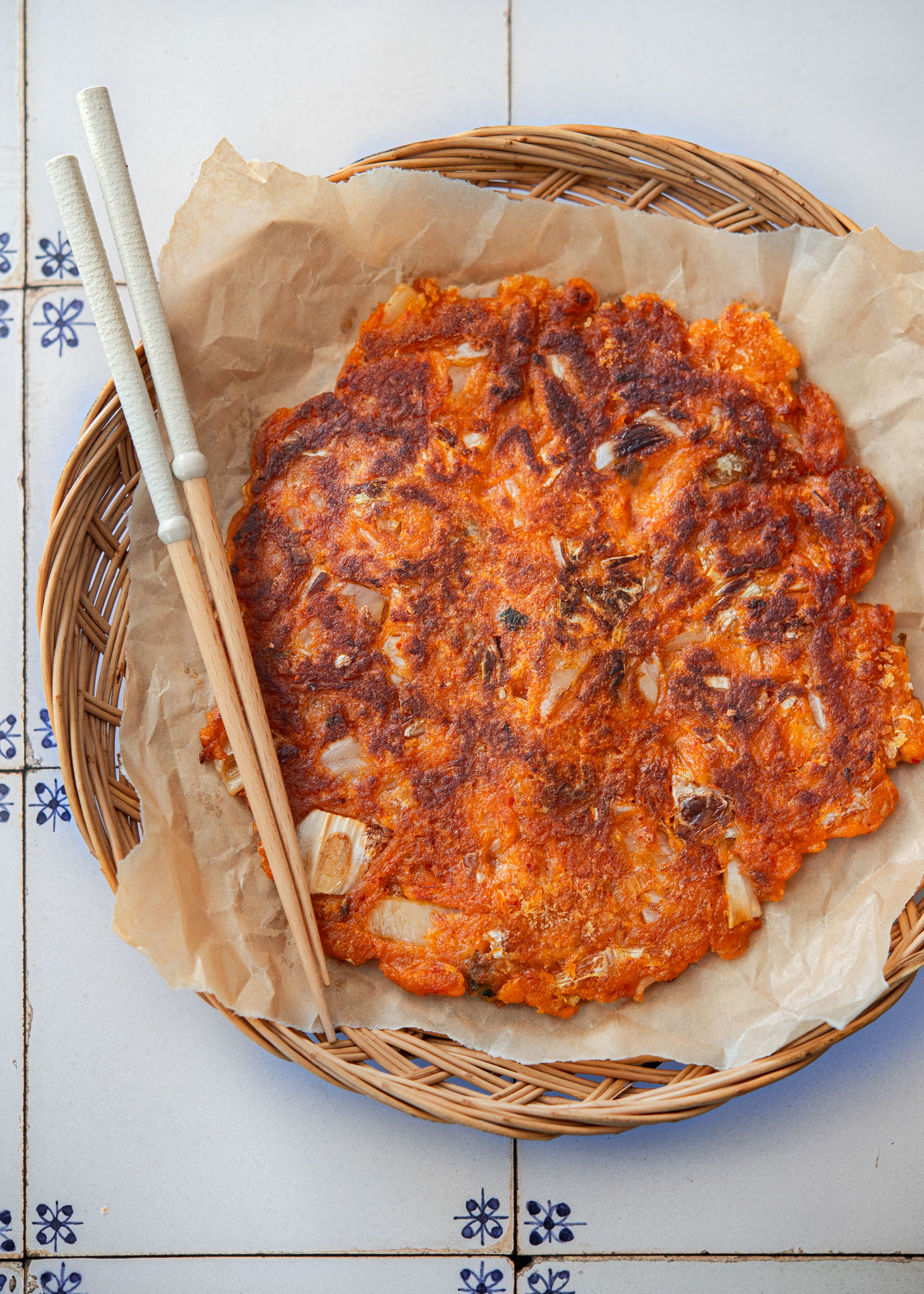
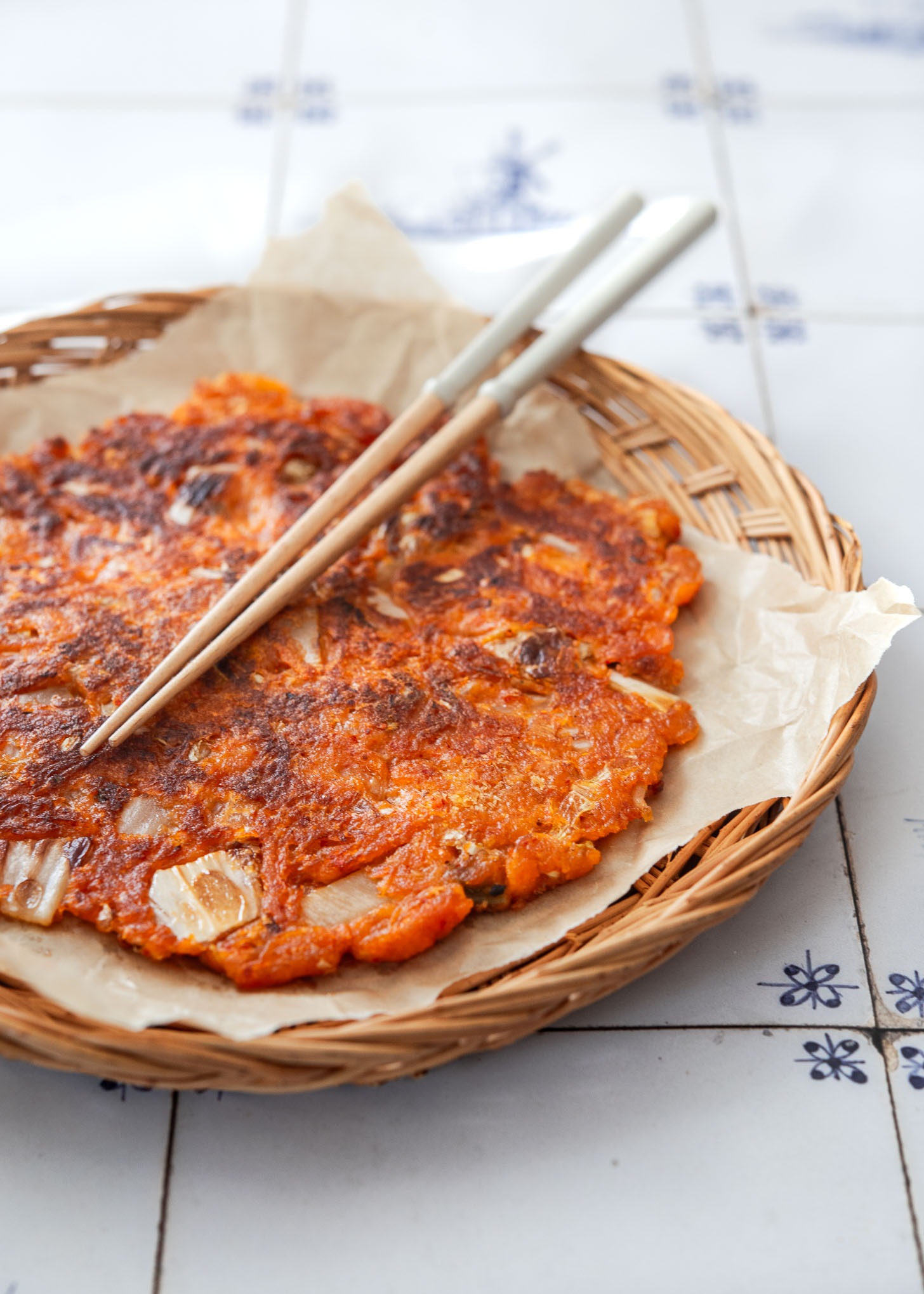
Crispy on the edges and tender in the middle, this kimchi pancake (kimchi jeon) is made with aged kimchi, a simple batter, and a few tricks for extra crunch. It’s a classic Korean comfort food that’s perfect as a snack, appetizer, or rainy-day treat.
Get new recipes via email:
If there’s one Korean pancake that truly steals the show, it’s kimchi pancake (kimchi jeon, 김치전)—crispy, savory, and bursting with bold, tangy flavor from aged kimchi. Also known as kimchi buchimgae, this spicy Korean classic is pure comfort food: quick to whip up, endlessly satisfying.
Kimchi jeon and kimchi buchimgae are often used interchangeably in Korea, though kimchi jeon is the term most commonly used at home.
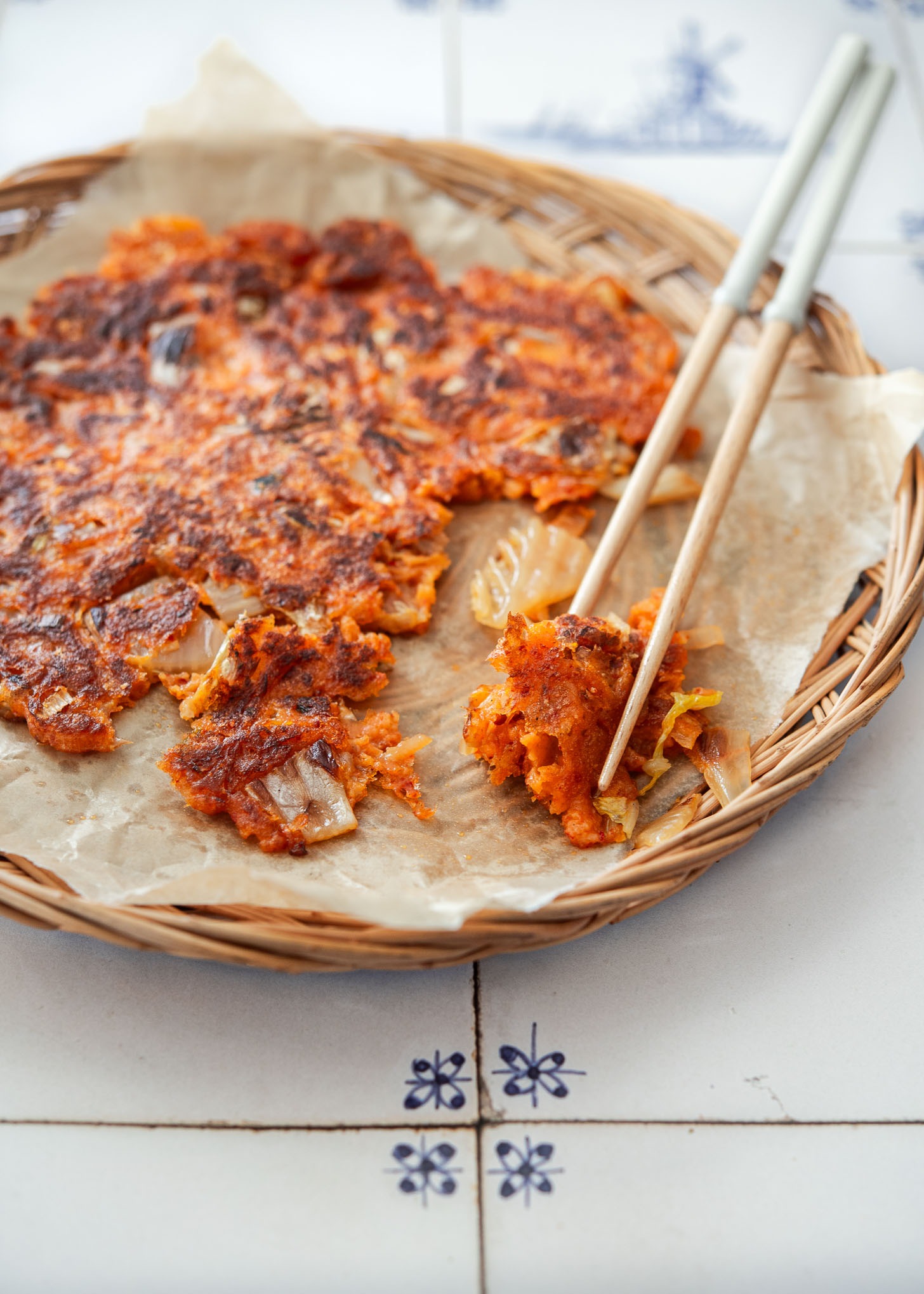
I’ve made kimchi pancakes more times than I can count—during weeknight dinners, rainy days, or just when that craving hits. And over the years, I’ve perfected the method to get that golden, lacy edge and soft, chewy middle—without using Korean pancake mix!
All you need are simple pantry staples like flour, a bit of starch, and a few easy tricks. In Korea, kimchi jeon is often the first thing we make when a jar of kimchi becomes too sour to serve at the table. That bold, tangy flavor turns into something magical once it hits a hot pan.
If you enjoy kimchi jeon, you’ll probably love other Korean pancakes as well. My yachaejeon (vegetable pancakes) and pajeon (scallion pancakes) use similar techniques and are equally satisfying on a rainy day.

Best Kimchi for Kimchi Pancakes
The best kimchi for kimchi pancakes is well-fermented kimchi that’s developed a pleasantly sour flavor. Growing up in Korea, kimchi jeon was one of the first things we made whenever kimchi became too sour to serve as a side dish.
Fresh kimchi can work in a pinch, but it won’t deliver the same depth and tang that make kimchi jeon so satisfying. As kimchi ages, its flavor becomes more concentrated, creating a richer pancake with better balance and complexity. That’s why many Korean home cooks save older kimchi specifically for dishes like kimchi pancakes, kimchi fried rice, and kimchi jjigae.
Don’t discard the kimchi juice, either. A few spoonfuls add vibrant color, extra flavor, and the signature tangy kick that makes a good kimchi pancake taste exceptional.
My Secrets for Extra Crispy Kimchi Jeon
Over the years, I’ve found that truly crispy kimchi pancakes come down to a few simple details.
First, a little potato starch helps create a lighter, crispier texture than flour alone. I also use cold carbonated water, which keeps the batter airy and prevents it from becoming dense.
Equally important is keeping the batter relatively thin. A thinner pancake develops more surface area for browning, resulting in crackly edges and a better texture overall.
Finally, let the pancake cook undisturbed until deeply golden before flipping, and don’t be afraid to add a little extra oil around the edges. These small techniques create the delicate crunch and tender center that make kimchi jeon so irresistible.
How to Make Kimchi Pancakes (Kimchi Jeon)
Gather the ingredients: sour kimchi, canned tuna, gochugaru, flour, potato starch (or cornstarch), baking powder, and carbonated water. Yes, carbonated!


Why I Use Carbonated Water Instead of Plain Water:
Carbonated water creates tiny air pockets in the batter, resulting in a lighter, crispier texture. If you don’t have soda water, ice-cold water is the next best option because it slows gluten development and helps keep the pancake from becoming chewy.
I skip the egg because it creates a softer, more cake-like texture. Traditional kimchi jeon relies on a simple flour-based batter, which helps the pancake stay lighter and crispier.


The Unexpected Ingredient for Extra Crunch (Panko):
A small amount of panko breadcrumbs absorbs excess moisture and adds a delicate crunch without making the pancake heavy. It’s not a traditional ingredient, but it’s one of my favorite tricks for achieving crackly edges at home.


Flip Without Breaking:
Let it cook undisturbed until the surface looks dry and the edges turn golden. This allows the pancake to firm up, making flipping easier. Add more oil as needed.
How Koreans Enjoy Kimchi Jeon
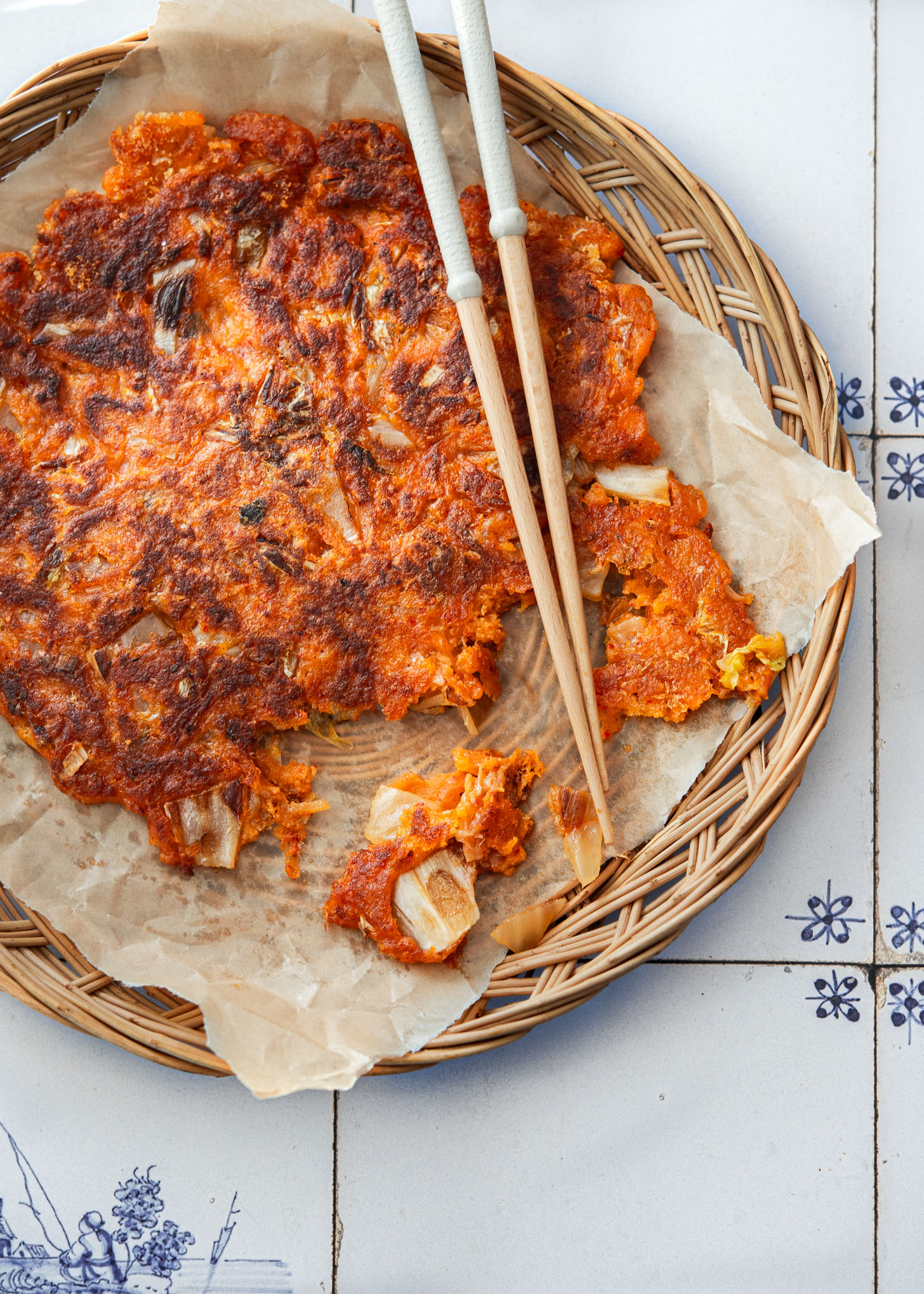
Kimchi pancakes are one of the few Korean pancakes that rarely need a dipping sauce. The aged kimchi and kimchi juice provide plenty of flavor on their own, so I usually enjoy them hot straight from the pan.
In Korea, kimchi jeon is especially popular on rainy days and is often served as anju (food enjoyed with drinks). A chilled bowl of makgeolli (Korean rice wine) is the classic pairing, though soju works well, too. If you prefer a non-alcoholic option, sparkling water or a lightly sweet soda balances the savory, tangy flavors nicely.
If you’re planning a Korean-inspired meal, serve kimchi pancakes alongside other Korean appetizers or small plates for sharing.
Easy Kimchi Jeon Variations
Traditional kimchi pancakes can be as simple as kimchi, batter, and a few pantry staples, making them an easy vegetarian option. But there are plenty of ways to customize them.
Seafood is a popular addition in Korea, especially squid, shrimp, or oysters. For a heartier pancake, try canned tuna, ground pork, or ground chicken. I often use canned tuna because it’s convenient and pairs especially well with the tangy flavor of aged kimchi.
Note: Updated from my original 2013 post with a slight adjustment for maximum crispiness. Same great flavor—now with even crunchier edges!
Kimchi Pancakes (Kimchi Jeon)
Recipe Video
Ingredients
- 1 ½ cup (225 g) chopped sour kimchi
- 3½ oz (100 g) canned tuna, drained, optional — see note below
- 1 tbsp (6–8 g) Korean chili flakes (gochugaru), optional
- 1 cup (125 g) all-purpose flour
- ⅓ cup (40 g potato starch, or cornstarch
- ½ tsp (2 g) baking powder
- 1 ¼ cup (300 ml) carbonated water, chilled, or use ice-cold water
- 4 tbsp (20 g) panko breadcrumbs
- non-fragrant cooking oil (as needed), for pan-frying
Instructions
- In a mixing bowl, combine chopped kimchi, canned tuna (or your choice of protein), and gochugaru.
- In a separate bowl, whisk together flour, potato starch (or cornstarch), and baking powder. Add this dry mixture to the kimchi mixture.
- Add carbonated Water. Start with 1 cup of carbonated water, then add more as needed. Stir until well combined. The batter should be wet but not runny. Adjust with more water if necessary.
- Sprinkle panko crumbs over the batter and give it a quick toss. This helps create an extra crunchy texture.
- Heat 1 tablespoon of oil in a nonstick skillet over medium heat until hot. Pour a ladleful of batter into the pan and spread it thinly (about 3/8 inch thick). Cook undisturbed for 2-3 minutes until the surface looks slightly dry and the edges turn golden brown and crispy.
- Use a spatula to loosen the edges, gently rotate the pancake, then flip it in one swift motion. Cook the other side until golden and crispy. If needed, drizzle a little more oil around the edges to maintain crispiness.
- Cook the remaining batter the same way. Serve hot, on its own or with your favorite drink. Enjoy!
Notes
- Use enough oil for even browning.
- Let the pancake cook undisturbed before flipping.
- Cook over medium heat for the best balance of crispness and color.
Delicious. Great use for any kimchi you have lying around.
Do you squeeze the kimchi before chopping and adding it?
Also, the sign up pop up X to close is hiding behind the search bar making navigation difficult on Firefox 🙁
No, I don’t squeeze out the kimchi—I like to keep the brine in for extra flavor.
As for the pop-up button, are you using it on desktop or mobile? I checked it on my desktop using Firefox, and it looked fine on my end.
Thanks for the tip about not squeezing!
It’s on Firefox mobile.
My husband said that these were best Korean pancakes I ever made. I agree
My husband said that these were the best Korean pancakes ever! Keeper. I added another 1/8 cup water
Merry Christmas and a Happy New Year 🙂 ela
looks wonderful…I haven’t tried a mix yet as I make my batter from mung beans but am willing to give it a go…btw..when I make my mung bean batter I use a Japanese dashi for moisture…gives it a nice twist.
thanks for the idea of mixing the batters. i’ve only used the pancake batter in the past and thought the result was too *soft* quickly after cooking. i’ll definitely give it a try!
You can definitely interchange the squid and calamari in recipes. They are pretty similar but the major difference is that calamari is smaller than squid. Also calamari is much softer in texture, therefore, more pricy.
Oh, I used Indian curry.
Thanks Holly! I learnt something new. 🙂
That would be a different trip for my taste buds. Exciting and delicious 🙂 ela
Looks delicious, reddish and spicy! And squid is such a good addition, too.
My grandpa use to make egg foo young and add kim chee to it.. I am not a fan of cabbage kimchee, I prefer the cucumber one… guess its the American in me…lol…
I have had kimchi pancakes before! But never curry ones. Love the idea – thanks.