

Bindaetteok (Korean Mung Bean Pancakes)
Bindaetteok is a savory Korean mung bean pancake made with ground beans, pork, kimchi, and fresh vegetables. The batter comes together quickly after a simple soak, and the pancakes fry up crisp and golden in minutes. Naturally gluten-free when made with gluten-free kimchi, they’re great for snacks, gatherings, and everyday Korean home cooking.
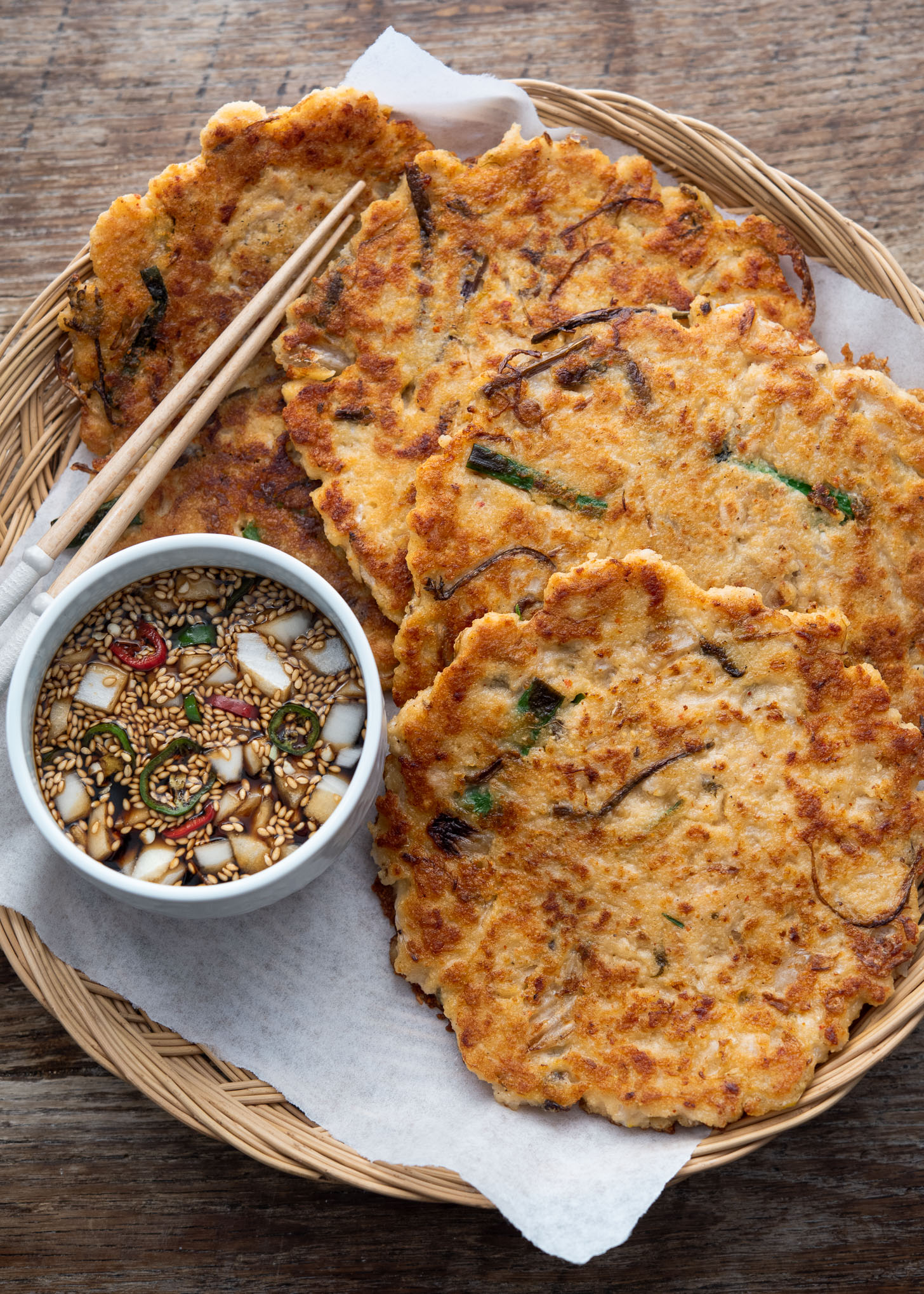
The first place I visited after moving back to Seoul was Gwangjang Market. I went straight for the bindaetteok (빈대떡). I had missed that nutty mung bean batter mixed with pork, kimchi, and crunchy sprouts, and I didn’t care that the market was packed with tourists. I just wanted that first bite.
When I finally tried it, the flavor was close, but the oil wasn’t. Market stalls fry batch after batch, so the oil often tastes tired. It reminded me why my mother’s bindaetteok always stood out. Fresh batter. Clean pan. Crispy edges. Hot off the griddle.
Bindaetteok, also called nokdu jeon (녹두전), is a familiar sight during Seollal and Chuseok, but Koreans make it year-round for family gatherings. They are also sold in almost any market stall along with my go-to pajeon with seafood and scallions, a Korean classic that locals and tourists order when they want an easy taste of jeon.
The good news is that homemade bindaetteok is simple once you soak the mung beans. A little prep gives you a batter that tastes clean and bright. I’ll walk you through the version I make at home so you can enjoy that same crisp, fresh flavor.

Dried Mung Beans vs. Mung Bean Flour
Soaking dried mung beans takes a little patience. Whole beans need time to hydrate, loosen the skins, and blend to the right texture. I usually use pre-hulled split mung beans from Asian markets because they soak fast and skip the peeling step.
A food processor gives you that coarse grind bindaetteok needs. Traditional cooks used metdol (멧돌), and my mother did too when I was young. The stone mill makes a rustic batter, but the food processor comes close enough for home cooking.
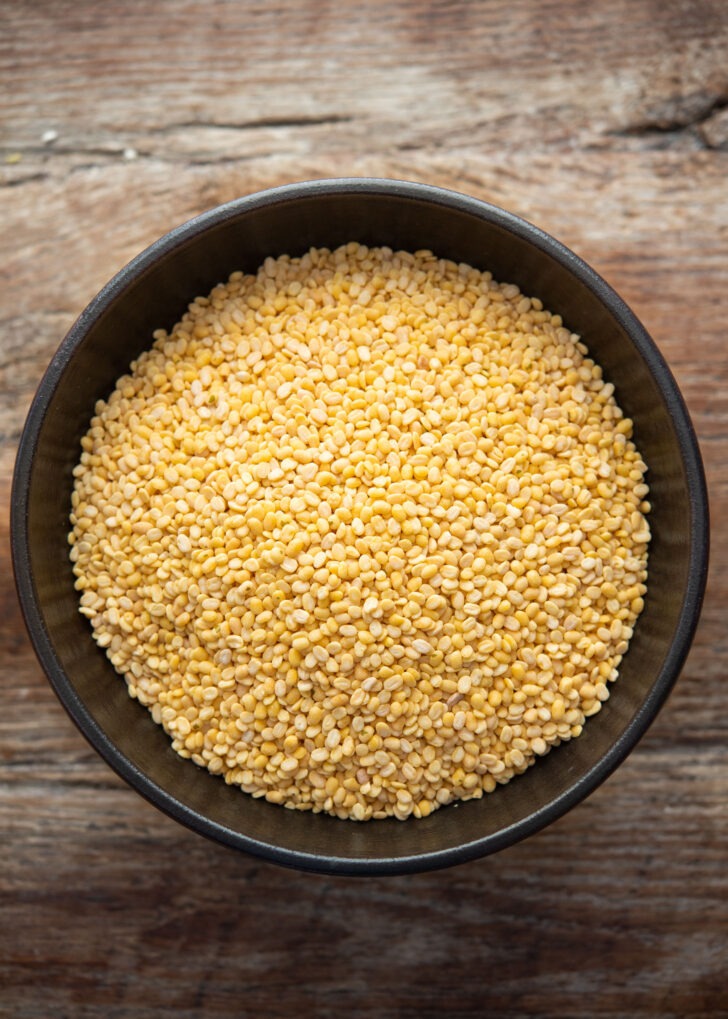

You can use a premade bindaetteok mix or plain mung bean flour if you want a shortcut. It works, but the pancakes turn out smoother and lose the signature bite. If you choose flour, use a little less liquid and let the batter rest so it hydrates evenly.
For the best flavor and texture, the soaked bean method still wins.
Key Ingredients You Need for Bindaetteok

Mung beans (nokdu, 녹두): Use pre-hulled split mung beans for the best texture. They blend smoothly and save you the peeling step. Whole mung beans also work if you soak them long enough.
Pork: Minced pork adds richness and rounds out the flavor. I season it lightly before mixing it into the batter so every bite tastes balanced. It makes a noticeable difference. If you want a vegan option, simply skip the pork. Mung beans are already protein-rich, so the pancakes hold up well without it.
Kimchi: Aged, well-fermented kimchi gives the pancakes a tangy edge. Fresh kimchi won’t have the same depth. Squeeze out excess liquid so the batter stays thick.
Mung bean sprouts: A quick blanch removes the raw taste and keeps them crisp. It also helps the pancakes fry evenly without getting soggy.
Bracken (gosari, 고사리): Traditional bindaetteok often includes gosari. I add it when I have leftovers from making gosari namul. Rehydrating dried gosari takes time, so feel free to skip it. The pancakes still taste authentic without it.
Sweet rice flour (찹쌀가루): A little sweet rice flour helps bind the pancakes and adds gentle chew. Whole sweet rice can also be blended with the beans if you prefer.
How to Make Bindaetteok Step by Step


Soak and Grind the Beans. Soak split mung beans in water for 6 to 24 hours. Drain well. Blend with a little fresh water until the mixture looks coarse and thick. Don’t blend it smooth. The tiny grainy bits give bindaetteok its chewy bite. I keep my batter slightly thick because it holds up well during frying.


Season the Pork and blanch the sprouts. Mix the minced pork with soy sauce, garlic, ginger, rice wine, and a little sesame oil. Let it sit while you prep the vegetables. Blanch mung bean sprouts for about 10 seconds. Rinse under cold water so they stay crisp and don’t release too much moisture in the pan.


Build the Batter. Combine the ground mung beans with the seasoned pork, blanched sprouts, sliced bracken, kimchi, green onion, and sweet rice flour. Stir until everything comes together. If the batter feels too stiff, add a splash of water. Keep it thick enough to form a pancake.


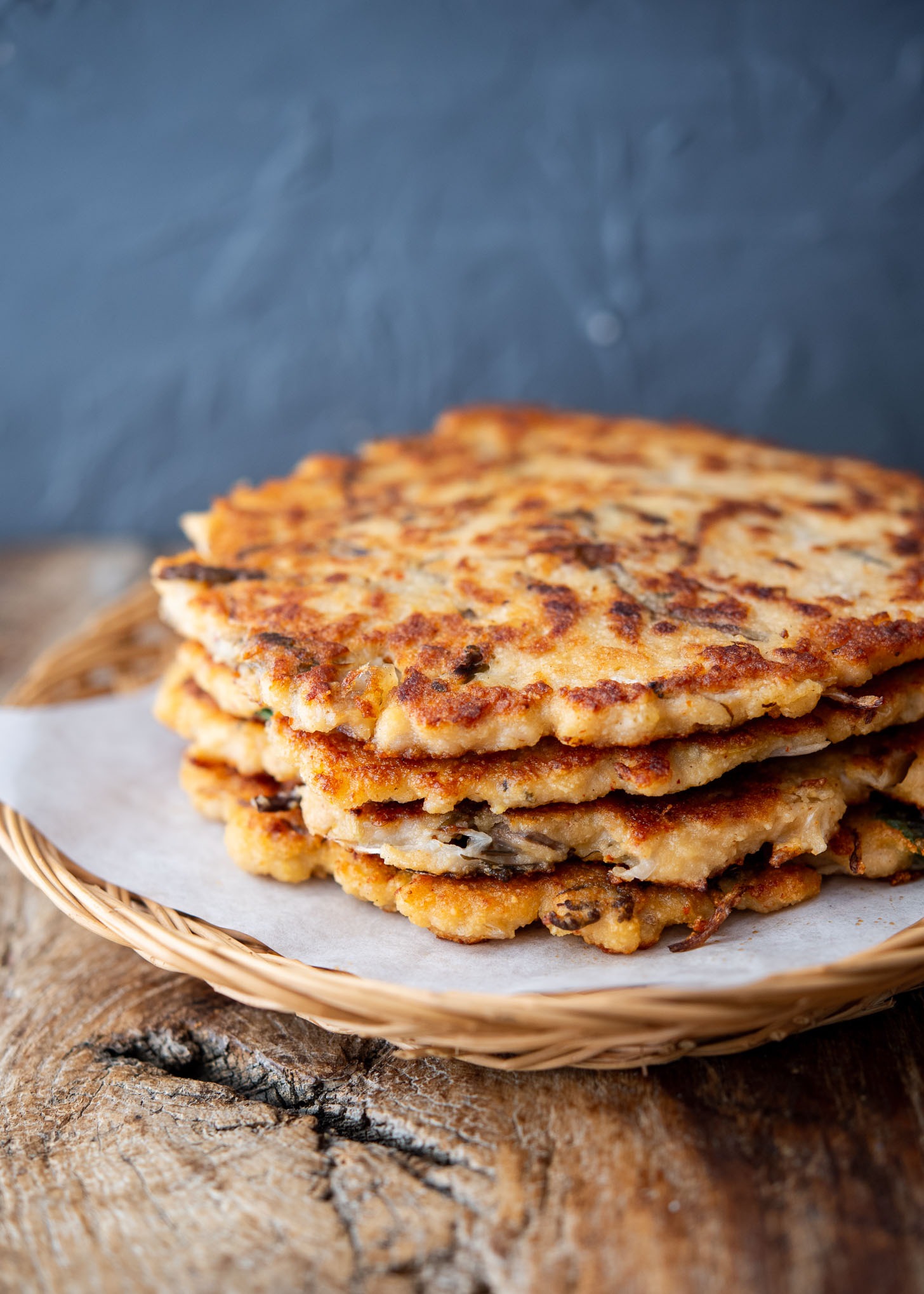
Fry Until Golden and Crisp. Heat a generous amount of oil in a skillet. Add a ladle of batter and spread it gently. Fry for 2 to 3 minutes until the edges turn golden and crisp. Flip and cook the second side until the pancake feels firm and browned.
Hyegyoung’s tip: Rest the pancakes on a basket or wire rack so the bottoms stay crisp. Serve hot with dipping sauce.
Dipping Sauce and Pairings
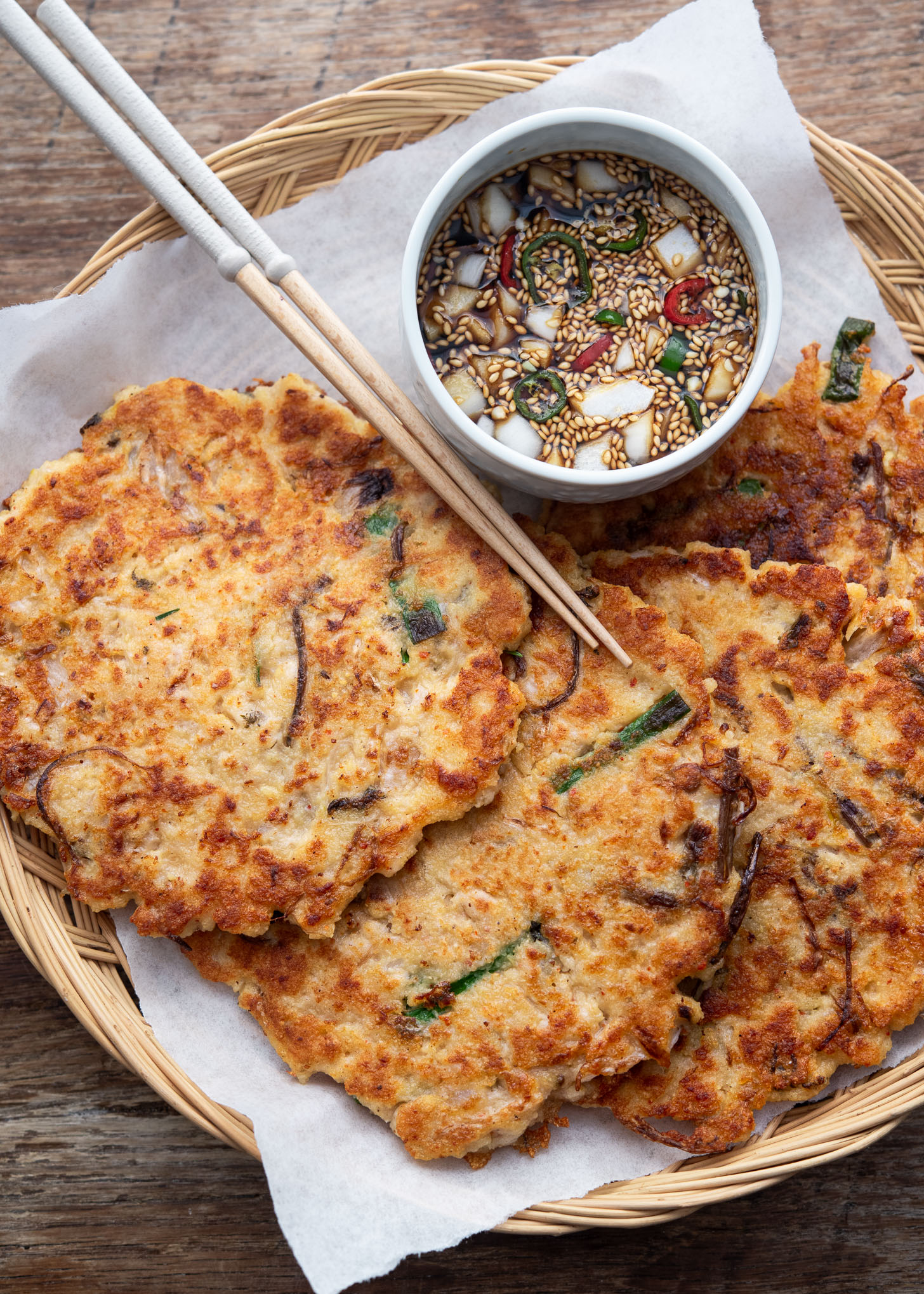
Bindaetteok tastes best with a simple soy dipping sauce. I mix soy sauce, vinegar, a little sugar, onion, sliced chili, and sesame seeds. The tang cuts through the rich pancake and keeps each bite bright.
Some people like a spicy kick with gochugaru. Keep the sauce balanced, not salty, since the pancakes already have seasoning. This simple sauce also works well with my crispy kimchi jeon recipe and the vegetable yachaejeon I make on busy nights.
For drinks, bindaetteok and makgeolli are a classic pair. The creamy, lightly sweet rice wine matches the crisp edges of the pancakes. Koreans often enjoy this combo on rainy days or at market stalls.
If you want a simple meal, serve the pancakes with kimchi, a mild broth, or a small vegetable side. Bindaetteok is hearty on its own, so a light side dish is usually enough.
How to Store, Reheat, or Freeze
Store: Cool the pancakes on a rack so the bottoms stay dry. Layer them in an airtight container with parchment in between. They keep in the fridge for up to 3 days.
Reheat: Use a skillet with a touch of oil and warm the pancakes over medium heat until the edges crisp again. An air fryer at 180°C for a few minutes also works well. Microwaving softens the texture, so use it only if you’re in a hurry.
Freeze: Freeze the pancakes in a single layer, then stack them with parchment in a freezer bag. They keep for about 2 months. Reheat straight from frozen in a pan or air fryer. The mung bean batter holds up nicely after freezing.
Hyegyoung’s note: I wrap a few pieces in parchment before freezing so I can grab only what I need on busy days.
Love this recipe? Rate it and share your experience in the comments below! On Instagram? Tag me to showcase your creation. For more delicious recipes, subscribe to our newsletter!

Bindaetteok (Crispy Korean Mung Bean Pancakes)
Recipe Video
Ingredients
- 1½ cups (10 oz, 285 g) dried split peas (mung beans), rinsed in a few change of water
- 1 cup (240 ml) water, more if needed
- 5 oz (140 g) mung bean sprouts, blanched and drained
- 3 oz (85 g) bracken (gosari), rehydrated and sliced, optional
- 5 oz (140 g) fermented kimchi, chopped
- 3 green onions, chopped
- ¼ cup (40 g) sweet rice flour (chapssal-garu)
- oil, for shallow frying
- 1 tbsp (15 ml) Korean soup soy sauce (gukganjang)
- 2 pinches salt and pepper
For pork seasoning
- ⅓ lb (150 g) minced pork
- 1 tbsp (15 ml) soy sauce
- 1 tbsp (15 ml) sweet rice wine (mirim)
- ½ tbsp (7 g) minced garlic
- ½ tbsp (7 ml) sesame oil
- ½ tsp (2 g) ginger paste
For dipping Sauce
- 4 tbsp (60 ml) soy sauce
- 2 tbsp (30 ml) rice vinegar
- 1 tbsp (15 ml) water
- 2 tbsp (20 g) chopped onion
- 1 tsp (4 g) sugar
- 1 tbsp (10 g) toasted sesame seeds
- 1 fresh chili, finely sliced
Instructions
- Soak the beans. Rinse the split mung beans and soak them for 6 to 24 hours. Drain well.
- Blend the beans. Add the soaked beans to a food processor with 1 cup (240 ml) of water. Blend until thick and slightly grainy, not smooth.
- Season the pork. Mix the minced pork with soy sauce, mirin, garlic, sesame oil, and ginger. Set aside.
- Prep the vegetables. Blanch the mung bean sprouts for 10 seconds and cool under cold water. Drain well. Slice the gosari and chop the kimchi and green onions.
- Make the batter. Combine the ground beans, seasoned pork, sprouts, gosari, kimchi, green onions, sweet rice flour, soup soy sauce, salt and pepper. Stir until evenly mixed. Add a splash of water if the batter feels too thick.
- Cook the pancakes. Heat 2 tablespoons of oil in a skillet over medium heat. Add a ladle of batter and spread gently. Fry 2 to 3 minutes per side until golden and crisp. Add more oil as needed between batches. Repeat with the remaining batter. Rest the pancakes on a rack and serve hot with dipping sauce. To make the dipping sauce, mix all the ingredients in a small bowl.
Notes
- The batter should be thick enough to hold its shape in the pan. Add water only if it feels too stiff.
- Vegetarian adaptation: skip the pork. The mung beans give enough structure on their own.
Would you please add the amount of sweet rice flour to the ingredient list? Is this mochiko flour? Thanks.
Thanks for pointing that out. It should be 1/4 cup. I’ve fixed the recipe. Appreciate it!
Helo;
Thank you for this most exciting recipe. I am most excited to give it a try. Can I use sauerkraut instead of the kimchi? i sometimes react to kimchi and I need a viable alternative for it. Also, is there a suitable sub for the wild fern? Thank you.
HI, i think you can use sauerkraut instead of kimchi. If you can’t find the fern, you can omit.
hi,
thank you for this recipe, the pancakes taste really great!
could recommend another recipe which using wild fern? i bought a whole bag and now i don’t know what to do with it….
thanks & hello from munich, germany
sophie
Try Bibimbap. https://www.beyondkimchee.com/bibimbap/
I’ve been making these pancakes with my Korean MIL for over 15 years on New Year’s Day, and I am thrilled to have found your easy to follow and common sense recipe!! The simple addition of the rice to the mung beans during soaking is the best tip!! Thank you so much for sharing your recipe. And, have a wonderful, healthy, delicious New Years!!
I am so glad to hear that my recipe is helping you to recreate the pancakes that you made with your MIL. Happy New Year to you!
Oh my! I have been searching for this recipe for years! I used to eat mung bean pancakes when I lived in a different city and love them. I made your recipe this weekend and they are simply gorgeous! I had to hunt to find kimchee, but it was so worth it. Thank you for sharing.
Thank you for sharing your recipe….and where did you get such lovely dinnerware? That set is gorgeous?
I made it today the first time. We had a big family so I doubled the amount of the recipe and was a little anxious how it would turn out. To my great relief, it was great!! Instead of pork, I added chopped squid and it was quite delicious too. I gave some to my son's friend who was here while I was cooking to take home. His mom called immediately after trying it. They were enjoying it too! Can the leftover pancake freeze well? Thank you.
Wahoo Korean food looks very délicious
I have to taste it 1 day 🙂
My halmoni just brought us a huge bag of dried yellow spit mung beans and i had no idea how to cook it. This recipe made me realize how long its been since i ate bindaetteok and i guess I will be eating it daily now. Thank you again for your great recipes 🙂
Surely. I'll check your site. Thank you.
Yes, you can keep the leftover batter in the fridge for up to couple days. You will see water is being separated from the batter, but just mix well before you cook again.
Hi Holly, those look really delicious! And I have enough 'old' kimchi left to make them! Just a question: would it be possible to keep leftover batter in the fridge to fry them the next day? Thanks!
I can't say exactly how many it will make. It will depends on how big each pancake you make. I made mine about 3" in diameter and I got about 20 pancakes. It will feed at least 4 people.
These look great! Can I ask how many pancakes the recipe makes, or for how many people?
Holly – Congrats on the guest post! The pancakes look delicious and pretty. Great post!
What an honor on the guest post! Congratulations. And this is a terrific recipe. I use mung beans a lot in dals and the like, but never in pancakes. I'll definitely give these a try – thanks.
Thank you for the idea. I've been trying to experiment kimchi recipes with my French friends here in France. I will try this recipe with lentils, perhaps. Is it possible to have your link to Koreataste.org to share your recipes? Thank you.
http://www.koreataste.org/lang/en/category/en/blogging-en/
Congratulations on your guest post!
This looks amazing. I have everything at home to make these! We use to do Korean pancakes, but then we found out that my kids are allergic to wheat and have been missing them a lot. This is a wheat free recipe! I am going to make them tonight! thanks 🙂
Of course you can. You need to soak the whole mungs bean overnight and rub them with both hands. The skin will come off easily if the beans are fully soaked, and will float to the top in the water while the yellow flesh will sink to the bottom. Rinse out the beans removing as much skins as possible. Some might not come off well, but it is okay.
Is it possible to use whole mung bean? I have a jar that needs to get used and was thinking that would be delicious. I have also used red lentils.
Thank you. Hope you can try soon.
Wow, these look and sound really delicious…!!! I have never heard of mung bean pancakes, but I know that that I'll give this recipe a shot as soon as I have mung bean in mypantry. I just checked out the Kimchi Chronicle website, it's so interesting, thank you for sharing, Holly :)!
Thanks. Bindaetteok is quite popular pancakes among Koreans and it's delicious.
Thanks, Erica.
Hi Holly! I'm so excited about your guest blog post! Congratulations, that is simply wonderful! 🙂
Congratulations on this awesome guest blogging opportunity! This is a very delicious first entry and something new to me as well.