

White Kimchi (Baek Kimchi)
A mild, refreshing napa cabbage kimchi with a clean broth and no spice. This naturally fermented, dairy-free staple brings brightness to Korean BBQ, rice bowls, and everyday meals.
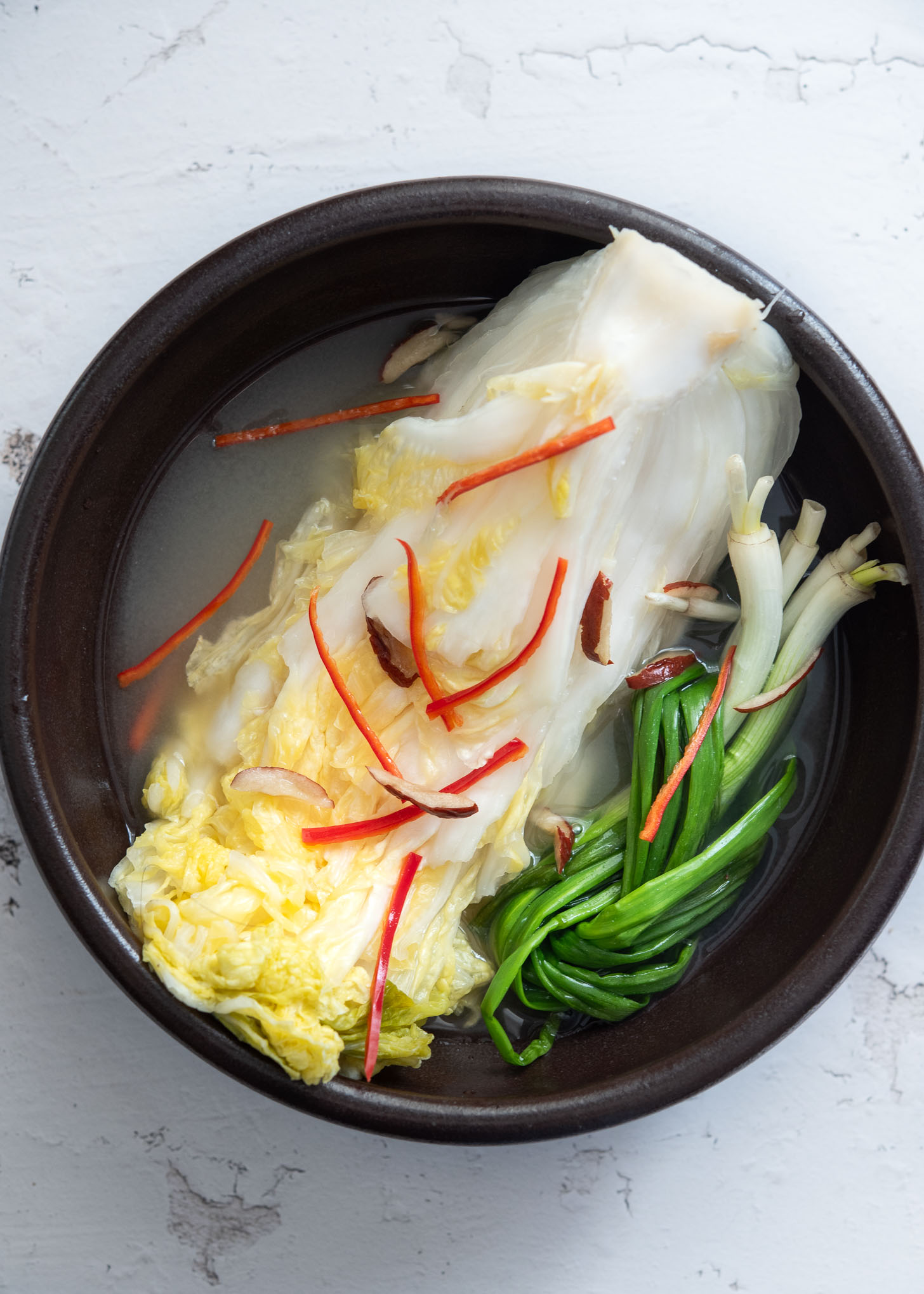
When my kids were little, they were always curious about kimchi because they saw me eating it every day — but the spicy heat was far too much for them. I remember rinsing traditional cabbage kimchi in water just so they could try a tiny bite without wincing.
That’s when I began making white kimchi (baek kimchi, 백김치) at home. It’s the gentle, non-spicy cousin of traditional kimchi — no gochugaru, no red color — just crisp napa cabbage, clean broth, and a refreshing tang that even young children can enjoy.

Get new recipes via email:
Over the years it became a staple in our house, especially during the colder months when we craved something light and cooling alongside warm meals.
This version tastes delicate at first, then develops a soft tang as it ferments. If you want a kimchi that’s mild, crunchy, and incredibly refreshing, white kimchi is the one to keep in your fridge year-round.

Key Ingredients for White Kimchi (Baek Kimchi)
White kimchi relies on a few simple ingredients, so each one plays an important role in the final flavor. Here’s how they work together — and what I look for when I make it at home.
Napa Cabbage: Choose a cabbage that feels heavy for its size with tightly packed leaves. This gives you crisp texture after fermentation and helps the cabbage absorb the clean, mild brine evenly.
Salt: Coarse Korean sea salt is essential. It draws out moisture slowly and seasons the cabbage without making it tough. Using iodized or fine table salt changes the texture and can lead to uneven fermentation.
Kimchi Brine Base (Rice Porridge + Kelp Stock): The brine starts with a thin rice porridge made with kelp stock. It gives the broth a smooth, light body and helps the flavors settle as the kimchi ferments. I always use mineral water for broth-based kimchi like this — it keeps the flavor clean and the fermentation steady.
Aromatics for Flavor and Balance: A blend of radish, pear, onion, garlic, and ginger builds the mild, refreshing character of white kimchi. Since there’s no chili paste or flakes in baek kimchi, these ingredients carry the entire aroma and gentle sweetness of the broth.
If you prefer a lightly seasoned kimchi with a touch of heat, my Easy Cabbage Kimchi is another simple, beginner-friendly option you might enjoy.
How to Make White Kimchi (Baek Kimchi)


Cut the cabbage properly. Quarter the napa cabbage lengthwise and sprinkle salt between the leaves, focusing on the thicker white parts.


Sat the cabbage. Dissolve the salt in water to make a brine, then fully submerge the cabbage for even salting. Sprinkle extra salt on the thick stems, as they take longer to soften. Let the cabbage soak in the brine for about 2 hours.


Rinse. Once the cabbage is well brined and softened, rinse it a few times to remove excess salt, then drain well while preparing the kimchi brine.


Make Sea kelp porridge. Simmer a piece of sea kelp in water, then whisk in sweet rice flour to create a smooth, runny slurry.


Puree the aromatics. Blend the radish, pear, onion, garlic, and ginger until smooth. Then strain it to extract the liquid, leaving out the fibrous residue. Using a fine kitchen bag or linen makes this process easier.


Prepare the kimchi brine. Now it’s time to finish the kimchi brine! Combine Mineral water (not tap water), rice flour porridge (made with sea kelp stock), and Korean fish sauce together in a kimchi container to create a balanced, flavorful brine.


Assemble the kimchi. Place the cabbage quarters into the brine. Tuck in the scallion bundles, making sure the cabbage is mostly submerged. Toss in optional garnishes like dried jujubes and seeded red chili for a pop of color!
Start fermentation. Let the kimchi sit at room temperature until you see small bubbles forming. Once it tastes lightly tangy, transfer it to the refrigerator to slow the fermentation and allow the clean flavor to deepen.

Fermenting and Serving Tips
White kimchi ferments slowly and develops its best flavor over several days. After the initial room-temperature fermentation, chilling is what brings out the clean, crisp tang that baek kimchi is known for.
If you enjoy mild, broth-forward kimchi, you might also like Dongchimi, another classic Korean favorite with a cool, refreshing flavor profile.
White kimchi keeps for about a month in a regular refrigerator and up to three months in a kimchi fridge. To serve, cut as needed, place in a small dish, and spoon the cold broth over the top. It pairs beautifully with grilled pork belly (samgyupsal), and it’s especially good tucked into a slice of bossam to balance the richness.
If you enjoy keeping a few kinds of kimchi in your fridge like I do, you can find the rest of my favorites in the Kimchi Recipes section.

Love this recipe? Rate it and share your experience in the comments below! On Instagram? Tag me to showcase your creation. For more delicious recipes, subscribe to our newsletter!

White Kimchi (Baek Kimchi)
Recipe Video
Ingredients
Salt brine
- 1 head (5 lb, 2.3 kg) napa cabbage, quartered
- 10 cup (2.5 liter) water
- 1 cup (225g) Korean coarse sea salt, divided
sweet rice porridge
- 4 cup (1 liter) water
- 1 large piece dried sea kelp (dashima)
- 2 tbsp (16 g) sweet rice flour, or plain wheat flour
Aromatics
- ½ Asian pear, peeled and diced
- ½ lb (225 g) Korean radish or daikon, peeled and diced
- ½ large onion, diced
- 7 cloves garlic
- 1 inch (2.5 cm fresh ginger, chopped
Kimchi brine
- 2¾ cup (700 ml) mineral water
- 3 tbsp (45 ml) Korean anchovy sauce
- 2 tbsp (30 ml) Korean plum extract (maeshil cheong), optional
- ½ tbsp (7 g) kosher salt
- 1 tbsp (12 g) sugar
Optional garnishes
- 2 bunches green onion, tied into small bundles
- 2 fresh red chilies or red bell pepper, seeded and thinly julienned
- 4 dried jujube, seeded and thinly julienned
Equipment
- 1 kimchi container 3 quart (3 liter) in size
Instructions
- To Salt Brine the Cabbage: Dissolve Korean coarse sea salt in a large bowl of water. Submerge the cabbage completely, ensuring the salt water reaches all the layers between the leaves.Sprinkle extra salt on the thick stem parts of the cabbage. Place the cabbage back into the brine and weigh it down with a heavy object to keep it submerged. Soak for 2 hours, turning the cabbage halfway through.Rinse the salted cabbage thoroughly with water to remove excess salt. Let it drain in a colander.
- To Make the Sea Kelp Stock and Sweet Rice Porridge: Boil a piece of sea kelp in water for a few minutes, then remove the kelp and reserved 3-1/2 cup (0.8 lier) of the stock. Whisk sweet rice flour into the kelp stock and simmer over medium heat until it thickens into a smooth, runny, syrup-like consistency. Let it cool completely.
- To Prepare the Aromatics: Dice onion, Korean radish, pear, garlic, and ginger. Blend them in a blender until smooth. Pour the aromatic puree into a fine kitchen bag or linen and squeeze out the liquid into a kimchi container, discarding the fibrous residue.
- To Make the Kimchi Brine: Mix the cooled rice porridge with the strained aromatic liquid. Add Korean anchovy sauce, salt, sugar, Korean plum extract, and mineral water. Whisk well until everything is combined. Taste and adjust the salt as needed.
- To Assemble and Ferment the Kimchi: Submerge the brined cabbage in the prepared kimchi brine, spooning the liquid over the leaves to coat them evenly. If using, tuck tied green onions between the cabbage layers. Sprinkle thinly sliced red chili (or sweet red pepper) and dried jujubes for added flavor and color. Cover the container with a lid. Let the container sit at room temperature for 2-3 days to kickstart fermentation, depending on the weather. Transfer to the refrigerator and ferment for an additional 3-5 days.
- Storage Tips: White kimchi will keep for about a month in a standard refrigerator or up to 3 months in a kimchi fridge. Enjoy its bright, tangy flavors as a refreshing side dish!

I can’t get the Korean pear easily here in Europe! Can I just omit it, or what else can I use to replace it?
You can use sweet apple instead. Hope you enjoy this white kimchi. Thanks!
I am actually headed out to pick up some nappa cabbage later today to try to make white kimchi and this recipe popped up in my email. This looks great! I’ll use this recipe instead of what I was planning to use as it’s more the flavor profile I enjoy.