
Tuna Cucumber Kimbap (Chamchi Kimbap)
Quick and refreshing tuna kimbap made with seasoned rice, crunchy cucumber strips, and creamy tuna-mayo filling. Simple ingredients, no cooking involved, and perfect for lunch, picnics, or light dinners—ready to roll in minutes.
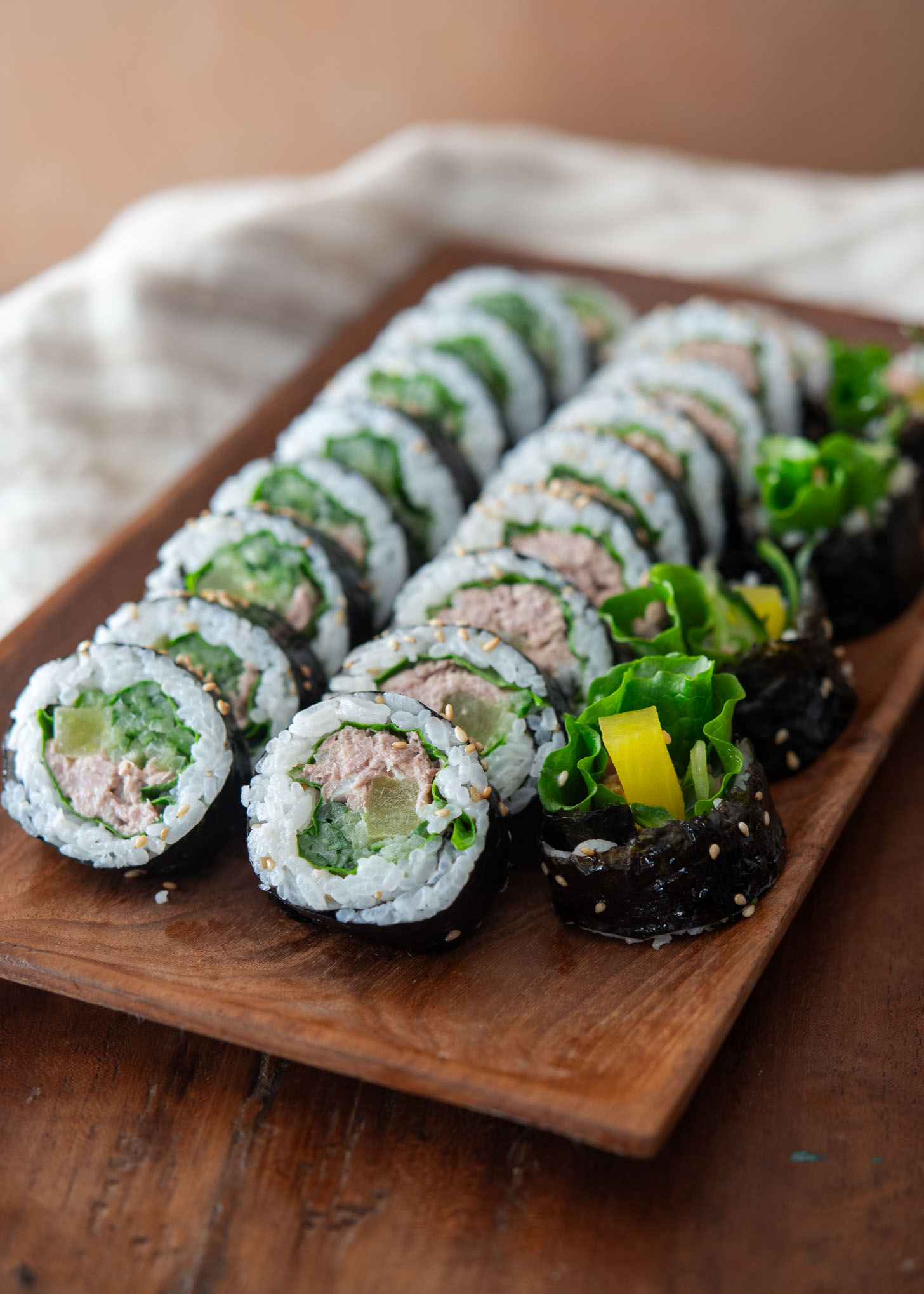
I’ve rolled a lot of kimbap in my kitchen over the years. Classic, bulgogi, veggie, spicy… you name it. But when someone asks me where to start, I point them straight to tuna kimbap. It is simple, reliable, and friendly enough for anyone who has never touched a bamboo mat before.
I taught this version to my kids when they were old enough to pack their own lunches, and it quickly became the roll that never came back home. Even now, if friends show up and I need something fast, I reach for tuna and cucumber. The cool crunch, the creamy filling, the seasoned rice… it feels light and fresh without any fuss.
Get new recipes via email:
On busy days, this is my comfort roll. No cooking time, no long prep list. Just clean flavors, a little chopping, and a neat roll that tastes like the kind of Korean home food I grew up eating.
If you want something a bit more classic, try the classic kimbap version I grew up rolling for picnics. I also have a quick rice ball (jumeokbap) recipe that works well when you want the same flavors without making a full roll.
Ingredients I Use for Tuna Kimbap (Plus Tips)
Here’s a closer look at the key ingredients that make this easy tuna kimbap recipe so satisfying—and how to choose the best ones for authentic flavor and great texture.
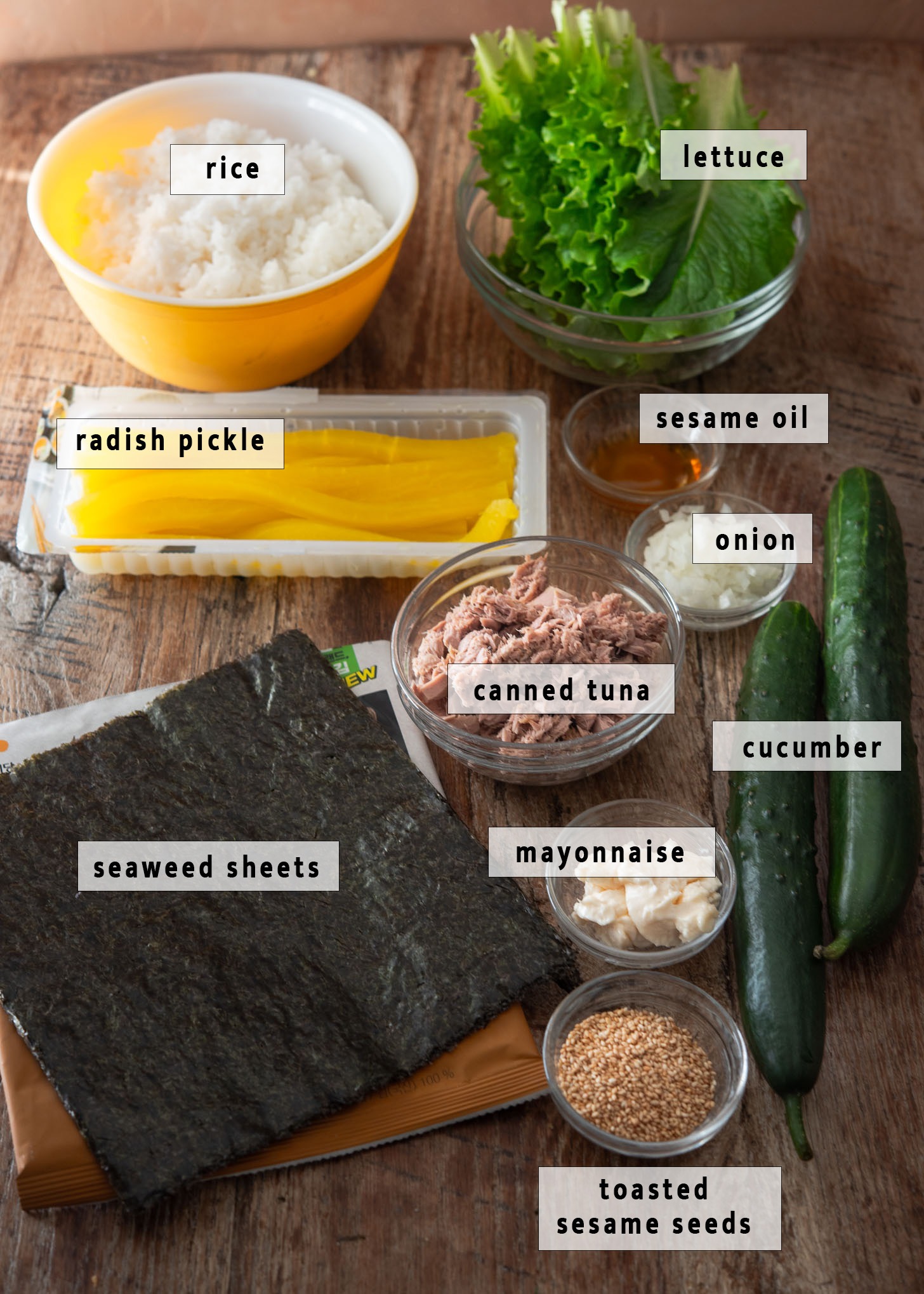
- Dried seaweed (gim / nori): For any kimbap roll, you’ll need sheets of roasted seaweed. Look for ones labeled gim (Korean) or sushi nori in Asian markets. I recommend the slightly thicker, shiny kind—they hold up better when rolling and don’t tear as easily.
- Canned tuna (chunk style): This is the star of the show. Use chunk light tuna (in oil or water, just be sure to drain it really well). I mix it with a spoonful of mayo and a pinch of chopped onion for extra umami and a hint of crunch. It’s simple, savory, and exactly what you want in a Korean tuna kimbap filling.
- Cucumber: I’ve tested both fresh and salted cucumber, and the quick salting method wins. I keeps the cucumber crisp, removes that raw edge, and helps prevent excess moisture from seeping into the kimbap roll.
- Pickled radish (danmuji): Danmuji brings a pop of brightness that cuts through the creamy tuna. Its tangy-sweet bite is classic in Korean lunchbox foods. You’ll find it in the refrigerated section of Korean or Asian grocery stores (look for the bright yellow sticks). If you can’t find it, any mild pickled veggie will do, though the flavor will shift slightly.
- Lettuce: I like to add a fresh lettuce leaf, green leaf or romaine, to act as a natural barrier between the rice and filling. It keeps the tuna mixture from soaking into the rice and adds a nice crisp bite. Bonus: it makes rolling a little easier, too—and looks neat, too.
How to Make Cucumber Tuna Kimbap (Step-by-Step)
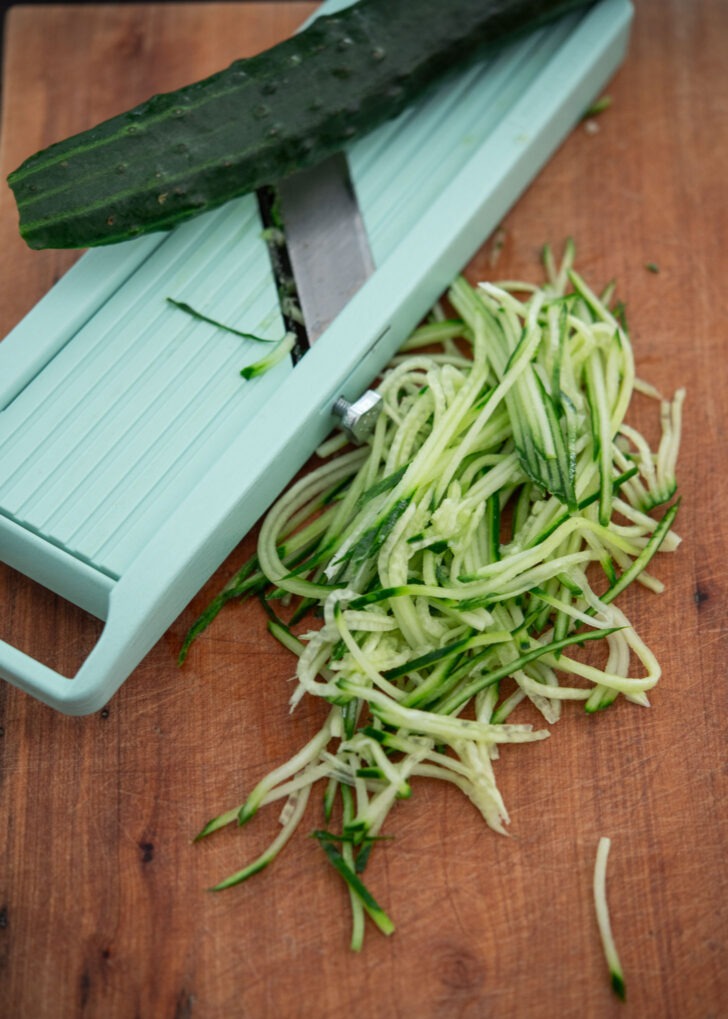
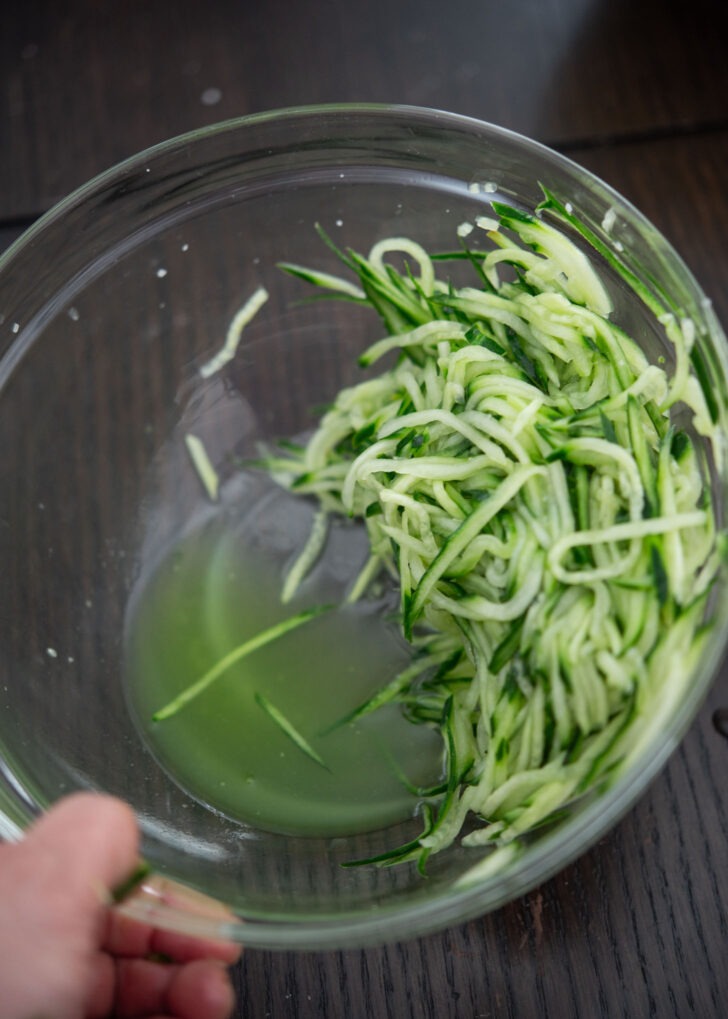
Salt the cucumber. Give the cucumber a quick sprinkle of salt and let it rest for a few minutes. This pulls out excess moisture so the roll stays crisp. Gently squeeze before using.
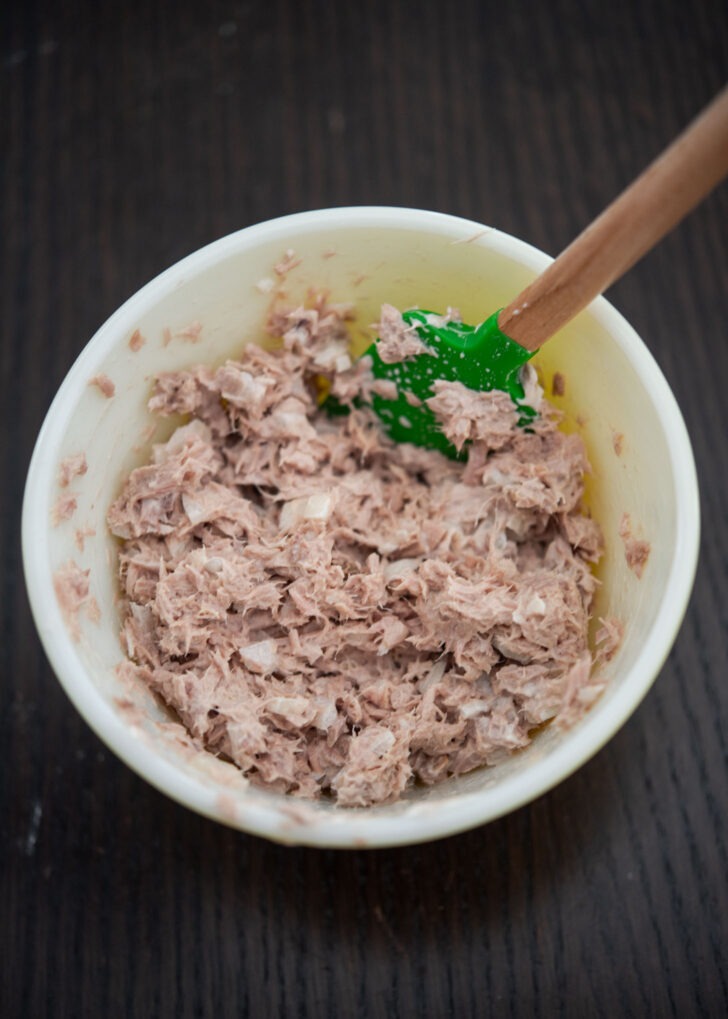
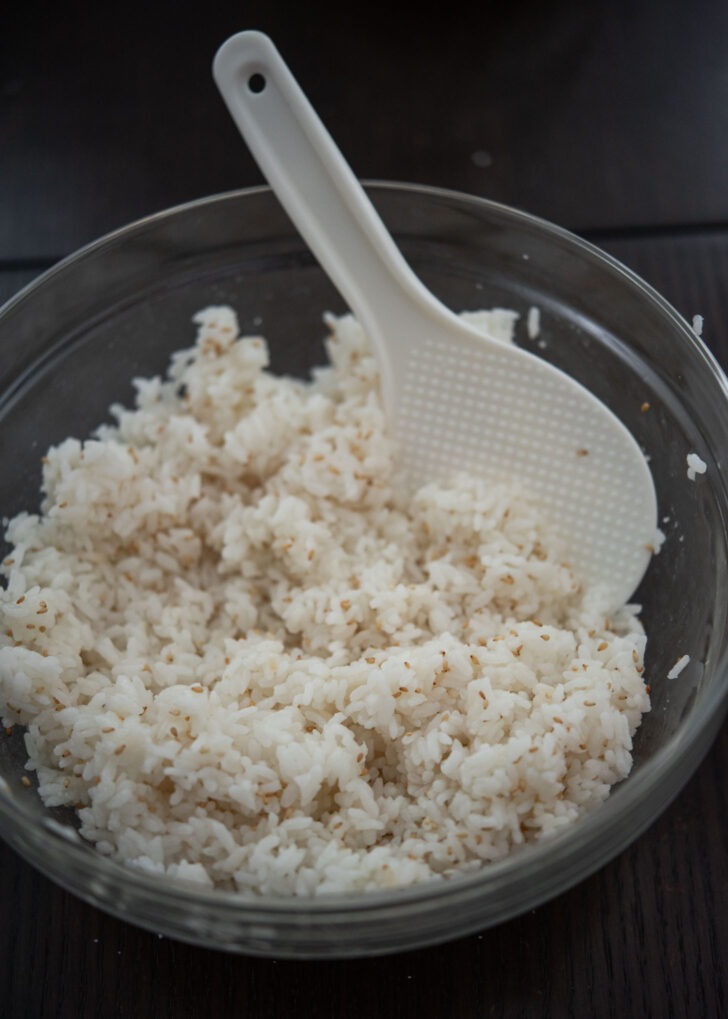
Prep the tuna and rice. Mix the drained tuna with a little mayo and finely chopped onion. Season warm short-grain rice with sesame oil and salt. Good rice seasoning makes the whole roll taste balanced.
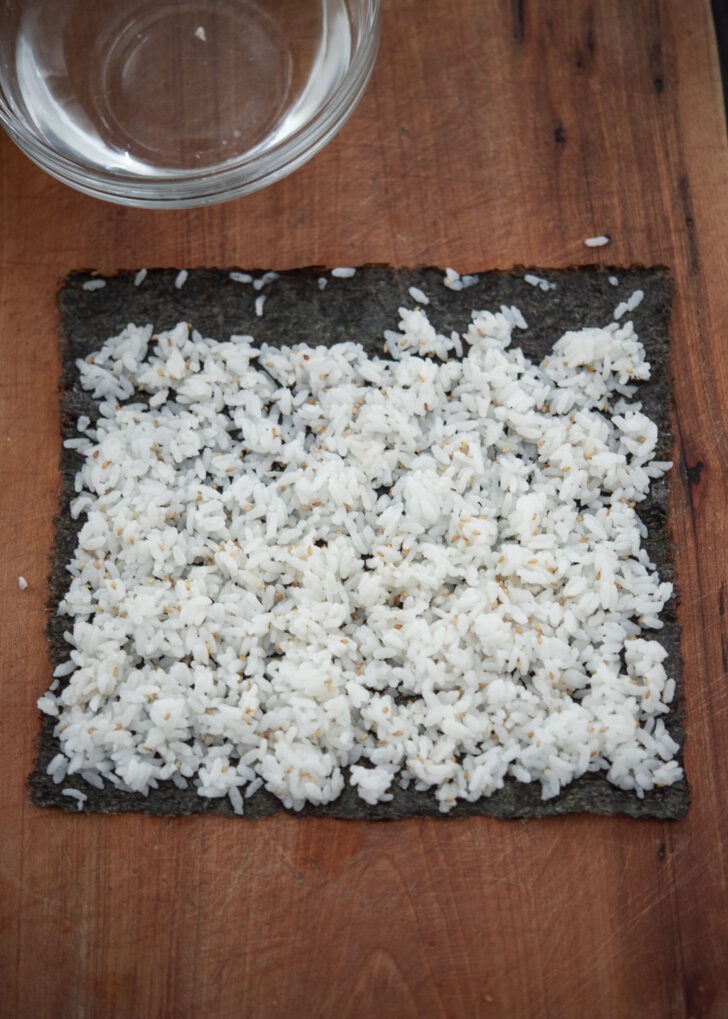
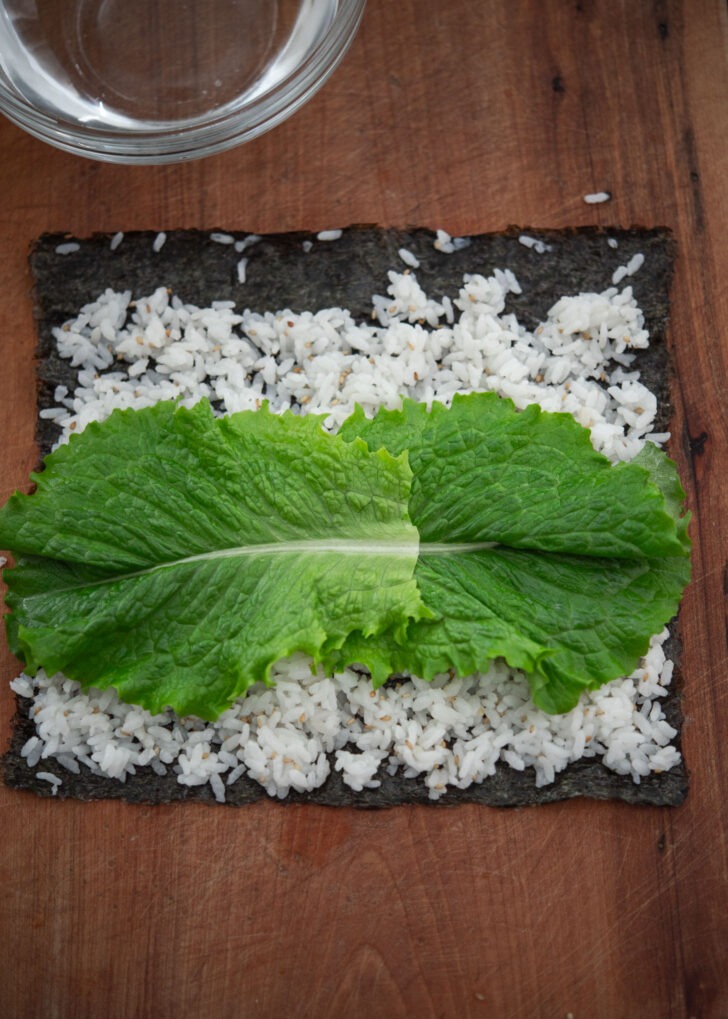
Spread the rice on the seaweed. Place a sheet of seaweed shiny side down and spread a thin, even layer of rice, leaving a small space at the top edge. I like to add a couple pieces of lettuce on the bottom third to keep everything tidy and add a fresh crunch.
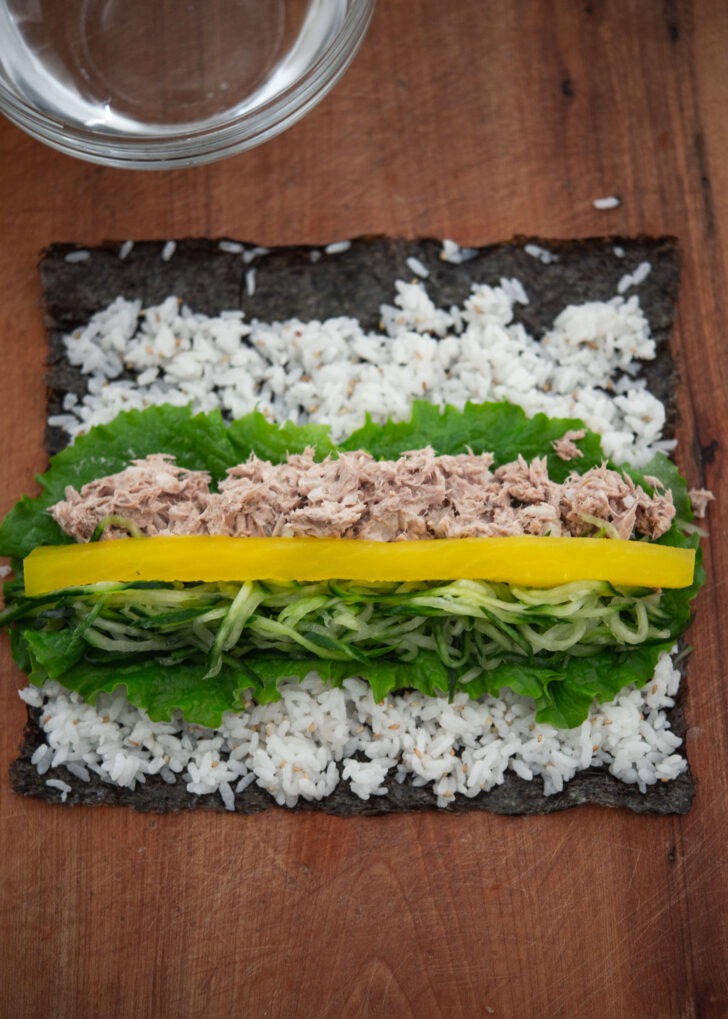
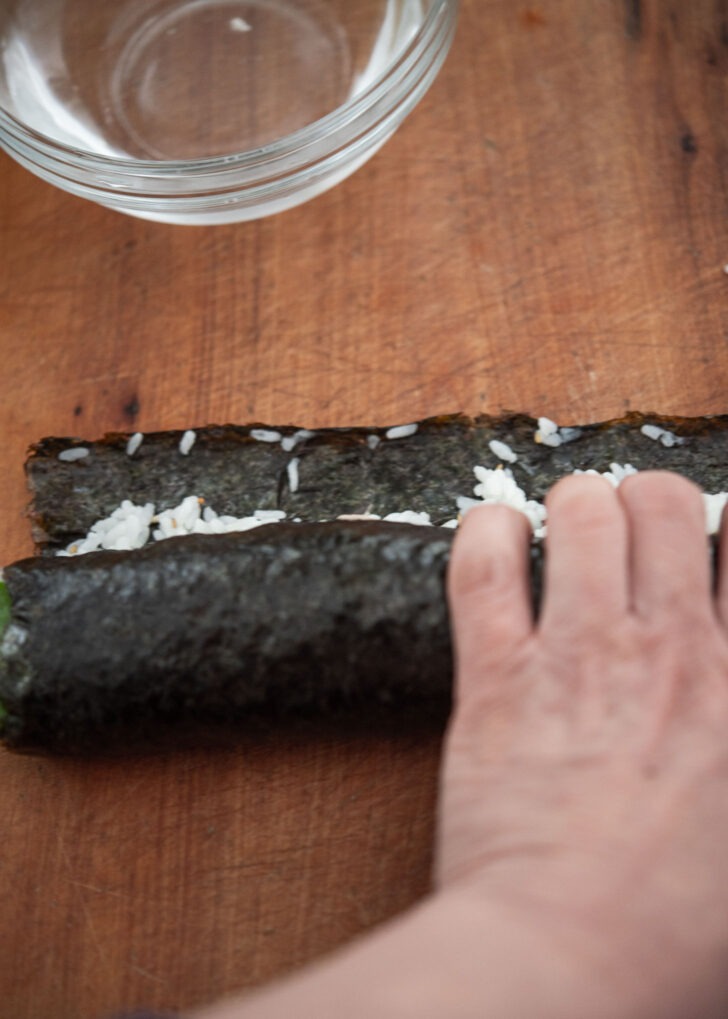
Add the filling and roll. Arrange the tuna mixture, cucumber, and a strip of pickled radish in the center. Start the roll tightly, tuck the fillings in with steady pressure, and let the mat help you form a compact roll. If you are new to rolling, the video below shows the hand movement clearly.
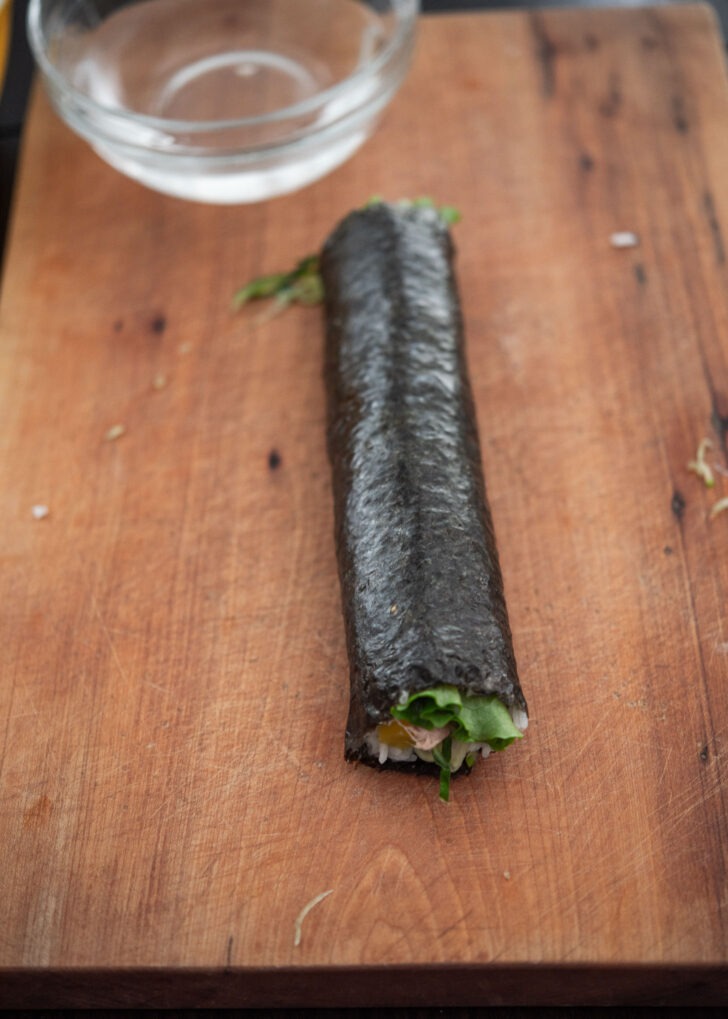
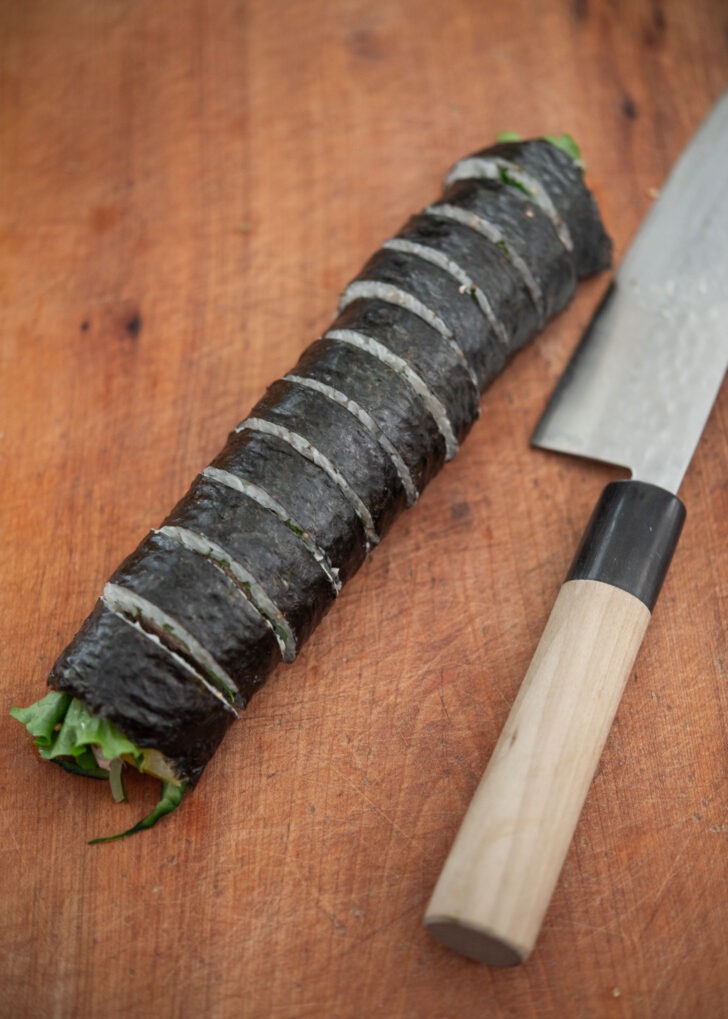
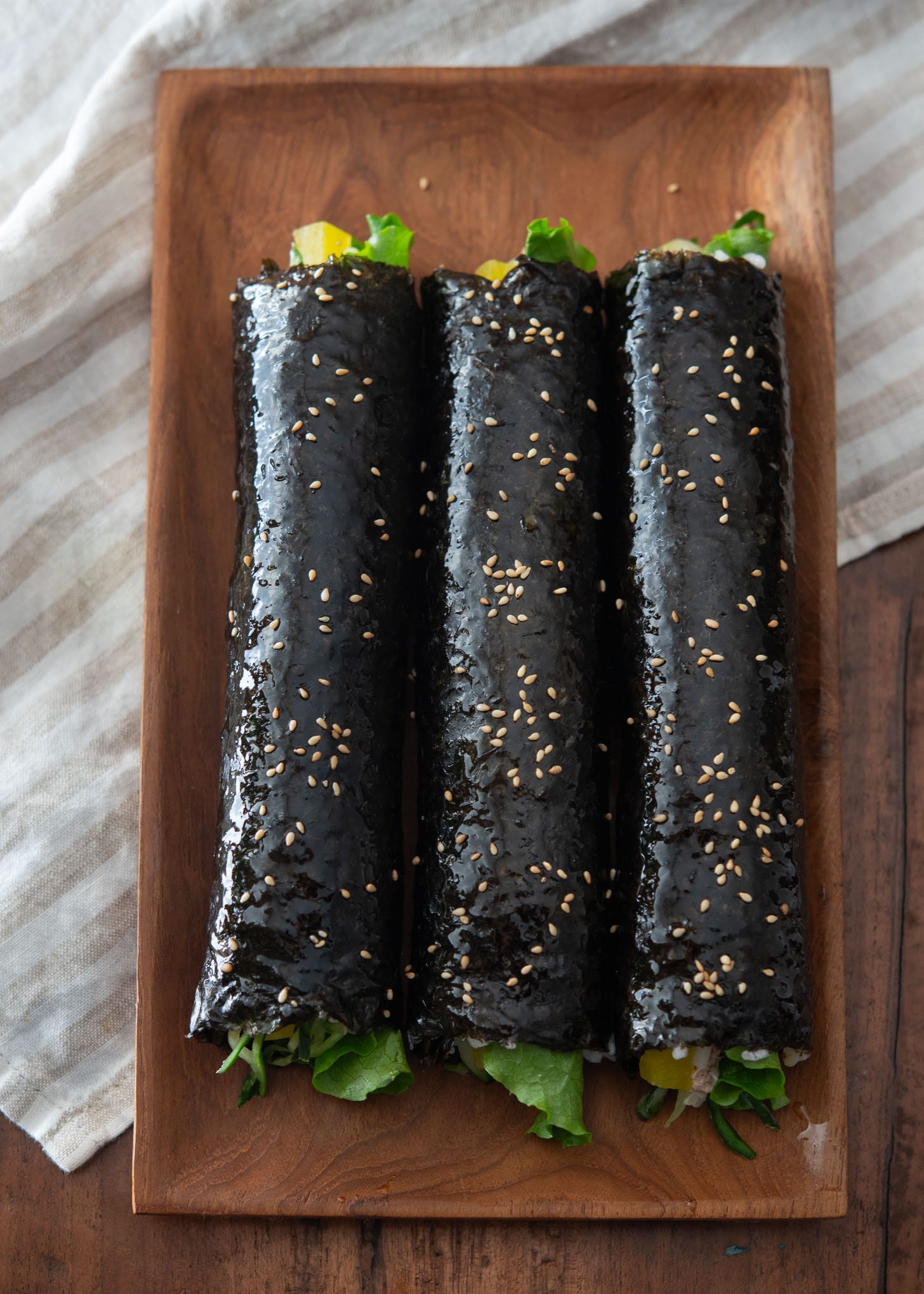
Slice and serve. Brush the outside with a little sesame oil if you want extra aroma. Use a sharp knife and wipe the blade between cuts for clean slices. A small sprinkle of sesame seeds at the end makes the roll look polished.
Tips for Better Tuna Kimbap
- Keep rice warm, not hot. Hot rice makes the seaweed soggy.
- Pat dry the cucumbers. Extra moisture = slipping and tearing.
- Don’t overload tuna. A thin, even layer rolls cleaner and cuts better.
- Use a sharp knife. Wipe with a damp towel between cuts for neat slices.
- Use a bamboo sushi mat to firm up the roll, if you’re not comfortable rolling with your hands.
And if you love rice-based meals in general, I keep all of my favorites in one place in my Korean rice dishes collection, which is basically my comfort-food corner.
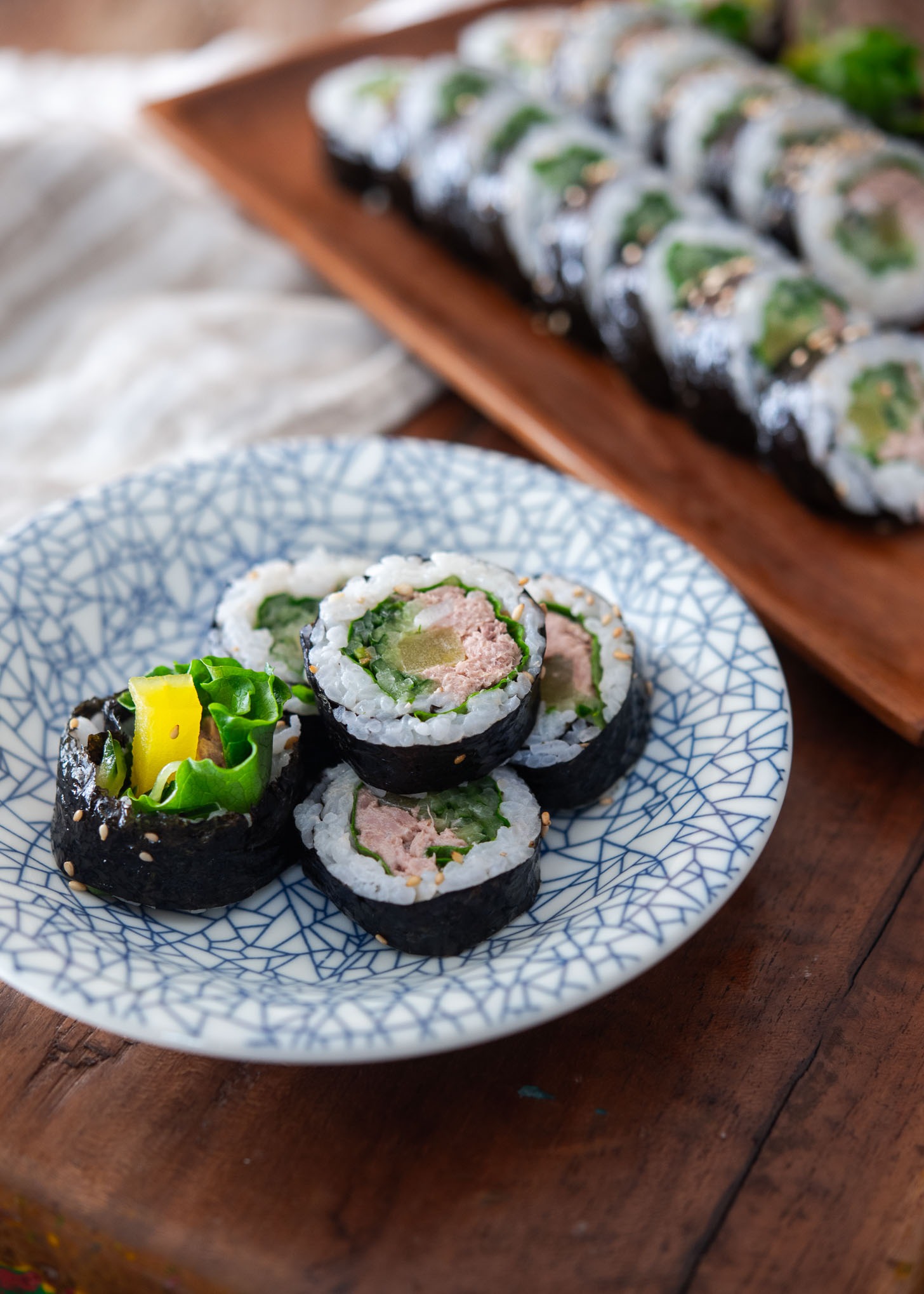
Love this recipe? Rate it and share your experience in the comments below! On Instagram? Tag me to showcase your creation. For more delicious recipes, subscribe to our newsletter!
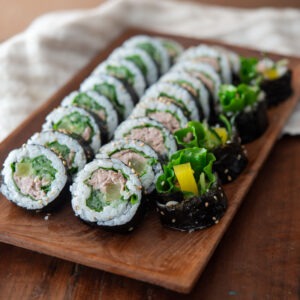
Tuna Cucumber Kimbap (Chamchi Kimbap)
Recipe Video
Ingredients
For rice
- 4 cups (640 g) cooked white rice, short grain rice
- 1/4 tsp (1.5 g) kosher salt
- 2 tsp (10 ml) sesame oil
- 1 tbsp (9 g) toasted sesame seeds
For tuna
- 2 cans 5-oz (142 g) each canned tuna
- 2 tbsp (20 g) minced onion
- 2 tbsp (30 g) mayonnaise
For other ingredients
- 1 about 300 g English cucumber, or 2 Kirby cucumber
- 1 tsp (6 g) kosher salt
- 8 romain lettuce leaves, Use only green part
- 4 strips (40 g) radish pickle
- extra sesame oil and sesame seeds, for ganish
Instructions
- Slice the cucumber into thin strips, sprinkle with salt, and let sit for 5 minutes. Gently squeeze to remove excess moisture.
- Mix the drained tuna with minced onion and mayonnaise. Set aside.
- Season the warm rice with kosher salt, sesame oil, and sesame seeds. Let it cool slightly.
Assembling kimbap
- Place a sheet of seaweed shiny side down on a bamboo mat. Spread a thin, even layer of rice over the sheet, leaving a small space at the top edge. Add the lettuce on the lower third.
- Arrange the tuna mixture, cucumber strips, and pickled radish on top of the lettuce.
- Roll the kimbap tightly by lifting the mat and tucking the fillings as you roll. Shape it into a firm, even roll. If you're not comfortable rolling with your hands, use a bamboo sushi mat to firm up the roll.
- Brush the outside lightly with sesame oil if desired. Use a sharp knife to slice, wiping the blade between cuts for clean pieces.
Notes
- For optimal results, use white short-grain or medium-grain rice. Make sure your rice is cooled down to the room temperature if using freshly cooked rice. Too-hot rice can make the seaweed shrink and soggy.
- For Storage: For best flavor and texture, enjoy the kimbap the day it’s made or by the next day. Store in an airtight container in the fridge, and slice just before serving to prevent the rice from drying out.